.svg)


%201.svg)
August 3, 2026
The Role of Digital PR in Long Term SEO Growth
Building a solid online presence is basically more than just posting content now and then or sprinkling keywords across your website. Search engines such as Google tend to point users toward businesses that feel trustworthy, useful, and backed up by others online, even if it’s not always obvious at first. When a company puts together a well-thought-out digital PR strategy, it can bring in solid media mentions, earning high-quality backlinks and stronger brand awareness, all of which feed long-term SEO progress. Rather than obsessing solely over rankings, digital PR helps you build credibility plus authority, so your site looks more appealing to search engines and also to real people who might become customers. In this guide, we’ll walk through how digital PR supports SEO, what makes it such a key part of modern marketing, and the most effective approaches for sustainable growth in search results.

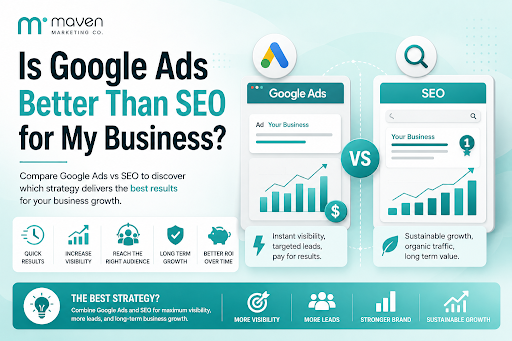
Is Google Ads Better Than SEO for My Business
One of the biggest questions business owners ask when they are planning online growth is whether they should invest in Google Ads or SEO. Both are strong marketing plays that help your company show up in Google search results, but they do things in separate lanes. Google Ads gives quicker visibility and can bring in leads fast, whereas SEO more or less focuses on slow, steady organic traffic that tends to grow the longer you keep building it. Picking the right direction depends on what you want to achieve, how much money you can spend, how crowded the market is, and how quickly you need results, like sooner rather than later. The good news is you don’t always have to choose one or the other; it’s not exactly a black-and-white situation. If you take time to understand the strongest points of both, you can put together a more sensible digital marketing plan that supports consistent expansion. In this guide, we’ll compare Google Ads vs SEO, explain the main differences, and help you figure out what option makes the most sense for your business.

When Should I Hire a Digital Marketing Agency
Growing a business today takes more than just having a website or throwing a post on social media; customers usually search around online, compare providers, skim reviews, and basically expect the brand to show up with a solid digital presence before they even think about buying. Many businesses try to run their marketing themselves, but there comes a point when “doing it all in-house” becomes clunky and hard to manage, all at once. Knowing when to hire a digital marketing agency can end up making a big, real difference for your growth. If you’re not getting enough leads, or your online visibility feels stuck, or sales are just not moving, the right agency can bring the know-how, plus a clear plan, to help you get noticeably better outcomes. In this guide, we’ll dig into what a digital marketing agency actually does, the usual signs it’s time to bring one on, and how picking the right marketing partner can help your business move forward at a faster pace.
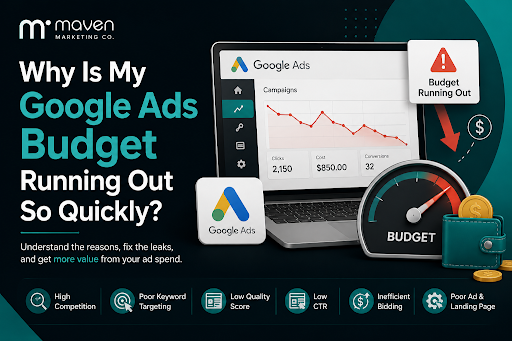
Why Is My Google Ads Budget Running Out So Quickly
Running a successful Google Ads budget isn’t only about throwing more money at it. It’s more like making every dollar, doing a bit extra. A lot of businesses start a Google Ads campaign with big hopes, then find out their daily budget is gone within a few hours, and that feels weird, right? After that, your ads stop showing effectively, new leads slip away, and your return on investment dips. So if your Google Ads budget is running out too fast, don’t stress. It’s a fairly common issue, and in most situations, it can be repaired with the right approach. There are multiple little things that can drain your advertising money quicker than you expected, from costly keywords to audience targeting that just doesn’t quite fit. In this guide, we’ll walk through why your budget disappears so quickly, how to cut wasteful spend, and the most reliable ways to boost your Google Ads ROI, even if your budget stays the same.

Link Building Strategies That Still Work in 2026 | Maven Marketing Co.
Link building has a reputation problem it does not entirely deserve. When most Australian marketing teams hear the term, they picture one of two things: the paid link schemes that Google has been penalising for years and that still circulate in the shadier corners of the SEO industry, or the outreach programmes that require significant labour that produce a handful of marginal links per month at a cost that makes the return on investment look questionable at best. Both of these pictures miss the methods that actually work in 2026, which share a common characteristic: they earn links as a byproduct of producing something valuable rather than acquiring them as a standalone purchase or extraction exercise. The distinction matters commercially because earned links are structurally different from purchased links. They tend to come from more relevant and more authoritative sources. They are more stable because they are not contingent on a payment being maintained. They are more likely to produce lasting ranking improvements because they represent genuine signals of editorial endorsement. And they are not a liability that sits waiting for the next Google spam update to detonate. This article covers the link earning methods that Australian businesses and their marketing teams can execute in 2026 to build domain authority through genuine editorial signals rather than purchases or schemes.

Handing the Keys to Google's AI: How to Keep Control of Your Ad Budget Inside Performance Max
Performance Max is Google's most automated campaign type, and also the one that provokes the most anxiety among Australian advertisers who have spent years developing campaign management practices that depend on visibility, control, and the ability to make deliberate, measurable changes. The anxiety has some basis. Performance Max does take more control away from the advertiser than any previous Google Ads campaign type: it chooses the placements, it selects the creative combinations, it determines the bid for each impression, and it distributes the budget across Google's inventory in ways the advertiser cannot directly specify. The part of the anxiety that is not well based is the conclusion that these constraints make Performance Max unmanageable or a blank cheque handed to Google's algorithm. Performance Max has a specific set of levers that, when correctly configured, give advertisers meaningful influence over where the budget goes, which audiences it targets, which creative assets it uses, and which conversion events it optimises toward. Understanding and using these levers is the difference between a Performance Max campaign that works within the advertiser's strategic parameters and one that wastes budget on inventory, audiences, and objectives that the business never intended to pursue.

TikTok and Instagram Search Trends for Australian Brands | Maven Marketing Co.
Something structurally significant has changed in how younger Australian consumers research purchases, and most Australian brands have not yet adjusted their discoverability strategy to reflect it. A proportion of the audience that would previously have opened Google to search for "best brunch spots Fitzroy" or "honest review Mecca skincare serum" is now opening TikTok or Instagram instead. They are searching within these platforms for short video content that shows them what they want to know: the actual food, the actual product, the actual experience, from people who have actually been there or used the item. This is not a marginal behaviour limited to a niche demographic. TikTok's own data has reported that a significant share of its users use the platform as a search engine, and the query patterns on Instagram's search function have expanded well beyond celebrity and hashtag discovery into product, venue, and service research. For Australian brands that have built their discoverability strategy entirely on Google organic search and Google Ads, this shift represents a gap that is growing over time as the audience that uses social platforms as primary discovery tools ages into demographics with higher purchasing power. This article covers what the shift to social search means practically, what content and account configuration signals these platforms use to surface results, and what Australian brands need to do differently to be found on TikTok and Instagram by people who are actively looking for what they offer.

How to Build a Google Business Profile That Converts Browsers Into Booked Appointments
A Google Business Profile that has been set up and left alone is doing roughly the same work as a shop front with the lights off. It confirms the business exists and provides the phone number, but it is not actively persuading a local searcher who is comparing three businesses in the search results to choose this one rather than the competitors sitting directly above and below it in the local pack. The businesses that win appointments from Google local search are not simply those that are closest to the searcher or those with the most reviews, although proximity and reviews both matter. They are the businesses that have treated their Google Business Profile as a conversion surface rather than a directory entry, and have populated every element of the profile with the specific information, imagery, and social proof that a local searcher needs to make a confident decision to book rather than keep browsing. The difference between a profile that ranks and converts and one that ranks but loses its potential customers to competitors is in the specific decisions this article covers: how to write the business description, which photos produce engagement, how to use posts to maintain freshness signals, how to respond to reviews in a way that builds rather than diminishes trust, and how to configure the booking and contact features that reduce friction between intent and appointment.

Hyperlocal Search Strategy to Dominate Local Rankings | Maven Marketing Co.
Every plumber in Melbourne is competing for "plumber Melbourne." Every accountant in Brisbane is competing for "accountant Brisbane." Every conveyancer in Sydney is competing for "conveyancer Sydney." These are the keywords that every competitor knows about, every competitor has built pages for, and every competitor is paying for in Google Ads. They are also the keywords where the gap between the most established and businesses with strong funding and the smaller, newer, or more constrained ones is widest, and where breaking into the top three positions requires either significant domain authority, a substantial paid media budget, or years of consistent investment in link acquisition. Search at the suburb level is a different competitive environment entirely. "Plumber Footscray," "accountant Fortitude Valley," and "conveyancer Chatswood" are searched thousands of times per month across the Australian market by people who are specifically looking for a business near them, but they are contested by a fraction of the competitors who contest the equivalents at the city level. Most Australian service businesses have not built content targeting individual suburbs because they are focused on the city keywords they already know are valuable. This article covers the suburb strategy, a systematic approach to building hyperlocal search presence across the suburbs an Australian service business actually serves, that captures a category of local search traffic with strong intent that most competitors leave entirely uncontested.

Google Helpful Content Guide for Australian Businesses | Maven Marketing Co.
The phrase "helpful content" is so simple and so intuitive that it has almost entirely lost its meaning in the context of SEO. Every marketing team believes the content they produce is helpful. Every agency pitching a content programme describes it as helpful. The question is not whether businesses intend to produce helpful content. The question is whether the specific signals Google uses to assess helpfulness are being satisfied, and most Australian businesses would be surprised to discover how specific those signals are, how different they are from general notions of quality, and how many content programmes that feel like they are producing content of high quality are failing the helpfulness assessment in ways that are entirely measurable and correctable. This article explains what Google actually means when it assesses whether content is helpful, what the specific signals are that its quality rater guidelines and the Helpful Content system use to make that assessment, and what Australian businesses producing content in 2026 need to do differently to satisfy those signals rather than simply feeling like they should be satisfied.

Why Google Rankings Dropped Overnight and How to Recover | Maven Marketing Co.
An overnight drop in Google rankings is one of those events that produces an immediate and powerful impulse to do something, to make changes, to fix whatever is broken, to act. This impulse is almost always wrong before the diagnosis is complete, because the correct action depends entirely on what caused the drop, and the cause is not always what it appears to be. The most common diagnostic errors Australian businesses make after a ranking drop are treating a Google algorithm update as a technical problem and spending weeks on site audits that address nothing, treating a technical problem as a quality issue and producing new content that does not fix the broken crawl configuration causing the drop, and making a series of changes in rapid succession that makes it impossible to determine which change, if any, produced the recovery. A ranking drop is a signal. Before responding to a signal, you need to know what it is signalling. This article provides the systematic diagnostic process that Australian businesses and their marketing teams should follow immediately after an overnight ranking drop to identify the real cause before taking any remediation action.
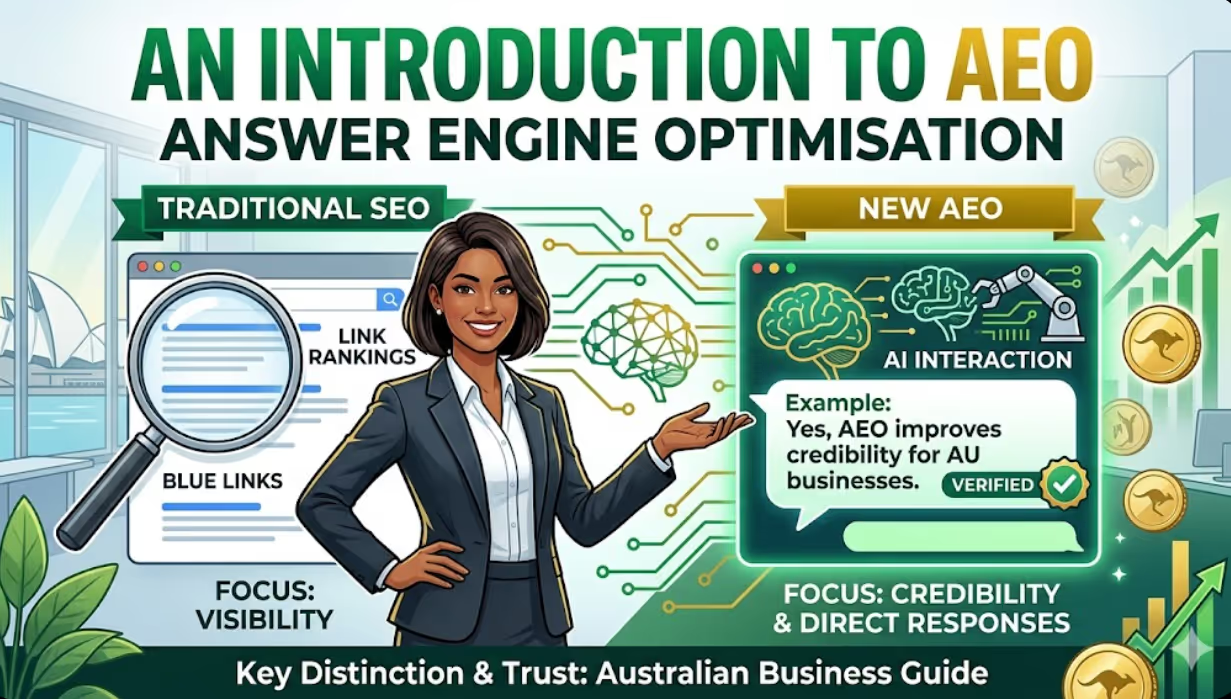
Answer Engine SEO for ChatGPT Gemini and Google AI | Maven Marketing Co.
The search engine as the primary discovery mechanism for Australian businesses is not disappearing, but it is being joined by something that operates on a different logic. Answer engines, the AI tools that synthesise information and generate direct responses to questions rather than returning a list of links, are now processing a meaningful and growing portion of the queries that would previously have produced a standard search results page. ChatGPT answers questions with citations. Gemini produces overviews with sourced references. Google's AI Summaries appear above the organic results for an expanding range of queries. The businesses and sources that appear in these answers are not there by accident. They have produced the kind of content, earned the kind of credibility signals, and structured their information in the way that answer engines use to decide whose information to draw from and whose name to include in the response. This article is about how to become one of those sources rather than one of the businesses that is absent from AI-generated answers entirely, with specific guidance on the requirements of each major AI answer platform used in the Australian market in 2026.

Why Australian Businesses Are Invisible to AI Search | Maven Marketing Co.
A growing proportion of Australian consumers and business buyers are starting their product and service research not with a Google search but with a conversational query to an AI tool. They are asking ChatGPT which accounting software suits a small business in Sydney. They are asking Perplexity which builders are highly regarded in Melbourne's inner suburbs. They are asking Google's AI Overview what the best options are for commercial cleaning services in Brisbane. They are asking Claude what digital marketing agencies in Australia specialise in ecommerce. In each of these interactions, the AI generates a response by synthesising information from its training data, its web access, and the sources it considers credible and comprehensive for the topic. Most Australian businesses are not in that response. Not because their product or service is inferior, but because the signals that AI systems use to identify, evaluate, and recommend businesses are different from the signals that have traditionally driven Google rankings, and most Australian businesses have not yet adapted their digital presence to produce those signals. This article explains why Australian businesses are invisible to AI queries, what determines which businesses appear in AI-generated recommendations, and the practical steps to improve visibility in discovery mediated through AI tools.

Freemium Model Optimisation: Converting Free to Paid Users
The freemium model is simultaneously one of the most effective user acquisition strategies available to Australian digital product businesses and one of the most frequently misunderstood conversion opportunities within those businesses. The misunderstanding is not in the acquisition part. Freemium acquires users with extraordinary efficiency: removing the price barrier from the first experience reduces friction to near zero, and a free product that is well designed can build a user base at a scale that paid acquisition alone could never achieve at the same cost. The misunderstanding is in the conversion part. Most Australian SaaS businesses and digital product companies treat the conversion from free to paid as a function of the pricing page and the upgrade prompt, as if the decision were made in a moment rather than across weeks or months of product experience. The reality is that the conversion from free to paid is the cumulative outcome of every interaction the user has had with the product, every email they have received, every friction point they have encountered in the free tier, and every moment of value they have experienced that makes the case for the paid tier to be worth their money. Understanding and optimising each of these dimensions is what separates the freemium products that convert at 5 to 10 percent from those that convert below 2 percent, which represents the difference between a commercially sustainable freemium model and an expensive user acquisition programme with a poor return.

Instagram Growth Services: Follower Quality vs Quantity for Australian Brands
The follower count on an Australian business's Instagram account is one of the most visible and most misleading metrics in social media marketing. It is visible because it appears on the profile, it is reported in every social media audit, and it is the number most stakeholders look at when assessing whether the brand's Instagram presence is meaningful. It is misleading because the commercial value of a follower depends entirely on who they are and whether they are genuinely interested in the brand, not on whether they exist in the follower count. An account with 80,000 followers assembled through purchased followers, aggressive tactics including following then unfollowing accounts, giveaway audience inflation, or international audience accumulation will consistently underperform an account with 8,000 followers who are real Australian consumers in the relevant category who discovered the brand through genuine interest and continue to engage with its content. The commercial consequences of this difference play out in every post, every story, and every paid campaign that uses the account's organic audience as a seed list for lookalike targeting. This article covers what genuinely valuable Instagram growth looks like for Australian brands, what services and approaches produce it, and what the warning signs are that a follower base has been built on foundations that will not convert to commercial outcomes.

PPC Competitor Conquest Strategy: Bidding on Australian Competitor Keywords
Bidding on a competitor's brand name in Google Ads places your ad in front of a searcher who is actively researching that competitor but has not yet committed to them, which is one of the highest-intent audiences available in paid search outside of direct brand searches for your own business. The searcher is already in the category, already aware that they have a problem to solve, and actively evaluating options. They are not in the early research phase. They are in the shortlisting phase, and an ad that appears at this moment with a compelling alternative message has a genuine opportunity to divert a qualified prospect from a competitor to the advertiser. This is the commercial logic behind competitor conquest campaigns, and it is why they feature prominently in the PPC strategies of the most aggressive and commercially sophisticated brands in competitive Australian markets. The legal and ethical dimensions of competitor bidding in Australia require careful attention, however. Bidding on a competitor's brand name as a keyword is generally permitted, but using the competitor's trademark in the ad copy itself is not, and the line between the two is where most conquest campaigns either fail for legal reasons or underperform because the ad cannot use the most direct comparison language the advertiser would want. This article covers the strategy, configuration, copywriting, and compliance requirements for running an effective competitor conquest campaign in the Australian market.
Google Ads Extensions Mastery: Using All 13 Extension Types Effectively
Google Ads extensions, now officially referred to as assets in the Google Ads interface, are the most underused lever in most Australian Google Ads accounts. Every extension type that is correctly configured and eligible to serve increases the physical size of the ad in the search results, provides additional reasons for a searcher to click, and contributes to the Quality Score that affects the CPC the account pays in each auction. Yet most Australian accounts deploy only the most obvious extension types, leaving sitelinks and callouts in place from the original setup and ignoring the other eleven types that could be adding incremental value to every eligible impression. The extensions that are missing are often the ones with the most commercially targeted impact: promotion extensions that surface an active offer at the moment of search, price extensions that give searchers the pricing context they need before clicking, structured snippets that build confidence in the range and depth of the offering, and lead form extensions that allow conversion requiring minimal friction without a landing page visit. Understanding all thirteen extension types, what they do, when they are appropriate, and how to configure them correctly is one of the account optimisation with the highest return activities available. This article covers every extension type available to Australian Google Ads advertisers in 2026, with configuration guidance and commercial context for each.
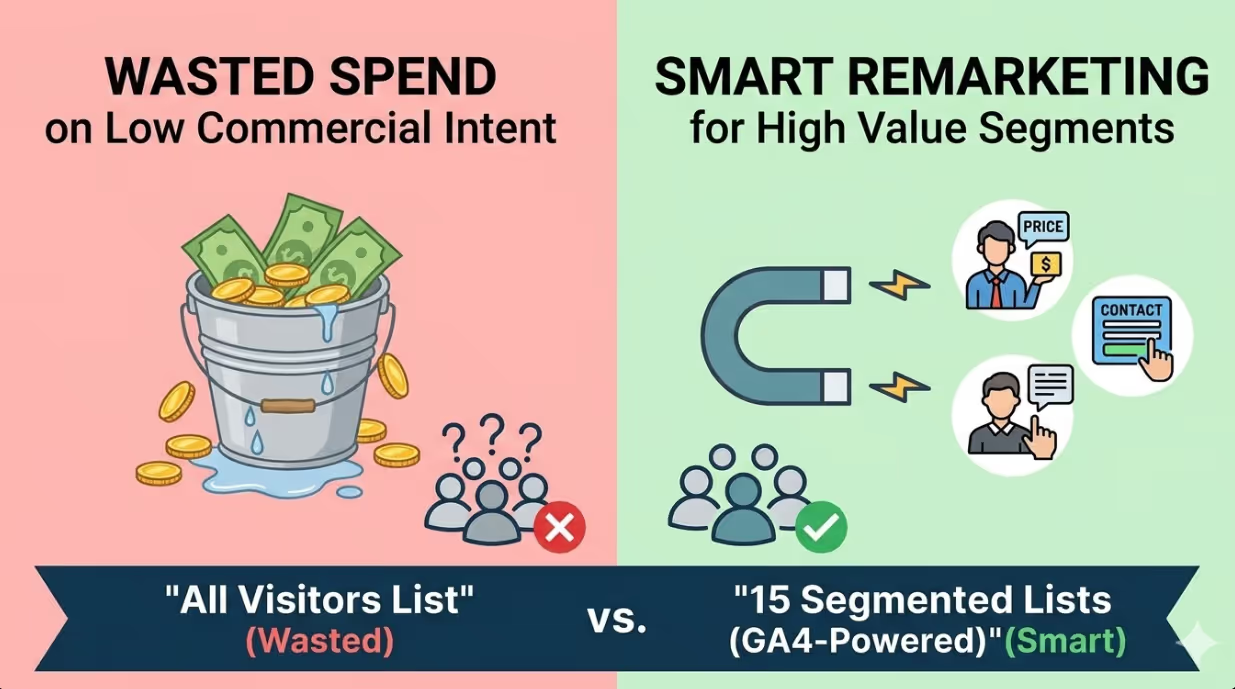
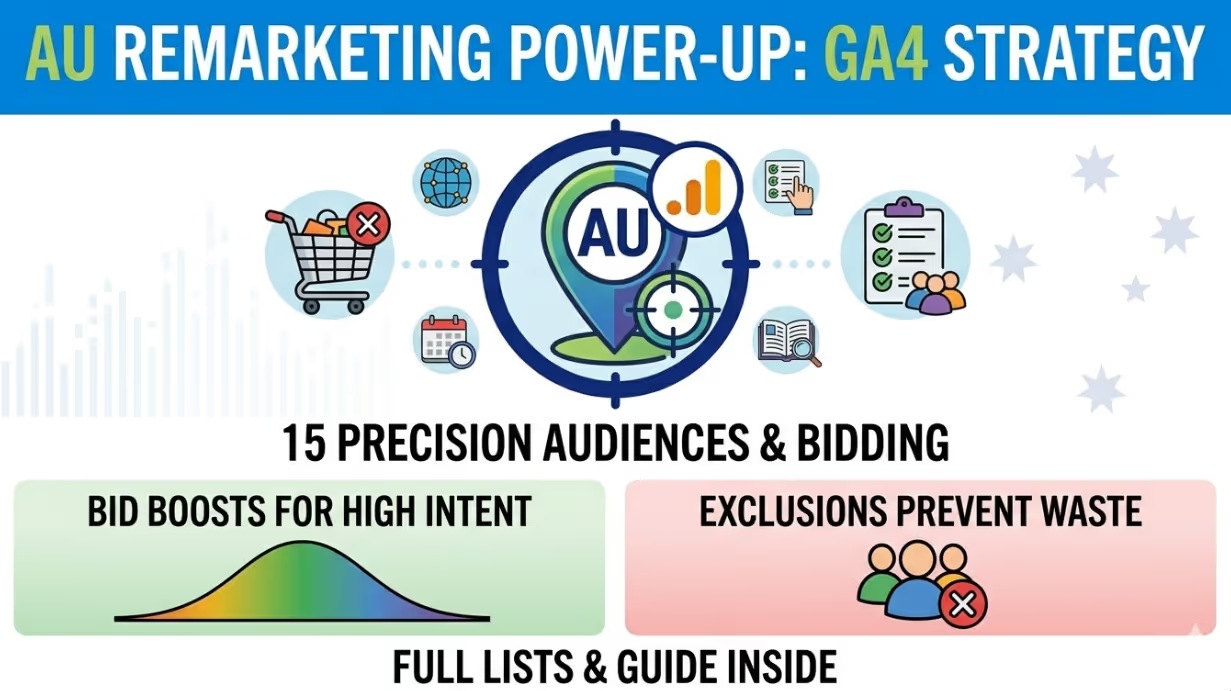
PPC Remarketing Audience Segmentation: 15 Lists Every Australian Business Needs
Most Australian businesses running Google Ads have remarketing set up in the broadest possible configuration: a single list of all website visitors, retargeted with the same ads at the same bid, regardless of which pages they visited, how long they stayed, whether they were close to converting, or how long ago their visit occurred. This is not a remarketing strategy. It is a generic spray of impressions across an audience that ranges from highly motivated buyers who visited the pricing page twice last week, to completely cold researchers who bounced after ten seconds three months ago, with the same message and the same commercial urgency applied to both. Effective PPC remarketing for Australian businesses requires audience segmentation that distinguishes between these cases and applies the appropriate bid level, message, and offer to each. The fifteen audience lists in this article represent the segmentation structure that covers the most commercially valuable distinctions in an Australian business's website audience, from the visitors with the strongest intent who are ready to act to the audiences that need a different message to return and convert. Each list is buildable in Google Analytics 4 and importable to Google Ads, and the combination of all fifteen provides a remarketing architecture that substantially outperforms a single undifferentiated list covering all visitors.
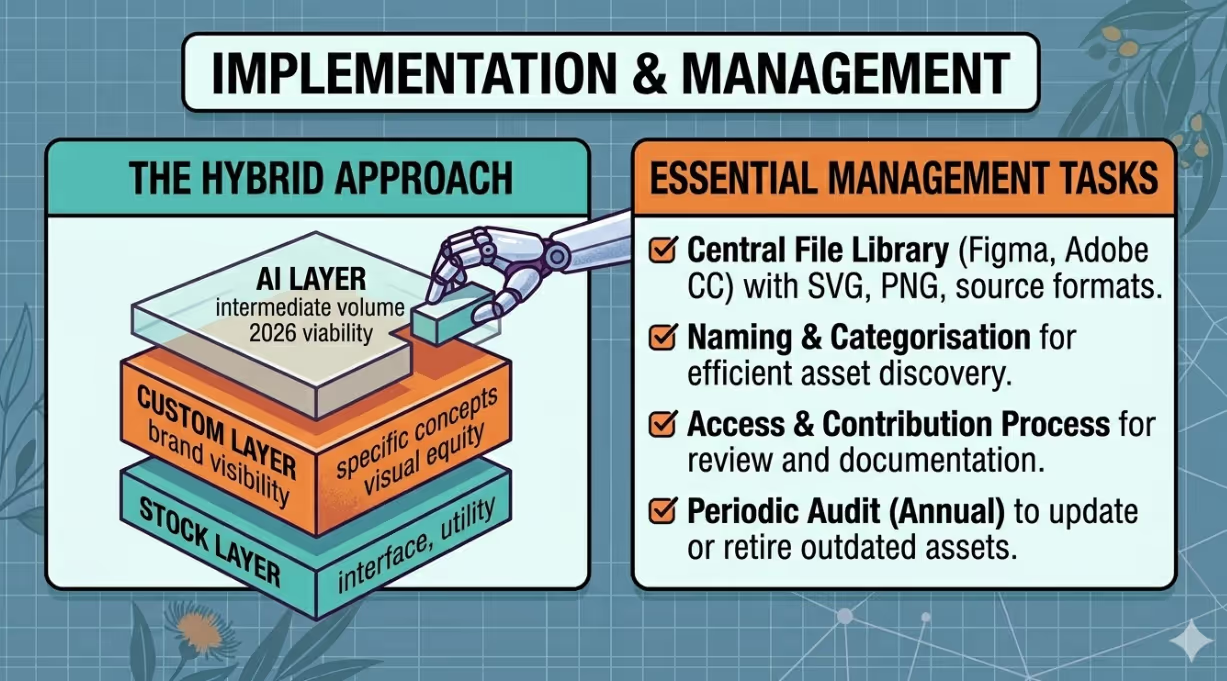
Iconography and Illustration: Custom Graphics vs Stock Asset Selection
The decision about whether to invest in custom iconography and illustration or to select from the available stock libraries is one that most Australian businesses make informally, based on perceived cost rather than a genuine assessment of the commercial and strategic implications of each approach. Stock icon libraries have become genuinely excellent in recent years, and the quality and breadth of platforms such as Noun Project, Feather, Material Symbols, and the major illustration sets means that a carefully selected and consistently applied stock set can produce a professional result for many purposes. But the cases where custom graphics produce a meaningfully better commercial outcome, where the distinctiveness of the visual language directly contributes to brand recognition, where the specific conceptual nuances of the business cannot be captured by generic symbols, and where visual coherence across a complex product requires a unified design system rather than a curated selection from multiple sources, are more common than the cost comparison alone suggests. Understanding when stock assets serve the purpose adequately and when the investment in custom graphic work is genuinely justified requires a framework that goes beyond the simple comparison of design fees against library subscription costs. This article provides that framework for Australian businesses making iconography and illustration decisions for their websites, products, and marketing materials.

Brand Integration in Web Design: Translating Style Guides to Digital
Most Australian businesses that have invested in a professional brand identity own a style guide that was built for print and adapted for digital as an afterthought. The logo variants, colour palette, typography, and visual language were developed with printed collateral, signage, and physical presentations in mind, and the digital applications were added to the guide as secondary specifications: use this hex code instead of the Pantone, use this system font for screen, use this minimum size for digital applications. What is rarely included is the set of specifications that digital actually requires: how the colour palette behaves across interactive states, how the typography scales across screen widths, how brand illustration and photography integrate with the grid and spacing system, how the visual identity translates to components like buttons, form fields, navigation, and data visualisation. The result is a website that shares a colour palette and a logo with the brand's printed materials but that does not feel like the same brand when a visitor engages with it, because the depth of specification needed to produce a coherent digital experience was never developed. This article covers what translating a brand identity to digital genuinely requires, from the design token structure that makes brand decisions systematic to the component library that makes them consistent at every touchpoint.

WordPress vs Shopify vs Custom Platform Comparison | Maven Marketing Co.
The question Australian businesses ask most frequently when beginning a website project is which platform they should build on, and it is a question that attracts a higher volume of generic, commercially motivated advice than almost any other in digital marketing. Agencies that specialise in one platform will recommend that platform. Developers who know one technology stack will advocate for that stack. Platform companies publish comparison pages that assess the competition through a lens that inevitably favours their own product. Cutting through this noise requires a framework that starts not with the platforms but with the business: its current size and technical resources, the nature of its ecommerce or content requirements, its expected growth trajectory, and the operational capacity of the team that will manage the site after it launches. The correct platform recommendation for a small Australian ecommerce brand with a solo operator and three hundred products is different from the correct recommendation for a service business with multiple locations, which is different again from the correct recommendation for a content publisher with complex editorial workflows or a retail brand with thousands of SKUs and custom pricing logic. This article provides the structured decision framework Maven Marketing Co uses when recommending platforms to Australian clients, with the honest assessment of where each of the three main options, WordPress, Shopify, and custom development, genuinely excels and genuinely fails.
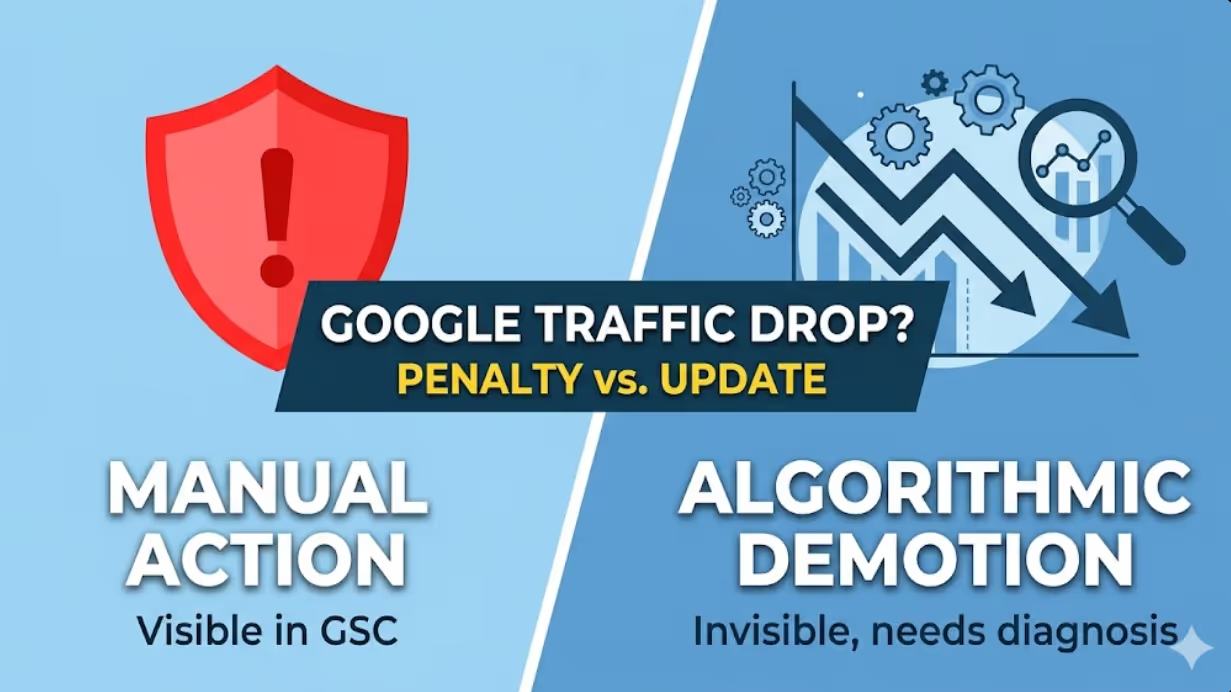
SEO Penalty Recovery: Diagnosing and Fixing Manual Actions and Algorithmic Demotions
A sudden and significant drop in organic search traffic is one of the most alarming events in digital marketing, and one of the most frequently misdiagnosed. The instinct when rankings collapse is to look immediately for a technical problem or to make rapid changes to the affected pages, and sometimes that instinct is correct. But the correct response to a traffic drop depends entirely on its cause, and the cause of a ranking decline is not always visible on the surface. Google applies two fundamentally different types of ranking intervention to websites: manual actions, which are deliberate penalties applied by a human reviewer at Google and are visible in Google Search Console, and algorithmic demotions, which are automatic adjustments made by changes to Google's ranking systems and do not generate any notification. The recovery strategy for a manual action is specific, requiring documentation and involving a formal reconsideration request to Google. The recovery strategy for an algorithmic demotion is a quality improvement programme that addresses the underlying content or site factors that the algorithm change penalised. Applying the manual action recovery process to an algorithmic demotion, or vice versa, wastes significant effort and delays the actual recovery. This article covers the diagnostic process for identifying which type of intervention has occurred, and the specific recovery strategies for each.
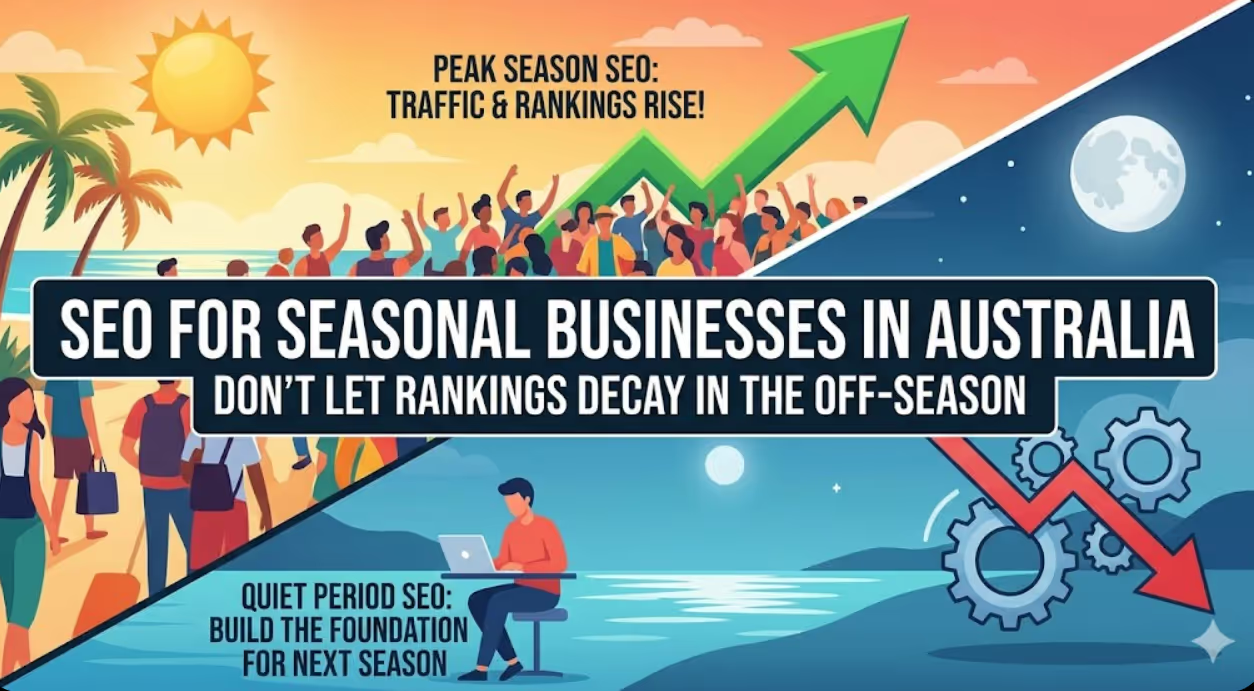
SEO for Seasonal Businesses: Maintaining Rankings During Off-Peak Periods
Seasonal businesses in Australia face an SEO challenge that their competitors who operate all year do not: the organic rankings they work hard to achieve during their peak period need to be actively protected through months when their category is quiet, their traffic is thin, and Google's quality signals from the site are at their weakest. The assumption that rankings earned during a busy season will hold themselves until the next one is wrong in most competitive categories. Google's ranking algorithm is continuous, and a site that is inactive, slow to crawl new content, generating no engagement signals, and receiving no new links during a long period when search volume is low will often find that competitors who have maintained their activity have moved ahead by the time the season turns. The key insight for Australian seasonal businesses is that the period when search volume is low is not dead time in the SEO programme. It is the period when the work is done to protect the rankings for peak season, develop the content that will drive the next season's visibility, and build the authority signals that make ranking faster and more durable when demand returns. This article covers the strategies that Australian seasonal businesses can use to protect their rankings, sustain their authority signals, and emerge from the quiet period with stronger organic positions than they entered it with.

Voice of Customer SEO to Improve Content Strategy | Maven Marketing Co.
Every Australian business that has staff who work with customers, client reviews, support tickets, sales call recordings, or feedback gathered after purchase has access to a source of SEO and content strategy insight that most of their competitors are not using. The language customers use when they describe their problems, articulate their hesitations, ask their questions, and explain what they were looking for before they found a solution is not just qualitative research data. It is keyword research data in its most authentic form: the exact phrases, questions, and vocabulary that real customers in the Australian market use when they are at the specific stages of their decision journey that the business most needs to reach them. The gap between this language and the language most businesses use in their marketing content is significant, consistent, and commercially costly. Businesses write about their services using the vocabulary of their industry. Customers search for solutions using the vocabulary of their experience. When the content bridges this gap, it ranks for what customers actually search. When it does not, it ranks for what practitioners write, which is often not what buyers search. This article covers the systematic process for collecting voice of customer data, extracting keyword and content strategy insights from it, and applying those insights to build SEO content that reaches Australian customers at every stage of their decision journey.
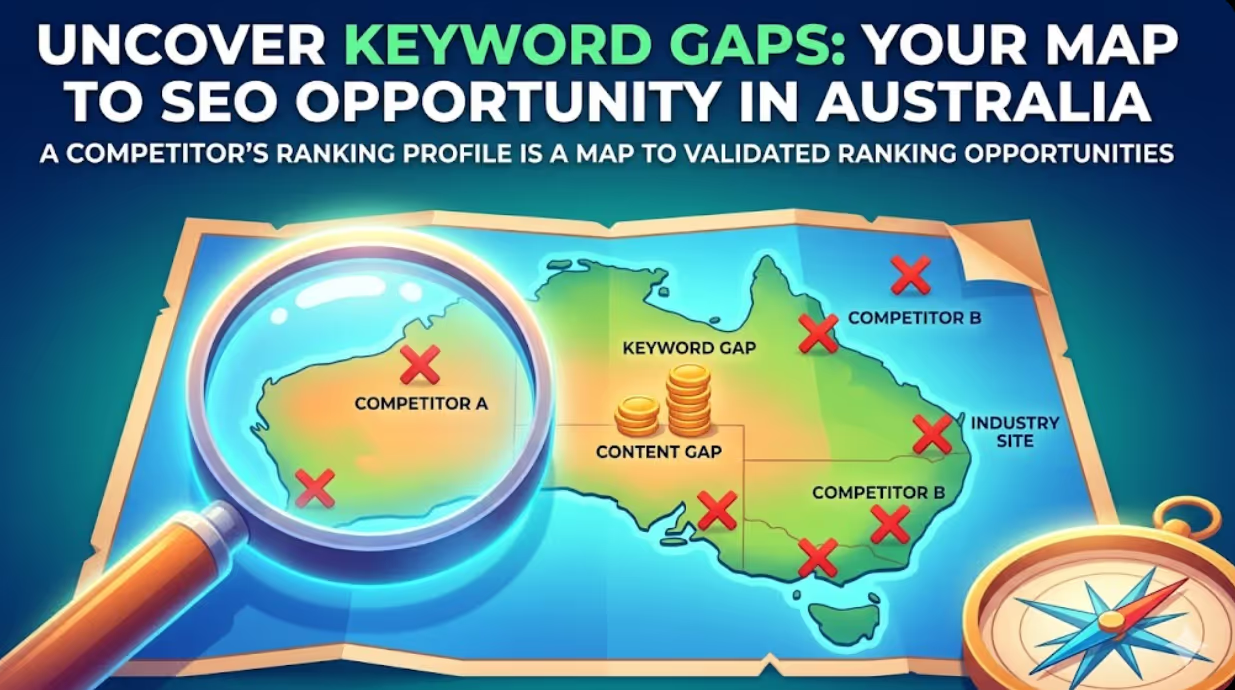
SEO Competitive Gap Analysis: Finding Untapped Ranking Opportunities
The most reliable source of ranking opportunities that an Australian business has not yet pursued is the set of keywords that its competitors rank for and it does not. This is not a peripheral observation. For most businesses that have published content consistently for a year or more without a systematic competitive analysis, the content gap between their site and their strongest competitors represents a larger body of rankable opportunity than any other single source of keyword discovery. A competitor that ranks on the first page of Australian Google results for a hundred commercially valuable queries is demonstrating that those queries are achievable, that Google judges the intent they represent to be commercially relevant to the category, and that a website covering the same topic space can reach that audience. Finding those gaps, understanding why they exist, and closing the most commercially important of them in a deliberate sequence is what competitive gap analysis produces. This article covers the systematic process for conducting a competitive gap analysis in the Australian market, from identifying the right competitors through to prioritising the gaps that represent the fastest and highest-value path to additional ranking positions.
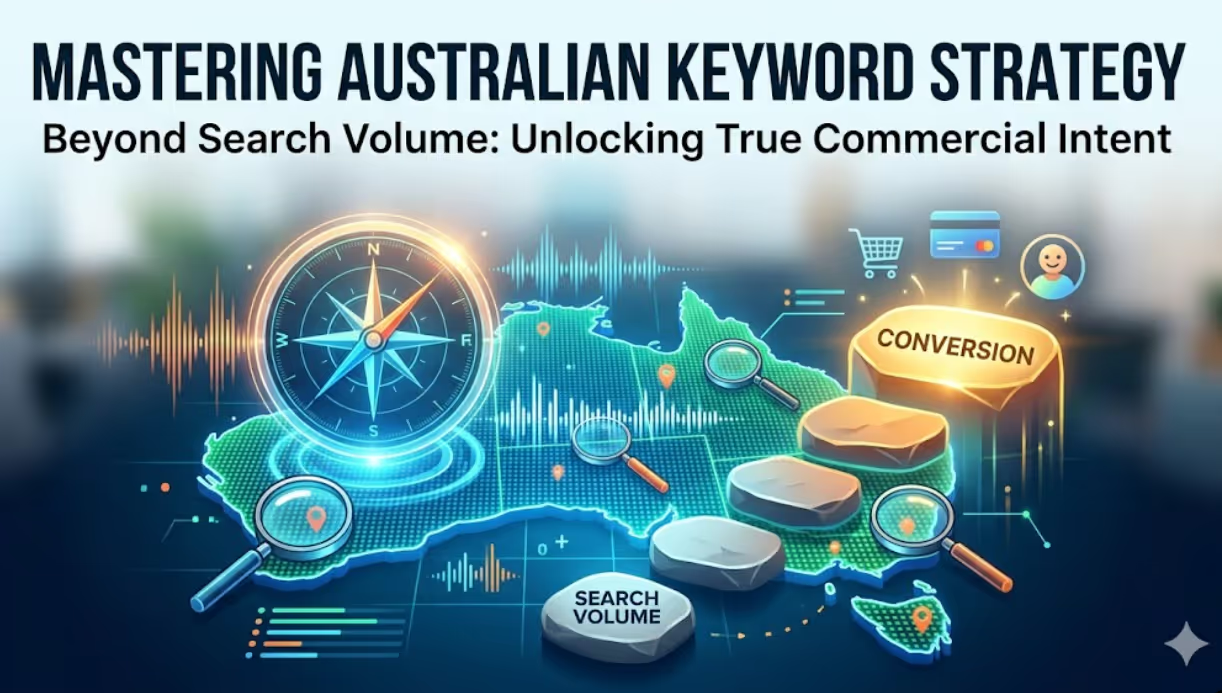
Keyword Research in 2026: Beyond Search Volume for Australian Market Intent
Search volume is the metric that most Australian marketing teams look at first when evaluating keywords, and the one that most misleads them when it becomes the dominant criterion for keyword selection. A keyword with high monthly search volume that converts nobody is a traffic acquisition problem dressed up as an SEO opportunity. A keyword with modest search volume and strong commercial intent in the Australian market can represent more revenue potential than a term with high volume that attracts researchers, students, and international visitors with no intention of purchasing. The evolution of keyword research practice in 2026 reflects a broader shift in how search marketing is understood: the goal is not to rank for the terms with the highest volume available in a topic area. The goal is to rank for the terms that connect the brand to the specific people who will take a commercially valuable action after finding the content. This requires assessing keywords against a set of criteria that search volume alone cannot capture: intent classification, Australian market specificity, conversion pathway alignment, competitive feasibility, and the seasonal and trend patterns that determine when a keyword opportunity is at its peak commercial value. This article covers each of these dimensions in the depth they require for Australian marketing teams building keyword strategies in 2026.
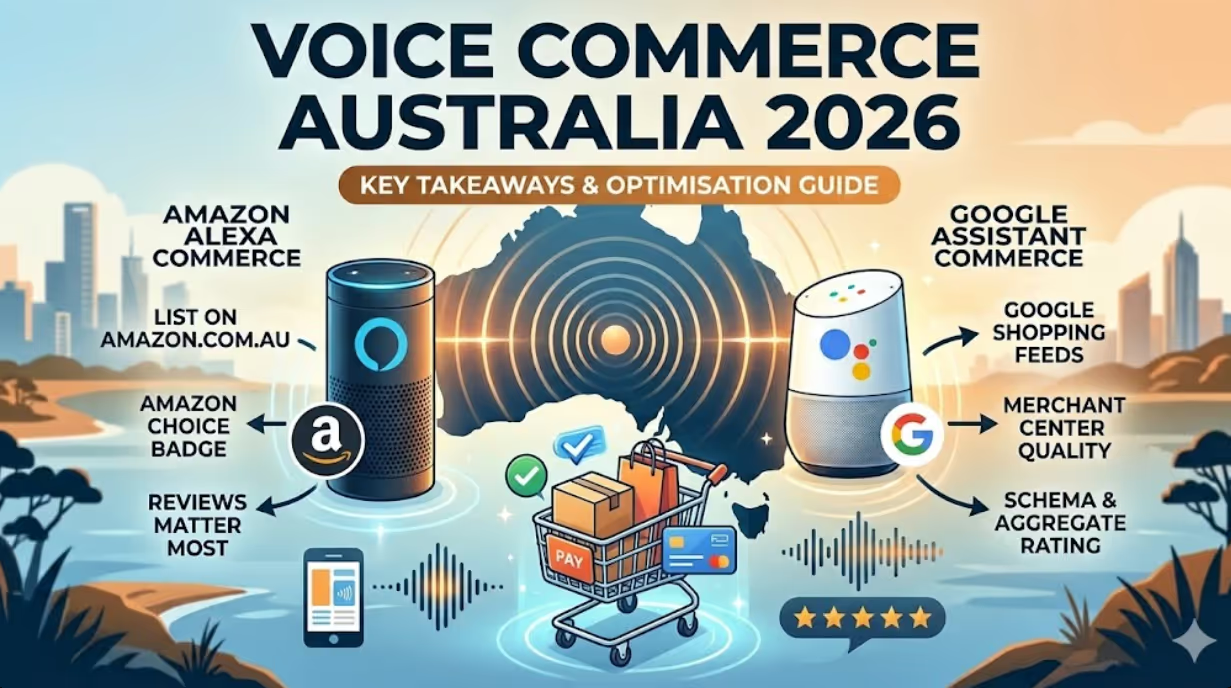
Voice Commerce Optimisation for Better Online Sales | Maven Marketing Co.
Voice commerce is not yet the dominant channel in Australian ecommerce, but it is no longer the speculative speculative topic it was five years ago. The penetration of smart speakers in Australian households has reached a level where a meaningful and growing segment of online shoppers uses voice commands to research products, add items to shopping lists, reorder previously purchased products, and in some categories complete purchases without touching a screen. The infrastructure that powers voice commerce, particularly Amazon's Alexa shopping platform and Google's Shopping integration with Google Assistant, has also matured to the point where Australian ecommerce businesses can take deliberate steps to improve their visibility and conversion performance in purchase journeys driven by voice. The optimisation required for voice commerce is not entirely separate from the work Australian ecommerce teams are already doing for search visibility and product feed management. But voice queries are structurally different from typed queries in ways that require targeted adaptations to product naming, structured data, review management, and fulfilment configuration. This article covers the practical optimisation steps available to Australian ecommerce businesses that want to capture a growing share of purchase intent driven by voice in 2026.
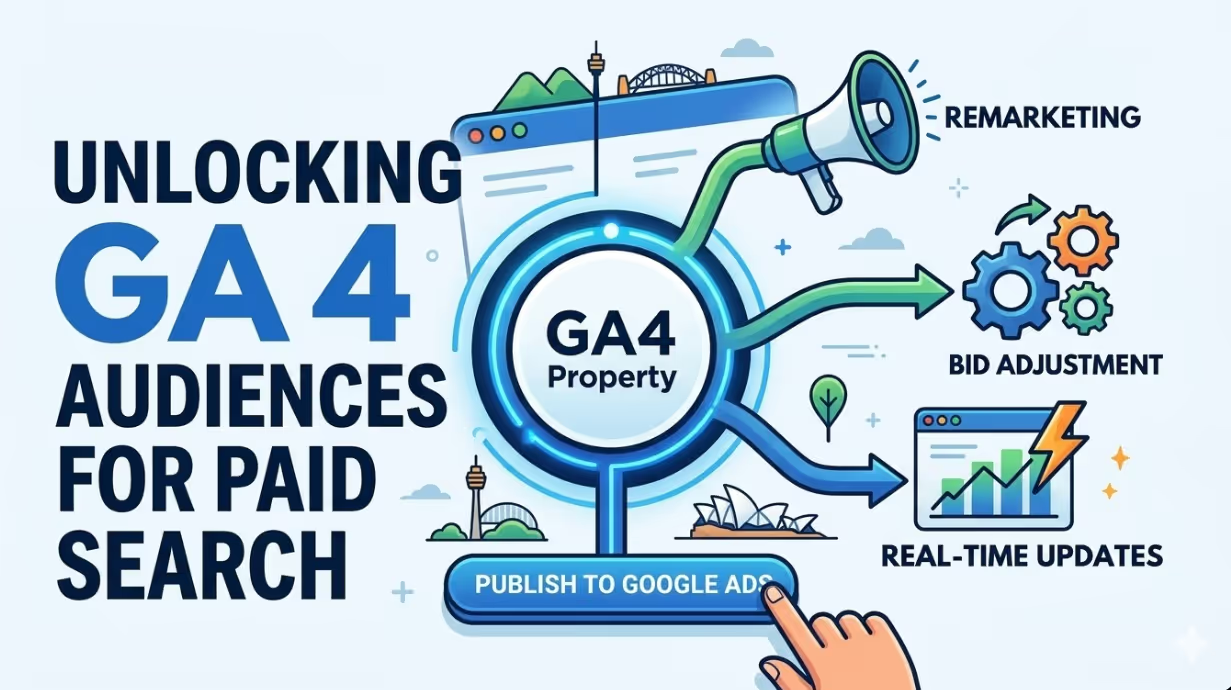
Google Analytics 4 Audiences: Building Predictive Segments
Google Analytics 4's audience builder is one of the most underused capabilities in the platform, and Australian marketing teams that have invested in GA4 implementation but are not building audiences are leaving the most commercially actionable output of that investment sitting idle. GA4 audiences are not simply lists of users that match a set of static conditions. They are dynamic segments that update continuously as user behaviour changes, can incorporate predictive signals from Google's machine learning models, and can be published directly to Google Ads for remarketing without requiring a separate audience configuration in the advertising platform. The three audience types that matter most for Australian ecommerce and service businesses are behavioural audiences built from event sequences, demographic and interest audiences informed by Google's observed user signals, and predictive audiences that use machine learning to identify users likely to purchase, likely to churn, or likely to generate high revenue in the coming days. Used correctly, these audience types allow Australian marketing teams to direct their paid media investment toward the segments most likely to convert, suppress spending on users who are unlikely to respond, and build remarketing programmes that reflect the actual commercial lifecycle of their customers rather than simple page visit recency.

Enhanced Ecommerce vs GA4: Migration and Implementation Guide
Universal Analytics with Enhanced Ecommerce tracking has been sunset, and every Australian ecommerce business still relying on historical UA data comparisons or attempting to replicate UA reporting structures in GA4 is working with a measurement framework that no longer reflects how Google Analytics actually works. GA4 is not a new version of Universal Analytics. It is a fundamentally different measurement model, and the ecommerce tracking implementation it requires is structurally different from Enhanced Ecommerce in ways that make a direct migration impossible. The Enhanced Ecommerce data layer that fed UA cannot be reused for GA4. The event names are different. The parameter structures are different. The product array format is different. The impression and promotion tracking model is different. Australian development teams that were briefed to "migrate UA Enhanced Ecommerce to GA4" and implemented GA4 by adding a new tag over the existing data layer without rebuilding the underlying event structure have accounts that appear to be tracking ecommerce but are missing significant portions of the purchase funnel data that the business needs to optimise. This article covers the complete GA4 ecommerce implementation for Australian ecommerce businesses, from the data layer architecture through to the reporting setup that makes the GA4 ecommerce data actionable.

Email Template Design: Branded Newsletters That Work Across Email Clients
Designing a branded email newsletter is a fundamentally different challenge from designing a web page or a social media post, and the businesses that underestimate this difference pay for it every time a subscriber opens their email in Microsoft Outlook and sees a broken layout, missing images, or a design that looks nothing like the polished template it appeared to be in the design preview. The email rendering environment is genuinely fragmented in a way that no other digital channel is: a single email must render acceptably across dozens of email clients and applications that each interpret HTML and CSS differently, with Outlook in particular using a rendering engine based on Microsoft Word rather than a web browser, producing predictable failures in layout, font rendering, and background image support for any designer who approaches email HTML as if it were a web page. A email template that is well designed accounts for these differences from the first line of code, using a set of proven structural and styling patterns that produce consistent results across Gmail, Apple Mail, Outlook, Yahoo, and the mobile clients that account for a large and growing proportion of Australian email opens. This article explains the design and development principles that produce branded email newsletters that work reliably across every major email client, and identifies the specific failure modes that most commonly affect Australian business email programmes.

Call-Only Campaigns for Services: Phone Lead Generation Strategy
For many Australian service businesses, a phone call is more commercially valuable than a form submission. A caller has already committed to immediate, direct communication with the business, has typically made the decision to engage a provider rather than continuing to research options, and converts to a booked job or signed agreement at a significantly higher rate than a website visitor who fills out a contact form and waits for a response. Google Ads call-only campaigns are designed specifically for this conversion pathway. They are mobile search ads that display a phone number and a call button instead of a website link, so that when a searcher taps the ad they are connected immediately to the business rather than being directed to a landing page. For Australian trade services, professional services, healthcare providers, legal firms, real estate agents, and any service category where the sales process begins with a conversation, call-only campaigns deserve dedicated budget and careful management alongside or instead of standard text campaigns directed at website leads. This article covers the full setup, targeting, bidding, and tracking strategy for call-only campaigns in the Australian market in 2026.
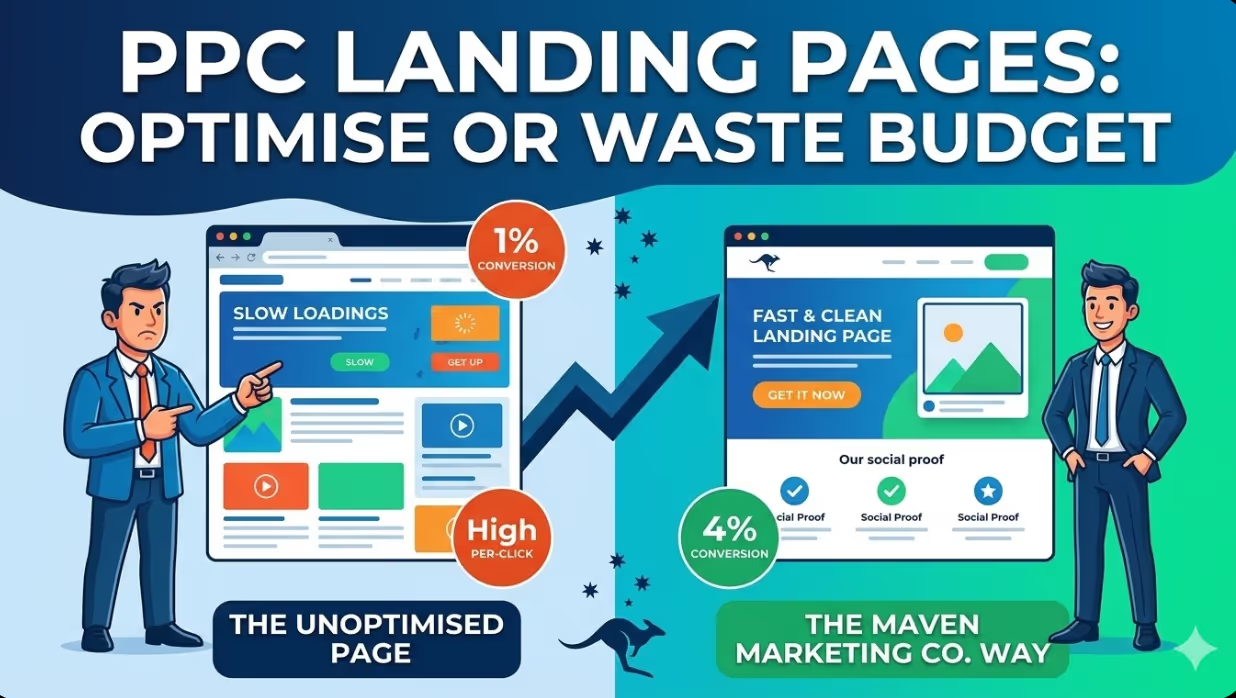
PPC Landing Page Requirements: What We Need from Clients for Conversion Success
The most common preventable source of wasted PPC budget in Australian Google Ads accounts is not poor keyword selection, incorrect bidding, or insufficient negative keyword management. It is sending paid traffic to landing pages that are structurally incapable of converting it. A Google Ads campaign managed with precision and expertise cannot overcome a landing page that loads in eight seconds, presents a generic homepage rather than a page specific to the ad's promise, has no visible phone number, requires visitors to navigate through three pages to find a contact form, or places its only call to action below the fold of content that most visitors will not scroll through. When Maven Marketing Co takes on a new PPC client, we conduct a landing page assessment before the first dollar of paid traffic is directed anywhere. The assessment identifies pages that are ready to receive paid traffic, pages that need targeted improvements before activation, and pages that require a landing page built specifically for the campaign to be created before the campaign can be expected to perform at the standard the client requires. This article explains what we look for in that assessment, why each element matters for conversion performance, and what Australian businesses should prepare before briefing a PPC agency on a new paid search campaign.

Website Lead Generation Optimisation: Form Placement and CTA Strategy
Most Australian business websites have a contact form somewhere on a contact page and a button in the navigation that says "Contact Us." This is not a lead generation strategy. It is a passive facility for visitors who have already made the decision to reach out, and it produces enquiries at a rate that reflects how few visitors choose to make contact without prompting without any encouragement or direction from the site itself. A website that is genuinely optimised for lead generation treats every page as a conversion opportunity, makes the act of enquiring as frictionless as possible regardless of where a visitor is in the site, and designs its calls to action to match the intent and knowledge level of the visitor at each stage of their journey through the content. The gap in enquiry volume between a passively constructed website and one built with deliberate lead generation infrastructure is consistently significant for Australian service businesses, and the optimisation required to close that gap is primarily a matter of structure, placement, and message rather than design budget or platform. This article covers the principles and specific tactics that produce the most meaningful improvements in website lead generation performance for Australian businesses in 2026.

Mobile Responsive Testing: 12 Devices We Check Before Site Launch
Responsive design tools that run in the browser, including Chrome DevTools device emulation and every online viewport preview service, are useful for catching obvious layout problems during development but they are not a substitute for testing on actual hardware. The visual rendering, touch event handling, font smoothing, scroll behaviour, video playback, form input behaviour, and performance characteristics of a real device running a real operating system with real browser software produce a different result from what even the most accurate emulator can replicate. Australian websites that skip device testing before launch discover the discrepancies after they go live, usually through user complaints, analytics data showing high bounce rates on specific device and browser combinations, or accessibility reports identifying interaction failures that emulation did not surface. The twelve devices in Maven Marketing Co's testing set used before launch are selected to represent the range of operating systems, screen densities, browser engines, and input methods that Australian website visitors are most likely to be using in 2026. Each device tests something different, and a site that passes on all twelve has been validated against a realistic cross section of the Australian audience it will serve. This article explains which devices are in the set, what each one is specifically testing for, and what the most common failures are at each device category.

Google Analytics 4 Measurement Protocol: Server-Side Event Tracking
The JavaScript tag that powers standard Google Analytics 4 tracking has a weakness that is well documented: it runs in the browser, and anything that prevents the browser from executing it, whether that is an adblocker, a content security policy, tracking prevention built into the browser, or the simple absence of a browser in transactions between servers, creates a gap in the data. For Australian businesses whose revenue depends on accurate conversion tracking, that gap has real commercial consequences. Orders processed in the back end without a corresponding browser session, offline conversions that happen after the digital journey ends, events from mobile applications where web tags do not apply, and transactions that occur in audience segments with heavy adblocker use all represent data that the standard JavaScript implementation cannot capture. GA4's Measurement Protocol is the solution to this problem. It is an HTTP API that allows any system with the ability to make an HTTP request to send events directly to Google Analytics, bypassing the browser layer entirely. Tracking via the Measurement Protocol from the server restores the data completeness that browser constraints erode and enables event types that the JavaScript SDK cannot physically capture. This article covers the implementation of GA4 Measurement Protocol tracking for Australian development teams, from the authentication requirements and request structure through to the event parameters and debugging tools needed to validate the implementation.

BigQuery for Marketing: SQL Queries for Google Analytics 4 Data
The standard Google Analytics 4 interface is a capable reporting tool for the majority of marketing analysis tasks, and for most Australian businesses it covers the dimensions, metrics, and exploration tools needed for ongoing performance monitoring. But there is a category of marketing analysis that the interface cannot perform: analysis that requires joining GA4 data to external data sources, constructing custom attribution models across the raw event stream, building cohort analyses at the user level, or querying at the granularity of individual events and sessions rather than the aggregated summaries the interface presents. This is where BigQuery becomes essential. Google Analytics 4's native BigQuery export, available to all GA4 properties at no additional cost beyond BigQuery storage and query fees, sends the raw event data from every session to a BigQuery dataset where it can be queried with SQL, joined to CRM data, revenue data, and advertising data, and used to build analyses that the standard interface cannot construct. For Australian marketing teams with access to a SQL-capable analyst, the BigQuery export transforms GA4 from a reporting tool into a full analytical data warehouse. This article covers the foundational query patterns for marketing analysis on GA4 BigQuery data, with practical SQL that Australian teams can adapt for their own datasets.

SQL Query Optimisation: Database Performance for High-Traffic Sites
Database performance is the hidden variable in most Australian website performance problems. When a page loads slowly, the investigation tends to start with assets on the front end, server configuration, and caching layers, and these are legitimate places to look. But for sites generating substantial query loads through activity generated by users, ecommerce catalogues, content management systems, or dynamic search functionality, the database layer is frequently where the most severe and most persistent performance bottlenecks live. A page that makes twelve database queries to render, each taking 200 milliseconds because they lack appropriate indexes or contain inefficient join structures, will be slow regardless of how well the assets on the front end are optimised, how aggressively the CDN is configured, or how much RAM the server has. The good news is that SQL query optimisation consistently delivers some of the largest page load time improvements available in web performance work, because the gains from a single poorly optimised query can be dramatic: a query that takes 800 milliseconds without an index can often be reduced to under five milliseconds with one. This article covers the core SQL query optimisation techniques that produce the most significant performance improvements for Australian websites with high traffic, in the sequence a database performance investigation should follow.

Google Ads Bid Strategy Selection: Matching Automation to Business Goals
The selection of a bid strategy in Google Ads is one of the most consequential decisions in paid search management, and one of the least systematically made by Australian PPC practitioners. Most accounts arrive at their current bid strategy through a combination of platform recommendations, historical precedent, and the path of least resistance rather than through a deliberate assessment of what the campaign's commercial goal requires and whether the available conversion data can support the level of automation being applied. The result is a common and costly mismatch: accounts running target ROAS strategies with insufficient conversion volume for the algorithm to model accurately, campaigns on maximise clicks strategies that have long since accumulated enough data to benefit from conversion optimisation, and Performance Max campaigns set to target CPA objectives when the actual commercial goal is to maximise profitable revenue rather than minimise cost per lead. Each of these mismatches costs money in a way that is difficult to see in the standard metrics because the campaign appears to be optimising, just not toward the right objective. This article provides the framework for matching bid strategy to commercial goal, conversion data availability, and campaign maturity across the full range of Google Ads bid strategies available to Australian advertisers in 2026.
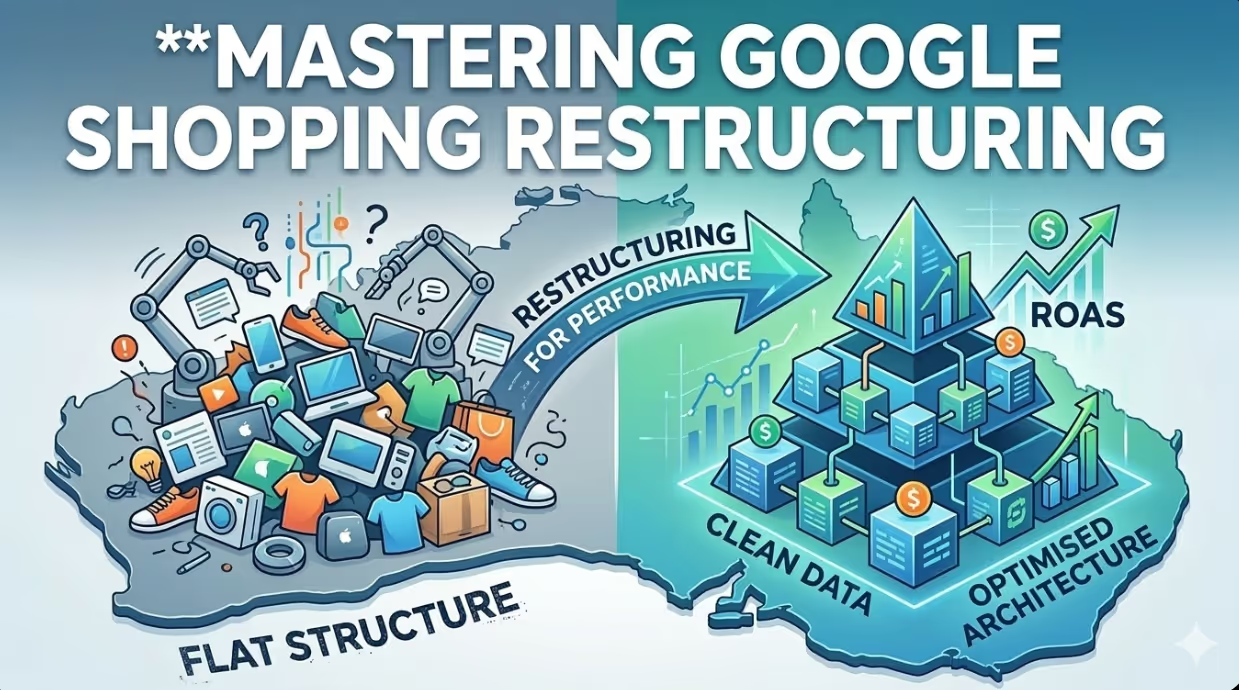
Shopping Campaign Restructuring: Fixing Underperforming Product Ads
A Google Shopping campaign that is generating spend but not producing the revenue its budget should support is one of the most frustrating problems in ecommerce PPC management, because the surface metrics often look acceptable while the underlying structure is working against the account's commercial objectives. Impressions are steady, rates of clicks through look reasonable, and conversions are occurring, but the cost per sale is too high, the ROAS is below target, and the categories or products that should be driving revenue are being outbid by the ones that should not be receiving the budget at all. In most cases, the problem is not the campaign settings. It is the structure beneath them: a product feed that has not been optimised to give Google the product attribute quality it needs to match against the right queries, a campaign organisation that allocates budget uniformly across products with fundamentally different margins and conversion rates, and a bidding strategy that has been given either too little data or the wrong objective to produce results the business actually needs. Restructuring a Shopping campaign is not primarily a settings exercise. It is a systematic diagnostic process that identifies the specific structural, feed, and bidding problems preventing the campaign from performing and addresses them in the sequence that produces the fastest and most durable improvement. This article covers that process in the detail required for Australian ecommerce businesses to execute it effectively.

Google Ads Account Structure: Campaign Architecture for Different Business Models
The architecture of a Google Ads account determines the quality of the data it produces, the precision with which the bidding algorithm can optimise, and the ease with which a manager can identify performance problems and act on them. An account where campaigns have been added incrementally without a governing structural logic, where ad groups contain mixed intent keywords, where budgets are shared in ways that allow poorly performing campaigns to absorb spend from stronger ones, and where conversion tracking is configured too broadly to produce clean attribution data is not just inefficient. It is actively misleading, generating performance metrics that look adequate in aggregate but obscure the specific sources of value and waste that a thoroughly structured account makes immediately visible. Google Ads account structure is not a discipline that suits all situations. The right architecture for an Australian ecommerce business selling hundreds of products across multiple categories is fundamentally different from the right architecture for a local service business generating enquiries across two or three service lines. Understanding the structural principles that apply to each major business model type, and applying them before adding campaigns rather than trying to restructure an account after the fact, is among the activities with the greatest leverage in PPC management. This article covers the campaign architecture principles and recommended structures for four distinct Australian business model types.
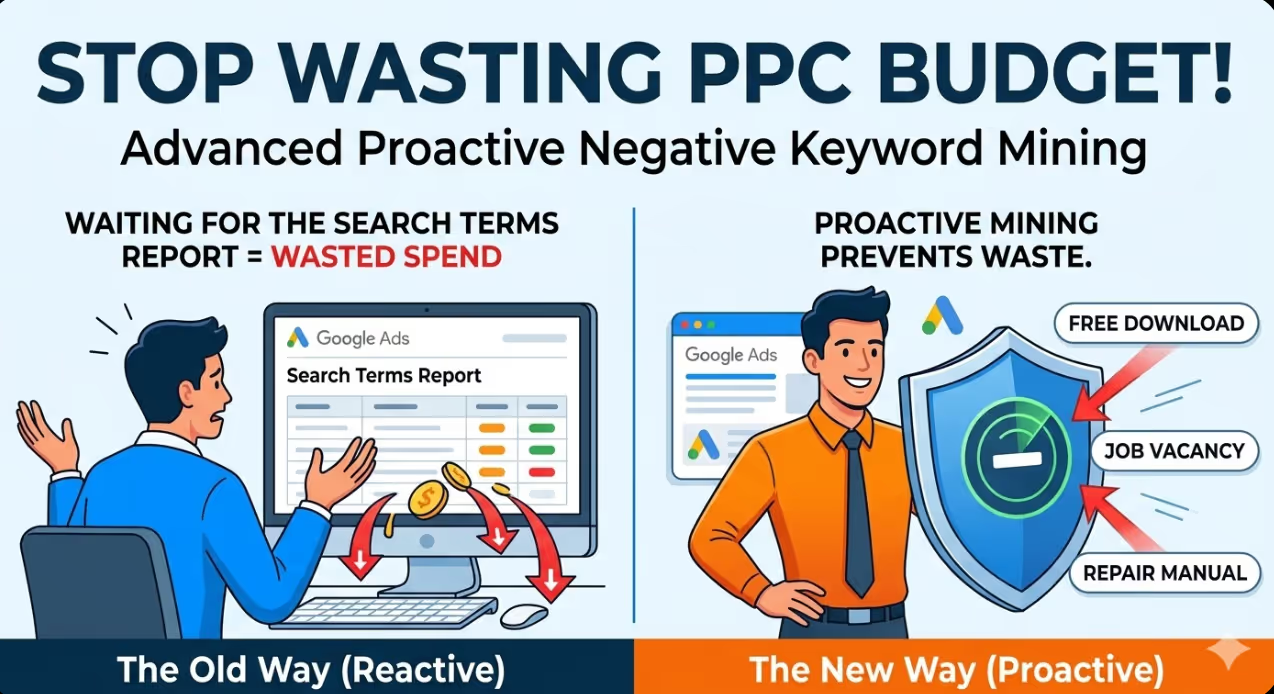
Google Ads Negative Keyword Mining: Advanced Techniques Beyond Search Terms Report
Most Australian PPC managers who actively manage negative keywords do so reactively: they open the Search Terms Report after spend has already been committed, identify queries that generated clicks without converting, and add them as negatives to prevent future waste. This reactive approach captures obvious problems after the damage is done, but it leaves the most significant sources of wasted spend untouched, because many of the queries that will drain budget from a campaign never appear prominently in the Search Terms Report until they have already accumulated meaningful spend. A proactive negative keyword strategy goes substantially further, mining for irrelevant query patterns before they enter the account through competitor analysis, industry terminology research, keyword expansion modelling, and a systematic analysis of the search intent landscape around every core keyword the account targets. The difference in wasted spend reduction between a reactive and a proactive approach to negative keyword management is significant in absolute dollar terms for most Australian PPC accounts, and the improvement in campaign efficiency that follows from eliminating irrelevant traffic compounds over time as the account's conversion signals become cleaner and the bidding algorithm is no longer optimising toward queries that were never commercially relevant. This article covers the full range of advanced negative keyword mining techniques that extend well beyond the Search Terms Report.

PPC Budget Allocation Framework: Distributing Spend Across Campaign Types
The question of how to distribute a PPC budget across campaign types is one that most Australian businesses treat as a secondary concern, something to be addressed once the campaigns are running and the data starts to accumulate. In practice, the initial budget allocation is among the most consequential decisions in the entire paid search programme, because it determines which campaign types receive enough budget to gather meaningful data, which are starved of the impression volume needed for the algorithm to optimise, and whether the overall account structure is oriented toward the commercial objectives it is supposed to serve. A Google Ads account where the budget is distributed based on intuition, convention, or the last recommendation made by an account manager rather than on a structured assessment of the funnel stage, conversion intent, and margin profile of each campaign type will consistently underperform one where the allocation reflects a deliberate strategic framework. This article provides that framework for Australian businesses managing PPC investment across Search, Shopping, Display, Performance Max, and remarketing campaigns, explaining the logic behind each allocation decision and the signals that should prompt a rebalance as the account matures.
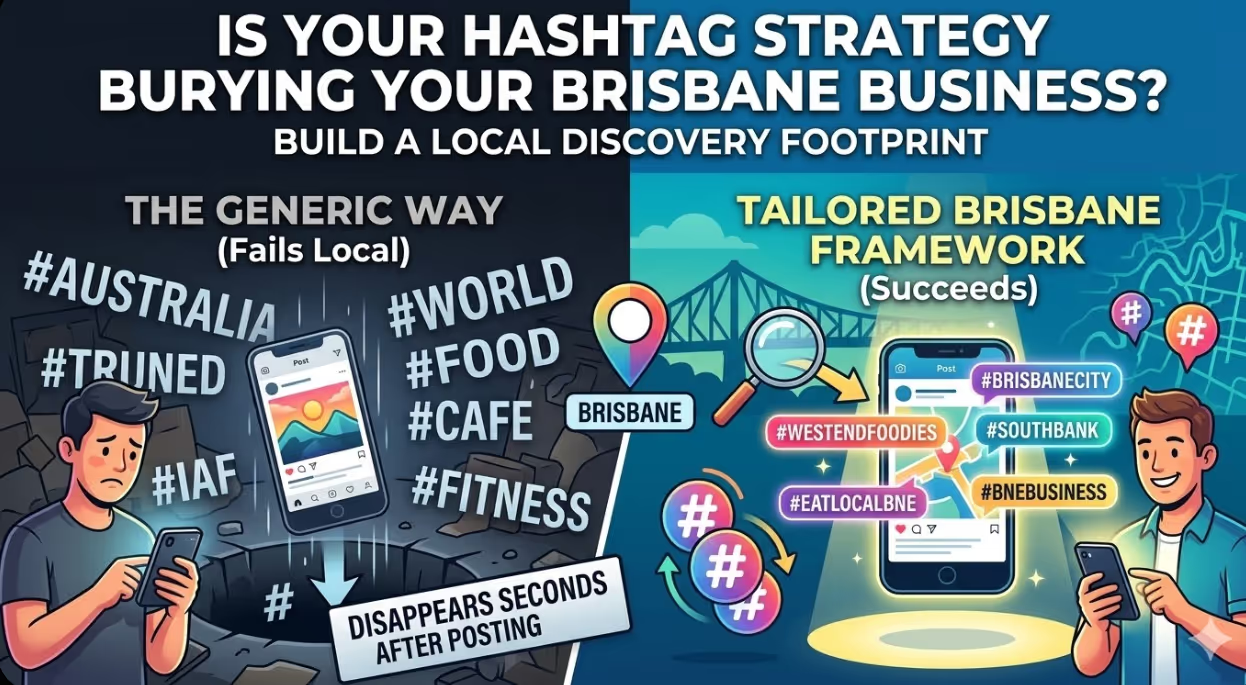
Hashtag Strategy Development: Research Backed Approach for Brisbane Audiences
Hashtag strategy is the element of social media content planning that receives the most generic advice and produces the most inconsistent results, because the approach that generates real discoverability for a Brisbane business is materially different from the approach that works for a national brand targeting a broad Australian audience, and both are different from the strategy relevant to an international creator producing content without a geographic anchor. Brisbane businesses that apply generic hashtag advice, filling their captions with the national hashtags with the highest volume or international hashtags in their category, consistently find that their content competes in pools so large that it disappears within seconds of publication, reaching nobody in their actual geographic market. The approach backed by research starts from the opposite direction: identifying the specific hashtags where Brisbane and Southeast Queensland audiences are genuinely active, layering in category and terms specific to each niche at the appropriate volume range for the account's size, and rotating the set intelligently to build a discovery footprint across multiple overlapping audience segments rather than repeating the same tags on every post. This article provides the full framework for developing a hashtag strategy tailored specifically to Brisbane audiences, from the initial research process through to the rotation logic and performance tracking that keeps the strategy producing results as the platform landscape evolves.
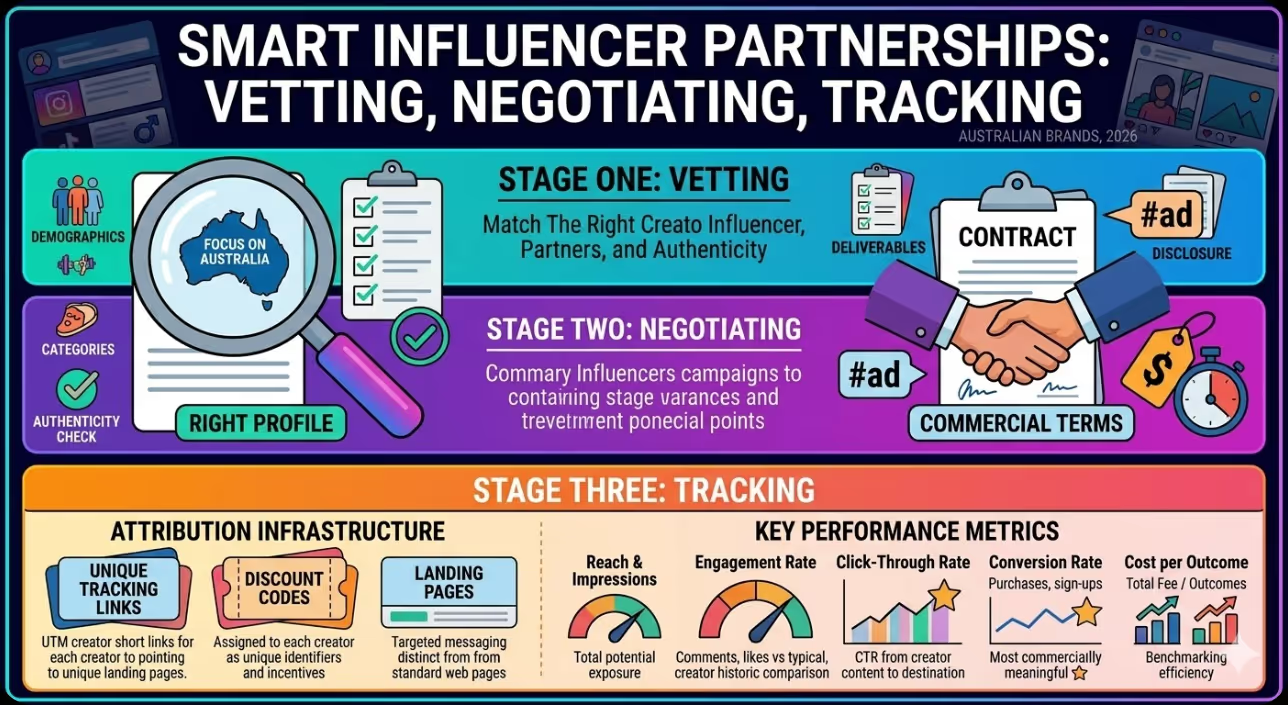
Influencer Partnership Management: Vetting, Negotiating, and Campaign Tracking
Influencer marketing is the most unevenly executed tactic in Australian digital marketing. At one end of the spectrum, brands are generating measurable returns from carefully selected creators whose audiences genuinely overlap with their target customer profile, with negotiated terms that align creator incentives with brand outcomes and tracking frameworks that connect the campaign activity to real commercial results. At the other end, brands are paying significant fees to creators whose follower counts look impressive but whose audiences are either unengaged, misaligned, or both, with no clear brief, no performance benchmarks, and no way to evaluate whether the campaign produced anything beyond a collection of posts with decent view counts. The difference between these two outcomes is not luck and it is not the size of the influencer budget. It is the rigour of the processes applied at each stage: vetting, negotiating, and tracking. Australian brands that treat influencer partnerships as a structured commercial relationship, governed by the same discipline they would apply to any other paid media investment, extract consistent value from the channel. Those that treat them as a creative relationship managed primarily on vibes and relationship warmth are the ones funding the cautionary tales. This article covers all three stages in the detail they require.

Instagram vs TikTok Resource Allocation: Platform Prioritisation Framework
The question of whether an Australian business should invest its social media resource primarily in Instagram, primarily in TikTok, or in some allocation across both is one that does not have a universal answer, but it does have a structured answer for any specific business once the right variables are assessed. Many Australian marketing teams make this decision based on where their personal familiarity lies, where their competitors are currently active, or where they have seen impressive results from another brand without systematically evaluating whether that brand's situation matches their own. The result is either a strong investment in the wrong platform for the audience being targeted, or a thin investment spread across both platforms that produces weak results on each. A platform prioritisation framework replaces those instincts with a set of specific questions whose answers, taken together, indicate which platform deserves the primary resource investment and what the secondary platform should look like if the budget and team capacity support maintaining both. This article provides that framework for Australian businesses evaluating their social media resource allocation for 2026 and beyond.

Instagram Stories Templates: Brand Specific Design Systems We Create
A professionally designed set of Instagram Stories templates is one of the most practical investments an Australian business can make in its social media presence, because it solves three problems simultaneously: it eliminates the time spent recreating designs from scratch each time a story is produced, it enforces the visual consistency that makes a brand recognisable across dozens of individual story frames published over weeks and months, and it raises the production standard to a level that a team member without graphic design training can maintain without the output looking inconsistent or amateur. The challenge most Australian businesses encounter when they attempt to create their own template systems is that they build templates for the content types they are already producing rather than for the full range of content their social media strategy requires, and they design them with insufficient flexibility to accommodate the variety of content that fills each category over time. A design system built correctly at the outset covers every content category in the brand's publishing plan, includes enough variation within each template to prevent the feed from looking repetitive, and is built with the platform constraints of Instagram Stories firmly in mind from the first design decision. This article explains exactly how Maven Marketing Co approaches Instagram Stories template design for Australian clients, from the initial brief through to a complete, design system that is ready for production.
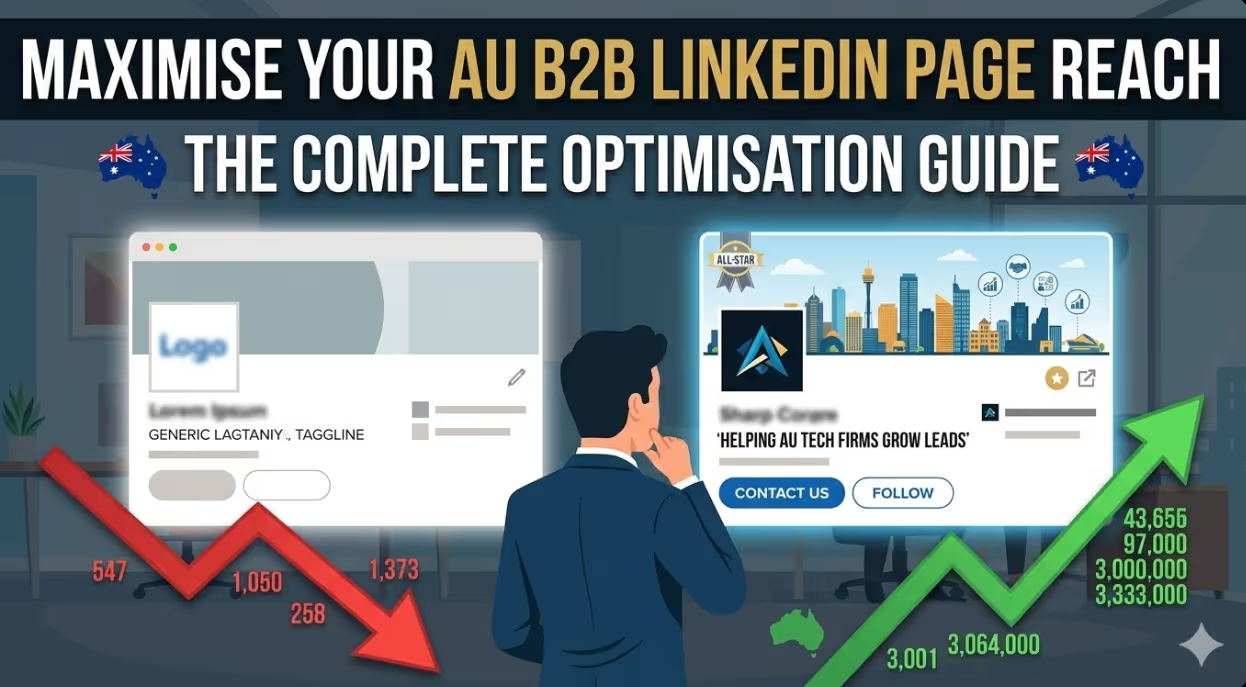
LinkedIn Company Page Optimisation: The 15 Elements We Perfect First
Most Australian businesses that use LinkedIn for B2B marketing are doing so from a Company Page that is doing less work than it could be. The page was set up when the company joined the platform, the basics were filled in at the time, and it has received incremental updates since but rarely a systematic review against the full set of elements that determine how the page performs in LinkedIn search, how it appears to visitors evaluating the brand, and how effectively it converts profile visitors into followers, website visitors, and qualified enquiries. A LinkedIn Company Page is not a passive directory listing. When it is thoroughly optimised, it functions as an active channel for organic discoverability on LinkedIn's own search platform, a first impression for prospects who visit the page before or instead of visiting the company website, and a foundation for content distribution that amplifies every article, update, and announcement the brand publishes on the platform. The fifteen elements covered in this article are those Maven Marketing Co addresses first on every new Australian client page, in the sequence that produces the fastest improvement in both discoverability and commercial impact.

Social Media Brand Voice for Consistent Marketing | Maven Marketing Co.
Every Australian business that operates across multiple social media platforms has a brand voice, whether it has been deliberately developed or not. The question is whether that voice is consistent, distinctive, and commercially effective, or whether it shifts from platform to platform, writer to writer, and month to month in ways that erode recognition and undermine the trust that consistent communication builds over time. A deliberately developed brand voice is one of the most durable marketing assets a business can create, because it operates across every piece of content the brand publishes, compounds in its effect as the audience grows more familiar with it, and creates a standard against which every piece of communication can be evaluated before it is published. The challenge for most Australian businesses is not understanding why a consistent brand voice matters. It is understanding how to develop one that is genuinely distinctive rather than generic, how to document it clearly enough that multiple team members can apply it consistently, and how to adapt it intelligently across platforms with different norms and audiences without losing the underlying character that makes it recognisable. This article addresses all three challenges in the sequence they need to be tackled.
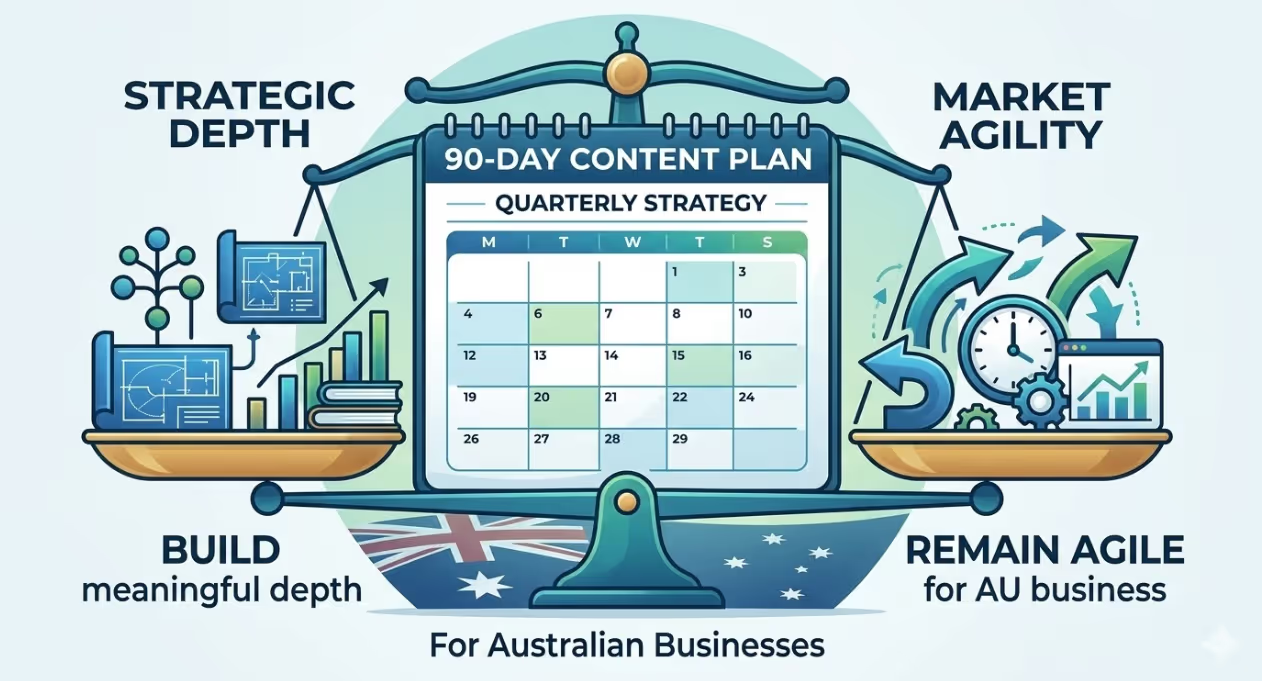
Content Calendar Development: Our 90-Day Planning Process for Australian Clients
Publishing blog content without a structured plan is one of the most common and most costly inefficiencies in Australian digital marketing. Businesses write articles when inspiration strikes, cover topics that feel relevant in the moment, and publish at irregular intervals that send inconsistent signals to both their audience and to Google. The result is a content library that has no coherent topical architecture, accumulates authority slowly because its articles reinforce no particular subject matter depth, and requires constant effort to sustain because there is no pipeline to draw from. A content calendar built on a 90-day planning horizon solves all of these problems simultaneously by establishing which topics will be covered, in what sequence, at what depth, and on what schedule, before a single article is written. The planning process that produces a genuinely strategic content calendar is not quick, but it is also not complicated. It requires keyword research, competitive analysis, a clear understanding of the business goals the content is meant to serve, and the discipline to commit to a schedule that treats content publishing as a business function rather than a marketing afterthought. This article explains exactly how Maven Marketing Co develops 90-day content calendars for Australian clients, from the first briefing conversation through to a fully populated editorial schedule.
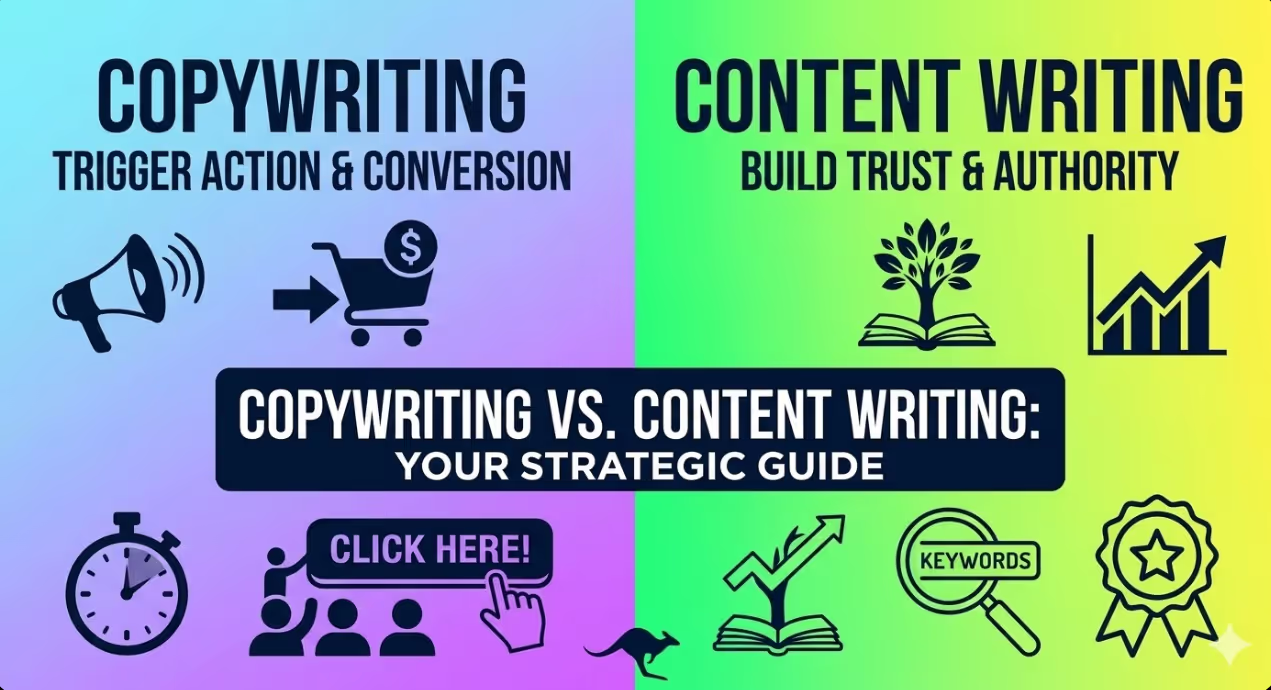
Copywriting vs Content Writing: Different Services for Different Goals
The terms copywriting and content writing are used interchangeably by a significant number of Australian businesses, agencies, and job advertisements, and the confusion costs money. Hiring a content writer to produce a sales page produces a thorough, readable piece that does not convert. Hiring a copywriter to produce a editorial programme spanning twelve months produces sharp, punchy articles that rank for nothing and build no topical authority. Both professionals are skilled at writing, but they are trained to solve different problems, optimised for different success metrics, and produce work that is valued against fundamentally different standards. Understanding the distinction is not an academic exercise in vocabulary. It is the practical knowledge that ensures Australian businesses brief the right person for each task, evaluate the output against the right criteria, and build a writing programme that serves both conversion and discoverability rather than sacrificing one for the other. This article draws the line clearly between the two disciplines, explains what each is best deployed for, and helps Australian marketing teams make better decisions about when they need which.
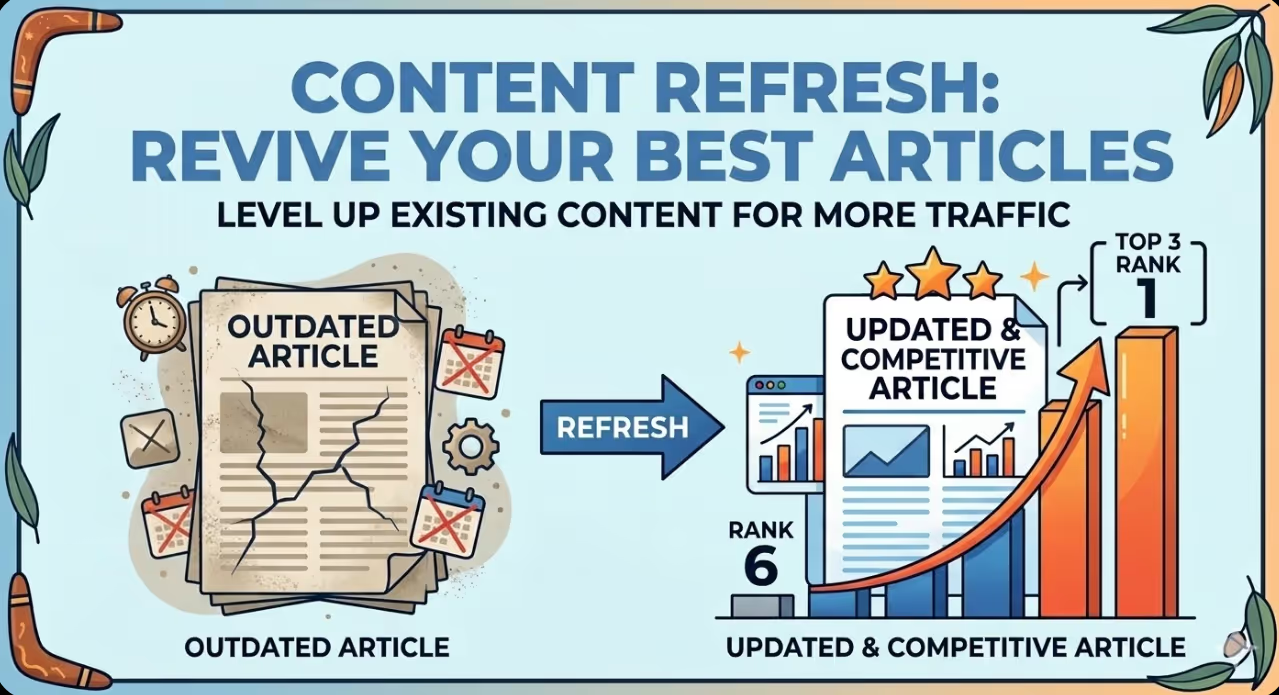
Content Refresh Services: Updating Old Posts for New Rankings
Most Australian businesses with an established blog are sitting on an underperforming content asset they have already paid to create. Articles published twelve, eighteen, or 24 months ago were written for a search landscape that has shifted, contain information that has become outdated, and are being outranked by newer, more thorough competitors who entered the same keyword space after the original articles were published. Creating brand new content to cover the same ground is expensive and unnecessary when the existing articles already have indexed history, existing backlinks, and residual authority that a new article would need months or years to accumulate. Content refresh services address this gap by systematically identifying which existing articles have the greatest ranking potential relative to their current performance, updating them to reflect current information and competitive standards, and relaunching them in a way that signals to Google that the content has been substantially improved. For Australian businesses looking for faster returns from their content investment, a disciplined content refresh programme often delivers stronger ranking improvements in a shorter timeframe than an equivalent investment in entirely new content.
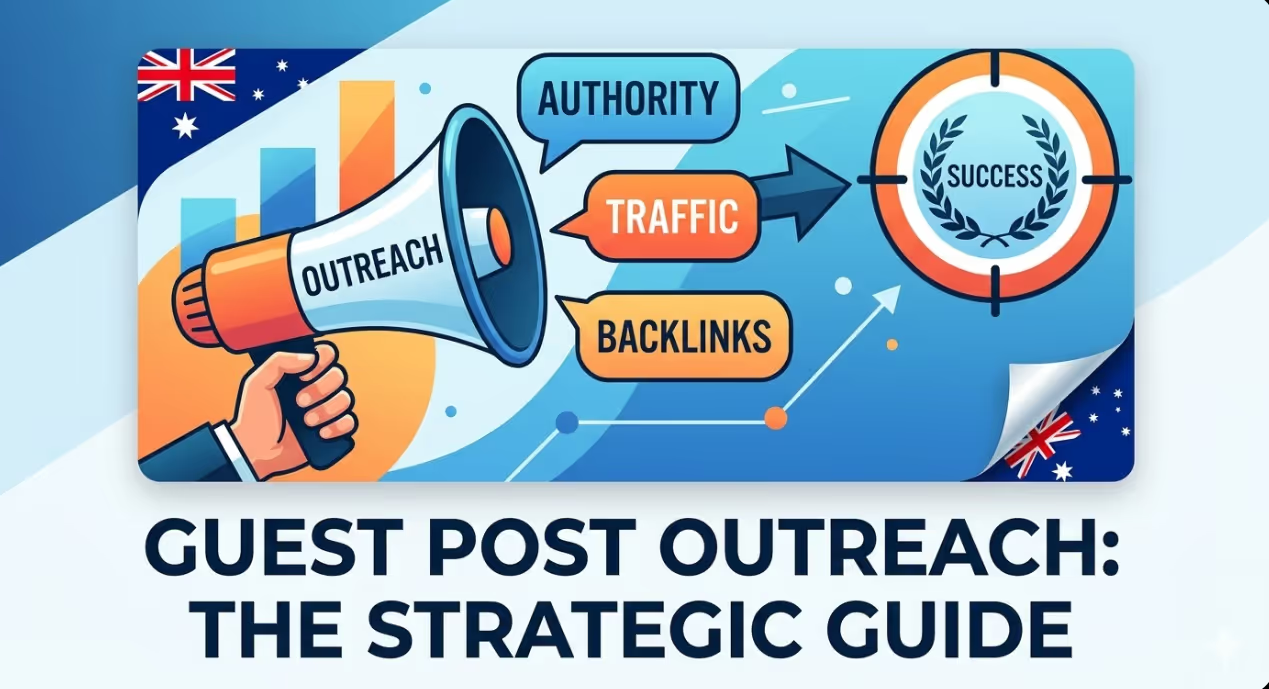
Guest Post Outreach: Link Building Through Editorial Placements
Building a strong backlink profile through editorial placements is one of the most durable and commercially valuable SEO investments an Australian business can make, and guest post outreach remains the most scalable method for doing it consistently. Done correctly, a guest post programme earns links from genuinely relevant, publications with genuine authority that send qualified referral traffic alongside the ranking signals, builds relationships with editors and publishers in the industry, and positions the brand as a credible voice in its field. Done poorly, it produces a folder of rejection emails, links on sites of low quality that Google discounts or penalises, and a reputation among editors as another brand sending generic pitches that demonstrate no familiarity with the publication. The difference between these two outcomes is almost entirely in the approach: the quality of target selection, the specificity and relevance of pitch angles, the standard of the content delivered, and the discipline to pursue placements on sites that add genuine value rather than simply accumulate link volume. This article sets out the guest post outreach process that produces real results for Australian businesses in 2026.
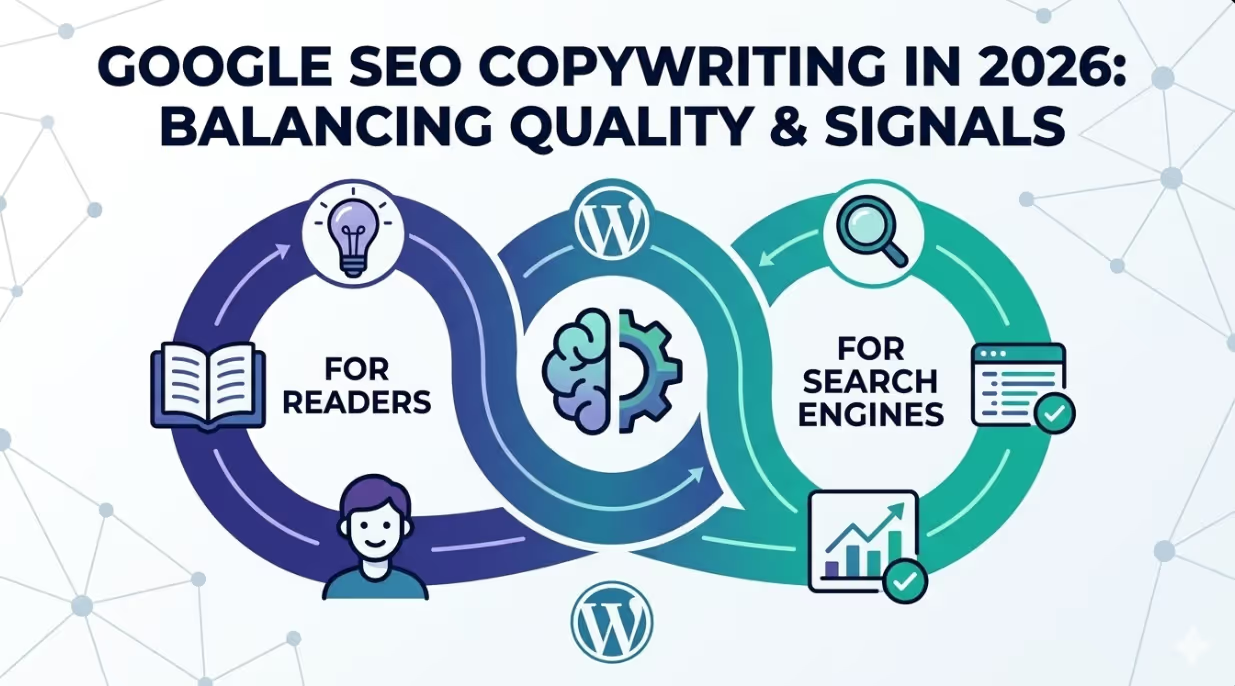
SEO Copywriting Process: Keyword Integration Without Sacrificing Readability
The tension between writing for search engines and writing for people is one of the most persistent misconceptions in digital marketing. Marketers who have watched their carefully crafted copy get rewritten to include a target keyword seventeen times in 800 words, or who have read optimised content that sounds like it was assembled from a list of terms rather than written by a human, understand instinctively that something has gone wrong. What has gone wrong is not that SEO and readability are genuinely in conflict. It is that keyword integration has been treated as a mechanical process rather than a craft one. Google's ranking systems have become sophisticated enough to reward content that satisfies the genuine information needs of searchers, and that standard is far closer to excellent writing than it is to keyword stuffing. For Australian marketing teams producing blog content, landing pages, service descriptions, and product copy, understanding how to integrate keywords in a way that serves both search visibility and reader experience is not a compromise between two competing goals. It is the same goal expressed at two different levels of analysis.
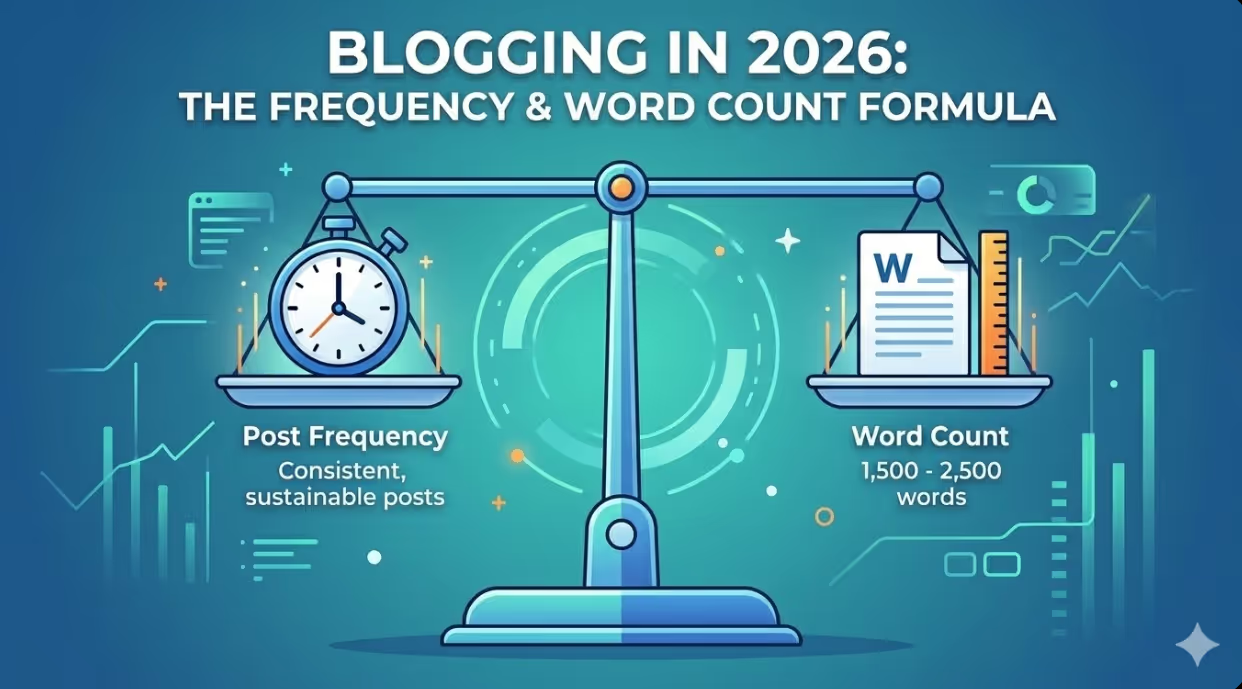
Blog Content Packages: Post Frequency and Word Count Options
Publishing blog content is one of the most durable and commercially effective strategies available to Australian businesses looking to grow their organic search presence, but the results it produces are directly tied to the decisions made around how much content to publish and how often. A business that publishes one exceptional article per month and a business that publishes four shallow articles per week are both blogging, but their SEO trajectories, their audience relationships, and their returns on the time and budget invested will be entirely different. Post frequency determines how quickly a site accumulates topical coverage and how reliably an audience can expect new content. Word count determines how thoroughly each piece of content covers its subject and how competitive it is likely to be in search results for the queries it targets. Neither variable is fixed for all businesses. The right combination depends on the industry, the competitive landscape, the resources available, and the specific commercial goals the content programme is meant to serve. This article explains the options, the tradeoffs, and the framework Australian businesses should use to choose a blog content package that fits their situation and their ambitions.
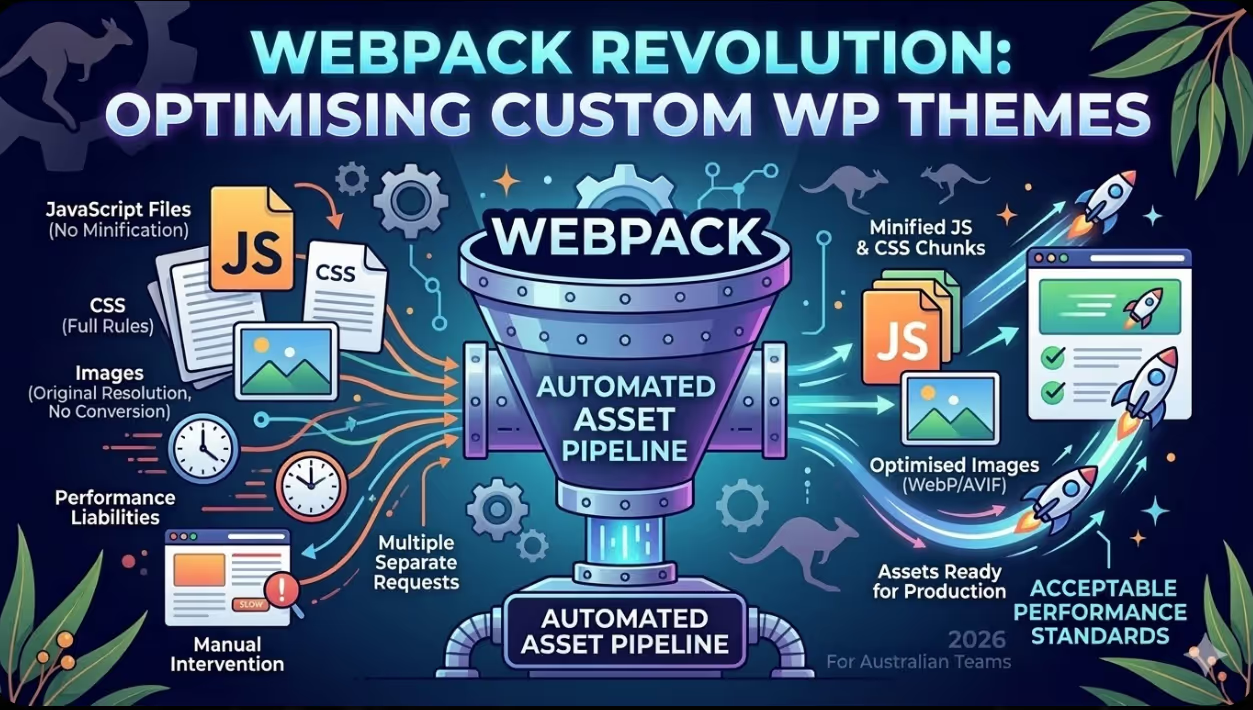
Webpack Build Optimisation for Custom WordPress Themes | Maven Marketing Co.
Custom WordPress themes built without a deliberate asset pipeline carry a familiar set of performance liabilities. JavaScript files are concatenated without minification, CSS is served in full regardless of which rules a given page actually needs, images are served at original resolution without format conversion, and the browser must make separate network requests for a collection of individual files that could be consolidated into a fraction of the total. Webpack is a module bundler that addresses all of these problems systematically, treating every file in a project as a module with dependencies, bundling and transforming assets according to a build configuration that the development team defines once and applies consistently on every build. For Australian development teams building and maintaining custom WordPress themes in 2026, understanding Webpack configuration is the difference between a theme that deploys assets ready for production automatically and one that requires manual intervention to reach acceptable performance standards. The investment in a solid Webpack configuration pays forward into every subsequent deployment, every new feature, and every performance audit the site undergoes.
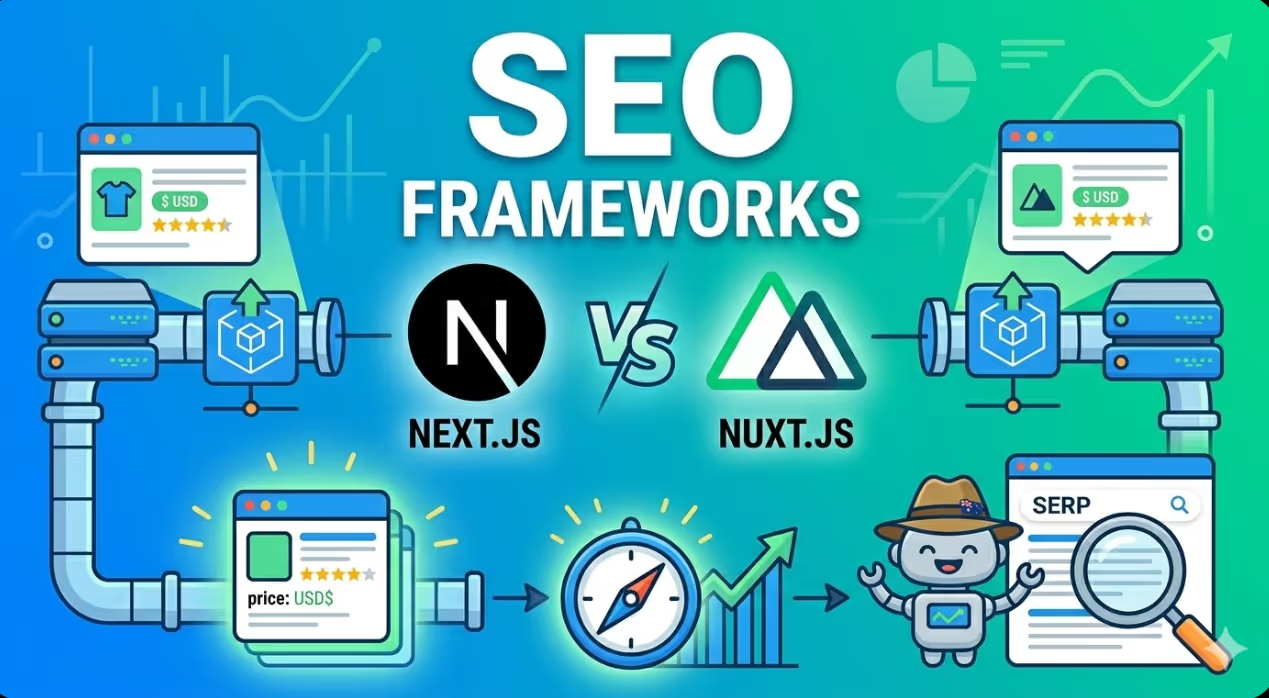
JavaScript Framework SEO: Next.js and Nuxt.js Optimisation Guide
JavaScript frameworks like Next.js and Nuxt.js have become the standard choice for Australian development teams building commercial web applications, marketing sites, and ecommerce experiences that require both engineering flexibility and strong user experience performance. The SEO implications of this choice are substantial and frequently misunderstood. A Next.js or Nuxt.js site configured correctly can outperform a traditionally rendered WordPress site on every search visibility dimension. The same site configured incorrectly, relying on rendering on the client side for content Googlebot cannot reliably process, missing structured metadata configuration, or serving different content to crawlers than to users, can rank poorly despite a technically sophisticated codebase. The difference between these two outcomes is not a choice of framework. It is a set of deliberate configuration decisions that Australian development and marketing teams need to make together, with a clear understanding of how rendering mode, metadata management, URL structure, and Core Web Vitals interact with search crawler behaviour and search ranking signals in 2026.
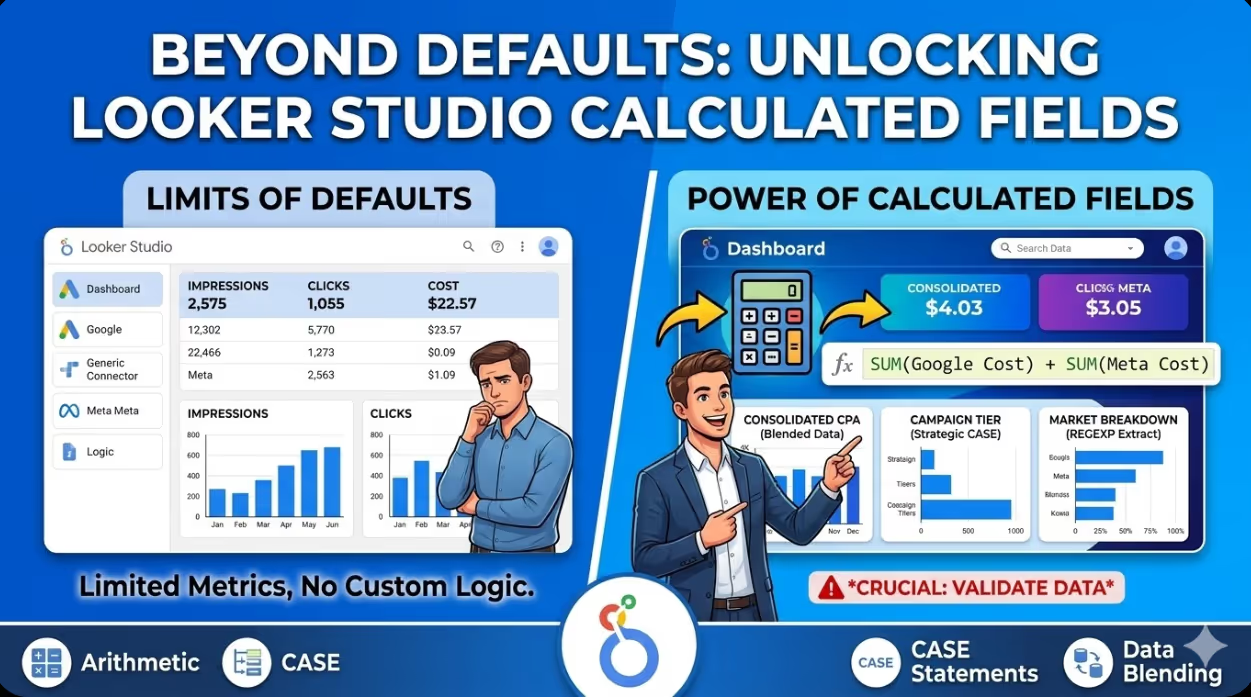
Looker Studio Calculated Fields: Advanced Metric Creation
Looker Studio connects to an impressive range of data sources and surfaces a large number of standard metrics and dimensions out of the box. For most Australian marketing teams running basic reporting, the default fields available through Google Ads, Google Analytics 4, Search Console, and social media connectors cover the majority of what they need to see. But default fields reflect the data model of the source platform, not the commercial logic of the business using them. A blended cost per acquisition that accounts for multiple ad platforms simultaneously, a revenue attribution model that weights channels according to the business's own judgement, a segment classification that groups campaigns by strategic intent rather than by the naming conventions a platform imposes, none of these exist as standard fields. Calculated fields are the mechanism that closes this gap, allowing Australian marketers to define metrics and dimensions using formulas that apply the business's own logic to the underlying data. Used well, calculated fields transform Looker Studio from a data visualisation layer into a genuine business intelligence tool that surfaces the specific insights the marketing team actually needs to make decisions.

Font Loading Optimisation: FOUT, FOIT and Performance Impact
Every time a browser loads a web page that uses a custom font, it faces a decision it has to make before it has the font file in its possession: show the text immediately in a fallback font and swap it out when the custom font arrives, or show nothing at all until the custom font is ready. Neither of those defaults is ideal. The first produces a visible flash of unstyled text as the font swaps in, potentially shifting the layout and jarring the user. The second produces invisible text for as long as the font takes to load, which on a slow connection can mean seconds of blank space where readable content should be. These two behaviours have names in web performance: FOUT, the Flash of Unstyled Text, and FOIT, the Flash of Invisible Text. Both are symptoms of a font loading strategy that has not been deliberately optimised, and both have measurable consequences for Core Web Vitals scores, user experience, and the overall impression a brand's website makes on visitors. For Australian websites using custom typography as part of their brand identity, understanding and controlling font loading behaviour is one of the most impactful and most frequently overlooked performance improvements available.

Redis Caching Implementation: Object Caching for WordPress Performance
WordPress is the most widely used content management system in the world, and its default approach to delivering page content involves querying the database for every piece of data it needs on every request. On a site with low traffic with a small dataset, this is manageable. On a commercial Australian website with significant traffic, a large product catalogue, complex page templates, or heavy use of plugins, the cumulative cost of those database queries becomes a measurable performance liability. Redis is a data store held in server memory that sits between WordPress and its database, storing the results of expensive queries so they do not need to be recalculated on every request. When implemented correctly, Redis object caching can reduce WordPress response times by 50 to 80 percent on pages requiring intensive database queries, lower server CPU usage significantly, and enable a site to handle substantially more concurrent traffic without additional infrastructure. For Australian businesses running WordPress at any meaningful scale, understanding Redis and knowing how to implement it is one of the most commercially valuable technical performance improvements available in 2026.

Mailchimp Transactional API: Mandrill Alternative Setup Guide
Navigating the shift from Mandrill to the Mailchimp Transactional API? This comprehensive guide walks you through the essential setup process, including critical domain authentication (SPF and DKIM) to ensure high deliverability. Discover why separating your marketing broadcasts from crucial system alerts, like password resets and order confirmations, is vital for protecting your sender reputation. We also explore top Mandrill alternatives to help you secure the perfect transactional email infrastructure for your business. Finally, learn how partnering with the experts at Maven Marketing Co can streamline this technical burden so your team can focus on growth.
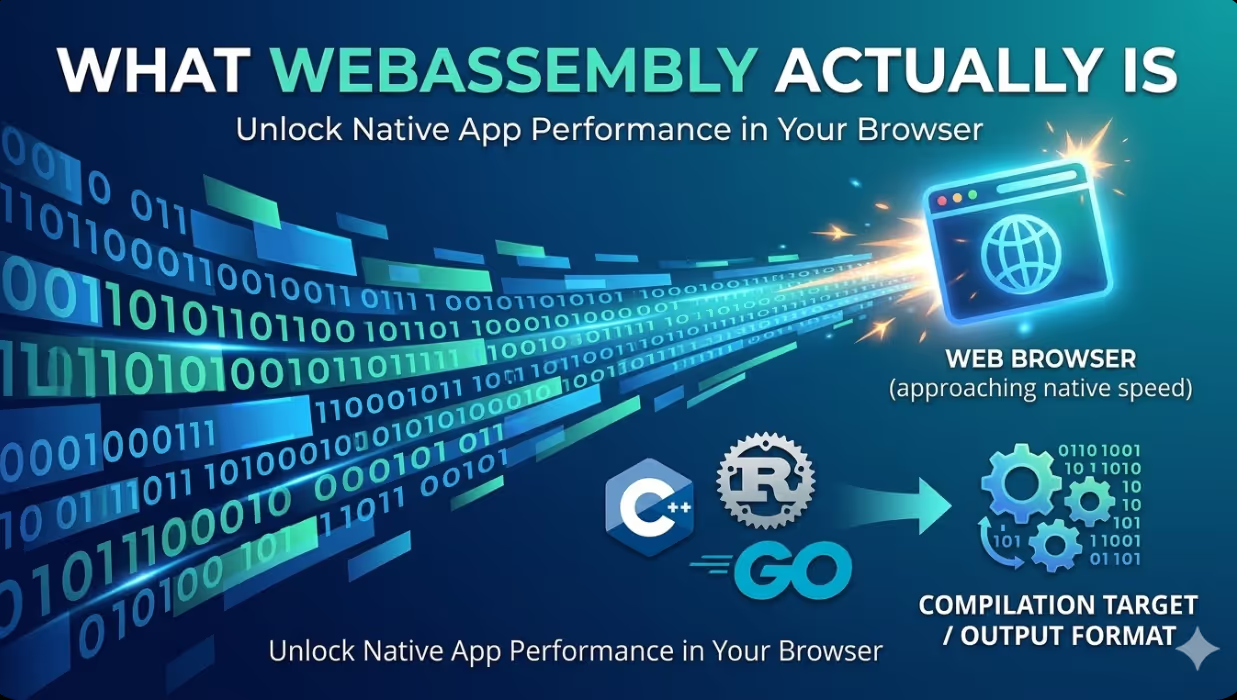
WebAssembly for Marketing: High Performance Web Applications
WebAssembly has been available in browsers since 2017, supported as a standard by all major browser vendors, and quietly deployed in some of the most web applications demanding the most from performance applications in the world. Most Australian marketers have never needed to think about it, and for most website use cases they still do not. But as the bar for interactive web experiences continues to rise and as marketing applications increasingly involve computation that JavaScript struggles to perform at the speeds users expect, WebAssembly is moving from a specialist engineering concern into territory that has direct implications for marketing outcomes. Interactive product configurators that run in real time, data visualisation running in the browser tools that process large datasets without a server round trip, personalisation engines that compute recommendations on the client side, and immersive experiences that would require a native application to perform smoothly on a desktop are all becoming practical web experiences because of what WebAssembly makes possible. This article explains what WebAssembly is in terms a marketing audience can act on, where it creates genuine commercial opportunities for Australian brands in 2026, and where its limitations mean simpler technologies are still the right choice.

Lazy Loading Strategy: Images, Videos and Iframes Performance
Most commercial Australian websites load every image, video, and embedded resource on a page the moment a user arrives, regardless of whether those resources are anywhere near what the user can currently see. A product page with forty images loads all forty on arrival. A blog post with an embedded YouTube video loads that video the moment the page opens. A landing page with six embedded maps loads all six immediately, even if the user never scrolls far enough to see them. This is wasteful by default, and the waste shows up directly in the metrics that matter: slower initial load times, heavier data transfer, worse Core Web Vitals scores, and a user experience that feels sluggish on mobile connections. Lazy loading is the technique that changes this default, deferring the loading of resources outside the current viewport until the user is actually approaching them. It is one of the most straightforward and highest return performance optimisations available for Australian websites with any significant amount of media content, and in 2026 the majority of it is achievable with native HTML attributes that require no JavaScript at all.
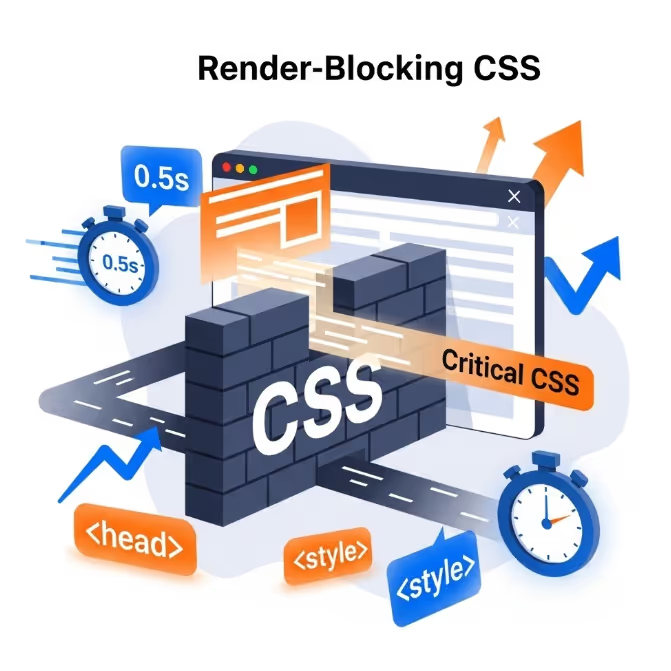
Critical CSS Extraction: Above the Fold Rendering Optimisation
Every time a browser loads a web page, it must download and process the page's CSS before it can render anything visible to the user. On most commercial Australian websites, that CSS file is a single large stylesheet containing styles for every page template, every component, and every breakpoint on the entire site. The browser has no way to know which of those styles are actually needed for the portion of the page the user can see right now, so it waits for the entire file to finish loading before rendering anything at all. This is what is meant by CSS that blocks rendering, and and it is one of the most significant and most fixable causes of poor First Contentful Paint scores across Australian commercial websites. Critical CSS extraction solves this by identifying exactly which styles are needed to render what is visible in the initial viewport, inlining those styles directly in the HTML document, and deferring the remainder of the stylesheet to load asynchronously after the visible content has been painted. The performance gains can be substantial and are directly measurable in Core Web Vitals reporting, PageSpeed Insights scores, and ultimately in the user experience metrics that influence both search rankings and conversion rates.

WebP and AVIF Image Formats for Faster Websites | Maven Marketing Co.
Page speed is no longer a technical nicety for Australian websites. It is a ranking signal, a conversion driver, and a direct measure of how seriously a business takes its users' time. Images consistently account for the majority of page weight on most commercial websites, and the format those images are delivered in has a direct and measurable impact on how quickly pages load, how well they score in Google's Core Web Vitals assessment, and how much bandwidth they consume for users on mobile connections. WebP and AVIF are the two formats that have fundamentally changed what is possible in web image delivery, offering file size reductions over traditional JPEG and PNG formats that translate into real and auditable improvements in site performance. In 2026, both formats enjoy broad browser support, mature tooling, and a clear implementation pathway that most Australian web development teams and sites managed through platforms can follow without significant technical overhead. This article covers what each format offers, how they compare, which Australian website types benefit most from switching, and how to implement them correctly regardless of the platform your site runs on.

Cloudflare Optimisation: CDN Configuration for Website Speed
Digital patience is extinct. You can invest tens of thousands of dollars into a visually breathtaking website, complete with compelling copy and a seamless user interface, but if that screen remains blank for more than three seconds, your potential customer is gone. Forever. In the hyper-competitive online arena, website speed is no longer just a technical metric; it is the foundational pillar of consumer trust and conversion optimisation. For Australian brands, battling the physical tyranny of distance to global servers makes this challenge even more acute. Implementing a robust Content Delivery Network (CDN) is no longer an optional luxury. This article provides a comprehensive masterclass on Cloudflare optimisation, unpacking the precise configurations required to slash latency, dominate Google’s Core Web Vitals, and transform your website into a frictionless, high-speed conversion engine.

Reddit Community Building: Long-Term Subreddit Strategy for Brands
For years, brands have viewed Reddit with a mixture of fascination and absolute terror. It is the wild west of the internet, a place where traditional marketing copy goes to die and corporate pandering is met with brutal honesty. Yet, behind this intimidating facade lies the most powerful community-building engine in the modern digital landscape. As consumers grow increasingly weary of polished, algorithmic feeds, they are retreating into the raw, unfiltered conversations found within subreddits. For Australian brands, establishing a long-term strategy on Reddit is no longer an optional digital experiment; it is a fundamental necessity for consumer trust and search engine relevance. This article unpacks the psychology of the Redditor, explores the profound impact of user-generated content on AI Overviews, and provides a comprehensive blueprint for transforming your brand from an intruding marketer into a valued community pillar.

TikTok Spark Ads: Boosting Organic Content Performance
Most paid social advertising starts with a brief, a creative team, a production budget, and a finished asset that may or may not land with its intended audience. TikTok Spark Ads take a different approach entirely. Instead of creating a new piece of advertising from scratch, Spark Ads allow you to put media budget behind content that has already been published and has already begun to earn genuine audience engagement. For Australian brands that have invested in building an organic TikTok presence, this is a meaningful shift in how paid amplification works. Rather than disrupting the feed with something that feels obviously like an ad, Spark Ads extend the reach of content that already feels native to the platform because it is. The engagement signals already present on the organic post carry through to the promoted version, the creator's or brand's profile link remains attached, and the ad appears in the feed in a format indistinguishable from standard content. For any Australian brand trying to extract more commercial value from the TikTok content it is already creating, Spark Ads are one of the most efficient and tools appropriate for the platform available.

Pinterest Idea Pins Strategy: Multi-Page Storytelling for Australian Brands
Pinterest is a platform that most Australian brands either ignore entirely or treat as a secondary afterthought to Instagram, and in doing so they are walking past an audience that is actively looking for ideas, products, and inspiration with a purchase intent that most social platforms cannot match. Pinterest Idea Pins, the platform's native sequential content format spanning multiple pages, take that environment rich with intent and give brands a storytelling canvas that goes well beyond a single image. Idea Pins allow you to create content across multiple pages combining video, image, text, and interactive elements in a format designed specifically for the discovery and inspiration stage of the customer journey. For Australian brands in food, travel, home, fashion, fitness, wellbeing, and a wide range of other categories, Idea Pins represent a genuinely underused opportunity to build a sustained presence with an audience whose mindset at the point of discovery is closer to active consideration than passive scrolling. This article covers how Idea Pins work, what makes them effective for Australian brand audiences, and how to build a content approach that earns the platform's algorithmic favour and drives genuine commercial outcomes.

Instagram Guides Creation: Curated Content for Australian Audiences
Instagram Guides are one of the least used features on a platform that most Australian brands already invest significant time and budget into, which makes them one of the more interesting content opportunities hiding in plain sight. While the rest of your industry is competing for attention in the standard feed and Stories, a thoroughly constructed Guide sits on your profile as a durable, structured content experience that visitors can find and read long after the moment of publication has passed. Guides allow you to curate your own posts, third party posts, products from your shopping catalogue, or actual real world places into a scrollable collection with your own commentary and framing, functioning somewhere between a blog post and a magazine editorial on Instagram's own infrastructure. For Australian brands looking to build genuine authority in their category, answer common customer questions at depth, or create content that earns attention beyond the standard 48-hour feed window, Guides offer a format that almost nobody in the local market is using with any strategic seriousness. This article covers the three types of Instagram Guides, how to build them in a way that serves your audience rather than just filling a tab on your profile, and how Australian brands across different industries can apply the format to their specific content goals.
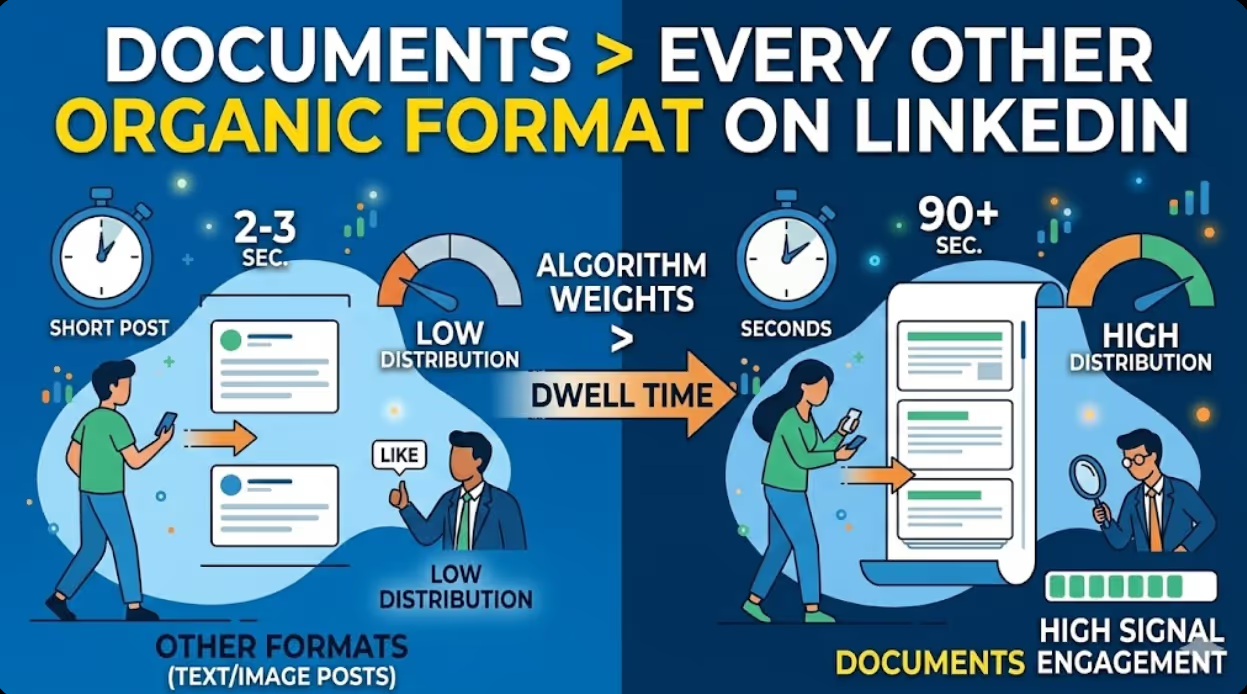
LinkedIn Document Posts: Long-Form Content Strategy for B2B
If there is one content format on LinkedIn that Australian B2B marketers are consistently underusing, it is the Document post. While most brands default to text updates, images, and the occasional video, Document posts, which are the native carousel and PDF format that users can scroll through directly in the feed, regularly outperform every other organic format for reach and dwell time on the platform. LinkedIn's algorithm appears to reward the extended engagement that documents generate, meaning thoroughly constructed document content can reach a significantly larger proportion of your followers and their networks than a standard post from the same account would. For B2B brands where a single meaningful conversation with the right decision maker can be worth thousands of dollars, a content format that reaches further, holds attention longer, and delivers substantive value in a format the audience can save and return to deserves far more strategic investment than most Australian businesses are currently giving it. This article covers how to build a LinkedIn Document content strategy that generates authority, attracts engagement from the right audiences, and creates a consistent pipeline of conversations that lead somewhere commercially useful.
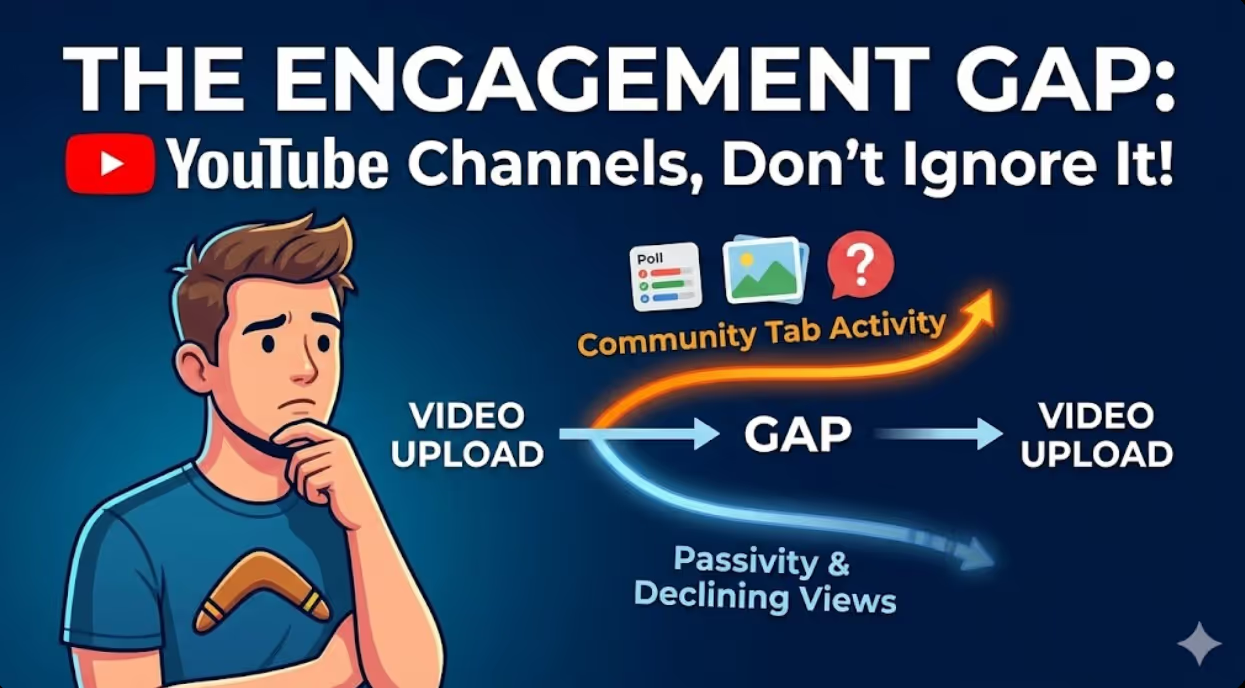
YouTube Community Tab Strategy to Grow Subscribers | Maven Marketing Co.
Most Australian brands and creators on YouTube think about their channel in terms of videos. The content calendar, the upload schedule, the thumbnail strategy, the SEO on each title and description. All of that matters. But in between those uploads, there is a significant gap in engagement where subscribers forget the channel exists, the algorithm loses confidence in the relationship between creator and audience, and the momentum built by a strong video gradually dissipates. The YouTube Community tab exists specifically to close that gap. It is a native social posting feature built directly into YouTube that allows channels to share text posts, images, polls, and previews with their subscribers outside the standard video format. For Australian brands and creators willing to invest a small amount of strategic effort into it, the Community tab is one of the most underutilised tools available for building audience loyalty, maintaining algorithmic visibility, and creating a genuine dialogue with subscribers that pure video content rarely achieves on its own.
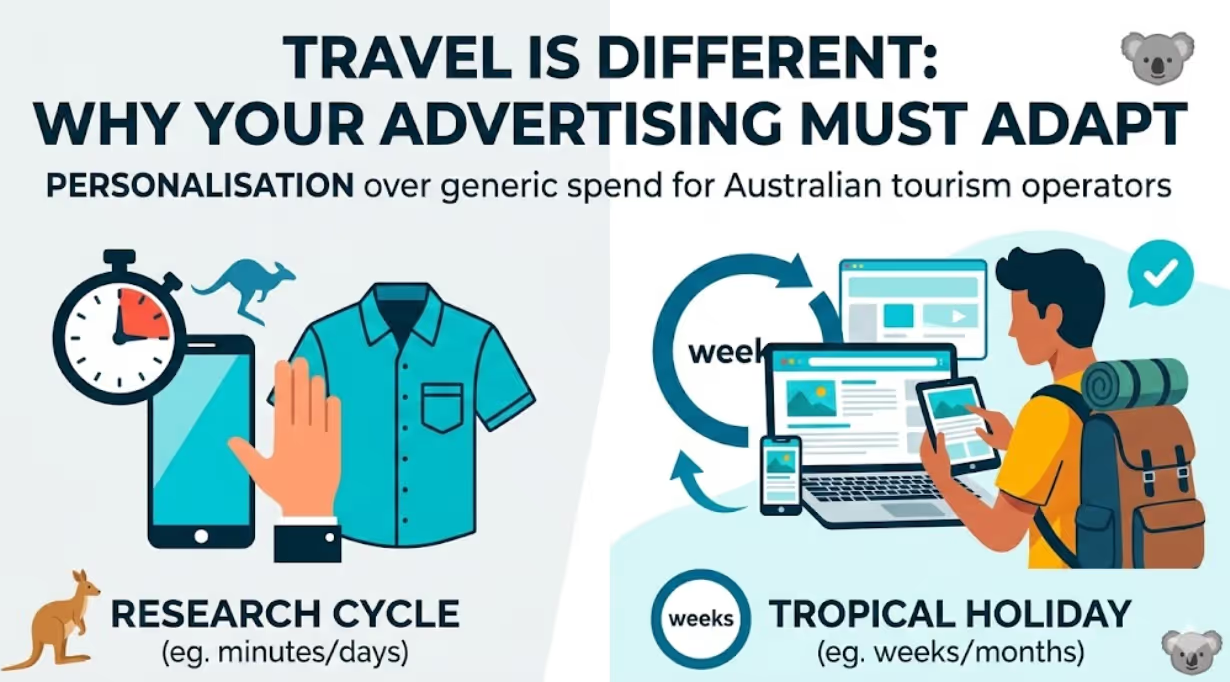
Facebook Dynamic Ads for Travel: Retargeting for Australian Tourism
Travel is one of the highest consideration purchase categories there is. Australians planning a trip typically spend weeks or months researching destinations, comparing accommodation options, checking flight prices, and reading reviews before committing to a booking. That extended research window creates a remarkable opportunity for tourism businesses willing to invest in staying visible and relevant throughout the decision process. Facebook Dynamic Ads for Travel are designed specifically for this purpose. They allow hotels, tour operators, airlines, and travel agencies to serve personalised ads to people who have already shown interest in specific products, whether that is a particular property, a departure route, or a destination package, dynamically matching the ad creative to what each individual traveller was actually browsing. For Australian tourism businesses competing in a market where international operators have significant advertising budgets, Dynamic Ads for Travel represent one of the most efficient ways to recover browsers who left without booking and move them toward conversion with relevance and timing that generic campaigns simply cannot replicate.

Instagram Shopping Catalog Setup: Product Feed Optimisation
Instagram Shopping has changed the way Australian consumers discover and buy products online, collapsing the distance between seeing something in a feed and completing a purchase to a matter of taps. But the quality of that experience, and the commercial results it generates for retailers, depends almost entirely on the quality of the product catalog sitting behind it. A poorly structured catalog with incomplete data, low resolution images, and mismatched pricing produces an Instagram Shop that feels amateur, underperforms in the algorithm, and drives abandonment at the point where purchase intent is highest. Getting the catalog setup right is not glamorous work, but it is the foundation on which everything else in an Instagram Shopping strategy rests. This article covers how to set up an Instagram Shopping catalog through Meta Commerce Manager, the product feed attributes that matter most for algorithmic visibility and conversion, the most common errors that reduce feed performance, and how Australian retailers can treat feed optimisation as an ongoing commercial activity rather than a single setup task.

Twitter Blue Verification for Australian Businesses | Maven Marketing Co.
The blue tick on Twitter, now X, used to mean something specific. It was a signal granted by the platform to confirm that a public figure, journalist, organisation, or brand was who they claimed to be. That system was dismantled in 2022 and replaced with a subscription model that allows anyone willing to pay a monthly fee to carry the same mark. For Australian businesses trying to decide whether paid verification is worth the investment, the answer is more nuanced than a simple yes or no. The blue tick no longer carries the same credibility signal it once did, but X Premium and the separate X Verified Organisations product do offer a suite of features that have genuine utility for brands with an active presence on the platform. This article covers what verification actually means on X today, which tier is appropriate for Australian businesses of different sizes, what the practical benefits are beyond the badge itself, and how to think about verification as part of a broader X strategy rather than as a standalone credibility purchase.

LinkedIn Sales Navigator Integration: Connecting Social Selling with Your CRM
LinkedIn Sales Navigator is widely used by Australian B2B sales teams as a prospecting tool, but most organisations are only extracting a fraction of its potential value because they have never properly connected it to their CRM. When Sales Navigator operates in isolation, the intelligence it generates stays with the individual sales rep and disappears the moment they change their workflow or leave the organisation. When it is integrated with a CRM, that intelligence becomes a shared, searchable, and actionable asset that improves pipeline visibility, accelerates outreach, and gives sales and marketing teams a common view of prospect behaviour. The integration is not technically complex for most major CRM platforms, but it does require deliberate configuration, clear data governance decisions, and alignment between sales and marketing on what signals matter and what actions they should trigger. This article covers how Sales Navigator integrates with the most commonly used CRM platforms in Australia, what the integration actually enables, and how to build a workflow that turns LinkedIn activity into measurable pipeline outcomes.

Facebook Pixel Advanced Matching: Improving Attribution Accuracy
Attribution in Meta advertising has never been straightforward, but the combination of iOS privacy changes, browser restrictions on third party cookies, and growing consumer awareness around data tracking has made it considerably more complicated in recent years. Australian advertisers running Facebook and Instagram campaigns are seeing gaps in their conversion data that were not there before, and those gaps are causing real problems. Campaigns that appear to be underperforming may be performing well with conversions simply going unreported. Budget decisions are being made on incomplete data. And optimisation signals fed back to Meta's algorithm are weaker than they should be, which limits how effectively the system can find and convert your most valuable customers. Facebook Pixel Advanced Matching is one of the most practical tools available for closing those attribution gaps without requiring a major technical overhaul. This article explains how it works, why it matters for Australian advertisers specifically, and how to implement it in a way that genuinely improves your campaign data quality.

Instagram Bio Link Strategy: Optimising Linktree Alternatives
Instagram gives you one link. One. For a platform that drives significant traffic and genuine purchase intent across Australian audiences, that single bio link carries more strategic weight than most brands give it credit for. The default response is to drop in a Linktree and move on, but a bio link page that is built with no strategy behind it is essentially a dead end dressed up as a navigation menu. The brands getting real conversion value from their Instagram presence are treating the bio link as a proper landing page, not an afterthought. This means thinking carefully about what you are sending people to, how the page is structured, what it communicates about your brand, and whether it is doing any measurable work toward your actual business goals. This article covers how to build a bio link strategy that earns its place in your Instagram presence, which tools are worth using, and how to avoid the mistakes that make most bio link pages invisible in terms of real commercial value.
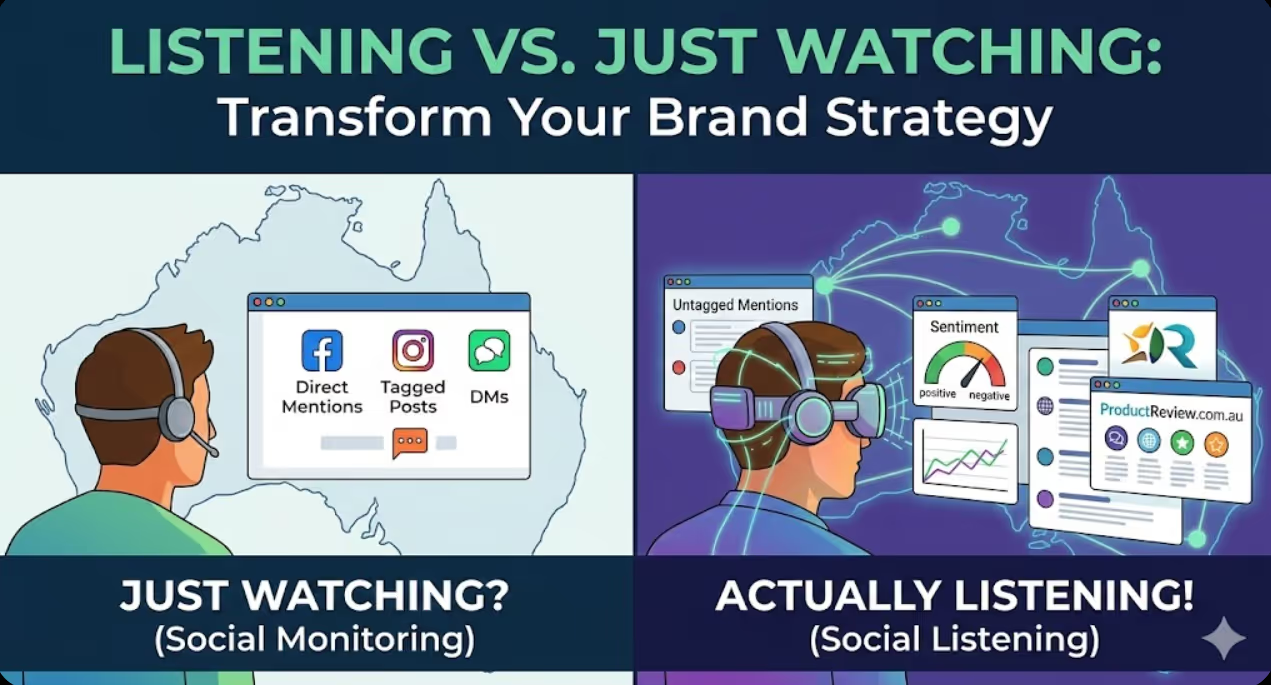
Social Listening Implementation: Setting Up Monitoring Systems for Australian Brands
Most Australian brands have some version of a social media presence, but far fewer have a system for genuinely listening to what is being said about them across that presence and beyond it. Social listening is not the same as checking your notifications or scanning your mentions. It is a structured approach to monitoring conversations across platforms, forums, news sites, and review channels to understand how your brand is perceived, what your competitors are doing, and where opportunities and threats are emerging before they become urgent. For brands operating in Australia, the combination of a relatively small but highly connected digital population and a media landscape where a single viral moment can travel fast makes social listening not just useful but strategically important. This article walks through how to implement a social listening system that works for Australian brands, which tools are worth considering, what to monitor, and how to turn raw data into decisions that actually improve your marketing and customer experience.
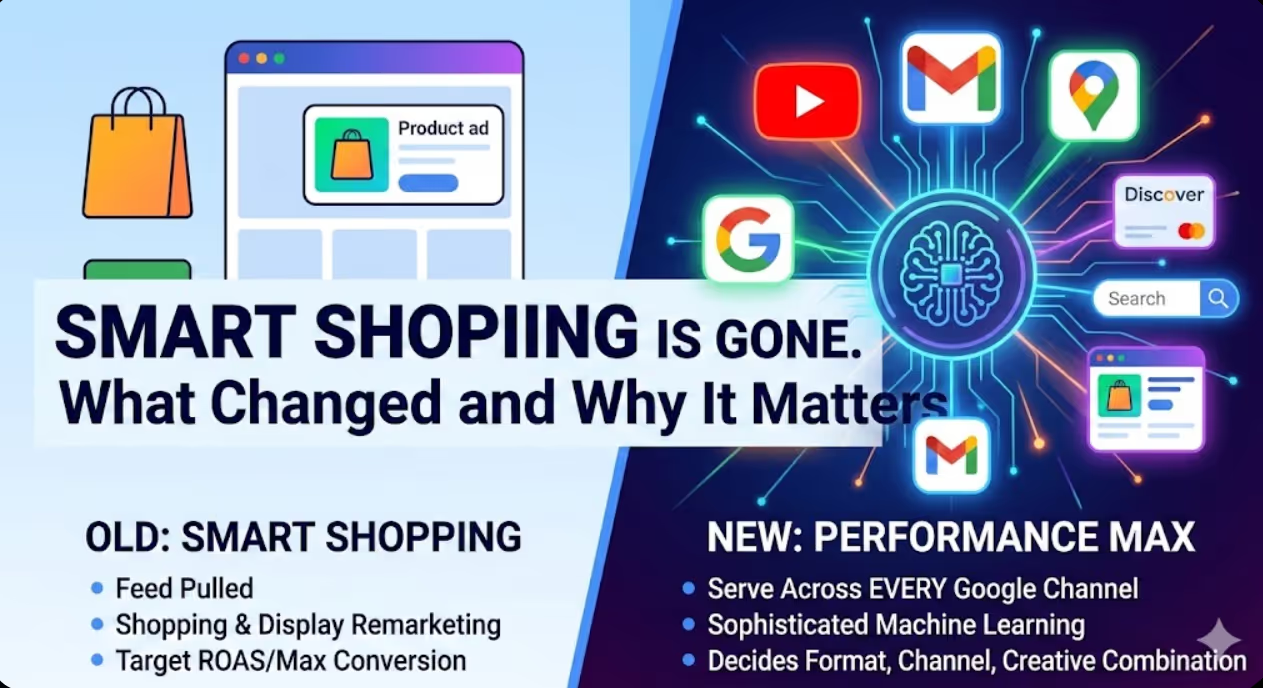
Smart Shopping vs Performance Max: Migration Strategy for Retailers
Smart Shopping campaigns were a comfortable fixture in the Google Ads accounts of Australian retailers for years, and then Google retired them. Performance Max arrived as the replacement and brought with it a fundamentally different way of running product advertising, one that gave Google's machine learning far more control and advertisers far less visibility into where their budget was actually going. For retailers who migrated early or were pushed across by Google's automated migration, the experience was mixed. Some saw strong results almost immediately, others watched their ROAS drop and struggled to understand why. The difference between those two outcomes almost always came down to how the migration was handled, what assets were provided, and how much conversion data the account had going in. This article covers what actually changed between Smart Shopping and Performance Max, the migration considerations that matter most for Australian retailers, and how to set up a Performance Max campaign that earns its budget rather than simply spending it.
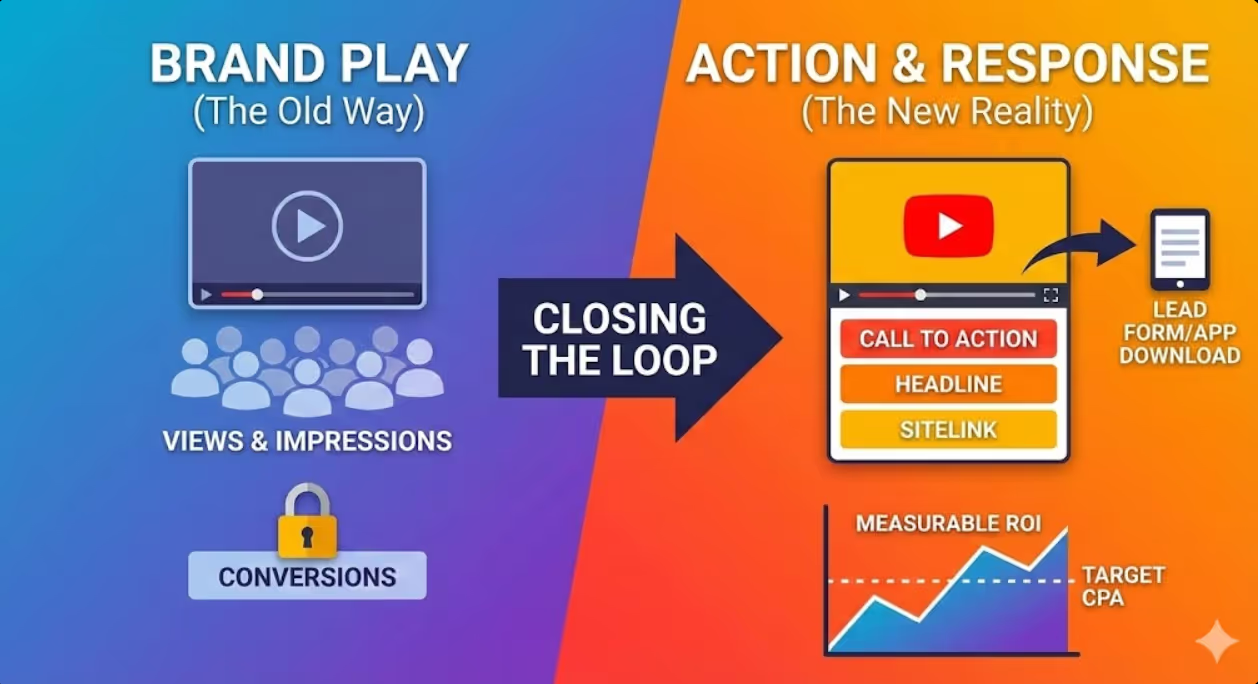
YouTube TrueView for Action to Increase Conversions | Maven Marketing Co.
Video advertising has spent years being treated as a brand awareness tool and not much else, but that perception is well behind where the platform actually sits today. YouTube TrueView for Action campaigns are built specifically to drive measurable responses from viewers, turning what was once a top of funnel channel into a genuine direct response engine. For Australian businesses that have avoided YouTube advertising because they could not see a clear line to conversions, this campaign type changes the equation entirely. When set up correctly with strong creative, precise audience targeting, and a clear call to action, these campaigns can generate leads, sales, and new registrations at a cost that competes directly with search and social. The mechanics are different from what most performance marketers are used to, and the creative requirements are more demanding, but the payoff for getting it right is substantial. This article covers how TrueView for Action works, what it takes to make a campaign perform, and where Australian marketers most commonly go wrong.

App Campaigns for Action: Mobile App Marketing Beyond Installation
Most businesses that invest in a mobile app celebrate when the installs start rolling in, but installs alone do not pay the bills. The real value of a mobile app sits further down the funnel where users are booking, purchasing, subscribing, and returning again and again. App Campaigns for Action are built specifically to reach that deeper behaviour, shifting the focus from acquisition metrics to the actions that actually matter to your bottom line. For Australian businesses operating in an increasingly mobile first environment, understanding how to market beyond the install is no longer optional. It is where competitive advantage is being won and lost. Whether you are running an ecommerce app, a service booking platform, a loyalty programme or a content subscription, the principles of action based app marketing apply directly to your goals. This article walks through how App Campaigns for Action work, why they outperform install only campaigns for most business models, and what Australian marketers need to get right to make them perform.

Local Campaigns for Multi-Location: Managing Australian Business Chains
Running local marketing campaigns across a business chain in Australia is one of the most nuanced challenges a growing brand will face. What works brilliantly at the national level often falls flat at the suburb level, and vice versa. Australian consumers are savvy and they can tell the difference between a brand that genuinely shows up in their community and one that is simply broadcasting from a head office somewhere else. The businesses that get this right are the ones that understand local search behaviour, invest in location-specific assets, and build systems that let their teams execute locally without losing brand consistency. From Google Business Profiles and localised landing pages to paid campaigns built around individual postcodes, the tools available to operators running multiple locations are powerful but only effective when used with intention and structure. This article breaks down exactly how Australian business chains can manage local campaigns at scale, maintain brand integrity, and consistently outperform smaller competitors in every market they operate in.

Discovery Campaigns Deep Dive: Feed-Based Advertising Strategy
Australian businesses seeking advertising placement beyond traditional search results face opportunities through Google Discovery Campaigns that deliver visually rich ads across YouTube Home Feed, Gmail Promotions tab, and Google Discover feed reaching users during browsing and content consumption rather than active search sessions. Discovery Campaigns operate fundamentally differently from search advertising using automated creative optimisation testing multiple image and headline combinations, feed-based placement appearing native to platform experiences, and audience targeting based on interests and behaviours rather than keyword intent that search campaigns employ. However, Discovery's automated nature provides less control than search campaigns, performance measurement differs substantially from search metrics, and creative quality directly determines campaign success more than any other Google Ads format because visual appeal drives engagement in discovery environments. This comprehensive guide reveals how Maven Marketing Co. helps Australian businesses implement Discovery Campaigns through strategic audience targeting, compelling creative development, systematic testing methodologies, and performance optimisation ensuring feed-based advertising generates qualified traffic and conversions rather than vanity impressions from poorly targeted beautiful ads that users scroll past without engaging.
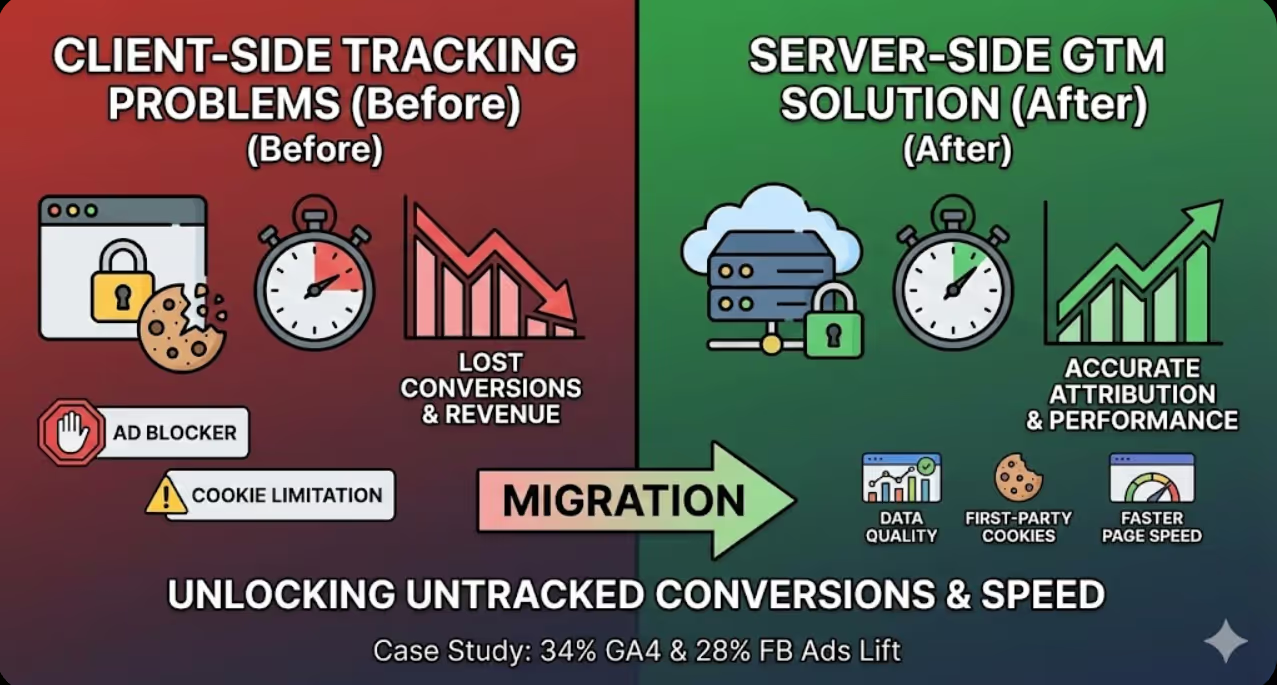
Google Tag Manager Server-Side: Enhanced Conversion Tracking Setup
Australian businesses relying exclusively on client-side Google Tag Manager implementation face mounting challenges where browser-based tracking increasingly fails due to ad blockers preventing tag firing, cookie restrictions limiting conversion attribution, privacy regulations requiring careful data handling, and page performance degradation from excessive JavaScript execution. Server-side Google Tag Manager addresses these limitations by moving tag execution from browsers to secure servers controlled by advertisers, enabling more reliable data collection immune to ad blockers, providing enhanced privacy controls over data transmission, and improving website performance through reduced client-side JavaScript. Implementation requires substantially more technical expertise than client-side setup, introduces hosting costs and infrastructure management responsibilities, and necessitates careful configuration avoiding data loss during migration. The gap between improved tracking accuracy and implementation complexity creates strategic decisions where medium to large Australian businesses with substantial tracking needs benefit whilst smaller businesses with basic requirements may find complexity exceeds advantages. This comprehensive guide reveals how Maven Marketing Co. helps Australian businesses evaluate whether server-side GTM benefits justify implementation complexity, systematic setup procedures, strategic tag migration approaches, and ongoing optimisation ensuring tracking accuracy whilst maintaining performance and privacy advantages.
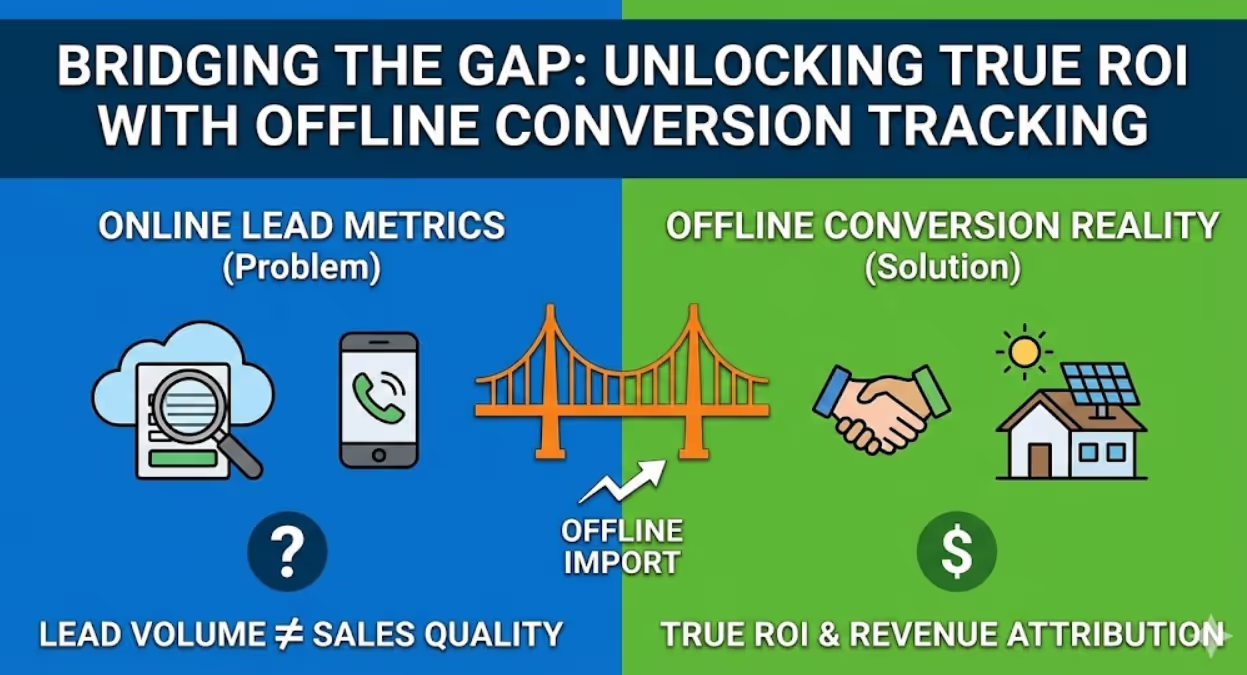
Offline Conversion Import: Connecting CRM Sales to Google Ads
Australian businesses generating leads through Google Ads that convert to sales offline through phone calls, in-person consultations, sales team follow-up, or extended purchase cycles face attribution challenges where Google Ads optimisation algorithms lack visibility into which clicks ultimately generated revenue versus merely producing leads that never closed. The gap between online lead generation and offline revenue realisation creates situations where campaigns generating highest-quality leads producing substantial revenue appear inefficient based on online conversion data alone, whilst campaigns producing low-quality leads that rarely close appear successful because algorithms optimise toward lead volume rather than downstream sales value that offline conversion import reveals. Offline conversion tracking connects CRM sales data to original Google Ads clicks enabling accurate attribution, automated bidding optimisation toward actual revenue, and comprehensive ROI analysis that businesses making attribution decisions based solely on lead generation metrics cannot achieve. This comprehensive guide reveals how Maven Marketing Co. helps Australian businesses implement offline conversion import through systematic CRM data preparation, Google Ads conversion action configuration, ongoing upload processes, and strategic bidding adjustments ensuring advertising optimisation targets actual business outcomes rather than proxy metrics that imperfectly correlate with revenue.
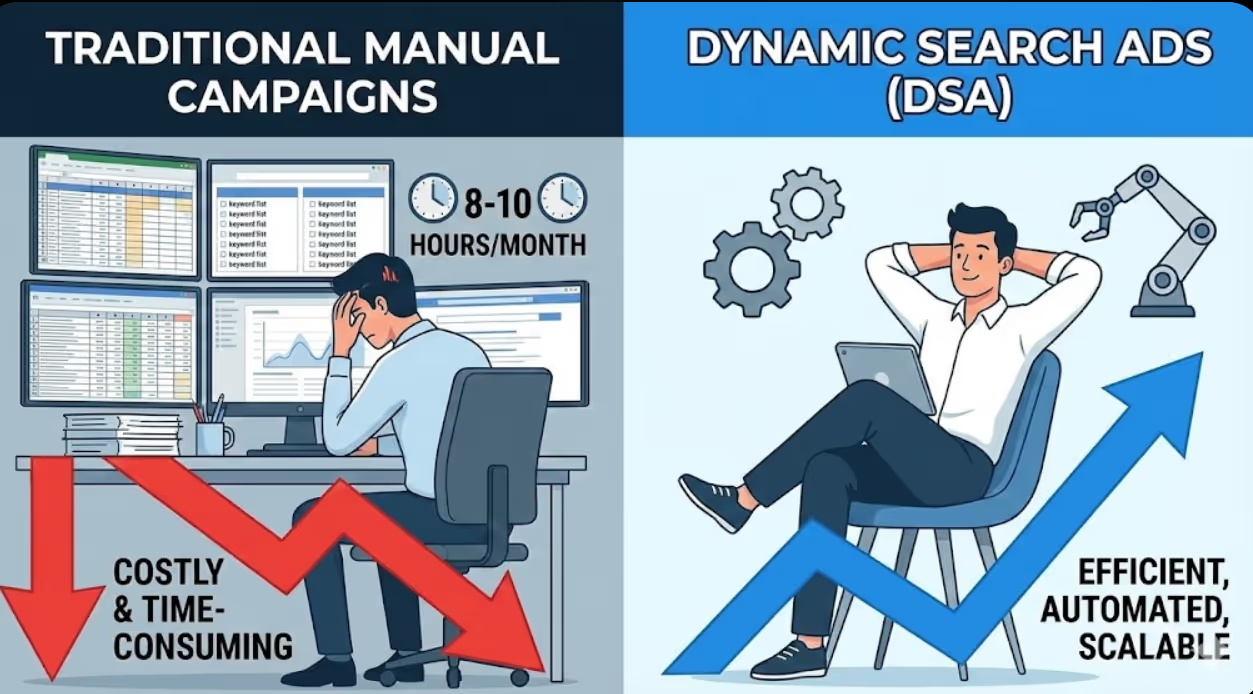
Dynamic Search Ads Evolution: AI-Generated Campaigns for Australian Services
Australian service businesses investing substantial time researching keywords, writing ad copy variations, and managing keyword bidding strategies face an automation alternative where Dynamic Search Ads leverage Google's artificial intelligence to automatically generate ad headlines, match relevant searches, and determine landing pages based on website content rather than requiring manual keyword lists and ad creation. DSAs can discover untapped search queries that keyword research misses, adapt instantly to website content changes without manual campaign updates, and reduce management overhead freeing resources for strategic initiatives. However, automation potentially sacrifices granular control, brand messaging consistency, and budget efficiency that manual campaigns provide through precise targeting. The gap between traditional keyword-based campaign management requiring continuous optimisation and Dynamic Search Ads promises strategic decisions where businesses must balance automation advantages against control trade-offs. This comprehensive guide reveals how Maven Marketing Co. helps Australian service businesses evaluate Dynamic Search Ads through systematic analysis of use cases, implementation strategies combining DSAs with traditional campaigns for optimal coverage, negative keyword strategies preventing wasteful traffic, and performance monitoring ensuring AI-generated campaigns deliver acceptable return on ad spend.

Google Ads Portfolio Bid Strategies: Multi-Campaign Optimisation
Portfolio bid strategies enable applying single automated bidding strategy across multiple campaigns, allowing Google's machine learning algorithms to optimise bids holistically rather than independently per campaign. This approach delivers superior performance for advertisers managing multiple campaigns targeting similar objectives by sharing conversion data across campaigns, enabling more sophisticated optimisation, balancing performance across portfolio, and simplifying management through centralised strategy control. Understanding when portfolio strategies outperform campaign-level bidding, how to group campaigns strategically, setting appropriate performance targets, and monitoring portfolio health ensures automated bidding delivers maximum efficiency across entire account structure.

In-Market Audiences 2026: Behavioural Targeting in Privacy-First Era
Third-party cookie deprecation and privacy regulations transformed audience targeting from identifier-based tracking to privacy-safe behavioural signals and machine learning. In-market audiences in 2026 leverage aggregated search patterns, anonymised browsing behaviour, first-party data, and contextual signals to identify purchase-ready prospects without individual tracking. Understanding how modern in-market audiences function, implementing privacy-compliant targeting strategies, combining multiple signal sources, optimising for signal quality, and measuring effectiveness in privacy-first environments enables effective audience targeting maintaining performance whilst respecting user privacy and regulatory requirements.

Customer Match Campaigns: First-Party Data Activation in Google Ads
Customer Match enables uploading first-party customer data including email addresses, phone numbers, and physical addresses into Google Ads for precision audience targeting across Search, Shopping, Display, YouTube, and Discovery campaigns. This powerful capability transforms existing customer relationships and CRM data into targetable audiences, enabling personalised messaging for existing customers, exclusion strategies preventing wasted spend, lookalike audience expansion reaching similar prospects, and lifecycle-based targeting matching offers to customer journey stages. Understanding data requirements, implementing strategic segmentation, optimising bidding approaches, maintaining privacy compliance, and measuring incremental impact unlocks substantial value from owned customer data.
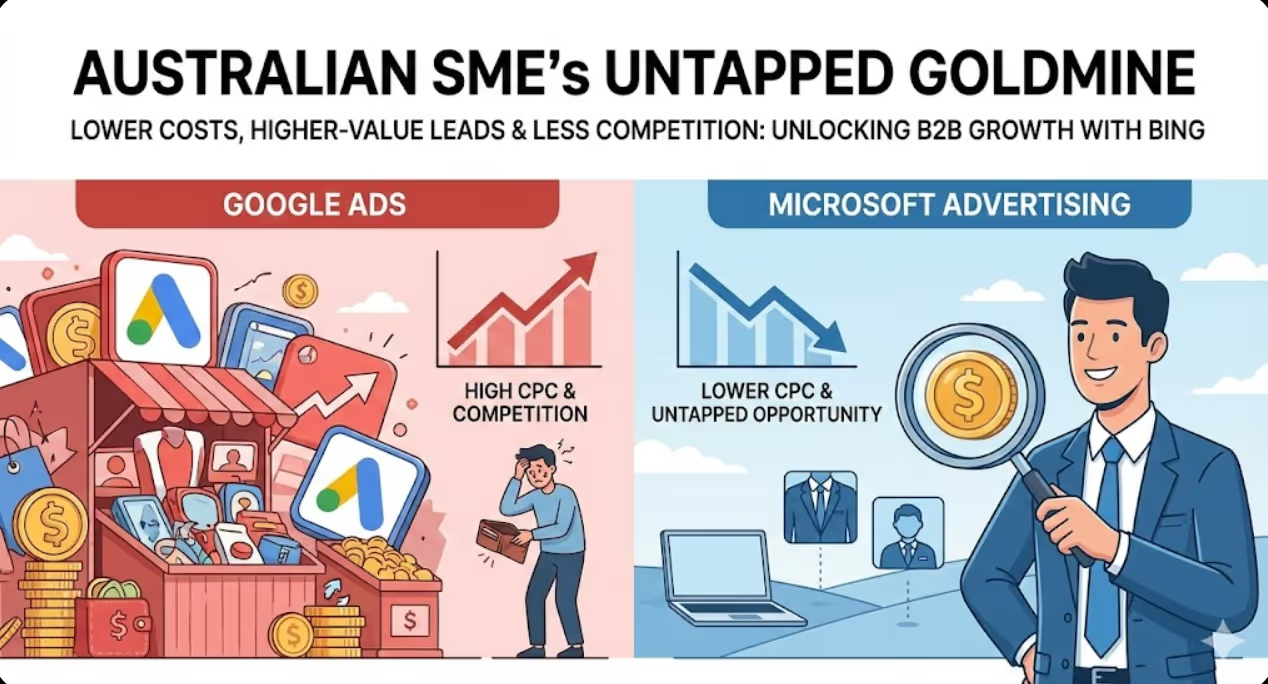
Microsoft Advertising Strategy: Bing's Untapped Opportunity for Australian SMEs
Most Australian SMEs focus exclusively on Google Ads, overlooking Microsoft Advertising's substantial opportunity despite Bing powering 15-20% of Australian search traffic. Lower competition drives 30-40% cheaper clicks whilst reaching older, higher-income demographics underserved by Google-focused strategies. LinkedIn profile targeting enables B2B precision impossible on Google, whilst seamless campaign imports allow testing Microsoft Advertising with minimal setup effort. Understanding Bing's unique audience, implementing platform-specific optimisations, leveraging Microsoft's ecosystem integration, and strategically allocating budgets across both platforms creates comprehensive search presence capturing opportunities competitors miss through Google-only approaches.
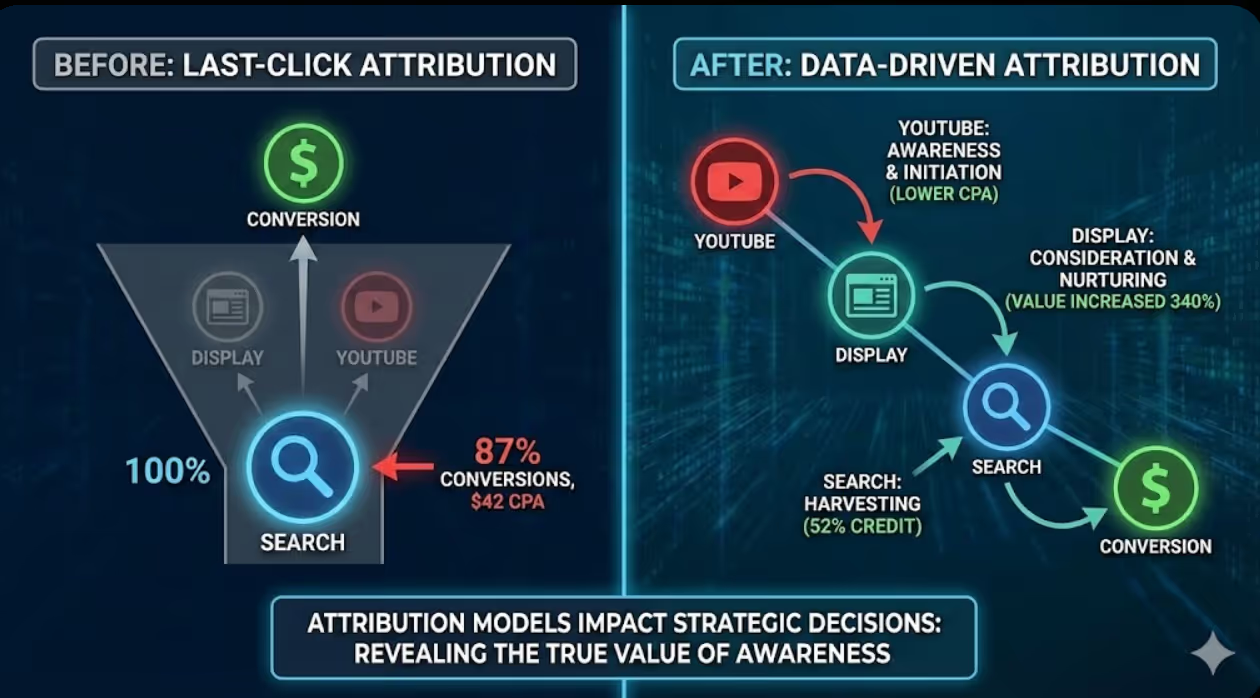
Google Ads Data-Driven Attribution: Moving Beyond Last-Click
Last-click attribution credits only the final touchpoint before conversion, ignoring all earlier interactions that influenced the customer journey. This oversimplified approach misrepresents campaign performance, undervalues awareness and consideration channels, and leads to misguided budget allocation decisions. Google Ads data-driven attribution uses machine learning to analyse actual conversion paths, distributing credit across touchpoints based on their genuine contribution to conversions. Understanding attribution models, implementing data-driven attribution, interpreting multi-touch insights, and optimising campaigns based on accurate credit distribution transforms advertising effectiveness whilst preventing systematic underinvestment in high-value awareness channels.

XML Sitemap Architecture: Advanced Segmentation for Large Australian Websites
Large Australian websites with thousands or tens of thousands of pages require sophisticated XML sitemap architecture ensuring search engines efficiently discover and index valuable content. Basic single-file sitemaps become unwieldy and ineffective at scale, whilst strategic segmentation by content type, update frequency, priority, and publication date enables targeted submission, monitoring, and optimisation. Understanding sitemap technical requirements, implementing dynamic generation, optimising priority and frequency signals, and monitoring indexation performance through Search Console transforms sitemaps from simple URL lists into powerful tools guiding search engine crawling and indexation.
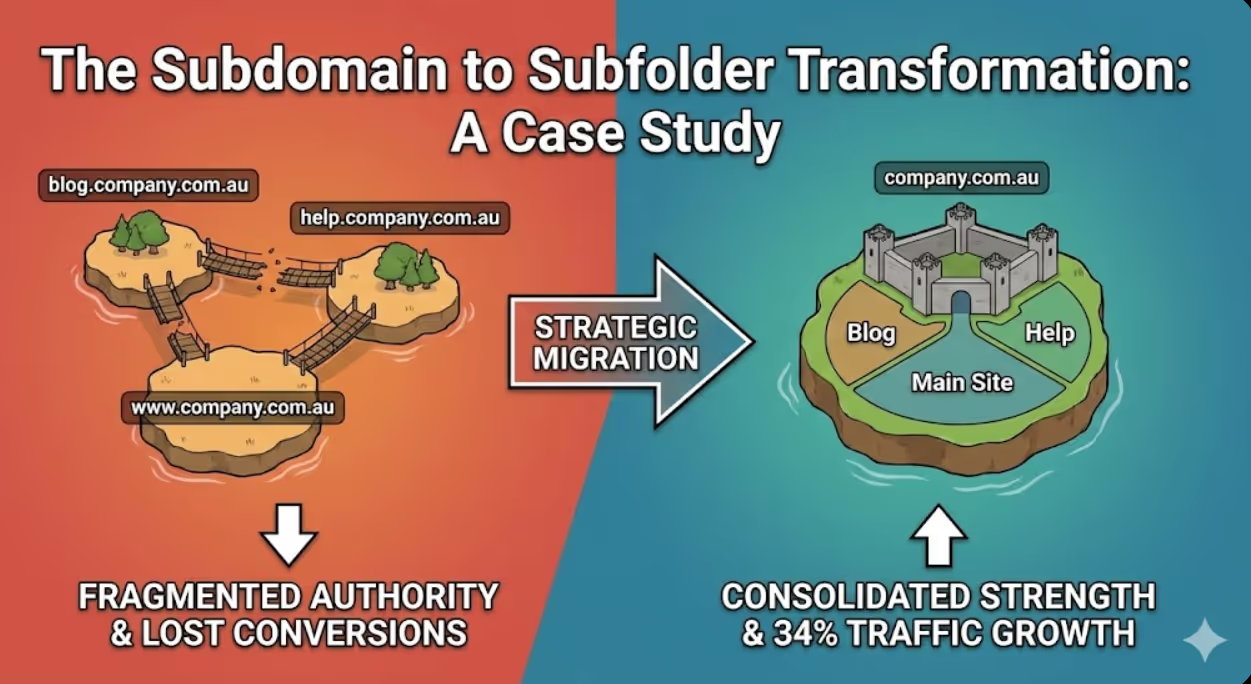
Subdomain vs Subfolder: SEO Architecture Decisions for Australian Brands
Australian businesses expanding their digital presence through blogs, e-commerce stores, regional sites, or separate service offerings face critical URL structure decisions where choosing between subdomain implementations like blog.example.com.au versus subfolder structures like example.com.au/blog determines how search engines perceive site relationships, allocate link equity, distribute domain authority, and assess content relevance for ranking purposes. The gap between these seemingly simple URL structure choices creates profound SEO implications where subdomains function as separate websites requiring independent authority building whilst subfolders consolidate authority benefiting from main domain strength, subdomains enable technical flexibility and independent hosting whilst subfolders simplify management and tracking, and subdomain migrations from established subfolder implementations risk traffic losses whilst subfolder consolidations can improve visibility through authority consolidation. This comprehensive guide reveals how Maven Marketing Co. helps Australian businesses evaluate subdomain versus subfolder decisions through systematic analysis of SEO implications, technical requirements, business objectives, and migration strategies ensuring URL structure choices align with organic visibility goals rather than creating architectural decisions that inadvertently fragment authority, complicate tracking, or require expensive migrations correcting initial implementation mistakes.
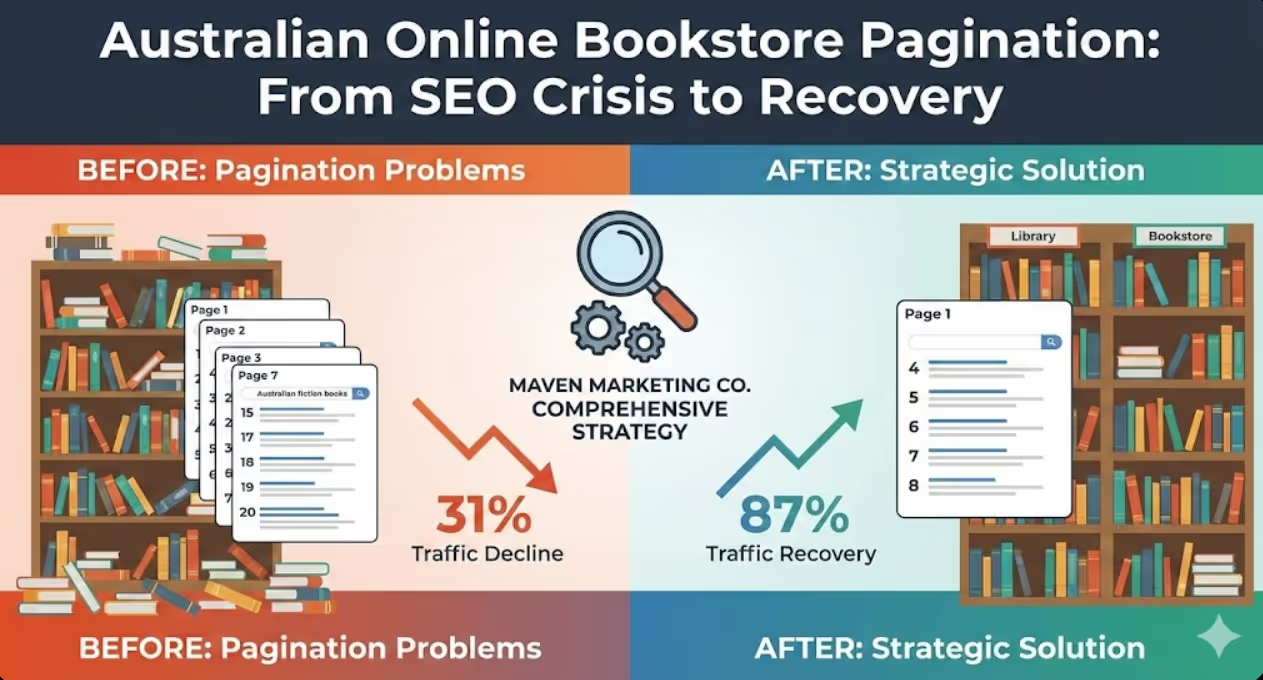
Pagination SEO Strategy: Managing Multi-Page Content for Search Engines
Australian e-commerce websites, news publishers, and content-heavy platforms implementing pagination to improve user experience by breaking long content lists into manageable page sequences inadvertently create technical SEO challenges where search engines struggle to understand relationships between paginated pages, waste crawl budget discovering endless pagination sequences, accidentally index parameter variations creating duplicate content problems, and distribute ranking signals across multiple pages rather than consolidating authority to primary URLs. The gap between pagination serving legitimate user navigation needs and creating search engine indexing problems requires sophisticated pagination SEO strategy addressing canonical implementation decisions, rel="next" and rel="prev" tag usage that Google deprecated then partially reinstated, view-all page alternatives that consolidate content, crawl budget protection through strategic pagination limits, and ongoing monitoring ensuring pagination doesn't fragment organic visibility across multiple competing URLs. This comprehensive guide reveals how Maven Marketing Co. helps Australian businesses implement pagination strategies that balance user experience requirements against search engine crawling efficiency, ensuring paginated content sequences receive proper indexing whilst avoiding the duplicate content penalties, crawl budget waste, and ranking signal dilution that improper pagination management inevitably creates.
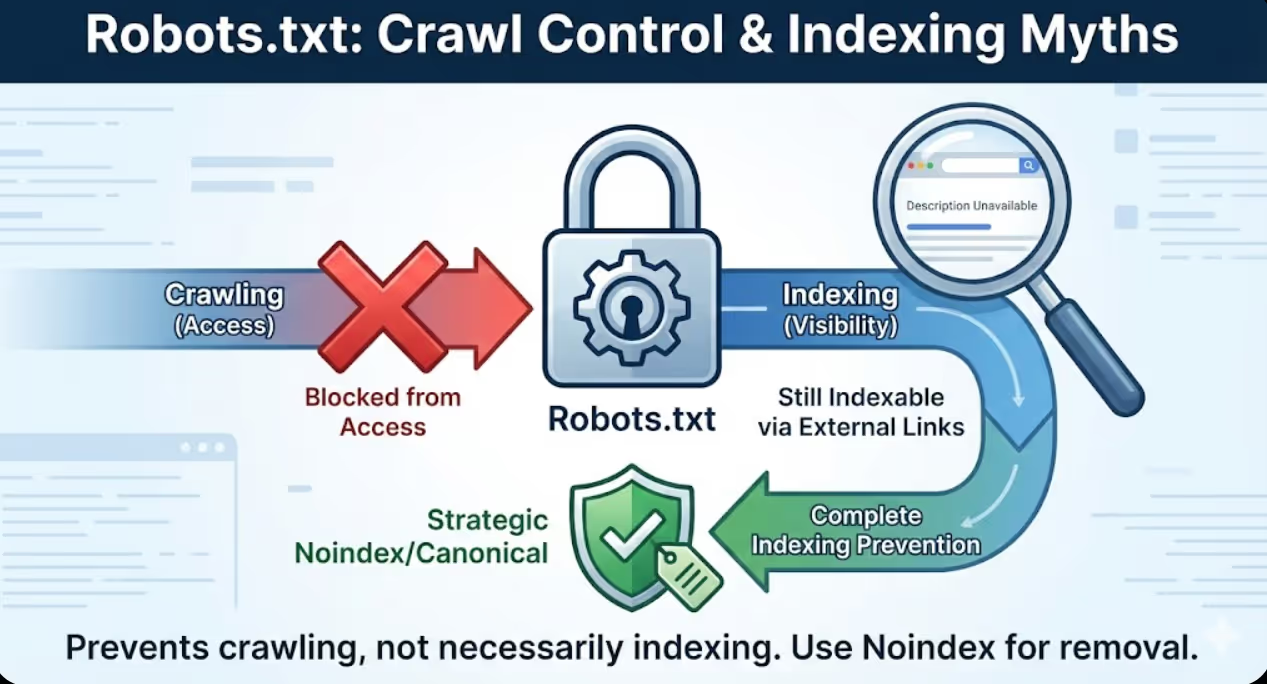
Robots.txt Optimisation: Advanced Crawl Directives for Complex Websites
Australian websites with complex architectures including e-commerce platforms, multi-domain properties, user-generated content, and extensive filtering systems face robots.txt implementation challenges where the line between strategic crawl budget protection and catastrophic indexing blockage is alarmingly thin, with misconfigured robots.txt files accidentally preventing Google from crawling entire website sections, blocking critical JavaScript and CSS resources that pages require for proper rendering, or inadvertently hiding high-value content from search engines whilst allowing wasteful crawling of duplicate variations and low-value pages that the directives should actually block. The gap between robots.txt's theoretical power to control search engine crawling and its practical reality as the single configuration file most capable of destroying organic visibility through syntax errors, overly aggressive blocking, or misunderstood directive behaviour requires sophisticated understanding of robots.txt functionality, common implementation pitfalls, testing methodologies, and strategic blocking decisions that protect crawl budget without accidentally eliminating pages from search indexes. This comprehensive guide reveals how Maven Marketing Co. helps Australian businesses implement robots.txt optimisation that strategically blocks wasteful crawling whilst avoiding the blocking mistakes that turn robots.txt from valuable crawl management tool into accidental organic visibility destroyer requiring emergency remediation when businesses discover their products, categories, or entire content sections disappeared from search results due to robots.txt misconfiguration.
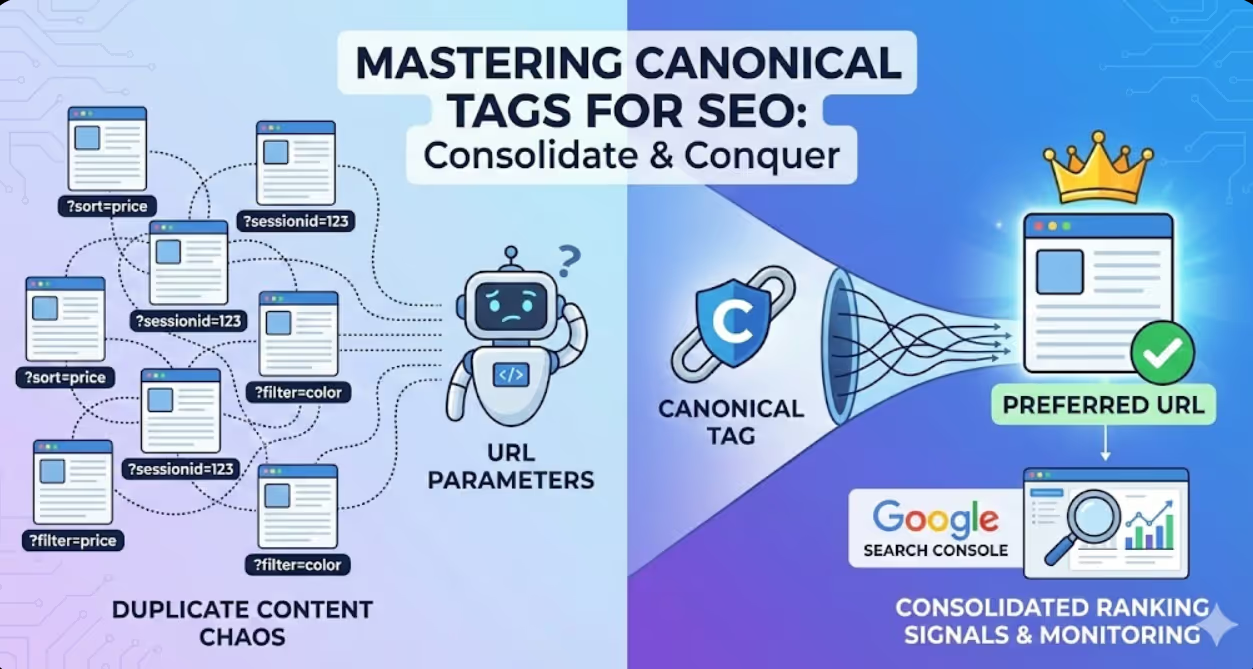
Canonicalisation Strategy: URL Parameters and Duplicate Content Solutions
Australian websites inadvertently creating duplicate content through URL parameters, session tracking, filtering systems, and multi-version page access face a strategic dilemma where multiple URLs serving identical or substantially similar content divide ranking signals across variations rather than consolidating authority to single preferred versions, systematically undermining organic search performance despite otherwise sound SEO implementation. The gap between having one authoritative version of each page conceptually and actually achieving that consolidation technically requires sophisticated canonicalisation strategy addressing URL parameters that create infinite variations, session identifiers that fragment indexes across user-specific URLs, HTTPS and non-HTTPS duplicates that search engines treat as distinct pages, www and non-www variations that dilute domain authority, and template-generated duplicates that pagination and filtering systems inevitably create. Improper canonicalisation or complete absence of canonical directives allows search engines to choose canonical URLs arbitrarily, frequently selecting non-preferred versions that lack optimisation whilst preferred versions remain unindexed, creating the frustrating scenario where businesses invest heavily in page optimisation only to have search engines index and rank inferior duplicate variations instead. This comprehensive guide reveals how Maven Marketing Co. helps Australian businesses implement strategic canonicalisation, resolving duplicate content problems, consolidating ranking signals to preferred URLs, and ensuring search engines index the specific page versions that businesses have optimised rather than algorithmic guesses about which duplicates deserve prominence.
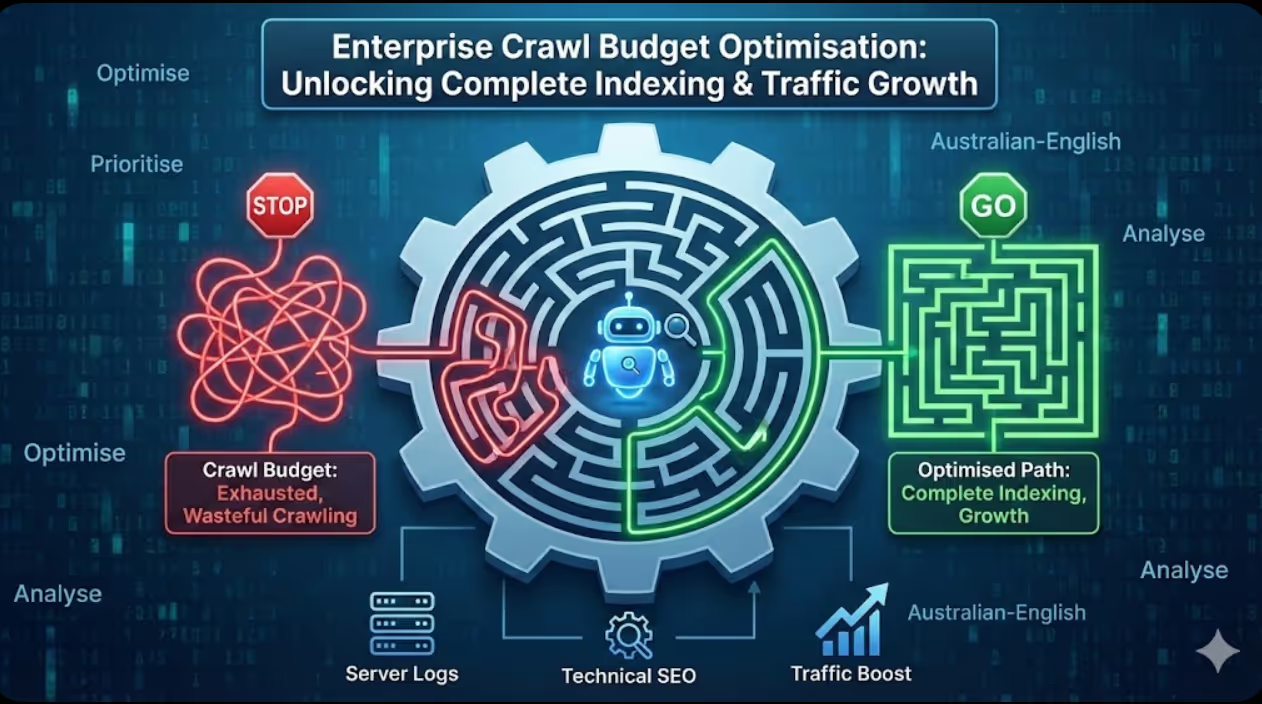
Crawl Budget Optimisation: Enterprise SEO for Large Catalogs
Enterprise websites with tens or hundreds of thousands of URLs face a fundamental indexing challenge that small business sites never encounter because search engine crawl budgets impose practical limits on how many pages Googlebot and other crawlers will process within reasonable timeframes, creating situations where substantial portions of large catalogues remain undiscovered, unindexed, or inadequately refreshed despite being technically accessible and properly optimised. The gap between total URL count and search engine crawl capacity means that crawl budget allocation determines which pages receive indexing attention whilst others remain invisible in search results regardless of their revenue potential, content quality, or strategic importance to the business. Inefficient crawl budget consumption through wasteful crawling of low-value URLs including filtered category variations, pagination sequences, session parameters, and duplicate content variations prevents search engines from discovering and indexing high-value product pages, category pages, and content that actually generates organic traffic and conversions. This comprehensive guide reveals how Maven Marketing Co. helps enterprise websites optimise crawl budget allocation through systematic waste elimination, strategic URL prioritisation, technical infrastructure improvements, and ongoing monitoring ensuring that search engines efficiently discover and maintain indexes of complete catalogues rather than fragmentary coverage leaving revenue-generating pages invisible regardless of optimisation quality.

Structured Data Testing: Validating Schema Implementation at Scale
Australian businesses implementing structured data markup across thousands of pages face a validation challenge that individual page testing cannot adequately address because errors affecting markup validity, rich snippet eligibility, and search feature qualification often emerge inconsistently across template variations, product categories, and dynamically generated content that manual spot-checking inevitably misses. A single schema implementation error in a template file can invalidate structured data across thousands of product pages, whilst category-specific markup bugs might affect only dozens of pages making them difficult to discover through random sampling that prioritises high-traffic pages potentially missing problematic segments. The gap between implementing schema markup and validating that implementation actually works correctly at enterprise scale requires systematic testing methodologies, automated validation tools, and ongoing monitoring processes that catch errors before they eliminate rich snippet appearances, disqualify pages from search features, and waste the substantial development investment that schema implementation represents. This comprehensive guide reveals how Maven Marketing Co. helps Australian businesses validate structured data implementation at scale through systematic testing frameworks, automated error detection, template-level validation, and continuous monitoring ensuring that markup maintains validity and rich snippet eligibility across complete websites rather than only on the handful of pages that manual testing examines.

AMP vs Core Web Vitals: Mobile Speed Strategy for 2026
Australian businesses pursuing mobile speed optimisation in 2026 face a strategic decision that would have been straightforward in 2018 but has become dramatically more nuanced as Google's priorities have evolved. Accelerated Mobile Pages once represented the definitive mobile speed solution with explicit search result badges, prioritised placement in Top Stories carousels, and clear ranking benefits that made AMP adoption appear mandatory for publishers and e-commerce businesses seeking mobile visibility. However, the 2021 introduction of Core Web Vitals as official ranking factors, the removal of AMP-specific search advantages, and the demonstrated ability of well-optimised standard HTML pages to achieve performance metrics matching or exceeding AMP created a fundamentally altered mobile speed landscape where the trade-offs between AMP's restrictions and Core Web Vitals optimisation must be carefully evaluated rather than assumed. This comprehensive guide reveals how Maven Marketing Co. helps Australian businesses navigate the 2026 mobile speed strategy decision, comparing AMP's continued relevance against modern Core Web Vitals optimisation, evaluating when each approach makes strategic sense, and implementing whichever strategy delivers optimal performance for specific business contexts rather than defaulting to outdated assumptions about mobile speed requirements.
.avif)
International SEO for Australian Exporters: Hreflang and Multi-Region Strategy
Australian businesses expanding into international markets face unique SEO challenges ensuring global customers discover their products and services through search engines. International SEO extends beyond translation, requiring strategic decisions about domain structure, proper hreflang implementation signalling language and regional variations, localised content addressing cultural nuances, and technical optimisation ensuring search engines correctly serve content to appropriate audiences. This comprehensive guide explores proven international SEO strategies for Australian exporters, from choosing between ccTLDs and subdirectories to implementing hreflang tags correctly, creating market-specific content, and measuring performance across regions for sustainable global growth.
.avif)
JavaScript SEO Troubleshooting: Fixing Rendering Issues in React and Vue
JavaScript frameworks like React and Vue enable building dynamic, interactive web applications that deliver exceptional user experiences. However, these frameworks create significant SEO challenges when search engine crawlers struggle to render JavaScript-heavy pages, leading to indexing failures and lost organic visibility. Understanding how search engines process JavaScript, identifying common rendering issues, and implementing solutions including server-side rendering, pre-rendering, and proper meta tag management ensures your modern web applications achieve search visibility they deserve whilst maintaining the interactive experiences users expect.