.svg)
.svg)
.svg)


%201.svg)
April 2, 2026
The Link Building Playbook That Still Works in 2026: Earn Authority Without Paying for It
Link building has a reputation problem it does not entirely deserve. When most Australian marketing teams hear the term, they picture one of two things: the paid link schemes that Google has been penalising for years and that still circulate in the shadier corners of the SEO industry, or the outreach programmes that require significant labour that produce a handful of marginal links per month at a cost that makes the return on investment look questionable at best. Both of these pictures miss the methods that actually work in 2026, which share a common characteristic: they earn links as a byproduct of producing something valuable rather than acquiring them as a standalone purchase or extraction exercise. The distinction matters commercially because earned links are structurally different from purchased links. They tend to come from more relevant and more authoritative sources. They are more stable because they are not contingent on a payment being maintained. They are more likely to produce lasting ranking improvements because they represent genuine signals of editorial endorsement. And they are not a liability that sits waiting for the next Google spam update to detonate. This article covers the link earning methods that Australian businesses and their marketing teams can execute in 2026 to build domain authority through genuine editorial signals rather than purchases or schemes.

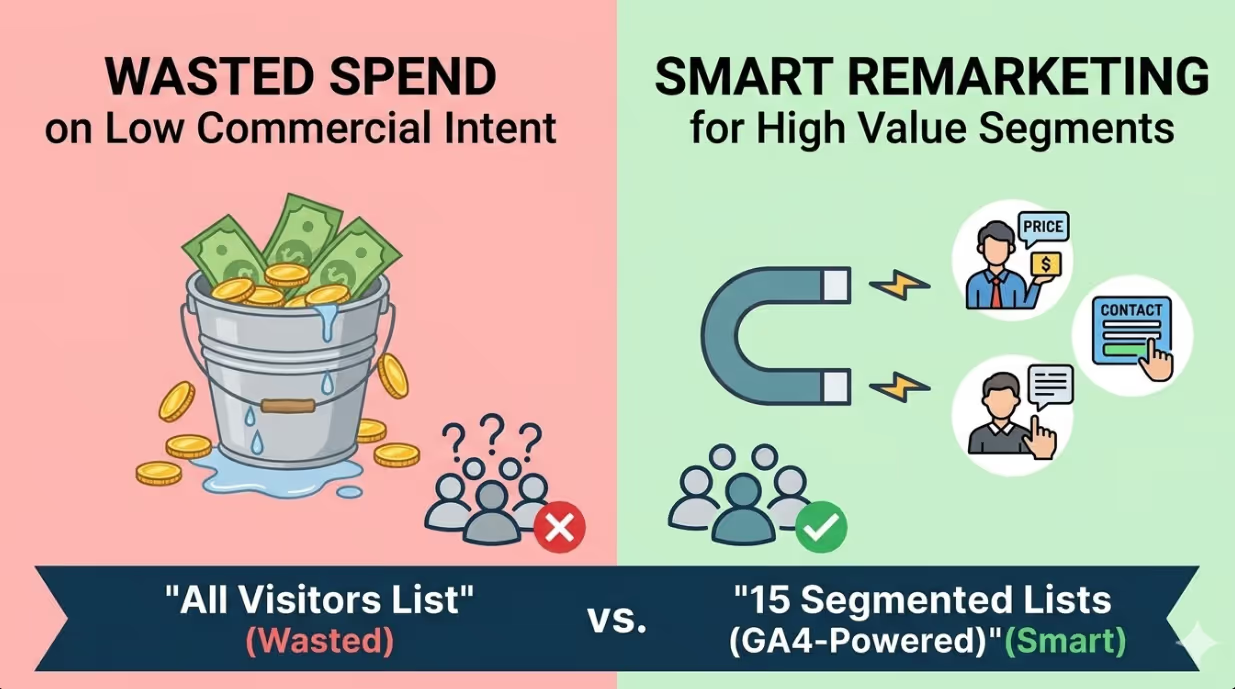
PPC Remarketing Audience Segmentation: 15 Lists Every Australian Business Needs
Most Australian businesses running Google Ads have remarketing set up in the broadest possible configuration: a single list of all website visitors, retargeted with the same ads at the same bid, regardless of which pages they visited, how long they stayed, whether they were close to converting, or how long ago their visit occurred. This is not a remarketing strategy. It is a generic spray of impressions across an audience that ranges from highly motivated buyers who visited the pricing page twice last week, to completely cold researchers who bounced after ten seconds three months ago, with the same message and the same commercial urgency applied to both. Effective PPC remarketing for Australian businesses requires audience segmentation that distinguishes between these cases and applies the appropriate bid level, message, and offer to each. The fifteen audience lists in this article represent the segmentation structure that covers the most commercially valuable distinctions in an Australian business's website audience, from the visitors with the strongest intent who are ready to act to the audiences that need a different message to return and convert. Each list is buildable in Google Analytics 4 and importable to Google Ads, and the combination of all fifteen provides a remarketing architecture that substantially outperforms a single undifferentiated list covering all visitors.
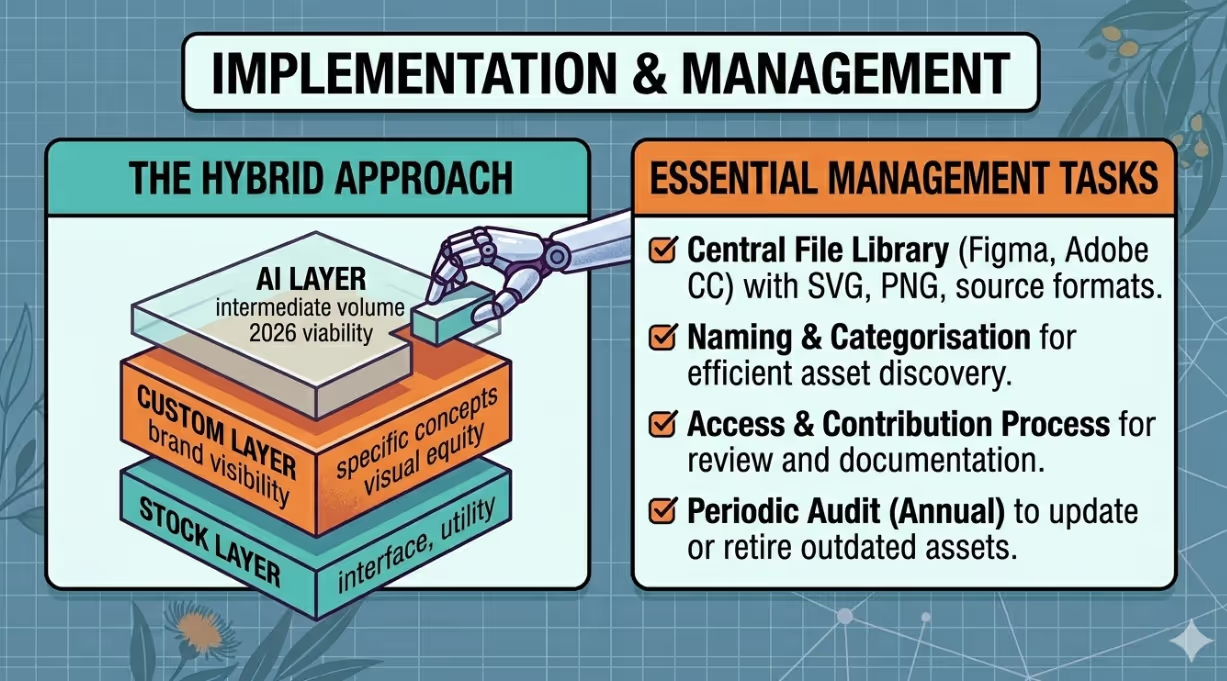
Iconography and Illustration: Custom Graphics vs Stock Asset Selection
The decision about whether to invest in custom iconography and illustration or to select from the available stock libraries is one that most Australian businesses make informally, based on perceived cost rather than a genuine assessment of the commercial and strategic implications of each approach. Stock icon libraries have become genuinely excellent in recent years, and the quality and breadth of platforms such as Noun Project, Feather, Material Symbols, and the major illustration sets means that a carefully selected and consistently applied stock set can produce a professional result for many purposes. But the cases where custom graphics produce a meaningfully better commercial outcome, where the distinctiveness of the visual language directly contributes to brand recognition, where the specific conceptual nuances of the business cannot be captured by generic symbols, and where visual coherence across a complex product requires a unified design system rather than a curated selection from multiple sources, are more common than the cost comparison alone suggests. Understanding when stock assets serve the purpose adequately and when the investment in custom graphic work is genuinely justified requires a framework that goes beyond the simple comparison of design fees against library subscription costs. This article provides that framework for Australian businesses making iconography and illustration decisions for their websites, products, and marketing materials.

Brand Integration in Web Design: Translating Style Guides to Digital
Most Australian businesses that have invested in a professional brand identity own a style guide that was built for print and adapted for digital as an afterthought. The logo variants, colour palette, typography, and visual language were developed with printed collateral, signage, and physical presentations in mind, and the digital applications were added to the guide as secondary specifications: use this hex code instead of the Pantone, use this system font for screen, use this minimum size for digital applications. What is rarely included is the set of specifications that digital actually requires: how the colour palette behaves across interactive states, how the typography scales across screen widths, how brand illustration and photography integrate with the grid and spacing system, how the visual identity translates to components like buttons, form fields, navigation, and data visualisation. The result is a website that shares a colour palette and a logo with the brand's printed materials but that does not feel like the same brand when a visitor engages with it, because the depth of specification needed to produce a coherent digital experience was never developed. This article covers what translating a brand identity to digital genuinely requires, from the design token structure that makes brand decisions systematic to the component library that makes them consistent at every touchpoint.

WordPress vs Shopify vs Custom: Platform Recommendation Framework
The question Australian businesses ask most frequently when beginning a website project is which platform they should build on, and it is a question that attracts a higher volume of generic, commercially motivated advice than almost any other in digital marketing. Agencies that specialise in one platform will recommend that platform. Developers who know one technology stack will advocate for that stack. Platform companies publish comparison pages that assess the competition through a lens that inevitably favours their own product. Cutting through this noise requires a framework that starts not with the platforms but with the business: its current size and technical resources, the nature of its ecommerce or content requirements, its expected growth trajectory, and the operational capacity of the team that will manage the site after it launches. The correct platform recommendation for a small Australian ecommerce brand with a solo operator and three hundred products is different from the correct recommendation for a service business with multiple locations, which is different again from the correct recommendation for a content publisher with complex editorial workflows or a retail brand with thousands of SKUs and custom pricing logic. This article provides the structured decision framework Maven Marketing Co uses when recommending platforms to Australian clients, with the honest assessment of where each of the three main options, WordPress, Shopify, and custom development, genuinely excels and genuinely fails.
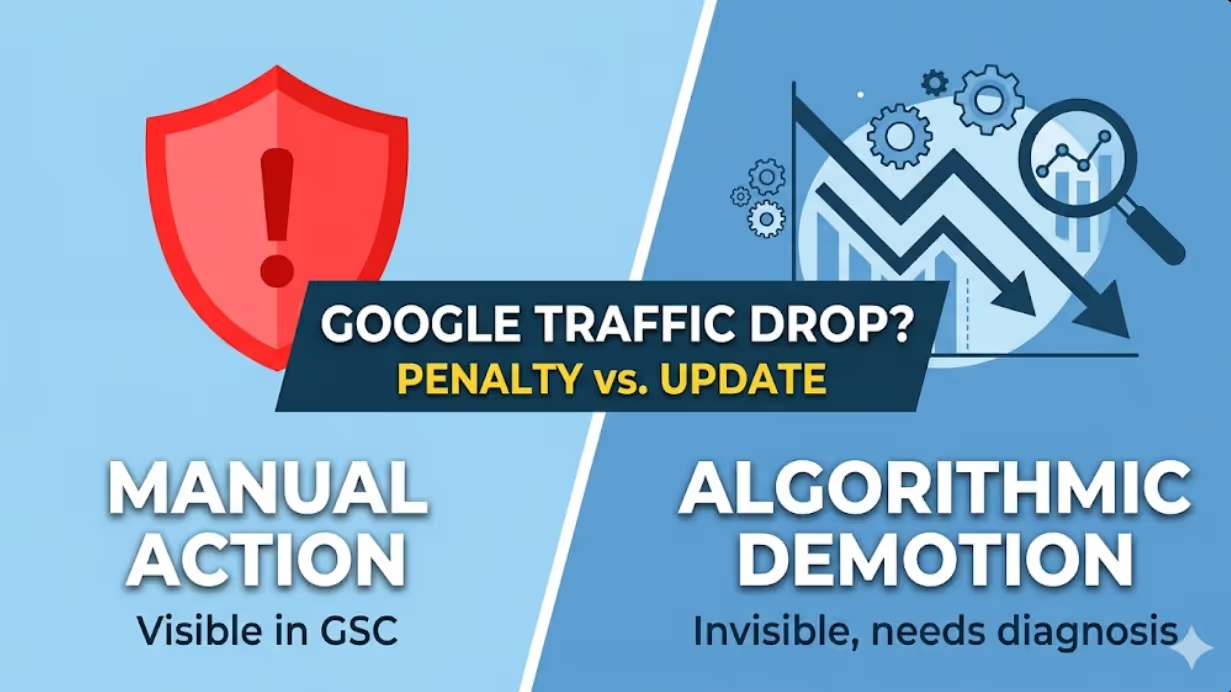
SEO Penalty Recovery: Diagnosing and Fixing Manual Actions and Algorithmic Demotions
A sudden and significant drop in organic search traffic is one of the most alarming events in digital marketing, and one of the most frequently misdiagnosed. The instinct when rankings collapse is to look immediately for a technical problem or to make rapid changes to the affected pages, and sometimes that instinct is correct. But the correct response to a traffic drop depends entirely on its cause, and the cause of a ranking decline is not always visible on the surface. Google applies two fundamentally different types of ranking intervention to websites: manual actions, which are deliberate penalties applied by a human reviewer at Google and are visible in Google Search Console, and algorithmic demotions, which are automatic adjustments made by changes to Google's ranking systems and do not generate any notification. The recovery strategy for a manual action is specific, requiring documentation and involving a formal reconsideration request to Google. The recovery strategy for an algorithmic demotion is a quality improvement programme that addresses the underlying content or site factors that the algorithm change penalised. Applying the manual action recovery process to an algorithmic demotion, or vice versa, wastes significant effort and delays the actual recovery. This article covers the diagnostic process for identifying which type of intervention has occurred, and the specific recovery strategies for each.
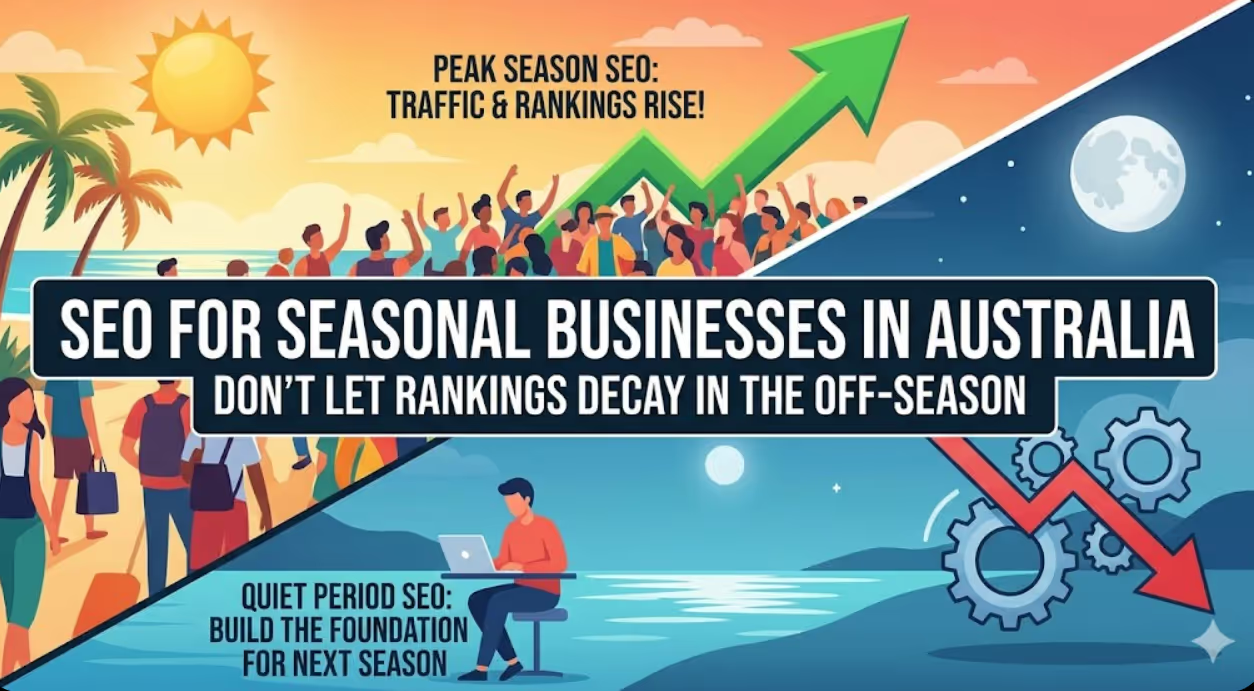
SEO for Seasonal Businesses: Maintaining Rankings During Off-Peak Periods
Seasonal businesses in Australia face an SEO challenge that their competitors who operate all year do not: the organic rankings they work hard to achieve during their peak period need to be actively protected through months when their category is quiet, their traffic is thin, and Google's quality signals from the site are at their weakest. The assumption that rankings earned during a busy season will hold themselves until the next one is wrong in most competitive categories. Google's ranking algorithm is continuous, and a site that is inactive, slow to crawl new content, generating no engagement signals, and receiving no new links during a long period when search volume is low will often find that competitors who have maintained their activity have moved ahead by the time the season turns. The key insight for Australian seasonal businesses is that the period when search volume is low is not dead time in the SEO programme. It is the period when the work is done to protect the rankings for peak season, develop the content that will drive the next season's visibility, and build the authority signals that make ranking faster and more durable when demand returns. This article covers the strategies that Australian seasonal businesses can use to protect their rankings, sustain their authority signals, and emerge from the quiet period with stronger organic positions than they entered it with.
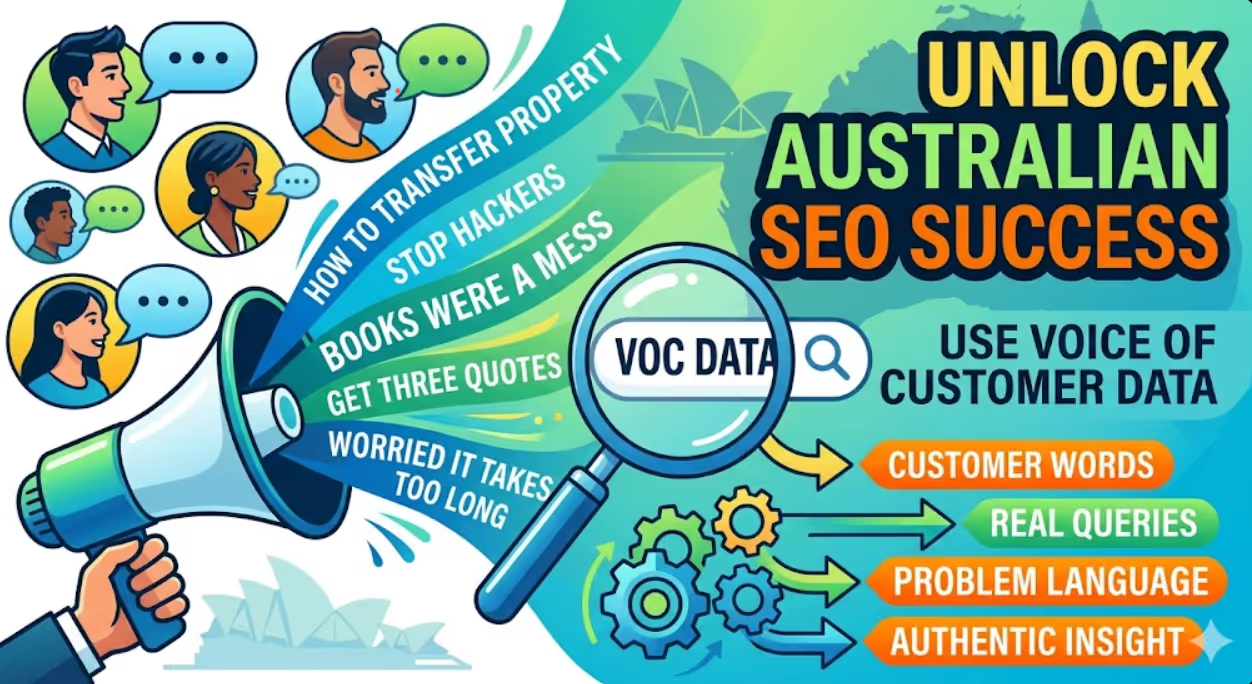
Voice of Customer SEO: Using Client Feedback to Inform Content Strategy
Every Australian business that has staff who work with customers, client reviews, support tickets, sales call recordings, or feedback gathered after purchase has access to a source of SEO and content strategy insight that most of their competitors are not using. The language customers use when they describe their problems, articulate their hesitations, ask their questions, and explain what they were looking for before they found a solution is not just qualitative research data. It is keyword research data in its most authentic form: the exact phrases, questions, and vocabulary that real customers in the Australian market use when they are at the specific stages of their decision journey that the business most needs to reach them. The gap between this language and the language most businesses use in their marketing content is significant, consistent, and commercially costly. Businesses write about their services using the vocabulary of their industry. Customers search for solutions using the vocabulary of their experience. When the content bridges this gap, it ranks for what customers actually search. When it does not, it ranks for what practitioners write, which is often not what buyers search. This article covers the systematic process for collecting voice of customer data, extracting keyword and content strategy insights from it, and applying those insights to build SEO content that reaches Australian customers at every stage of their decision journey.
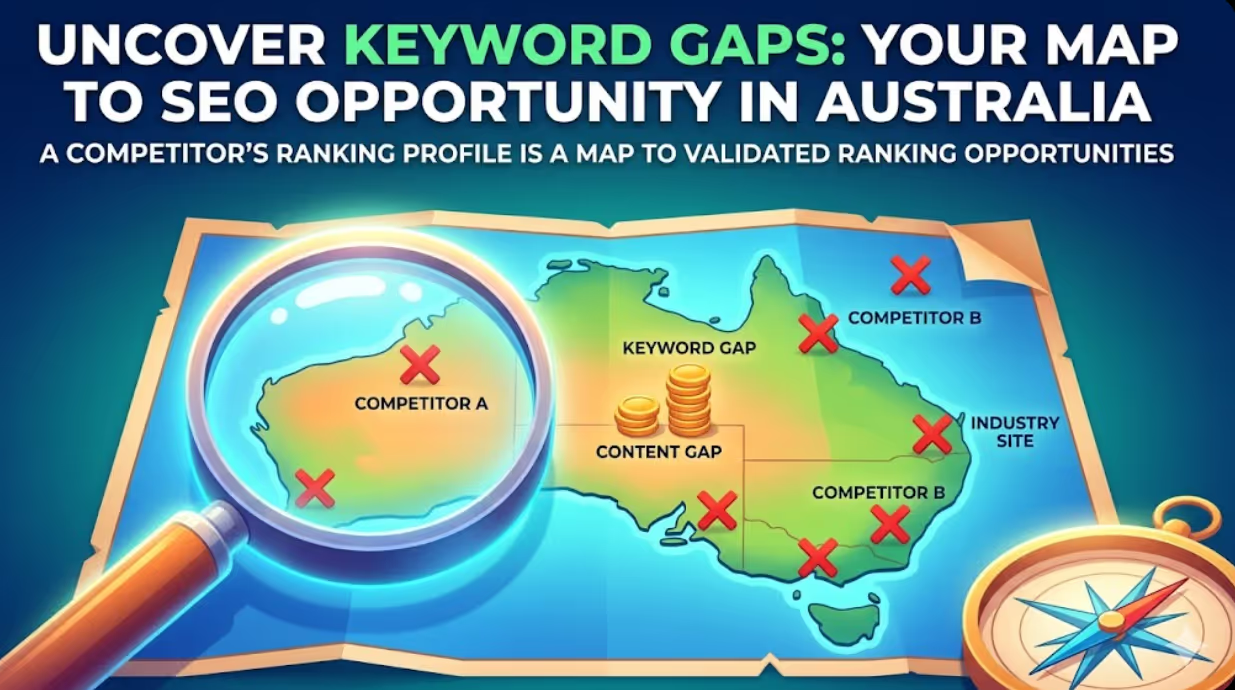
SEO Competitive Gap Analysis: Finding Untapped Ranking Opportunities
The most reliable source of ranking opportunities that an Australian business has not yet pursued is the set of keywords that its competitors rank for and it does not. This is not a peripheral observation. For most businesses that have published content consistently for a year or more without a systematic competitive analysis, the content gap between their site and their strongest competitors represents a larger body of rankable opportunity than any other single source of keyword discovery. A competitor that ranks on the first page of Australian Google results for a hundred commercially valuable queries is demonstrating that those queries are achievable, that Google judges the intent they represent to be commercially relevant to the category, and that a website covering the same topic space can reach that audience. Finding those gaps, understanding why they exist, and closing the most commercially important of them in a deliberate sequence is what competitive gap analysis produces. This article covers the systematic process for conducting a competitive gap analysis in the Australian market, from identifying the right competitors through to prioritising the gaps that represent the fastest and highest-value path to additional ranking positions.
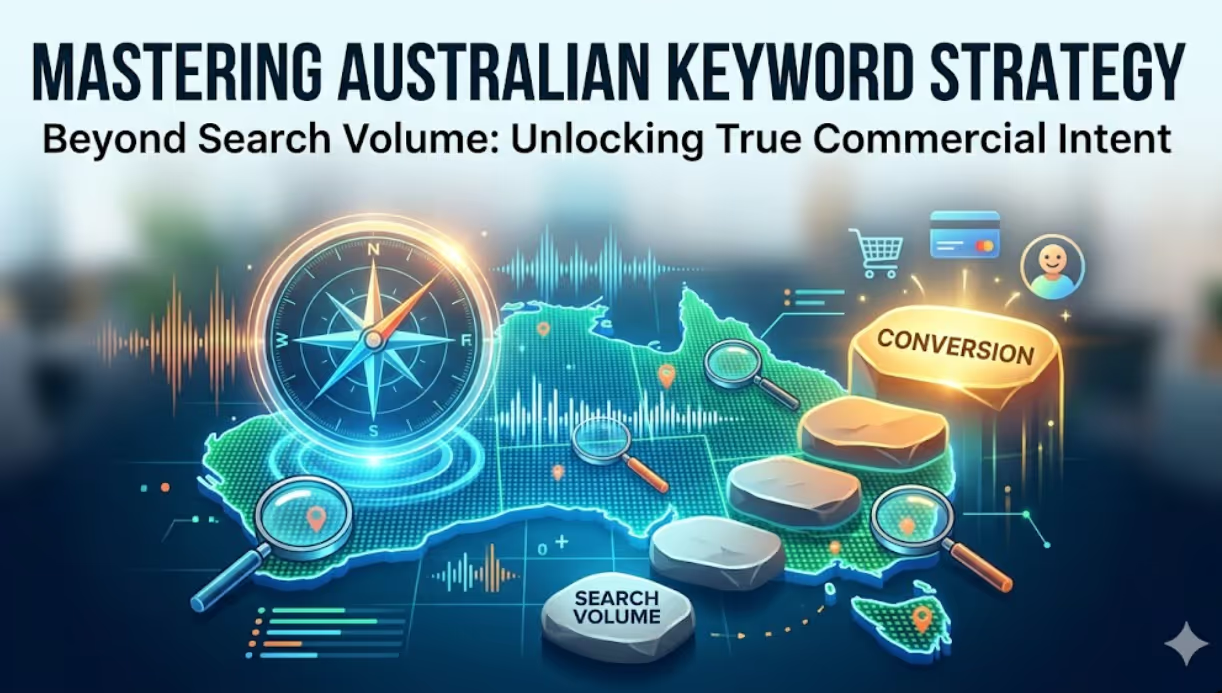
Keyword Research in 2026: Beyond Search Volume for Australian Market Intent
Search volume is the metric that most Australian marketing teams look at first when evaluating keywords, and the one that most misleads them when it becomes the dominant criterion for keyword selection. A keyword with high monthly search volume that converts nobody is a traffic acquisition problem dressed up as an SEO opportunity. A keyword with modest search volume and strong commercial intent in the Australian market can represent more revenue potential than a term with high volume that attracts researchers, students, and international visitors with no intention of purchasing. The evolution of keyword research practice in 2026 reflects a broader shift in how search marketing is understood: the goal is not to rank for the terms with the highest volume available in a topic area. The goal is to rank for the terms that connect the brand to the specific people who will take a commercially valuable action after finding the content. This requires assessing keywords against a set of criteria that search volume alone cannot capture: intent classification, Australian market specificity, conversion pathway alignment, competitive feasibility, and the seasonal and trend patterns that determine when a keyword opportunity is at its peak commercial value. This article covers each of these dimensions in the depth they require for Australian marketing teams building keyword strategies in 2026.
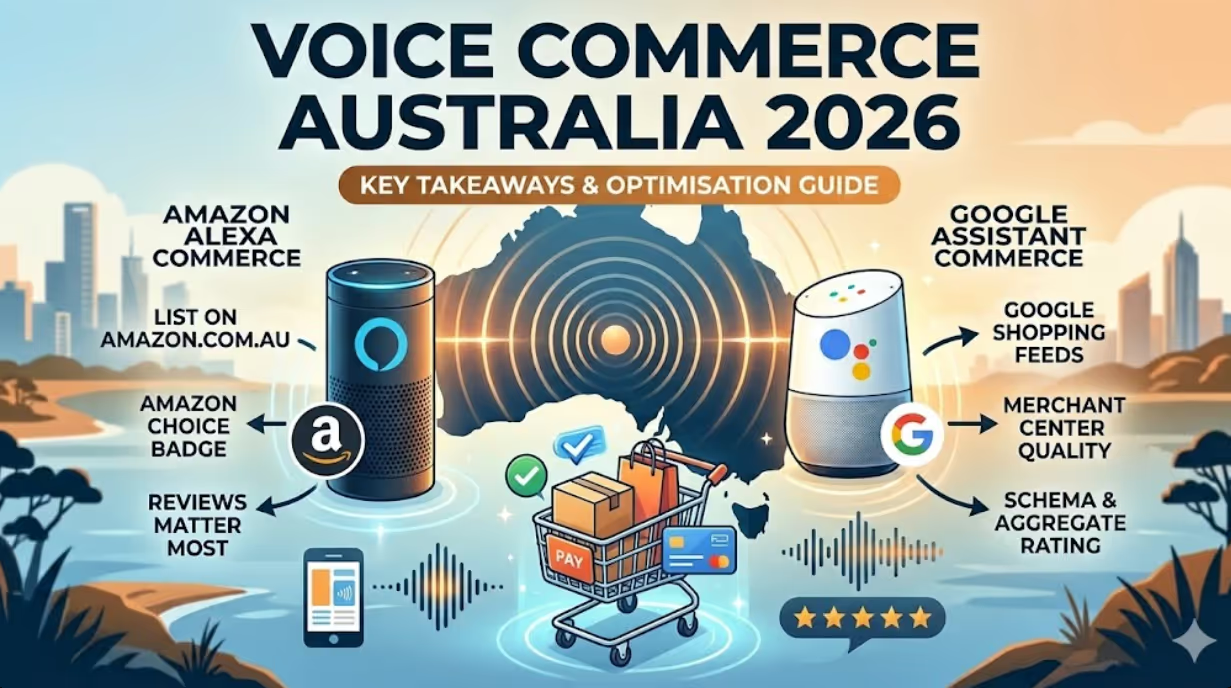
Voice Commerce Optimisation: Alexa and Google Shopping Integration
Voice commerce is not yet the dominant channel in Australian ecommerce, but it is no longer the speculative speculative topic it was five years ago. The penetration of smart speakers in Australian households has reached a level where a meaningful and growing segment of online shoppers uses voice commands to research products, add items to shopping lists, reorder previously purchased products, and in some categories complete purchases without touching a screen. The infrastructure that powers voice commerce, particularly Amazon's Alexa shopping platform and Google's Shopping integration with Google Assistant, has also matured to the point where Australian ecommerce businesses can take deliberate steps to improve their visibility and conversion performance in purchase journeys driven by voice. The optimisation required for voice commerce is not entirely separate from the work Australian ecommerce teams are already doing for search visibility and product feed management. But voice queries are structurally different from typed queries in ways that require targeted adaptations to product naming, structured data, review management, and fulfilment configuration. This article covers the practical optimisation steps available to Australian ecommerce businesses that want to capture a growing share of purchase intent driven by voice in 2026.
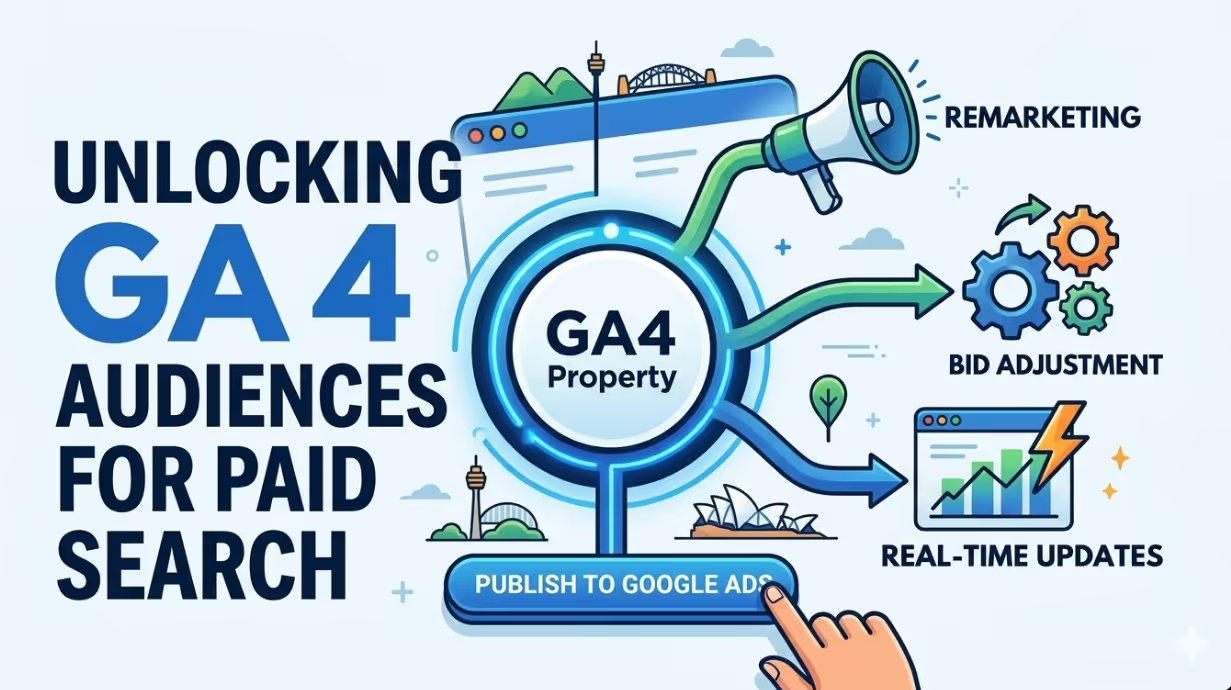
Google Analytics 4 Audiences: Building Predictive Segments
Google Analytics 4's audience builder is one of the most underused capabilities in the platform, and Australian marketing teams that have invested in GA4 implementation but are not building audiences are leaving the most commercially actionable output of that investment sitting idle. GA4 audiences are not simply lists of users that match a set of static conditions. They are dynamic segments that update continuously as user behaviour changes, can incorporate predictive signals from Google's machine learning models, and can be published directly to Google Ads for remarketing without requiring a separate audience configuration in the advertising platform. The three audience types that matter most for Australian ecommerce and service businesses are behavioural audiences built from event sequences, demographic and interest audiences informed by Google's observed user signals, and predictive audiences that use machine learning to identify users likely to purchase, likely to churn, or likely to generate high revenue in the coming days. Used correctly, these audience types allow Australian marketing teams to direct their paid media investment toward the segments most likely to convert, suppress spending on users who are unlikely to respond, and build remarketing programmes that reflect the actual commercial lifecycle of their customers rather than simple page visit recency.

Enhanced Ecommerce vs GA4: Migration and Implementation Guide
Universal Analytics with Enhanced Ecommerce tracking has been sunset, and every Australian ecommerce business still relying on historical UA data comparisons or attempting to replicate UA reporting structures in GA4 is working with a measurement framework that no longer reflects how Google Analytics actually works. GA4 is not a new version of Universal Analytics. It is a fundamentally different measurement model, and the ecommerce tracking implementation it requires is structurally different from Enhanced Ecommerce in ways that make a direct migration impossible. The Enhanced Ecommerce data layer that fed UA cannot be reused for GA4. The event names are different. The parameter structures are different. The product array format is different. The impression and promotion tracking model is different. Australian development teams that were briefed to "migrate UA Enhanced Ecommerce to GA4" and implemented GA4 by adding a new tag over the existing data layer without rebuilding the underlying event structure have accounts that appear to be tracking ecommerce but are missing significant portions of the purchase funnel data that the business needs to optimise. This article covers the complete GA4 ecommerce implementation for Australian ecommerce businesses, from the data layer architecture through to the reporting setup that makes the GA4 ecommerce data actionable.