
.svg)


%201.svg)

Key Takeaways
- Facebook Groups have 1.8 billion monthly active users globally, with over 70% of Australian Facebook users engaging with groups regularly
- Community-driven marketing generates 5-10x higher engagement rates compared to traditional Facebook Page posts
- Successful brand communities require authentic interaction, valuable content, and clear moderation guidelines
- Australian brands using Facebook Groups report 34% higher customer retention rates and 28% increase in word-of-mouth referrals
- The algorithm prioritises Group content in newsfeeds, giving brands unprecedented organic reach opportunities
- Micro-communities (under 10,000 members) often deliver stronger ROI than massive groups for most Australian businesses
.avif)
Why Facebook Groups Matter More Than Ever for Australian Brands
The landscape of social media marketing has shifted dramatically. While businesses pour resources into polished content for their Facebook Pages, Instagram feeds, and TikTok accounts, there's a quiet revolution happening in Facebook Groups—and savvy Australian brands are already capitalising on it.
Here's the uncomfortable truth: your Facebook Page posts are reaching roughly 2-5% of your followers organically. Meanwhile, Facebook Groups are experiencing unprecedented engagement, with members actively seeking out community discussions and brand interactions. This isn't just a temporary trend; it's a fundamental shift in how Australians consume and engage with content online.
Australian consumers are craving authentic connections. They're tired of being talked at—they want to be part of something meaningful. Facebook Groups provide that intimate, community-driven experience that builds genuine brand loyalty, not just follower counts.
The Psychology Behind Community-Driven Marketing
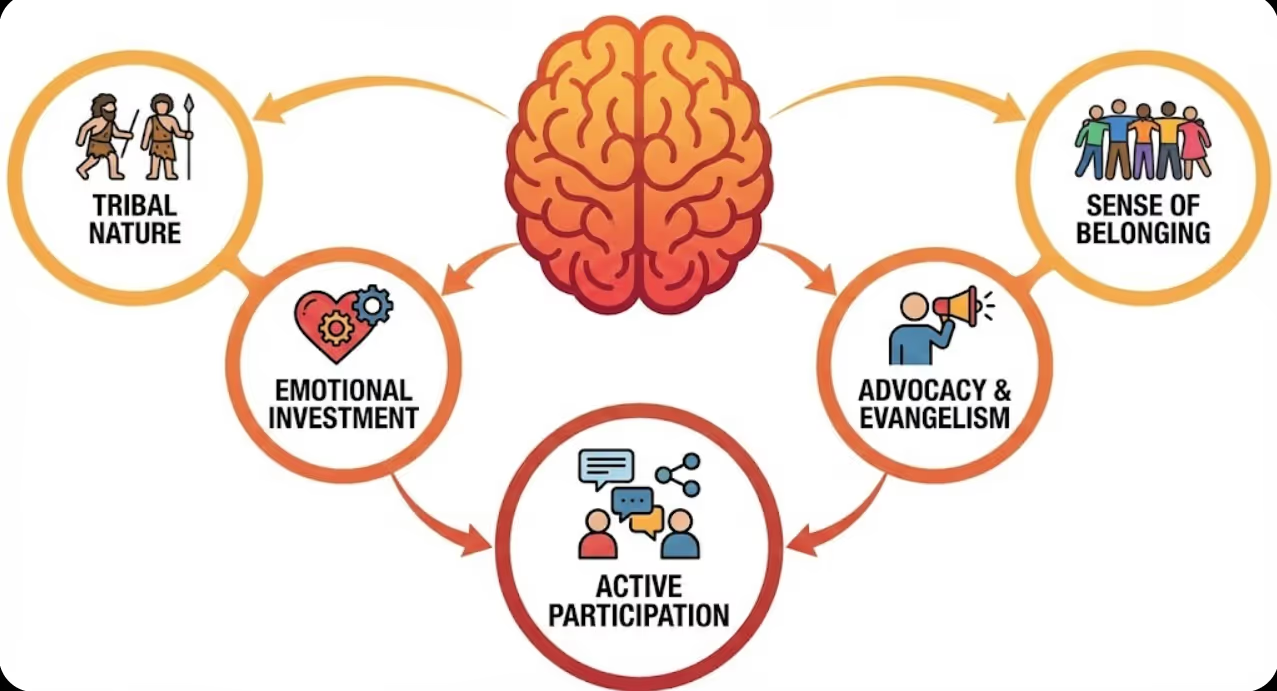
Understanding why Facebook Groups work requires diving into consumer psychology. Humans are tribal by nature. We seek belonging, validation, and shared experiences. When you create a Facebook Group around your brand, you're not just building an audience—you're cultivating a tribe.
This sense of belonging triggers powerful emotional responses. Members don't just consume your content; they identify with your community. They become advocates, defenders, and evangelists for your brand. This psychological investment is worth far more than any paid advertising campaign could achieve.
Consider how different the engagement feels. On a Facebook Page, someone might scroll past your post in seconds. In a Group, that same person stops, reads, comments, and often returns multiple times to check responses. They're invested. They care. That's the difference between passive consumption and active participation.
Setting Up Your Facebook Group for Maximum Impact
Creating a successful Facebook Group isn't about clicking "Create Group" and hoping members flood in. It requires strategic planning and thoughtful execution.
Choose Your Group Type Strategically
Your Group's purpose should align perfectly with your brand mission whilst providing genuine value. Australian outdoor retailer Paddy Pallin, for example, doesn't just run a sales-focused group—they've built thriving communities around hiking tips, gear reviews, and trail recommendations. Members join for the expertise and community, not because they're being sold to.
Craft Compelling Group Details
Your Group name, description, and cover photo work together to communicate value instantly. Avoid generic names like "Brand X Community." Instead, focus on the transformation or benefit: "Australian Small Business Growth Strategies" communicates far more value than "Maven Marketing Community."
Your description should answer three critical questions: What will members gain? Who is this for? What can they expect? Be specific. Vague promises attract inactive members who'll never engage.
Establish Clear Community Guidelines
This step separates thriving communities from spam-filled wastelands. According to research from Social Media Today, Groups with clearly defined rules experience 67% less spam and significantly higher quality discussions.
Your guidelines should cover acceptable content, promotional policies, respectful interaction standards, and consequences for violations. Don't just create these rules—pin them, reference them regularly, and enforce them consistently.
Content Strategies That Drive Engagement
The content you share in your Facebook Group requires a completely different approach than your other social channels. Here's what actually works for Australian brands.
Ask Questions That Matter
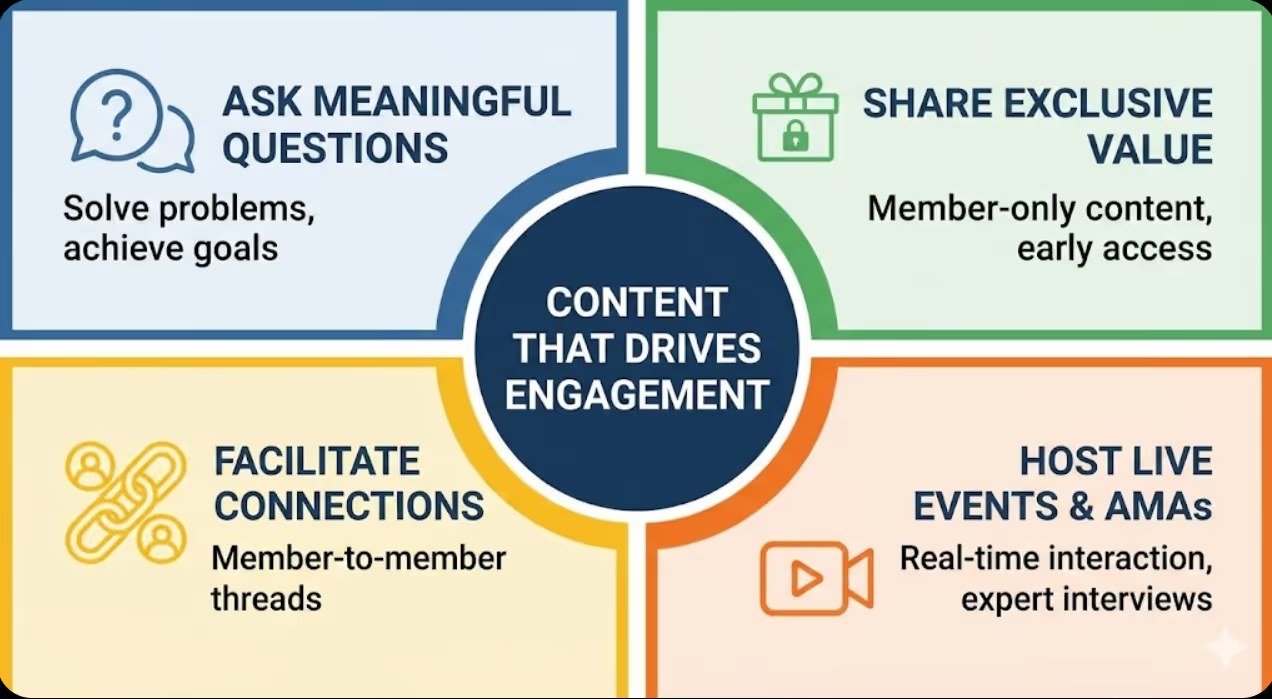
Generic engagement bait ("What's everyone doing this weekend?") might generate comments, but it won't build community or drive business results. Instead, ask questions that help members solve real problems or achieve specific goals.
Melbourne-based fitness brand Lorna Jane excels at this in their community groups, asking questions like "What's your biggest challenge when trying to maintain healthy habits during winter?" These questions generate valuable insights whilst making members feel heard and understood.
Share Exclusive Value
Give your Group members something they can't get anywhere else. This might include early product launches, member-only discounts, behind-the-scenes content, or expert advice sessions. The exclusivity reinforces the value of membership and encourages participation.
Facilitate Member-to-Member Connections
The most powerful Facebook Groups aren't brand-to-customer broadcasts—they're platforms where members connect with each other. Create weekly threads where members can introduce themselves, share wins, ask for advice, or collaborate on projects.
When members help each other, they're building relationships that extend beyond your brand. These connections create a stickiness that traditional marketing simply cannot replicate.
Host Live Events and AMAs
Facebook Live sessions within Groups generate phenomenal engagement. According to data compiled by Hootsuite's social media research, live videos in Groups receive 6x more interactions than regular video posts.
Australian brands are using weekly "Ask Me Anything" sessions, expert interviews, product demonstrations, and casual check-ins to deepen relationships with community members. These live interactions create memorable moments that strengthen brand affinity.
Moderation: The Make-or-Break Factor
Even the best-intentioned Facebook Group will devolve into chaos without proper moderation. This is where many Australian businesses stumble—they create the Group but fail to nurture it properly.
Build a Moderation Team
You cannot moderate an active Group alone, and you shouldn't try. Recruit 3-5 engaged community members to serve as moderators. Choose people who embody your brand values, demonstrate good judgment, and actively participate in discussions.
Provide your moderation team with clear guidelines, authority to remove inappropriate content, and regular communication. Monthly moderator check-ins help maintain consistency and address emerging challenges.
Respond Quickly and Authentically
When members post questions or comments, respond within hours, not days. This responsiveness signals that the community is active and valued. Your responses don't need to be lengthy—a simple acknowledgment or thoughtful question keeps conversations flowing.
Avoid corporate-speak and overly promotional language. You're having a conversation with real people who want authentic interaction, not a carefully crafted marketing message.
Address Conflicts Professionally
Disagreements will happen. How you handle them defines your community's culture. Address conflicts promptly, fairly, and transparently. Remove comments that violate guidelines whilst explaining why to reinforce community standards.
When handled well, conflict resolution actually strengthens community bonds. Members appreciate leadership that maintains a respectful environment where diverse perspectives can coexist.
Measuring Success: Beyond Vanity Metrics
Too many Australian businesses measure Facebook Group success by member count alone. This is a critical mistake. A Group with 50,000 inactive members delivers far less value than one with 500 highly engaged participants.
Track Engagement Rate
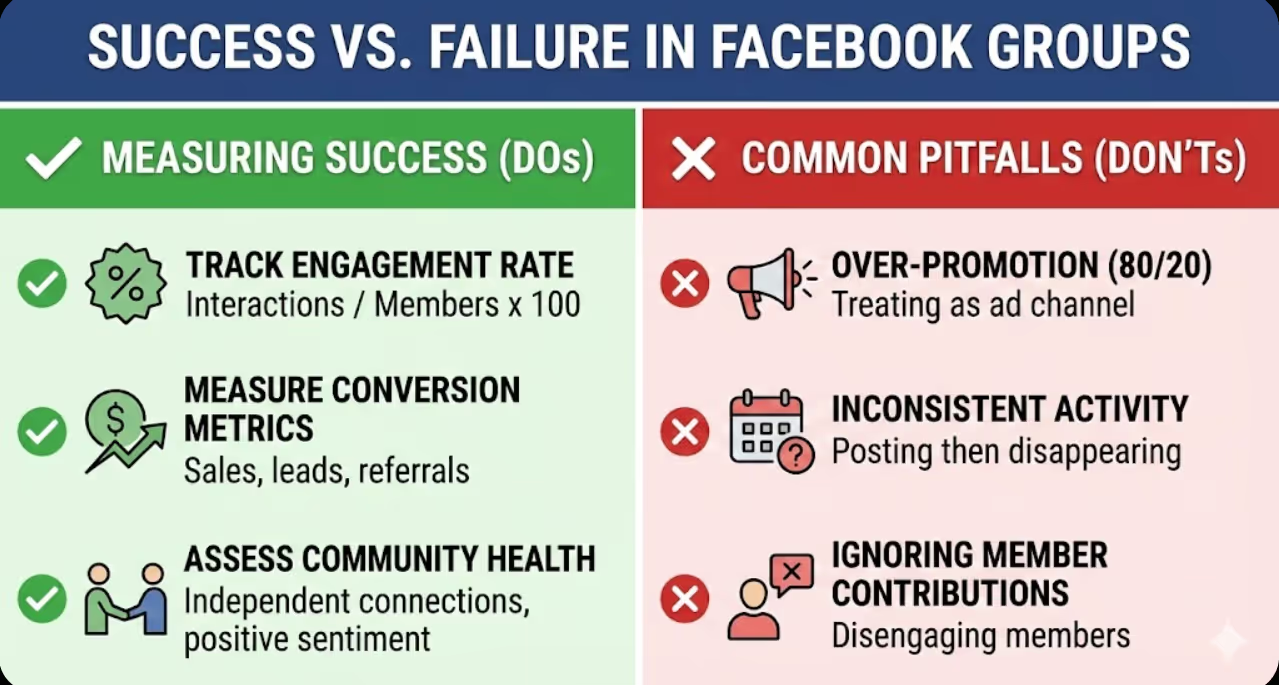
Calculate your engagement rate by dividing total interactions (posts, comments, reactions) by total members, then multiplying by 100. Healthy Groups typically show engagement rates between 10-30%, dramatically higher than Page engagement rates.
Monitor this metric monthly. Declining engagement signals that your content strategy needs adjustment or your moderation approach requires refinement.
Measure Conversion Metrics
What business outcomes does your Group generate? Track metrics like email list growth from Group members, sales influenced by Group discussions, customer support tickets resolved within the Group, and referrals generated by members.
These conversion metrics demonstrate ROI far better than member counts. They justify the time investment and guide strategic decisions about Group development.
Assess Community Health Indicators
Look beyond numbers to qualitative indicators. Are members posting without prompting? Do they reference the Group positively outside the community? Are they connecting with each other independently? These signs indicate a thriving, self-sustaining community.
Australian Case Studies: Brands Doing It Right
Boost Juice: Building a Wellness Community
Boost Juice transformed their Facebook Group from a product-focused space into a holistic wellness community. Rather than constantly promoting smoothies, they share nutrition tips, fitness challenges, and member success stories. The result? Members view the Group as a valuable resource, not an advertising platform, leading to stronger brand loyalty and increased store visits.
Bunnings: The DIY Community Hub
Bunnings leveraged Australians' love of DIY projects by creating Groups focused on sharing project ideas, troubleshooting challenges, and celebrating completed work. Members post photos of their creations, ask for advice, and genuinely help each other—whilst naturally discussing Bunnings products in context. It's community-driven marketing at its finest.
Canva: Empowering Design Communities
Canva's Australian Facebook Groups focus on specific user segments—small business owners, educators, marketers. By creating niche communities rather than one massive group, they deliver highly relevant content and facilitate meaningful connections. Members share templates, offer design feedback, and learn from each other, with Canva facilitating rather than dominating conversations.
Common Pitfalls to Avoid
Over-Promotion
Nothing kills a Facebook Group faster than treating it as another advertising channel. The 80/20 rule applies here: 80% valuable, educational, or entertaining content; 20% promotional. Even that 20% should feel natural and relevant, not forced.
Inconsistent Activity
Posting daily for two weeks then disappearing for a month destroys community momentum. Consistency matters more than frequency. Better to post quality content three times weekly indefinitely than daily for short bursts.
Ignoring Member Contributions
When members post questions or share content and receive crickets in response, they disengage. Make it a priority to acknowledge every member contribution, even with a simple reaction or brief comment. This recognition encourages continued participation.
Failing to Evolve
Your Group should grow and change with your community. Regularly solicit feedback through polls or discussion threads. What content do members want more of? What features would enhance their experience? Adapt based on their input.
The Future of Facebook Group Marketing in Australia
Despite predictions of Facebook's demise, research indicates that Facebook Groups are actually growing, particularly among Australian users seeking authentic community experiences. The platform continues investing in Group features, signalling long-term commitment to community-building tools.
Smart Australian brands are recognising this opportunity. They're shifting resources from trying to game the Page algorithm to building genuine communities that generate organic engagement, customer loyalty, and measurable business results.
The competitive advantage lies in starting now, before your market becomes saturated. Early movers establish authority, build engaged communities, and create barriers to entry for competitors.
Your Next Steps
Facebook Group marketing isn't a quick win—it's a long-term relationship-building strategy. The brands winning in this space commit to showing up consistently, providing genuine value, and facilitating meaningful connections.
Start small. Create a Group focused on serving a specific segment of your audience exceptionally well. Test different content types, engagement strategies, and community-building tactics. Learn what resonates with your unique audience, then double down on what works.
The Australian brands dominating their markets five years from now won't be those with the biggest advertising budgets—they'll be those who built the strongest communities.
Transform Your Brand's Community Strategy Today
Building a thriving Facebook Group requires strategy, consistency, and authentic engagement—but the rewards are extraordinary. Higher customer retention, increased referrals, deeper brand loyalty, and sustainable organic reach all flow from genuine community connections.
At Maven Marketing Co, we specialise in helping Australian businesses develop and execute community-driven marketing strategies that deliver measurable results. Our team has helped dozens of brands transform their social media presence from broadcasting platforms into thriving communities that drive real business growth.
Ready to build a community that genuinely connects with your customers? Let's discuss how Facebook Group marketing can work for your unique business goals. Visit mavenmarketingco.com.au to book your free strategy consultation and discover how community-driven marketing can transform your brand's relationship with customers.

Table of contents
read more blogs
Is Google Ads Better Than SEO for My Business
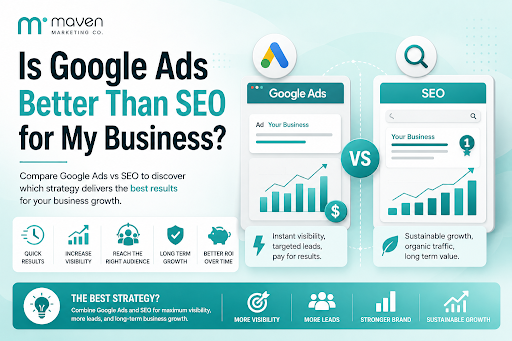
One of the biggest questions business owners ask when they are planning online growth is whether they should invest in Google Ads or SEO. Both are strong marketing plays that help your company show up in Google search results, but they do things in separate lanes. Google Ads gives quicker visibility and can bring in leads fast, whereas SEO more or less focuses on slow, steady organic traffic that tends to grow the longer you keep building it. Picking the right direction depends on what you want to achieve, how much money you can spend, how crowded the market is, and how quickly you need results, like sooner rather than later. The good news is you don’t always have to choose one or the other; it’s not exactly a black-and-white situation. If you take time to understand the strongest points of both, you can put together a more sensible digital marketing plan that supports consistent expansion. In this guide, we’ll compare Google Ads vs SEO, explain the main differences, and help you figure out what option makes the most sense for your business.

When Should I Hire a Digital Marketing Agency
Growing a business today takes more than just having a website or throwing a post on social media; customers usually search around online, compare providers, skim reviews, and basically expect the brand to show up with a solid digital presence before they even think about buying. Many businesses try to run their marketing themselves, but there comes a point when “doing it all in-house” becomes clunky and hard to manage, all at once. Knowing when to hire a digital marketing agency can end up making a big, real difference for your growth. If you’re not getting enough leads, or your online visibility feels stuck, or sales are just not moving, the right agency can bring the know-how, plus a clear plan, to help you get noticeably better outcomes. In this guide, we’ll dig into what a digital marketing agency actually does, the usual signs it’s time to bring one on, and how picking the right marketing partner can help your business move forward at a faster pace.
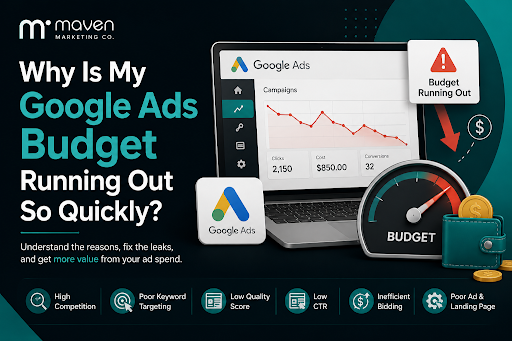
Why Is My Google Ads Budget Running Out So Quickly
Running a successful Google Ads budget isn’t only about throwing more money at it. It’s more like making every dollar, doing a bit extra. A lot of businesses start a Google Ads campaign with big hopes, then find out their daily budget is gone within a few hours, and that feels weird, right? After that, your ads stop showing effectively, new leads slip away, and your return on investment dips. So if your Google Ads budget is running out too fast, don’t stress. It’s a fairly common issue, and in most situations, it can be repaired with the right approach. There are multiple little things that can drain your advertising money quicker than you expected, from costly keywords to audience targeting that just doesn’t quite fit. In this guide, we’ll walk through why your budget disappears so quickly, how to cut wasteful spend, and the most reliable ways to boost your Google Ads ROI, even if your budget stays the same.


