.svg)


%201.svg)
Key Takeaways
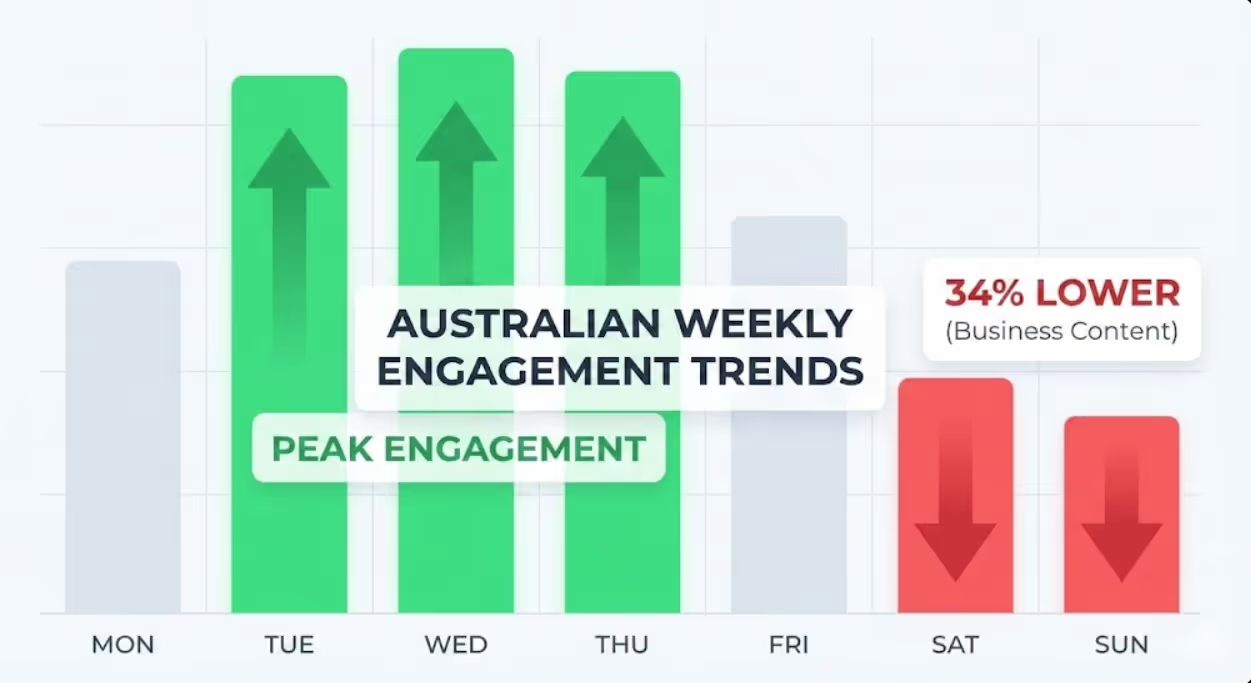
- Australian social media engagement peaks Tuesday-Thursday, with weekends showing 34% lower business content engagement
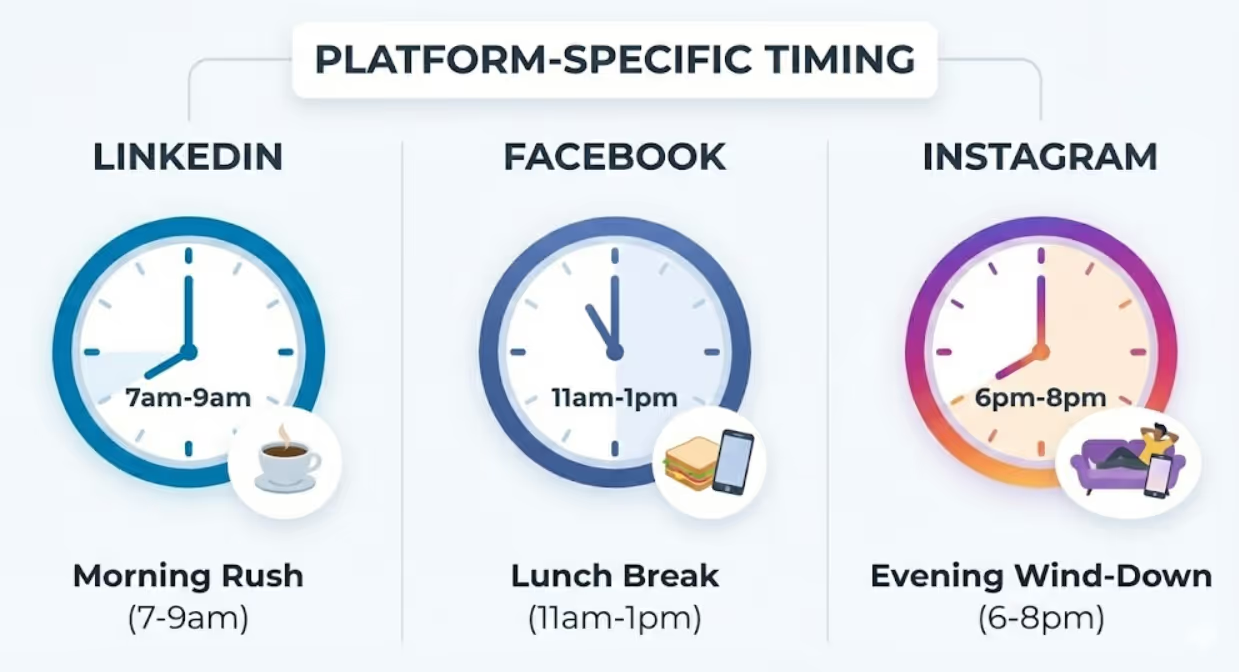
- Platform-specific timing matters: LinkedIn performs best 7-9am, Instagram peaks 6-8pm, Facebook sees highest engagement 11am-1pm
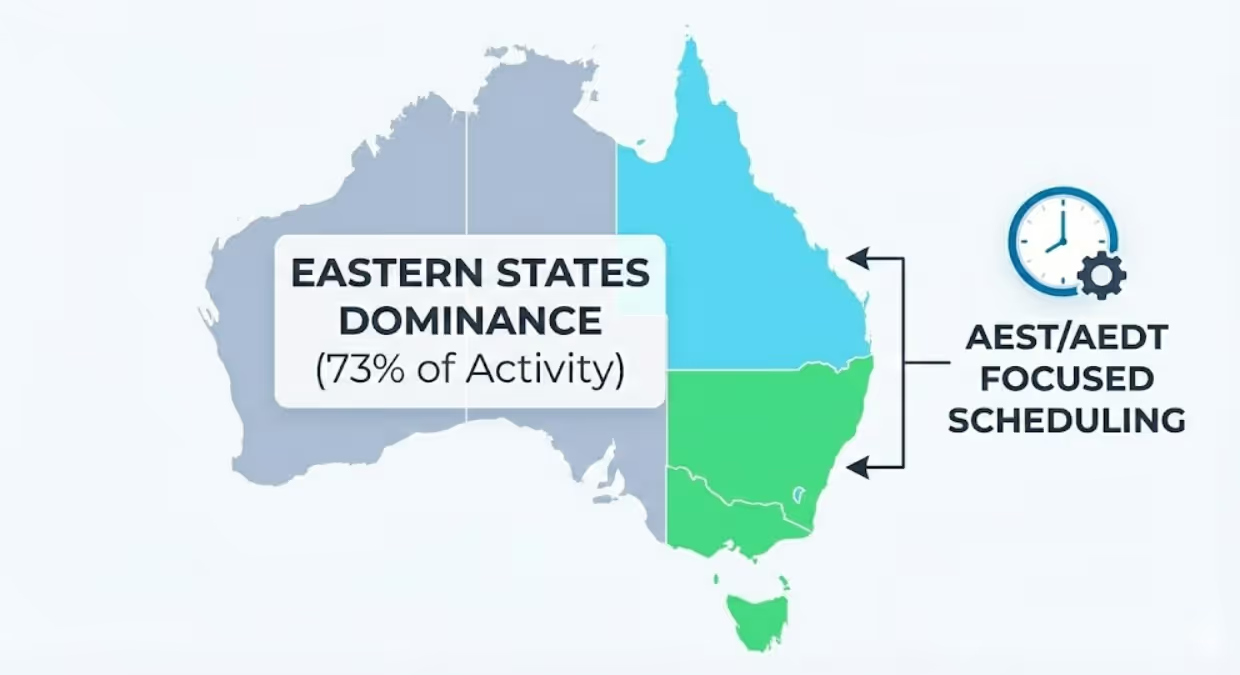
- Eastern states dominate Australian social media activity (73%), requiring AEST/AEDT-focused scheduling despite national presence
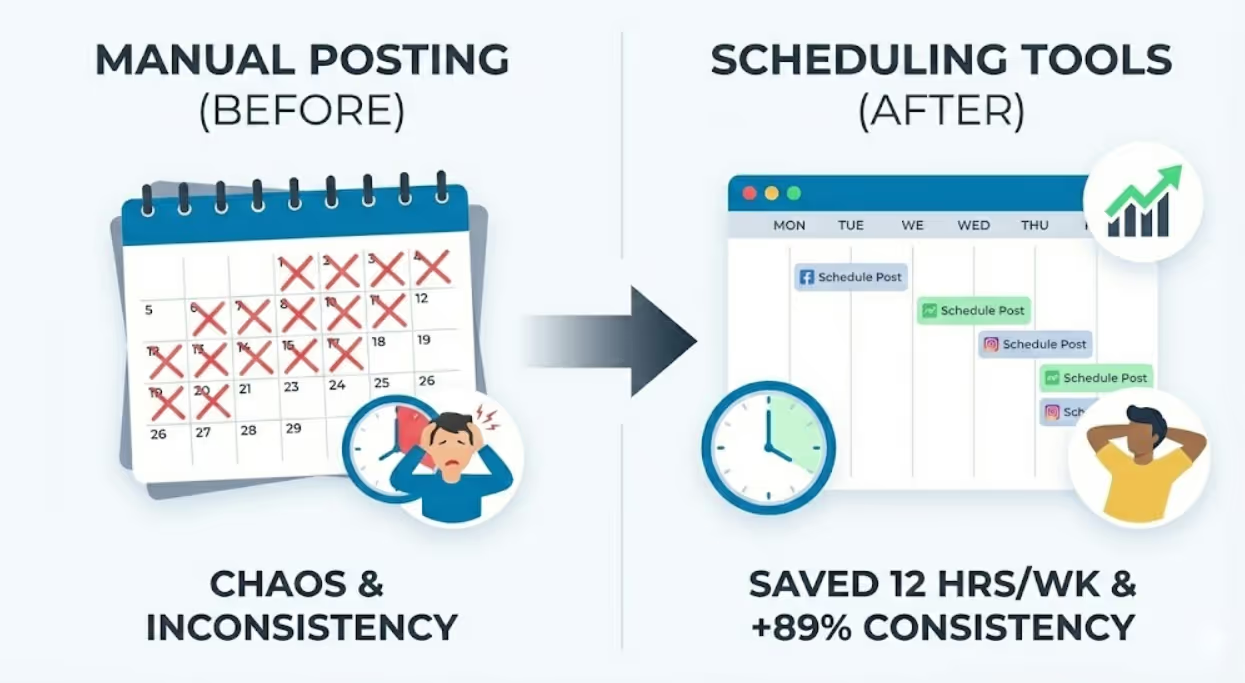
- Scheduling tools save Australian businesses an average 12 hours weekly whilst increasing posting consistency by 89%
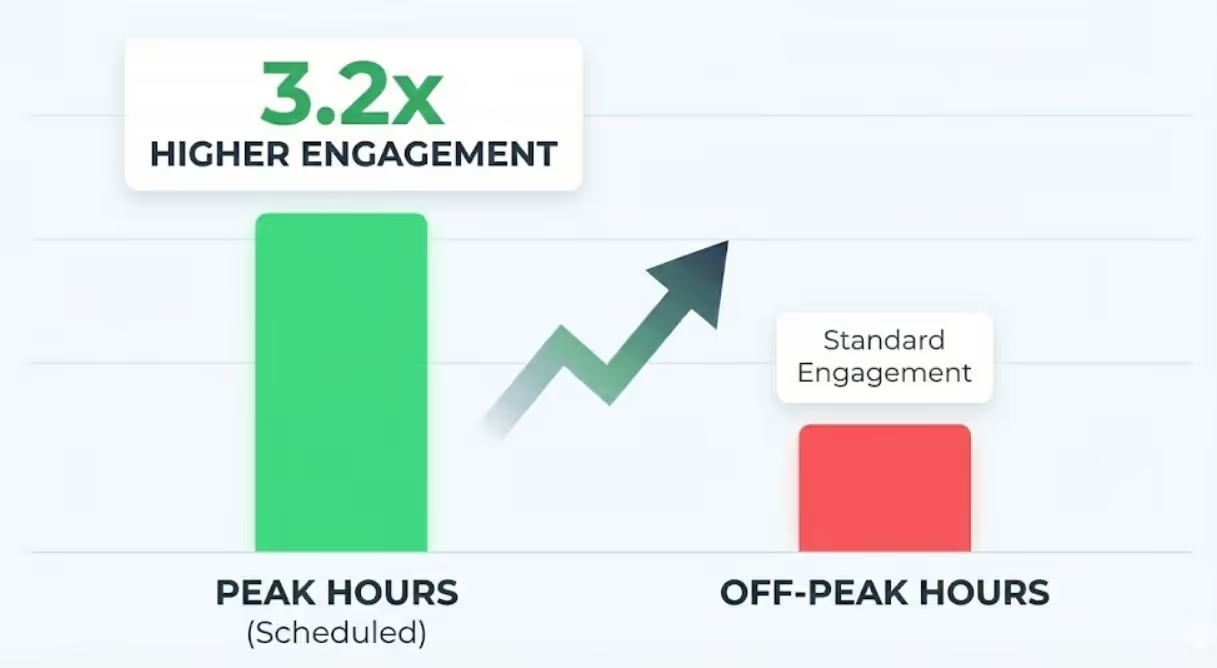
- Posts scheduled during Australian peak hours achieve 3.2x higher engagement than off-peak content
- Time zone complexity across Australia requires strategic scheduling for businesses serving multiple regions
Why Generic Posting Advice Fails Australian Businesses
Most social media scheduling advice originates from US-centric research, creating fundamental problems for Australian marketers. American peak engagement times—9am EST or 3pm PST—translate to midnight or 6am AEDT, precisely when Australian audiences sleep.
Beyond time zone misalignment, Australian social media behavior differs culturally from other English-speaking markets. Australians engage more heavily during commute times than lunch breaks, prefer authenticity over polish, and show distinct platform preferences that don't mirror US or UK patterns.
Research on Australian social media habits reveals we check platforms more frequently but scroll faster than American users, requiring thumb-stopping content timed for maximum visibility during brief engagement windows.
Understanding these nuances transforms posting from hopeful broadcasting to strategic audience connection.
The Australian Time Zone Challenge
Australia spans three primary time zones—AEST/AEDT (Eastern), ACST/ACDT (Central), and AWST (Western)—creating scheduling complexity for national businesses.
The Eastern States Dominance
Sydney, Melbourne, and Brisbane contain 73% of Australia's population and dominate social media activity. For most Australian businesses, optimizing for Eastern time delivers maximum impact even if serving national audiences.
Businesses with significant Western Australian customer bases face a genuine dilemma—post for Sydney's 8am (5am Perth) or Perth's 8am (11am Sydney)? The answer depends on revenue distribution and audience concentration, not geographic fairness.
Daylight Saving Complications
October through April introduces additional complexity as NSW, VIC, TAS, ACT, and SA observe daylight saving whilst QLD, NT, and WA don't. This creates temporary four-hour gaps between Perth and Sydney, requiring scheduling adjustments twice annually.
Quality scheduling tools handle these transitions automatically, but manual posting requires vigilant calendar awareness to avoid missing windows or posting at awkward times.
Multi-Timezone Strategy
Businesses serving truly national audiences benefit from dual-posting strategies—primary content optimized for Eastern audiences and secondary posts targeting Western markets 2-3 hours later. This maximizes reach without fragmenting messaging.
Platform-Specific Timing for Australian Audiences
Each platform has distinct usage patterns among Australian audiences, requiring customized scheduling approaches.
Facebook Timing Strategy
Australian Facebook usage follows predictable patterns shaped by the platform's demographic skew toward users 35+.
Peak Engagement Windows:
- 11am-1pm AEST: Lunch breaks drive peak Facebook engagement as users scroll feeds while eating or taking work breaks
- 6-8pm AEST: Evening wind-down creates secondary peak as families settle after dinner
- 9-10am AEST: Morning coffee and commute scrolling provides solid engagement, particularly for news-style content
Optimal Days:Wednesday and Thursday consistently outperform other weekdays by 23-31%. Tuesdays perform well. Mondays show lower engagement as people catch up from weekends. Fridays see declining engagement after 2pm as Australian workers mentally check out.
Weekends suit lifestyle brands, restaurants, and entertainment but show 34% lower engagement for B2B or professional services content.
Instagram Timing Strategy
Instagram's younger demographic (68% of users under 35) creates different engagement patterns centered around lifestyle moments.
Peak Engagement Windows:
- 6-8pm AEST: Evening relaxation time generates highest Instagram engagement as users unwind, browse, and engage extensively
- 7-9am AEST: Morning routines—coffee, commute, gym—drive strong engagement with visually appealing content
- 12-1pm AEST: Lunch scrolling peaks for food, fashion, and lifestyle content
Instagram Reels and Stories show slightly different patterns, with Reels performing exceptionally well 8-10pm as users seek entertainment before bed, and Stories achieving highest completion rates 7-9am when users catch up on overnight posts.
LinkedIn Timing Strategy
Professional platform LinkedIn follows work-centric patterns among Australian business audiences.
Peak Engagement Windows:
- 7-9am AEST: Pre-work and commute time sees highest LinkedIn engagement as professionals catch up on industry news
- 12-1pm AEST: Lunch breaks drive secondary engagement spike
- 5-6pm AEST: Post-work wind-down creates tertiary engagement window
LinkedIn engagement drops precipitously after 6pm and remains low throughout evenings and weekends. Australian professionals compartmentalize LinkedIn as work-time activity, unlike Facebook or Instagram which blend personal and professional throughout the day.
Tuesday, Wednesday, and Thursday dramatically outperform Monday and Friday. According to Australian LinkedIn engagement research, mid-week posts achieve 47% higher engagement than Monday posts and 62% higher than Friday posts.
TikTok Timing Strategy
TikTok's youngest demographic (73% under 30) and algorithm-driven discovery model create unique timing considerations.
Peak Engagement Windows:
- 7-9pm AEST: Peak entertainment consumption time for younger Australians
- 6-7am AEST: Morning scrolling before school/university/work
- 12-1pm AEST: Lunch break entertainment seeking
TikTok's algorithm matters more than timing for this platform. Well-optimized content can achieve viral reach regardless of posting time as the algorithm surfaces engaging content to relevant users hours or days after publication.
However, initial engagement velocity influences algorithmic promotion. Posting during peak times increases likelihood of immediate engagement that signals quality to the algorithm, creating compounding visibility effects.
Twitter/X Timing Strategy
Twitter's real-time nature and news-focused Australian user base create different optimal windows.
Peak Engagement Windows:
- 7-9am AEST: News consumption during breakfast and commute
- 12-1pm AEST: Midday news check and discussion
- 6-8pm AEST: Evening news catch-up and commentary
Twitter engagement correlates strongly with news cycles. Posts timed around major announcements, sporting events, or trending topics dramatically outperform off-cycle content regardless of general peak times.
Industry-Specific Timing Nuances
Beyond platform patterns, industry influences optimal posting times as different audiences engage differently.
Food & Hospitality: Peak interest occurs 10-11am (lunch planning), 3-5pm (dinner planning), and 7-9pm (evening cravings and next-day planning). Weekend engagement increases 67% for restaurants and cafes.
Retail & E-commerce: Evening browsing (7-10pm) drives highest engagement and conversion, particularly Thursday-Saturday as weekend purchasing intent builds. Lunchtime (12-2pm) creates secondary shopping window.
B2B Services: Strict business hours apply—Tuesday-Thursday, 8am-5pm AEST. After-hours and weekend posts achieve 71% lower engagement for professional services.
Fitness & Wellness: Early morning (5-7am) captures pre-workout motivation. Evening (5-8pm) catches post-work exercise window. Monday and Tuesday show 43% higher engagement as weekly motivation peaks.
Entertainment & Events: Evening and weekend engagement dominates. Thursday-Saturday, 6-11pm captures planning and booking behavior for weekend entertainment.
Essential Scheduling Tools for Australian Businesses
Manual posting at optimal times demands impractical dedication. Scheduling tools automate timing whilst improving consistency and reducing workload.
Later (Best for Visual-First Brands)
Later excels for Instagram-focused Australian businesses with strong visual content. The visual content calendar, drag-and-drop scheduling, and Instagram-specific features (first-comment scheduling, Stories scheduling, Linkin.bio) make it ideal for fashion, food, travel, and lifestyle brands.
Pricing starts at $25 AUD monthly for starter plans, with time zone handling adequate for Australian businesses serving primarily domestic audiences.
Hootsuite (Best for Multi-Platform Management)
Hootsuite provides comprehensive multi-platform scheduling, monitoring, and analytics. The platform handles Facebook, Instagram, LinkedIn, Twitter, TikTok, and Pinterest from unified dashboard.
For Australian businesses managing presence across multiple platforms and time zones, Hootsuite's robust scheduling (including time zone-specific queues) and detailed analytics justify the higher price point (from $99 AUD monthly).
Buffer (Best for Simplicity and Affordability)
Buffer balances functionality and affordability beautifully. The clean interface, optimal timing suggestions (based on your account's historical engagement), and queue scheduling make it accessible for small Australian businesses.
Starting at $6 AUD monthly per channel, Buffer provides essential scheduling without overwhelming complexity—ideal for solo operators and small teams.
Meta Business Suite (Best for Facebook/Instagram Budget Option)
Meta's native scheduling tool is free and handles Facebook and Instagram effectively. For businesses active only on Meta platforms, it provides adequate scheduling, basic analytics, and cross-posting capabilities without additional software costs.
Limitations include less sophisticated analytics than third-party tools and Facebook/Instagram exclusivity, but the price (free) suits budget-conscious Australian small businesses.
Sprout Social (Best for Enterprise-Level Needs)
Large Australian businesses and agencies benefit from Sprout Social's comprehensive features—advanced analytics, team collaboration tools, social listening, and sophisticated scheduling across all major platforms.
The significant investment ($249 USD monthly minimum) makes sense only for businesses where social media directly drives substantial revenue or brands requiring enterprise-level coordination and reporting.
Building Your Australian Posting Schedule
Theoretical knowledge means nothing without practical implementation. Here's how to build an effective posting schedule for Australian audiences.
Step 1: Audit Current Performance
Before changing anything, understand your current patterns. Review analytics for your last 90 days, identifying when your posts received highest engagement. Your specific audience may deviate from general Australian patterns.
Note which post types, topics, and formats perform best at different times. Perhaps your audience engages more with video in evenings but prefers quick tips during morning commutes.
Step 2: Create Platform-Specific Schedules
Develop posting schedules customized to each platform and your audience insights:
Example B2B Schedule:
- LinkedIn: Tuesday-Thursday, 8am and 12pm AEST
- Facebook: Wednesday-Thursday, 11am and 6pm AEST
- Instagram: Tuesday-Thursday, 7am and 7pm AEST
Example B2C Retail Schedule:
- Instagram: Daily, 7am, 1pm, and 7pm AEST
- Facebook: Tuesday-Saturday, 11am and 7pm AEST
- TikTok: Daily, 8am and 8pm AEST
Step 3: Batch Content Creation
Schedule dedicated time weekly for content creation—writing captions, designing graphics, filming videos. Batching creates efficiency and ensures consistent quality.
Many successful Australian businesses dedicate Friday afternoons to creating next week's content, scheduling everything before weekend. This Monday-Friday rhythm maintains consistency without daily posting pressure.
Step 4: Schedule Strategically
Load your scheduling tool with batched content, distributing posts across optimal times identified in your platform-specific schedules. Build 1-2 weeks ahead to create buffer against unexpected disruptions.
Leave room for real-time content—trending topics, timely responses, spontaneous moments. An entirely pre-scheduled presence feels robotic. Balance planned consistency with authentic spontaneity.
Step 5: Monitor and Adjust
Review analytics monthly. Which scheduled times consistently outperform? Which underperform? Adjust schedules based on performance data rather than assumptions.
Australian audience behaviors shift with seasons, holidays, and cultural moments. Your optimal posting times in January may differ from July. Continuous optimization beats "set and forget" approaches.
Advanced Scheduling Strategies
Once basic scheduling is mastered, these advanced tactics optimize further.
Time Zone Segmentation: For businesses serving distinct geographic markets, create separate posting queues for Eastern and Western audiences. Tools like Hootsuite enable time-zone-specific scheduling ensuring appropriate timing for each region.
Frequency Optimization: More isn't always better. Test different posting frequencies—perhaps 3x daily versus 1x daily on Instagram—measuring engagement rate per post rather than total engagement. Often, reduced frequency with higher-quality content outperforms high-volume mediocre content.
Seasonal Adjustments: Australian summer and winter create different social media consumption patterns. Summer sees increased weekend engagement as people seek activities. Winter drives higher evening engagement as people spend more time indoors. Adjust schedules seasonally for optimal impact.
Campaign Integration: Align social media schedules with broader marketing campaigns. Product launch weeks might require increased frequency and strategic timing around announcement moments. Sale periods benefit from reminder posts at optimal purchasing windows.
Common Scheduling Mistakes to Avoid
Even experienced marketers make preventable scheduling errors that undermine results.
Ignoring Analytics: Scheduling based on generic advice rather than your specific audience data wastes opportunity. Your audience might engage differently than average Australian users. Trust your data over general recommendations.
Over-Automation: Scheduling everything removes spontaneity and responsiveness. Reserve 20-30% of content for real-time posting responding to trends, news, or timely opportunities.
Time Zone Confusion: Ensure your scheduling tool reflects AEST/AEDT correctly. Accidentally scheduling for US time zones is embarrassingly common and completely undermines your strategy.
Neglecting Engagement: Scheduling posts isn't enough—you must engage with comments, messages, and mentions. Schedule not just posting time but engagement time responding to your audience.
Inconsistent Frequency: Posting 5x one week and 0x the next confuses algorithms and audiences. Consistency matters more than volume. Better to maintain 3x weekly reliably than fluctuate between 7x and 0x weekly.
Measuring Scheduling Success
Effective measurement determines whether your scheduling strategy delivers results or requires adjustment.
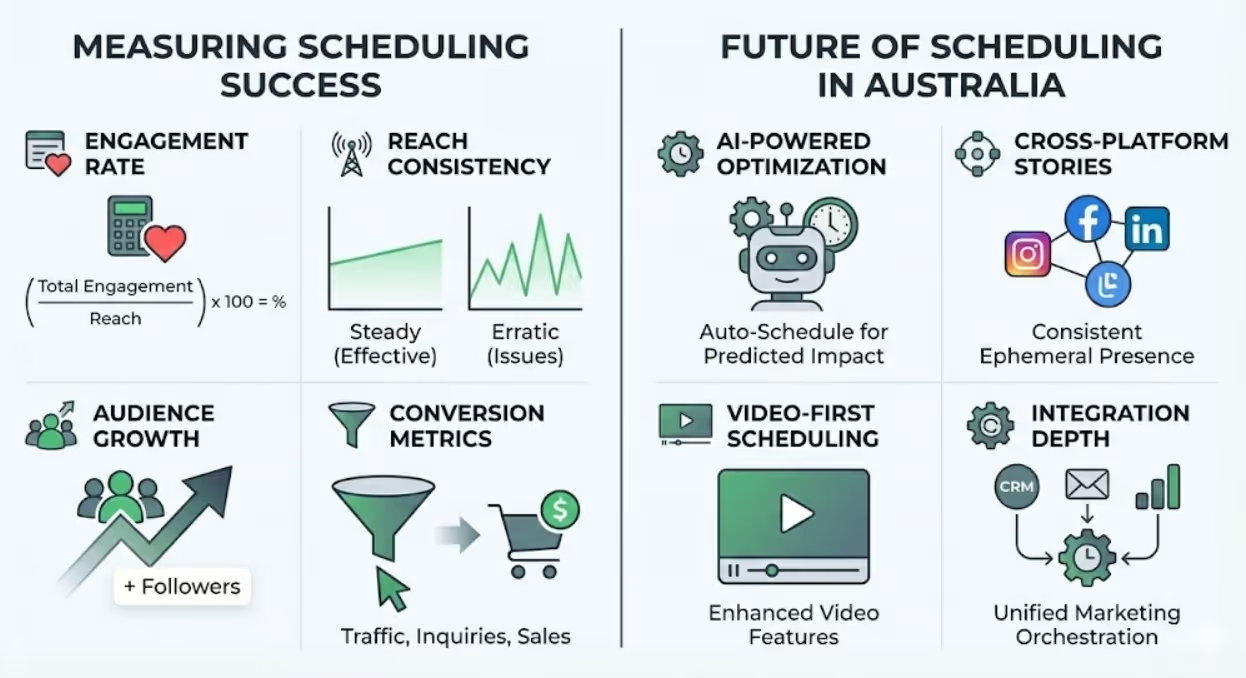
Engagement Rate: Total engagement (likes, comments, shares) divided by reach, multiplied by 100. This percentage indicates content resonance better than raw engagement numbers. Track this metric per posting time to identify optimal windows.
Reach Consistency: Measure whether scheduled posts achieve consistent reach or fluctuate wildly. Consistent reach suggests effective timing and algorithmic favor. Erratic reach indicates timing issues or content quality inconsistency.
Audience Growth: Effective scheduling should correlate with steady audience growth as consistent, well-timed content attracts new followers. Stagnant growth despite regular posting suggests timing or content issues.
Conversion Metrics: Ultimately, social media should drive business outcomes—website traffic, inquiries, sales. Attribute conversions to social sources, identifying which platforms and posting times generate highest-value traffic.
The Future of Social Media Scheduling in Australia
Australian social media landscapes continue evolving, requiring adaptive scheduling approaches.
AI-Powered Optimization: Emerging tools use artificial intelligence to analyze your specific audience behavior and automatically schedule posts for predicted optimal impact. These tools continuously learn and adjust, removing manual optimization burden.
Cross-Platform Stories: As Stories formats proliferate across platforms, scheduling tools are improving ephemeral content scheduling. This enables consistent Stories presence across Instagram, Facebook, and LinkedIn without manual posting.
Video-First Scheduling: With video dominating engagement across platforms, scheduling tools are enhancing video-specific features—thumbnail selection, caption optimization, and cross-platform video formatting.
Integration Depth: Scheduling tools increasingly integrate with broader marketing ecosystems—CRM systems, email marketing, analytics platforms—creating unified marketing orchestration rather than isolated social media scheduling.
Start Scheduling Strategically Today
The difference between businesses succeeding and struggling on social media often isn't content quality—it's strategic timing and consistent execution. Brilliant content posted when nobody's watching achieves nothing. Adequate content posted when your Australian audience actively engages drives remarkable results.
Scheduling tools and strategic timing don't replace creativity or authentic connection—they amplify both by ensuring your efforts reach audiences when they're most receptive. The Australian businesses dominating social media aren't working harder; they're working smarter through strategic scheduling that maximizes every piece of content's impact.
Your audience is online right now, scrolling, seeking content that resonates. The question is whether your content appears when they're looking.
Optimize Your Social Media Timing Strategy
Implementing effective social media scheduling requires understanding Australian audience behaviors, selecting appropriate tools, and maintaining consistency whilst remaining adaptable to performance data and market changes.
At Maven Marketing Co, we help Australian businesses develop and execute social media strategies optimized for local audiences. Our team understands the unique timing considerations, platform preferences, and cultural nuances that make Australian social media marketing distinct from global approaches.
Ready to stop posting randomly and start reaching your Australian audience when they're most engaged? Let's discuss how strategic scheduling can multiply your social media impact whilst reducing the time you spend managing your presence. Visit mavenmarketingco.com.au to schedule your complimentary social media strategy session and discover how proper timing transforms your results.

Table of contents
read more blogs
Is Google Ads Better Than SEO for My Business
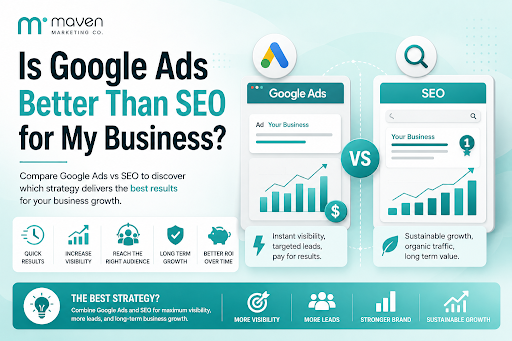
One of the biggest questions business owners ask when they are planning online growth is whether they should invest in Google Ads or SEO. Both are strong marketing plays that help your company show up in Google search results, but they do things in separate lanes. Google Ads gives quicker visibility and can bring in leads fast, whereas SEO more or less focuses on slow, steady organic traffic that tends to grow the longer you keep building it. Picking the right direction depends on what you want to achieve, how much money you can spend, how crowded the market is, and how quickly you need results, like sooner rather than later. The good news is you don’t always have to choose one or the other; it’s not exactly a black-and-white situation. If you take time to understand the strongest points of both, you can put together a more sensible digital marketing plan that supports consistent expansion. In this guide, we’ll compare Google Ads vs SEO, explain the main differences, and help you figure out what option makes the most sense for your business.

When Should I Hire a Digital Marketing Agency
Growing a business today takes more than just having a website or throwing a post on social media; customers usually search around online, compare providers, skim reviews, and basically expect the brand to show up with a solid digital presence before they even think about buying. Many businesses try to run their marketing themselves, but there comes a point when “doing it all in-house” becomes clunky and hard to manage, all at once. Knowing when to hire a digital marketing agency can end up making a big, real difference for your growth. If you’re not getting enough leads, or your online visibility feels stuck, or sales are just not moving, the right agency can bring the know-how, plus a clear plan, to help you get noticeably better outcomes. In this guide, we’ll dig into what a digital marketing agency actually does, the usual signs it’s time to bring one on, and how picking the right marketing partner can help your business move forward at a faster pace.
Why Is My Google Ads Budget Running Out So Quickly
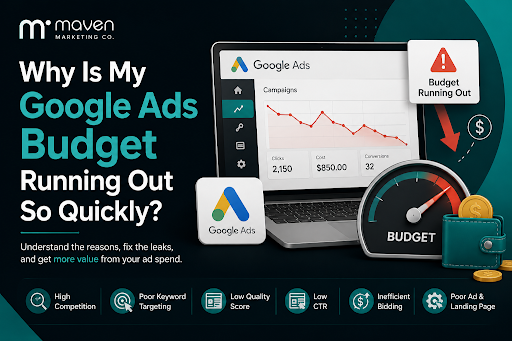
Running a successful Google Ads budget isn’t only about throwing more money at it. It’s more like making every dollar, doing a bit extra. A lot of businesses start a Google Ads campaign with big hopes, then find out their daily budget is gone within a few hours, and that feels weird, right? After that, your ads stop showing effectively, new leads slip away, and your return on investment dips. So if your Google Ads budget is running out too fast, don’t stress. It’s a fairly common issue, and in most situations, it can be repaired with the right approach. There are multiple little things that can drain your advertising money quicker than you expected, from costly keywords to audience targeting that just doesn’t quite fit. In this guide, we’ll walk through why your budget disappears so quickly, how to cut wasteful spend, and the most reliable ways to boost your Google Ads ROI, even if your budget stays the same.