.svg)


%201.svg)

Key Takeaways
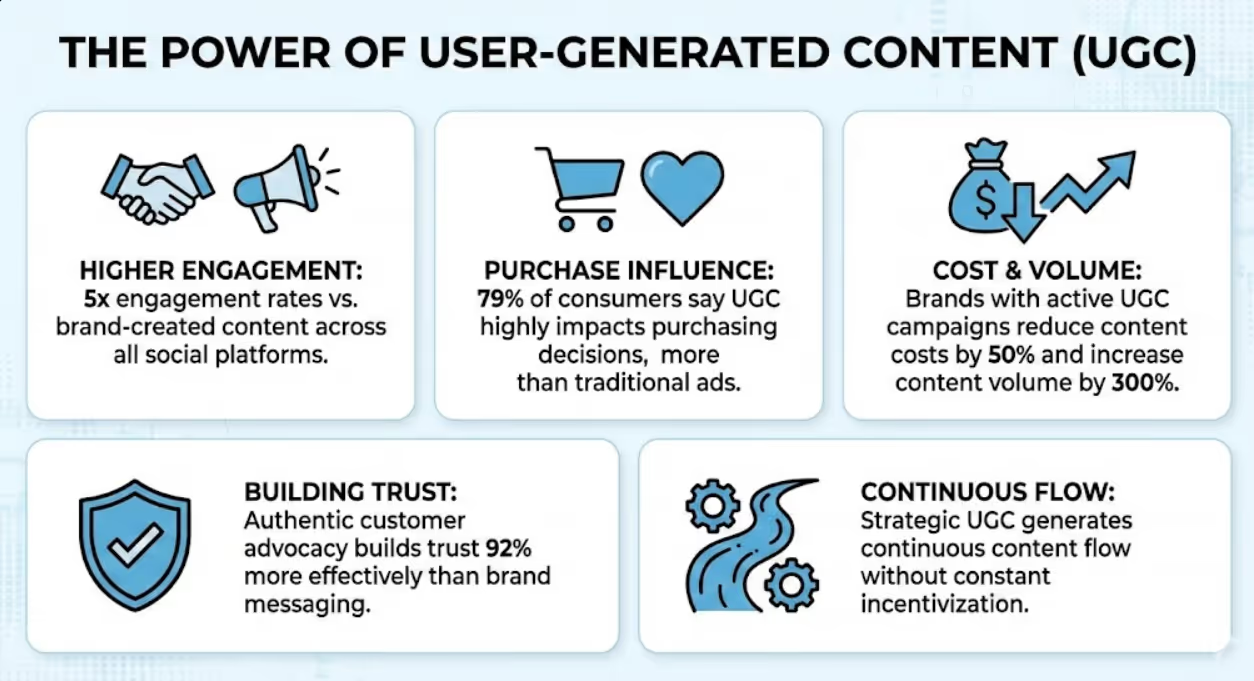
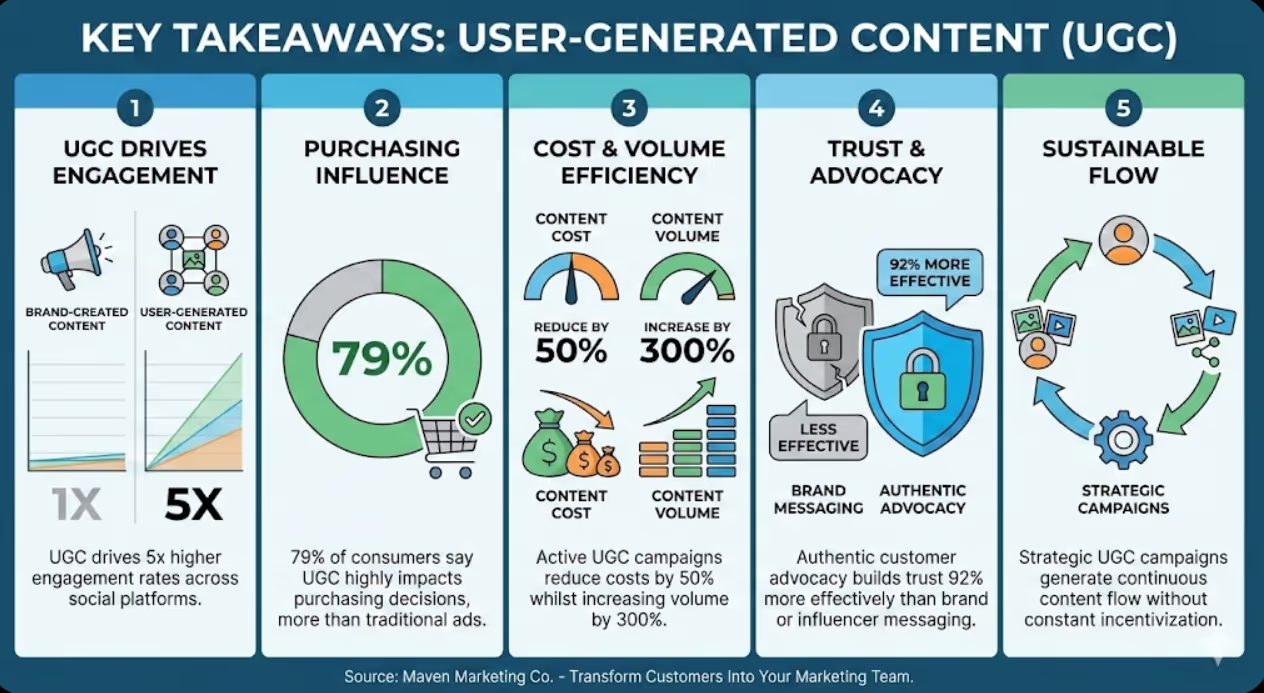
- User-generated content drives 5x higher engagement rates than brand-created content across all social platforms
- 79% of consumers say UGC highly impacts their purchasing decisions, making it more influential than traditional advertising
- Brands with active UGC campaigns reduce content creation costs by 50% whilst increasing content volume by 300%
- Authentic customer advocacy builds trust 92% more effectively than brand messaging or influencer partnerships
- Strategic UGC campaigns generate continuous content flow without constant incentivization or requests
- Rights management and authentic curation separate successful UGC programmes from legal and brand risks
Why User-Generated Content Outperforms Brand Content
The fundamental shift in consumer trust explains UGC's extraordinary effectiveness. Modern consumers are marketing-savvy sceptics who instinctively distrust brand messaging while trusting peer recommendations implicitly.
When your marketing team creates content claiming your product is exceptional, consumers understand you're biased. When a genuine customer shares unprompted enthusiasm, that carries authentic credibility no advertising budget can purchase.
This credibility gap continues widening. Research on consumer trust patterns shows 92% of consumers trust organic, user-generated content more than traditional advertising, and 70% specifically seek out customer reviews and content before making purchase decisions.
Beyond trust, UGC provides diversity and volume impossible for brand teams to replicate. Your customers experience your products in countless contexts, applications, and combinations you'd never anticipate. This diversity creates relevant content for varied audience segments, increasing the likelihood any prospective customer sees themselves reflected in your UGC.
Australian outdoor brand Kathmandu built their Instagram presence almost entirely on customer adventure photos. Rather than staging expensive photoshoots in exotic locations, they leveraged thousands of customers already wearing their gear on genuine adventures. The content is more authentic, more diverse, and infinitely more cost-effective than traditional brand photography.
The Psychology of Customer Advocacy
Understanding why customers create and share content about brands reveals how to encourage this behaviour strategically.
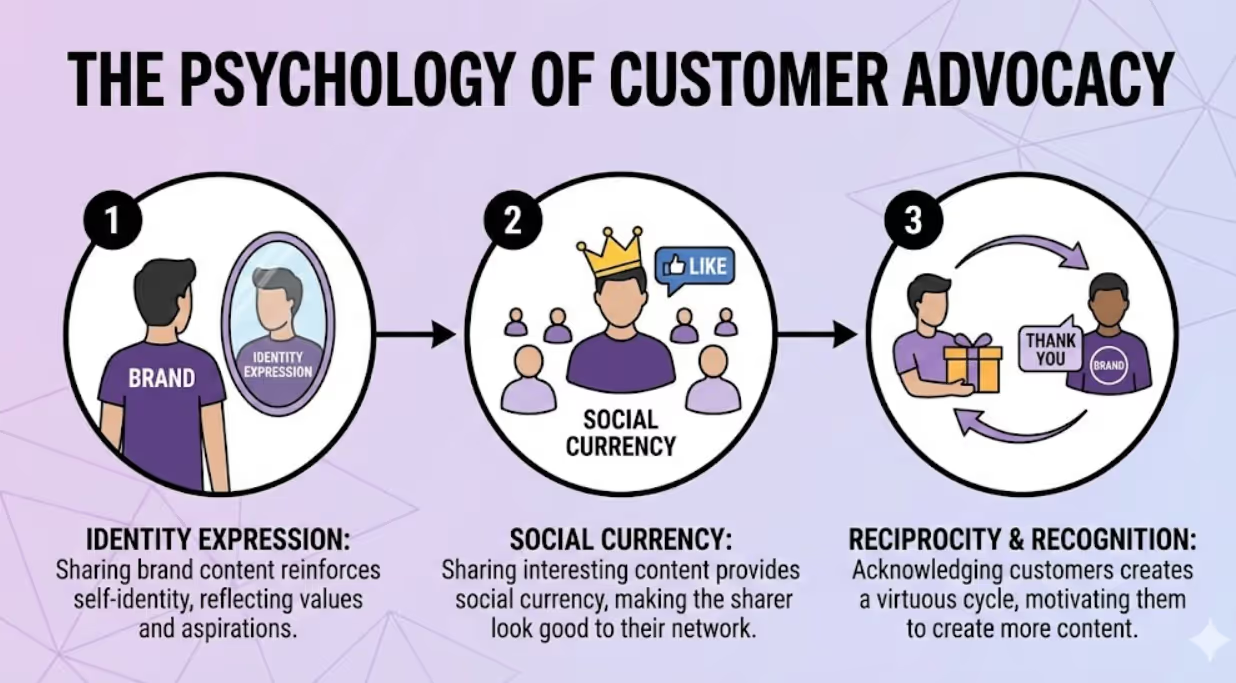
Identity Expression
People share brand content that reinforces their self-identity. When someone posts about their new Tesla, marathon finish wearing Nike, or craft coffee setup featuring a specific grinder, they're not promoting products—they're expressing identity.
Brands become identity signals. Strategic UGC campaigns tap into this by positioning your brand as an identity expression vehicle. What does using your product say about someone? How does it reflect their values, aspirations, or tribe membership?
Social Currency
Sharing interesting, beautiful, or unique content provides social currency—it makes the sharer look good to their network. People share brand content that enhances their social standing, whether through aesthetic appeal, insider access, humour, or usefulness.
UGC campaigns succeeding best provide social currency. When customers share your content or create content featuring your brand, it should make them look informed, tasteful, adventurous, or otherwise desirable to their audience.
Reciprocity and Recognition
Humans feel compelled to reciprocate kindness and appreciate recognition. When brands acknowledge customers—resharing their content, featuring them in campaigns, or simply thanking them publicly—those customers often create more content as reciprocal appreciation.
This reciprocity creates virtuous cycles. Feature one customer's content, and they're motivated to create more. Their friends see the recognition and aspire to similar acknowledgment. Your UGC volume grows organically through strategic recognition of early advocates.
Community Belonging
People want to belong to communities sharing their interests and values. UGC participation signals community membership. When customers see others sharing content about your brand, creating their own content becomes participation in that community.
Building community around your brand transforms UGC from individual acts to collective expression. Members contribute not just to share with their personal networks but to participate in and enrich the brand community.
Designing Effective UGC Campaigns
Random customer content happens occasionally. Consistent, high-quality UGC requires strategic campaign design that makes creation easy, valuable, and rewarding for customers.
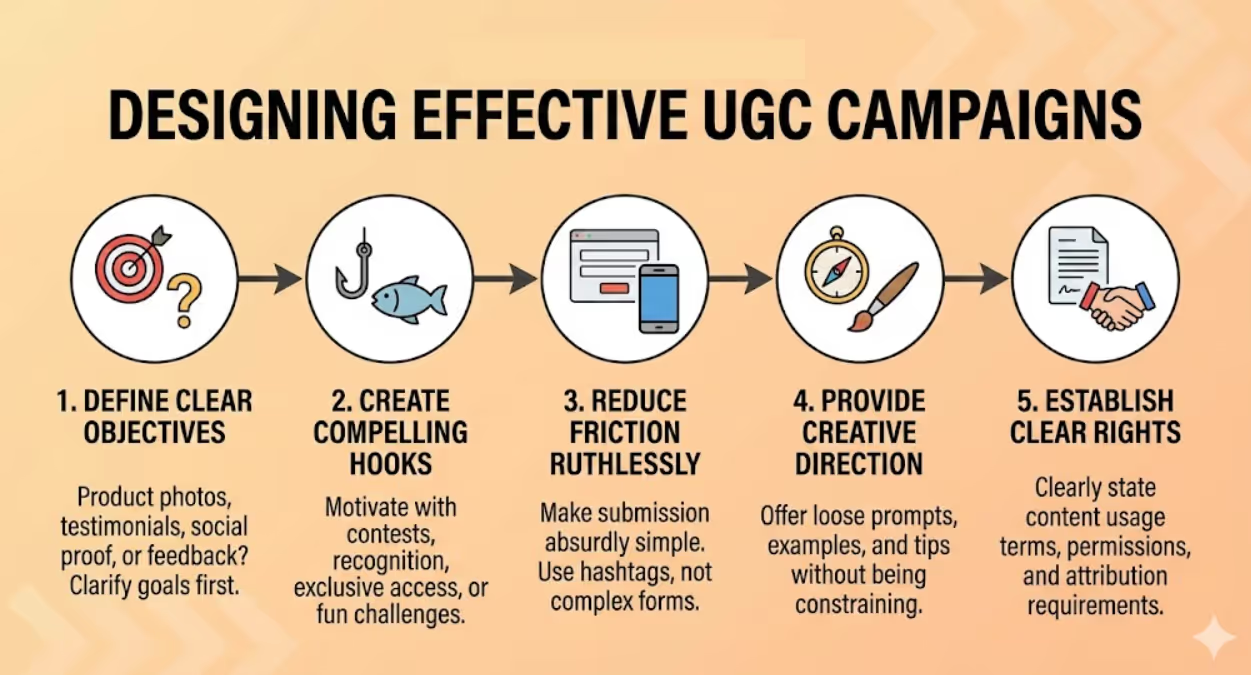
Define Clear Campaign Objectives
UGC campaigns serve different objectives requiring different approaches. Clarify whether you're seeking product photography for your website, testimonial videos for advertising, social proof for product pages, inspiration content for social media, or feedback for product development.
Campaign mechanics, incentives, and promotion strategies all depend on objectives. A campaign seeking website product photography requires different structure than one building social media engagement.
Create Compelling Participation Hooks
Customers need clear, motivating reasons to participate. Effective hooks include contests with desirable prizes, recognition and featuring of submitted content, exclusive access or perks for contributors, community belonging and connection with like-minded customers, or creative challenges that are genuinely fun to participate in.
The best campaigns combine multiple hooks. GoPro's awards programme offers cash prizes (contest), features winning content prominently (recognition), and creates community among adventure content creators (belonging).
Reduce Friction Ruthlessly
Every additional step in your UGC submission process dramatically reduces participation. Make creation and submission absurdly simple.
Use hashtags for social media collection rather than complex submission forms. Provide clear, simple content guidelines rather than extensive rules. Ensure mobile-friendly submission if forms are necessary. Minimize required fields and information. Offer multiple submission channels catering to different preferences.
Australian restaurant chain Grill'd encourages burger photos with a simple hashtag (#grilld). No forms, no requirements, no complexity. Customers snap photos they were taking anyway, add the hashtag, and Grill'd has a continuous UGC stream.
Provide Creative Direction Without Constraints
Customers aren't professional content creators. They need guidance on what you're seeking without feeling constrained or intimidated.
Share examples of excellent UGC, provide loose creative prompts or themes, suggest contexts or scenarios for content, and offer technical tips improving submission quality. Balance is critical—enough direction to inspire and guide, not so much that participation feels like work or requires skills customers lack.
Establish Clear Rights and Usage Terms
Legal nightmares lurk in poorly managed UGC programmes. Establish clear terms regarding content rights, usage permissions, attribution requirements, and compensation if any.
Many brands use hashtag campaigns with clear terms stating that using the hashtag grants the brand permission to repost and use the content. Others require explicit permission before featuring customer content. Choose your approach based on risk tolerance and legal counsel, but absolutely establish something clear and defensible.
According to UGC legal best practices research, brands without clear rights management face average legal costs of $47,000 annually resolving disputes, versus virtually zero for brands with proper protocols.
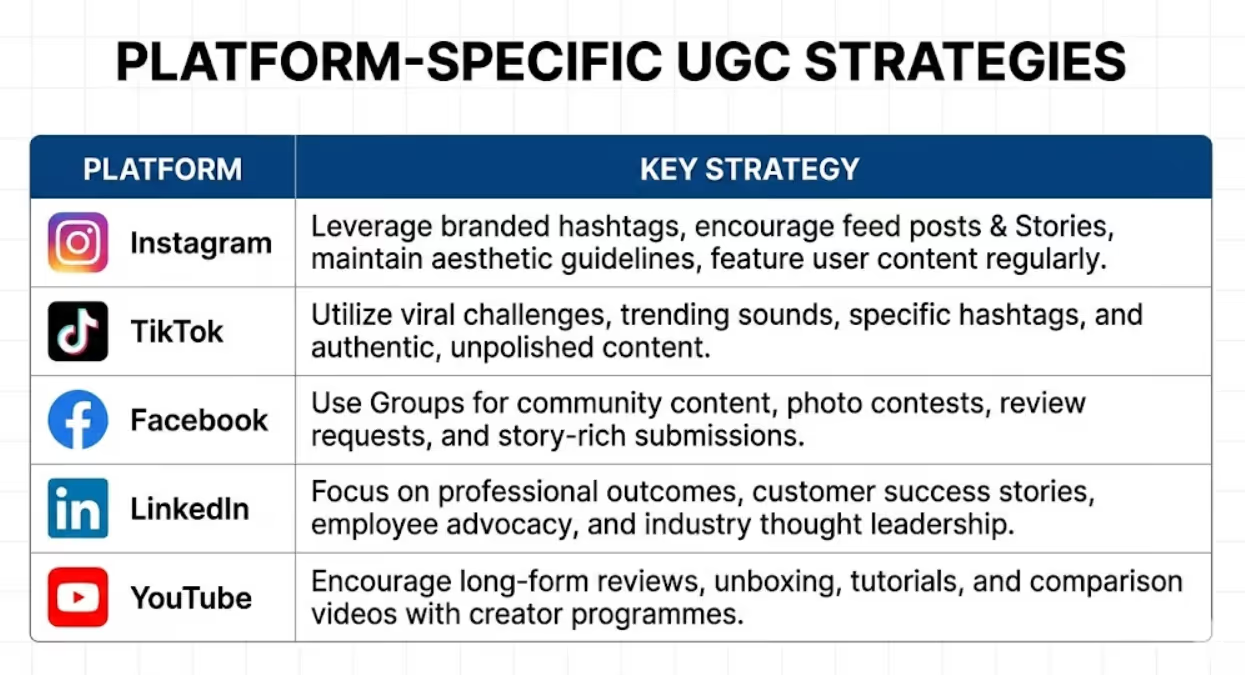
Platform-Specific UGC Strategies
Different platforms require tailored UGC approaches reflecting their unique cultures, content formats, and user behaviors.
Instagram UGC Campaigns
Instagram's visual nature and hashtag functionality make it the dominant UGC platform. Successful Instagram UGC campaigns leverage branded hashtags that are memorable and unique, encourage both feed posts and Stories for diverse content types, create aesthetic guidelines ensuring content aligns with brand image, feature user content in your feed and Stories regularly, and engage meaningfully with every submission through comments or DMs.
Melbourne-based fashion brand Gorman runs exceptional Instagram UGC through their #gormanGIRL hashtag, showcasing diverse customers styling Gorman pieces in personal ways. They regularly feature customer content, creating aspirational recognition whilst providing endless authentic style inspiration.
TikTok UGC Campaigns
TikTok's algorithm rewards participation and creativity, making it ideal for viral UGC campaigns. Effective TikTok UGC leverages challenges with simple, replicable creative formats, trending sounds that amplify reach, specific hashtags for tracking and discovery, demonstration or transformation content showing product use, and authentic, unpolished content that matches platform culture.
Hashtag challenges on TikTok can generate millions of submissions. The key is making participation genuinely fun, not just transactional. If your challenge isn't something people want to do regardless of brand connection, it won't achieve viral traction.
Facebook UGC Campaigns
Facebook's older demographic and community features create different UGC opportunities. Successful Facebook campaigns utilize Facebook Groups for community-based content sharing, photo contests encouraging life-moment submissions, review and testimonial requests integrated with business pages, customer story features highlighting detailed experiences, and event-based UGC from brand experiences or activations.
Facebook users often share more detailed, narrative content compared to Instagram's visual focus. Encourage story-rich submissions showcasing emotional connections and meaningful experiences.
LinkedIn UGC Campaigns
B2B brands leverage LinkedIn UGC differently, focusing on professional outcomes and business impact. Effective LinkedIn UGC includes customer success stories detailing business results, employee advocacy sharing company culture and expertise, professional use-case demonstrations, industry thought leadership from customers using your solutions, and testimonial videos from decision-makers and executives.
LinkedIn's professional context demands substantive content. Superficial or purely promotional UGC underperforms compared to content demonstrating genuine professional value and business outcomes.
YouTube UGC Campaigns
YouTube's long-form video format supports detailed UGC including product reviews and unboxing videos, tutorial and how-to content, customer journey documentaries, comparison and testing videos, and transformation or before-and-after content.
Encourage YouTube UGC by providing early product access to creators, offering affiliate relationships for reviewers, creating creator programmes with exclusive benefits, and featuring standout videos on your official channel.
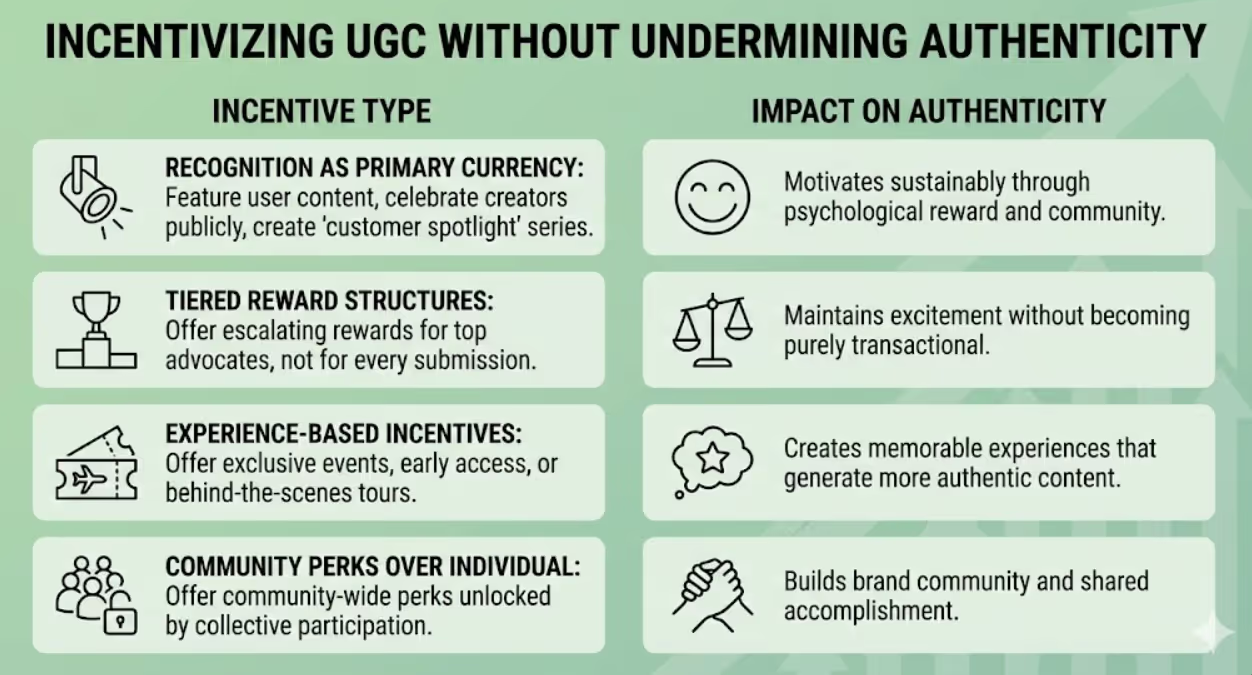
Incentivizing UGC Without Undermining Authenticity
The incentivization paradox: you need to motivate UGC creation, but excessive incentives undermine the authenticity that makes UGC valuable.
Recognition as Primary Currency
For many customers, recognition matters more than tangible rewards. Being featured on a brand's official channel, receiving public acknowledgment, or having content seen by thousands provides significant psychological reward.
Build recognition infrastructure—regularly feature user content, celebrate creators publicly, create "customer spotlight" series, and maintain UGC galleries on your website. This recognition motivates ongoing participation more sustainably than financial incentives.
Tiered Reward Structures
Create participation tiers offering escalating rewards without requiring incentives for every submission. Perhaps monthly featured creators receive product gifts, quarterly contests award significant prizes, and annual programmes recognize top advocates with exclusive experiences.
This structure maintains excitement and aspiration whilst keeping most UGC organically motivated by recognition and community rather than transactional rewards.
Experience-Based Incentives
Experiences often motivate UGC more effectively than cash or products. Invitations to exclusive events, early product access, behind-the-scenes tours, or meetings with brand founders create memorable experiences worth sharing—generating more UGC as customers document and share these special opportunities.
GoPro's awards programme exemplifies this, offering adventure experiences as prizes. Winners receive trips, equipment, and opportunities generating even more content, creating virtuous UGC cycles.
Community Perks Over Individual Rewards
Rather than rewarding individual submissions, offer community-wide perks unlocked by collective participation. "When we reach 1,000 submissions, everyone who participated gets 20% off" creates collaborative motivation and community spirit whilst reducing per-submission costs.
This approach builds brand community and shared accomplishment rather than purely transactional relationships.
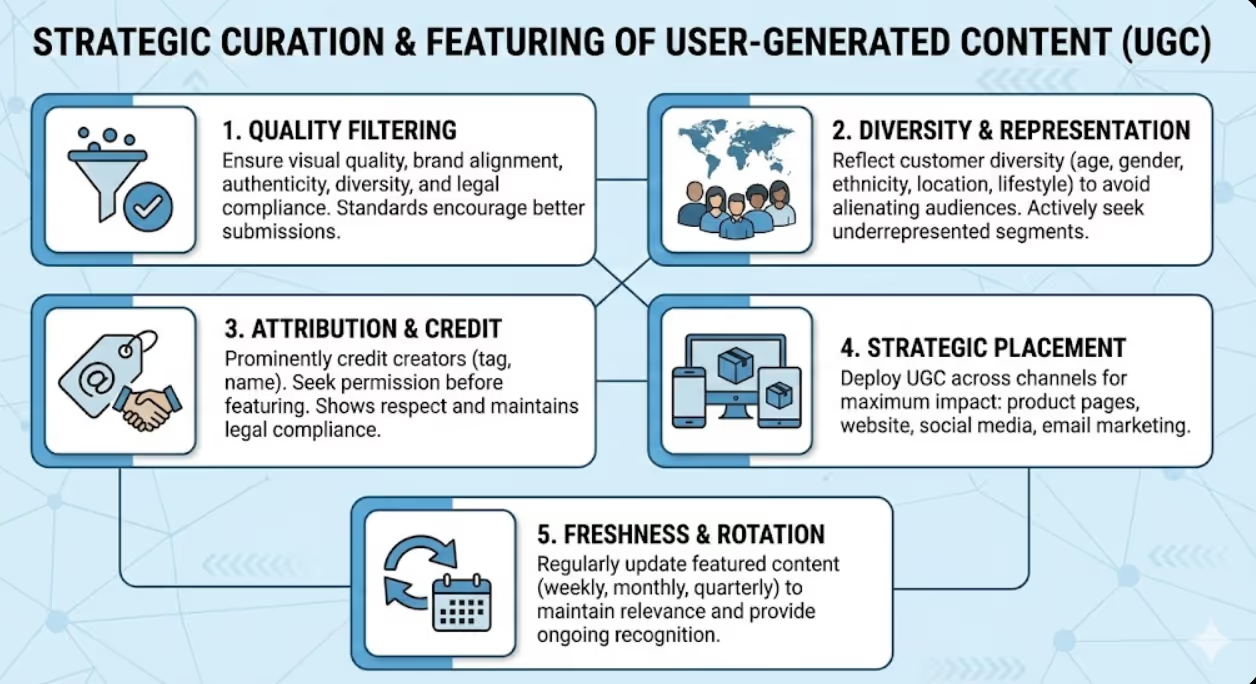
Curating and Featuring User-Generated Content
Collecting UGC is only half the equation. Strategic curation and featuring amplifies impact whilst maintaining brand standards.
Quality Filtering
Not all UGC merits featuring. Establish clear quality standards including visual quality (proper lighting, focus, composition), brand alignment (reflects brand values and aesthetics), authenticity (genuine, not overly staged), diversity (represents varied customer segments), and legal compliance (appropriate rights and permissions).
Featuring only high-quality UGC maintains brand image whilst encouraging future submissions that meet your standards. Customers observe what gets featured and adjust accordingly.
Diversity and Representation
Featured UGC should reflect your actual customer diversity—age, gender, ethnicity, geography, use cases, and lifestyles. Narrow representation alienates potential customers who don't see themselves reflected.
Actively seek and feature diverse content. If your UGC skews toward particular demographics, proactively encourage underrepresented segments through targeted campaigns or outreach.
Attribution and Credit
Always credit content creators prominently. Tag their social accounts, include their names, and seek permission before featuring. Proper attribution shows respect, encourages future submissions, and maintains legal compliance.
Some brands develop sophisticated attribution systems—custom graphics highlighting creator names, featured creator profiles, or creator spotlight series. This recognition infrastructure incentivizes participation whilst celebrating your community.
Strategic Placement
Different UGC serves different purposes and platforms. Product photography works on websites and paid ads. Lifestyle content excels on Instagram. Detailed testimonials fit email marketing. Video reviews enhance product pages.
Categorize collected UGC by type and quality, then deploy strategically across channels where each format delivers maximum impact.
Freshness and Rotation
Regularly refresh featured UGC to maintain relevance and provide ongoing recognition opportunities. Stale content suggests inactive community and reduces motivation for new submissions.
Establish rotation schedules—weekly for social media features, monthly for website galleries, quarterly for email campaigns. Consistent rotation keeps content fresh whilst creating numerous featuring opportunities.
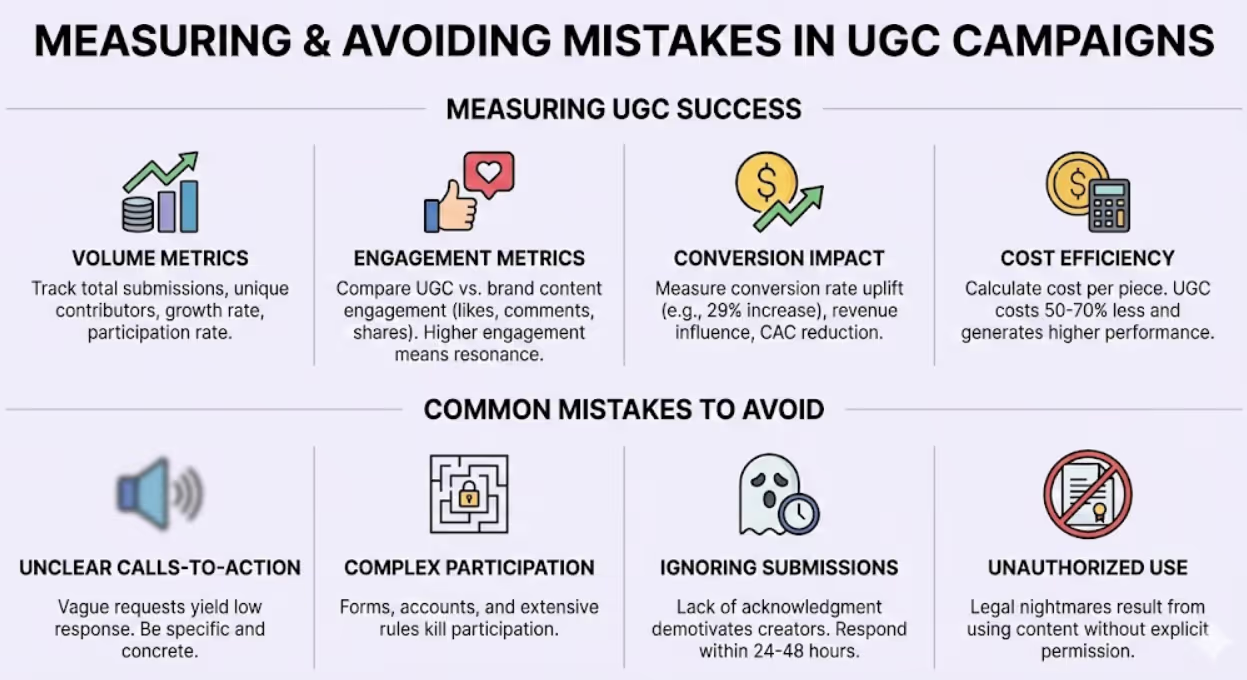
Measuring UGC Campaign Success
Effective measurement determines whether UGC campaigns deliver ROI and guides optimization.
Volume Metrics
Track total submissions, unique contributors, submission growth rate over time, and participation rate (submissions relative to audience size). These metrics indicate campaign traction and community engagement health.
Engagement Metrics
Measure engagement on featured UGC compared to brand-created content. UGC should significantly outperform brand content—if not, either your curation needs improvement or you're featuring content that doesn't resonate with audiences.
Track likes, comments, shares, and saves on featured UGC. Higher engagement indicates authentic content resonating with audiences.
Conversion Impact
Ultimate success means business outcomes. Measure conversion rates on pages featuring UGC versus those without, revenue influenced by UGC campaigns, customer acquisition cost reduction from UGC versus traditional content, and product-specific performance correlation with UGC volume.
Australian e-commerce brands implementing UGC on product pages report average conversion increases of 29% and return rate decreases of 18% as customers have clearer expectations from authentic content.
Cost Efficiency
Calculate content cost per piece for UGC versus brand-created content. Factor in campaign costs, curation time, rights management, and featuring efforts against traditional content creation costs.
Most brands find UGC costs 50-70% less per piece whilst generating significantly higher engagement and conversion performance.
Sentiment and Quality
Beyond quantitative metrics, assess qualitative dimensions—overall sentiment of submissions, brand perception reflected in content, customer satisfaction indicators within UGC, and content quality trends over time.
These qualitative insights guide campaign refinement and reveal how customers genuinely perceive and experience your brand.
Case Studies: UGC Campaigns Done Right
Real brand examples illuminate principles in practice.
Airbnb: #OneLessStranger Campaign
Airbnb's campaign encouraged users to perform random acts of hospitality for strangers and share stories with #OneLessStranger. Within three weeks, they received over 3 million social media interactions and extensive media coverage.
The campaign succeeded because it aligned perfectly with Airbnb's brand values (human connection, hospitality, community) whilst creating genuinely feel-good participation opportunities. Participants weren't promoting Airbnb—they were spreading kindness and sharing positive human moments.
GoPro: Awards Programme
GoPro transformed customers into their primary content creation engine through their awards programme offering cash prizes and recognition for exceptional user footage. This generates millions of submissions annually, providing GoPro with endless authentic product demonstration content.
The genius lies in product-market fit—GoPro customers already create adventure content; GoPro simply incentivizes and showcases the best. The awards validate GoPro's brand positioning whilst sourcing advertising content customers create enthusiastically.
Starbucks: White Cup Contest
Starbucks invited customers to doodle on their iconic white cups and share photos. They received 4,000 submissions in three weeks, generating massive engagement and reinforcing Starbucks' community-focused brand identity.
The campaign succeeded through simplicity (customers already held the canvas), creativity (artistic expression is fun), and achievable excellence (anyone can doodle, professionals can create stunning art).
Australian Example: Cotton On Foundation #FactoryFloor
Cotton On encouraged employees and customers to share photos from their "factory floor"—wherever they work, create, or hustle. The campaign celebrated diverse work and creativity whilst building community around Cotton On's accessible, inclusive brand identity.
By broadening "factory floor" beyond literal manufacturing, they enabled widespread participation whilst reinforcing brand values of authenticity, hard work, and inclusivity. The Australian-focused campaign generated thousands of submissions showcasing the diversity of Cotton On's community.
Common UGC Campaign Mistakes to Avoid
Even well-intentioned campaigns fail through preventable errors.
Unclear Calls-to-Action
Vague requests like "share your experience" generate minimal response. Specific, concrete asks—"Post a photo of your morning coffee setup featuring our mug with #MorningRitual"—provide clear participation pathways.
Overly Complex Participation Requirements
Every additional requirement dramatically reduces participation. Asking customers to fill forms, create accounts, agree to extensive terms, or submit through complicated processes kills campaigns.
Ignoring or Slow-Responding to Submissions
Nothing demotivates UGC participation faster than feeling ignored. When customers create content and receive zero acknowledgment—no like, comment, or feature—they rarely participate again.
Establish protocols ensuring every submission receives some acknowledgment within 24-48 hours, even if just a like or brief comment.
Using UGC Without Permission
Legal and ethical nightmares result from featuring customer content without permission. Always secure explicit rights, even for public social media posts.
A simple DM requesting permission before featuring takes 30 seconds and prevents potentially expensive legal disputes whilst showing respect for content creators.
Featuring Only "Perfect" Content
Over-curated UGC loses authenticity. If you only feature professionally-shot, perfectly-styled content, you're essentially running a photography contest, not a genuine UGC campaign.
Balance quality standards with authenticity. Slightly imperfect but genuinely enthusiastic content often outperforms polished submissions lacking authentic emotion.
Building Long-Term UGC Programmes
One-off campaigns generate temporary UGC bursts. Sustained programmes create permanent content engines and advocacy communities.
Ambassador Programmes
Formalize relationships with your most active UGC creators through ambassador programmes offering exclusive perks, early product access, special recognition, and potentially compensation in exchange for consistent content creation.
Ambassadors provide reliable UGC flow whilst embodying your brand values and connecting authentically with community members.
Seasonal Campaign Calendars
Plan UGC campaigns around seasons, holidays, and brand milestones creating natural participation rhythms. Spring product launches, summer adventure content, holiday gift inspiration, and new year transformation stories all provide thematic campaign hooks.
This calendar approach maintains fresh participation opportunities whilst aligning UGC with business objectives and seasonal marketing needs.
Integration Across Marketing Channels
UGC shouldn't exist in isolation. Integrate across paid advertising (UGC in social ads), email marketing (customer stories and testimonials), website content (product pages, galleries, testimonials), retail environments (in-store displays featuring customer content), and product development (customer feedback and use-case insights).
This integration maximizes UGC value whilst demonstrating to customers that their contributions meaningfully impact your brand.
Transform Customers Into Your Marketing Team
User-generated content represents the future of authentic, effective marketing. As consumers increasingly ignore traditional advertising while trusting peer recommendations implicitly, brands leveraging customer advocacy gain insurmountable advantages over those still relying primarily on brand-created messaging.
The most successful brands don't just sell products—they build communities of advocates who enthusiastically share their experiences, creating authentic content that resonates far more powerfully than any advertising campaign.
Your satisfied customers are ready to advocate for your brand. The question is whether you've created the structures, incentives, and recognition systems that transform occasional enthusiasm into consistent, strategic content creation.
Launch Your UGC Strategy Today
Developing effective user-generated content campaigns requires understanding customer psychology, designing participation frameworks that balance ease with quality, and building sustainable programmes that consistently generate authentic advocacy.
At Maven Marketing Co, we help Australian businesses design and implement UGC strategies that transform customers into brand advocates whilst generating authentic content that builds trust and drives conversions. Our team has developed successful UGC programmes across industries, creating sustainable content engines that reduce marketing costs whilst improving performance.
Ready to leverage your customers' authentic voices and transform satisfied buyers into active advocates? Let's discuss how strategic UGC campaigns can build trust, reduce content costs, and drive measurable growth for your business. Visit mavenmarketingco.com.au to schedule your complimentary UGC strategy consultation and discover how customer advocacy can become your most powerful marketing asset.

Table of contents
read more blogs
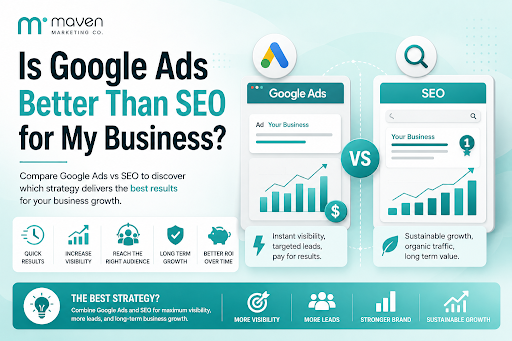
Is Google Ads Better Than SEO for My Business
One of the biggest questions business owners ask when they are planning online growth is whether they should invest in Google Ads or SEO. Both are strong marketing plays that help your company show up in Google search results, but they do things in separate lanes. Google Ads gives quicker visibility and can bring in leads fast, whereas SEO more or less focuses on slow, steady organic traffic that tends to grow the longer you keep building it. Picking the right direction depends on what you want to achieve, how much money you can spend, how crowded the market is, and how quickly you need results, like sooner rather than later. The good news is you don’t always have to choose one or the other; it’s not exactly a black-and-white situation. If you take time to understand the strongest points of both, you can put together a more sensible digital marketing plan that supports consistent expansion. In this guide, we’ll compare Google Ads vs SEO, explain the main differences, and help you figure out what option makes the most sense for your business.

When Should I Hire a Digital Marketing Agency
Growing a business today takes more than just having a website or throwing a post on social media; customers usually search around online, compare providers, skim reviews, and basically expect the brand to show up with a solid digital presence before they even think about buying. Many businesses try to run their marketing themselves, but there comes a point when “doing it all in-house” becomes clunky and hard to manage, all at once. Knowing when to hire a digital marketing agency can end up making a big, real difference for your growth. If you’re not getting enough leads, or your online visibility feels stuck, or sales are just not moving, the right agency can bring the know-how, plus a clear plan, to help you get noticeably better outcomes. In this guide, we’ll dig into what a digital marketing agency actually does, the usual signs it’s time to bring one on, and how picking the right marketing partner can help your business move forward at a faster pace.
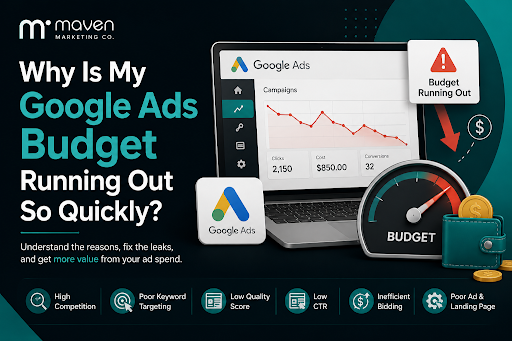
Why Is My Google Ads Budget Running Out So Quickly
Running a successful Google Ads budget isn’t only about throwing more money at it. It’s more like making every dollar, doing a bit extra. A lot of businesses start a Google Ads campaign with big hopes, then find out their daily budget is gone within a few hours, and that feels weird, right? After that, your ads stop showing effectively, new leads slip away, and your return on investment dips. So if your Google Ads budget is running out too fast, don’t stress. It’s a fairly common issue, and in most situations, it can be repaired with the right approach. There are multiple little things that can drain your advertising money quicker than you expected, from costly keywords to audience targeting that just doesn’t quite fit. In this guide, we’ll walk through why your budget disappears so quickly, how to cut wasteful spend, and the most reliable ways to boost your Google Ads ROI, even if your budget stays the same.