.svg)


%201.svg)
Key Takeaways
Comprehensive brand guidelines cover visual identity, voice and tone, messaging frameworks, and application standards across all customer touchpoints, creating a unified brand experience that builds recognition and trust with Australian consumers.
Effective brand guidelines balance prescription with flexibility, providing clear standards for core brand elements while allowing creative adaptation for different contexts, channels, and audiences without compromising brand integrity.
Implementation requires strategic rollout, team training, accessible documentation, and regular audits to ensure guidelines are understood, adopted, and consistently applied across internal teams, external partners, and all brand applications.
Well-executed brand guidelines deliver measurable business value through increased brand recognition, improved marketing efficiency, reduced production costs, stronger customer loyalty, and higher perceived brand value in competitive markets.
Living brand guidelines evolve with your business through scheduled reviews, stakeholder feedback, and strategic updates that reflect market changes, business growth, and emerging touchpoints while maintaining core brand identity.
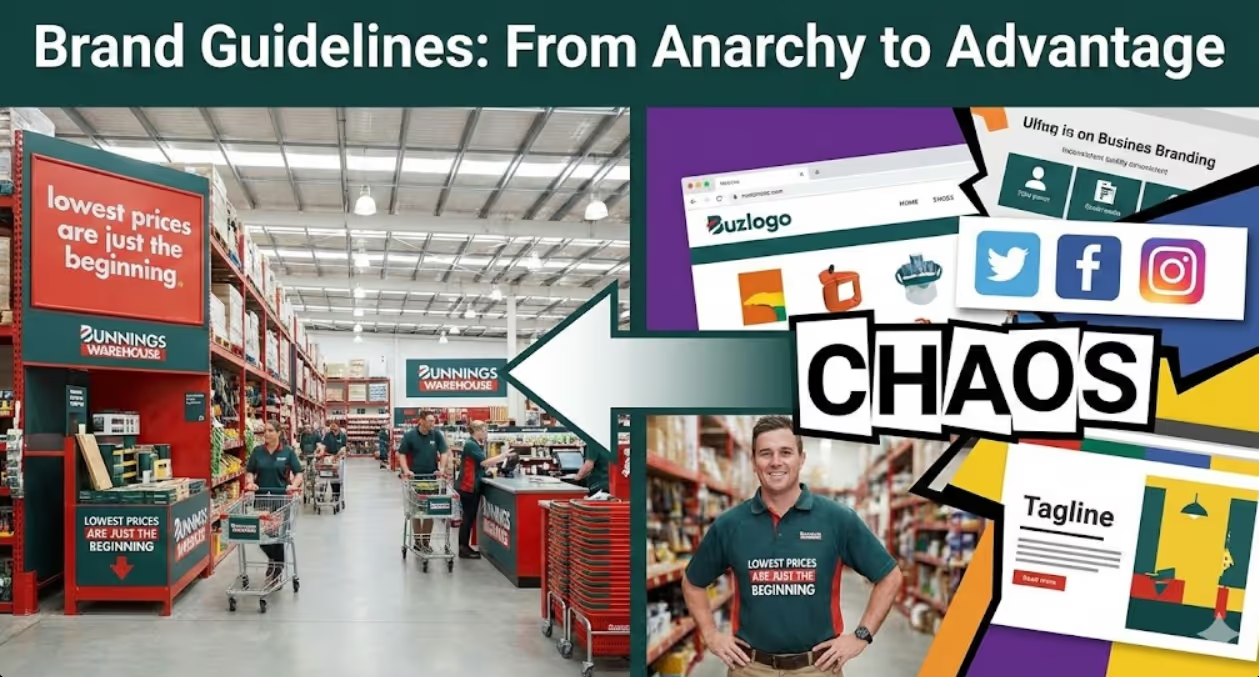
Walk into any Bunnings warehouse in Australia, and you'll immediately recognize where you are. The green and red colour scheme, the cheerful "lowest prices are just the beginning" promise, the warehouse layout—every element reinforces a consistent brand experience. This consistency didn't happen by accident. It's the result of meticulous brand guidelines that govern every touchpoint.
Yet most Australian businesses operate without clear brand guidelines, creating what amounts to brand anarchy. Your website uses one shade of blue, your social media another. Your sales team describes your value proposition differently than your marketing materials. Your Melbourne office produces collateral that looks nothing like what comes from your Sydney team.
This inconsistency costs you more than you realize. Every time a customer encounters conflicting brand expressions, you're asking their brain to work harder to recognize you. You're fragmenting the mental shortcuts that drive brand recall and preference. You're essentially competing against yourself.
Why Brand Guidelines Matter More Than Ever
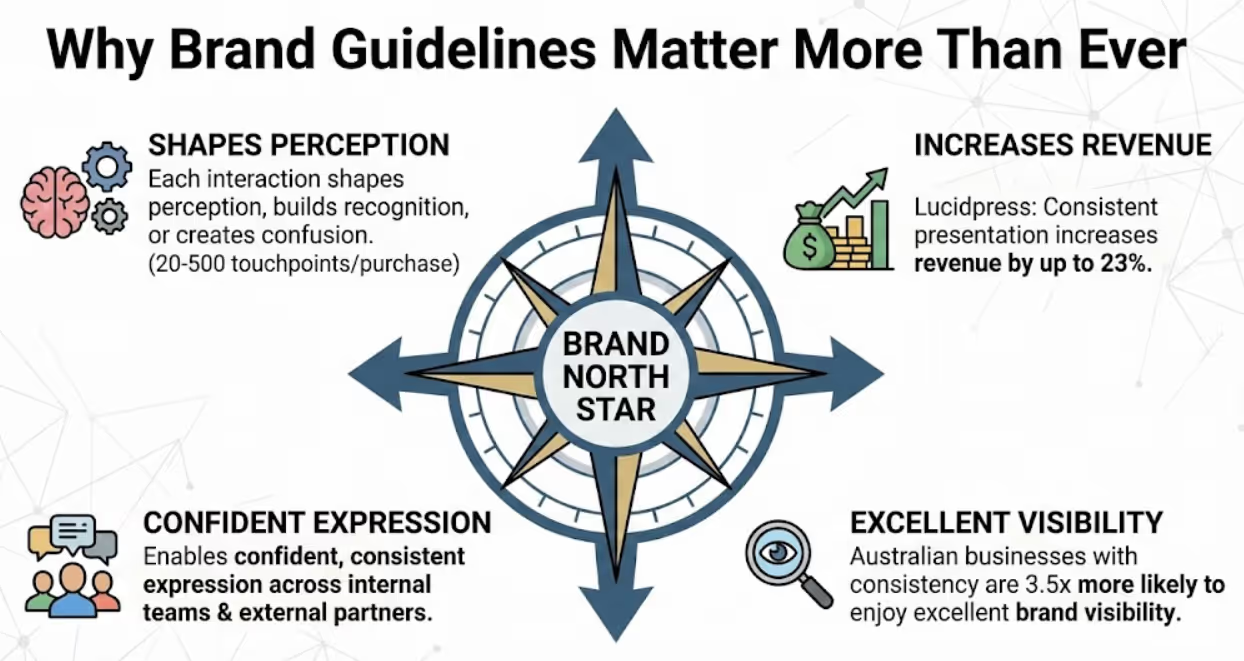
The modern customer journey involves an average of 20 to 500 touchpoints before purchase, depending on your industry and price point. Each interaction shapes perception, builds recognition, or creates confusion. Without brand guidelines, you're leaving those critical impressions to chance.
According to research from Lucidpress, consistent brand presentation across all platforms increases revenue by up to 23%. Australian businesses that maintain brand consistency are also 3.5 times more likely to enjoy excellent brand visibility compared to those with inconsistent branding.
Brand guidelines serve as your north star, ensuring everyone who touches your brand—from your internal design team to external agencies, from franchisees to social media managers—understands exactly how to represent your business. They're not creative constraints; they're the framework that enables confident, consistent expression of your brand identity.
Think of brand guidelines as the constitution for your brand. They don't dictate every decision, but they establish the principles and standards that guide those decisions. They answer the questions that arise daily: Can we use this font? Should this headline be uppercase? What's our position on sustainability? How do we describe what we do?
The Essential Components of Comprehensive Brand Guidelines
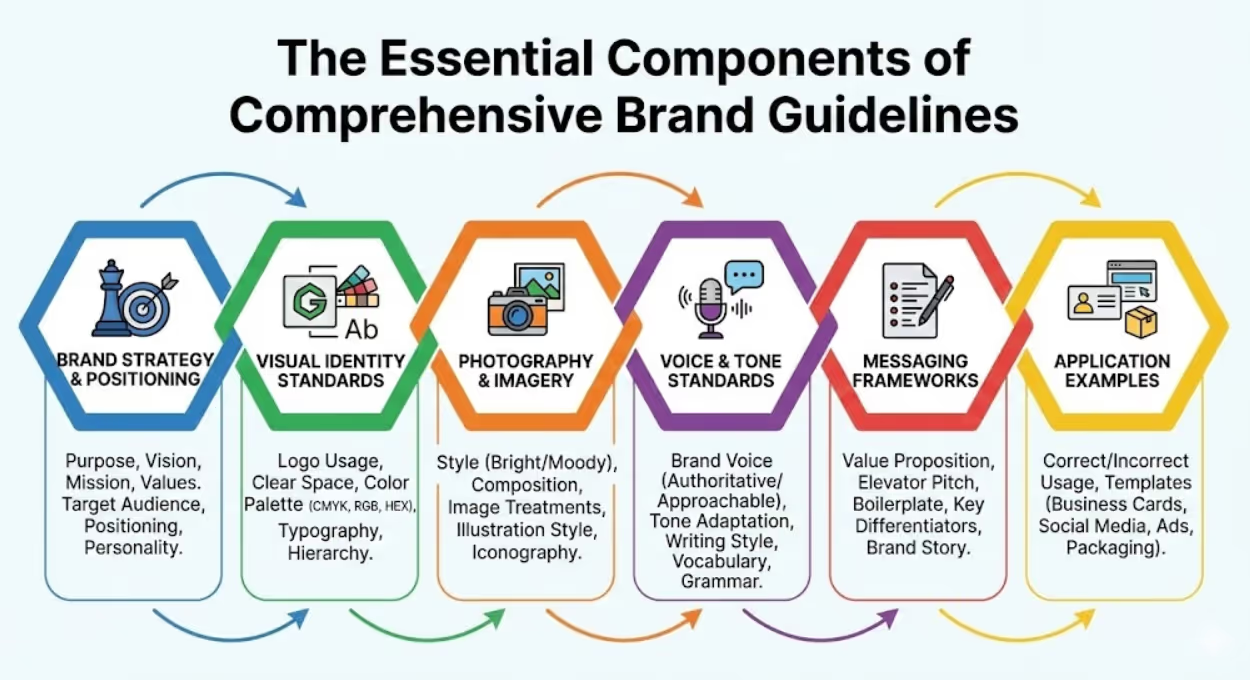
Effective brand guidelines cover six critical areas, each playing a specific role in maintaining consistency across touchpoints.
Brand strategy and positioning forms the foundation. This section articulates your brand purpose, vision, mission, and values. It defines your target audience, competitive positioning, and brand personality. This isn't decorative content—it's the strategic context that informs every other guideline. When your team understands why your brand exists and who it serves, they make better decisions about how to express it.
Visual identity standards typically receive the most attention, and for good reason. This section covers your logo usage, including minimum sizes, clear space requirements, correct and incorrect applications, and colour variations. It defines your colour palette with specific values for print (CMYK and Pantone) and digital (RGB and HEX). Typography guidelines specify primary and secondary typefaces, hierarchy systems, and acceptable alternatives when brand fonts aren't available.
Photography and imagery guidelines ensure visual consistency across applications. Define your photography style—are images bright and airy or moody and dramatic? Authentic and candid or polished and professional? Specify image treatments, filters, composition preferences, and subject matter that aligns with your brand. Include guidance on illustration style, iconography, and graphic elements that support your visual identity.
Voice and tone standards bring consistency to written communication. Your brand voice represents your personality—is it authoritative or approachable? Professional or playful? Your tone adapts that voice to different contexts and audiences. Include writing style preferences, vocabulary to embrace and avoid, grammar and punctuation standards, and examples of voice in action across different touchpoints.
Messaging frameworks provide templates for common communication needs. Core messaging includes your value proposition, elevator pitch, boilerplate descriptions in various lengths, and key differentiators. Product or service descriptions follow consistent structures. Brand story elements create narrative cohesion across touchpoints.
Application examples demonstrate guidelines in action. Show correct logo placement on business cards, letterheads, email signatures, presentations, advertisements, social media profiles, and packaging. Include templates where appropriate and examples of both correct and incorrect applications to clarify standards.
Building Brand Guidelines That Your Team Will Actually Use
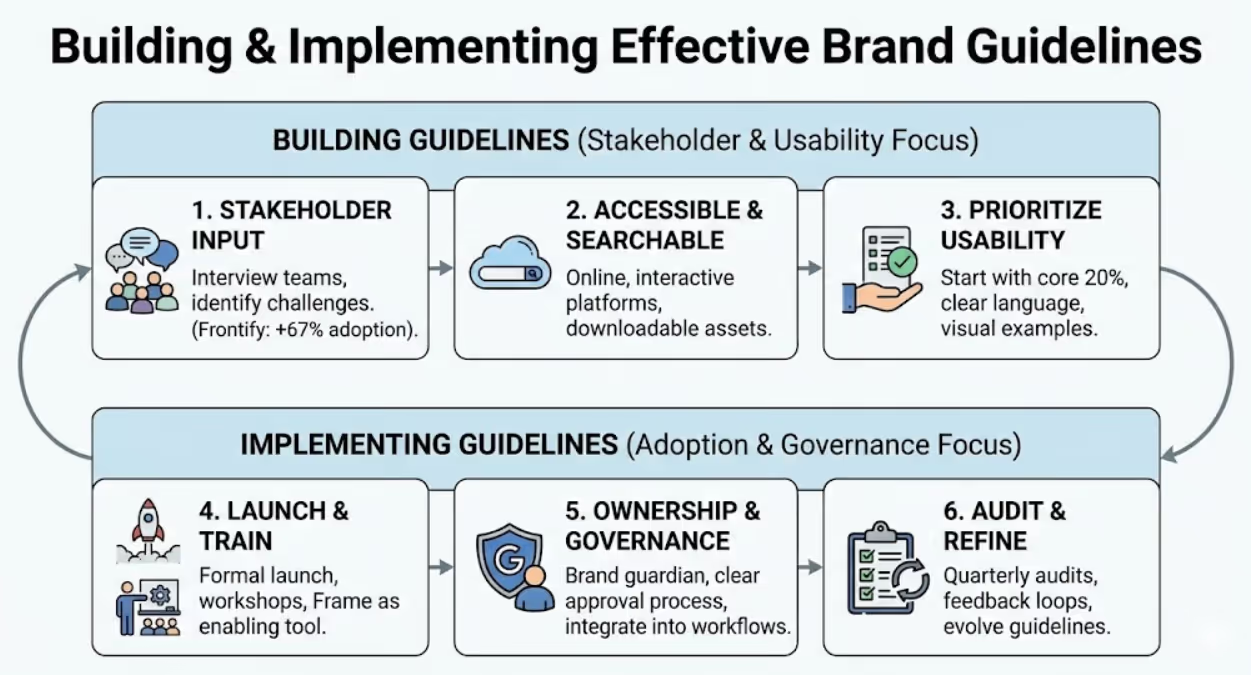
The difference between brand guidelines that gather digital dust and those that drive real consistency lies in how they're built and presented. Start with stakeholder input. Interview team members across departments to understand their brand application challenges. What questions arise repeatedly? Where does confusion occur? Research from Frontify shows that involving stakeholders in guideline development increases adoption rates by 67%.
Create guidelines that are accessible and searchable. A 200-page PDF sitting on a shared drive won't drive consistency. Modern brand guidelines live online, with search functionality, interactive elements, and downloadable assets. Platforms like Frontify, Bynder, or even a well-structured website make guidelines easy to reference in the moment of need.
Prioritize usability over comprehensiveness. Start with the 20% of guidelines that govern 80% of brand applications. You can always expand later. A concise, focused guide that people actually reference beats an exhaustive manual that overwhelms users.
Use clear, directive language. Instead of "Logo should generally appear in the top left," write "Place logo in the top left corner, 20 pixels from top and left edges." Specificity eliminates guesswork and reduces the need for approval cycles.
Include visual examples extensively. Show, don't just tell. For every rule, provide visual demonstrations of correct and incorrect applications. Seeing what good looks like is far more instructive than reading descriptions.
Make assets downloadable directly from guidelines. When someone needs your logo, they shouldn't have to email the marketing team or dig through folders. Provide direct downloads of logos in all necessary formats, colour palettes, font files (where licensing permits), and templates.
Implementing Brand Guidelines Across Your Organization
Creating guidelines is only half the battle. Implementation determines whether they actually drive consistency. Start with a formal launch that frames guidelines as an enabling tool rather than restrictive policy. Host workshops that walk teams through key sections, demonstrate how to use the guidelines, and answer questions. This creates buy-in and reduces resistance.
Establish clear ownership and governance. Designate a brand guardian—typically someone in marketing—who serves as the go-to resource for guideline questions and enforces standards. Create a simple approval process for applications that fall outside standard guidelines, balancing consistency with necessary flexibility.
Integrate guidelines into existing workflows. If your sales team creates proposals in a specific tool, provide templates within that tool that follow brand standards. If designers work in Adobe Creative Suite, supply branded libraries and templates. Meeting people where they work increases compliance dramatically.
Conduct regular brand audits. Every quarter, review a sample of brand touchpoints—website pages, social media posts, email campaigns, sales collateral, signage, packaging. Document where guidelines are being followed and where they're not. Use findings to identify training gaps or guideline clarifications needed.
Provide ongoing training for new team members and external partners. Brand guidelines should be part of onboarding. When you engage agencies, freelancers, or vendors, make guideline review a contract requirement. According to Marq, 68% of businesses say brand consistency has contributed to revenue growth of 10% or more.
Create feedback loops. Encourage team members to flag situations where guidelines feel unclear or don't address their needs. Use this input to refine and expand guidelines over time. The best brand guidelines evolve based on real-world application.
Tailoring Guidelines for Different Touchpoints and Audiences
Not every touchpoint requires the same level of brand rigour. Your packaging might demand precise colour matching and placement specifications, while your social media presence benefits from more creative flexibility within brand parameters.
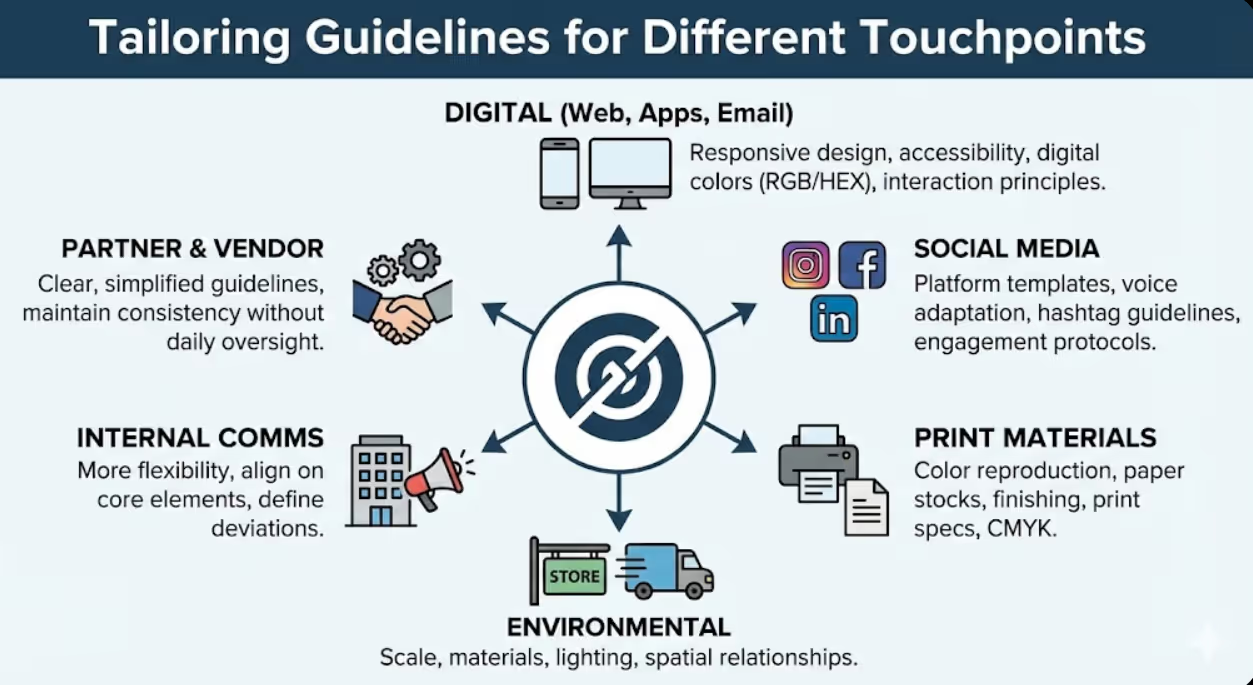
Digital touchpoints including websites, apps, and email need guidelines that address responsive design, accessibility standards, animation and interaction principles, and digital-specific colour applications. Screen colours appear differently than print, so provide RGB and HEX values specifically calibrated for digital.
Social media platforms each have unique technical requirements and audience expectations. Provide platform-specific templates and specifications. Define how your brand voice adapts to Instagram versus LinkedIn. Establish hashtag guidelines and response protocols that maintain brand consistency while allowing real-time engagement.
Print materials demand precision around colour reproduction, paper stocks, finishing techniques, and print specifications. Include guidance on working with printers to achieve consistent results. Specify when to use your full-colour logo versus single-colour versions.
Environmental applications including signage, vehicle graphics, and retail spaces require guidelines around scale, materials, lighting, and spatial relationships. These applications often represent your largest brand investments, making consistency critical.
Internal communications may allow more flexibility than external materials while still maintaining brand recognition. Define where internal touchpoints can deviate from customer-facing standards and where they must align.
Partner and vendor materials present unique challenges. When others represent your brand—resellers, franchisees, or co-marketing partners—guidelines must be clear enough to maintain consistency without daily oversight. Consider creating simplified guideline versions specifically for external partners.
Common Pitfalls That Undermine Brand Guideline Effectiveness
The most frequent mistake is creating overly restrictive guidelines that stifle creativity and slow execution. Your guidelines should enable confident decision-making, not require approval for every application. Build in flexibility for creative expression within clear parameters.
Another common issue is letting guidelines become outdated. Brands evolve. New touchpoints emerge. Guidelines created five years ago likely don't address Instagram Reels, podcast cover art, or AR experiences. Schedule annual reviews to keep guidelines current.
Many businesses also fail to make guidelines accessible. If people can't find or easily navigate your guidelines, they won't use them. Invest in making guidelines discoverable and user-friendly.
Insufficient examples represent another pitfall. Abstract rules without visual demonstrations leave too much room for interpretation. For every standard, show multiple applications demonstrating correct usage.
Some organizations create separate guidelines for different teams or regions without ensuring alignment. This fragments your brand. While you may need tailored versions for specific audiences, they must derive from and align with a single source of truth.
Finally, many brands don't connect guidelines to business strategy. When guidelines feel like arbitrary design preferences rather than strategic tools, people question their value. Always connect standards back to business objectives and customer experience goals.
Measuring the Impact of Brand Guidelines
Brand guideline effectiveness shows up in both qualitative and quantitative metrics. Brand consistency scores measure how uniformly your brand appears across touchpoints. Conduct quarterly audits using a scorecard that rates compliance across key guideline areas. Track improvement over time.
Monitor brand recognition metrics through aided and unaided awareness studies. Consistent brand presentation builds recognition faster and maintains it longer than inconsistent application. Compare recognition rates before and after guideline implementation.
Track production efficiency. Teams working with clear guidelines produce materials faster because they spend less time debating design decisions or seeking approvals. Measure average time from brief to final asset before and after guideline adoption.
Calculate cost savings from reduced revisions and fewer brand asset recreations. When guidelines are clear and followed, you eliminate the costs of redoing work that doesn't meet brand standards. You also reduce redundant asset creation when existing assets are easily discoverable.
Measure employee confidence through surveys. Ask team members how confident they feel representing the brand before and after guideline implementation. Higher confidence correlates with better brand execution.
Monitor customer perception metrics including brand clarity, professionalism, and trustworthiness. Consistent brand presentation influences all three. Track these through regular customer surveys.
Assess competitive differentiation. In markets where competitors present inconsistent identities, your consistency becomes a competitive advantage that's visible in preference and consideration metrics.
Frequently Asked Questions
How long does it take to develop comprehensive brand guidelines for a small to medium Australian business and what resources are required?
Developing thorough brand guidelines typically takes 6 to 12 weeks for small to medium businesses, depending on complexity and existing brand assets. The process involves brand strategy definition (1 to 2 weeks), visual identity development or refinement (2 to 3 weeks), guideline documentation and design (2 to 3 weeks), stakeholder review and refinement (1 to 2 weeks), and platform setup and team training (1 to 2 weeks). Required resources include a brand strategist or marketing lead to define positioning and messaging, a designer to create or refine visual identity and produce guideline documentation, a copywriter for voice and messaging guidelines, and stakeholder time for input and review. Many Australian businesses invest between $15,000 and $50,000 for professionally developed guidelines, though simpler versions can be created with smaller budgets by focusing on core elements first and expanding over time. The investment pays for itself through improved efficiency, reduced revisions, and stronger brand performance.
What should Australian businesses include in brand guidelines when operating across multiple states or targeting diverse regional markets?
Brand guidelines for multi-state or regionally diverse operations need to balance national consistency with local relevance. Include core brand elements that never change regardless of location—your logo, primary colours, core values, and fundamental positioning. These create recognition across all markets. Define flexible elements where regional adaptation is permitted, such as imagery that reflects local communities, messaging that addresses regional priorities or preferences, and examples that resonate with specific markets. Establish clear approval processes for regional variations to prevent brand fragmentation. Include cultural sensitivity guidelines that acknowledge Australia's diverse communities, particularly when marketing to multicultural areas in Melbourne, Sydney, or Brisbane. Specify how to handle state-specific regulatory requirements, pricing variations, or service differences without compromising brand consistency. According to Talon Outdoor research, regional personalization within consistent brand frameworks increases campaign effectiveness by up to 35% compared to purely standardized approaches. Create a tiered system where brand guardians at the national level set non-negotiable standards while regional leads have authority to adapt within defined parameters.
How do small Australian businesses maintain brand consistency when working with multiple freelancers, agencies, and contractors who aren't full-time employees?
Small businesses maintain brand consistency with external partners through strategic documentation and clear communication. Start by creating a condensed "essentials" version of your full brand guidelines specifically for external use, covering the 20% of rules that govern 80% of applications. Make this document easily accessible via a simple URL or cloud storage link that you include in all contractor agreements. Require guideline review as part of onboarding, confirmed through a simple acknowledgment or brief quiz. Provide brand asset packages that include logos in all necessary formats, fonts (where licensing permits), colour swatches, and templates for common deliverables. Establish a single point of contact for brand questions and approvals to maintain consistency in decision-making. Build guideline review into your contract terms and project briefs. Create a shared workspace (like Dropbox, Google Drive, or a brand management platform) where approved assets live and everyone accesses the same current files. Conduct brief alignment calls at project start to ensure partners understand your brand context and standards. Many successful small businesses schedule quarterly check-ins with regular contractors to review brand applications and address questions. The investment in clear guidelines and communication saves significantly more time and money than correcting off-brand work after production.
Transform Brand Chaos Into Strategic Consistency
Brand guidelines aren't bureaucracy—they're the framework that transforms individual creative decisions into a cohesive brand experience. When every touchpoint reinforces the same identity, values, and promise, you build recognition faster, earn trust more easily, and create lasting competitive advantage.
The Australian businesses winning in crowded markets aren't necessarily those with the biggest budgets or flashiest creative. They're the ones that show up consistently, building familiarity and trust through every interaction.
Your brand is one of your most valuable assets. Protecting it through clear, comprehensive guidelines isn't optional—it's essential to sustainable growth.
Ready to develop brand guidelines that drive real consistency across every customer touchpoint? Maven Marketing Co. specializes in creating practical, user-friendly brand guidelines that teams actually use. Let's build the framework your brand deserves.

Table of contents
read more blogs
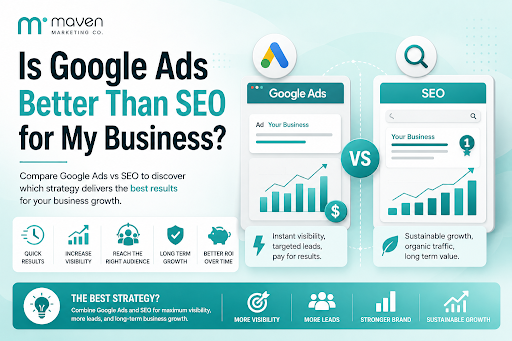
Is Google Ads Better Than SEO for My Business
One of the biggest questions business owners ask when they are planning online growth is whether they should invest in Google Ads or SEO. Both are strong marketing plays that help your company show up in Google search results, but they do things in separate lanes. Google Ads gives quicker visibility and can bring in leads fast, whereas SEO more or less focuses on slow, steady organic traffic that tends to grow the longer you keep building it. Picking the right direction depends on what you want to achieve, how much money you can spend, how crowded the market is, and how quickly you need results, like sooner rather than later. The good news is you don’t always have to choose one or the other; it’s not exactly a black-and-white situation. If you take time to understand the strongest points of both, you can put together a more sensible digital marketing plan that supports consistent expansion. In this guide, we’ll compare Google Ads vs SEO, explain the main differences, and help you figure out what option makes the most sense for your business.

When Should I Hire a Digital Marketing Agency
Growing a business today takes more than just having a website or throwing a post on social media; customers usually search around online, compare providers, skim reviews, and basically expect the brand to show up with a solid digital presence before they even think about buying. Many businesses try to run their marketing themselves, but there comes a point when “doing it all in-house” becomes clunky and hard to manage, all at once. Knowing when to hire a digital marketing agency can end up making a big, real difference for your growth. If you’re not getting enough leads, or your online visibility feels stuck, or sales are just not moving, the right agency can bring the know-how, plus a clear plan, to help you get noticeably better outcomes. In this guide, we’ll dig into what a digital marketing agency actually does, the usual signs it’s time to bring one on, and how picking the right marketing partner can help your business move forward at a faster pace.
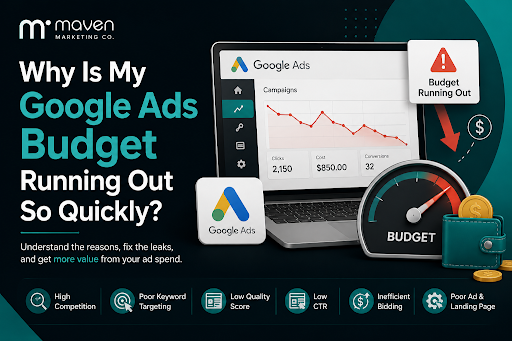
Why Is My Google Ads Budget Running Out So Quickly
Running a successful Google Ads budget isn’t only about throwing more money at it. It’s more like making every dollar, doing a bit extra. A lot of businesses start a Google Ads campaign with big hopes, then find out their daily budget is gone within a few hours, and that feels weird, right? After that, your ads stop showing effectively, new leads slip away, and your return on investment dips. So if your Google Ads budget is running out too fast, don’t stress. It’s a fairly common issue, and in most situations, it can be repaired with the right approach. There are multiple little things that can drain your advertising money quicker than you expected, from costly keywords to audience targeting that just doesn’t quite fit. In this guide, we’ll walk through why your budget disappears so quickly, how to cut wasteful spend, and the most reliable ways to boost your Google Ads ROI, even if your budget stays the same.