
.svg)
.svg)
.svg)


%201.svg)
April 2, 2026
The Link Building Playbook That Still Works in 2026: Earn Authority Without Paying for It
Link building has a reputation problem it does not entirely deserve. When most Australian marketing teams hear the term, they picture one of two things: the paid link schemes that Google has been penalising for years and that still circulate in the shadier corners of the SEO industry, or the outreach programmes that require significant labour that produce a handful of marginal links per month at a cost that makes the return on investment look questionable at best. Both of these pictures miss the methods that actually work in 2026, which share a common characteristic: they earn links as a byproduct of producing something valuable rather than acquiring them as a standalone purchase or extraction exercise. The distinction matters commercially because earned links are structurally different from purchased links. They tend to come from more relevant and more authoritative sources. They are more stable because they are not contingent on a payment being maintained. They are more likely to produce lasting ranking improvements because they represent genuine signals of editorial endorsement. And they are not a liability that sits waiting for the next Google spam update to detonate. This article covers the link earning methods that Australian businesses and their marketing teams can execute in 2026 to build domain authority through genuine editorial signals rather than purchases or schemes.

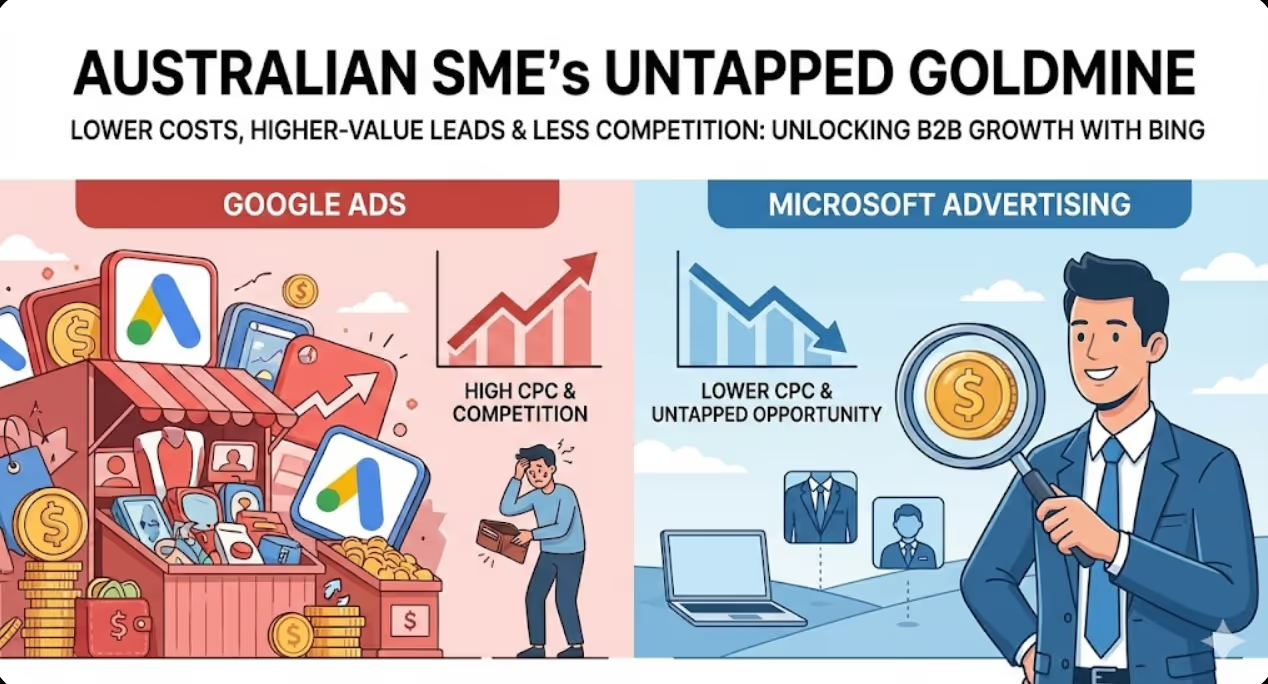
Microsoft Advertising Strategy: Bing's Untapped Opportunity for Australian SMEs
Most Australian SMEs focus exclusively on Google Ads, overlooking Microsoft Advertising's substantial opportunity despite Bing powering 15-20% of Australian search traffic. Lower competition drives 30-40% cheaper clicks whilst reaching older, higher-income demographics underserved by Google-focused strategies. LinkedIn profile targeting enables B2B precision impossible on Google, whilst seamless campaign imports allow testing Microsoft Advertising with minimal setup effort. Understanding Bing's unique audience, implementing platform-specific optimisations, leveraging Microsoft's ecosystem integration, and strategically allocating budgets across both platforms creates comprehensive search presence capturing opportunities competitors miss through Google-only approaches.
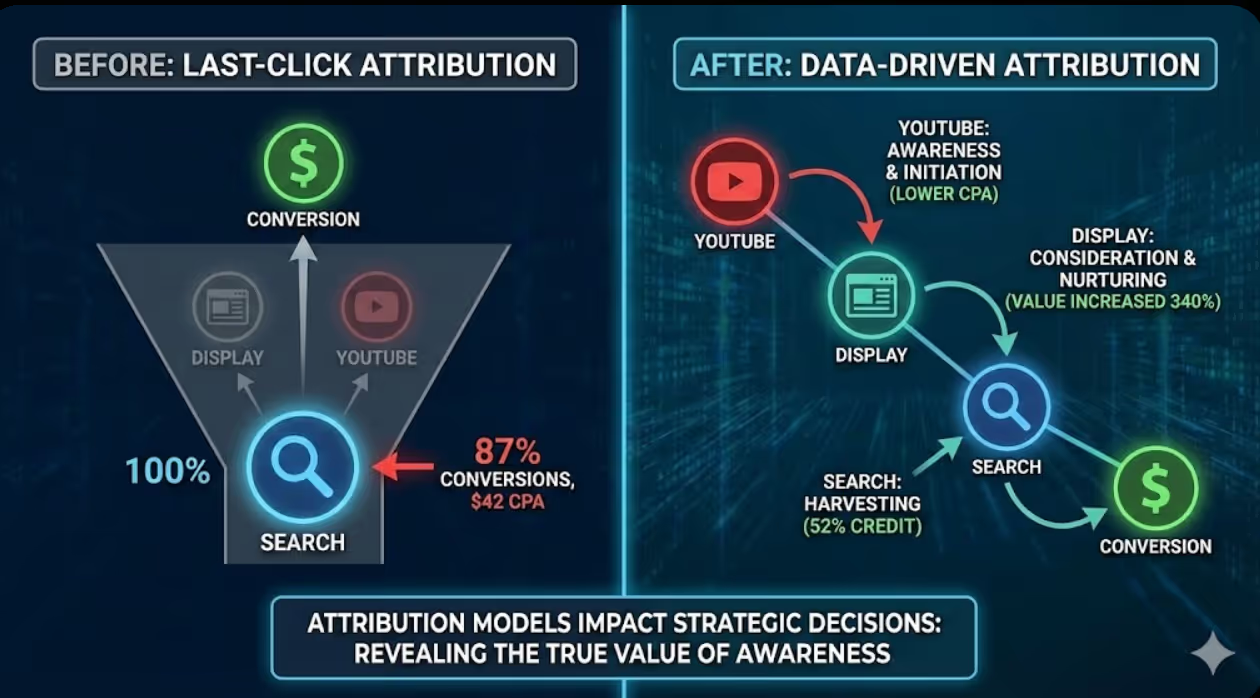
Google Ads Data-Driven Attribution: Moving Beyond Last-Click
Last-click attribution credits only the final touchpoint before conversion, ignoring all earlier interactions that influenced the customer journey. This oversimplified approach misrepresents campaign performance, undervalues awareness and consideration channels, and leads to misguided budget allocation decisions. Google Ads data-driven attribution uses machine learning to analyse actual conversion paths, distributing credit across touchpoints based on their genuine contribution to conversions. Understanding attribution models, implementing data-driven attribution, interpreting multi-touch insights, and optimising campaigns based on accurate credit distribution transforms advertising effectiveness whilst preventing systematic underinvestment in high-value awareness channels.

XML Sitemap Architecture: Advanced Segmentation for Large Australian Websites
Large Australian websites with thousands or tens of thousands of pages require sophisticated XML sitemap architecture ensuring search engines efficiently discover and index valuable content. Basic single-file sitemaps become unwieldy and ineffective at scale, whilst strategic segmentation by content type, update frequency, priority, and publication date enables targeted submission, monitoring, and optimisation. Understanding sitemap technical requirements, implementing dynamic generation, optimising priority and frequency signals, and monitoring indexation performance through Search Console transforms sitemaps from simple URL lists into powerful tools guiding search engine crawling and indexation.
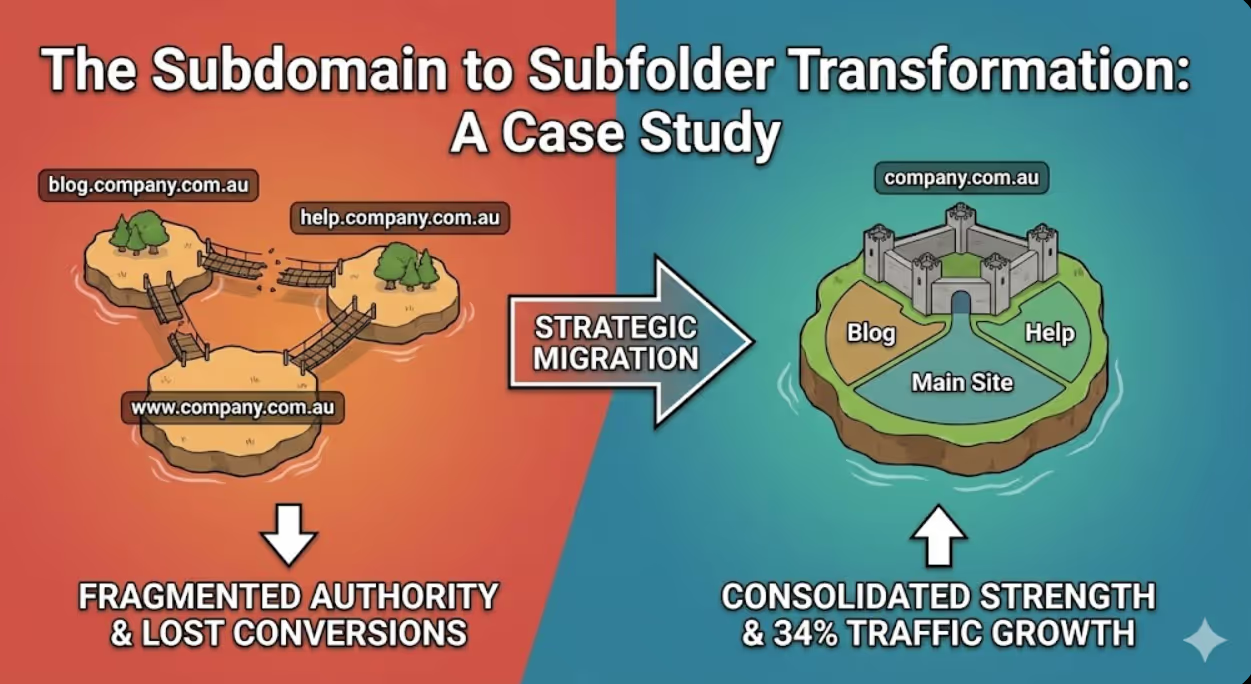
Subdomain vs Subfolder: SEO Architecture Decisions for Australian Brands
Australian businesses expanding their digital presence through blogs, e-commerce stores, regional sites, or separate service offerings face critical URL structure decisions where choosing between subdomain implementations like blog.example.com.au versus subfolder structures like example.com.au/blog determines how search engines perceive site relationships, allocate link equity, distribute domain authority, and assess content relevance for ranking purposes. The gap between these seemingly simple URL structure choices creates profound SEO implications where subdomains function as separate websites requiring independent authority building whilst subfolders consolidate authority benefiting from main domain strength, subdomains enable technical flexibility and independent hosting whilst subfolders simplify management and tracking, and subdomain migrations from established subfolder implementations risk traffic losses whilst subfolder consolidations can improve visibility through authority consolidation. This comprehensive guide reveals how Maven Marketing Co. helps Australian businesses evaluate subdomain versus subfolder decisions through systematic analysis of SEO implications, technical requirements, business objectives, and migration strategies ensuring URL structure choices align with organic visibility goals rather than creating architectural decisions that inadvertently fragment authority, complicate tracking, or require expensive migrations correcting initial implementation mistakes.
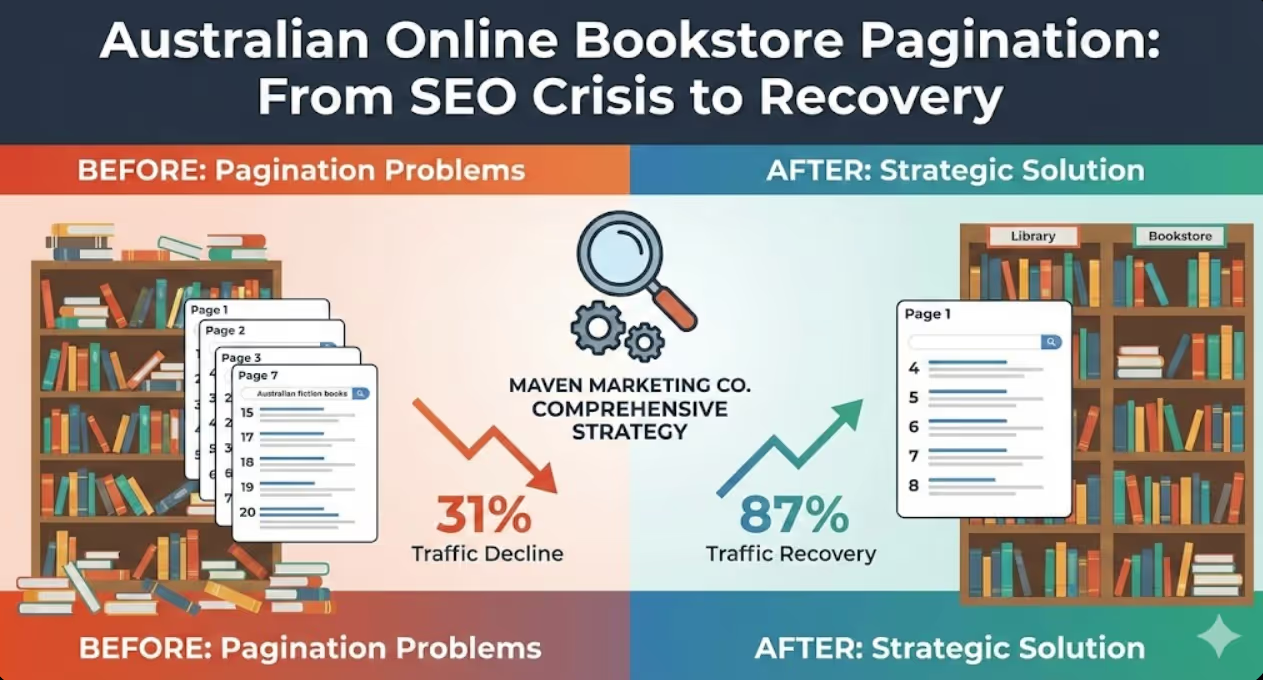
Pagination SEO Strategy: Managing Multi-Page Content for Search Engines
Australian e-commerce websites, news publishers, and content-heavy platforms implementing pagination to improve user experience by breaking long content lists into manageable page sequences inadvertently create technical SEO challenges where search engines struggle to understand relationships between paginated pages, waste crawl budget discovering endless pagination sequences, accidentally index parameter variations creating duplicate content problems, and distribute ranking signals across multiple pages rather than consolidating authority to primary URLs. The gap between pagination serving legitimate user navigation needs and creating search engine indexing problems requires sophisticated pagination SEO strategy addressing canonical implementation decisions, rel="next" and rel="prev" tag usage that Google deprecated then partially reinstated, view-all page alternatives that consolidate content, crawl budget protection through strategic pagination limits, and ongoing monitoring ensuring pagination doesn't fragment organic visibility across multiple competing URLs. This comprehensive guide reveals how Maven Marketing Co. helps Australian businesses implement pagination strategies that balance user experience requirements against search engine crawling efficiency, ensuring paginated content sequences receive proper indexing whilst avoiding the duplicate content penalties, crawl budget waste, and ranking signal dilution that improper pagination management inevitably creates.
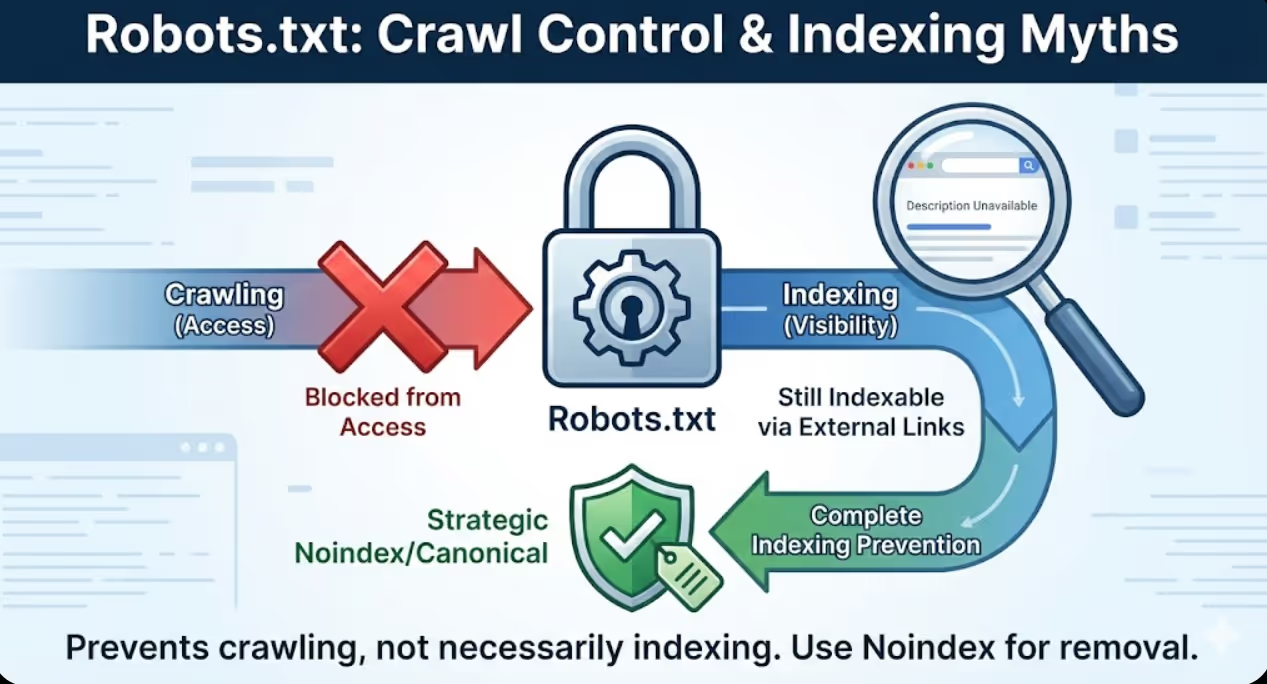
Robots.txt Optimisation: Advanced Crawl Directives for Complex Websites
Australian websites with complex architectures including e-commerce platforms, multi-domain properties, user-generated content, and extensive filtering systems face robots.txt implementation challenges where the line between strategic crawl budget protection and catastrophic indexing blockage is alarmingly thin, with misconfigured robots.txt files accidentally preventing Google from crawling entire website sections, blocking critical JavaScript and CSS resources that pages require for proper rendering, or inadvertently hiding high-value content from search engines whilst allowing wasteful crawling of duplicate variations and low-value pages that the directives should actually block. The gap between robots.txt's theoretical power to control search engine crawling and its practical reality as the single configuration file most capable of destroying organic visibility through syntax errors, overly aggressive blocking, or misunderstood directive behaviour requires sophisticated understanding of robots.txt functionality, common implementation pitfalls, testing methodologies, and strategic blocking decisions that protect crawl budget without accidentally eliminating pages from search indexes. This comprehensive guide reveals how Maven Marketing Co. helps Australian businesses implement robots.txt optimisation that strategically blocks wasteful crawling whilst avoiding the blocking mistakes that turn robots.txt from valuable crawl management tool into accidental organic visibility destroyer requiring emergency remediation when businesses discover their products, categories, or entire content sections disappeared from search results due to robots.txt misconfiguration.
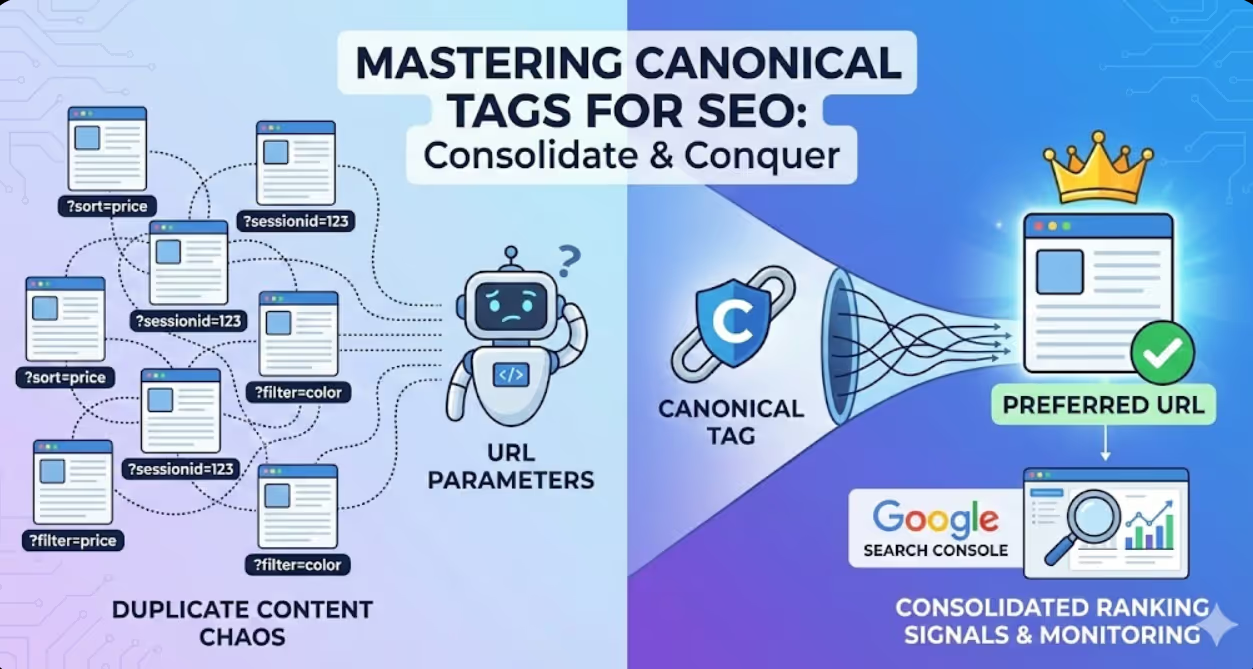
Canonicalisation Strategy: URL Parameters and Duplicate Content Solutions
Australian websites inadvertently creating duplicate content through URL parameters, session tracking, filtering systems, and multi-version page access face a strategic dilemma where multiple URLs serving identical or substantially similar content divide ranking signals across variations rather than consolidating authority to single preferred versions, systematically undermining organic search performance despite otherwise sound SEO implementation. The gap between having one authoritative version of each page conceptually and actually achieving that consolidation technically requires sophisticated canonicalisation strategy addressing URL parameters that create infinite variations, session identifiers that fragment indexes across user-specific URLs, HTTPS and non-HTTPS duplicates that search engines treat as distinct pages, www and non-www variations that dilute domain authority, and template-generated duplicates that pagination and filtering systems inevitably create. Improper canonicalisation or complete absence of canonical directives allows search engines to choose canonical URLs arbitrarily, frequently selecting non-preferred versions that lack optimisation whilst preferred versions remain unindexed, creating the frustrating scenario where businesses invest heavily in page optimisation only to have search engines index and rank inferior duplicate variations instead. This comprehensive guide reveals how Maven Marketing Co. helps Australian businesses implement strategic canonicalisation, resolving duplicate content problems, consolidating ranking signals to preferred URLs, and ensuring search engines index the specific page versions that businesses have optimised rather than algorithmic guesses about which duplicates deserve prominence.
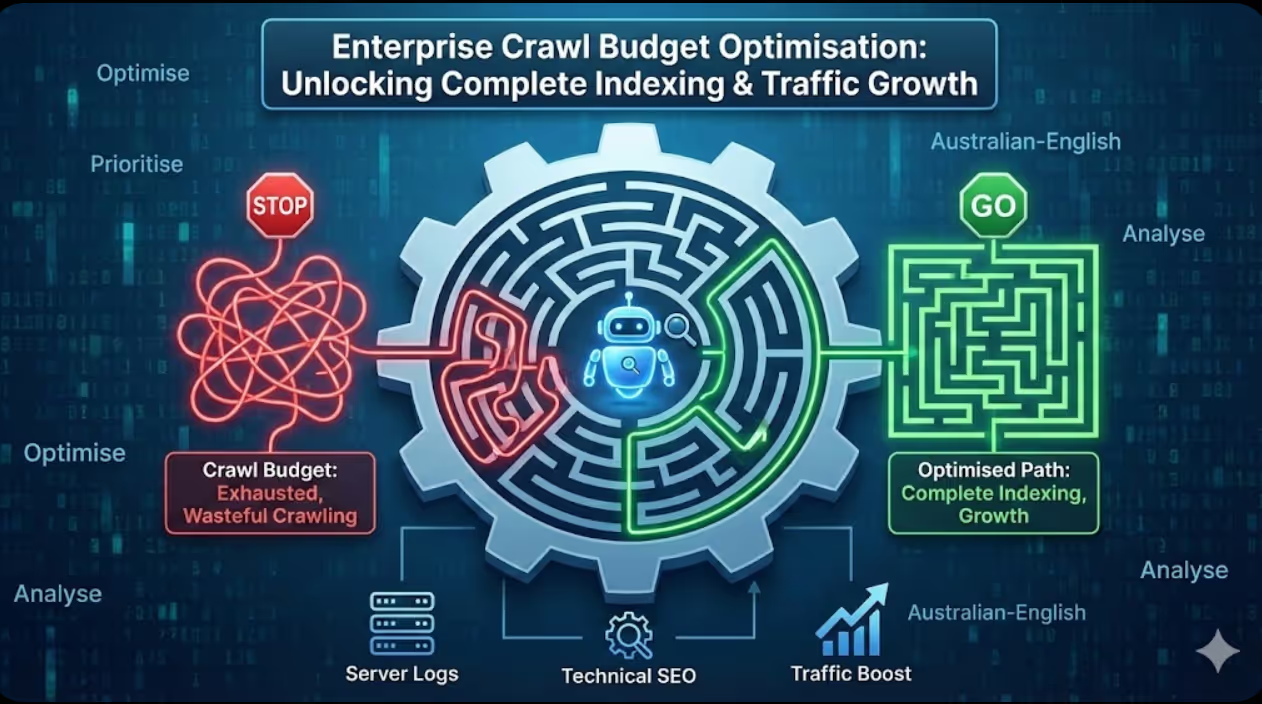
Crawl Budget Optimisation: Enterprise SEO for Large Catalogs
Enterprise websites with tens or hundreds of thousands of URLs face a fundamental indexing challenge that small business sites never encounter because search engine crawl budgets impose practical limits on how many pages Googlebot and other crawlers will process within reasonable timeframes, creating situations where substantial portions of large catalogues remain undiscovered, unindexed, or inadequately refreshed despite being technically accessible and properly optimised. The gap between total URL count and search engine crawl capacity means that crawl budget allocation determines which pages receive indexing attention whilst others remain invisible in search results regardless of their revenue potential, content quality, or strategic importance to the business. Inefficient crawl budget consumption through wasteful crawling of low-value URLs including filtered category variations, pagination sequences, session parameters, and duplicate content variations prevents search engines from discovering and indexing high-value product pages, category pages, and content that actually generates organic traffic and conversions. This comprehensive guide reveals how Maven Marketing Co. helps enterprise websites optimise crawl budget allocation through systematic waste elimination, strategic URL prioritisation, technical infrastructure improvements, and ongoing monitoring ensuring that search engines efficiently discover and maintain indexes of complete catalogues rather than fragmentary coverage leaving revenue-generating pages invisible regardless of optimisation quality.

Structured Data Testing: Validating Schema Implementation at Scale
Australian businesses implementing structured data markup across thousands of pages face a validation challenge that individual page testing cannot adequately address because errors affecting markup validity, rich snippet eligibility, and search feature qualification often emerge inconsistently across template variations, product categories, and dynamically generated content that manual spot-checking inevitably misses. A single schema implementation error in a template file can invalidate structured data across thousands of product pages, whilst category-specific markup bugs might affect only dozens of pages making them difficult to discover through random sampling that prioritises high-traffic pages potentially missing problematic segments. The gap between implementing schema markup and validating that implementation actually works correctly at enterprise scale requires systematic testing methodologies, automated validation tools, and ongoing monitoring processes that catch errors before they eliminate rich snippet appearances, disqualify pages from search features, and waste the substantial development investment that schema implementation represents. This comprehensive guide reveals how Maven Marketing Co. helps Australian businesses validate structured data implementation at scale through systematic testing frameworks, automated error detection, template-level validation, and continuous monitoring ensuring that markup maintains validity and rich snippet eligibility across complete websites rather than only on the handful of pages that manual testing examines.
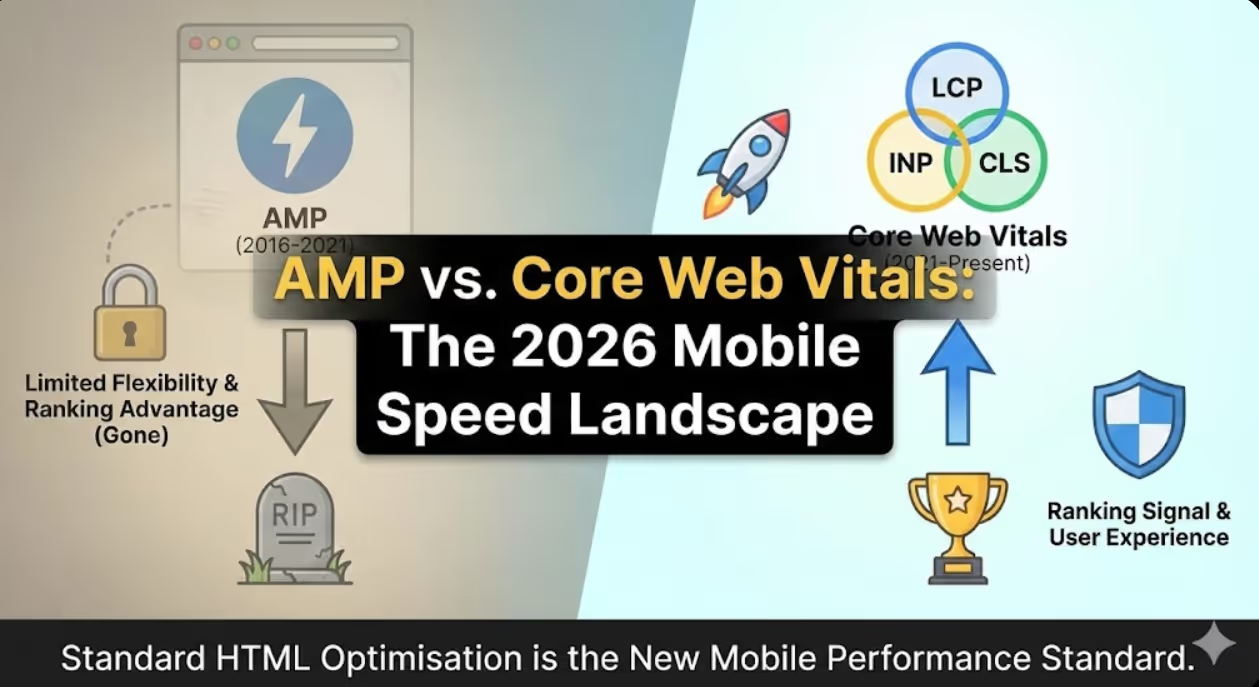
AMP vs Core Web Vitals: Mobile Speed Strategy for 2026
Australian businesses pursuing mobile speed optimisation in 2026 face a strategic decision that would have been straightforward in 2018 but has become dramatically more nuanced as Google's priorities have evolved. Accelerated Mobile Pages once represented the definitive mobile speed solution with explicit search result badges, prioritised placement in Top Stories carousels, and clear ranking benefits that made AMP adoption appear mandatory for publishers and e-commerce businesses seeking mobile visibility. However, the 2021 introduction of Core Web Vitals as official ranking factors, the removal of AMP-specific search advantages, and the demonstrated ability of well-optimised standard HTML pages to achieve performance metrics matching or exceeding AMP created a fundamentally altered mobile speed landscape where the trade-offs between AMP's restrictions and Core Web Vitals optimisation must be carefully evaluated rather than assumed. This comprehensive guide reveals how Maven Marketing Co. helps Australian businesses navigate the 2026 mobile speed strategy decision, comparing AMP's continued relevance against modern Core Web Vitals optimisation, evaluating when each approach makes strategic sense, and implementing whichever strategy delivers optimal performance for specific business contexts rather than defaulting to outdated assumptions about mobile speed requirements.
.avif)
International SEO for Australian Exporters: Hreflang and Multi-Region Strategy
Australian businesses expanding into international markets face unique SEO challenges ensuring global customers discover their products and services through search engines. International SEO extends beyond translation, requiring strategic decisions about domain structure, proper hreflang implementation signalling language and regional variations, localised content addressing cultural nuances, and technical optimisation ensuring search engines correctly serve content to appropriate audiences. This comprehensive guide explores proven international SEO strategies for Australian exporters, from choosing between ccTLDs and subdirectories to implementing hreflang tags correctly, creating market-specific content, and measuring performance across regions for sustainable global growth.
.avif)
JavaScript SEO Troubleshooting: Fixing Rendering Issues in React and Vue
JavaScript frameworks like React and Vue enable building dynamic, interactive web applications that deliver exceptional user experiences. However, these frameworks create significant SEO challenges when search engine crawlers struggle to render JavaScript-heavy pages, leading to indexing failures and lost organic visibility. Understanding how search engines process JavaScript, identifying common rendering issues, and implementing solutions including server-side rendering, pre-rendering, and proper meta tag management ensures your modern web applications achieve search visibility they deserve whilst maintaining the interactive experiences users expect.


