.svg)


%201.svg)

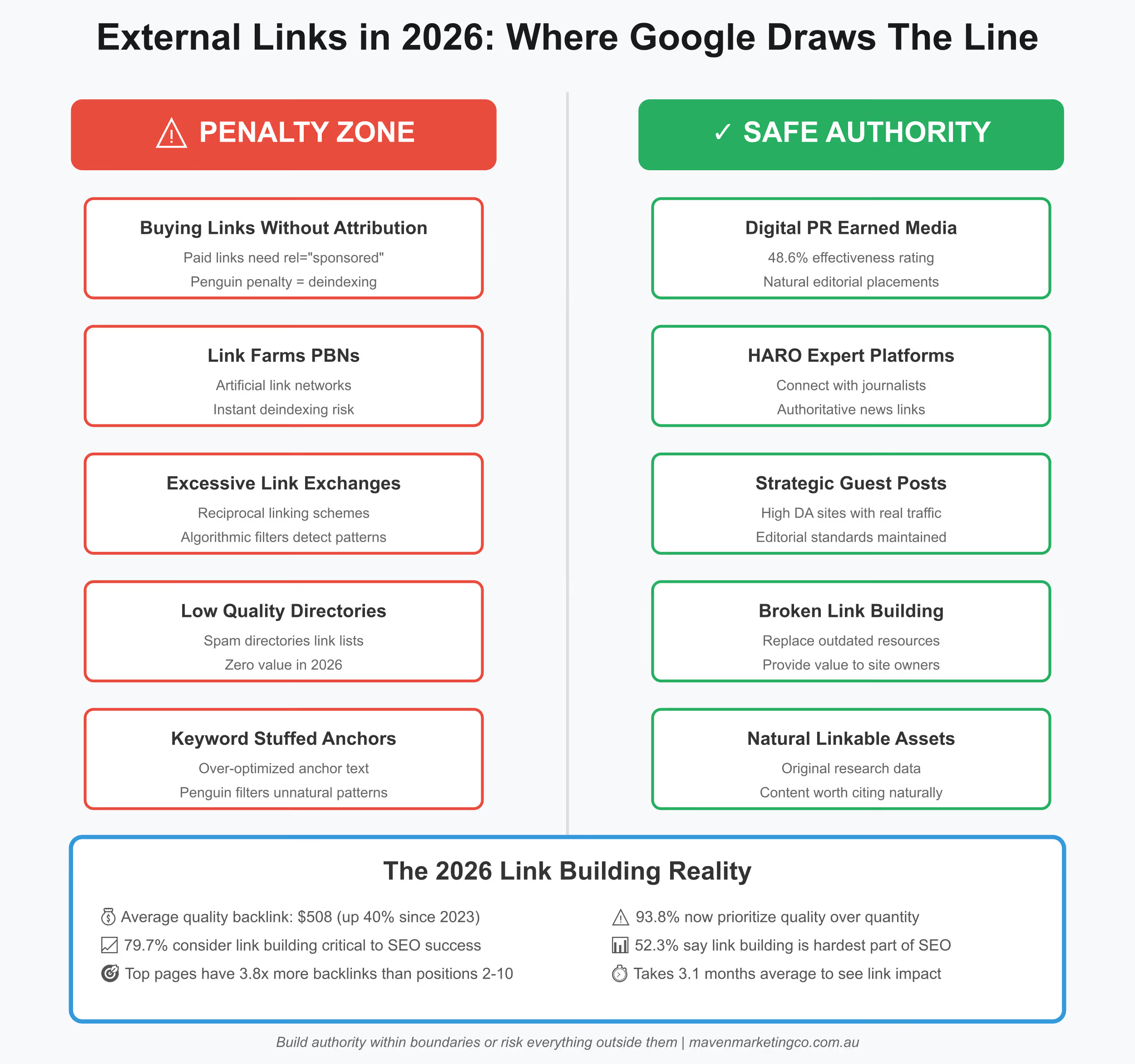
According to comprehensive SEO industry analysis, 79.7% of SEO professionals consider link building an important part of their strategy in 2025 and beyond. Yet 52.3% of digital marketers say link building is the hardest part of SEO. The difficulty isn't building links. It's building the right ones without crossing invisible lines that trigger algorithmic penalties.
Here's the reality Australian businesses face. Quality backlinks now cost an average of $508 each, up from $364 just two years ago. That's a 40% increase reflecting genuine market scarcity for high authority links that actually move rankings. Meanwhile, 93.8% of link builders now say quality matters more than quantity, abandoning volume based strategies that worked brilliantly through 2022.
The businesses succeeding in 2026 understand exactly where Google draws its lines. They build authority through strategic external links that strengthen their domain reputation, enhance content credibility, and signal expertise to both users and algorithms. Those who misunderstand the boundaries watch their rankings collapse despite significant link building investment.
This isn't theoretical. Google's leaked API documentation from 2024 revealed the company still heavily relies on authoritative placements and highly contextual anchor text. The algorithm didn't become less link dependent. It became more sophisticated at identifying which links demonstrate genuine authority versus manipulative attempts at ranking improvement.
The Authority Paradox: Why External Links Still Dominate Rankings
Let's establish foundation before discussing boundaries. Analysis of 1,000,000 keywords reveals links remain a crucial ranking factor with significant correlation values between rankings and various link metrics. The page ranking number one on Google has an average of 3.8 times more backlinks than other pages in the top ten.
These numbers tell us something critical. While link impact might have decreased from the early PageRank days, they still play vital roles in how websites rank. As one seasoned SEO professional stated, backlinks are the currency of SEO. Without backlinks you have no authority. Without authority you don't rank.
Approximately 58% of businesses believe link building significantly affects SERP rankings. But here's the paradox creating confusion for Australian businesses. Google's official communications consistently downplay link importance while real world data and competitive analysis prove links remain among the strongest ranking signals.
Why the disconnect? Google wants to discourage manipulative link schemes while maintaining links as quality signals. They publicly minimize link importance to reduce spam while algorithmically rewarding genuine authority links earned through quality content and brand building.
For Australian businesses, this creates strategic opportunity. Competitors focused on Google's public messaging underinvest in link building. Meanwhile, businesses understanding the actual algorithm mechanics build dominant link profiles that competitors cannot quickly overcome.

Where Google Draws The Line: Understanding 2026 Penalties
The boundaries determining acceptable versus penalizable external link strategies have become remarkably clear through algorithm updates, leaked documentation, and pattern analysis of penalized sites.
Link Spam and Manipulation: Google's guidelines strictly prohibit link spamming, which takes various forms including excessive link exchanges, automated link generation, or buying and selling links for ranking purposes. This is considered black hat SEO technique harming both linking and linked websites.
The biggest risk of incorrect external link usage is manipulation through artificial links. Google recognizes buying and selling links is common in online business. To comply with guidelines, these links must include rel="nofollow" or rel="sponsored" attributes signaling the link should not pass ranking value.
Neglecting to label paid links as sponsored can result in severe penalties. While rel="nofollow" can still be used for paid links, Google states sponsored should be the preferred option for external linking strategy involving any compensation.
Low Quality and Irrelevant Links: If a website excessively links to external sources, or uses low quality or irrelevant websites as link sources, search engines interpret this as manipulative behaviour resulting in penalties or reduced visibility in SERPs.
Even high authority sites can leak link equity if they regularly link to thin, off topic, or spammy resources. Quality sites and journalists worth getting links from usually have high editorial standards.
Link Farms and Networks: Using link farms goes hand in hand with buying links, and Google does not look fondly upon them. Using them will see your website deindexed entirely. These networks exist solely to manipulate PageRank through artificial link arrangements that provide no genuine value to users.
Over Optimization and Anchor Text Manipulation: Evidence from Google's 2023 antitrust trial and recent leaks confirm Google heavily relies on anchor texts within its ranking system. This reliance means raw links and overly varied anchor texts, once hallmarks of good SEO, are now scrutinized more critically.
Google's Penguin algorithm specifically filters out websites using black hat link building strategies. You don't want to go overboard with keyword rich anchor text. The algorithm identifies patterns suggesting manipulation rather than natural editorial linking.
The Australian Context: Why Local Businesses Face Unique Challenges
Australian businesses building external link profiles face distinct challenges compared to US or UK competitors.
The Australian content ecosystem is smaller, meaning fewer high authority Australian domains exist for link acquisition. Competition for quality local links is fiercer. Australian businesses often need to balance local link building with international outreach depending on their market positioning.
Data specific to the Australian market shows 93.8% of link builders now prioritise quality over quantity, with 80.9% predicting link building costs will continue rising over the next two to three years. This isn't surprising given Google's aggressive crackdown on low quality tactics throughout 2024.
For Australian businesses, this means being strategic about every link. Focus on Australian news outlets, industry publications, and authoritative .com.au domains when targeting local customers. For businesses serving international markets, combine Australian authority building with strategic international placements on globally recognized platforms.
The advantage? Australian businesses executing quality link building properly face less competition than US counterparts because fewer Australian SEO teams have adapted to post 2024 realities. Many still try scaled outreach and guest post networks that stopped working eighteen months ago.
Five Authority Building Strategies That Work in 2026
After analysing what survives algorithm volatility and actually moves rankings, five external link strategies consistently deliver results for Australian businesses while staying well clear of penalty triggers.
1. Digital PR and Earned Media

Digital PR achieves a 48.6% effectiveness rating according to SEO professionals yet only 17.7% actually use it. This gap represents the biggest opportunity in link building today.
Digital PR works because it generates earned media, high quality mentions, and semantic signals AI engines use to surface answers. Google's leaked API documentation suggested the company considers author niche authority when ranking content. Getting added to relevant listicles in your niche becomes crucial as AI's role in search grows.
When your business is mentioned when people ask AI about the best tools or services in your category, you've achieved something more valuable than a simple backlink. You've established authority AI systems recognize and propagate.
Create data driven campaigns built around proprietary research. Run industry surveys. Analyse market trends. Generate original statistics that journalists actually want to cite. When you become the source of new information, media outlets naturally link to you as authoritative sources.
2. HARO and Expert Source Platforms
Help a Reporter Out and similar platforms offer opportunities to connect with journalists seeking expert sources, build high quality backlinks from news sites, establish yourself as industry authority, and generate earned media coverage through legitimate editorial processes.
While traditional HARO closed in early 2024 and its successor Connectively ceased operations in December 2024, several alternative platforms continue thriving in this space. The key is responding with credentials and helpful tips rather than promotional pitches.
Give reporters quotes and they'll hook you up with backlinks from authoritative publications. These links come from legitimate editorial decisions rather than paid placements, making them algorithmically safe while providing substantial SEO value.
Australian businesses should prioritise platforms connecting them with Australian and regional Asia Pacific media outlets alongside international opportunities. Local authoritative sources carry disproportionate weight in regional search results.
3. Strategic Guest Posting on Authoritative Sites
Guest posting remains the most popular link building tactic with 64.9% of link builders using it, but execution determines whether this builds authority or triggers penalties.
Gone are days when any guest post on any site provided value. In 2026, focus exclusively on pitching in depth, relevant articles to blogs with high domain authority. Target sites with real rankings and consistent traffic. Check the site's outbound link quality before pursuing placement.
Avoid guest posting on link marketplaces where sites only exist to buy and sell links. Google's Link Spam Update rendered these mostly worthless. Only 6% of guest post sites analysed were still considered high quality after 2024 algorithm updates.
Quality sites with genuine audiences and editorial standards remain valuable. Sites where 1,000+ real people read your content monthly. Sites that reject 80% of submissions because they maintain standards. These placements build authority rather than trigger scrutiny.
4. Broken Link Building and Resource Replacement
Identify broken links on niche relevant websites and suggest your content as replacement. This white hat tactic provides value to site owners fixing broken user experiences while earning quality backlinks.
When sites rebrand or retire features, hundreds of external links pointing to old URLs suddenly become broken. Reach out to everyone still linking to outdated resources offering your updated alternative. Focus on sites with highest Domain Authority for maximum impact.
This strategy works because you're solving problems rather than asking favours. Site owners want to fix broken links. Providing superior alternatives positions you as helpful resource rather than spam request.
5. Creating Linkable Assets That Attract Natural Links
The foundation of successful link building in 2026 starts with creating content that naturally attracts links. This approach aligns with both Google's guidelines and user expectations.
Content attracting natural backlinks typically demonstrates original research and proprietary data, comprehensive analysis going deeper than competitors, practical frameworks and actionable insights, visual assets like infographics and interactive tools, and authoritative expertise on topics audiences care about.
Only 2.2% of content gets links from more than one site. The vast majority of online content, around 94%, receives zero external links. If you're creating content hoping it naturally attracts backlinks without deliberate strategy, you're wasting time and money.
But content genuinely worth linking to, promoted strategically to relevant audiences, can generate sustained backlink acquisition over years. This is how you build authority that compounds rather than erodes.
The Technical Side: Implementing External Links Correctly
Beyond strategic acquisition, technical implementation determines whether your external link profile builds authority or triggers algorithm filters.
Use Appropriate Link Attributes: Google uses links for page relevancy and discovery. Ensure links are crawlable by using standard anchor elements with href attributes. Use nofollow only when you don't trust the source, not for every external link on your site.
If you were paid for a link, qualify it with sponsored or nofollow. If users can insert links on your site like forum sections or Q&A sites, add ugc (user generated content) or nofollow to these links. These attributes help search engines understand link context without penalizing your site.
Optimize Anchor Text Naturally: Anchor text should be descriptive, concise, and relevant, helping users and Google understand linked content. For images, use the alt attribute for anchor text. Avoid generic text like "click here" that provides zero context.
Use anchor text that naturally describes what users find when clicking. "2025 SEO industry report" is far more informative than generic "click here" for a link. Where a link appears on the page influences how it's interpreted. Links placed naturally within main body content carry more weight than those tucked into footers or sidebars.
Maintain Appropriate Link Density: There's no magical ideal number of links a page should contain, but if you think it's too much, it probably is. Too many outbound links can distract readers and send people away from your website.
The quantity of outbound links matters not because there's strict limit, but because too many can dilute focus and overwhelm readers. A handful of high value, contextually relevant links is far more effective than dozens of loosely related ones.

Link to High Quality, Relevant Sources: Link out to external sites when it makes sense and provide context to readers about what they can expect. Using external links can help establish trustworthiness, especially when citing sources.
Prioritise government sites, educational institutions, and established industry leaders. If you're writing about SEO trends and link to established sources like Ahrefs, Moz, or Google Search Central, you're sending clear semantic cues that your content is grounded in recognized expertise.
What to Avoid: The 2026 Penalty Triggers
Understanding what builds authority is only half the equation. Australian businesses must also recognize what triggers penalties so they can audit existing link profiles and avoid future mistakes.
Never Buy Links Without Proper Attribution: Link buying violations without nofollow or sponsored attributes result in Google Penalty through Penguin update, potentially ruining websites and causing ranking plummets. Even one identified paid link without proper attribution can trigger manual review.
Avoid Excessive Link Exchanges: Link exchanges as primary strategy fell to 51.6% usage among link builders, down from previous years. While occasional reciprocal linking between genuinely relevant sites remains acceptable, systematic link exchange schemes trigger algorithmic filters.
Don't Participate in Private Blog Networks: These exist specifically to manipulate rankings through artificial link arrangements. Google identifies PBN patterns through IP addresses, WHOIS data, content similarity, and link graph analysis. Participation risks complete deindexing.
Skip Low Quality Directory Submissions: Unless targeting genuine, curated directories in your specific niche, directory submissions waste time. Google distinguishes between legitimate business directories and link farms instantly. Most directory links provide zero value in 2026.
Avoid Footer and Sidebar Link Schemes: Footer links used to be common practice but became obsolete after 2013 algorithmic penalties. Websites adding keyword rich footer links now get deemed as spam. The same applies to sidebar links existing solely for SEO purposes rather than user navigation.
Measuring External Link Success in 2026
Traditional metrics like raw link count provide incomplete pictures. Here's what Australian businesses should actually track.
Domain Authority and Domain Rating: Tools like Moz's Domain Authority and Ahrefs' Domain Rating predict how well websites rank. Use these to find good link targets, check link quality before pursuing backlinks, analyse competitors to find gaps, track progress measuring link building impact, and prioritise budget focusing on high authority domains.
Google doesn't use third party metrics for rankings, but these metrics measure link profile strength. They're not 100% accurate but give rough authority ideas critical for SEO performance.
Link Quality Over Quantity: Track percentage of links from domains with DA/DR above 50, links from topically relevant sites in your industry, links from domains with real traffic and engagement, and links earning genuine editorial placement versus paid or exchanged.
Quality beats quantity in every scenario. One link from authoritative publication in your industry delivers more ranking impact than fifty directory listings.
Time to Impact: It typically takes an average of 3.1 months for link impact on search rankings to be observed. 89.2% of link builders say it takes between one and six months to see results. Don't expect immediate ranking changes from new links.
Referral Traffic and Engagement: Beyond rankings, track whether links drive qualified visitors to your site. Analyse bounce rates, time on site, and conversion rates from referral traffic. Links providing SEO value but zero qualified visitors might not justify investment.
The Bottom Line
External links remain among the strongest ranking signals in 2026, but the line between strategic authority building and algorithmic penalties has never been clearer or less forgiving. Google's sophisticated algorithms identify and devalue artificial links instantly while rewarding genuine authority signals earned through quality content and legitimate relationship building.
Rising link costs reflect genuine scarcity. The value of quality backlinks continues increasing, with estimates suggesting single high quality links could cost up to $2,500 from premium publications. This isn't market inefficiency. It's accurate pricing of increasingly scarce assets as Google eliminates easier acquisition methods.
For Australian businesses, success requires understanding exactly where 2026 SEO draws its lines. Build authority through digital PR, expert positioning, strategic guest content, and genuinely valuable resources that attract natural links. Avoid paid link schemes, low quality directories, excessive exchanges, and any tactic existing purely for algorithmic manipulation.
The businesses dominating Australian search results in 2026 aren't those with the most links. They're those with the highest quality link profiles built systematically over time through white hat strategies that strengthen brand authority while staying well clear of penalty triggers.
Your competitors are either figuring this out or watching rankings collapse despite link building investment. Which group will you join?
Build Authority The Right Way
Stop gambling with link building tactics that risk algorithmic penalties. At Maven Marketing Co., we help Australian businesses build high quality external link profiles that strengthen domain authority while staying completely within Google's guidelines.
Our approach combines strategic digital PR securing earned media coverage, expert positioning on authoritative platforms, relationship building with relevant publications, technical implementation ensuring proper link attributes, and ongoing monitoring protecting your link profile from penalties.
We don't sell cheap directory links or participate in link schemes. We build genuine authority through white hat strategies that deliver sustained ranking improvements and qualified referral traffic.
Contact Maven Marketing Co. today for a link profile audit revealing exactly where your current external links stand, which opportunities build authority in your industry, and the strategic roadmap protecting your rankings while improving search visibility in 2026.

Table of contents
read more blogs
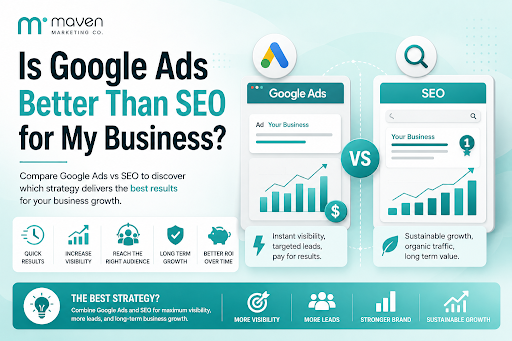
Is Google Ads Better Than SEO for My Business
One of the biggest questions business owners ask when they are planning online growth is whether they should invest in Google Ads or SEO. Both are strong marketing plays that help your company show up in Google search results, but they do things in separate lanes. Google Ads gives quicker visibility and can bring in leads fast, whereas SEO more or less focuses on slow, steady organic traffic that tends to grow the longer you keep building it. Picking the right direction depends on what you want to achieve, how much money you can spend, how crowded the market is, and how quickly you need results, like sooner rather than later. The good news is you don’t always have to choose one or the other; it’s not exactly a black-and-white situation. If you take time to understand the strongest points of both, you can put together a more sensible digital marketing plan that supports consistent expansion. In this guide, we’ll compare Google Ads vs SEO, explain the main differences, and help you figure out what option makes the most sense for your business.

When Should I Hire a Digital Marketing Agency
Growing a business today takes more than just having a website or throwing a post on social media; customers usually search around online, compare providers, skim reviews, and basically expect the brand to show up with a solid digital presence before they even think about buying. Many businesses try to run their marketing themselves, but there comes a point when “doing it all in-house” becomes clunky and hard to manage, all at once. Knowing when to hire a digital marketing agency can end up making a big, real difference for your growth. If you’re not getting enough leads, or your online visibility feels stuck, or sales are just not moving, the right agency can bring the know-how, plus a clear plan, to help you get noticeably better outcomes. In this guide, we’ll dig into what a digital marketing agency actually does, the usual signs it’s time to bring one on, and how picking the right marketing partner can help your business move forward at a faster pace.
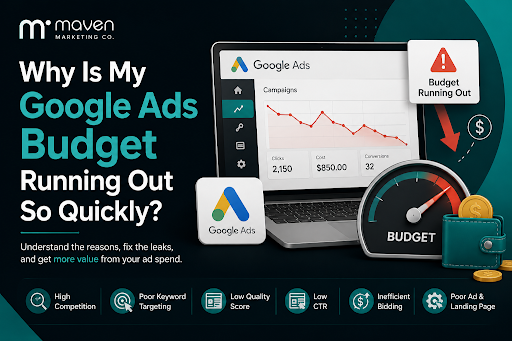
Why Is My Google Ads Budget Running Out So Quickly
Running a successful Google Ads budget isn’t only about throwing more money at it. It’s more like making every dollar, doing a bit extra. A lot of businesses start a Google Ads campaign with big hopes, then find out their daily budget is gone within a few hours, and that feels weird, right? After that, your ads stop showing effectively, new leads slip away, and your return on investment dips. So if your Google Ads budget is running out too fast, don’t stress. It’s a fairly common issue, and in most situations, it can be repaired with the right approach. There are multiple little things that can drain your advertising money quicker than you expected, from costly keywords to audience targeting that just doesn’t quite fit. In this guide, we’ll walk through why your budget disappears so quickly, how to cut wasteful spend, and the most reliable ways to boost your Google Ads ROI, even if your budget stays the same.