.svg)
.svg)
.svg)


%201.svg)
April 2, 2026
The Link Building Playbook That Still Works in 2026: Earn Authority Without Paying for It
Link building has a reputation problem it does not entirely deserve. When most Australian marketing teams hear the term, they picture one of two things: the paid link schemes that Google has been penalising for years and that still circulate in the shadier corners of the SEO industry, or the outreach programmes that require significant labour that produce a handful of marginal links per month at a cost that makes the return on investment look questionable at best. Both of these pictures miss the methods that actually work in 2026, which share a common characteristic: they earn links as a byproduct of producing something valuable rather than acquiring them as a standalone purchase or extraction exercise. The distinction matters commercially because earned links are structurally different from purchased links. They tend to come from more relevant and more authoritative sources. They are more stable because they are not contingent on a payment being maintained. They are more likely to produce lasting ranking improvements because they represent genuine signals of editorial endorsement. And they are not a liability that sits waiting for the next Google spam update to detonate. This article covers the link earning methods that Australian businesses and their marketing teams can execute in 2026 to build domain authority through genuine editorial signals rather than purchases or schemes.

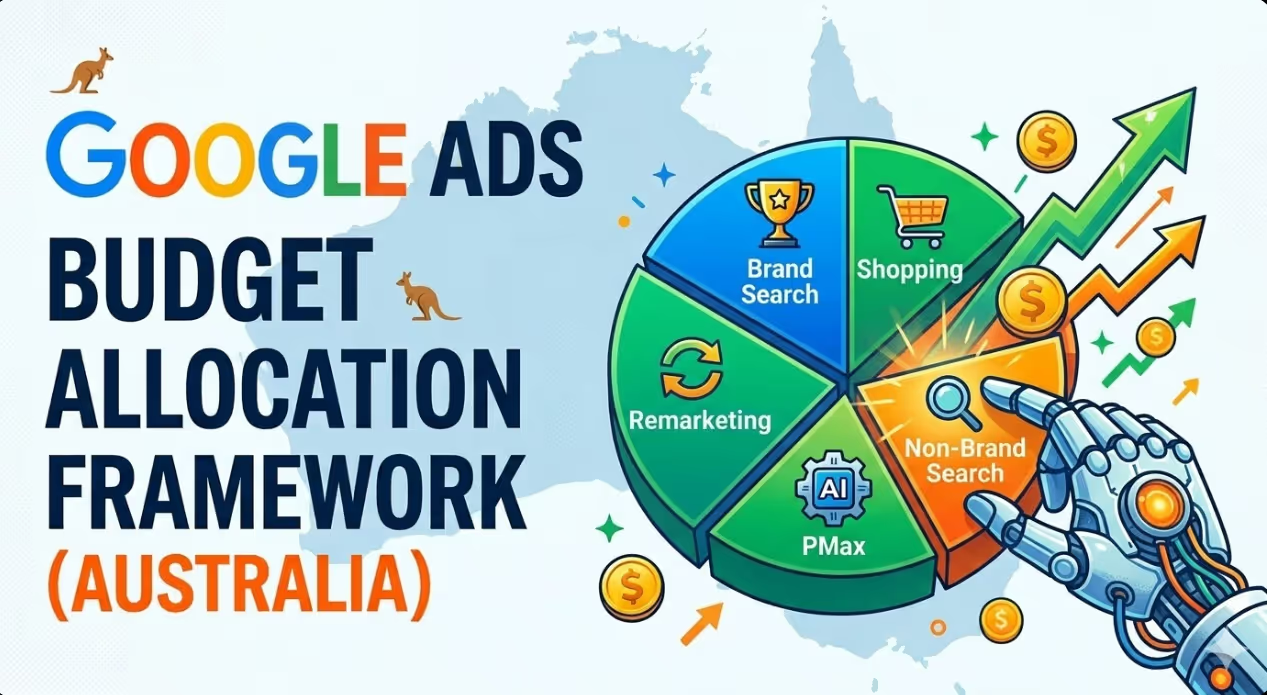
PPC Budget Allocation Framework: Distributing Spend Across Campaign Types
The question of how to distribute a PPC budget across campaign types is one that most Australian businesses treat as a secondary concern, something to be addressed once the campaigns are running and the data starts to accumulate. In practice, the initial budget allocation is among the most consequential decisions in the entire paid search programme, because it determines which campaign types receive enough budget to gather meaningful data, which are starved of the impression volume needed for the algorithm to optimise, and whether the overall account structure is oriented toward the commercial objectives it is supposed to serve. A Google Ads account where the budget is distributed based on intuition, convention, or the last recommendation made by an account manager rather than on a structured assessment of the funnel stage, conversion intent, and margin profile of each campaign type will consistently underperform one where the allocation reflects a deliberate strategic framework. This article provides that framework for Australian businesses managing PPC investment across Search, Shopping, Display, Performance Max, and remarketing campaigns, explaining the logic behind each allocation decision and the signals that should prompt a rebalance as the account matures.
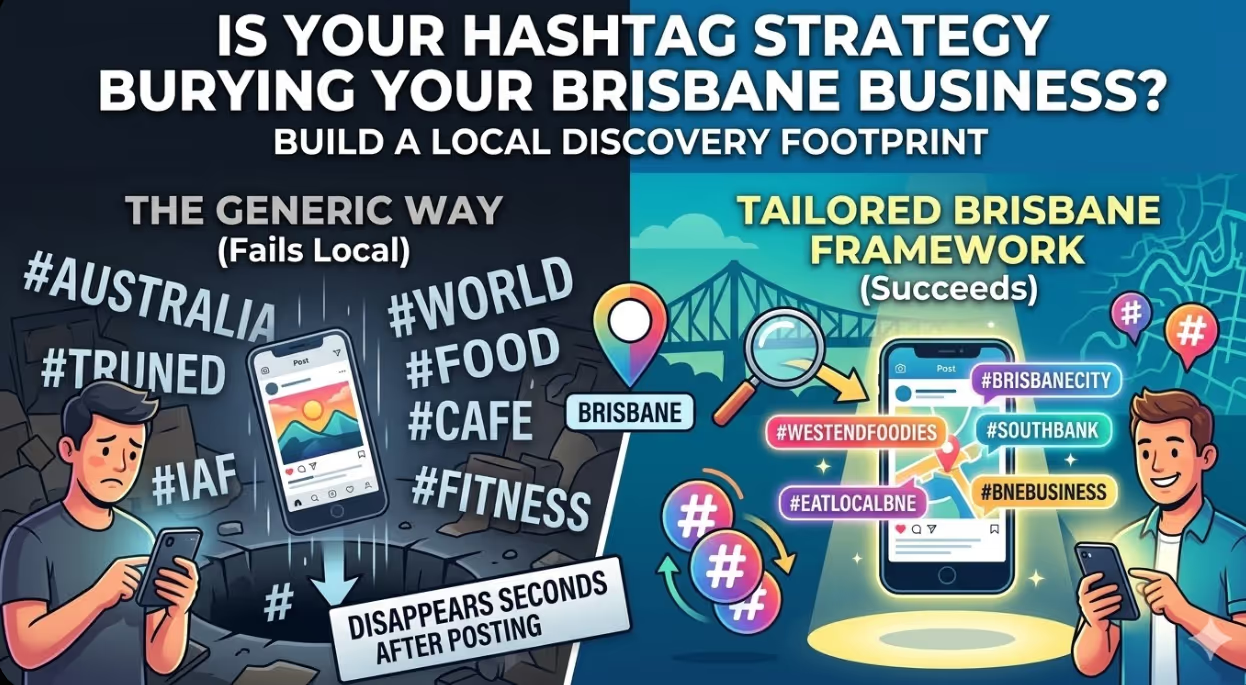
Hashtag Strategy Development: Research Backed Approach for Brisbane Audiences
Hashtag strategy is the element of social media content planning that receives the most generic advice and produces the most inconsistent results, because the approach that generates real discoverability for a Brisbane business is materially different from the approach that works for a national brand targeting a broad Australian audience, and both are different from the strategy relevant to an international creator producing content without a geographic anchor. Brisbane businesses that apply generic hashtag advice, filling their captions with the national hashtags with the highest volume or international hashtags in their category, consistently find that their content competes in pools so large that it disappears within seconds of publication, reaching nobody in their actual geographic market. The approach backed by research starts from the opposite direction: identifying the specific hashtags where Brisbane and Southeast Queensland audiences are genuinely active, layering in category and terms specific to each niche at the appropriate volume range for the account's size, and rotating the set intelligently to build a discovery footprint across multiple overlapping audience segments rather than repeating the same tags on every post. This article provides the full framework for developing a hashtag strategy tailored specifically to Brisbane audiences, from the initial research process through to the rotation logic and performance tracking that keeps the strategy producing results as the platform landscape evolves.
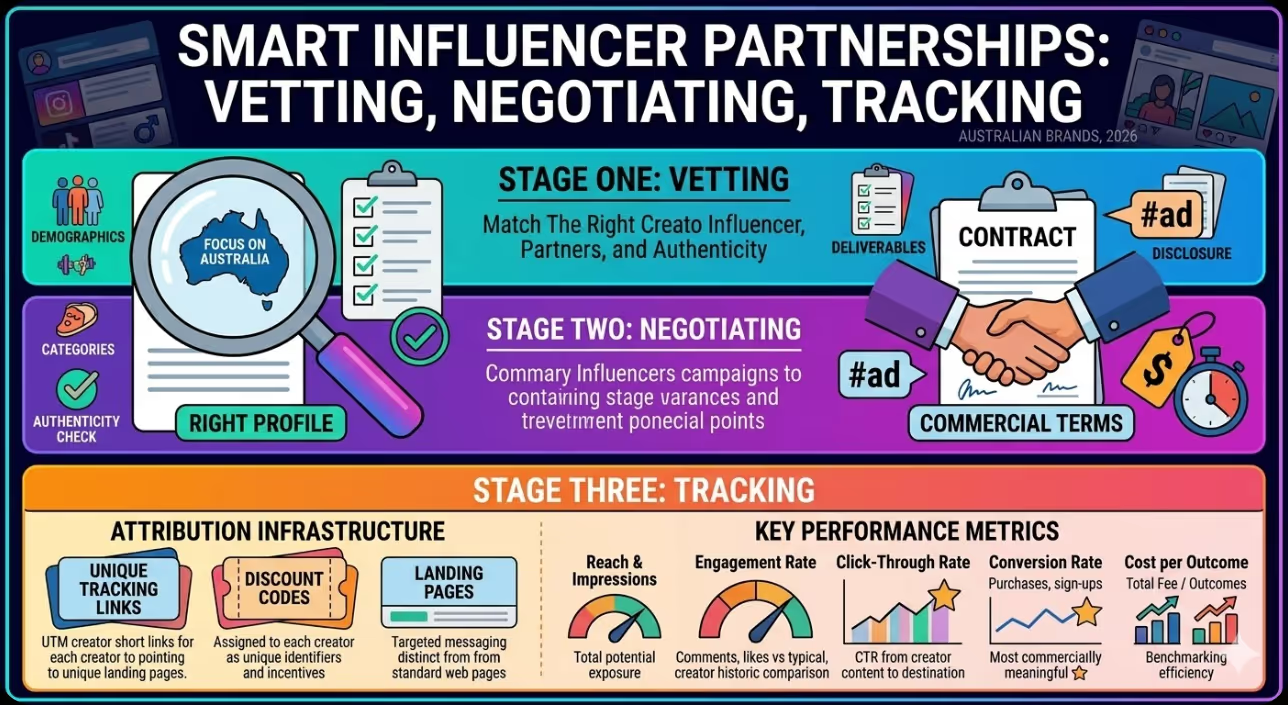
Influencer Partnership Management: Vetting, Negotiating, and Campaign Tracking
Influencer marketing is the most unevenly executed tactic in Australian digital marketing. At one end of the spectrum, brands are generating measurable returns from carefully selected creators whose audiences genuinely overlap with their target customer profile, with negotiated terms that align creator incentives with brand outcomes and tracking frameworks that connect the campaign activity to real commercial results. At the other end, brands are paying significant fees to creators whose follower counts look impressive but whose audiences are either unengaged, misaligned, or both, with no clear brief, no performance benchmarks, and no way to evaluate whether the campaign produced anything beyond a collection of posts with decent view counts. The difference between these two outcomes is not luck and it is not the size of the influencer budget. It is the rigour of the processes applied at each stage: vetting, negotiating, and tracking. Australian brands that treat influencer partnerships as a structured commercial relationship, governed by the same discipline they would apply to any other paid media investment, extract consistent value from the channel. Those that treat them as a creative relationship managed primarily on vibes and relationship warmth are the ones funding the cautionary tales. This article covers all three stages in the detail they require.

Instagram vs TikTok Resource Allocation: Platform Prioritisation Framework
The question of whether an Australian business should invest its social media resource primarily in Instagram, primarily in TikTok, or in some allocation across both is one that does not have a universal answer, but it does have a structured answer for any specific business once the right variables are assessed. Many Australian marketing teams make this decision based on where their personal familiarity lies, where their competitors are currently active, or where they have seen impressive results from another brand without systematically evaluating whether that brand's situation matches their own. The result is either a strong investment in the wrong platform for the audience being targeted, or a thin investment spread across both platforms that produces weak results on each. A platform prioritisation framework replaces those instincts with a set of specific questions whose answers, taken together, indicate which platform deserves the primary resource investment and what the secondary platform should look like if the budget and team capacity support maintaining both. This article provides that framework for Australian businesses evaluating their social media resource allocation for 2026 and beyond.
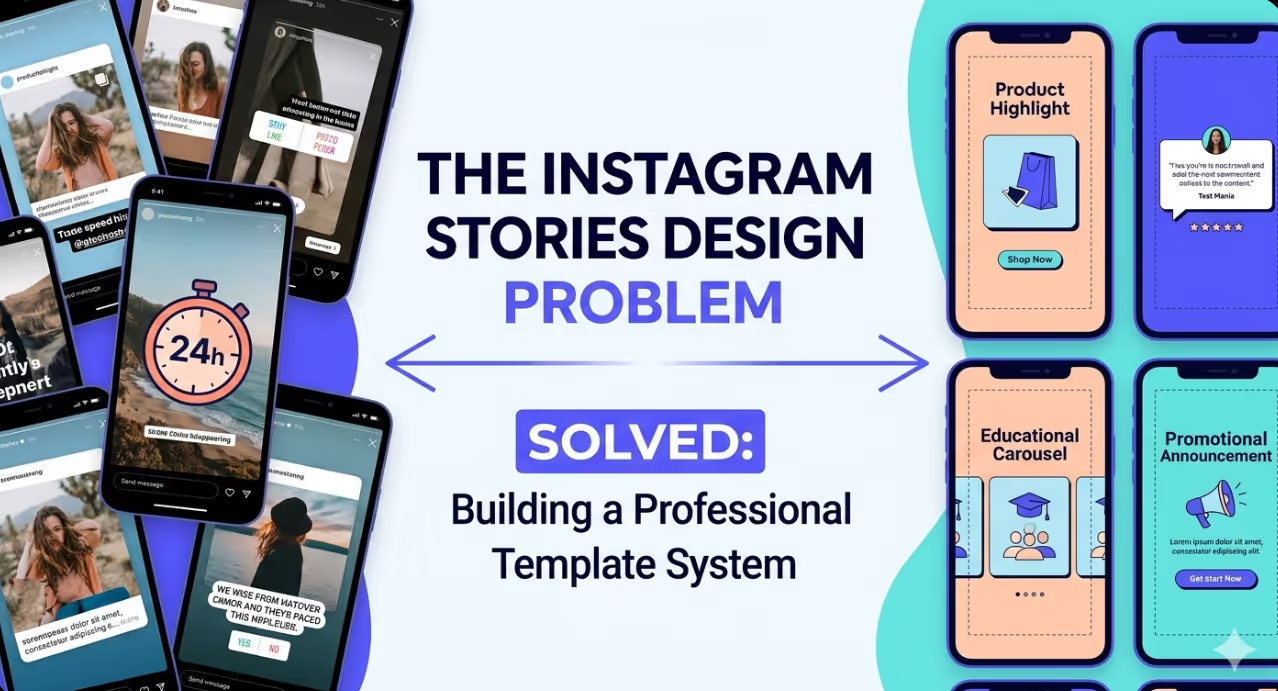
Instagram Stories Templates: Brand Specific Design Systems We Create
A professionally designed set of Instagram Stories templates is one of the most practical investments an Australian business can make in its social media presence, because it solves three problems simultaneously: it eliminates the time spent recreating designs from scratch each time a story is produced, it enforces the visual consistency that makes a brand recognisable across dozens of individual story frames published over weeks and months, and it raises the production standard to a level that a team member without graphic design training can maintain without the output looking inconsistent or amateur. The challenge most Australian businesses encounter when they attempt to create their own template systems is that they build templates for the content types they are already producing rather than for the full range of content their social media strategy requires, and they design them with insufficient flexibility to accommodate the variety of content that fills each category over time. A design system built correctly at the outset covers every content category in the brand's publishing plan, includes enough variation within each template to prevent the feed from looking repetitive, and is built with the platform constraints of Instagram Stories firmly in mind from the first design decision. This article explains exactly how Maven Marketing Co approaches Instagram Stories template design for Australian clients, from the initial brief through to a complete, design system that is ready for production.
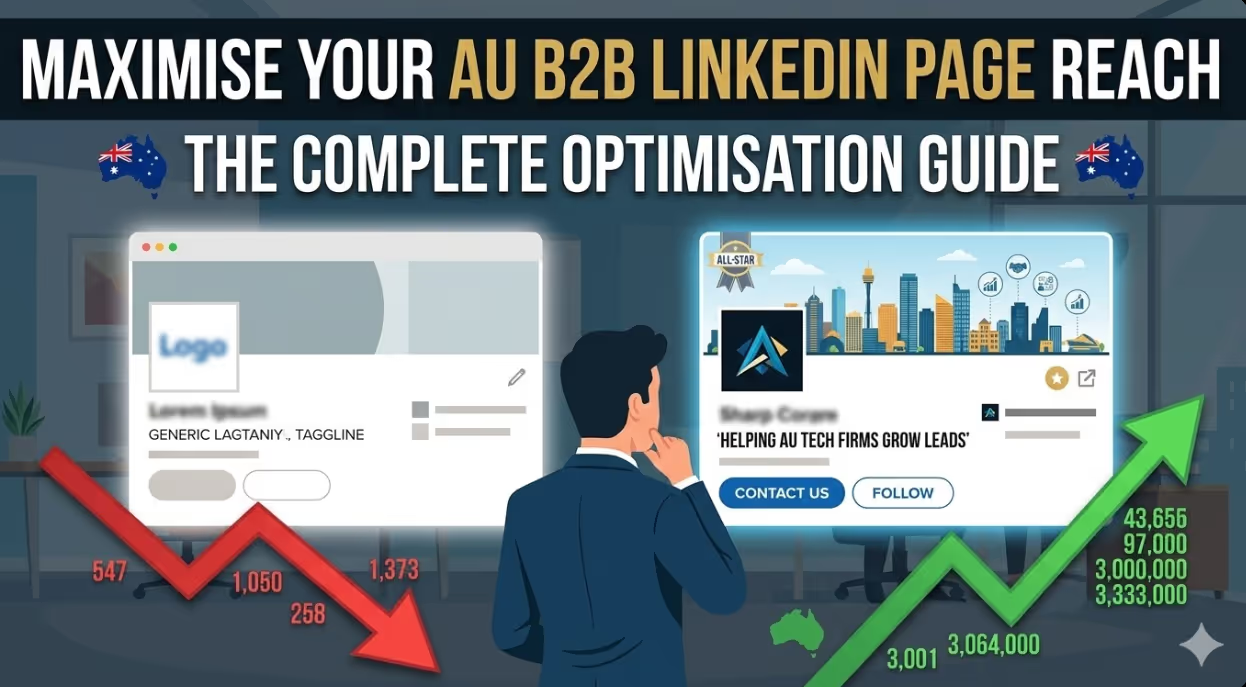
LinkedIn Company Page Optimisation: The 15 Elements We Perfect First
Most Australian businesses that use LinkedIn for B2B marketing are doing so from a Company Page that is doing less work than it could be. The page was set up when the company joined the platform, the basics were filled in at the time, and it has received incremental updates since but rarely a systematic review against the full set of elements that determine how the page performs in LinkedIn search, how it appears to visitors evaluating the brand, and how effectively it converts profile visitors into followers, website visitors, and qualified enquiries. A LinkedIn Company Page is not a passive directory listing. When it is thoroughly optimised, it functions as an active channel for organic discoverability on LinkedIn's own search platform, a first impression for prospects who visit the page before or instead of visiting the company website, and a foundation for content distribution that amplifies every article, update, and announcement the brand publishes on the platform. The fifteen elements covered in this article are those Maven Marketing Co addresses first on every new Australian client page, in the sequence that produces the fastest improvement in both discoverability and commercial impact.

Social Media Brand Voice Development: Creating Consistency Across Platforms
Every Australian business that operates across multiple social media platforms has a brand voice, whether it has been deliberately developed or not. The question is whether that voice is consistent, distinctive, and commercially effective, or whether it shifts from platform to platform, writer to writer, and month to month in ways that erode recognition and undermine the trust that consistent communication builds over time. A deliberately developed brand voice is one of the most durable marketing assets a business can create, because it operates across every piece of content the brand publishes, compounds in its effect as the audience grows more familiar with it, and creates a standard against which every piece of communication can be evaluated before it is published. The challenge for most Australian businesses is not understanding why a consistent brand voice matters. It is understanding how to develop one that is genuinely distinctive rather than generic, how to document it clearly enough that multiple team members can apply it consistently, and how to adapt it intelligently across platforms with different norms and audiences without losing the underlying character that makes it recognisable. This article addresses all three challenges in the sequence they need to be tackled.
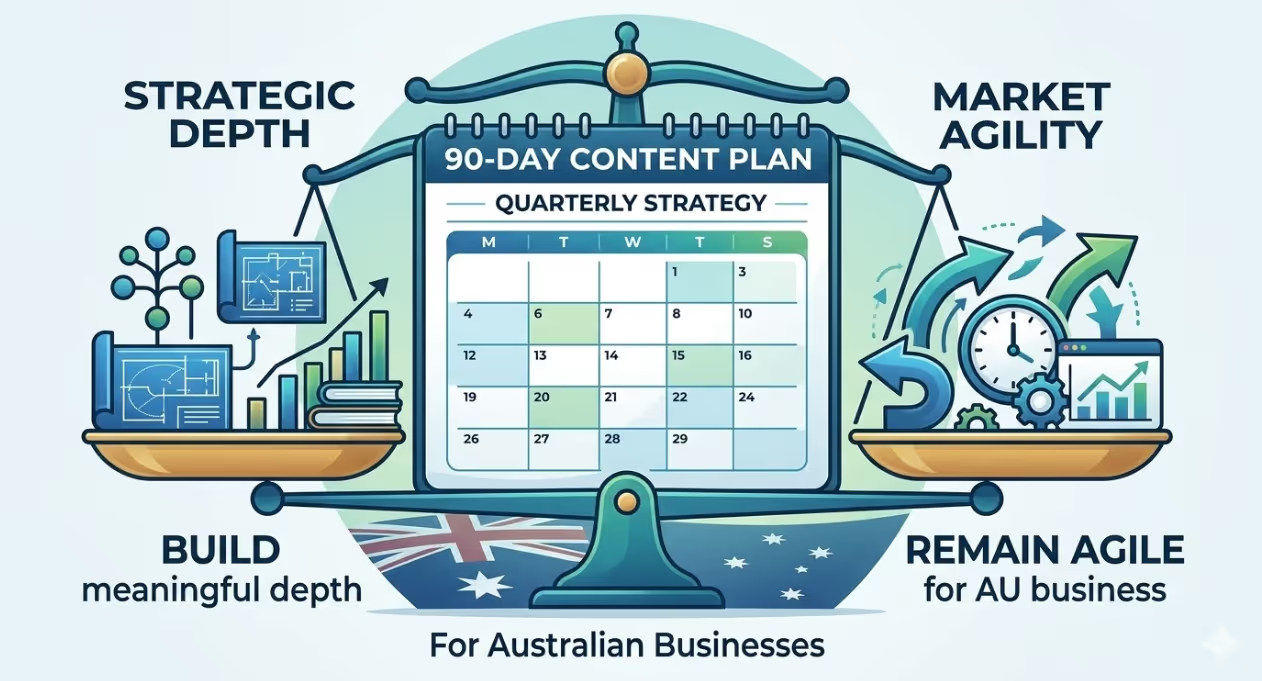
Content Calendar Development: Our 90-Day Planning Process for Australian Clients
Publishing blog content without a structured plan is one of the most common and most costly inefficiencies in Australian digital marketing. Businesses write articles when inspiration strikes, cover topics that feel relevant in the moment, and publish at irregular intervals that send inconsistent signals to both their audience and to Google. The result is a content library that has no coherent topical architecture, accumulates authority slowly because its articles reinforce no particular subject matter depth, and requires constant effort to sustain because there is no pipeline to draw from. A content calendar built on a 90-day planning horizon solves all of these problems simultaneously by establishing which topics will be covered, in what sequence, at what depth, and on what schedule, before a single article is written. The planning process that produces a genuinely strategic content calendar is not quick, but it is also not complicated. It requires keyword research, competitive analysis, a clear understanding of the business goals the content is meant to serve, and the discipline to commit to a schedule that treats content publishing as a business function rather than a marketing afterthought. This article explains exactly how Maven Marketing Co develops 90-day content calendars for Australian clients, from the first briefing conversation through to a fully populated editorial schedule.
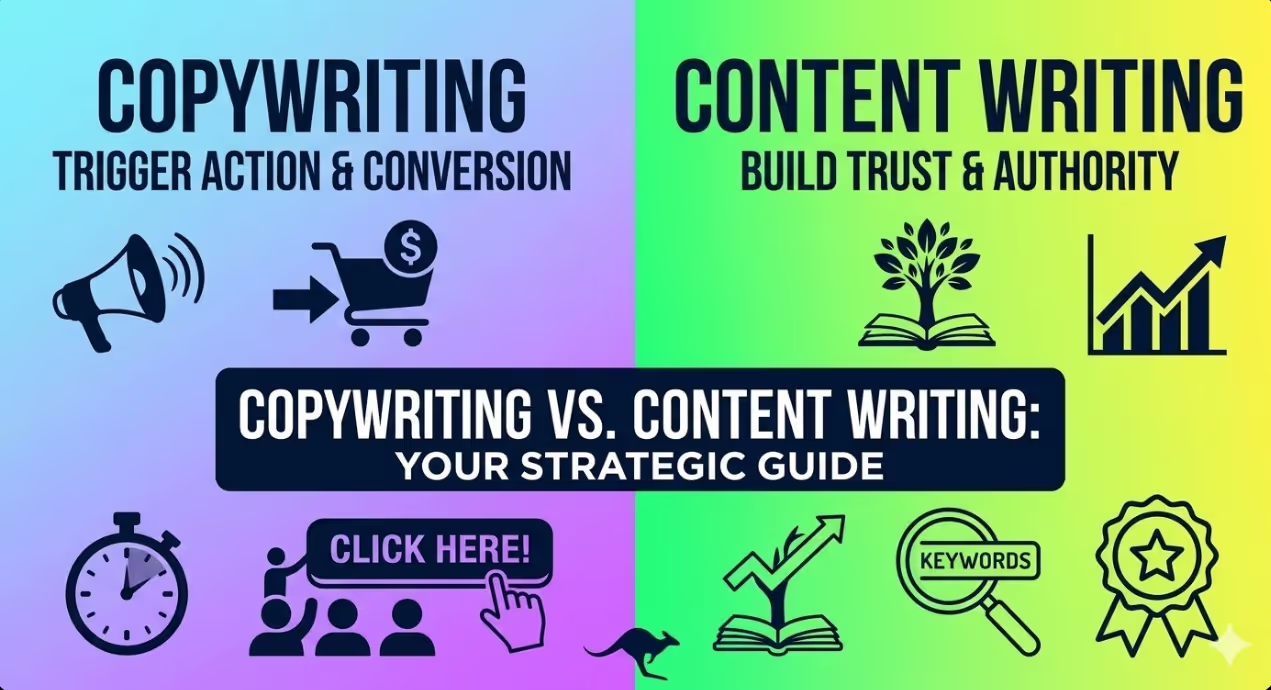
Copywriting vs Content Writing: Different Services for Different Goals
The terms copywriting and content writing are used interchangeably by a significant number of Australian businesses, agencies, and job advertisements, and the confusion costs money. Hiring a content writer to produce a sales page produces a thorough, readable piece that does not convert. Hiring a copywriter to produce a editorial programme spanning twelve months produces sharp, punchy articles that rank for nothing and build no topical authority. Both professionals are skilled at writing, but they are trained to solve different problems, optimised for different success metrics, and produce work that is valued against fundamentally different standards. Understanding the distinction is not an academic exercise in vocabulary. It is the practical knowledge that ensures Australian businesses brief the right person for each task, evaluate the output against the right criteria, and build a writing programme that serves both conversion and discoverability rather than sacrificing one for the other. This article draws the line clearly between the two disciplines, explains what each is best deployed for, and helps Australian marketing teams make better decisions about when they need which.
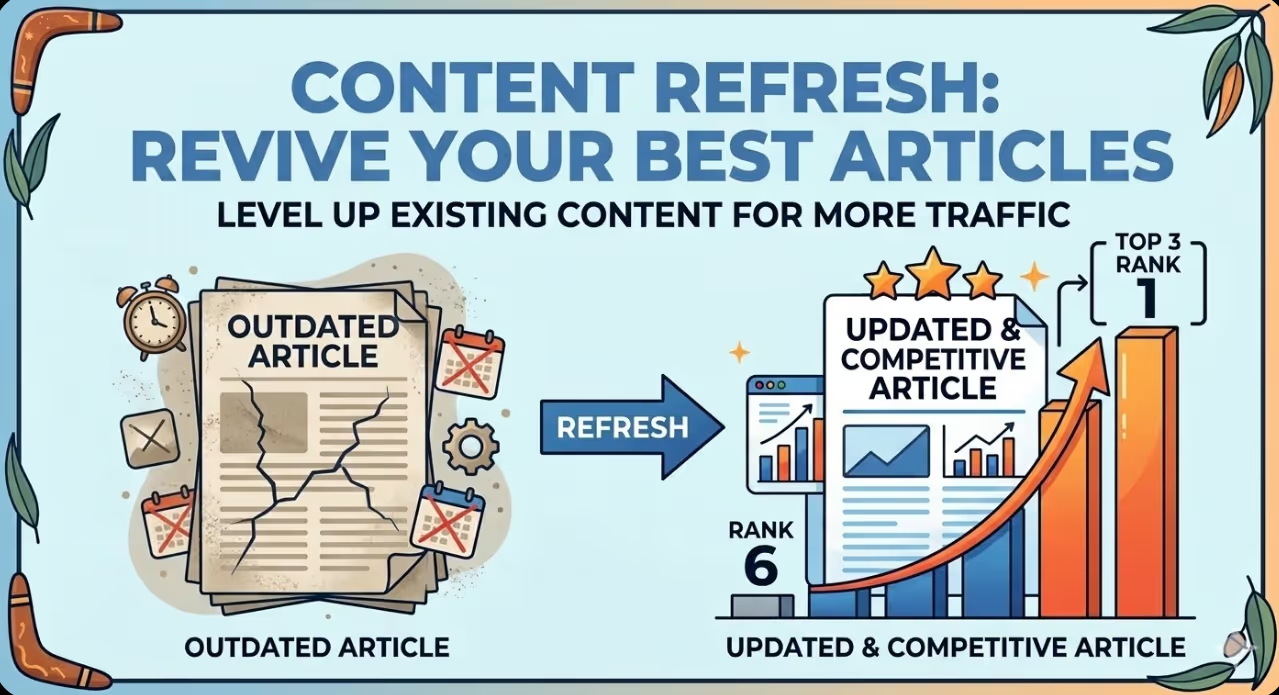
Content Refresh Services: Updating Old Posts for New Rankings
Most Australian businesses with an established blog are sitting on an underperforming content asset they have already paid to create. Articles published twelve, eighteen, or 24 months ago were written for a search landscape that has shifted, contain information that has become outdated, and are being outranked by newer, more thorough competitors who entered the same keyword space after the original articles were published. Creating brand new content to cover the same ground is expensive and unnecessary when the existing articles already have indexed history, existing backlinks, and residual authority that a new article would need months or years to accumulate. Content refresh services address this gap by systematically identifying which existing articles have the greatest ranking potential relative to their current performance, updating them to reflect current information and competitive standards, and relaunching them in a way that signals to Google that the content has been substantially improved. For Australian businesses looking for faster returns from their content investment, a disciplined content refresh programme often delivers stronger ranking improvements in a shorter timeframe than an equivalent investment in entirely new content.
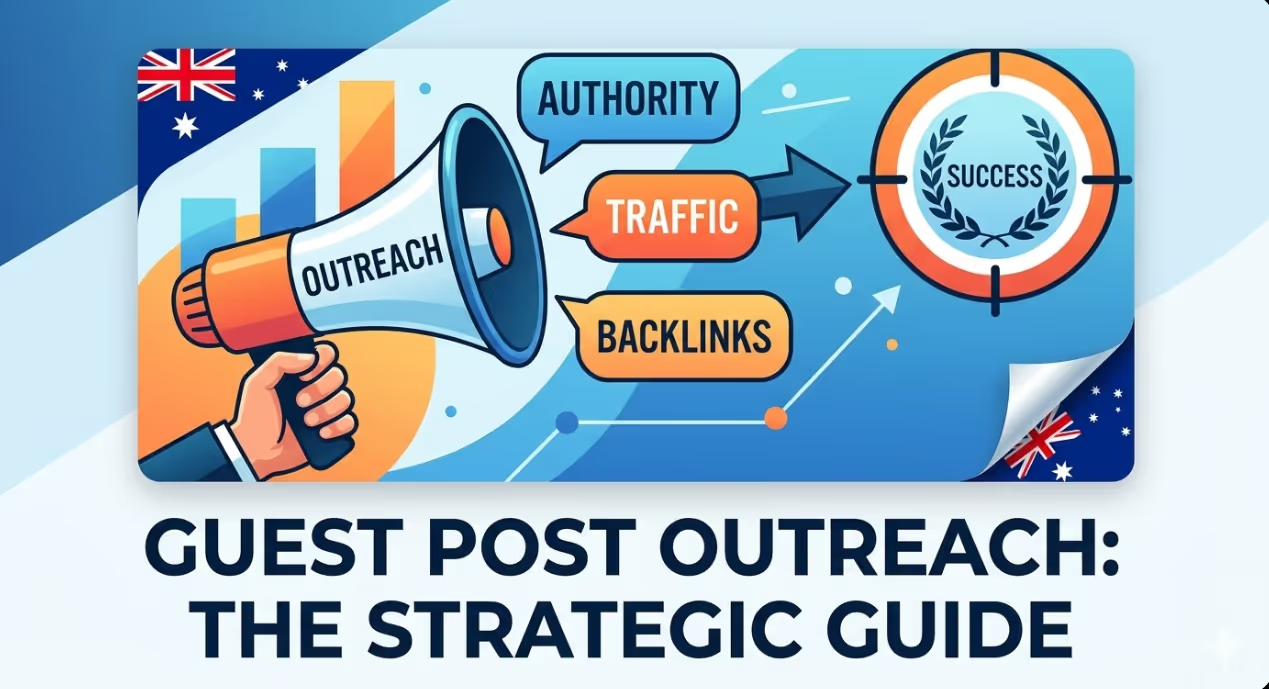
Guest Post Outreach: Link Building Through Editorial Placements
Building a strong backlink profile through editorial placements is one of the most durable and commercially valuable SEO investments an Australian business can make, and guest post outreach remains the most scalable method for doing it consistently. Done correctly, a guest post programme earns links from genuinely relevant, publications with genuine authority that send qualified referral traffic alongside the ranking signals, builds relationships with editors and publishers in the industry, and positions the brand as a credible voice in its field. Done poorly, it produces a folder of rejection emails, links on sites of low quality that Google discounts or penalises, and a reputation among editors as another brand sending generic pitches that demonstrate no familiarity with the publication. The difference between these two outcomes is almost entirely in the approach: the quality of target selection, the specificity and relevance of pitch angles, the standard of the content delivered, and the discipline to pursue placements on sites that add genuine value rather than simply accumulate link volume. This article sets out the guest post outreach process that produces real results for Australian businesses in 2026.
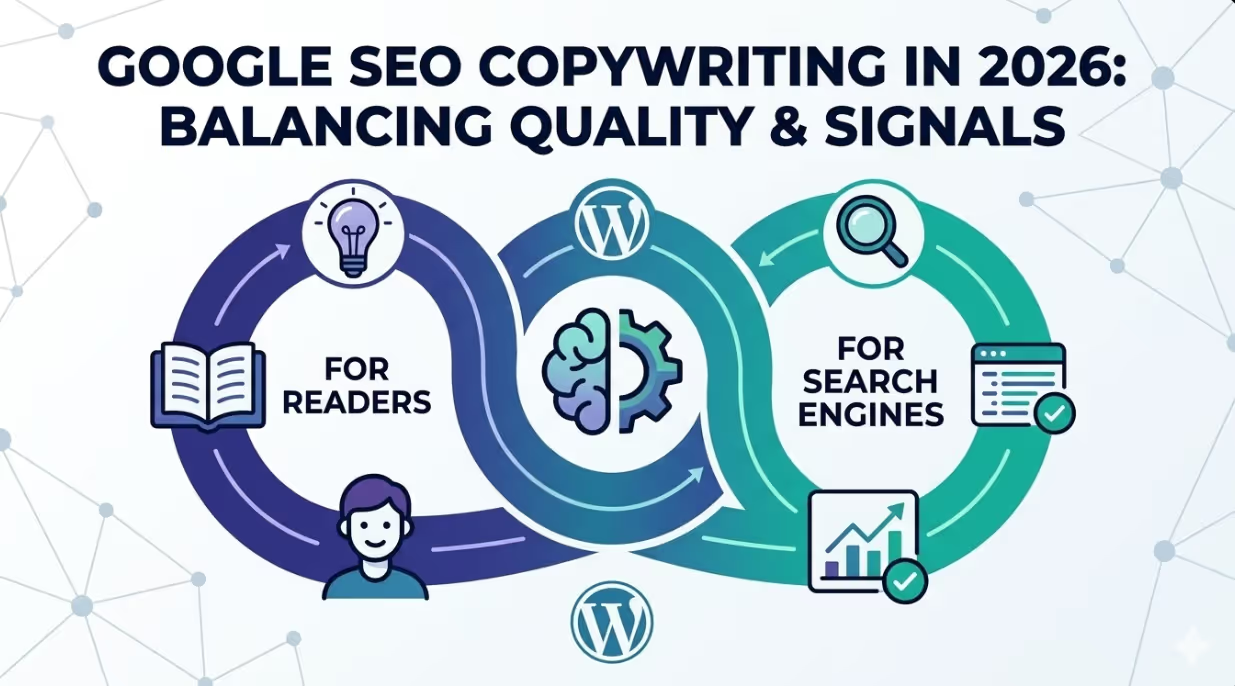
SEO Copywriting Process: Keyword Integration Without Sacrificing Readability
The tension between writing for search engines and writing for people is one of the most persistent misconceptions in digital marketing. Marketers who have watched their carefully crafted copy get rewritten to include a target keyword seventeen times in 800 words, or who have read optimised content that sounds like it was assembled from a list of terms rather than written by a human, understand instinctively that something has gone wrong. What has gone wrong is not that SEO and readability are genuinely in conflict. It is that keyword integration has been treated as a mechanical process rather than a craft one. Google's ranking systems have become sophisticated enough to reward content that satisfies the genuine information needs of searchers, and that standard is far closer to excellent writing than it is to keyword stuffing. For Australian marketing teams producing blog content, landing pages, service descriptions, and product copy, understanding how to integrate keywords in a way that serves both search visibility and reader experience is not a compromise between two competing goals. It is the same goal expressed at two different levels of analysis.