
.svg)
.svg)
.svg)


%201.svg)
April 2, 2026
The Link Building Playbook That Still Works in 2026: Earn Authority Without Paying for It
Link building has a reputation problem it does not entirely deserve. When most Australian marketing teams hear the term, they picture one of two things: the paid link schemes that Google has been penalising for years and that still circulate in the shadier corners of the SEO industry, or the outreach programmes that require significant labour that produce a handful of marginal links per month at a cost that makes the return on investment look questionable at best. Both of these pictures miss the methods that actually work in 2026, which share a common characteristic: they earn links as a byproduct of producing something valuable rather than acquiring them as a standalone purchase or extraction exercise. The distinction matters commercially because earned links are structurally different from purchased links. They tend to come from more relevant and more authoritative sources. They are more stable because they are not contingent on a payment being maintained. They are more likely to produce lasting ranking improvements because they represent genuine signals of editorial endorsement. And they are not a liability that sits waiting for the next Google spam update to detonate. This article covers the link earning methods that Australian businesses and their marketing teams can execute in 2026 to build domain authority through genuine editorial signals rather than purchases or schemes.


Reddit Community Building: Long-Term Subreddit Strategy for Brands
For years, brands have viewed Reddit with a mixture of fascination and absolute terror. It is the wild west of the internet, a place where traditional marketing copy goes to die and corporate pandering is met with brutal honesty. Yet, behind this intimidating facade lies the most powerful community-building engine in the modern digital landscape. As consumers grow increasingly weary of polished, algorithmic feeds, they are retreating into the raw, unfiltered conversations found within subreddits. For Australian brands, establishing a long-term strategy on Reddit is no longer an optional digital experiment; it is a fundamental necessity for consumer trust and search engine relevance. This article unpacks the psychology of the Redditor, explores the profound impact of user-generated content on AI Overviews, and provides a comprehensive blueprint for transforming your brand from an intruding marketer into a valued community pillar.
TikTok Spark Ads: Boosting Organic Content Performance
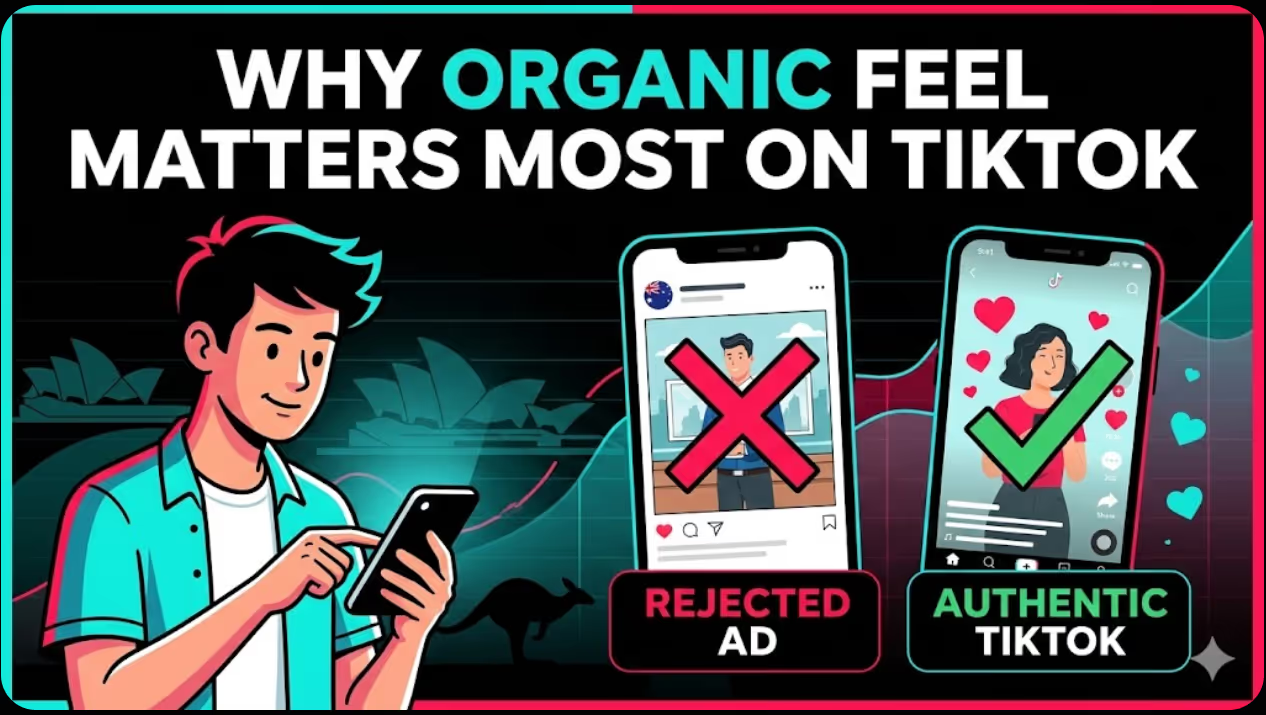
Most paid social advertising starts with a brief, a creative team, a production budget, and a finished asset that may or may not land with its intended audience. TikTok Spark Ads take a different approach entirely. Instead of creating a new piece of advertising from scratch, Spark Ads allow you to put media budget behind content that has already been published and has already begun to earn genuine audience engagement. For Australian brands that have invested in building an organic TikTok presence, this is a meaningful shift in how paid amplification works. Rather than disrupting the feed with something that feels obviously like an ad, Spark Ads extend the reach of content that already feels native to the platform because it is. The engagement signals already present on the organic post carry through to the promoted version, the creator's or brand's profile link remains attached, and the ad appears in the feed in a format indistinguishable from standard content. For any Australian brand trying to extract more commercial value from the TikTok content it is already creating, Spark Ads are one of the most efficient and tools appropriate for the platform available.
Pinterest Idea Pins Strategy: Multi-Page Storytelling for Australian Brands
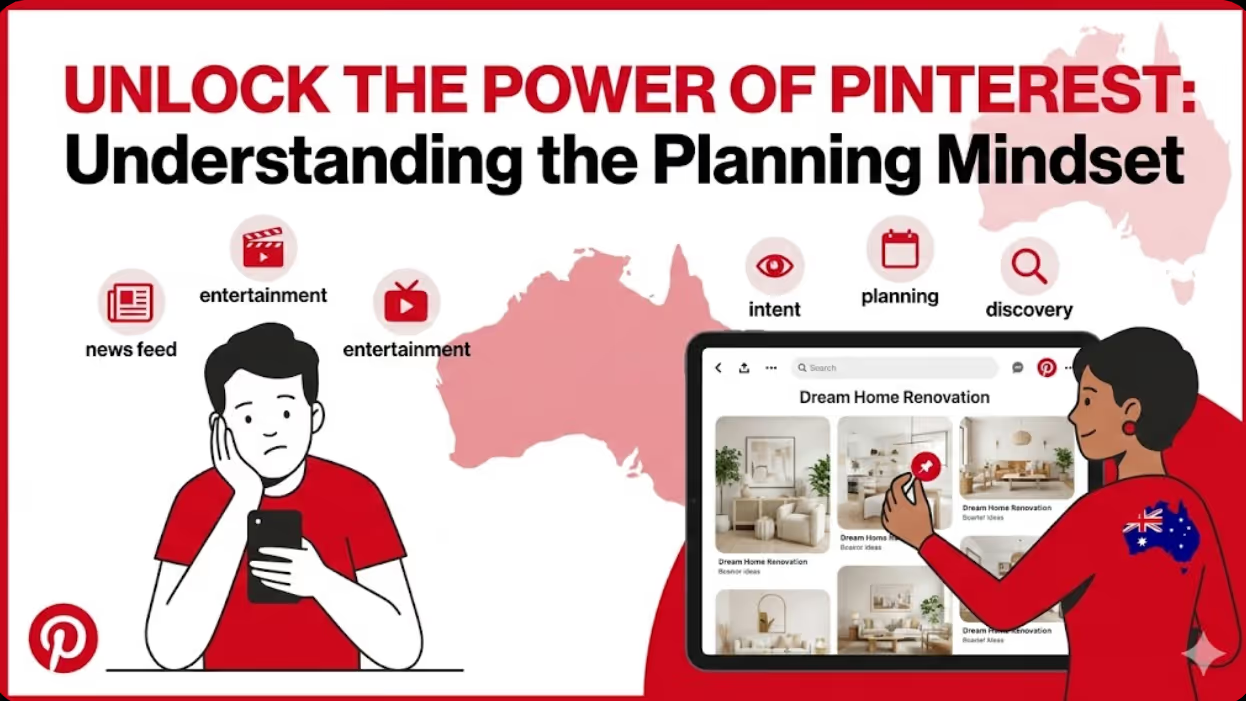
Pinterest is a platform that most Australian brands either ignore entirely or treat as a secondary afterthought to Instagram, and in doing so they are walking past an audience that is actively looking for ideas, products, and inspiration with a purchase intent that most social platforms cannot match. Pinterest Idea Pins, the platform's native sequential content format spanning multiple pages, take that environment rich with intent and give brands a storytelling canvas that goes well beyond a single image. Idea Pins allow you to create content across multiple pages combining video, image, text, and interactive elements in a format designed specifically for the discovery and inspiration stage of the customer journey. For Australian brands in food, travel, home, fashion, fitness, wellbeing, and a wide range of other categories, Idea Pins represent a genuinely underused opportunity to build a sustained presence with an audience whose mindset at the point of discovery is closer to active consideration than passive scrolling. This article covers how Idea Pins work, what makes them effective for Australian brand audiences, and how to build a content approach that earns the platform's algorithmic favour and drives genuine commercial outcomes.
Instagram Guides Creation: Curated Content for Australian Audiences
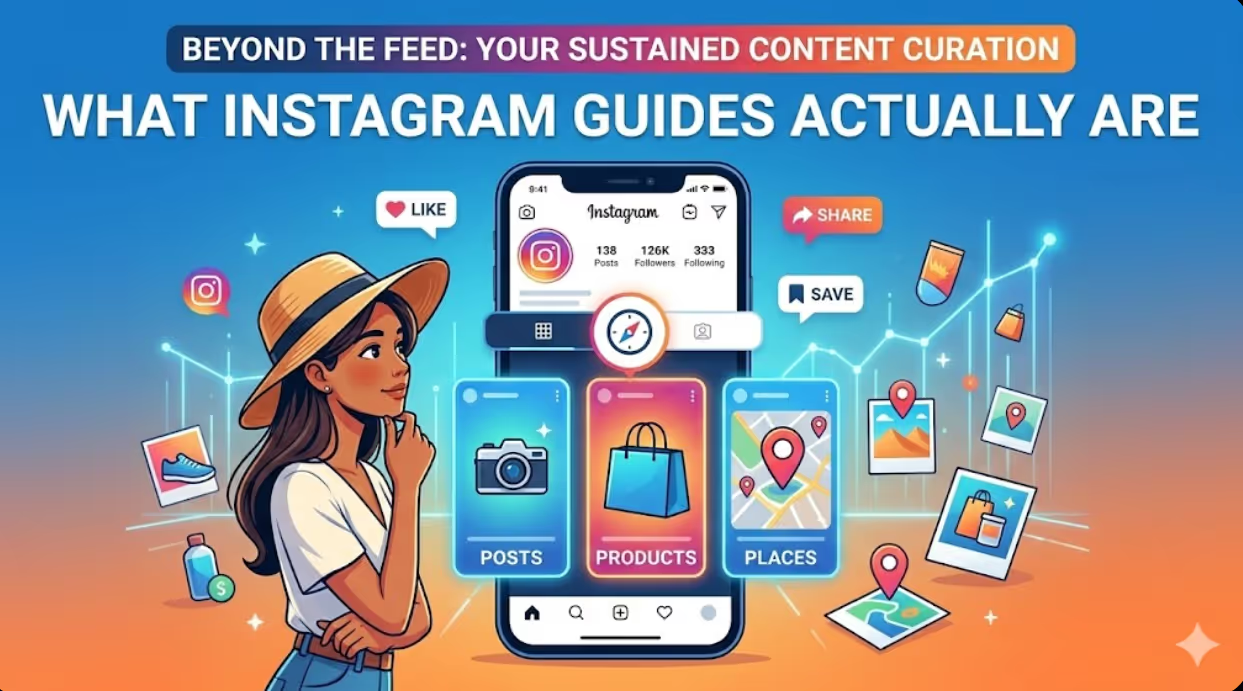
Instagram Guides are one of the least used features on a platform that most Australian brands already invest significant time and budget into, which makes them one of the more interesting content opportunities hiding in plain sight. While the rest of your industry is competing for attention in the standard feed and Stories, a thoroughly constructed Guide sits on your profile as a durable, structured content experience that visitors can find and read long after the moment of publication has passed. Guides allow you to curate your own posts, third party posts, products from your shopping catalogue, or actual real world places into a scrollable collection with your own commentary and framing, functioning somewhere between a blog post and a magazine editorial on Instagram's own infrastructure. For Australian brands looking to build genuine authority in their category, answer common customer questions at depth, or create content that earns attention beyond the standard 48-hour feed window, Guides offer a format that almost nobody in the local market is using with any strategic seriousness. This article covers the three types of Instagram Guides, how to build them in a way that serves your audience rather than just filling a tab on your profile, and how Australian brands across different industries can apply the format to their specific content goals.
LinkedIn Document Posts: Long-Form Content Strategy for B2B
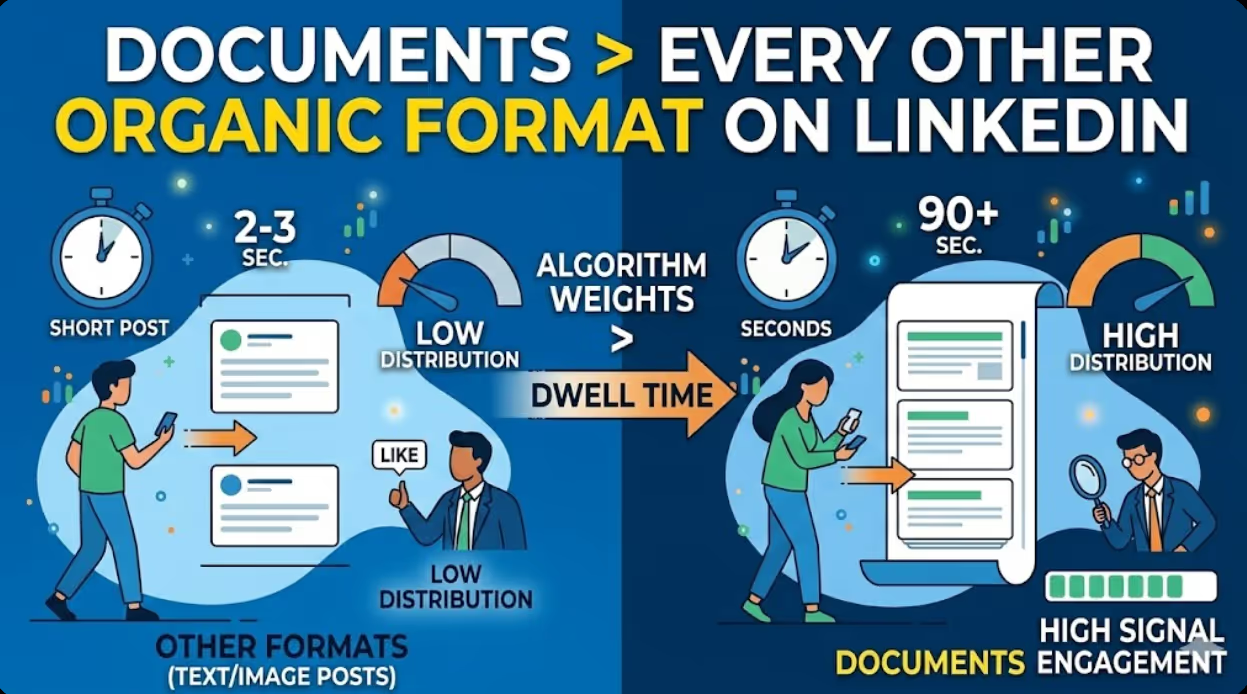
If there is one content format on LinkedIn that Australian B2B marketers are consistently underusing, it is the Document post. While most brands default to text updates, images, and the occasional video, Document posts, which are the native carousel and PDF format that users can scroll through directly in the feed, regularly outperform every other organic format for reach and dwell time on the platform. LinkedIn's algorithm appears to reward the extended engagement that documents generate, meaning thoroughly constructed document content can reach a significantly larger proportion of your followers and their networks than a standard post from the same account would. For B2B brands where a single meaningful conversation with the right decision maker can be worth thousands of dollars, a content format that reaches further, holds attention longer, and delivers substantive value in a format the audience can save and return to deserves far more strategic investment than most Australian businesses are currently giving it. This article covers how to build a LinkedIn Document content strategy that generates authority, attracts engagement from the right audiences, and creates a consistent pipeline of conversations that lead somewhere commercially useful.
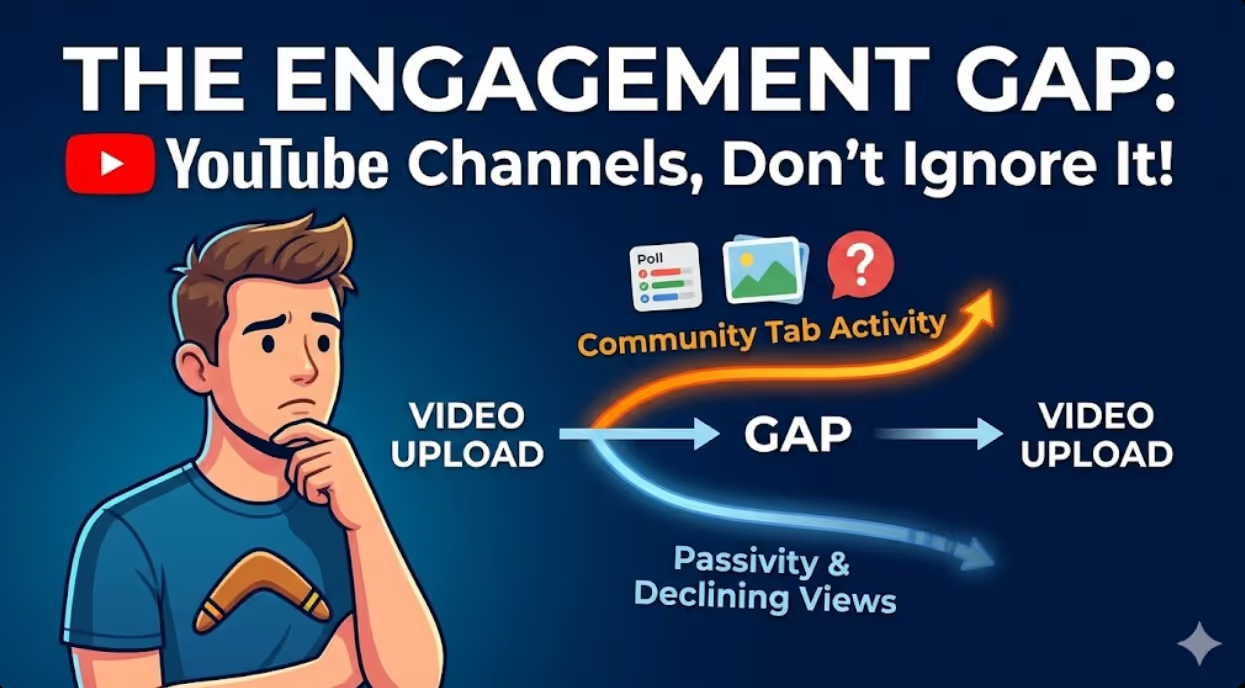
YouTube Community Tab Strategy: Engaging Subscribers Between Videos
Most Australian brands and creators on YouTube think about their channel in terms of videos. The content calendar, the upload schedule, the thumbnail strategy, the SEO on each title and description. All of that matters. But in between those uploads, there is a significant gap in engagement where subscribers forget the channel exists, the algorithm loses confidence in the relationship between creator and audience, and the momentum built by a strong video gradually dissipates. The YouTube Community tab exists specifically to close that gap. It is a native social posting feature built directly into YouTube that allows channels to share text posts, images, polls, and previews with their subscribers outside the standard video format. For Australian brands and creators willing to invest a small amount of strategic effort into it, the Community tab is one of the most underutilised tools available for building audience loyalty, maintaining algorithmic visibility, and creating a genuine dialogue with subscribers that pure video content rarely achieves on its own.
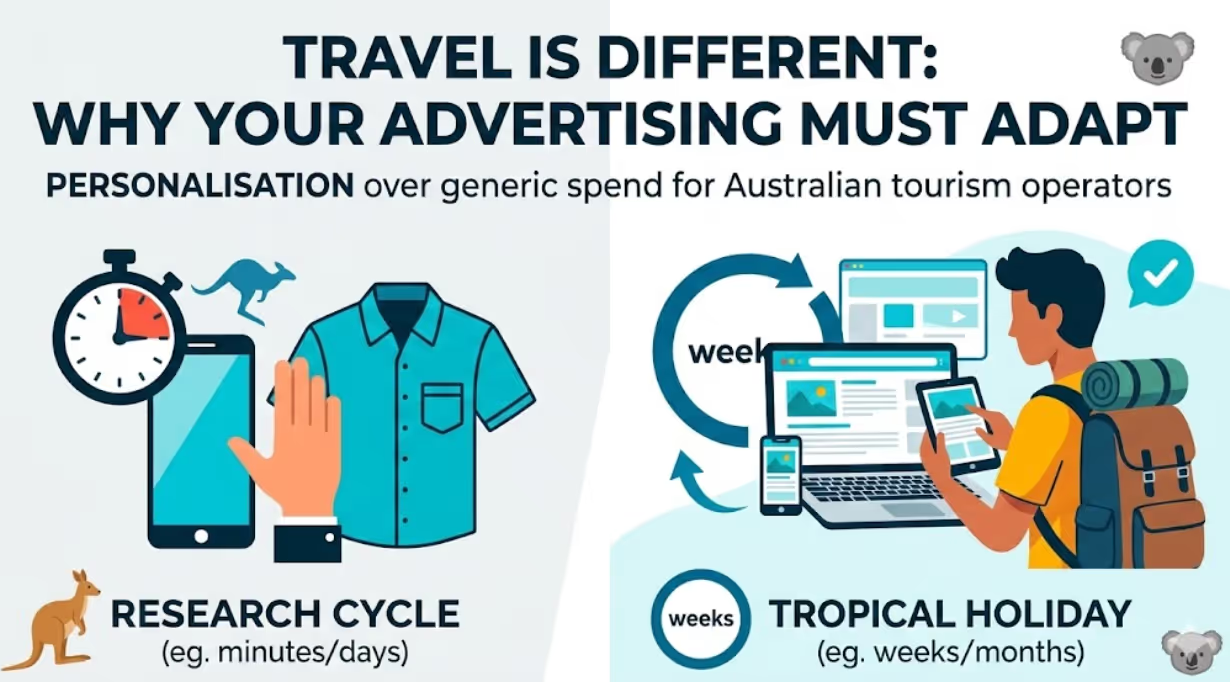
Facebook Dynamic Ads for Travel: Retargeting for Australian Tourism
Travel is one of the highest consideration purchase categories there is. Australians planning a trip typically spend weeks or months researching destinations, comparing accommodation options, checking flight prices, and reading reviews before committing to a booking. That extended research window creates a remarkable opportunity for tourism businesses willing to invest in staying visible and relevant throughout the decision process. Facebook Dynamic Ads for Travel are designed specifically for this purpose. They allow hotels, tour operators, airlines, and travel agencies to serve personalised ads to people who have already shown interest in specific products, whether that is a particular property, a departure route, or a destination package, dynamically matching the ad creative to what each individual traveller was actually browsing. For Australian tourism businesses competing in a market where international operators have significant advertising budgets, Dynamic Ads for Travel represent one of the most efficient ways to recover browsers who left without booking and move them toward conversion with relevance and timing that generic campaigns simply cannot replicate.

Instagram Shopping Catalog Setup: Product Feed Optimisation
Instagram Shopping has changed the way Australian consumers discover and buy products online, collapsing the distance between seeing something in a feed and completing a purchase to a matter of taps. But the quality of that experience, and the commercial results it generates for retailers, depends almost entirely on the quality of the product catalog sitting behind it. A poorly structured catalog with incomplete data, low resolution images, and mismatched pricing produces an Instagram Shop that feels amateur, underperforms in the algorithm, and drives abandonment at the point where purchase intent is highest. Getting the catalog setup right is not glamorous work, but it is the foundation on which everything else in an Instagram Shopping strategy rests. This article covers how to set up an Instagram Shopping catalog through Meta Commerce Manager, the product feed attributes that matter most for algorithmic visibility and conversion, the most common errors that reduce feed performance, and how Australian retailers can treat feed optimisation as an ongoing commercial activity rather than a single setup task.
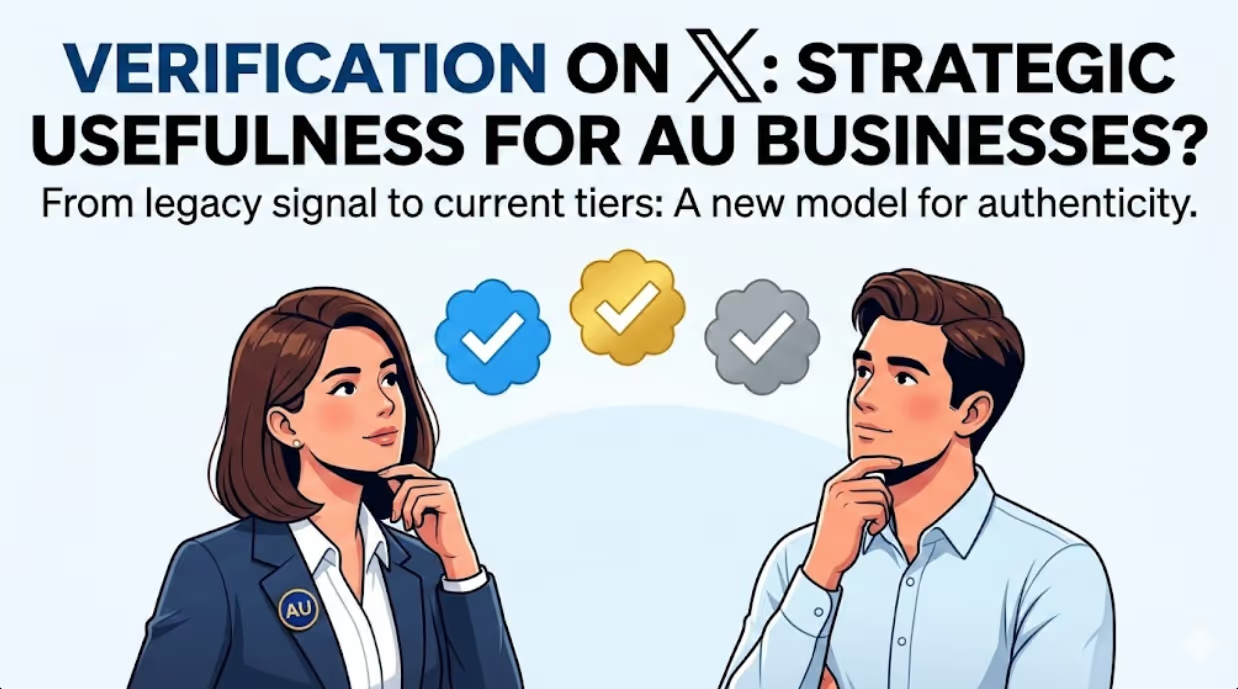
Twitter Blue Verification: Paid Verification Strategy for Australian Businesses
The blue tick on Twitter, now X, used to mean something specific. It was a signal granted by the platform to confirm that a public figure, journalist, organisation, or brand was who they claimed to be. That system was dismantled in 2022 and replaced with a subscription model that allows anyone willing to pay a monthly fee to carry the same mark. For Australian businesses trying to decide whether paid verification is worth the investment, the answer is more nuanced than a simple yes or no. The blue tick no longer carries the same credibility signal it once did, but X Premium and the separate X Verified Organisations product do offer a suite of features that have genuine utility for brands with an active presence on the platform. This article covers what verification actually means on X today, which tier is appropriate for Australian businesses of different sizes, what the practical benefits are beyond the badge itself, and how to think about verification as part of a broader X strategy rather than as a standalone credibility purchase.

LinkedIn Sales Navigator Integration: Connecting Social Selling with Your CRM
LinkedIn Sales Navigator is widely used by Australian B2B sales teams as a prospecting tool, but most organisations are only extracting a fraction of its potential value because they have never properly connected it to their CRM. When Sales Navigator operates in isolation, the intelligence it generates stays with the individual sales rep and disappears the moment they change their workflow or leave the organisation. When it is integrated with a CRM, that intelligence becomes a shared, searchable, and actionable asset that improves pipeline visibility, accelerates outreach, and gives sales and marketing teams a common view of prospect behaviour. The integration is not technically complex for most major CRM platforms, but it does require deliberate configuration, clear data governance decisions, and alignment between sales and marketing on what signals matter and what actions they should trigger. This article covers how Sales Navigator integrates with the most commonly used CRM platforms in Australia, what the integration actually enables, and how to build a workflow that turns LinkedIn activity into measurable pipeline outcomes.

Facebook Pixel Advanced Matching: Improving Attribution Accuracy
Attribution in Meta advertising has never been straightforward, but the combination of iOS privacy changes, browser restrictions on third party cookies, and growing consumer awareness around data tracking has made it considerably more complicated in recent years. Australian advertisers running Facebook and Instagram campaigns are seeing gaps in their conversion data that were not there before, and those gaps are causing real problems. Campaigns that appear to be underperforming may be performing well with conversions simply going unreported. Budget decisions are being made on incomplete data. And optimisation signals fed back to Meta's algorithm are weaker than they should be, which limits how effectively the system can find and convert your most valuable customers. Facebook Pixel Advanced Matching is one of the most practical tools available for closing those attribution gaps without requiring a major technical overhaul. This article explains how it works, why it matters for Australian advertisers specifically, and how to implement it in a way that genuinely improves your campaign data quality.
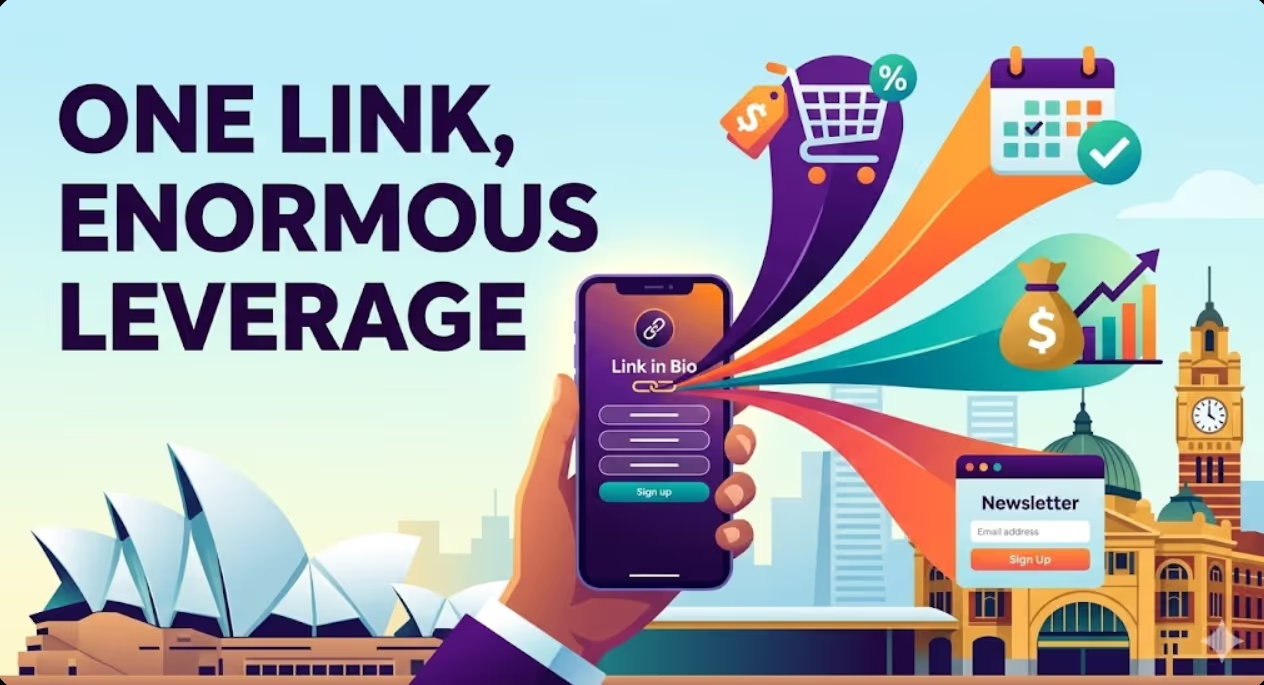
Instagram Bio Link Strategy: Optimising Linktree Alternatives
Instagram gives you one link. One. For a platform that drives significant traffic and genuine purchase intent across Australian audiences, that single bio link carries more strategic weight than most brands give it credit for. The default response is to drop in a Linktree and move on, but a bio link page that is built with no strategy behind it is essentially a dead end dressed up as a navigation menu. The brands getting real conversion value from their Instagram presence are treating the bio link as a proper landing page, not an afterthought. This means thinking carefully about what you are sending people to, how the page is structured, what it communicates about your brand, and whether it is doing any measurable work toward your actual business goals. This article covers how to build a bio link strategy that earns its place in your Instagram presence, which tools are worth using, and how to avoid the mistakes that make most bio link pages invisible in terms of real commercial value.


