
.svg)


%201.svg)

Quick Answers
Q: What is international SEO and why do Australian exporters need it?
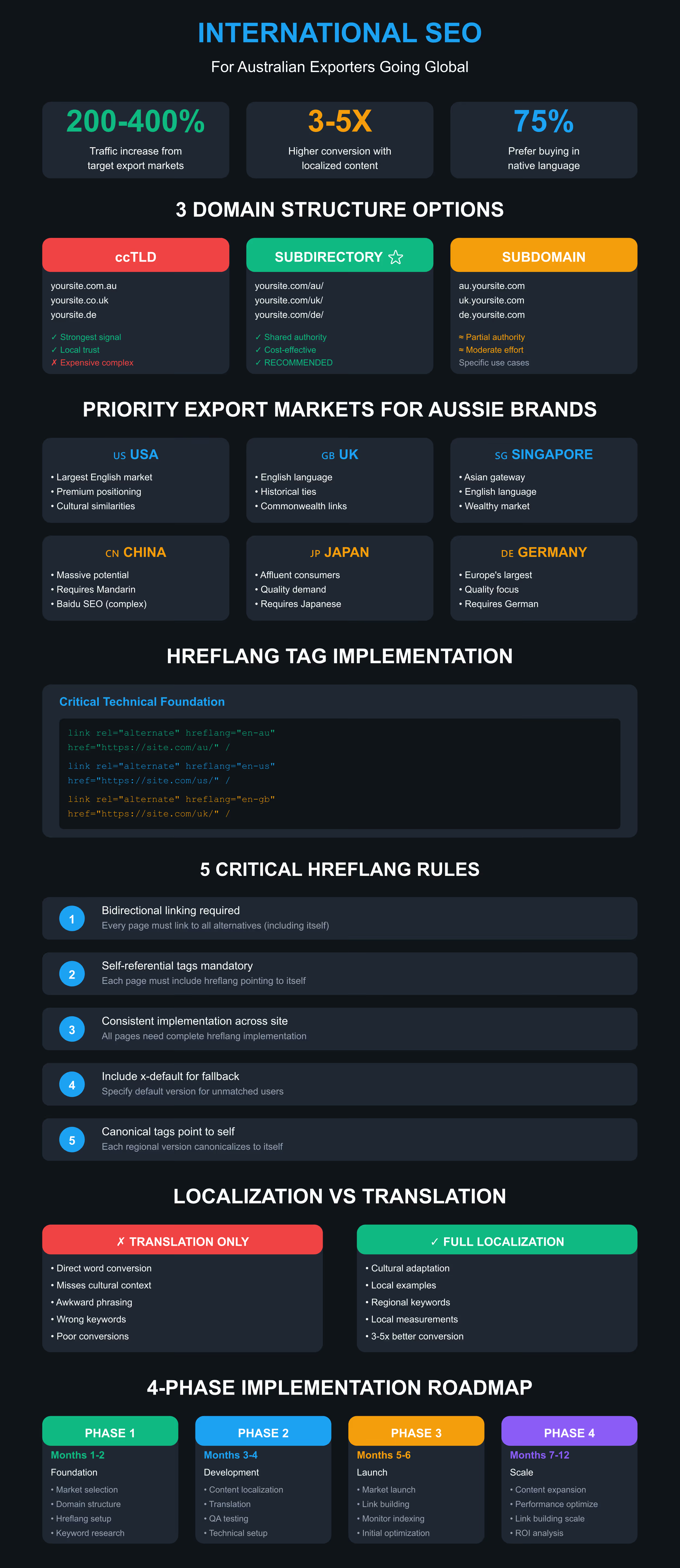
International SEO optimizes websites to rank in search engines across multiple countries and languages, enabling Australian exporters to reach overseas customers searching in their local languages and regional Google versions. Unlike domestic SEO focusing solely on google.com.au, international SEO ensures your content appears in google.com (USA), google.co.uk (UK), google.de (Germany), and other country-specific search engines when potential customers search for products or services you export. This requires technical implementations like hreflang tags telling search engines which language and regional version to show specific users, country-specific content addressing local search intent and cultural preferences, geotargeting signals through domain structure and hosting, and optimized meta content for regional keyword variations. Australian exporters implementing international SEO typically see 200-400% traffic increases from target markets within 6-12 months, with conversion rates often higher than domestic traffic as content precisely matches local search intent and cultural expectations. For example, an Australian wine exporter optimizing for US, UK, and Asian markets would create region-specific content addressing each market's wine preferences, implement hreflang tags directing users to appropriate versions, and optimize for regional keywords like "Shiraz" in Australia vs "Syrah" in USA vs regional wine terminology in Asia.
Q: Should Australian exporters use country-specific domains, subdirectories, or subdomains for international SEO?
The optimal international domain structure depends on budget, technical resources, and strategic priorities rather than a universal best practice. Country-code top-level domains (ccTLDs like yoursite.com.au, yoursite.co.uk, yoursite.de) provide strongest geotargeting signals and local trust but require separate SEO efforts for each domain, significantly higher development and maintenance costs, and complex implementation for resource-constrained exporters. Subdirectories on existing domains (yoursite.com/uk/, yoursite.com/de/) consolidate domain authority, simplify management with single platform, cost less to implement and maintain, and suit most Australian exporters with moderate international ambitions. Google treats subdirectories as part of the main domain, allowing accumulated authority to benefit all international versions. Subdomains (uk.yoursite.com, de.yoursite.com) fall between ccTLDs and subdirectories—Google treats them somewhat independently, requiring more SEO effort than subdirectories but less than separate domains. Most Australian exporters should use subdirectories unless targeting major markets justifying dedicated ccTLD investment. For example, an exporter targeting USA, UK, and Germany might use yoursite.com/us/, yoursite.com/uk/, and yoursite.com/de/ initially, then migrate USA to yoursite.com (main market focus) once proven successful. Large enterprises with substantial budgets and dedicated market teams might justify yoursite.co.uk and yoursite.de for strategic European presence.
The International SEO Imperative For Australian Exporters
Australian businesses increasingly look beyond domestic markets for growth. With a relatively small population of 26 million, export markets represent enormous expansion opportunities. Digital channels enable even small Australian exporters to reach international customers cost-effectively—but only if potential buyers can find you in local search results.
Traditional export marketing relied on trade shows, distributors, and physical presence in target markets. Digital transformation democratized international commerce, enabling direct customer relationships across borders. However, simply having an English website on a .com.au domain doesn't make you visible to overseas searchers.
Search behavior varies dramatically by country and language. Americans searching "athletic shoes" rarely find Australian retailers because Google.com prioritizes US-based results. German users searching "Sportschuhe" (sports shoes) won't discover English-only Australian sites. Japanese consumers prefer local e-commerce platforms and Japanese-language content.
According to Australian Trade and Investment Commission research, Australian exporters investing in localized digital presence see 3-5x higher conversion rates compared to generic English websites, with customer acquisition costs 40-60% lower than traditional export marketing channels.
International SEO bridges this gap—optimizing your digital presence for discovery, engagement, and conversion across target export markets.
Understanding International SEO: Beyond Translation
International SEO encompasses far more than translating existing content into foreign languages. It requires strategic consideration of cultural preferences, regional search behavior, technical implementation, and localized user experience.
The Core Components
Geotargeting: Signaling to search engines which geographic regions you're targeting. This involves domain structure decisions, hosting location considerations, Google Search Console country targeting, and consistent local signals throughout your site.
Language Targeting: Optimizing content for specific languages, including proper translation, cultural adaptation, keyword research in target languages, and hreflang implementation directing search engines to serve appropriate language versions.
Content Localization: Adapting messaging, imagery, examples, and value propositions to resonate with local audiences. This transcends translation to cultural and commercial relevance.
Technical Implementation: Properly configuring hreflang tags, URL structures, canonical tags, and XML sitemaps to prevent duplicate content issues while enabling search engines to understand your international structure.
Regional Link Building: Earning backlinks from authoritative sites in target countries, strengthening geotargeting signals and building topical authority in regional search algorithms.
Common Misconceptions
Myth 1: "Google Translate is sufficient for international SEO"Reality: Machine translation produces grammatically awkward content failing to capture nuance, misses regional keyword opportunities, and damages user experience. Professional translation combined with cultural adaptation is essential.
Myth 2: "English works everywhere since it's a global language"Reality: While English has international reach, non-English speakers strongly prefer native language content. Studies show 75% of consumers prefer purchasing in their native language, and conversion rates for localized content consistently exceed English-only approaches by 3-5x.
Myth 3: "International SEO is only for large enterprises"Reality: Australian SMEs successfully implement international SEO using subdirectory structures and focused market strategies. Starting with 1-2 priority export markets and expanding systematically is viable for businesses of all sizes.
Myth 4: "We can implement international SEO later once we have customers overseas"Reality: International SEO takes 6-12 months to show significant results. Implementing early enables organic traffic growth supporting export expansion rather than reacting after market entry.
Strategic Market Selection: Where Should Australian Exporters Focus?
Before implementing international SEO, strategically select target markets based on demand potential, competitive dynamics, and resource requirements.
Priority Market Analysis Framework
Market Demand Assessment:
- Search volume analysis for your products/services in target countries
- Economic indicators and purchasing power in potential markets
- Trade data showing existing Australian export success in your category
- Cultural fit and product-market alignment
Competitive Landscape:
- Analysis of local competitors in target markets
- Presence of other international competitors
- Search result analysis for target keywords in each market
- Opportunity to differentiate based on Australian origin
Resource Requirements:
- Language capabilities (in-house or translation partners)
- Cultural expertise for content localization
- Shipping and logistics feasibility
- Customer service capacity for international clients
- Regulatory and compliance considerations
High-Opportunity Markets for Australian Exporters
United States: Largest English-language market with strong demand for premium Australian products (wine, food, beauty, lifestyle). Cultural similarities ease market entry but requires understanding of American search behavior and commercial preferences.
United Kingdom: Another English-language market with historical ties and cultural overlap. Brexit created opportunities for non-EU suppliers. Requires British English adaptation and understanding of UK-specific search patterns.
China: Massive market with extraordinary growth potential but significant complexity. Requires Mandarin content, understanding of Baidu SEO (differs dramatically from Google), and navigation of regulatory landscape. Consider this long-term strategic investment.
Japan: Affluent market valuing quality Australian products, particularly food, beverage, and premium goods. Requires Japanese content and understanding of unique Japanese search behavior and e-commerce preferences.
Singapore: English-language Asian gateway with wealthy population and strong Australian connections. Excellent entry point for Asian expansion with lower language barriers.
Germany: Europe's largest economy with strong demand for sustainable, high-quality products. Requires German content but offers substantial opportunity for Australian exporters in appropriate categories.
Most Australian exporters should start with USA or UK (English-language markets requiring less investment) before expanding to non-English markets requiring translation and deeper localization.

Domain Strategy: Choosing Your International Structure
Your domain structure fundamentally impacts international SEO success, affecting everything from technical implementation to user trust and SEO efficiency.
Option 1: Country-Code Top-Level Domains (ccTLDs)
Structure Examples:
- yourcompany.com.au (Australia)
- yourcompany.com (USA)
- yourcompany.co.uk (United Kingdom)
- yourcompany.de (Germany)
Advantages:
- Strongest geotargeting signal to search engines
- Maximum local trust—users recognize and trust local domains
- Clear separation between markets
- Ability to customize completely for each market
Disadvantages:
- Expensive—requires purchasing and maintaining multiple domains
- SEO effort must be replicated for each domain (link building, authority building)
- Complex management with separate platforms or synchronized systems
- Risk of domain availability issues in some countries
Best For: Large Australian exporters with substantial budgets, dedicated teams for major markets, and long-term commitment to specific countries. Example: Major Australian wine brands with significant US and UK presence might justify .com and .co.uk domains.
Option 2: Subdirectories (Subdirectory with gTLD)
Structure Examples:
- yourcompany.com/au/ (Australia)
- yourcompany.com/us/ (USA)
- yourcompany.com/uk/ (United Kingdom)
- yourcompany.com/de/ (Germany)
Advantages:
- Consolidated domain authority benefits all international versions
- Centralized management—single platform, easier implementation
- Cost-effective—no additional domain purchases
- Simplified technical implementation and maintenance
Disadvantages:
- Weaker geotargeting signal compared to ccTLDs
- All markets share the same top-level domain (may seem less "local")
- Requires proper hreflang implementation for search engines
- Some users may be confused by URL structure
Best For: Most Australian exporters, especially SMEs and mid-market businesses. Provides optimal balance of SEO efficiency, cost-effectiveness, and scalability. Recommended starting point for international expansion.
Option 3: Subdomains
Structure Examples:
- au.yourcompany.com (Australia)
- us.yourcompany.com (USA)
- uk.yourcompany.com (United Kingdom)
- de.yourcompany.com (Germany)
Advantages:
- Somewhat consolidated authority (better than separate domains)
- Clearer market separation than subdirectories
- Technical flexibility for different platforms or hosting per market
Disadvantages:
- Google treats subdomains semi-independently, requiring more SEO effort
- Less authority consolidation than subdirectories
- More complex technical implementation
- Can be confusing for users
Best For: Specific scenarios where technical architecture requires separation (different platforms per market) or legacy structure already uses subdomains. Generally not recommended for new international implementations.
Maven Marketing Co.'s Recommendation
For most Australian exporters, subdirectories on a .com domain provide the optimal starting point:
- Use yourcompany.com with subdirectories for each market
- Implement proper hreflang tags signaling language and region targeting
- Leverage consolidated domain authority across all markets
- Start with 1-2 priority markets before expanding
- Graduate to ccTLDs only for markets representing major revenue with dedicated teams
This approach balances SEO efficiency, cost management, and technical simplicity while providing flexibility to evolve strategy as international presence grows.
Hreflang Implementation: The Technical Foundation

Hreflang tags are the technical backbone of international SEO, telling search engines which language and regional version of content to show specific users. Proper implementation prevents duplicate content issues while ensuring appropriate versions appear in local search results.
Understanding Hreflang Tags
Hreflang tags indicate:
- The language of a page (ISO 639-1 language codes)
- Optional: The regional targeting (ISO 3166-1 Alpha 2 country codes)
- Alternative versions of the same content for other languages/regions
Example Hreflang Tag:
html
<link rel="alternate" hreflang="en-au" href="https://yoursite.com/au/" />
<link rel="alternate" hreflang="en-us" href="https://yoursite.com/us/" />
<link rel="alternate" hreflang="en-gb" href="https://yoursite.com/uk/" />
<link rel="alternate" hreflang="de-de" href="https://yoursite.com/de/" />
<link rel="alternate" hreflang="x-default" href="https://yoursite.com/" />
This implementation tells search engines:
- Show /au/ version to users in Australia searching in English
- Show /us/ version to users in USA searching in English
- Show /uk/ version to users in UK searching in English
- Show /de/ version to users in Germany searching in German
- Show homepage as default for users in other countries or languages
Implementation Methods
Method 1: HTML Link Elements (Recommended for Most)Add hreflang tags in the <head> section of each page pointing to all alternative versions including itself.
Advantages: Simple to implement, visible in page source for verification, works universally across platforms.
Method 2: HTTP Headers
Include hreflang information in HTTP response headers, useful for non-HTML files like PDFs.
Method 3: XML Sitemap
Include hreflang annotations in XML sitemaps.
Advantages: Centralized management, useful for large sites with many pages.
Disadvantages: More complex to implement correctly, harder to debug issues.
Critical Hreflang Rules
1. Bidirectional Linking: Every page must link to all alternatives, including itself. If /au/ points to /us/, then /us/ must point back to /au/.
2. Self-Referential Tags: Each page must include a hreflang tag pointing to itself.
3. Consistent Implementation: All alternative versions must have complete hreflang implementation. Missing tags on any page break the signal.
4. X-Default Tag: Include hreflang="x-default" pointing to your default version for users not matching other specified regions/languages. Typically your main English version or homepage.
5. Canonical Tags: Ensure canonical tags on each language/region version point to themselves, not to other versions. This prevents search engines from treating alternatives as duplicate content.
Common Hreflang Mistakes Australian Exporters Make
Mistake 1: Inconsistent Implementation
Adding hreflang tags to some pages but not others creates confused signals. Implement consistently across entire site.
Mistake 2: Incorrect Language/Country Codes
Using non-standard codes (e.g., "au" instead of "en-au" for English-Australia) breaks functionality. Always use proper ISO codes.
Mistake 3: Missing Return Links
Page A points to Page B, but Page B doesn't point back to Page A. Bidirectional linking is mandatory.
Mistake 4: Mixing Hreflang with Canonical Incorrectly
Setting canonical tags on regional versions pointing to the main version tells search engines to ignore the regional content. Each version should canonicalize to itself.
Mistake 5: Not Including Self-Referential Tags
Every page must include a hreflang tag pointing to itself as well as alternatives.
Testing Hreflang Implementation
Use these tools to verify correct implementation:
- Hreflang Tags Testing Tool by Aleyda Solis
- Google Search Console International Targeting report
- Technical SEO crawling tools like Screaming Frog SEO Spider
- Manual inspection of page source code
Address all errors before launching international SEO strategy. Incorrect hreflang implementation is worse than no implementation—it creates confused signals harming rankings in all markets.
International Keyword Research: Understanding Regional Search Behavior
Keywords that perform well in Australia may be irrelevant or phrased differently in target export markets. Comprehensive international keyword research is essential for content optimization and market understanding.
Regional Keyword Variations
Search terminology varies dramatically across English-speaking markets alone:
Footwear Example:
- Australia: "runners," "thongs" (flip-flops), "sandshoes"
- USA: "sneakers," "flip-flops," "tennis shoes"
- UK: "trainers," "plimsolls," "pumps"
Automotive Example:
- Australia: "boot" (trunk), "bonnet" (hood), "ute" (pickup truck)
- USA: "trunk," "hood," "pickup truck"
- UK: "boot," "bonnet," "estate car" (station wagon)
These differences extend beyond vocabulary to search intent and competitive landscapes.

International Keyword Research Process
Step 1: Translate Core Keywords
Work with native speakers or professional translators to identify natural translations of your core Australian keywords in target languages. Avoid literal translations that may sound awkward or miss regional terminology.
Step 2: Use Regional Keyword Tools
- Google Keyword Planner with location targeting for each market
- SEMrush with country-specific databases
- Ahrefs with country filters
- Answer the Public for regional question patterns
- Google Trends comparing regional interest
Step 3: Analyze Competitor Content
Examine successful local competitors and international players in target markets:
- Which terms do they target in titles and headings?
- What content topics resonate with local audiences?
- How do they structure information and navigation?
- What calls-to-action and value propositions do they emphasize?
Step 4: Understand Search Intent DifferencesSearch intent can vary by market even for similar terms. American users might search with commercial intent where UK users seek information, or vice versa. Analyze actual search results in each market to understand what content ranks and why.
Step 5: Map Keywords to ContentCreate content mapping aligning target keywords with appropriate pages for each regional version. Ensure content matches local search intent, not just keyword translation.
Cultural Considerations in Keyword Research
Beyond linguistic differences, cultural factors influence search behavior:
Measurement Systems: Americans search in pounds, ounces, and Fahrenheit while most other markets use metric. Optimize content accordingly.
Date Formats: MM/DD/YYYY (USA) vs DD/MM/YYYY (Australia, UK, Europe) affects how date-specific content should be presented.
Currency: Display prices in local currency for each market version to meet user expectations and reduce friction.
Seasonal Differences: Australian summer is Northern Hemisphere winter. Seasonal content timing and keywords must adapt to each market's calendar.
Local Regulations and Standards: Industry-specific keywords may reference local standards, regulatory bodies, or certifications unfamiliar to Australian exporters but essential for local credibility.
Content Localization: Beyond Translation
Professional translation is necessary but insufficient for international SEO success. Content localization adapts messaging, examples, imagery, and value propositions to resonate with local audiences.
Localization vs Translation
Translation: Converting text from one language to another while maintaining meaning.
Localization: Adapting content to cultural context, local preferences, regional examples, and market-specific expectations.
Example: Australian Original: "Our organic wines have won gold medals at the Sydney Royal Wine Show, a favorite among Aussies enjoying a barbie."
Bad Translation (USA): Same text translated literally, mentioning unfamiliar awards and using "barbie" confusing American audiences.
Good Localization (USA): "Our organic wines have earned gold medals at prestigious international competitions, perfect for backyard grilling and summer gatherings."
The localized version maintains the core message (award-winning wines for outdoor entertaining) while using relevant awards, familiar terminology, and regional context.
Content Elements Requiring Localization
Product Descriptions:
- Emphasize features relevant to local markets
- Use measurements and specifications familiar to local buyers
- Address local use cases and applications
- Reference local standards or certifications where applicable
Imagery and Visuals:
- Depict people reflecting target market demographics
- Show products in contexts familiar to local audiences
- Use culturally appropriate colors, symbols, and visual styles
- Consider text in images requiring translation
Social Proof and Testimonials:
- Feature customers from target markets when possible
- Reference local media mentions or awards
- Use regionally relevant success metrics (e.g., "trusted by 10,000 UK businesses")
- Display familiar payment methods and trust signals
Calls to Action:
- Use locally appropriate action language
- Reflect cultural communication styles (direct vs indirect)
- Adapt urgency and promotional messaging to local norms
- Consider local purchasing patterns (immediate vs researched decisions)
Navigation and User Experience:
- Organize information according to local user expectations
- Use terminology familiar to target market
- Consider reading direction for some languages (right-to-left)
- Adapt form fields to local conventions (postal codes, phone formats)
Working With Translation and Localization Partners
In-House Multilingual Teams: Ideal but expensive. Only viable for large exporters with substantial international operations.
Professional Translation Services: Essential for accuracy. Look for services offering:
- Native speakers in target languages
- Industry-specific expertise
- SEO awareness (maintaining keyword optimization)
- Cultural consulting beyond linguistic translation
Local Market Consultants: Consider partnering with consultants in target markets who understand local search behavior, competitive dynamics, and cultural nuances. Investment in local expertise pays dividends in content relevance and market understanding.
Quality Assurance: Always have native speakers review translated and localized content before publication. Machine translation tools like Google Translate are useful for research but never for published content.
Technical SEO for International Sites
Beyond hreflang implementation, several technical considerations impact international SEO success.
URL Structure Consistency
Maintain consistent URL structures across all regional versions:
- If product pages use /products/product-name/ in Australia, use /us/products/product-name/, /uk/products/product-name/ etc.
- Consistent structure aids crawling, indexing, and user navigation
- Simplifies hreflang implementation and canonical tag management
- Makes international expansion more scalable
International XML Sitemaps
Create and submit separate XML sitemaps for each regional version to Google Search Console:
- Sitemap clearly indicating all Australian pages (/au/ subdirectory)
- Separate sitemap for US pages (/us/ subdirectory)
- Separate sitemap for UK pages (/uk/ subdirectory)
- Etc. for each market
This helps search engines discover and index international content efficiently.
Geotargeting in Google Search Console
Use Google Search Console to set country targeting (when using subdirectories or subdomains):
- Add each international section as separate property
- Set geographic target for each property matching intended market
- Monitor performance separately by market
Note: This is unnecessary with ccTLDs as the domain itself signals targeting.
Page Speed Optimization
Page speed impacts rankings globally, but connection speeds and device prevalence vary by market:
- Optimize for mobile-first indexing across all markets
- Consider regional content delivery networks (CDNs) for faster loading
- Test page speed from target market locations, not just Australia
- Account for varying internet infrastructure quality in different markets
Structured Data Markup
Implement structured data (schema.org markup) with regional customization:
- Use local language for schema markup text fields
- Include regional pricing and availability
- Reference local business addresses if applicable
- Adapt product information to local specifications
International Link Building Strategies
Backlinks from authoritative sites in target markets strengthen geotargeting signals and build regional SEO authority.

Regional Link Building Approaches
Digital PR in Target Markets:Create newsworthy stories with local angles for target market media:
- Australian origin stories (unique perspective, innovation, quality)
- Data and research relevant to local markets
- Expert commentary on local industry issues
- Product launches or market entry announcements
Local Business Directories:Submit to authoritative directories in target countries:
- Industry-specific directories relevant to your exports
- Regional business directories (better-business-bureau-equivalent sites)
- Trade association directories in target markets
Partnership and Supplier Relationships:Leverage relationships with distributors, retailers, or partners in target markets:
- Request links from partner websites mentioning supplier relationships
- Provide co-branded content partners can use with attribution
- Create partner resource pages linking to regional versions
Content Collaborations:Develop content partnerships with relevant sites in target markets:
- Guest posting on industry blogs in target countries
- Co-creating research or guides with local organizations
- Contributing expertise to local industry publications
- Sponsoring or participating in local events with online presence
Regional Influencer Outreach:Identify and engage influencers in target markets:
- Bloggers and content creators in your industry
- Social media personalities with relevant audiences
- Industry experts who might reference your products/services
- Review sites and comparison platforms in target markets
Link Building Quality Considerations
Prioritize links from:
- Sites hosted in target countries (regional IP addresses)
- Domains with country-specific TLDs matching your target markets
- Content in target market languages
- High domain authority and topical relevance
- Natural editorial mentions rather than obvious paid placements
Avoid:
- Low-quality international link networks or schemes
- Links from content in languages not matching target markets
- Reciprocal link arrangements with no editorial value
- Links from sites unrelated to your industry or target markets
Measuring International SEO Success
Track performance separately for each international market to understand what's working and where to optimize.
Key Metrics by Market
Organic Traffic:
- Overall traffic from each target country
- Landing pages receiving international traffic
- Traffic growth trends over time
- Traffic by device type in each market
Keyword Rankings:
- Rankings in local Google versions (google.com, google.co.uk, google.de)
- Position changes for priority keywords by market
- Featured snippet and knowledge panel appearances by market
- Impression share and visibility metrics
Engagement Metrics:
- Bounce rate by country/language version
- Time on site and pages per session by market
- Conversion paths differing by region
- Content performance varying by market
Conversion Metrics:
- Conversion rate by country
- Revenue or leads from each international market
- Cost per acquisition varying by region
- Customer lifetime value by market
Technical Health:
- Hreflang implementation status and errors
- Indexation of international pages in local Google versions
- Crawl errors specific to international sections
- Page speed metrics in target market locations
Tools for International SEO Measurement
Google Search Console:
- Create separate properties for each regional section
- Monitor performance, coverage, and issues by market
- Track international targeting and hreflang status
Google Analytics:
- Segment by country and language
- Create custom reports for each target market
- Track behavior flow differences by region
- Monitor goal completions by geography
Third-Party SEO Tools:
- SEMrush or Ahrefs with country-specific tracking
- Rank tracking tools monitoring local Google versions
- International backlink analysis
- Competitor tracking in target markets
Common Challenges Australian Exporters Face

Challenge 1: Resource Constraints
Problem: International SEO requires translation, localization, technical implementation, and ongoing content creation—demanding for resource-limited exporters.
Solution: Phased approach starting with 1-2 priority English-language markets (USA, UK) using subdirectories. Expand gradually as resources allow and ROI proves positive. Consider outsourcing translation and localization rather than building internal capabilities initially.
Challenge 2: Cultural Knowledge Gaps
Problem: Understanding search behavior, content preferences, and buying patterns in unfamiliar markets challenges Australian-based teams.
Solution: Partner with local consultants or agencies in target markets for cultural insights and content review. Join international trade associations providing market intelligence. Start with markets closest culturally to Australia before expanding to more distant markets.
Challenge 3: Maintaining Content Parity
Problem: Keeping content synchronized across multiple regional versions as products, offers, and information evolve.
Solution: Implement content management systems with multilingual capabilities. Create workflows ensuring updates propagate to all regional versions. Use translation management platforms streamlining localization processes. Accept that perfect parity isn't always necessary—adapt to local market priorities.
Challenge 4: Technical Implementation Complexity
Problem: Hreflang tags, proper URL structures, and international technical SEO create implementation challenges for non-technical teams.
Solution: Work with experienced international SEO specialists for initial setup. Use testing tools to verify correct implementation before launch. Document processes for ongoing maintenance. Consider platforms with built-in international SEO features.
Challenge 5: Competitive Dynamics
Problem: Competing against established local players and international competitors already strong in target markets.
Solution: Leverage Australian origin story and differentiation. Target underserved niches within broader markets. Focus on long-tail keywords with lower competition initially. Build authority gradually through consistent content and link building.
Case Study: Australian Wine Exporter
The Scenario
A mid-sized Australian wine producer with established domestic presence wanted to expand exports to USA and UK markets, historically relying on distributors but seeking direct-to-consumer channels.
The Strategy
Market Selection: Focused initially on USA (largest market, wine culture, premium positioning opportunities) and UK (cultural ties, existing trade relationships, premium wine market).
Domain Structure: Implemented subdirectory approach—australianwinery.com/us/ and australianwinery.com/uk/ leveraging existing domain authority.
Content Localization:
- USA version emphasized wine scores from Wine Spectator and Wine Advocate (influential US publications), used "Syrah" instead of "Shiraz" for consistency with US terminology, highlighted food pairing suggestions popular in American cuisine, and emphasized sustainable practices appealing to US premium wine consumers.
- UK version referenced UK wine critics and publications, maintained British English spelling and terminology, highlighted awards from UK wine competitions, and adapted content to British wine buying preferences.
Keyword Research:
- Identified regional variations in wine search behavior
- Targeted both brand terms and category terms ("Australian Shiraz" in US, "Australian red wine" in UK)
- Addressed local wine education queries in each market
Technical Implementation:
- Hreflang tags properly implemented across all pages
- Separate XML sitemaps for each regional section
- Geographic targeting set in Google Search Console
- Optimized page speed for international users
Link Building:
- Secured features in US and UK wine blogs through digital PR
- Submitted to online wine directories in each market
- Developed content partnerships with food and lifestyle sites
- Built relationships with wine influencers in target markets
The Results (12 Months)
- 340% increase in organic traffic from USA
- 280% increase in organic traffic from UK
- 24% conversion rate on US-targeted content (vs 8% on generic content)
- 19% conversion rate on UK-targeted content
- Direct-to-consumer sales from international markets grew from negligible to 23% of total revenue
- 450+ keywords ranking in top 10 positions across both markets
Key Success Factors
- Started with clear market prioritization rather than trying to target everywhere
- Invested in professional localization, not just translation
- Proper technical implementation from the start avoiding costly corrections
- Consistent content creation and optimization over 12-month period
- Integration with broader export strategy including paid advertising and social media
Your International SEO Action Plan
Phase 1: Foundation (Months 1-2)
Strategic Planning:
- Define 1-2 priority export markets based on demand and resources
- Choose domain structure (subdirectories recommended for most)
- Audit current content for international expansion potential
- Identify translation and localization resources
Technical Preparation:
- Implement chosen URL structure for international versions
- Configure hreflang tags properly across site
- Set up Google Search Console properties for each market
- Ensure technical infrastructure supports international expansion
Keyword Research:
- Research keywords in each target market language/region
- Identify regional variations and competitive opportunities
- Map keywords to content for each market version
- Document search intent differences by market
Phase 2: Content Development (Months 3-4)
Content Creation:
- Develop localized content for each target market
- Translate and adapt priority pages first
- Create market-specific landing pages and key content
- Ensure proper optimization for regional keywords
Quality Assurance:
- Native speaker review of all translated content
- Cultural adaptation review ensuring local relevance
- Technical testing of hreflang implementation
- Mobile optimization verification
Launch Preparation:
- Create regional XML sitemaps
- Configure Google Search Console targeting
- Test international versions thoroughly
- Plan phased rollout if launching multiple markets
Phase 3: Launch and Link Building (Months 5-6)
Market Launch:
- Publish international versions simultaneously
- Submit sitemaps to search engines
- Monitor indexation in local Google versions
- Address any technical issues immediately
Initial Link Building:
- Submit to regional business directories
- Reach out to industry-relevant sites in target markets
- Begin content partnerships and digital PR
- Leverage existing relationships for initial links
Monitoring:
- Track rankings in each local Google version
- Monitor traffic from target countries
- Analyze engagement and conversion patterns
- Identify quick-win optimization opportunities
Phase 4: Optimization and Expansion (Months 7-12)
Content Expansion:
- Add more localized content based on performance data
- Create market-specific blog content and resources
- Develop regional landing pages for long-tail opportunities
- Expand product/service pages with local optimization
Performance Optimization:
- Refine content based on keyword performance
- Address pages underperforming in specific markets
- Improve conversion paths showing friction
- Optimize for featured snippets in target markets
Link Building Scale:
- Expand outreach to more regional publications
- Develop comprehensive content earning natural links
- Build relationships with influencers and industry sites
- Monitor and replicate competitor link strategies
Measurement and Reporting:
- Comprehensive performance analysis by market
- ROI calculation for international SEO investment
- Identify highest-performing markets for potential expansion
- Document learnings to inform future market entry
The Future: Australian Exporters Going Global
International SEO transforms how Australian businesses access global markets. The exporters thriving in coming years are those recognizing digital presence isn't optional—it's the primary discovery mechanism for international buyers.
The businesses dominating international search results in their categories aren't necessarily the largest—they're those who implemented international SEO strategically, understanding that visibility in local search results precedes all other export success.
Start with focused market selection, proper technical implementation, and commitment to localization beyond translation. Expand systematically as you prove ROI and build capability. The Australian exporters leading their categories internationally in 2026 and beyond began their international SEO journey years earlier.
Ready To Expand Your International Digital Footprint?
Maven Marketing Co. specializes in international SEO strategy for Australian exporters targeting global markets. Our team combines technical SEO expertise with international market understanding, helping Australian businesses achieve visibility and conversions in target export markets.
We've helped Australian exporters across wine, food and beverage, manufacturing, professional services, and technology sectors implement international SEO strategies driving 200-400% traffic increases from target markets.
Don't let potential international customers search unsuccessfully for products or services you export. Visit mavenmarketingco.com.au today for a complimentary international SEO assessment. We'll analyze your export market opportunities, identify technical requirements, and provide a clear roadmap to international visibility.
Book your international SEO consultation now and join the Australian exporters capturing global demand through strategic digital presence.

Table of contents
read more blogs

Is Google Ads Better Than SEO for My Business
One of the biggest questions business owners ask when they are planning online growth is whether they should invest in Google Ads or SEO. Both are strong marketing plays that help your company show up in Google search results, but they do things in separate lanes. Google Ads gives quicker visibility and can bring in leads fast, whereas SEO more or less focuses on slow, steady organic traffic that tends to grow the longer you keep building it. Picking the right direction depends on what you want to achieve, how much money you can spend, how crowded the market is, and how quickly you need results, like sooner rather than later. The good news is you don’t always have to choose one or the other; it’s not exactly a black-and-white situation. If you take time to understand the strongest points of both, you can put together a more sensible digital marketing plan that supports consistent expansion. In this guide, we’ll compare Google Ads vs SEO, explain the main differences, and help you figure out what option makes the most sense for your business.

When Should I Hire a Digital Marketing Agency
Growing a business today takes more than just having a website or throwing a post on social media; customers usually search around online, compare providers, skim reviews, and basically expect the brand to show up with a solid digital presence before they even think about buying. Many businesses try to run their marketing themselves, but there comes a point when “doing it all in-house” becomes clunky and hard to manage, all at once. Knowing when to hire a digital marketing agency can end up making a big, real difference for your growth. If you’re not getting enough leads, or your online visibility feels stuck, or sales are just not moving, the right agency can bring the know-how, plus a clear plan, to help you get noticeably better outcomes. In this guide, we’ll dig into what a digital marketing agency actually does, the usual signs it’s time to bring one on, and how picking the right marketing partner can help your business move forward at a faster pace.

Why Is My Google Ads Budget Running Out So Quickly
Running a successful Google Ads budget isn’t only about throwing more money at it. It’s more like making every dollar, doing a bit extra. A lot of businesses start a Google Ads campaign with big hopes, then find out their daily budget is gone within a few hours, and that feels weird, right? After that, your ads stop showing effectively, new leads slip away, and your return on investment dips. So if your Google Ads budget is running out too fast, don’t stress. It’s a fairly common issue, and in most situations, it can be repaired with the right approach. There are multiple little things that can drain your advertising money quicker than you expected, from costly keywords to audience targeting that just doesn’t quite fit. In this guide, we’ll walk through why your budget disappears so quickly, how to cut wasteful spend, and the most reliable ways to boost your Google Ads ROI, even if your budget stays the same.


