.svg)


%201.svg)

Quick Answers
Q: Which e-commerce platform is best for Australian businesses: Shopify, WooCommerce, or custom development?
The best e-commerce platform depends entirely on your specific business needs, technical capabilities, and growth plans. Shopify excels for businesses wanting quick launches with minimal technical complexity, offering reliable hosting, integrated payments, and comprehensive support starting from $39 AUD monthly. It's ideal for traditional product retailers without complex requirements. WooCommerce suits businesses needing customization flexibility while controlling costs, requiring WordPress hosting (from $30 monthly) plus development investment, best for content-driven stores or unique workflows. Custom development makes sense for businesses with complex requirements, unique business models, or enterprise scale, requiring $50,000 to $300,000 investment but delivering complete control. Most Australian small businesses (revenue under $500,000 annually) succeed with Shopify or WooCommerce. Growing businesses ($500,000 to $5 million) often outgrow Shopify's limitations and benefit from WooCommerce or headless commerce. Enterprises and businesses with complex needs justify custom platforms.
Q: What are the total costs of running a Shopify store versus WooCommerce in Australia for a typical online retailer?
Total cost of ownership differs significantly between platforms. Shopify's all-inclusive pricing starts at $39 monthly for Basic (suitable for new stores), $105 monthly for Shopify plan (most businesses), or $399 monthly for Advanced, plus 2.7% to 2.4% transaction fees or 0.5% to 0.15% if using Shopify Payments. Annual costs range from $6,000 to $15,000 for typical stores including apps, themes, and transaction fees. WooCommerce is free software but requires WordPress hosting ($30 to $300 monthly), SSL certificates (often included), payment gateway fees (1.75% plus 30 cents for Stripe in Australia), and development costs ($3,000 to $20,000 for initial setup, $500 to $3,000 annually for maintenance). First-year WooCommerce costs typically range $8,000 to $35,000 depending on customization needs, then $4,000 to $12,000 annually. WooCommerce becomes more cost effective at higher transaction volumes due to lower percentage fees, while Shopify offers predictability and simplicity. Calculate your specific scenarios using projected monthly revenue, transaction volume, required apps or plugins, and development needs.
The Australian e-commerce market continues explosive growth, reaching $63.2 billion in 2023 and projected to exceed $85 billion by 2026. Every day, more businesses recognize that online retail isn't optional anymore. It's essential infrastructure.
But here's where most entrepreneurs stumble: choosing the wrong e-commerce platform. This decision affects everything from launch timelines to profit margins, customer experience to operational complexity. Make the right choice and you build a foundation for sustainable growth. Make the wrong choice and you're rebuilding from scratch in 18 months.
After helping hundreds of Australian businesses launch and scale online stores, we've seen every scenario play out. Let's cut through the marketing hype and examine what really matters when choosing between Shopify, WooCommerce, and custom development in 2026.
Understanding Your E-commerce Platform Options
Before diving into detailed comparisons, let's clarify what each platform actually represents:
Shopify: The Hosted All-in-One Solution

Shopify is a fully hosted SaaS (Software as a Service) platform handling everything: hosting infrastructure, security updates, payment processing, inventory management, and customer support. You pay monthly subscription fees, and Shopify manages the technical complexity.
The Analogy: Shopify is like renting a fully furnished retail space in a shopping center. Everything's included, maintained by the landlord, and you focus purely on selling. You have some customization options within defined parameters, but you're working within the mall's rules and infrastructure.
Core Philosophy: Simplicity and reliability over infinite flexibility.
WooCommerce: The WordPress E-commerce Plugin
WooCommerce is open-source e-commerce software built as a WordPress plugin. You control everything: choosing hosting providers, configuring servers, installing plugins, and managing updates. The software itself is free, but you handle (or pay for) technical management.
The Analogy: WooCommerce is like buying a commercial property. You own it completely, customize however you want, and have total control. But you're responsible for maintenance, security, utilities, and everything else. You can hire property managers (developers/agencies), but ultimate responsibility remains yours.
Core Philosophy: Flexibility and ownership over managed convenience.
Custom E-commerce Development
Custom platforms are built from scratch (or using frameworks like Laravel, Node.js, or headless commerce solutions) specifically for your business requirements. Every feature, workflow, and integration is designed around your unique needs.
The Analogy: Custom development is like commissioning an architect to design and build a purpose-built retail space. Everything serves your exact specifications, but requires significant upfront investment, longer timelines, and ongoing technical team management.
Core Philosophy: Perfect fit and competitive differentiation over speed and cost efficiency.
Detailed Platform Comparison: Features and Capabilities
Let's examine how each platform performs across critical e-commerce functions:
Setup and Launch Speed
Shopify Winner
Shopify enables fastest time to market. Basic stores launch in days with minimal technical knowledge. Choose a theme, add products, configure payment processing, and you're live. The admin interface is intuitive, designed specifically for retailers without technical backgrounds.
Timeline: 1 to 4 weeks for basic stores, 4 to 12 weeks for complex stores with customization.
WooCommerce: Moderate Speed
WooCommerce requires WordPress expertise or developer assistance. You'll choose hosting, install WordPress and WooCommerce, select themes and plugins, configure settings, and customize functionality. More initial complexity than Shopify but achievable for technically comfortable users.
Timeline: 2 to 6 weeks for basic stores, 8 to 16 weeks for complex implementations.
Custom Development: Slowest
Custom platforms require comprehensive planning, design, development, and testing phases. Even using modern frameworks and headless commerce APIs, custom builds take significant time.
Timeline: 12 to 26 weeks minimum, often 6 to 12 months for enterprise solutions.
Cost Analysis: Total Cost of Ownership
Understanding true costs requires examining all expenses over three years:
Shopify Costs Breakdown
Monthly Subscription:
- Basic Shopify: $39 AUD
- Shopify: $105 AUD
- Advanced Shopify: $399 AUD
- Shopify Plus (Enterprise): $2,500+ AUD
Transaction Fees (if not using Shopify Payments):
- Basic: 2%
- Shopify: 1%
- Advanced: 0.6%
- Plus: 0.15%
Shopify Payments Rates (most Australian merchants):
- Basic: 2.7% + 30 cents
- Shopify: 2.5% + 30 cents
- Advanced: 2.4% + 30 cents
Additional Costs:
- Premium themes: $0 to $400 (one-time)
- Apps and plugins: $20 to $500 monthly
- Custom development: $5,000 to $100,000+ for complex customization
- Transaction fees add up significantly at volume
Three Year TCO Example (Shopify plan, $50,000 monthly revenue):
- Subscriptions: $3,780
- Apps: $7,200
- Transaction fees: $18,000
- Theme and customization: $8,000
- Total: $37,000
WooCommerce Costs Breakdown
WooCommerce Software: Free (open source)
Essential Costs:
- Hosting: $30 to $300 monthly ($360 to $3,600 annually)
- SSL Certificate: $0 to $200 annually (often included in hosting)
- Domain: $15 to $50 annually
- Premium theme: $60 to $200 (one-time)
- Essential plugins: $100 to $1,000 annually
- Payment gateway fees: 1.75% + 30 cents (Stripe Australia standard rate)
- Maintenance and updates: $500 to $3,000 annually
Development Costs:
- Basic setup: $3,000 to $8,000
- Complex customization: $15,000 to $50,000+
- Ongoing development: $2,000 to $10,000 annually
Three Year TCO Example (mid-tier hosting, $50,000 monthly revenue):
- Hosting: $5,400
- Initial development: $12,000
- Ongoing maintenance: $6,000
- Plugins and themes: $2,500
- Payment processing: $12,600
- Total: $38,500
At lower volumes, WooCommerce and Shopify costs are comparable. At high volumes, WooCommerce's lower transaction fees make it more cost effective.
Custom Development Costs Breakdown
Initial Development:
- Basic custom platform: $50,000 to $150,000
- Mid-range solution: $150,000 to $300,000
- Enterprise platform: $300,000 to $1,000,000+
Ongoing Costs:
- Hosting and infrastructure: $500 to $5,000+ monthly
- Development team: $5,000 to $30,000+ monthly
- Maintenance and updates: $30,000 to $150,000+ annually
- Security and compliance: $10,000 to $50,000+ annually
Three Year TCO Example (mid-range custom platform):
- Initial development: $200,000
- Ongoing development: $180,000
- Infrastructure: $72,000
- Maintenance: $60,000
- Total: $512,000
Custom development makes financial sense only when the platform delivers competitive advantages justifying the investment premium.
Customization and Flexibility
WooCommerce Winner
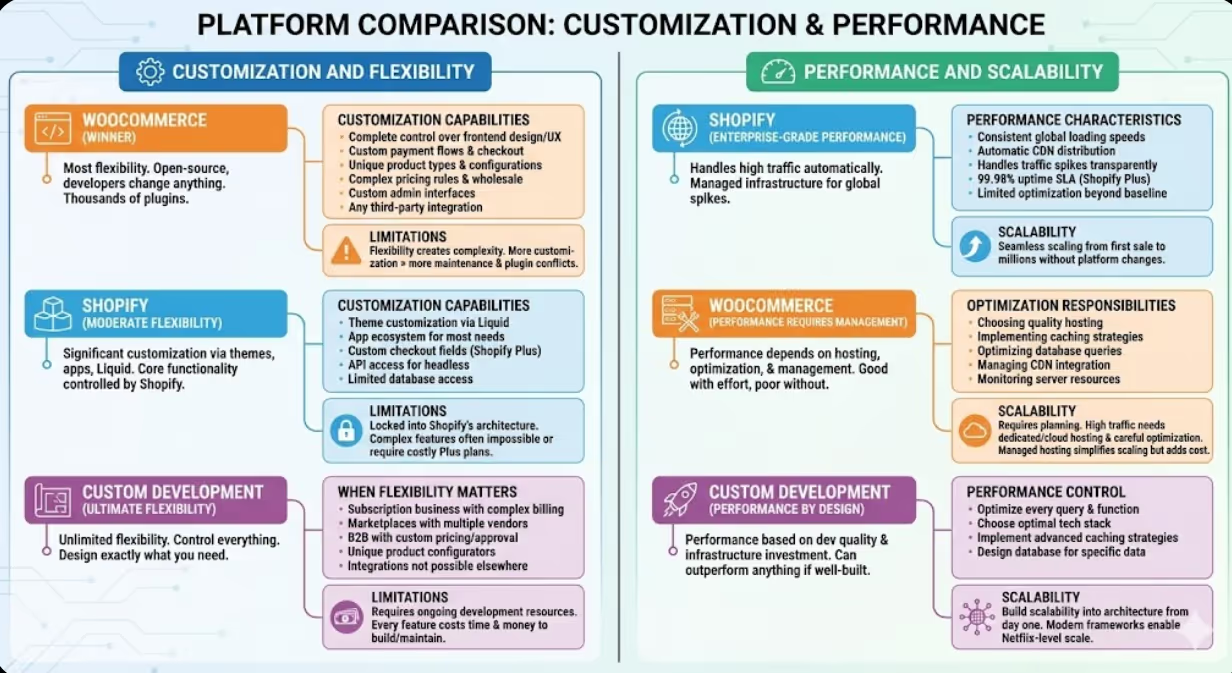
WooCommerce offers the most flexibility for modifications. Open-source architecture means developers can change anything. Thousands of plugins extend functionality, and custom code integrates seamlessly.
Customization Capabilities:
- Complete control over frontend design and user experience
- Custom payment flows and checkout processes
- Unique product types and configurations
- Complex pricing rules and wholesale functionality
- Custom admin interfaces and workflows
- Integration with any third-party system
Limitations: Flexibility creates complexity. More customization means more maintenance and potential plugin conflicts.
Shopify: Moderate Flexibility
Shopify allows significant customization through themes, apps, and Liquid templating language. However, core functionality remains controlled by Shopify. You customize within their framework rather than changing the framework itself.
Customization Capabilities:
- Theme customization through Liquid
- App ecosystem covering most needs
- Custom checkout fields (Shopify Plus only)
- API access for headless implementations
- Limited database access
Limitations: Locked into Shopify's architecture. Complex custom features often impossible or require expensive Shopify Plus plans. Some business models don't fit Shopify's structure.
Custom Development: Ultimate Flexibility
Custom platforms deliver unlimited flexibility because you control everything. Design exactly the flows, features, and integrations your business requires.
When Custom Flexibility Matters:
- Subscription businesses with complex billing models
- Marketplaces connecting multiple vendors
- B2B platforms with custom pricing and approval workflows
- Unique product configurators or customization tools
- Integration requirements Shopify and WooCommerce can't accommodate
Limitations: Flexibility requires ongoing development resources. Every feature costs time and money to build and maintain.
Performance and Scalability
Shopify: Enterprise-Grade Performance
Shopify handles high traffic automatically. Their infrastructure manages Black Friday traffic spikes, international customers, and sudden viral growth without intervention. Performance optimization is handled by Shopify's engineering team.
Performance Characteristics:
- Consistent loading speeds globally
- Automatic CDN distribution
- Handles traffic spikes transparently
- 99.98% uptime SLA (Shopify Plus)
- Limited ability to optimize beyond Shopify's baseline
Scalability: Seamless. Stores scale from first sale to millions in revenue without platform changes.
WooCommerce: Performance Requires Management
WooCommerce performance depends entirely on hosting quality, optimization efforts, and technical management. Well-optimized WooCommerce sites perform excellently. Poorly managed sites struggle.
Performance Optimization Responsibilities:
- Choosing quality hosting providers
- Implementing caching strategies
- Optimizing database queries
- Managing CDN integration
- Monitoring server resources
Scalability: Requires planning. High-traffic WooCommerce sites need dedicated or cloud hosting, careful optimization, and potential architectural changes. Managed WooCommerce hosting providers simplify scaling but increase costs.
Custom Development: Performance By Design
Custom platforms deliver performance based on development quality and infrastructure investment. Well-architected custom platforms outperform any off-the-shelf solution. Poorly built custom systems create nightmares.
Performance Control:
- Optimize every query and function
- Choose optimal tech stack for your use case
- Implement advanced caching strategies
- Design database structure for your specific data patterns
Scalability: Build scalability into architecture from day one. Modern frameworks and headless architectures enable Netflix-level scale when properly implemented.
Payment Processing and Transaction Fees
Payment processing significantly impacts profitability, especially at scale.
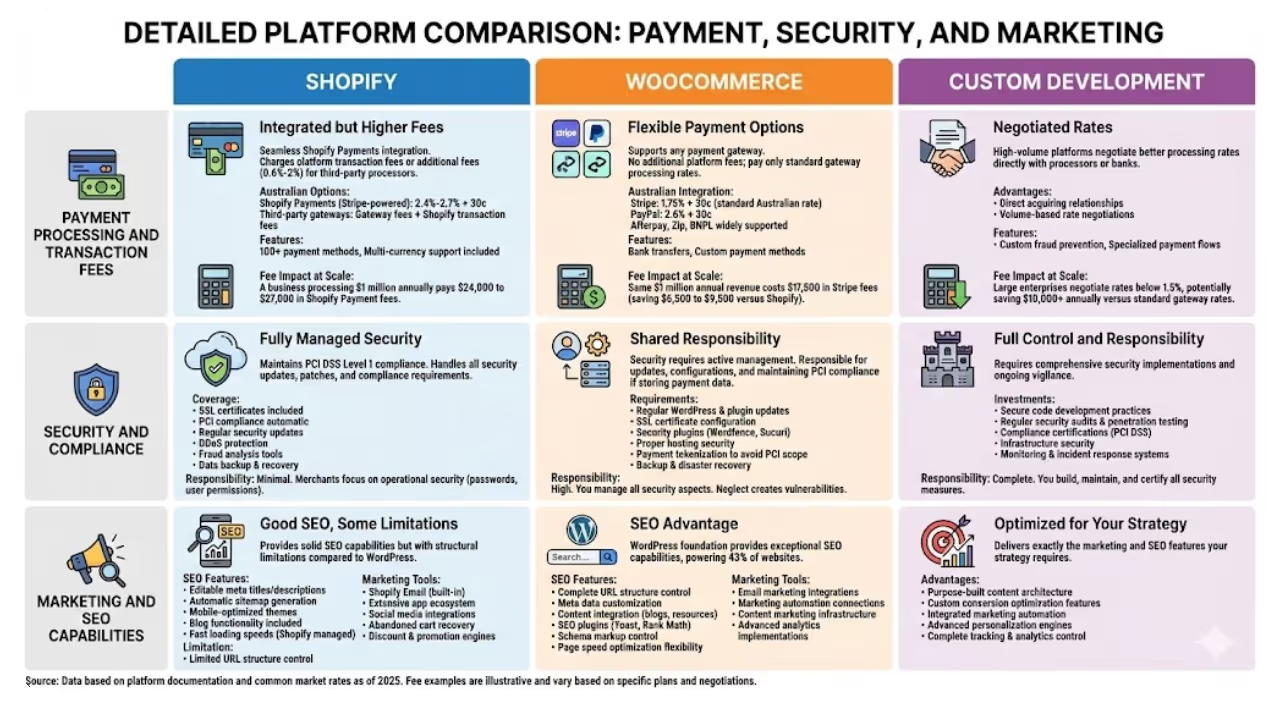
Shopify: Integrated but Higher Fees
Shopify Payments integrates seamlessly but charges transaction fees. Alternatively, use third-party processors but pay additional fees to Shopify (0.6% to 2% depending on plan).
Australian Payment Options:
- Shopify Payments (Stripe-powered): 2.4% to 2.7% + 30 cents
- Third-party gateways: Gateway fees + Shopify transaction fees
- 100+ payment methods supported
- Multi-currency support included
Fee Impact at Scale: A business processing $1 million annually pays $24,000 to $27,000 in Shopify Payment fees.
WooCommerce: Flexible Payment Options
WooCommerce supports any payment gateway without platform fees. You only pay standard gateway processing rates.
Australian Payment Integration:
- Stripe: 1.75% + 30 cents (standard Australian rate)
- PayPal: 2.6% + 30 cents
- Afterpay, Zip, and BNPL options widely supported
- Bank transfers and custom payment methods
- No additional platform fees
Fee Impact at Scale: Same $1 million annual revenue costs $17,500 in Stripe fees (saving $6,500 to $9,500 versus Shopify).
Custom Development: Negotiated Rates
High-volume custom platforms often negotiate better processing rates directly with payment processors or banks.
Enterprise Payment Advantages:
- Direct acquiring relationships
- Volume-based rate negotiations
- Custom fraud prevention
- Specialized payment flows
Fee Impact at Scale: Large enterprises negotiate rates below 1.5%, potentially saving $10,000+ annually versus standard gateway rates.
Security and Compliance
E-commerce security is non-negotiable. Breaches destroy customer trust and trigger regulatory penalties.
Shopify: Fully Managed Security
Shopify maintains PCI DSS Level 1 compliance, the highest certification. They handle all security updates, patches, and compliance requirements. Merchants inherit Shopify's security posture.
Security Coverage:
- SSL certificates included
- PCI compliance automatic
- Regular security updates
- DDoS protection
- Fraud analysis tools
- Data backup and recovery
Responsibility: Minimal. Shopify handles platform security. Merchants focus on operational security (password management, user permissions).
WooCommerce: Shared Responsibility
WooCommerce security requires active management. You're responsible for updates, security configurations, and maintaining PCI compliance if storing payment data.
Security Requirements:
- Regular WordPress and plugin updates
- SSL certificate configuration
- Security plugins (Wordfence, Sucuri)
- Proper hosting security configurations
- Payment tokenization to avoid PCI scope
- Backup systems and disaster recovery
Responsibility: High. You (or your developer/agency) manage all security aspects. Neglect creates vulnerabilities.
Custom Development: Full Control and Responsibility
Custom platforms require comprehensive security implementations and ongoing vigilance.
Security Investments:
- Secure code development practices
- Regular security audits and penetration testing
- Compliance certifications (PCI DSS if relevant)
- Infrastructure security configurations
- Monitoring and incident response systems
Responsibility: Complete. You build, maintain, and certify all security measures.
Marketing and SEO Capabilities
Driving traffic and converting visitors depends partly on platform capabilities:
WooCommerce: SEO Advantage
WooCommerce's WordPress foundation provides exceptional SEO capabilities. WordPress powers 43% of websites partly because of its SEO strengths.
SEO Features:
- Complete URL structure control
- Meta data customization
- Content integration (blogs, resources)
- SEO plugins (Yoast, Rank Math)
- Schema markup control
- Page speed optimization flexibility
Marketing Tools:
- Email marketing integrations
- Marketing automation connections
- Content marketing infrastructure
- Advanced analytics implementations
Shopify: Good SEO, Some Limitations
Shopify provides solid SEO capabilities but with some structural limitations compared to WordPress.
SEO Features:
- Editable meta titles and descriptions
- Automatic sitemap generation
- Mobile-optimized themes
- Blog functionality included
- Fast loading speeds (Shopify managed)
- Limited URL structure control
Marketing Tools:
- Shopify Email (built-in)
- Extensive app ecosystem
- Social media integrations
- Abandoned cart recovery
- Discount and promotion engines
Custom Development: Optimized for Your Strategy
Custom platforms deliver exactly the marketing and SEO features your strategy requires.
Advantages:
- Purpose-built content architecture
- Custom conversion optimization features
- Integrated marketing automation
- Advanced personalization engines
- Complete tracking and analytics control
Platform Selection Framework: Which One Is Right for You?
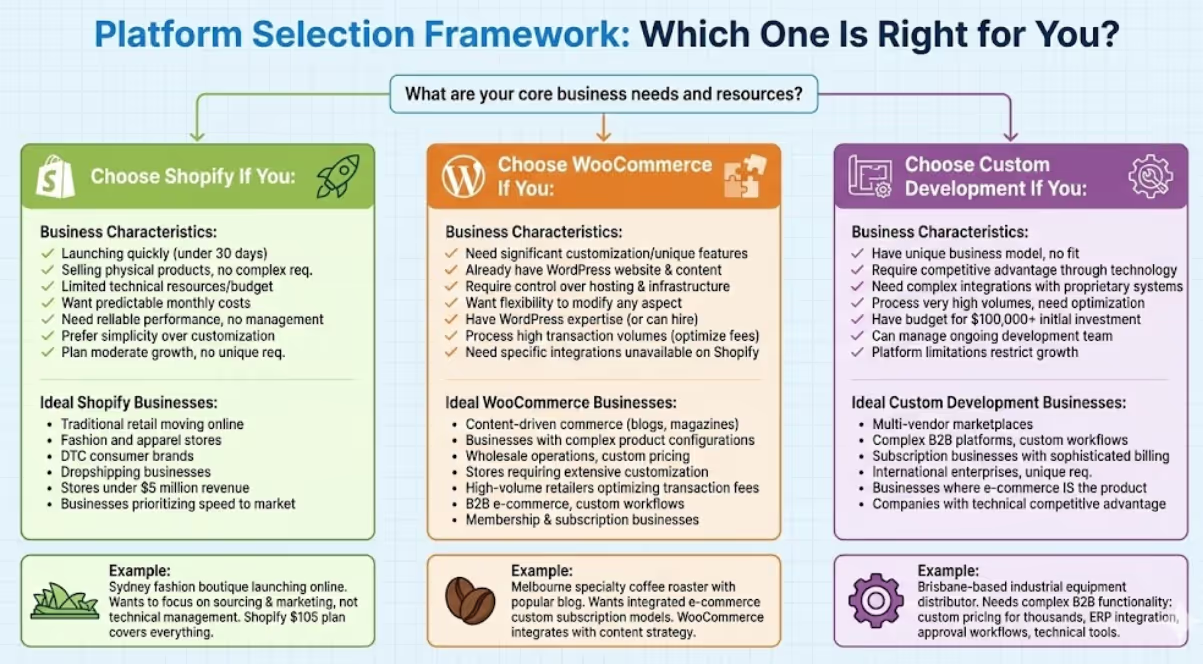
Use this decision framework to identify your optimal platform:
Choose Shopify If You:
Business Characteristics:
- Launching quickly is critical (under 30 days)
- Selling physical products without complex requirements
- Have limited technical resources or budget for development
- Want predictable monthly costs
- Need reliable performance without management
- Prefer simplicity over customization
- Plan moderate growth without unique requirements
Ideal Shopify Businesses:
- Traditional retail brands moving online
- Fashion and apparel stores
- Consumer goods and direct-to-consumer brands
- Dropshipping businesses
- Stores under $5 million annual revenue
- Businesses prioritizing speed to market
Example: A Sydney fashion boutique launching online wants to focus on product sourcing and marketing, not technical management. Shopify's $105 monthly plan provides everything needed without hiring developers.
Choose WooCommerce If You:
Business Characteristics:
- Need significant customization or unique features
- Already have WordPress website with content
- Require control over hosting and infrastructure
- Want flexibility to modify any aspect
- Have (or can hire) WordPress development expertise
- Process high transaction volumes where lower fees matter
- Need specific integrations unavailable on Shopify
Ideal WooCommerce Businesses:
- Content-driven commerce (blogs, magazines selling products)
- Businesses with complex product configurations
- Wholesale operations with custom pricing
- Stores requiring extensive customization
- High-volume retailers optimizing transaction fees
- B2B e-commerce with custom workflows
- Membership and subscription businesses
Example: A Melbourne specialty coffee roaster has a popular blog driving traffic and wants integrated e-commerce with custom subscription models. WooCommerce integrates seamlessly with their content strategy and enables flexible subscription configurations.
Choose Custom Development If You:
Business Characteristics:
- Have unique business model not fitting existing platforms
- Require competitive advantage through technology
- Need complex integrations with proprietary systems
- Process very high volumes requiring optimization
- Have budget for $100,000+ initial investment
- Can manage ongoing development team
- Platform limitations restrict your growth potential
Ideal Custom Development Businesses:
- Multi-vendor marketplaces
- Complex B2B platforms with custom workflows
- Subscription businesses with sophisticated billing
- International enterprises with unique requirements
- Businesses where e-commerce IS the product
- Companies with technical competitive advantages
Example: A Brisbane-based industrial equipment distributor needs complex B2B functionality including custom pricing for thousands of customers, integration with ERP systems, approval workflows, and technical specification tools. No off-the-shelf platform accommodates these requirements cost effectively.
Hybrid Approaches: Headless Commerce and Multi-Platform Strategies
In 2026, rigid platform categories are blurring:
Headless Commerce Architecture
Headless approaches separate frontend experiences from backend e-commerce functionality. Use Shopify or WooCommerce as content and order management systems while building custom frontends.
Benefits:
- Platform reliability and features
- Custom user experience flexibility
- Omnichannel content delivery
- Future-proof architecture
Use Cases:
- Businesses wanting Shopify's backend with React/Vue frontends
- Companies delivering content across web, mobile, and IoT
- Brands prioritizing unique customer experiences
Consideration: Requires significant technical investment while maintaining platform subscription costs.
Multi-Store Strategies
Some businesses operate multiple platform instances for different purposes:
- Shopify for retail direct-to-consumer
- WooCommerce for wholesale portal
- Custom dashboard for business intelligence
This approach optimizes each channel for specific needs rather than forcing all business through one platform.
Migration Considerations: Switching Platforms
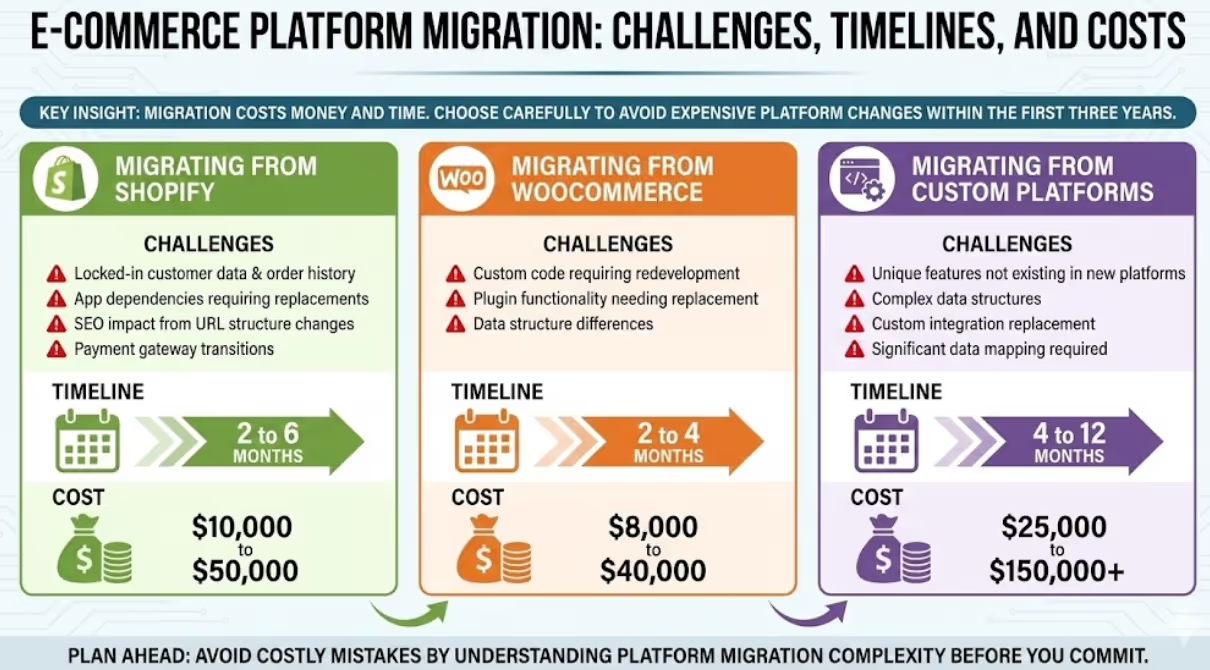
Many businesses eventually outgrow their initial platform choice. Understanding migration complexity helps inform initial decisions:
Migrating From Shopify
Challenges:
- Locked-in customer data and order history
- App dependencies requiring replacements
- SEO impact from URL structure changes
- Payment gateway transitions
Timeline: 2 to 6 months for typical migrations
Cost: $10,000 to $50,000 depending on complexity
Migrating From WooCommerce
Challenges:
- Custom code requiring redevelopment
- Plugin functionality needing replacement
- Data structure differences
Timeline: 2 to 4 months
Cost: $8,000 to $40,000
Migrating From Custom Platforms
Challenges:
- Unique features not existing in new platforms
- Complex data structures
- Custom integration replacement
- Significant data mapping required
Timeline: 4 to 12 months
Cost: $25,000 to $150,000+
Key Insight: Migration costs money and time. Choose carefully to avoid expensive platform changes within first three years.
The Australian E-commerce Context: Local Considerations
Australian businesses face unique factors affecting platform selection:

Payment Processing
Australian consumers expect local payment methods:
- Afterpay and Zip (buy now, pay later)
- PayPal and PayID
- Major bank integration options
- Multi-currency for international customers
All three platforms support Australian payment requirements, but implementation ease varies.
Shipping and Logistics
Australian shipping complexity (domestic distances, international freight) requires robust shipping management:
- Australia Post integration
- Multiple carrier support
- International shipping calculations
- Zone-based shipping rules
Shopify and WooCommerce both handle Australian shipping requirements well. Custom platforms require building shipping logic.
Tax Compliance
GST requirements, international tax rules, and multi-state considerations need proper handling:
- Automatic GST calculations
- International tax rules
- Proper tax reporting
- Integration with accounting systems (Xero, MYOB)
All platforms support GST, but WooCommerce offers most flexibility for complex tax scenarios.
Data Sovereignty
Some Australian businesses require data stored within Australian jurisdiction:
- Government contractors
- Healthcare and medical businesses
- Financial services
- Privacy-sensitive industries
Platform Options:
- Shopify: Data stored on global infrastructure (not exclusively Australian)
- WooCommerce: Choose Australian hosting providers
- Custom: Complete control over data location
Making Your Decision: Action Steps
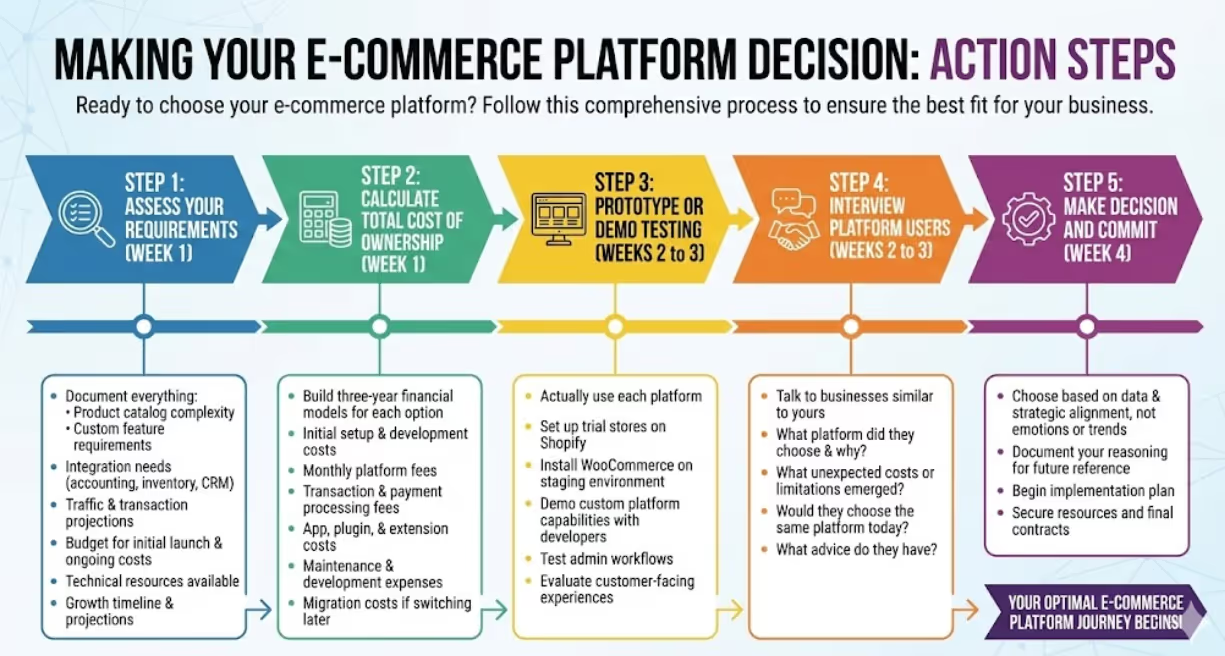
Ready to choose your e-commerce platform? Follow this process:
Step 1: Assess Your Requirements (Week 1)
Document everything:
- Product catalog complexity
- Custom feature requirements
- Integration needs (accounting, inventory, CRM)
- Traffic and transaction projections
- Budget for initial launch and ongoing costs
- Technical resources available
- Growth timeline and projections
Step 2: Calculate Total Cost of Ownership (Week 1)
Build three-year financial models for each platform option:
- Initial setup and development costs
- Monthly platform fees
- Transaction and payment processing fees
- App, plugin, and extension costs
- Maintenance and development expenses
- Migration costs if switching later
Step 3: Prototype or Demo Testing (Week 2 to 3)
Actually use each platform:
- Set up trial stores on Shopify
- Install WooCommerce on staging environment
- Demo custom platform capabilities with developers
- Test admin workflows
- Evaluate customer-facing experiences
Step 4: Interview Platform Users (Week 2 to 3)
Talk to businesses similar to yours:
- What platform did they choose and why?
- What unexpected costs or limitations emerged?
- Would they choose the same platform today?
- What advice do they have?
Step 5: Make Decision and Commit (Week 4)
Choose based on data and strategic alignment, not emotions or trends. Document your reasoning for future reference.
The Truth About Platform Selection
Here's what most comparison articles won't tell you: there's no universally "best" platform. The right choice depends entirely on your specific circumstances.
Shopify is genuinely excellent for traditional product retailers wanting simplicity and reliability. But it frustrates businesses needing customization or facing high-volume transaction fees.
WooCommerce delivers exceptional flexibility and cost effectiveness at scale. But it requires technical competence and ongoing management that some businesses can't provide.
Custom development enables competitive differentiation impossible on off-the-shelf platforms. But most businesses don't actually need custom platforms and waste resources building what Shopify or WooCommerce provides excellently.
The worst decision isn't choosing the "wrong" platform. It's choosing without understanding what you actually need, then discovering limitations after significant investment.
Ready to Launch Your Australian E-commerce Business?
Choosing your e-commerce platform is just the beginning. Success requires strategic planning, technical implementation, ongoing optimization, and deep understanding of Australian e-commerce markets.
Whether you choose Shopify's simplicity, WooCommerce's flexibility, or custom development's power, implementation quality determines outcomes more than platform selection. A well-executed Shopify store outperforms a poorly implemented custom platform every time.
Need expert guidance choosing and implementing the right e-commerce platform? Maven Marketing Co. specializes in Australian e-commerce strategy and implementation. Our team has launched hundreds of online stores across all major platforms, helping businesses avoid expensive mistakes and build scalable foundations for growth.
We start with comprehensive business analysis, ensuring platform selection aligns with your actual requirements, budget realities, and growth trajectory. Then we handle implementation, from technical setup through launch optimization and ongoing performance improvement.
Contact Maven Marketing Co. today for a complimentary e-commerce platform consultation. We'll analyze your specific requirements, compare total cost of ownership across platforms, and provide clear recommendations with detailed implementation roadmaps. Let's build your online retail success on the platform that actually fits your business.
The right platform accelerates growth. The wrong platform creates expensive obstacles. Choose strategically, implement excellently, and focus on what actually drives e-commerce success: exceptional products, compelling marketing, and outstanding customer experiences. Your platform should enable these priorities, not distract from them.

Table of contents
read more blogs
How to Build a Brand Positioning Strategy That Sets Your Business Apart
Most businesses can explain what they sell. Far fewer can explain, in a sentence or two, why the right customer should choose them instead of another credible option. That gap is where brand positioning matters.A strong brand positioning strategy gives your business a clear place in the market and a clear place in the customer's mind. It helps your team decide who you are speaking to, what you want to be known for, which benefits deserve the most attention and how your marketing should sound and look across every channel.It is not a slogan exercise and it is not something reserved for large consumer brands. For an Australian service business, e-commerce brand, professional firm, or growing B2B company, positioning can make everyday decisions easier, from website copy and campaign messaging to pricing, sales conversations, and brand identity. The goal is not to look different for the sake of it. The goal is to be meaningfully different in a way the right customers understand and value.

The Role of Digital PR in Long Term SEO Growth
Building a solid online presence is basically more than just posting content now and then or sprinkling keywords across your website. Search engines such as Google tend to point users toward businesses that feel trustworthy, useful, and backed up by others online, even if it’s not always obvious at first. When a company puts together a well-thought-out digital PR strategy, it can bring in solid media mentions, earning high-quality backlinks and stronger brand awareness, all of which feed long-term SEO progress. Rather than obsessing solely over rankings, digital PR helps you build credibility plus authority, so your site looks more appealing to search engines and also to real people who might become customers. In this guide, we’ll walk through how digital PR supports SEO, what makes it such a key part of modern marketing, and the most effective approaches for sustainable growth in search results.

Is Google Ads Better Than SEO for My Business
One of the biggest questions business owners ask when they are planning online growth is whether they should invest in Google Ads or SEO. Both are strong marketing plays that help your company show up in Google search results, but they do things in separate lanes. Google Ads gives quicker visibility and can bring in leads fast, whereas SEO more or less focuses on slow, steady organic traffic that tends to grow the longer you keep building it. Picking the right direction depends on what you want to achieve, how much money you can spend, how crowded the market is, and how quickly you need results, like sooner rather than later. The good news is you don’t always have to choose one or the other; it’s not exactly a black-and-white situation. If you take time to understand the strongest points of both, you can put together a more sensible digital marketing plan that supports consistent expansion. In this guide, we’ll compare Google Ads vs SEO, explain the main differences, and help you figure out what option makes the most sense for your business.