.svg)


%201.svg)

Key Takeaways
- Social listening and social monitoring are different disciplines. Monitoring tracks direct mentions; listening analyses broader conversations, sentiment, and trends.
- A social listening system is only as useful as the action framework connected to it. Data without workflow produces reports, not results.
- Australian brands need to account for local slang, regional references, and platform behaviour that differs from global norms when setting up keyword tracking.
- Competitor monitoring within a social listening system gives brands early visibility into market shifts, product launches, and customer sentiment gaps.
- Crisis detection is one of the highest value use cases for social listening. The difference between catching a reputational issue early and reacting after it has escalated is often a matter of hours.
- Choosing the right tool depends on your brand size, budget, and the channels most relevant to your audience and not on feature lists alone.
- Regular reporting cadence and clear ownership of the listening function are essential for keeping the system active and useful over time.
The Difference Between Listening and Just Watching
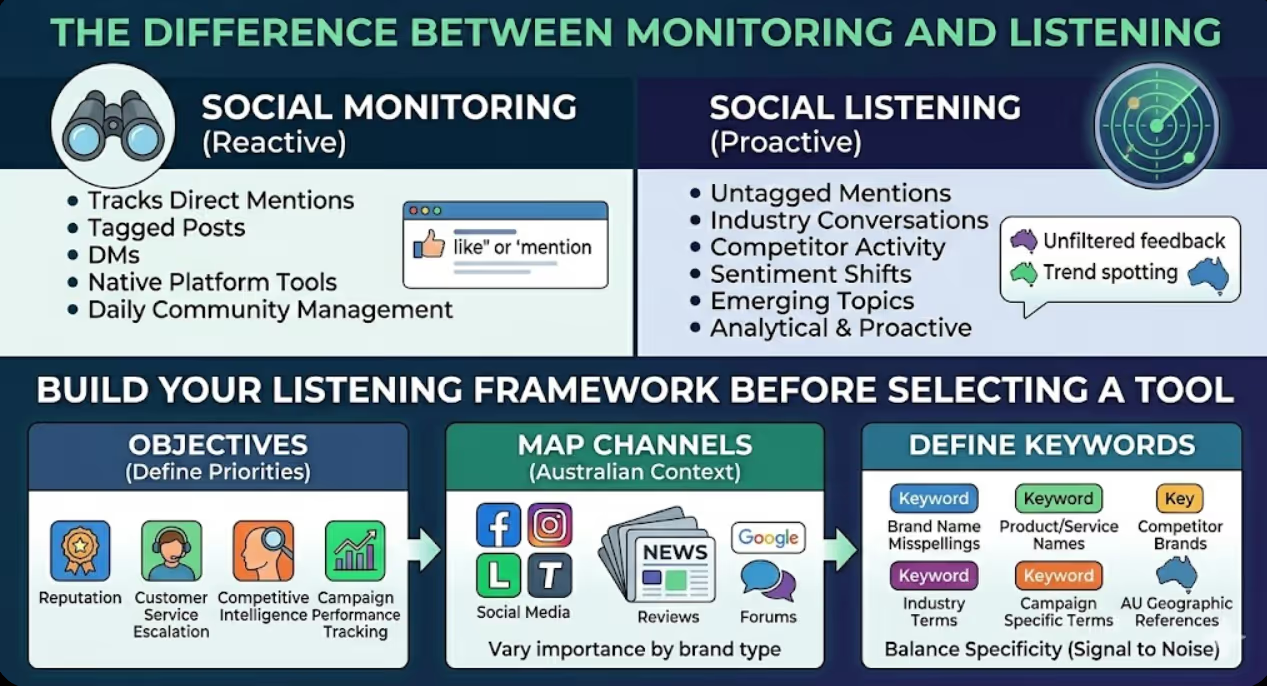
There is a distinction worth making clearly at the outset because it affects everything from tool selection to how you interpret the data. Social monitoring is reactive. It tracks direct mentions of your brand name, your tagged posts, and your direct messages. Most platforms provide this natively, and most community managers do some version of it every day.
Social listening is proactive and analytical. It goes beyond your own channels to track untagged mentions, industry conversations, competitor activity, sentiment shifts, and emerging topics across the broader digital environment. It asks not just "what are people saying to us" but "what are people saying about us, about our category, and about our competitors, whether or not they intended for us to hear it."
For Australian brands, the practical value of that broader view is substantial. A customer who has a poor experience at your Melbourne location and posts about it on a Facebook community group without tagging your brand will not appear in your monitoring dashboard. But a social listening system with the right keyword setup will surface that post, giving you an opportunity to respond before the thread develops momentum.
The same logic applies to competitive intelligence. A competitor quietly receiving a wave of negative sentiment about a product feature is information you can act on. A hashtag gaining traction in your category that you have not yet engaged with is an opportunity. None of this reaches you through standard monitoring. It only reaches you if you are listening.
Building Your Listening Framework Before You Select a Tool
The instinct for most marketers is to evaluate tools first. Resist it. The tool selection decision is far easier and far more likely to produce a good outcome once you have clarity on what you actually need to monitor, why you are monitoring it, and what you will do with what you find.
Start with your objectives. Social listening can serve a wide range of functions including brand reputation management, customer service escalation, competitive intelligence, campaign performance tracking, influencer identification, product feedback collection, and crisis detection. Most brands will have more than one objective, but they will not have equal priority. Being clear about which objective matters most shapes everything from keyword lists to reporting frequency to who in the organisation needs access to the data.
Map your channel landscape next. In Australia, the relevant social and digital channels for listening purposes typically include Facebook, Instagram, X (formerly Twitter), LinkedIn, TikTok, Reddit, YouTube comments, Google reviews, product review platforms like ProductReview.com.au, news media mentions, and industry forums. Not all of these will be equally important for every brand. A B2B software company and a national hospitality chain will have very different channel priorities, and trying to monitor everything equally is a fast path to data overload and analysis paralysis.
Define your keyword categories clearly. A well structured keyword list for an Australian brand typically covers brand name variations and common misspellings, product or service names, key personnel names for senior executive brands, branded hashtags, competitor brand names, industry category terms, campaign specific terms, and relevant local geographic references. The specificity of your keyword list directly determines the signal to noise ratio of your listening data. Too broad and you are drowning in irrelevant results. Too narrow and you are missing conversations that matter.
Choosing the Right Tool for Your Brand
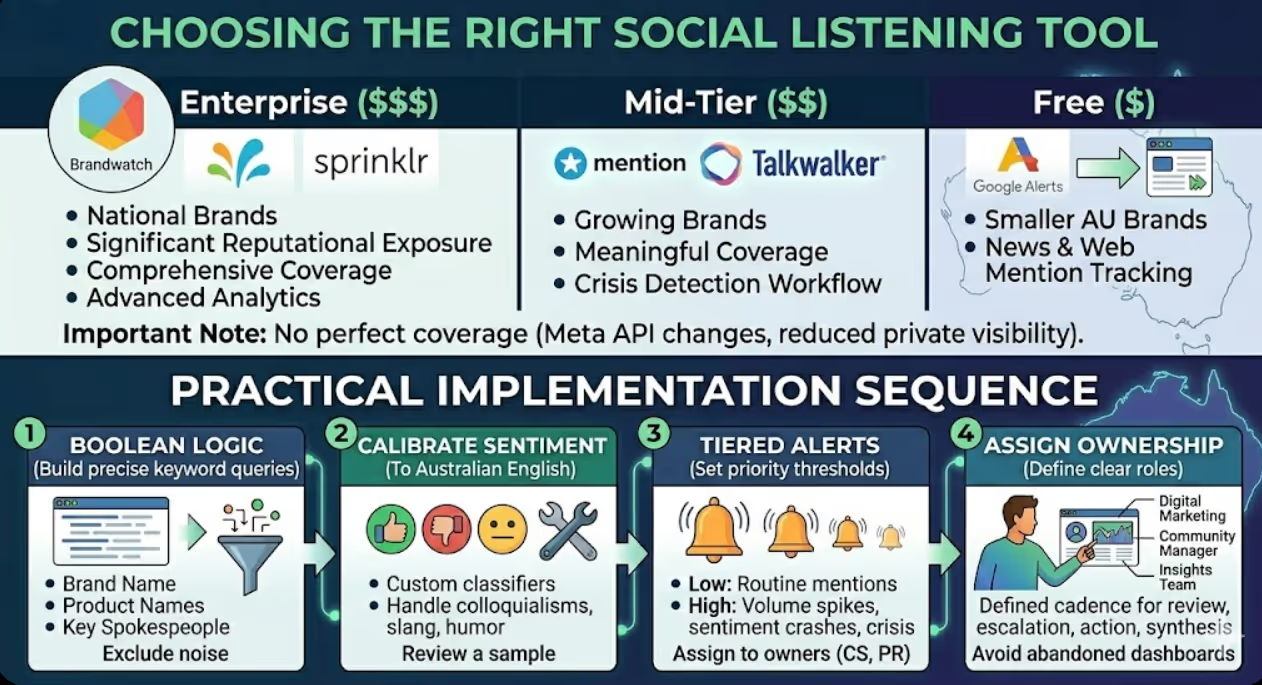
The social listening tool market is broad, and the pricing range is equally so. Enterprise platforms can run to tens of thousands of dollars per year. Mid tier tools sit in a range accessible to growing brands. And free or low cost options exist that serve genuine use cases for smaller operations.
The key variables for Australian brands when evaluating tools are channel coverage, historical data access, sentiment analysis accuracy for Australian English, the quality of Boolean search functionality, alerting capabilities, and the quality of reporting outputs.
Brandwatch and Sprinklr sit at the enterprise end of the market and offer comprehensive coverage across social, news, forums, and review platforms. For national brands or those with significant reputational exposure, the depth of data and the sophistication of the analytics justify the investment.
Mention and Talkwalker occupy a useful mid tier position, offering meaningful coverage without the enterprise price point. Both handle Australian content reasonably well and include alerting functionality that supports crisis detection workflows.
Google Alerts remains a genuinely useful free tool for tracking brand mentions in news content and indexed web pages, and for most smaller Australian brands it is an appropriate starting point for monitoring outside of social platforms.
It is worth noting that no tool offers perfect coverage of all channels. Facebook and Instagram data access in particular has become more restricted since Meta's API changes, meaning that many tools have reduced their ability to surface private group conversations and some public post content. Understanding these limitations before committing to a platform matters, particularly if Facebook communities are a significant part of your brand's conversation landscape.
According to the 2024 Sprout Social Index, the brands deriving the most value from social listening are those that have connected it directly to business decisions rather than treating it as a reporting function. The tool is the infrastructure. The value comes from the workflow built around it.
Setting Up Your Monitoring System: A Practical Sequence
Once your objectives are defined, your channels mapped, and your tool selected, the implementation sequence follows a logical order.
Configure your keyword streams with Boolean logic. Most professional listening tools support Boolean operators, which allow you to build precise search queries that include required terms, exclude noise, and capture variations. For an Australian brand called, for example, Coastal Supply Co, your primary brand stream might include the brand name, common abbreviations, product names, and the names of key spokespeople, while excluding irrelevant homonyms or competitor mentions that share terminology. Taking the time to build clean Boolean queries upfront dramatically reduces the volume of irrelevant results you need to sift through.
Set up sentiment tracking and calibrate it to Australian English. Sentiment analysis on most platforms uses natural language processing to classify mentions as positive, negative, or neutral. The accuracy of this classification varies, and for Australian English, with its particular colloquialisms, dry humour, and tendency toward understatement, the baseline accuracy of standard sentiment models can be unreliable. Review a sample of categorised mentions early in the implementation and adjust your custom classifiers or manually correct errors to train the system toward greater accuracy over time.
Create tiered alert thresholds. Not all mentions require the same speed of response. A single negative review on ProductReview.com.au is worth knowing about and responding to, but it does not require the same urgency as a sudden spike in negative sentiment that suggests an emerging crisis. Configure your alert thresholds to reflect this. High priority alerts for volume spikes, sentiment crashes, or mentions from high reach accounts should go to whoever owns crisis communications. Standard alerts for routine brand mentions can feed into a regular review workflow at a less urgent pace.
Assign clear ownership. Social listening systems fail most often not because of tool limitations but because nobody owns the function clearly. Someone in the organisation needs to be responsible for reviewing incoming data on a defined cadence, escalating what needs escalating, actioning what can be actioned, and synthesising insights for broader reporting. In smaller teams this is typically a digital marketing or community management role. In larger organisations it may sit within a dedicated insights or communications function. Either way, undefined ownership produces abandoned dashboards.
Competitive Intelligence: What to Track Beyond Your Own Brand
Some of the most valuable intelligence a social listening system can generate has nothing to do with your own brand directly. Monitoring competitor conversations with the same rigour you apply to your own brand creates an ongoing stream of market intelligence that would otherwise require significant research investment to access.
For Australian brands, competitive listening typically focuses on the following.
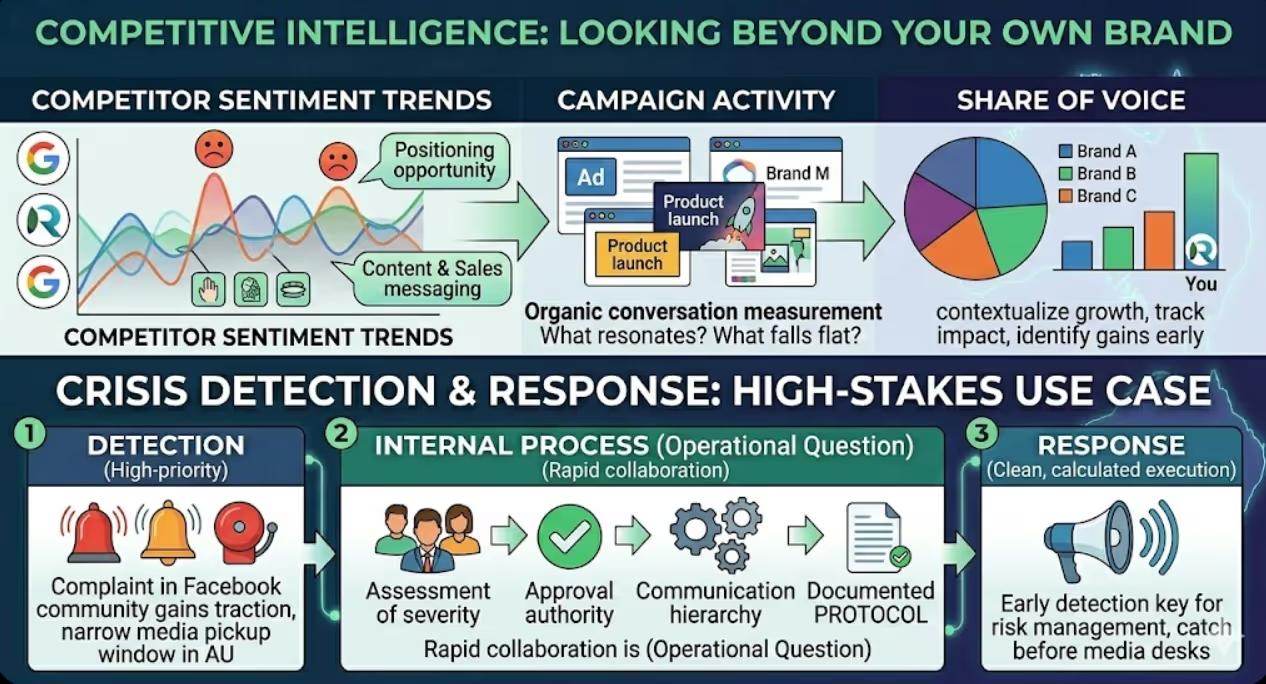
Competitor sentiment trends over time. A sustained shift in how customers are talking about a competitor, particularly when negative sentiment is rising around a specific product, service, or experience, represents a positioning opportunity. If customers are expressing frustration with something your competitor does poorly and you do it better, that intelligence should be informing your content strategy and your sales messaging.
Competitor campaign activity. Social listening surfaces organic conversation around competitor campaigns, product launches, and promotions. Watching how audiences respond to competitor activity gives you a read on what is resonating in your category and what is falling flat, without needing to spend on your own market research.
Share of voice. Measuring your brand's share of the total conversation volume in your category relative to competitors is one of the most useful benchmarks a listening system can generate. It contextualises your growth, tracks the impact of marketing activity, and identifies when a competitor is gaining ground before that gain shows up in sales data.
Crisis Detection and Response: The Highest Stakes Use Case
For Australian brands, the reputational speed of a crisis developing on social media makes early detection the most urgent application of social listening. A complaint that gets traction in a Facebook community, a product issue that is picked up by a journalist monitoring social platforms, a customer video that starts accumulating views and any of these can move from contained to widespread within hours.
A properly configured listening system with appropriate alert thresholds gives your communications team a meaningful head start. The operational question is not just whether you will detect the issue but whether your internal response process is fast enough to act on that detection effectively.
Australian communications professionals have noted a particular pattern in local crisis situations: the window between initial social traction and mainstream media pickup is often narrower in Australia than in larger markets, partly because of the tight relationship between social media activity and news monitoring by Australian journalists. Catching an issue at the social stage before it reaches editorial desks is not always possible, but it is substantially more possible with a listening system than without one.
The response protocol connected to your listening system matters as much as the system itself. When an alert fires indicating a potential crisis, the team needs to know immediately who is responsible for assessing severity, who has approval authority on public responses, and what the communication hierarchy looks like. Documenting this before a crisis occurs rather than establishing it in the middle of one is one of the most practical risk management steps an Australian brand can take.
Reporting: Turning Data Into Decisions
Social listening data has genuine strategic value only if it feeds into decisions. Reports that summarise mention volumes and sentiment scores but produce no clear action items are a cost centre, not a strategic asset.
The most useful listening reports for Australian brands answer specific questions rather than aggregating all available data. Monthly brand health reports that track share of voice, sentiment trends, and top performing themes give leadership teams a strategic view. Weekly community reports that surface customer feedback themes, emerging issues, and competitor activity give marketing and product teams actionable inputs. Immediate alerts that flag volume spikes, influencer mentions, or sentiment crashes give communications teams the operational information they need to respond.
Research published by the Content Marketing Institute consistently finds that the brands generating the strongest returns from digital marketing are those that use audience insight data to inform content strategy. Social listening is one of the richest sources of that insight available, and its value compounds over time as trend data accumulates and benchmarks become more meaningful.
FAQs
How is social listening different from tracking your own social media analytics?Your own social media analytics show you how your content performs with your existing audience. Social listening shows you what is being said about your brand, your category, and your competitors across the entire digital landscape, including by people who have never engaged with your owned channels. The two data sources are complementary but serve different purposes. Analytics inform content optimisation; listening informs brand strategy, product development, and reputation management.
How much should an Australian brand expect to spend on social listening tools?The range is wide. Free tools like Google Alerts provide basic news and web monitoring at no cost and are a reasonable starting point for smaller brands. Mid tier platforms typically cost between $300 and $1,500 per month depending on the volume of mentions tracked and the depth of analytics required. Enterprise platforms used by national brands can cost significantly more. Most Australian brands at a growth stage find that a mid tier tool configured well outperforms an enterprise tool configured poorly, so implementation quality matters as much as the tool selected.
How often should we review our social listening keyword lists?At minimum, keyword lists should be reviewed quarterly to account for shifts in how customers talk about your brand and category, new product launches, emerging competitor activity, and changes in platform behaviour. In practice, the most effective listening setups are reviewed more frequently, particularly after major campaigns, product launches, or any event that changes the conversation landscape around your brand.
Build a Listening System Worth Having
Setting up social listening properly takes more upfront investment than most brands expect, and considerably less than most brands fear. The returns in crisis prevention, competitive intelligence, customer insight, and brand health visibility compound significantly once the system is running and owned clearly.
Maven Marketing Co helps Australian brands build social listening systems that go beyond data collection and feed directly into marketing strategy, customer experience, and communications planning.
Talk to the team at Maven Marketing Co →

Table of contents
read more blogs

How to Build a Brand Positioning Strategy That Sets Your Business Apart
Most businesses can explain what they sell. Far fewer can explain, in a sentence or two, why the right customer should choose them instead of another credible option. That gap is where brand positioning matters.A strong brand positioning strategy gives your business a clear place in the market and a clear place in the customer's mind. It helps your team decide who you are speaking to, what you want to be known for, which benefits deserve the most attention and how your marketing should sound and look across every channel.It is not a slogan exercise and it is not something reserved for large consumer brands. For an Australian service business, e-commerce brand, professional firm, or growing B2B company, positioning can make everyday decisions easier, from website copy and campaign messaging to pricing, sales conversations, and brand identity. The goal is not to look different for the sake of it. The goal is to be meaningfully different in a way the right customers understand and value.

The Role of Digital PR in Long Term SEO Growth
Building a solid online presence is basically more than just posting content now and then or sprinkling keywords across your website. Search engines such as Google tend to point users toward businesses that feel trustworthy, useful, and backed up by others online, even if it’s not always obvious at first. When a company puts together a well-thought-out digital PR strategy, it can bring in solid media mentions, earning high-quality backlinks and stronger brand awareness, all of which feed long-term SEO progress. Rather than obsessing solely over rankings, digital PR helps you build credibility plus authority, so your site looks more appealing to search engines and also to real people who might become customers. In this guide, we’ll walk through how digital PR supports SEO, what makes it such a key part of modern marketing, and the most effective approaches for sustainable growth in search results.

Is Google Ads Better Than SEO for My Business
One of the biggest questions business owners ask when they are planning online growth is whether they should invest in Google Ads or SEO. Both are strong marketing plays that help your company show up in Google search results, but they do things in separate lanes. Google Ads gives quicker visibility and can bring in leads fast, whereas SEO more or less focuses on slow, steady organic traffic that tends to grow the longer you keep building it. Picking the right direction depends on what you want to achieve, how much money you can spend, how crowded the market is, and how quickly you need results, like sooner rather than later. The good news is you don’t always have to choose one or the other; it’s not exactly a black-and-white situation. If you take time to understand the strongest points of both, you can put together a more sensible digital marketing plan that supports consistent expansion. In this guide, we’ll compare Google Ads vs SEO, explain the main differences, and help you figure out what option makes the most sense for your business.