.svg)


%201.svg)

Key Takeaways
- The Instagram bio link is the primary conversion bridge between your social audience and your owned digital channels. It deserves a proper strategy.
- Generic Linktree pages with five unlabelled buttons are a missed opportunity. Every element of the page should reflect deliberate brand and conversion thinking.
- The best bio link tools offer analytics that show you which links your audience is actually clicking, giving you data to optimise against.
- Your bio link destination should change in line with your content calendar, campaign activity, and business priorities rather than staying static for months.
- Australian brands should consider hosting their own bio link page on their own domain for SEO benefit, brand consistency, and full analytics control.
- Testing different page layouts, button copy, and link ordering is straightforward on most bio link platforms and consistently produces meaningful performance differences.
- The bio link page is part of your brand experience. Visual consistency with your Instagram feed and website builds trust and reduces abandonment.
One Link, Enormous Leverage
Instagram's decision to limit profiles to a single clickable link in the bio was originally a constraint. For brands that have thought carefully about how to use it, it has become an asset.
The reason is scarcity and intent. When someone visits your Instagram profile after seeing content they found genuinely interesting, they are at a moment of heightened engagement. They want more. The bio link is the only place you can direct that energy into a conversion action, and the quality of what they find when they click determines whether that moment produces a result or dissolves into nothing.
Australian Instagram audiences are sophisticated. They will click a bio link on the expectation of finding something useful, current, and relevant to what they just saw in your content. If they land on a page that looks nothing like your brand, is full of outdated links, or does not reflect what the content promised, they leave. And unlike a website where you might remarket to a visitor, an Instagram profile visit that converts to nothing leaves almost no trail you can follow up on.
Getting the bio link right is not a significant technical undertaking. It is primarily a strategic and executional one. The tools are accessible, the setup is fast, and the upside from doing it well compounds across every piece of content you publish.
What Is Wrong With Most Bio Link Pages
Before looking at what a strong bio link strategy looks like, it helps to understand what most brands are doing and why it underperforms.
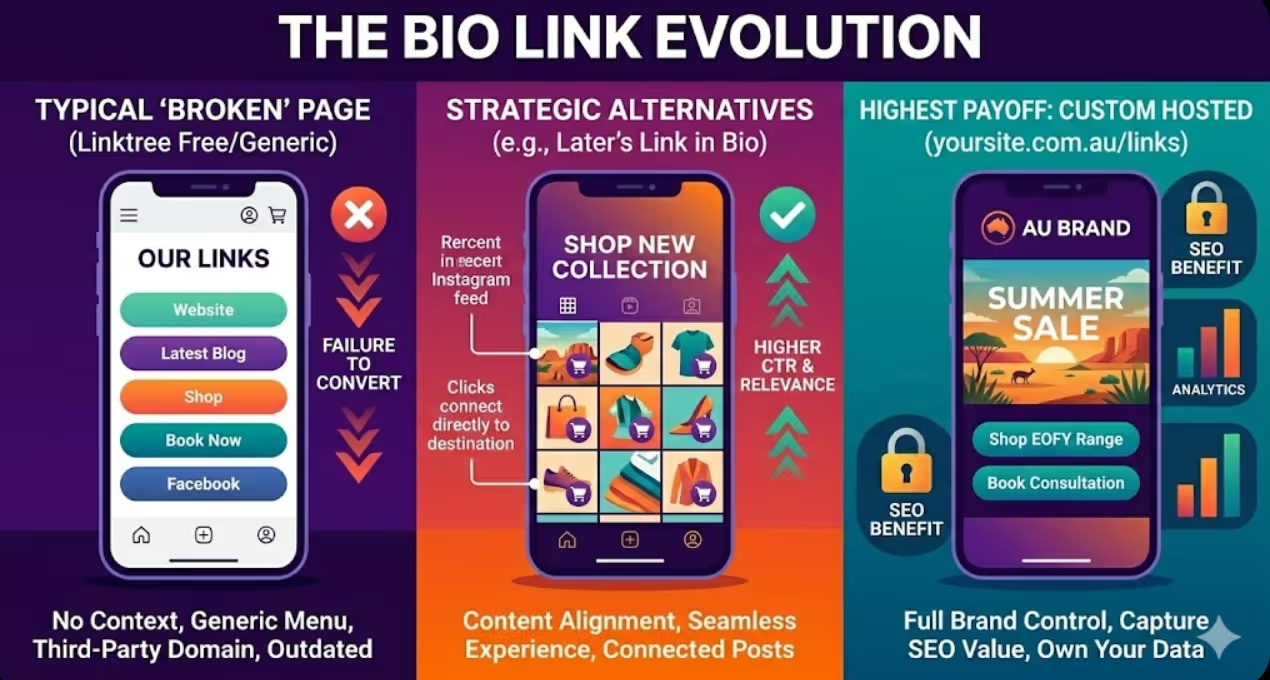
The typical brand bio link page is a Linktree or similar tool with four to six buttons arranged vertically, labelled something like "Website," "Shop," "Latest Blog," "Book Now," and "Follow Us on Facebook." The buttons are in the default platform colours or a loosely branded approximation. There is no headline communicating why a visitor should click anything. There are no images. The page has not been updated since it was created eight months ago.
This approach fails on several counts. It provides no context for a visitor arriving from a specific piece of content. It treats every visitor identically regardless of what drew them to the profile. It offers no visual reason to engage. And it gives the brand no useful data about which link is actually driving behaviour because the analytics are either not set up or not reviewed.
The opposing view is that any bio link is better than none. That is technically true but strategically insufficient. An Instagram presence that generates genuine engagement and then routes it into a page that fails to convert is a system with a hole in it. Fixing that hole is one of the higher leverage optimisations available to Australian brands without requiring any additional content production or media spend.
Linktree and Its Actual Alternatives
Linktree is the most recognised name in the bio link space, and for good reason. It is fast to set up, broadly functional, and free at the basic tier. For individual creators or brands with simple needs, it is a perfectly adequate tool.
The limitations become relevant as brand requirements grow. The free tier is limited in customisation, analytics, and integrations. The branding on the page signals third party hosting to visitors, which can undercut the trust and consistency that more established brands want to maintain. And critically, a Linktree page lives on Linktree's domain, meaning that any SEO value flowing from Instagram clicks accrues to Linktree rather than to your own website.
The alternatives worth evaluating for Australian brands fall into three broad categories.
Dedicated bio link platforms that go beyond Linktree's feature set. Tools like Beacons, Later's Link in Bio, and Milkshake offer more sophisticated design options, better analytics, and tighter integration with ecommerce and booking platforms. Later's Link in Bio is particularly useful for brands already using Later for scheduling, as it connects individual posts to specific landing pages, meaning a visitor who clicks through from a specific piece of content lands on a page relevant to that content rather than a generic menu.
Custom hosted bio link pages built directly on your own website or domain. This is the highest effort option but also the one with the greatest lasting payoff. A bio link page at yoursite.com.au/links or a similar URL captures the SEO benefit of inbound traffic, keeps visitors within your own analytics ecosystem from the moment they arrive, and allows full brand expression without platform limitations. For Australian brands investing seriously in organic search, this approach is worth the additional setup time.
Instagram's own native tools including the action buttons available on Business profiles and the newer product tagging and link sticker features in Stories. These do not replace a bio link page for profile visitors but do complement it by distributing conversion opportunities more broadly across the content experience.
According to Later's research on Instagram link in bio performance, accounts that update their bio link in alignment with their content calendar see significantly higher click through rates than those leaving a static link in place. This is consistent with the broader principle that relevance drives conversion, and it has direct implications for how frequently Australian brands should be updating their bio link destinations.
Building a Bio Link Page That Actually Converts
Whether you are using a third party platform or a custom hosted page, the conversion principles that make a bio link page work are consistent.
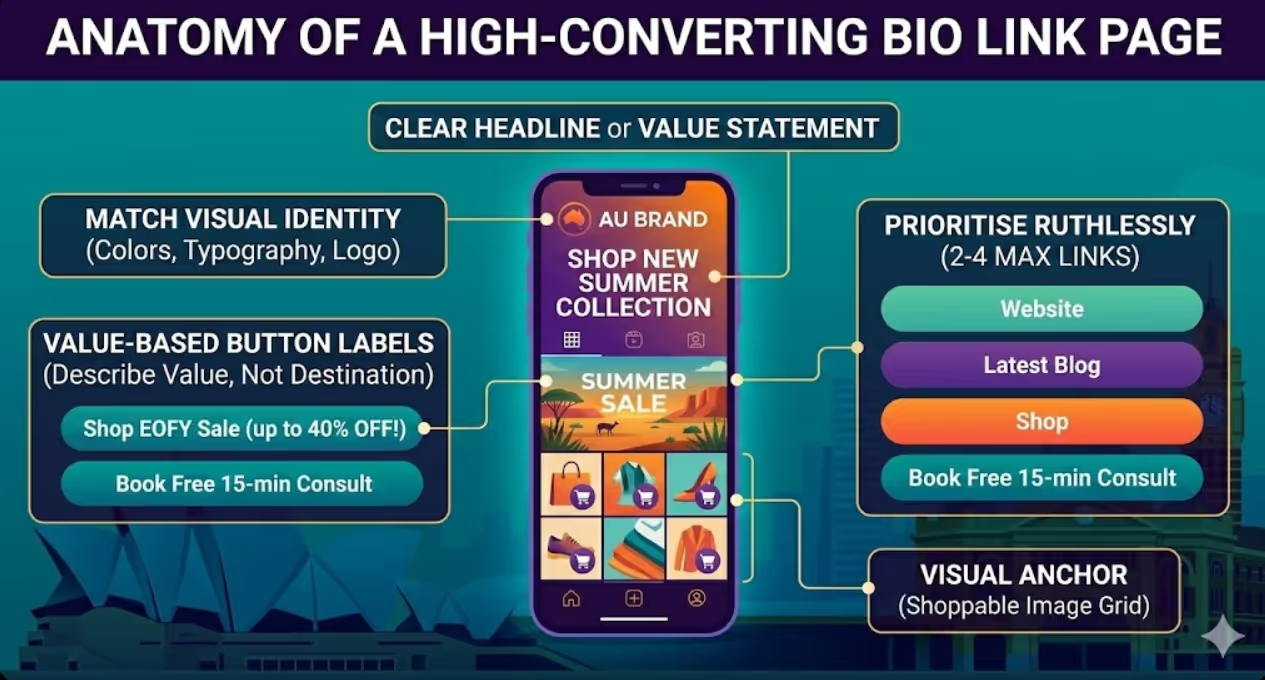
Lead with a clear headline or value statement. Most bio link pages open directly into a list of buttons. Adding a short headline above the links, something as simple as "New collection just dropped" or "Book your free consultation," gives context to a visitor who has just arrived from your content and immediately reinforces the relevance of what they are about to see.
Prioritise ruthlessly. Every link you add to a bio link page competes for attention with every other link. A visitor confronted with seven options will frequently choose none of them. The most effective bio link pages carry two to four links maximum, each one representing a distinct and high priority destination. If you have a current campaign running, that destination should almost always be at the top of the list.
Match the visual identity of your brand. Your bio link page is the first destination many Instagram visitors will reach when they decide to engage more deeply with your brand. If it looks nothing like your website or your feed, that visual discontinuity creates a subconscious friction that increases abandonment. Use your brand colours, your logo, and your typography. If your platform allows custom backgrounds or imagery, use them.
Write button labels that describe value, not just destination. "Shop Now" is weaker than "Shop the new summer range." "Book Here" is weaker than "Book a free 30 minute consult." The copy on your link buttons is advertising copy in miniature. It should give the visitor a reason to click, not just a category label.
Include a visual anchor where relevant. For product oriented brands, embedding a shoppable image grid that mirrors your Instagram feed and links individual posts to specific product pages is one of the highest performing bio link configurations available. It creates a seamless experience from feed to purchase and gives visitors a familiar visual context immediately upon arrival.
Analytics: The Part Most Brands Skip
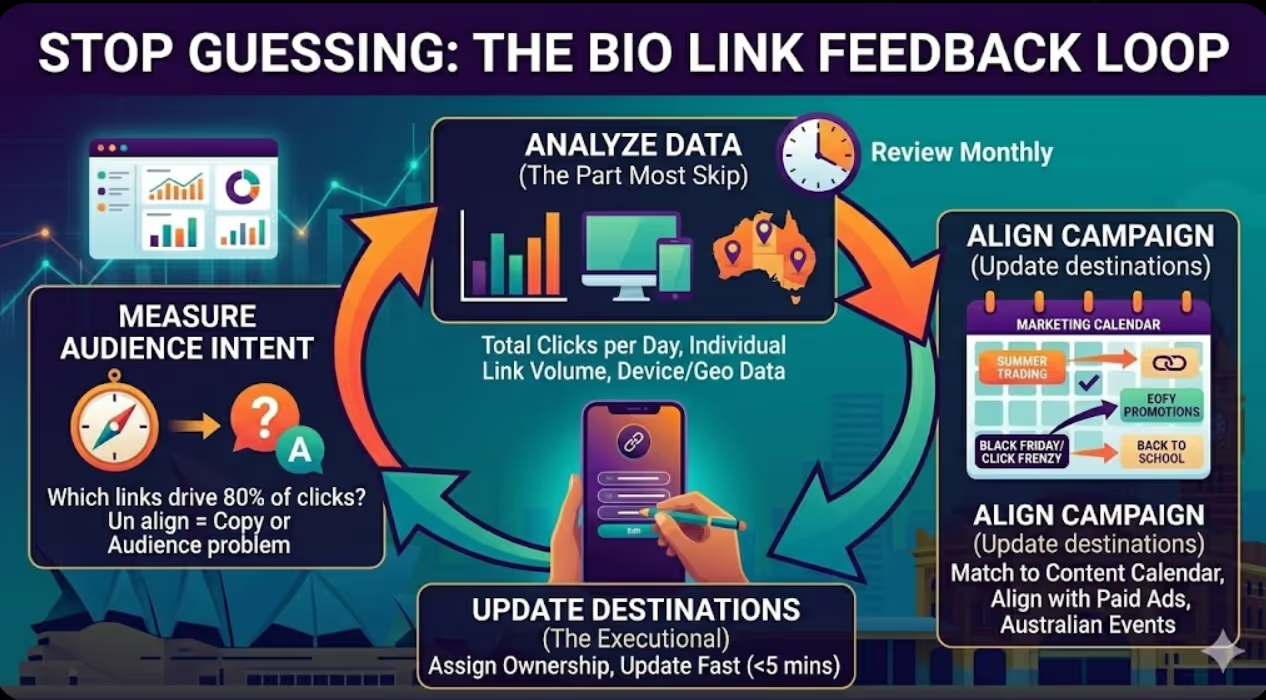
The genuine advantage of using a dedicated bio link platform over a single static URL is the click analytics it provides. Knowing which links your audience clicks, when they click them, and how that behaviour changes across different content campaigns is data that directly informs your bio link strategy over time.
At minimum, your bio link analytics should be telling you total clicks per day, individual link click volumes, and the device breakdown of your visitors. More sophisticated platforms will show you geographic data, traffic source breakdowns, and historical trends. For Australian brands, the geographic data is particularly useful for understanding whether your Instagram audience is concentrated in the markets most relevant to your business or whether the reach is distributed in ways that affect your campaign focus.
The practical application of this data is straightforward. If your bio link page has four destinations and one of them consistently drives 80 percent of all clicks, that tells you something important about where your audience's intent sits. If a link you expected to perform well is generating almost no clicks, that is either a copywriting problem, a positioning problem, or a signal that the audience the content is bringing to your profile is not aligned with the destination you are offering them.
Review your bio link analytics at the same cadence as your broader Instagram analytics, which for most active Australian brand accounts means at minimum a monthly review with a check against any major content pushes or campaign periods.
Campaign Alignment: Updating Your Bio Link Like a Marketer
One of the clearest indicators of a brand that treats its Instagram presence seriously is a bio link that changes in response to what is happening in the content feed. When your most recent posts are promoting a specific product launch or event and your bio link still points to a homepage you have not updated since last quarter, you are breaking the conversion chain at the exact moment it should be strongest.
Building bio link updates into your content calendar is not a significant operational burden. For most brands it takes less than five minutes to swap a destination or reorder a link priority. The discipline is simply in remembering to do it and assigning ownership to whoever manages the account.
Seasonal campaigns in Australia create natural bio link update triggers. The summer trading period, end of financial year promotions, back to school campaigns, and major retail events like Click Frenzy and Black Friday all represent moments where the bio link should be actively pointing to the most relevant current destination rather than a generic fallback.
For brands running paid Instagram advertising alongside organic content, bio link alignment matters even more. If your paid campaign is driving profile visits in addition to direct landing page traffic, those profile visitors are arriving with purchase intent already primed. Sending them to a bio link page that does not reflect the campaign they just saw is a direct conversion leak worth closing.
FAQs
Should Australian brands use Linktree or build their own bio link page?
It depends on where you are in your brand's digital maturity. Linktree is a perfectly functional starting point for brands with limited technical resources or those still testing their bio link strategy. As your Instagram presence matures and drives meaningful traffic, migrating to a custom hosted page on your own domain is worth the effort. You gain full analytics control, SEO benefit from inbound traffic, and the brand consistency that a third party platform page cannot fully replicate.
How often should we update the bio link on our Instagram profile?
At minimum, every time you launch a campaign, publish a piece of content that references a specific destination, or have a business priority that changes what you most want profile visitors to do. For actively managed brand accounts, this might mean updating the primary link or adjusting link order once or twice a week. The bio link should be treated as a live, responsive element of your Instagram strategy rather than a static, neglected infrastructure item.
Can the bio link page help with SEO for our website?
Yes, but only if the bio link page is hosted on your own domain. When your bio link page lives on a third party platform like Linktree or Beacons, the inbound traffic from Instagram accrues to their domain, not yours. Hosting a bio link page at a URL on your own website means that every click from your Instagram profile contributes to your website's traffic signals, reduces your domain's bounce rate if the page is thoughtfully designed, and captures those visitors within your own analytics and remarketing infrastructure from their first interaction.
Make Your One Link Do More
Instagram gives you one link. How much work that link does for your brand is entirely within your control. A bio link strategy that is updated consistently, built around conversion principles, and connected to your content and campaign calendar is one of the simplest and most accessible improvements an Australian brand can make to its social media performance.
Maven Marketing Co helps Australian brands build social media strategies that connect content to commercial outcomes at every touchpoint, including the ones most brands overlook.
Talk to the team at Maven Marketing Co →

Table of contents
read more blogs
How to Build a Brand Positioning Strategy That Sets Your Business Apart
Most businesses can explain what they sell. Far fewer can explain, in a sentence or two, why the right customer should choose them instead of another credible option. That gap is where brand positioning matters.A strong brand positioning strategy gives your business a clear place in the market and a clear place in the customer's mind. It helps your team decide who you are speaking to, what you want to be known for, which benefits deserve the most attention and how your marketing should sound and look across every channel.It is not a slogan exercise and it is not something reserved for large consumer brands. For an Australian service business, e-commerce brand, professional firm, or growing B2B company, positioning can make everyday decisions easier, from website copy and campaign messaging to pricing, sales conversations, and brand identity. The goal is not to look different for the sake of it. The goal is to be meaningfully different in a way the right customers understand and value.

The Role of Digital PR in Long Term SEO Growth
Building a solid online presence is basically more than just posting content now and then or sprinkling keywords across your website. Search engines such as Google tend to point users toward businesses that feel trustworthy, useful, and backed up by others online, even if it’s not always obvious at first. When a company puts together a well-thought-out digital PR strategy, it can bring in solid media mentions, earning high-quality backlinks and stronger brand awareness, all of which feed long-term SEO progress. Rather than obsessing solely over rankings, digital PR helps you build credibility plus authority, so your site looks more appealing to search engines and also to real people who might become customers. In this guide, we’ll walk through how digital PR supports SEO, what makes it such a key part of modern marketing, and the most effective approaches for sustainable growth in search results.

Is Google Ads Better Than SEO for My Business
One of the biggest questions business owners ask when they are planning online growth is whether they should invest in Google Ads or SEO. Both are strong marketing plays that help your company show up in Google search results, but they do things in separate lanes. Google Ads gives quicker visibility and can bring in leads fast, whereas SEO more or less focuses on slow, steady organic traffic that tends to grow the longer you keep building it. Picking the right direction depends on what you want to achieve, how much money you can spend, how crowded the market is, and how quickly you need results, like sooner rather than later. The good news is you don’t always have to choose one or the other; it’s not exactly a black-and-white situation. If you take time to understand the strongest points of both, you can put together a more sensible digital marketing plan that supports consistent expansion. In this guide, we’ll compare Google Ads vs SEO, explain the main differences, and help you figure out what option makes the most sense for your business.