
.svg)


%201.svg)

Key Takeaways
- Performance Max replaced Smart Shopping entirely in 2022. There is no path back, so optimising for the new format is the only viable strategy.
- Performance Max campaigns run across all Google channels simultaneously including Search, Shopping, Display, YouTube, Discover, Maps, and Gmail.
- Asset quality and variety directly influence campaign performance. Providing minimal assets produces minimal results.
- Audience signals are not targeting in the traditional sense. They guide the algorithm without hard restrictions, which is an important distinction.
- Conversion tracking and account history are more critical than ever. Performance Max campaigns in data poor accounts struggle to exit the learning phase.
- Search term transparency is limited compared to standard Shopping and Search campaigns. Supplementary Search campaigns remain important for brand protection and high intent queries.
- Retailers with large product catalogues should segment Performance Max campaigns by product category or margin rather than running a single campaign across the entire feed.
What Actually Changed and Why It Matters
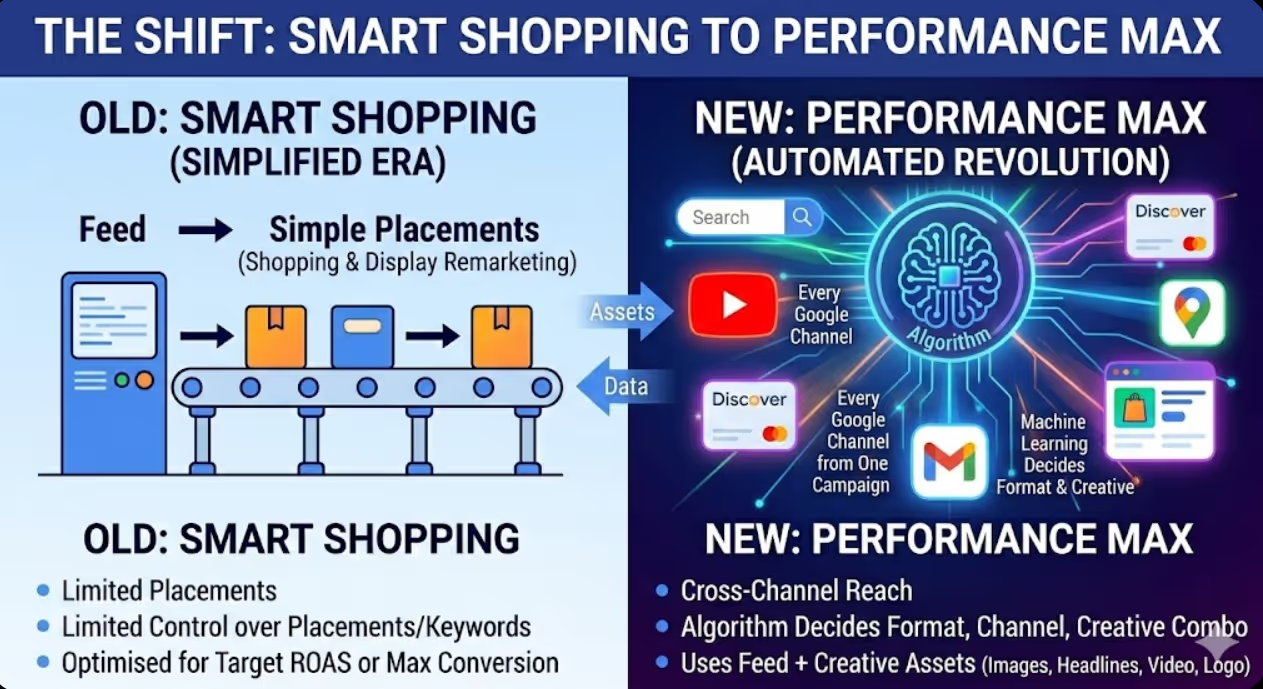
Smart Shopping was, by modern standards, a relatively simple campaign type. It pulled from your product feed, ran across Google Shopping and Display remarketing placements, and optimised toward a target ROAS or maximum conversion value goal. Advertisers had limited control over placements and keywords but understood broadly where their ads were appearing and how the budget was being allocated.
Performance Max is a different animal entirely. It is Google's most automated campaign type, designed to serve ads across every Google owned channel from a single campaign. Search, Shopping, Display, YouTube, Discover, Gmail, and Maps are all within scope. The algorithm decides not just who to show your ads to but which format, which channel, and which creative combination to use at any given moment.
For retailers, this shift has significant implications. The product feed that powered Smart Shopping remains central to Performance Max, but it now sits alongside a full suite of creative assets — images, headlines, descriptions, logos, and videos — that the campaign can draw on for non-Shopping placements. If those assets are not provided or are provided at low quality, the campaign compensates by defaulting heavily toward Shopping placements, which limits reach and often inflates CPCs in competitive categories.
Google's official transition documentation confirmed that all Smart Shopping campaigns were automatically migrated to Performance Max in 2022. The automated migration carried over bidding strategies, budget settings, and product feed connections, but it did not generate new creative assets or restructure campaign organisation. Accounts that relied on that automatic migration without subsequent optimisation were essentially running Performance Max campaigns with Smart Shopping era inputs — and wondering why the results had changed.
The Case for Performance Max When It Works Well
Before getting into the mechanics of migration strategy, it is worth acknowledging what Performance Max does well for retailers when the conditions are right.
The channel reach is genuinely broader than anything Smart Shopping could deliver. A retailer whose Smart Shopping campaign was limited to Shopping and Display placements can now reach potential customers watching YouTube, browsing Gmail, navigating Google Maps, and reading content across the Display Network — all within a single campaign structure. For brands that have historically struggled to justify video or display spend as separate budget lines, Performance Max offers a way to extend reach across these channels without building and managing separate campaigns.
The machine learning is also more sophisticated than what powered Smart Shopping. When a Performance Max campaign has sufficient conversion data, strong creative assets, and well structured audience signals, the algorithm's ability to identify and convert high value users across multiple touchpoints is genuinely impressive. The accounts seeing the best Performance Max results in Australia tend to be those with clean conversion tracking, a conversion history of at least several hundred events per month, and creative assets that give the algorithm real variety to test.
The challenge is that these conditions do not exist in every account, and Performance Max is considerably less forgiving than Smart Shopping when foundational elements are missing.
Migration Strategy: What to Do Before You Launch
The accounts that performed best through the Smart Shopping to Performance Max transition shared a common approach. They treated migration as a rebuilding exercise rather than a copy and paste job. Here is what that looks like in practice.
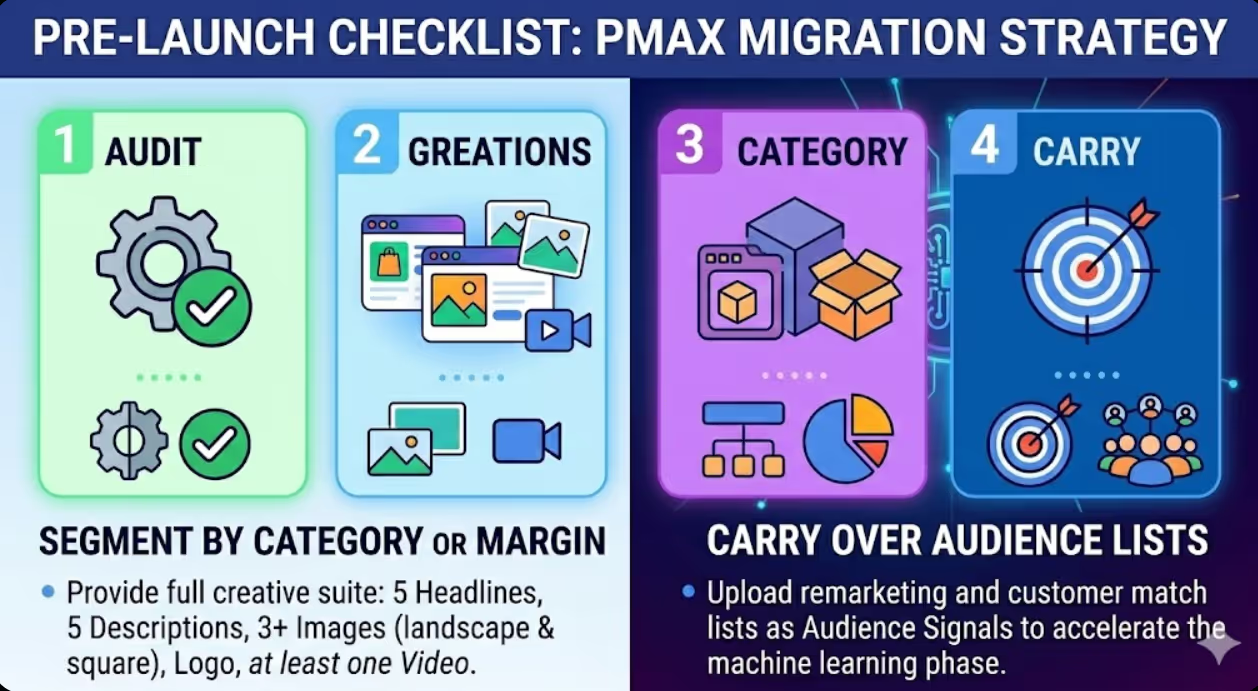
Audit your conversion tracking first. Performance Max optimises toward whatever conversion actions are set as primary in your account. If you have smaller conversion events such as page views or add to cart events marked as primary alongside purchase events, the campaign will optimise toward the easier, higher volume actions rather than the revenue events that actually matter. Before migration, clean up your conversion action settings so the campaign is optimising exclusively toward purchase or revenue conversion events.
Build your asset groups with intention. Each asset group in a Performance Max campaign functions similarly to an ad group, grouping a set of creative assets with a product feed listing group. The quality of those assets determines how broadly and effectively the campaign can reach users on non-Shopping placements. For each asset group you should be providing at minimum: five headlines, five descriptions, a minimum of three images in both landscape and square formats, your logo, and ideally at least one video. If you do not provide a video, Google will automatically generate one from your image assets, and the results are almost never what you would want representing your brand.
Segment by category or margin, not just by brand. One of the most common structural mistakes in Performance Max for retailers is running a single campaign across an entire product catalogue. Products with very different margins, different purchase cycles, and different competitive dynamics will all be optimised toward the same ROAS target, which means the algorithm will gravitate toward the products it can convert most easily rather than the products you most want to sell. Segmenting into multiple campaigns by product category, margin tier, or strategic priority gives you meaningful control over budget allocation and performance targets.
Carry over your audience lists. Audience signals in Performance Max tell the algorithm where to start looking for likely converters. Your remarketing lists, customer match lists, and similar audiences from your previous campaigns are among the most valuable signals you can provide. Upload these into the audience signals section of each asset group at launch. The algorithm will expand beyond them, but starting with strong signals dramatically accelerates the learning phase.
What Performance Max Does Not Tell You
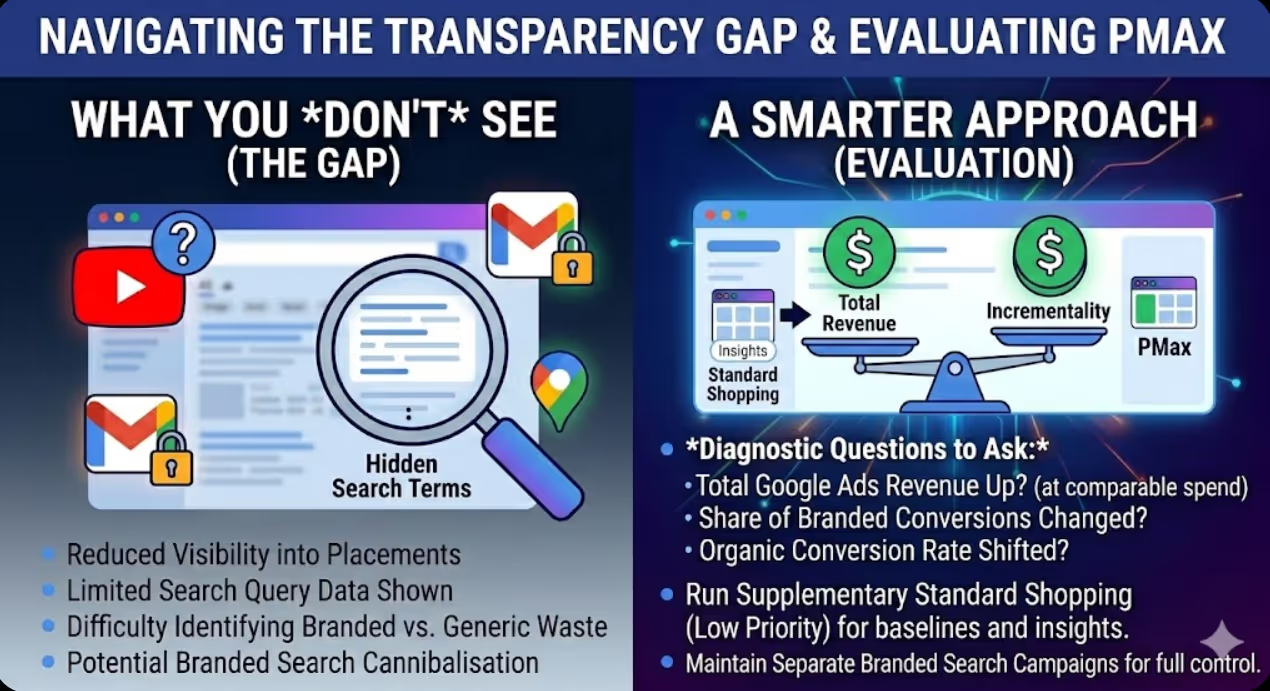
Transparency is the most consistent criticism levelled at Performance Max by performance marketers, and it is a fair one. Compared to Smart Shopping, the visibility into where budget is going, which placements are converting, and which search terms are triggering Shopping ads is significantly reduced.
Search terms reporting, for instance, shows only a fraction of the actual queries driving traffic and conversions. This matters for retailers because branded search terms, competitor terms, and generic category terms all trigger very different purchase intent levels and deserve to be managed differently. Without visibility into which terms are driving your Shopping placements, it is difficult to identify waste or capitalise on high performing query patterns.
The practical response to this transparency gap is to run a supplementary Standard Shopping campaign alongside your Performance Max campaign, with a lower priority setting. This gives you a cleaner read on Shopping specific performance and provides a safety net for branded and high intent queries that you want more direct control over. It also gives you a comparison baseline for evaluating whether Performance Max is genuinely delivering incremental value across its broader channel mix.
Brand campaigns in Search should also run separately. Performance Max will capture branded search traffic if left unconstrained, which inflates its reported conversion numbers with traffic that would have converted through organic search or a dedicated brand campaign regardless. Brand exclusions within Performance Max or a separately managed brand Search campaign are both viable approaches to keeping this traffic accounted for correctly.
Feeding the Algorithm: The Role of Your Product Feed
Your Google Merchant Centre feed is the engine of any retail Performance Max campaign, and its quality has a direct and measurable impact on performance. Retailers who invested in Smart Shopping optimisation without a corresponding focus on feed quality will find that the same gaps that limited Shopping performance then will limit Performance Max performance now, across more channels and at greater cost.
Feed optimisation for Performance Max follows the same principles as Smart Shopping with added emphasis on the attributes that support non-Shopping placements. Product titles should lead with the most important descriptive keywords, not brand names. Descriptions should be substantive and keyword rich rather than pulled wholesale from internal product descriptions written for a different purpose. Images should meet Google's quality standards and present the product clearly against a clean background.
Custom labels are particularly useful for retailers running segmented Performance Max campaigns. Assigning custom label values based on margin, stock level, sale status, or strategic priority allows you to filter product groups into specific asset groups and campaigns, ensuring your budget allocation reflects your actual commercial priorities rather than defaulting to whatever the algorithm finds easiest to convert.
Google Merchant Centre documentation on feed attributes provides the definitive reference for feed specifications, and any retailer running Performance Max should be treating feed quality as an ongoing programme of work rather than a single setup task.
Evaluating Performance: Are You Actually Better Off?
One of the genuinely difficult questions after migrating to Performance Max is whether the campaign is performing better or worse than Smart Shopping did. The answer is complicated by the fact that Performance Max reports conversions across a broader set of placements, which can make direct ROAS comparisons misleading.
A Performance Max campaign showing a higher ROAS than your former Smart Shopping campaign may simply be capturing conversions that would have occurred through other channels anyway, particularly branded search and organic. Incrementality matters, and evaluating it requires looking at total account performance across all campaigns rather than treating Performance Max metrics in isolation.
Useful diagnostic questions include: Has total revenue from Google Ads increased or decreased since migration at a comparable spend level? Has the share of conversions attributed to branded search changed significantly? Have organic conversion rates shifted in a way that suggests cannibalisation? These account level questions are more revealing than campaign level ROAS comparisons when evaluating the true impact of the transition.
For Australian retailers who made the migration and are not satisfied with current performance, the most productive response is usually to revisit asset quality, conversion tracking configuration, campaign segmentation, and audience signal completeness before adjusting bids or restructuring campaigns. In the majority of underperforming accounts, at least one of these foundational elements is the limiting factor.
FAQs
Can I still run Standard Shopping campaigns alongside Performance Max?Yes, and for most retailers it is worth doing. Running a Standard Shopping campaign at lower priority gives you a more transparent view of Shopping specific performance, provides a safety net for high intent and branded queries, and creates a useful comparison baseline for evaluating Performance Max's incremental contribution. Google has confirmed that Performance Max takes priority over Standard Shopping when both are eligible for the same query, so the Standard campaign will receive traffic when Performance Max does not bid on a particular query.
How long does the Performance Max learning phase take and what affects it?The learning phase typically runs for one to two weeks after a significant campaign change, though it can extend to four weeks for campaigns with lower conversion volume. The primary factor influencing learning phase duration is the rate at which the campaign accumulates conversion events. Campaigns with a target ROAS set too aggressively, a budget that is too restrictive relative to the target CPA, or insufficient conversion history going into launch will take significantly longer to exit the learning phase or may fail to do so entirely.
Should every retailer be using Performance Max or are there situations where other campaign types are more appropriate?Performance Max is the right primary campaign type for most retailers running product advertising on Google, but it is not a complete solution on its own. Retailers with strong branded search demand should manage brand terms separately in a dedicated Search campaign. Retailers with specific high margin or high priority products benefit from segmented Performance Max campaigns rather than a single broad campaign. And retailers in highly competitive categories should supplement Performance Max with Standard Shopping for greater transparency and control over their most valuable product lines.
Build a Migration Strategy That Actually Works
Moving from Smart Shopping to Performance Max is not a technical exercise. It is a strategic one. The retailers extracting the strongest results from Performance Max are those who approached the transition with a clear plan, strong creative assets, clean conversion data, and a willingness to manage the campaign actively rather than hand it entirely to automation.
Maven Marketing Co helps Australian retailers navigate Google Ads migrations, rebuild underperforming Performance Max campaigns, and build the kind of account structure that gives the algorithm the best possible chance of delivering results that matter.
Talk to the team at Maven Marketing Co →

Table of contents
read more blogs
How to Build a Brand Positioning Strategy That Sets Your Business Apart
Most businesses can explain what they sell. Far fewer can explain, in a sentence or two, why the right customer should choose them instead of another credible option. That gap is where brand positioning matters.A strong brand positioning strategy gives your business a clear place in the market and a clear place in the customer's mind. It helps your team decide who you are speaking to, what you want to be known for, which benefits deserve the most attention and how your marketing should sound and look across every channel.It is not a slogan exercise and it is not something reserved for large consumer brands. For an Australian service business, e-commerce brand, professional firm, or growing B2B company, positioning can make everyday decisions easier, from website copy and campaign messaging to pricing, sales conversations, and brand identity. The goal is not to look different for the sake of it. The goal is to be meaningfully different in a way the right customers understand and value.

The Role of Digital PR in Long Term SEO Growth
Building a solid online presence is basically more than just posting content now and then or sprinkling keywords across your website. Search engines such as Google tend to point users toward businesses that feel trustworthy, useful, and backed up by others online, even if it’s not always obvious at first. When a company puts together a well-thought-out digital PR strategy, it can bring in solid media mentions, earning high-quality backlinks and stronger brand awareness, all of which feed long-term SEO progress. Rather than obsessing solely over rankings, digital PR helps you build credibility plus authority, so your site looks more appealing to search engines and also to real people who might become customers. In this guide, we’ll walk through how digital PR supports SEO, what makes it such a key part of modern marketing, and the most effective approaches for sustainable growth in search results.
Is Google Ads Better Than SEO for My Business
One of the biggest questions business owners ask when they are planning online growth is whether they should invest in Google Ads or SEO. Both are strong marketing plays that help your company show up in Google search results, but they do things in separate lanes. Google Ads gives quicker visibility and can bring in leads fast, whereas SEO more or less focuses on slow, steady organic traffic that tends to grow the longer you keep building it. Picking the right direction depends on what you want to achieve, how much money you can spend, how crowded the market is, and how quickly you need results, like sooner rather than later. The good news is you don’t always have to choose one or the other; it’s not exactly a black-and-white situation. If you take time to understand the strongest points of both, you can put together a more sensible digital marketing plan that supports consistent expansion. In this guide, we’ll compare Google Ads vs SEO, explain the main differences, and help you figure out what option makes the most sense for your business.


