.svg)


%201.svg)

PPC Competitor Conquest Strategy: Bidding on Australian Competitor Keywords
Bidding on a competitor's brand name in Google Ads places your ad in front of a searcher who is actively researching that competitor but has not yet committed to them, which is one of the highest-intent audiences available in paid search outside of direct brand searches for your own business. The searcher is already in the category, already aware that they have a problem to solve, and actively evaluating options. They are not in the early research phase. They are in the shortlisting phase, and an ad that appears at this moment with a compelling alternative message has a genuine opportunity to divert a qualified prospect from a competitor to the advertiser. This is the commercial logic behind competitor conquest campaigns, and it is why they feature prominently in the PPC strategies of the most aggressive and commercially sophisticated brands in competitive Australian markets. The legal and ethical dimensions of competitor bidding in Australia require careful attention, however. Bidding on a competitor's brand name as a keyword is generally permitted, but using the competitor's trademark in the ad copy itself is not, and the line between the two is where most conquest campaigns either fail for legal reasons or underperform because the ad cannot use the most direct comparison language the advertiser would want. This article covers the strategy, configuration, copywriting, and compliance requirements for running an effective competitor conquest campaign in the Australian market.
Google Ads Extensions Mastery: Using All 13 Extension Types Effectively
Google Ads extensions, now officially referred to as assets in the Google Ads interface, are the most underused lever in most Australian Google Ads accounts. Every extension type that is correctly configured and eligible to serve increases the physical size of the ad in the search results, provides additional reasons for a searcher to click, and contributes to the Quality Score that affects the CPC the account pays in each auction. Yet most Australian accounts deploy only the most obvious extension types, leaving sitelinks and callouts in place from the original setup and ignoring the other eleven types that could be adding incremental value to every eligible impression. The extensions that are missing are often the ones with the most commercially targeted impact: promotion extensions that surface an active offer at the moment of search, price extensions that give searchers the pricing context they need before clicking, structured snippets that build confidence in the range and depth of the offering, and lead form extensions that allow conversion requiring minimal friction without a landing page visit. Understanding all thirteen extension types, what they do, when they are appropriate, and how to configure them correctly is one of the account optimisation with the highest return activities available. This article covers every extension type available to Australian Google Ads advertisers in 2026, with configuration guidance and commercial context for each.
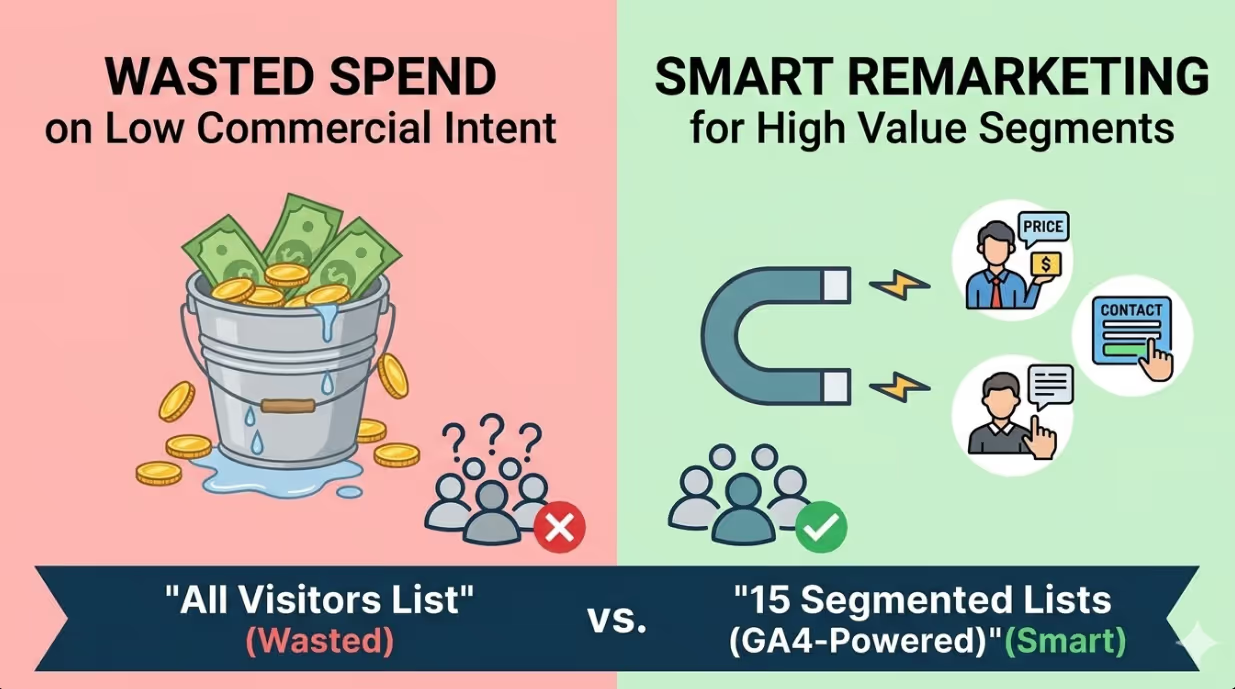
PPC Remarketing Audience Segmentation: 15 Lists Every Australian Business Needs
Most Australian businesses running Google Ads have remarketing set up in the broadest possible configuration: a single list of all website visitors, retargeted with the same ads at the same bid, regardless of which pages they visited, how long they stayed, whether they were close to converting, or how long ago their visit occurred. This is not a remarketing strategy. It is a generic spray of impressions across an audience that ranges from highly motivated buyers who visited the pricing page twice last week, to completely cold researchers who bounced after ten seconds three months ago, with the same message and the same commercial urgency applied to both. Effective PPC remarketing for Australian businesses requires audience segmentation that distinguishes between these cases and applies the appropriate bid level, message, and offer to each. The fifteen audience lists in this article represent the segmentation structure that covers the most commercially valuable distinctions in an Australian business's website audience, from the visitors with the strongest intent who are ready to act to the audiences that need a different message to return and convert. Each list is buildable in Google Analytics 4 and importable to Google Ads, and the combination of all fifteen provides a remarketing architecture that substantially outperforms a single undifferentiated list covering all visitors.

Call-Only Campaigns for Services: Phone Lead Generation Strategy
For many Australian service businesses, a phone call is more commercially valuable than a form submission. A caller has already committed to immediate, direct communication with the business, has typically made the decision to engage a provider rather than continuing to research options, and converts to a booked job or signed agreement at a significantly higher rate than a website visitor who fills out a contact form and waits for a response. Google Ads call-only campaigns are designed specifically for this conversion pathway. They are mobile search ads that display a phone number and a call button instead of a website link, so that when a searcher taps the ad they are connected immediately to the business rather than being directed to a landing page. For Australian trade services, professional services, healthcare providers, legal firms, real estate agents, and any service category where the sales process begins with a conversation, call-only campaigns deserve dedicated budget and careful management alongside or instead of standard text campaigns directed at website leads. This article covers the full setup, targeting, bidding, and tracking strategy for call-only campaigns in the Australian market in 2026.
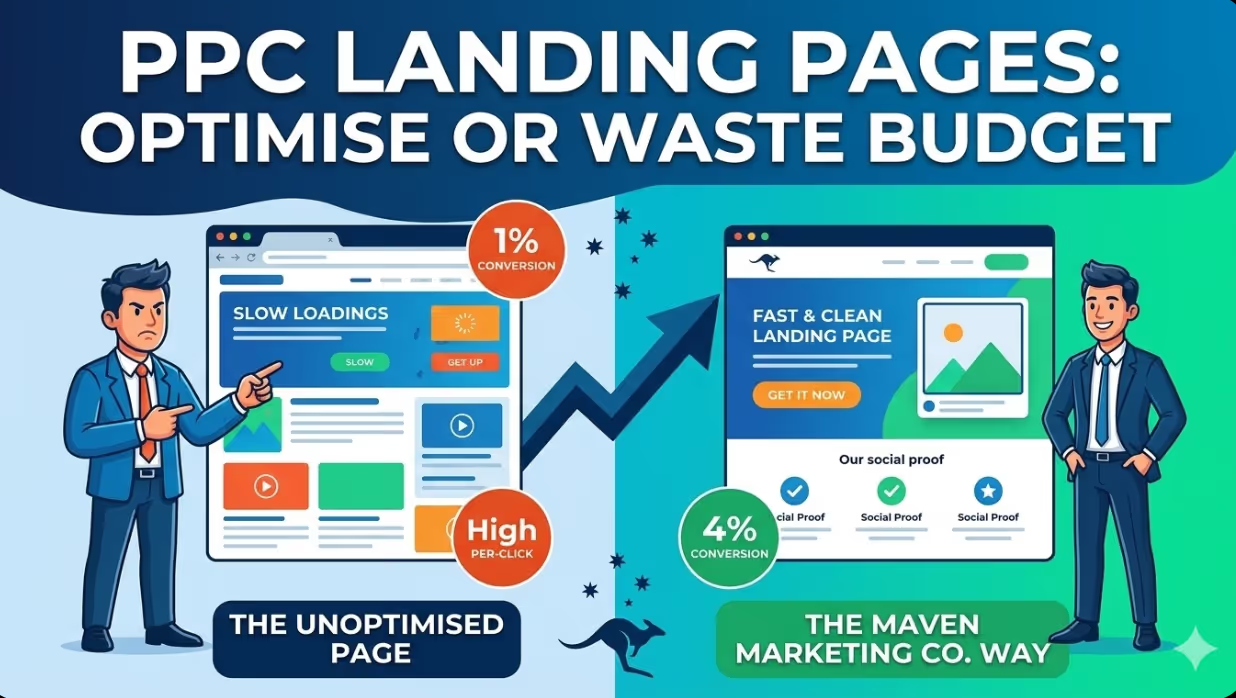
PPC Landing Page Requirements: What We Need from Clients for Conversion Success
The most common preventable source of wasted PPC budget in Australian Google Ads accounts is not poor keyword selection, incorrect bidding, or insufficient negative keyword management. It is sending paid traffic to landing pages that are structurally incapable of converting it. A Google Ads campaign managed with precision and expertise cannot overcome a landing page that loads in eight seconds, presents a generic homepage rather than a page specific to the ad's promise, has no visible phone number, requires visitors to navigate through three pages to find a contact form, or places its only call to action below the fold of content that most visitors will not scroll through. When Maven Marketing Co takes on a new PPC client, we conduct a landing page assessment before the first dollar of paid traffic is directed anywhere. The assessment identifies pages that are ready to receive paid traffic, pages that need targeted improvements before activation, and pages that require a landing page built specifically for the campaign to be created before the campaign can be expected to perform at the standard the client requires. This article explains what we look for in that assessment, why each element matters for conversion performance, and what Australian businesses should prepare before briefing a PPC agency on a new paid search campaign.

Google Ads Bid Strategy Selection: Matching Automation to Business Goals
The selection of a bid strategy in Google Ads is one of the most consequential decisions in paid search management, and one of the least systematically made by Australian PPC practitioners. Most accounts arrive at their current bid strategy through a combination of platform recommendations, historical precedent, and the path of least resistance rather than through a deliberate assessment of what the campaign's commercial goal requires and whether the available conversion data can support the level of automation being applied. The result is a common and costly mismatch: accounts running target ROAS strategies with insufficient conversion volume for the algorithm to model accurately, campaigns on maximise clicks strategies that have long since accumulated enough data to benefit from conversion optimisation, and Performance Max campaigns set to target CPA objectives when the actual commercial goal is to maximise profitable revenue rather than minimise cost per lead. Each of these mismatches costs money in a way that is difficult to see in the standard metrics because the campaign appears to be optimising, just not toward the right objective. This article provides the framework for matching bid strategy to commercial goal, conversion data availability, and campaign maturity across the full range of Google Ads bid strategies available to Australian advertisers in 2026.

Shopping Campaign Restructuring: Fixing Underperforming Product Ads
A Google Shopping campaign that is generating spend but not producing the revenue its budget should support is one of the most frustrating problems in ecommerce PPC management, because the surface metrics often look acceptable while the underlying structure is working against the account's commercial objectives. Impressions are steady, rates of clicks through look reasonable, and conversions are occurring, but the cost per sale is too high, the ROAS is below target, and the categories or products that should be driving revenue are being outbid by the ones that should not be receiving the budget at all. In most cases, the problem is not the campaign settings. It is the structure beneath them: a product feed that has not been optimised to give Google the product attribute quality it needs to match against the right queries, a campaign organisation that allocates budget uniformly across products with fundamentally different margins and conversion rates, and a bidding strategy that has been given either too little data or the wrong objective to produce results the business actually needs. Restructuring a Shopping campaign is not primarily a settings exercise. It is a systematic diagnostic process that identifies the specific structural, feed, and bidding problems preventing the campaign from performing and addresses them in the sequence that produces the fastest and most durable improvement. This article covers that process in the detail required for Australian ecommerce businesses to execute it effectively.

Google Ads Account Structure: Campaign Architecture for Different Business Models
The architecture of a Google Ads account determines the quality of the data it produces, the precision with which the bidding algorithm can optimise, and the ease with which a manager can identify performance problems and act on them. An account where campaigns have been added incrementally without a governing structural logic, where ad groups contain mixed intent keywords, where budgets are shared in ways that allow poorly performing campaigns to absorb spend from stronger ones, and where conversion tracking is configured too broadly to produce clean attribution data is not just inefficient. It is actively misleading, generating performance metrics that look adequate in aggregate but obscure the specific sources of value and waste that a thoroughly structured account makes immediately visible. Google Ads account structure is not a discipline that suits all situations. The right architecture for an Australian ecommerce business selling hundreds of products across multiple categories is fundamentally different from the right architecture for a local service business generating enquiries across two or three service lines. Understanding the structural principles that apply to each major business model type, and applying them before adding campaigns rather than trying to restructure an account after the fact, is among the activities with the greatest leverage in PPC management. This article covers the campaign architecture principles and recommended structures for four distinct Australian business model types.
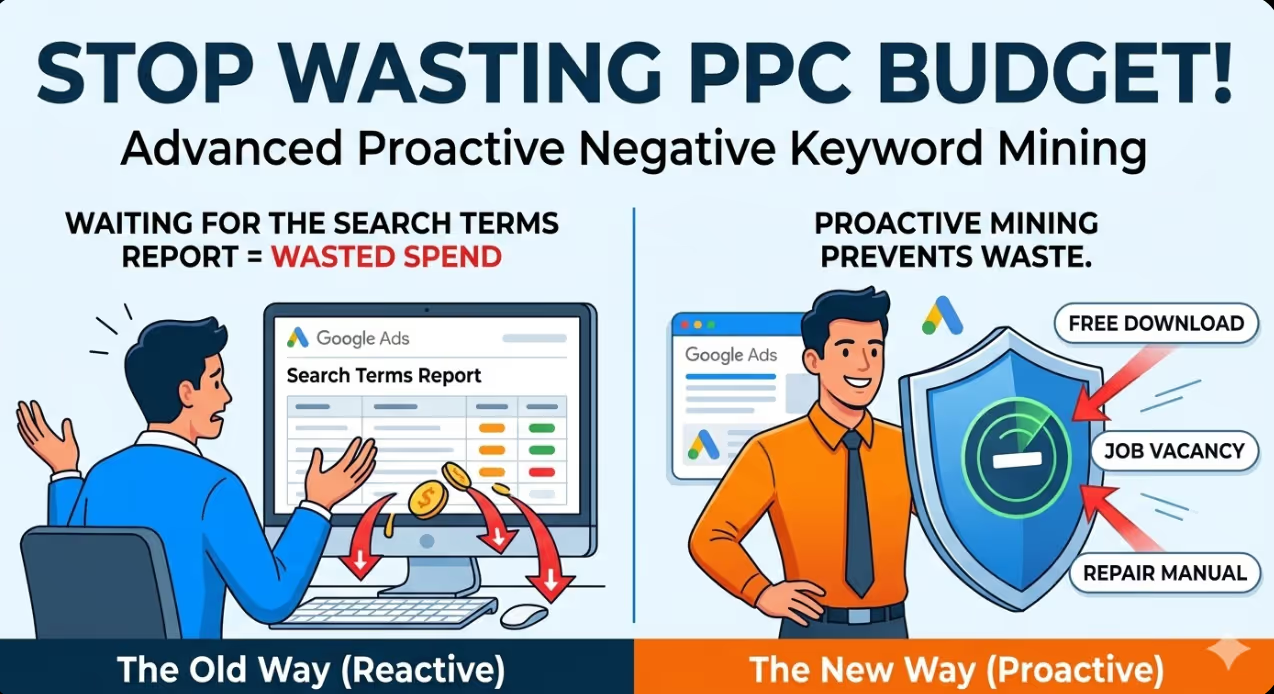
Google Ads Negative Keyword Mining: Advanced Techniques Beyond Search Terms Report
Most Australian PPC managers who actively manage negative keywords do so reactively: they open the Search Terms Report after spend has already been committed, identify queries that generated clicks without converting, and add them as negatives to prevent future waste. This reactive approach captures obvious problems after the damage is done, but it leaves the most significant sources of wasted spend untouched, because many of the queries that will drain budget from a campaign never appear prominently in the Search Terms Report until they have already accumulated meaningful spend. A proactive negative keyword strategy goes substantially further, mining for irrelevant query patterns before they enter the account through competitor analysis, industry terminology research, keyword expansion modelling, and a systematic analysis of the search intent landscape around every core keyword the account targets. The difference in wasted spend reduction between a reactive and a proactive approach to negative keyword management is significant in absolute dollar terms for most Australian PPC accounts, and the improvement in campaign efficiency that follows from eliminating irrelevant traffic compounds over time as the account's conversion signals become cleaner and the bidding algorithm is no longer optimising toward queries that were never commercially relevant. This article covers the full range of advanced negative keyword mining techniques that extend well beyond the Search Terms Report.
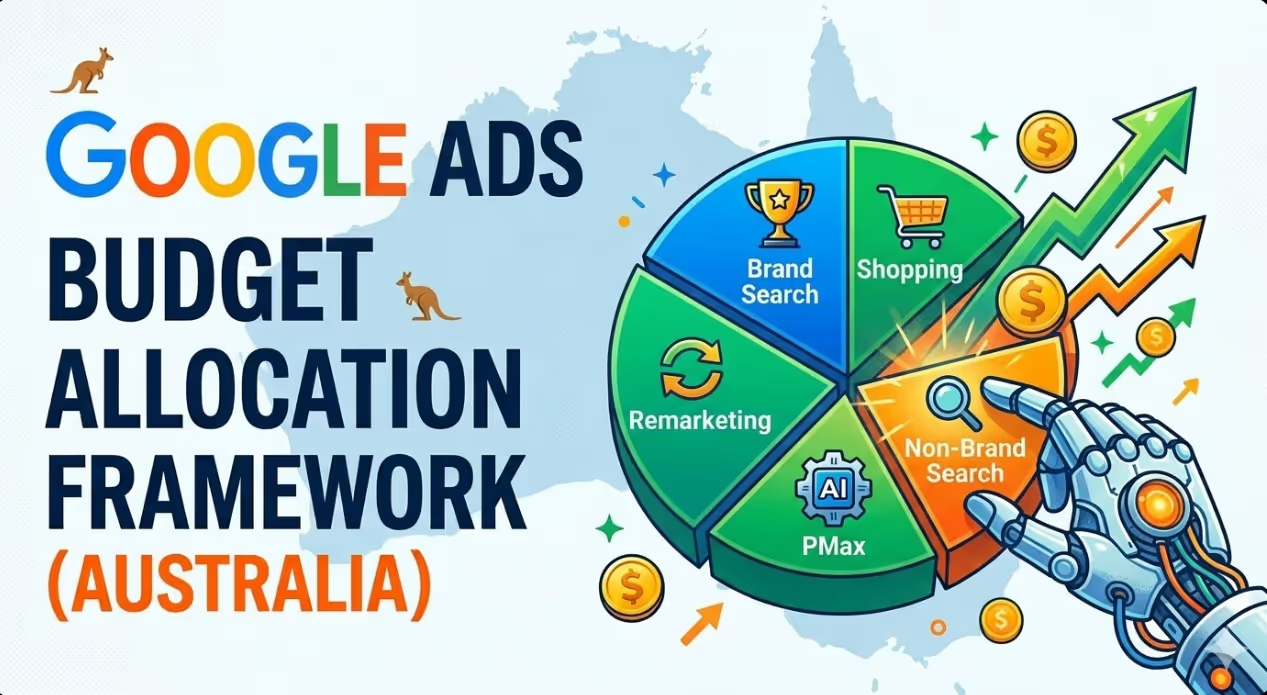
PPC Budget Allocation Framework: Distributing Spend Across Campaign Types
The question of how to distribute a PPC budget across campaign types is one that most Australian businesses treat as a secondary concern, something to be addressed once the campaigns are running and the data starts to accumulate. In practice, the initial budget allocation is among the most consequential decisions in the entire paid search programme, because it determines which campaign types receive enough budget to gather meaningful data, which are starved of the impression volume needed for the algorithm to optimise, and whether the overall account structure is oriented toward the commercial objectives it is supposed to serve. A Google Ads account where the budget is distributed based on intuition, convention, or the last recommendation made by an account manager rather than on a structured assessment of the funnel stage, conversion intent, and margin profile of each campaign type will consistently underperform one where the allocation reflects a deliberate strategic framework. This article provides that framework for Australian businesses managing PPC investment across Search, Shopping, Display, Performance Max, and remarketing campaigns, explaining the logic behind each allocation decision and the signals that should prompt a rebalance as the account matures.

Facebook Pixel Advanced Matching: Improving Attribution Accuracy
Attribution in Meta advertising has never been straightforward, but the combination of iOS privacy changes, browser restrictions on third party cookies, and growing consumer awareness around data tracking has made it considerably more complicated in recent years. Australian advertisers running Facebook and Instagram campaigns are seeing gaps in their conversion data that were not there before, and those gaps are causing real problems. Campaigns that appear to be underperforming may be performing well with conversions simply going unreported. Budget decisions are being made on incomplete data. And optimisation signals fed back to Meta's algorithm are weaker than they should be, which limits how effectively the system can find and convert your most valuable customers. Facebook Pixel Advanced Matching is one of the most practical tools available for closing those attribution gaps without requiring a major technical overhaul. This article explains how it works, why it matters for Australian advertisers specifically, and how to implement it in a way that genuinely improves your campaign data quality.
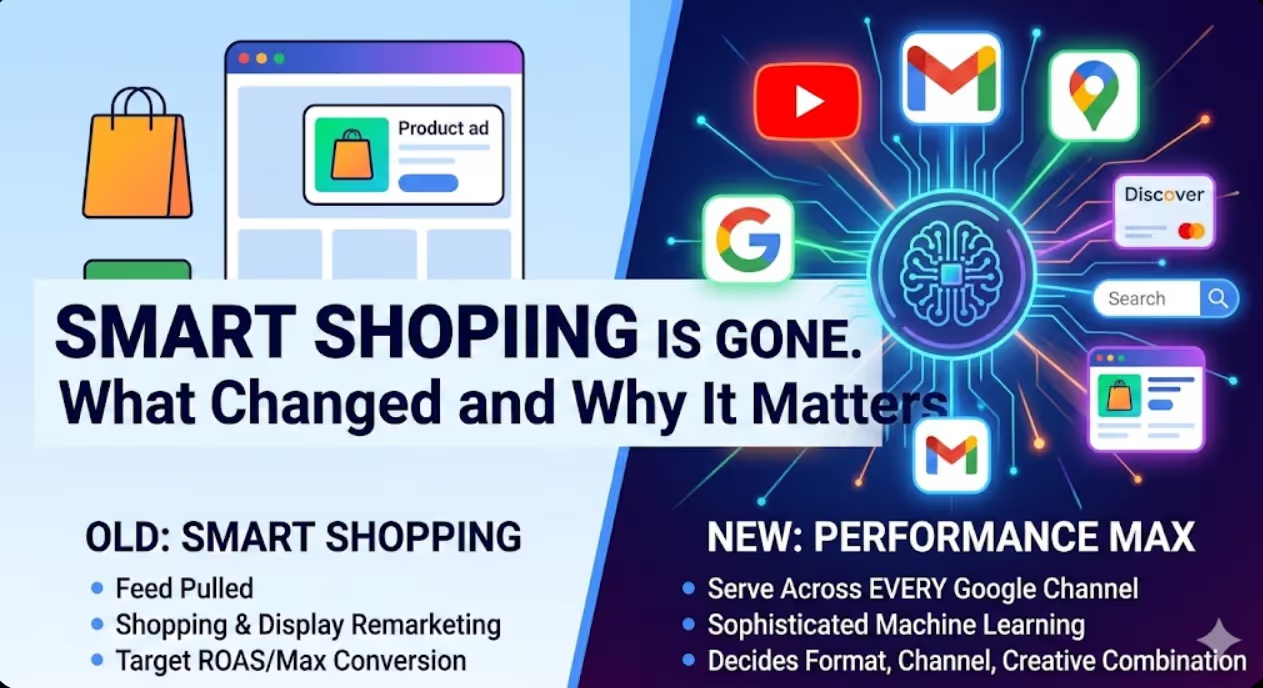
Smart Shopping vs Performance Max: Migration Strategy for Retailers
Smart Shopping campaigns were a comfortable fixture in the Google Ads accounts of Australian retailers for years, and then Google retired them. Performance Max arrived as the replacement and brought with it a fundamentally different way of running product advertising, one that gave Google's machine learning far more control and advertisers far less visibility into where their budget was actually going. For retailers who migrated early or were pushed across by Google's automated migration, the experience was mixed. Some saw strong results almost immediately, others watched their ROAS drop and struggled to understand why. The difference between those two outcomes almost always came down to how the migration was handled, what assets were provided, and how much conversion data the account had going in. This article covers what actually changed between Smart Shopping and Performance Max, the migration considerations that matter most for Australian retailers, and how to set up a Performance Max campaign that earns its budget rather than simply spending it.

Discovery Campaigns Deep Dive: Feed-Based Advertising Strategy
Australian businesses seeking advertising placement beyond traditional search results face opportunities through Google Discovery Campaigns that deliver visually rich ads across YouTube Home Feed, Gmail Promotions tab, and Google Discover feed reaching users during browsing and content consumption rather than active search sessions. Discovery Campaigns operate fundamentally differently from search advertising using automated creative optimisation testing multiple image and headline combinations, feed-based placement appearing native to platform experiences, and audience targeting based on interests and behaviours rather than keyword intent that search campaigns employ. However, Discovery's automated nature provides less control than search campaigns, performance measurement differs substantially from search metrics, and creative quality directly determines campaign success more than any other Google Ads format because visual appeal drives engagement in discovery environments. This comprehensive guide reveals how Maven Marketing Co. helps Australian businesses implement Discovery Campaigns through strategic audience targeting, compelling creative development, systematic testing methodologies, and performance optimisation ensuring feed-based advertising generates qualified traffic and conversions rather than vanity impressions from poorly targeted beautiful ads that users scroll past without engaging.
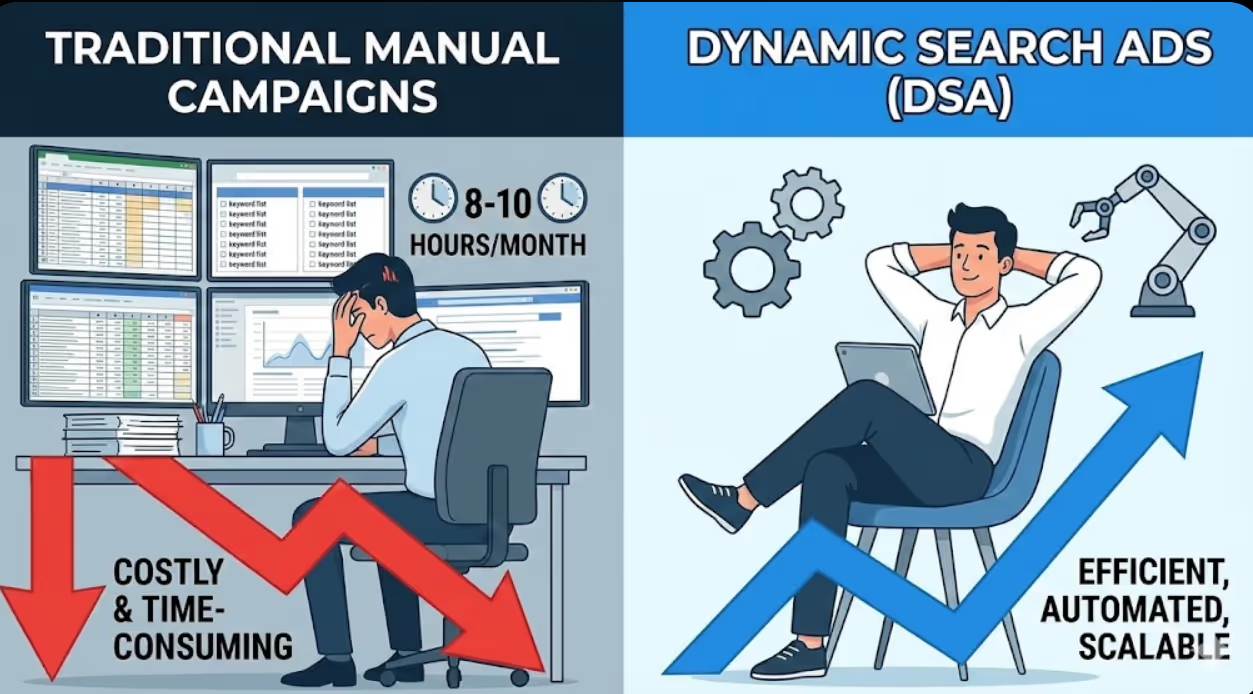
Dynamic Search Ads Evolution: AI-Generated Campaigns for Australian Services
Australian service businesses investing substantial time researching keywords, writing ad copy variations, and managing keyword bidding strategies face an automation alternative where Dynamic Search Ads leverage Google's artificial intelligence to automatically generate ad headlines, match relevant searches, and determine landing pages based on website content rather than requiring manual keyword lists and ad creation. DSAs can discover untapped search queries that keyword research misses, adapt instantly to website content changes without manual campaign updates, and reduce management overhead freeing resources for strategic initiatives. However, automation potentially sacrifices granular control, brand messaging consistency, and budget efficiency that manual campaigns provide through precise targeting. The gap between traditional keyword-based campaign management requiring continuous optimisation and Dynamic Search Ads promises strategic decisions where businesses must balance automation advantages against control trade-offs. This comprehensive guide reveals how Maven Marketing Co. helps Australian service businesses evaluate Dynamic Search Ads through systematic analysis of use cases, implementation strategies combining DSAs with traditional campaigns for optimal coverage, negative keyword strategies preventing wasteful traffic, and performance monitoring ensuring AI-generated campaigns deliver acceptable return on ad spend.

Google Ads Portfolio Bid Strategies: Multi-Campaign Optimisation
Portfolio bid strategies enable applying single automated bidding strategy across multiple campaigns, allowing Google's machine learning algorithms to optimise bids holistically rather than independently per campaign. This approach delivers superior performance for advertisers managing multiple campaigns targeting similar objectives by sharing conversion data across campaigns, enabling more sophisticated optimisation, balancing performance across portfolio, and simplifying management through centralised strategy control. Understanding when portfolio strategies outperform campaign-level bidding, how to group campaigns strategically, setting appropriate performance targets, and monitoring portfolio health ensures automated bidding delivers maximum efficiency across entire account structure.

In-Market Audiences 2026: Behavioural Targeting in Privacy-First Era
Third-party cookie deprecation and privacy regulations transformed audience targeting from identifier-based tracking to privacy-safe behavioural signals and machine learning. In-market audiences in 2026 leverage aggregated search patterns, anonymised browsing behaviour, first-party data, and contextual signals to identify purchase-ready prospects without individual tracking. Understanding how modern in-market audiences function, implementing privacy-compliant targeting strategies, combining multiple signal sources, optimising for signal quality, and measuring effectiveness in privacy-first environments enables effective audience targeting maintaining performance whilst respecting user privacy and regulatory requirements.

Customer Match Campaigns: First-Party Data Activation in Google Ads
Customer Match enables uploading first-party customer data including email addresses, phone numbers, and physical addresses into Google Ads for precision audience targeting across Search, Shopping, Display, YouTube, and Discovery campaigns. This powerful capability transforms existing customer relationships and CRM data into targetable audiences, enabling personalised messaging for existing customers, exclusion strategies preventing wasted spend, lookalike audience expansion reaching similar prospects, and lifecycle-based targeting matching offers to customer journey stages. Understanding data requirements, implementing strategic segmentation, optimising bidding approaches, maintaining privacy compliance, and measuring incremental impact unlocks substantial value from owned customer data.
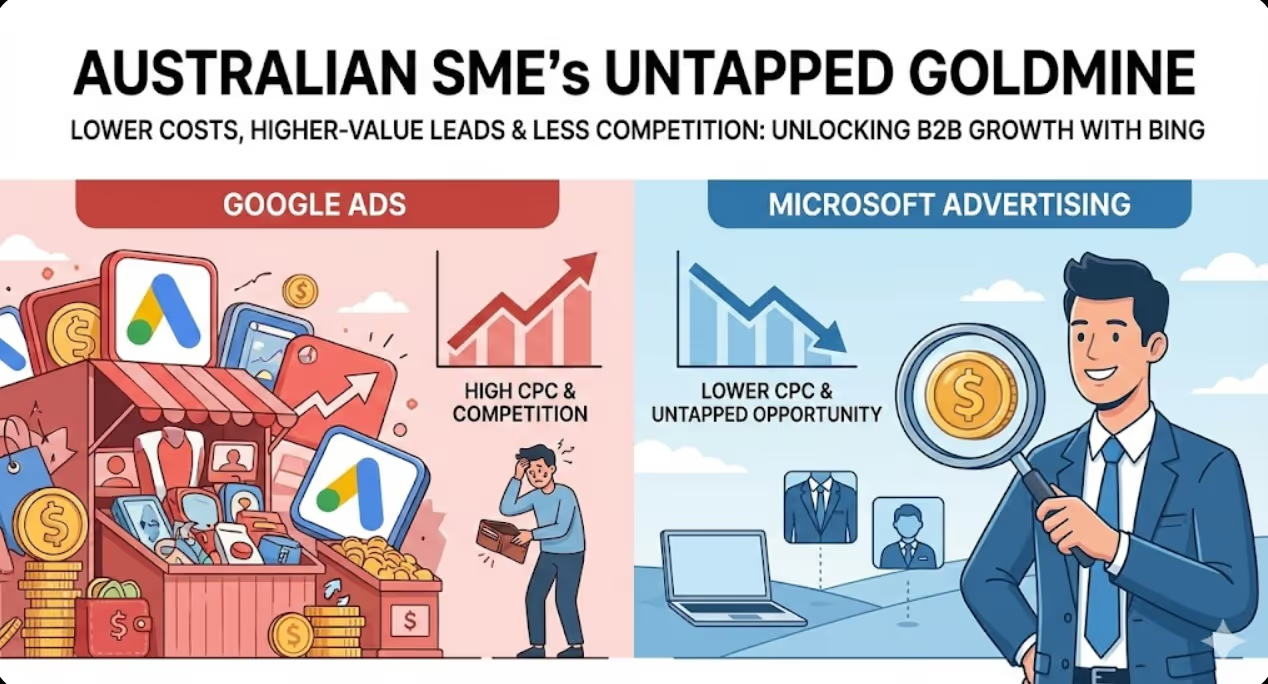
Microsoft Advertising Strategy: Bing's Untapped Opportunity for Australian SMEs
Most Australian SMEs focus exclusively on Google Ads, overlooking Microsoft Advertising's substantial opportunity despite Bing powering 15-20% of Australian search traffic. Lower competition drives 30-40% cheaper clicks whilst reaching older, higher-income demographics underserved by Google-focused strategies. LinkedIn profile targeting enables B2B precision impossible on Google, whilst seamless campaign imports allow testing Microsoft Advertising with minimal setup effort. Understanding Bing's unique audience, implementing platform-specific optimisations, leveraging Microsoft's ecosystem integration, and strategically allocating budgets across both platforms creates comprehensive search presence capturing opportunities competitors miss through Google-only approaches.
Google Ads Data-Driven Attribution: Moving Beyond Last-Click
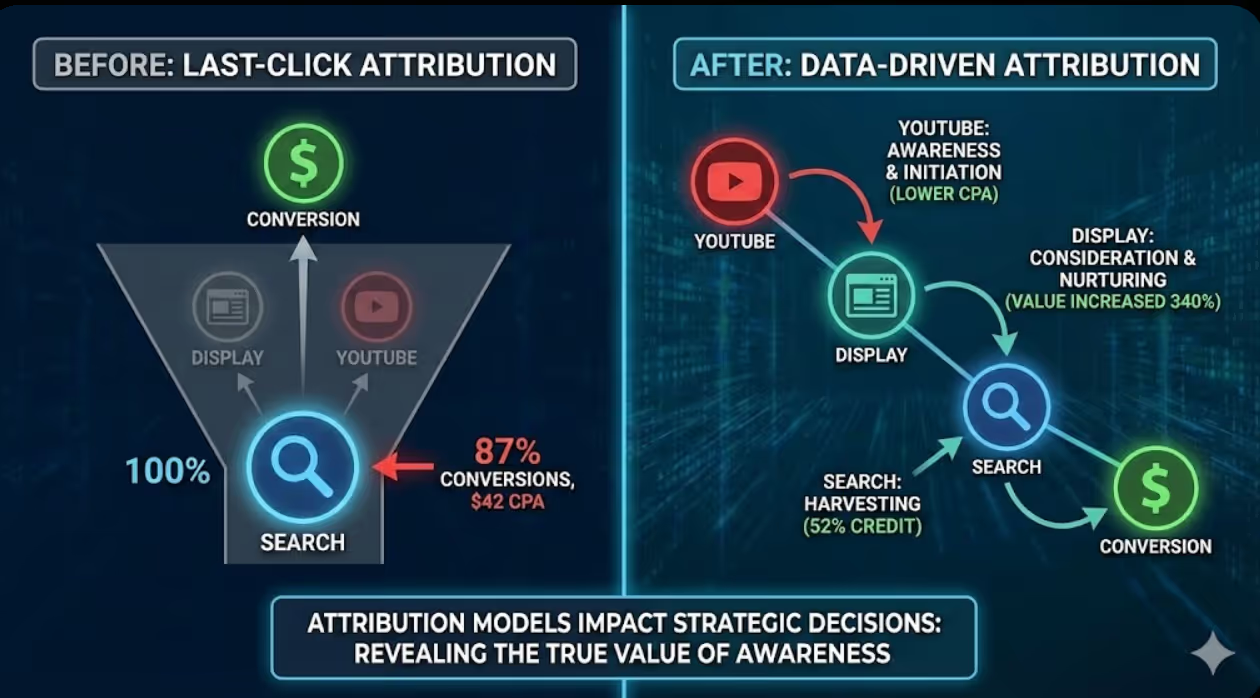
Last-click attribution credits only the final touchpoint before conversion, ignoring all earlier interactions that influenced the customer journey. This oversimplified approach misrepresents campaign performance, undervalues awareness and consideration channels, and leads to misguided budget allocation decisions. Google Ads data-driven attribution uses machine learning to analyse actual conversion paths, distributing credit across touchpoints based on their genuine contribution to conversions. Understanding attribution models, implementing data-driven attribution, interpreting multi-touch insights, and optimising campaigns based on accurate credit distribution transforms advertising effectiveness whilst preventing systematic underinvestment in high-value awareness channels.
.avif)
Programmatic Advertising Basics: Automated Media Buying for SMEs
Australian small and medium enterprises watching competitors deploy programmatic advertising campaigns often assume that automated media buying requires enterprise budgets, technical expertise, and dedicated trading desk relationships that SME resources cannot support. This assumption costs opportunity because modern programmatic advertising platforms have democratised access to sophisticated audience targeting, real time optimisation, and cross platform reach that previously required six figure minimum spending commitments and specialist agency relationships. Strategic programmatic deployment enables Australian SMEs to compete effectively for customer attention across the open web, reaching precisely defined audiences with relevant messages at scale that manual media buying approaches cannot match for efficiency or targeting precision. Yet most Australian SMEs either avoid programmatic entirely due to perceived complexity or deploy it ineffectively by treating programmatic platforms as simple extensions of social media advertising without understanding the distinctive strategic considerations that programmatic media buying requires. This comprehensive guide reveals how Australian SMEs can evaluate programmatic advertising fit for their businesses, understand how programmatic technology actually works, navigate platform selection, implement campaigns effectively, and measure results that justify continued investment in automated media buying.
.avif)
Google Ads for Lead Generation: Optimizing for Phone Calls and Form Fills
Australian service businesses waste thousands monthly generating website traffic that never converts to qualified leads, celebrating low cost-per-click whilst actual cost-per-lead reaches unsustainable levels through poor conversion optimization. The gap between click and lead represents profit difference between thriving agencies, tradies, and consultancies versus those struggling with advertising ROI that doesn't justify continued investment. Melbourne legal firm generated 4,200 monthly clicks at $8.40 CPC ($35,280 spend) producing only 87 qualified leads ($405 cost per lead)—economics making Google Ads seem unprofitable until implementing call tracking, form optimization, and landing page improvements reducing CPL to $89 whilst maintaining lead volume through conversion rate optimization. This comprehensive guide reveals how Australian lead generation businesses should optimize Google Ads holistically, from call-optimized campaigns and mobile click-to-call extensions through multi-step forms reducing friction, landing page conversion optimization, and lead qualification frameworks that fill sales pipelines with prospects actually worth pursuing rather than tire-kickers consuming follow-up time without revenue potential.
.avif)
Quality Score Optimization: Lowering Costs While Improving Ad Position
Australian businesses overpay for Google Ads by 50-300% through neglecting Quality Score—Google's 1-10 rating determining both ad position and cost-per-click through algorithmic assessment of ad relevance, landing page experience, and expected click-through rate. A campaign with Quality Score of 3 pays triple the CPC of equivalent Quality Score 10 campaign for identical ad position, transforming $15 clicks into $5 clicks purely through relevance optimization without bidding changes. Melbourne retailer improved Quality Score from average 4/10 to 8/10 across 340 keywords, reducing average CPC from $8.40 to $3.20 (62% decrease) whilst improving average ad position from 3.2 to 1.8—simultaneously lowering costs and increasing visibility through systematic relevance improvements. Yet 67% of Australian SMEs can't define Quality Score or explain its cost impact, blindly accepting inflated CPCs that relevance optimization would halve. This comprehensive guide reveals how Australian businesses should optimize Quality Score strategically, from keyword-ad-landing page alignment and CTR improvement through landing page speed optimization and account structure refinement that compound savings whilst improving campaign performance systematically.
.avif)
Conversion Tracking Setup: Measuring True Google Ads ROI
Australian businesses waste $180 million annually optimizing Google Ads campaigns toward proxy metrics—clicks, impressions, and CTR—whilst actual business outcomes including leads, sales, and revenue remain unmeasured, creating fundamental disconnect between advertising performance and commercial success. Without proper conversion tracking, you're flying blind, celebrating cost-per-click reductions whilst lead volume declines, or pausing profitable campaigns showing poor vanity metrics but generating revenue consistently. Melbourne retailer spent nine months optimizing Google Ads for maximum clicks achieving 4,200 monthly clicks at $2.80 CPC—celebrating efficiency gains until implementing conversion tracking revealed only 47 monthly sales from those clicks at $252 cost per acquisition, far exceeding $85 target making entire campaign unprofitable despite "excellent" CTR and low CPC. This comprehensive guide reveals how Australian businesses should implement conversion tracking properly, from Google Ads conversion actions and enhanced conversions through GA4 integration, offline conversion import, and value-based bidding that optimize toward actual business outcomes rather than meaningless engagement metrics.

Ad Copy Testing Framework: Writing PPC Ads That Outperform Competitors
Australian businesses waste 40-60% of PPC potential through untested ad copy that fails to resonate with audiences, relying on gut instinct and competitor mimicry rather than systematic testing revealing what actually drives clicks and conversions. The difference between profitable and mediocre Google Ads campaigns often isn't targeting, bidding, or budget—it's ad copy quality, with winning variations outperforming losers by 200-400% CTR and 150-300% conversion rate through strategic messaging that addresses specific pain points, objections, and decision triggers. Melbourne software company Xero increased conversion rate 340% through systematic ad copy testing, discovering that "Free 30-Day Trial—No Credit Card Required" outperformed "Try Xero Free" by eliminating commitment friction prospects didn't realize they had. This comprehensive guide reveals how Australian businesses should implement structured ad copy testing frameworks, from hypothesis development and variation creation through statistical validation and iterative optimization that compounds performance improvements achieving market-dominating efficiency.
.avif)
Negative Keywords Strategy: Reducing Wasted Ad Spend in Google Ads
Australian businesses waste an estimated $340 million annually on irrelevant Google Ads clicks from poorly managed negative keyword lists, paying for traffic that will never convert whilst depleting budgets that could capture qualified leads. A Brisbane law firm discovered they'd spent $23,000 over six months on "free legal advice" searches despite offering exclusively paid services—every click representing wasted spend from searchers seeking completely different outcomes. Strategic negative keyword implementation prevents these costly mismatches, filtering searches demonstrating wrong intent, geographic location, or qualification level before clicks occur. Businesses implementing comprehensive negative keyword strategies reduce wasted spend 25-40% without sacrificing conversion volume, reallocating savings toward profitable keywords that actually drive business outcomes. This comprehensive guide reveals how Australian businesses should build, maintain, and optimize negative keyword lists that protect budgets whilst preserving reach to genuinely qualified prospects.
Google Ads Bidding Strategies Decoded: Smart Bidding vs Manual in 2026
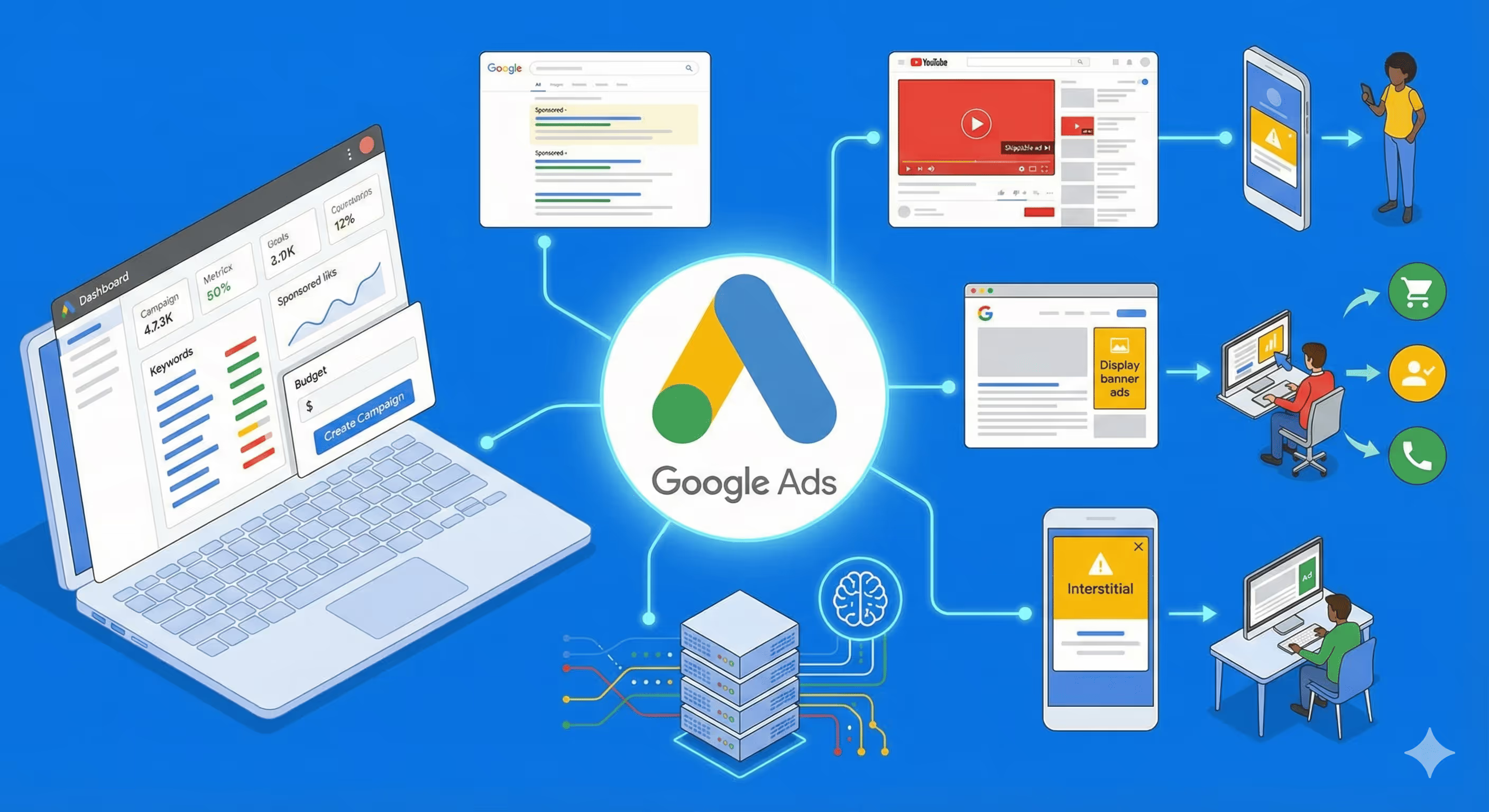
Google Ads bidding strategies have evolved dramatically as machine learning algorithms gain unprecedented sophistication. Australian businesses face a critical choice: embrace Smart Bidding automation or maintain manual control over bid management. In 2026, the answer isn't binary—it's strategic. This comprehensive guide decodes every bidding strategy available, revealing when Smart Bidding outperforms manual approaches by 30-40%, when manual bidding delivers superior control, and how to implement hybrid strategies capturing advantages of both. Discover data-driven frameworks for selecting optimal bidding strategies based on your business goals, conversion volume, and competitive landscape.

Zero Click Search Impact on Google Ads Strategy in 2025 | Maven Marketing Co.
The rules of search have fundamentally changed. With 60% of Google searches now ending without a click and AI Overviews expanding rapidly, running Google Ads the same way you did in 2023 means hemorrhaging money and missing opportunities. This comprehensive guide reveals how zero-click search behavior is reshaping PPC performance and provides actionable strategies Australian businesses need to adapt, thrive, and capture market share in 2025's AI-dominated search landscape.
.avif)
How to Optimise for Local SEO: A Brisbane Business Guide
This comprehensive guide will walk Brisbane business owners through the process of optimising their digital presence for local search, providing actionable strategies that deliver measurable results in the unique Australian market.