.svg)


%201.svg)

Quick Answers
Q: What is a headless CMS and how does it differ from traditional CMS platforms like WordPress?
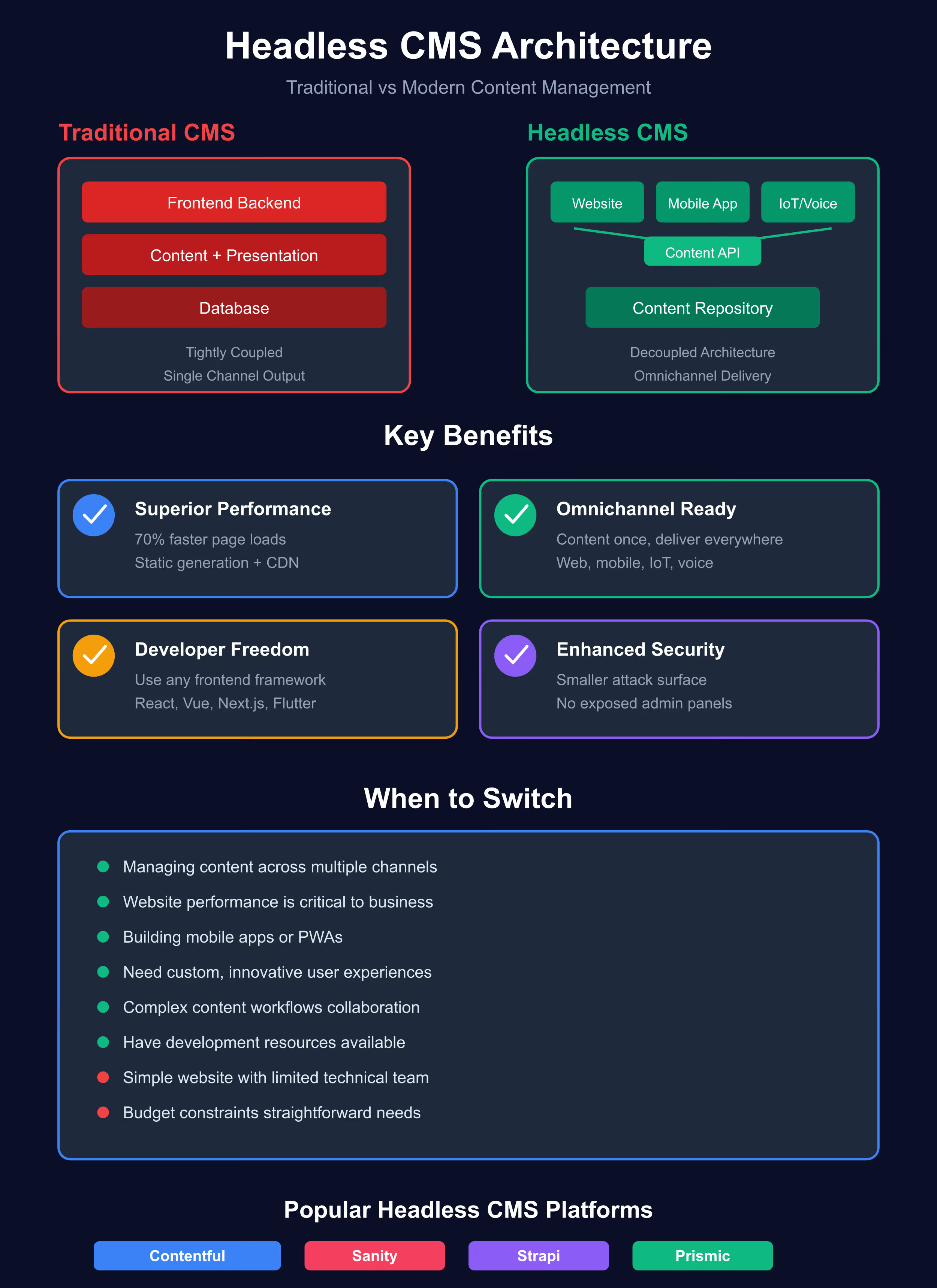
A headless CMS is a content management system that stores and delivers content through APIs without a built-in presentation layer. Unlike traditional CMS platforms like WordPress that tightly couple content management with website design and templates, headless CMS separates the "head" (frontend presentation) from the "body" (backend content repository). This means content creators manage content in one place, while developers build custom frontends using any technology stack. Traditional WordPress sites serve content through PHP templates tied to the database, while headless CMS delivers content via REST or GraphQL APIs that can power websites, mobile apps, IoT devices, and digital displays simultaneously. For Australian businesses managing content across multiple channels, this architecture offers unprecedented flexibility and performance.
Q: When should an Australian business switch from WordPress or another traditional CMS to a headless architecture?
Australian businesses should consider switching to headless CMS when they experience specific pain points or growth requirements. Key indicators include managing content across multiple digital channels (website, mobile apps, digital kiosks), needing superior website performance for competitive advantage, requiring custom user experiences that traditional CMS templates can't deliver, scaling content operations across multiple brands or regions, or building progressive web apps and native mobile applications. Retail businesses expanding into omnichannel experiences, media companies publishing across platforms, enterprises with complex content workflows, and tech companies prioritizing developer experience benefit most. However, small businesses with simple websites, limited technical resources, or straightforward content needs may find traditional CMS platforms more cost effective. The switch makes sense when the benefits of flexibility, performance, and scalability outweigh the higher initial development costs.
The Australian digital landscape is evolving rapidly. Businesses are no longer asking customers to visit just their website. They're delivering experiences across mobile apps, voice assistants, digital displays, smartwatches, and platforms that haven't been invented yet.
Traditional content management systems like WordPress, Drupal, and Joomla were built for a simpler time when "website" and "digital presence" meant the same thing. Today, Australian businesses need architecture that can keep pace with how consumers actually interact with content.
Enter headless CMS: a fundamental rethinking of how we manage and deliver digital content.
Understanding Headless CMS Architecture
Before diving into whether your Australian business should make the switch, let's demystify what headless CMS actually means.
The Traditional CMS Model
Traditional CMS platforms bundle everything together: content storage, content management interface, templates, themes, plugins, and frontend rendering. When you publish content in WordPress, the system stores it in a MySQL database, processes it through PHP, applies your theme's templates, and delivers HTML to browsers.
This works beautifully for standard websites. But it creates limitations when you want to deliver that same content to a mobile app, display it on an in-store digital screen, or surface it through voice search.
The Headless Architecture
Headless CMS removes the presentation layer entirely. The system focuses purely on content storage, management, and delivery through APIs. Your content becomes data that any application can request and display however it needs.
Think of it like a restaurant kitchen. Traditional CMS is like a diner where the kitchen, dining room, and service are all connected and fixed. Headless CMS is like a cloud kitchen that prepares food for delivery to any location through any service. The kitchen focuses on food quality, while separate teams handle the dining experience.
Why "Headless" Matters for Australian Businesses
Australian businesses face unique challenges: vast geographic distances, diverse urban and regional markets, increasing mobile usage, and consumers expecting seamless experiences across devices. Headless architecture addresses these by enabling content to flow efficiently to any touchpoint.

Popular Headless CMS Platforms in Australia
Several headless CMS platforms have gained traction in the Australian market, each serving different business needs:
Contentful
Contentful leads the enterprise headless CMS space with robust content modeling, multi-language support, and excellent developer experience. Australian enterprises including major retailers and media companies use Contentful for its scalability and reliability.
Best For: Large enterprises, international businesses, content-heavy applications
Pricing: Starts free, scales to enterprise pricing
Australian Advantage: Strong API performance for Asia-Pacific region
Sanity
Sanity offers real-time collaboration, flexible content structures, and powerful customization options. Its unique approach to content modeling makes it popular with agencies and mid-size businesses.
Best For: Agencies, content-driven businesses, teams needing real-time collaboration
Pricing: Free tier available, transparent scaling costs
Standout Feature: Real-time editing and instant content updates
Strapi
Strapi is an open-source headless CMS that gives Australian businesses complete control over their content infrastructure. Companies that prioritize data sovereignty and customization choose Strapi.
Best For: Businesses wanting self-hosted solutions, custom requirements, developer flexibility
Pricing: Free open-source, paid cloud hosting and enterprise support available
Australian Context: Can be hosted in Australian data centers for compliance
Prismic
Prismic emphasizes editor experience with a beautiful interface and slice-based content modeling. Marketing teams love its intuitive approach to content creation.
Best For: Marketing-focused teams, agencies, businesses prioritizing content creator experience
Pricing: Free tier, affordable scaling
Strength: Exceptional user interface for non-technical users
Signs Your Australian Business Should Switch to Headless CMS
Not every business needs headless architecture. Here are the clearest indicators that it's time to make the switch:

1. You're Managing Content Across Multiple Channels
If your business publishes content to a website, mobile app, email campaigns, digital signage, and social media, you're likely copying and pasting between systems or maintaining separate content for each channel.
The Headless Solution: Create content once, deliver everywhere. Your product descriptions, blog posts, and marketing content live in one system and automatically flow to every channel through APIs.
Australian Example: Retail chains with physical stores, e-commerce sites, and mobile apps can manage all product information centrally. Update a price or product detail once, and it changes everywhere instantly.
2. Your Website Performance Is Suffering
Traditional CMS platforms generate pages dynamically, querying databases and processing PHP or similar server-side code for every visitor. This creates slower load times, especially for Australian users in regional areas or mobile networks.
The Headless Advantage: Headless CMS enables static site generation and edge caching. Your content gets pre-built into optimized HTML/CSS/JavaScript and served from CDNs (content delivery networks) close to users.
Performance Impact: Australian businesses switching to headless architecture typically see page load times improve from 3 to 5 seconds down to under 1 second. This directly impacts SEO rankings, conversion rates, and user experience.
3. Your Development Team Wants Modern Tools
Developers increasingly prefer working with modern JavaScript frameworks like React, Vue, Next.js, or mobile technologies like React Native and Flutter. Traditional CMS platforms force them into older templating languages and restrictive environments.
Developer Freedom: Headless CMS liberates developers to use their preferred tools and frameworks. Frontend teams can work independently from backend content management, accelerating development cycles.
Talent Acquisition: Australian tech companies competing for developer talent find that modern architecture makes positions more attractive to skilled developers.
4. You Need Custom User Experiences
Traditional CMS themes and templates limit what you can build. Custom functionality often requires extensive plugin development or theme modifications that become maintenance nightmares.
Design Freedom: With headless architecture, designers and developers have complete control over user experience. Every interaction, animation, and interface element can be custom-built without CMS constraints.
Use Cases: Configurators, interactive tools, personalized dashboards, custom checkout experiences, and innovative interfaces that differentiate your brand.

5. Content Workflow Complexity Is Growing
As Australian businesses scale, content operations become more complex. Multiple teams, approval workflows, scheduled publishing, content localization, and version control strain traditional CMS capabilities.
Enterprise Content Management: Headless CMS platforms offer sophisticated workflow engines, role-based permissions, content scheduling, and audit trails designed for complex organizations.
Collaboration: Teams in Sydney, Melbourne, Brisbane, and Perth can work simultaneously on content without conflicts or overwrites, with real-time updates visible across the organization.
6. You're Building Progressive Web Apps or Native Mobile Apps
If your digital strategy includes mobile applications, traditional CMS creates architectural headaches. You need content accessible through APIs rather than scraping HTML from web pages.
Mobile-First Approach: Headless CMS was designed for this exact use case. Your mobile developers request content through clean APIs, receiving structured data they can format for native app interfaces.
Future-Proofing: When you build the next version of your app, switch platforms, or add voice interfaces, your content infrastructure doesn't need to change.
7. Security and Compliance Are Critical
Traditional CMS platforms expose both content management and content delivery, creating larger attack surfaces. WordPress sites face constant security threats from plugin vulnerabilities and outdated software.
Security Benefits: Headless CMS separates your content management system from public-facing websites. Attackers can't target admin panels that don't exist on production servers. For Australian businesses handling sensitive data or operating in regulated industries, this architecture reduces risk.
Compliance: Self-hosted headless CMS options like Strapi allow Australian businesses to keep data within Australian jurisdictions, addressing data sovereignty requirements.
8. You Want to Experiment and Iterate Quickly
Testing new features, redesigning sections, or trying different user experiences in traditional CMS often means duplicating content or risking production sites.
Experimentation Freedom: Headless architecture enables A/B testing different frontends with the same content, preview environments for every feature branch, and rapid iteration without touching production content.
Innovation Speed: Australian startups and growth companies use headless CMS to ship new features weekly or even daily, responding to market opportunities faster than competitors.
When You Should NOT Switch to Headless CMS
Headless architecture isn't universally better. Some scenarios favor traditional CMS:
Small Businesses with Simple Needs
If you run a local business with a straightforward website, minimal traffic, and no plans for multiple digital channels, WordPress with a good theme probably serves you better. The simplicity, lower costs, and extensive plugin ecosystem make more sense.
Stick with Traditional If: You have a 5 to 20 page website, update content occasionally, don't need mobile apps or multiple channels, and have limited technical resources.
Limited Technical Resources
Headless CMS requires developer expertise. You can't simply install a theme and start clicking. If you don't have development team or budget for ongoing technical support, traditional CMS offers more self-service options.
Technical Reality: Expect to invest in frontend development, API integration, and ongoing maintenance. Content creators still get easy interfaces, but the technical foundation needs expert management.
Content-Heavy Sites with Simple Presentation Needs
Some blogs, news sites, and content publishers need robust content management but have straightforward presentation requirements. Traditional CMS excels at these use cases.
Consider Hybrid: Many businesses adopt a "decoupled" approach, using traditional CMS with API capabilities to get benefits of both worlds.
Budget Constraints
Initial development costs for headless architecture typically run 2x to 4x higher than traditional CMS sites. Ongoing hosting costs may also increase due to separate frontend and backend infrastructure.
Investment Consideration: If your digital presence isn't a core business driver or you're bootstrapping, invest elsewhere first. Headless CMS delivers returns when digital channels drive significant revenue or operational efficiency.
Implementation Strategies for Australian Businesses
If you've determined headless CMS makes sense, here's how to approach implementation:
Phase 1: Assessment and Planning (4 to 6 weeks)
Start by auditing your current content ecosystem. Document every place content appears, who creates it, what workflows exist, and what technical integrations you need.
Key Activities:
- Map all content types and their relationships
- Identify content creators and their needs
- Document current pain points and requirements
- Evaluate headless CMS platforms against criteria
- Calculate total cost of ownership for 3 years
- Define success metrics
Phase 2: Proof of Concept (6 to 8 weeks)
Before committing to full migration, build a proof of concept with your chosen headless CMS. Select a non-critical section of your site or a new project to test the waters.
Proof of Concept Goals:
- Validate content modeling approach
- Test API performance and reliability
- Evaluate developer experience
- Assess content editor experience
- Identify integration challenges
- Refine cost estimates
Phase 3: Content Migration Strategy (4 to 8 weeks)
Content migration from traditional CMS to headless platforms requires careful planning. You're not just copying content, you're restructuring it into more flexible formats.
Migration Approaches:
- Big Bang: Switch everything at once (higher risk, faster completion)
- Phased Migration: Move content types or site sections progressively (lower risk, longer timeline)
- Parallel Running: Maintain both systems temporarily (highest cost, lowest risk)
Australian Considerations: Plan migration during low-traffic periods, considering timezone differences for international operations.
Phase 4: Frontend Development (8 to 16 weeks)
Building custom frontends takes time. Australian businesses typically choose between:
Static Site Generators: Next.js, Gatsby, Nuxt.js for fast, pre-built sites
Single Page Applications: React, Vue, Angular for interactive web apps
Mobile Development: React Native, Flutter for native apps
Hybrid Approaches: Combining multiple frontend types
Timeline varies dramatically based on design complexity and features required.
Phase 5: Testing and Optimization (4 to 6 weeks)
Comprehensive testing ensures your new headless architecture performs better than what you replaced.
Testing Checklist:
- Content publication workflows
- Multi-device rendering and responsiveness
- Page load performance across Australian regions
- SEO technical implementation
- Integration testing with third-party systems
- Security penetration testing
- Content editor training and feedback
Phase 6: Launch and Continuous Improvement
Launch doesn't mean you're done. Headless architecture enables continuous iteration and improvement.
Post-Launch Focus:
- Monitor performance metrics against baseline
- Gather content creator feedback
- Optimize API calls and caching strategies
- Enhance features based on user data
- Expand to additional channels
Cost Considerations for Australian Businesses
Understanding total cost of ownership helps make informed decisions:
Initial Development Costs
Small to Medium Websites: $30,000 to $80,000
Complex Websites: $80,000 to $200,000
Enterprise Implementations: $200,000 to $500,000+
Factors affecting cost: design complexity, content volume, custom features, integrations, number of channels, and migration complexity.
Ongoing Costs

Headless CMS Platform:
- Free tier options available
- Mid-tier: $500 to $2,000 monthly
- Enterprise: $3,000 to $10,000+ monthly
Hosting and Infrastructure:
- Frontend hosting (Vercel, Netlify): $0 to $500 monthly
- CDN costs: $100 to $1,000+ monthly depending on traffic
- Backend infrastructure: $100 to $1,000+ monthly
Development and Maintenance:
- Content updates: Similar to traditional CMS
- Feature development: $5,000 to $20,000 per major feature
- Ongoing optimization: $2,000 to $10,000 monthly for active development
ROI Considerations
Australian businesses typically see ROI through:
- Improved Performance: Better conversion rates and SEO rankings
- Development Efficiency: Faster feature launches and iterations
- Content Operations: Reduced time managing multi-channel content
- Reduced Technical Debt: Less maintenance and security overhead
- Competitive Advantage: Better user experiences drive market share
Calculate expected value from these areas against implementation and ongoing costs.
Australian Business Success Stories
Media and Publishing
A Melbourne-based media company switched from WordPress to Contentful to manage content across their website, mobile apps, and digital displays. They reduced content publication time by 60%, improved site performance by 3x, and launched new digital products in weeks instead of months.
Key Benefit: Journalists create content once, and it automatically formats correctly for web, mobile, newsletter, and social media distribution.

E-commerce Retail
A Sydney fashion retailer rebuilt their e-commerce experience using Shopify for transactions and Sanity for content management. The headless approach enabled rich storytelling around products, seasonal campaigns, and brand content while maintaining reliable checkout.
Results: Page load times decreased by 70%, mobile conversion rates improved by 35%, and the marketing team gained independence from developers for content updates.
Professional Services
A national professional services firm implemented Strapi to power their website, client portal, and internal knowledge base. Self-hosting in Australian data centers addressed their data residency requirements while the API-first approach enabled custom client experiences.
Outcome: Unified content management reduced duplication, improved consistency across touchpoints, and accelerated new office launches from months to weeks.
Making the Decision: A Framework for Australian Businesses
Use this decision framework to evaluate if and when to switch:
Score Your Business (1 to 5 scale)

Multi-Channel Strategy: How many channels do you actively manage?
Performance Requirements: How critical is website speed to your business?
Development Resources: Do you have in-house or reliable agency development support?
Content Complexity: How sophisticated are your content workflows?
Growth Plans: How quickly are you expanding digital touchpoints?
Budget Availability: Can you invest in higher upfront development costs?
Technical Debt: How painful is your current CMS to maintain?
Competitive Pressure: How important is digital innovation to your market position?
Scoring:
- 32 to 40: Strong candidate for headless CMS, proceed with planning
- 24 to 31: Investigate further, consider proof of concept
- 16 to 23: Monitor the space, consider in 12 to 18 months
- 8 to 15: Traditional CMS likely more appropriate for now
The Future of Content Management in Australia
Headless CMS represents where content management is heading. As Australian businesses operate increasingly across digital channels, API-first content delivery becomes infrastructure rather than innovation.
Emerging trends include:
- Composable Architecture: Combining best-of-breed services through APIs
- Edge Computing: Content delivery optimized for Australian and Asia-Pacific users
- AI-Powered Content: Automated content generation and optimization
- Voice and IoT: Content delivery to emerging interfaces
- Personalization Engines: Dynamic content adaptation based on user behavior
Australian businesses adopting headless architecture now position themselves to adopt these capabilities as they mature.
Ready to Explore Headless CMS for Your Australian Business?
Switching to headless CMS architecture is a significant decision that requires careful evaluation of your business needs, technical capabilities, and growth strategy. Not every business needs headless CMS today, but understanding when it makes sense ensures you're not left behind as digital expectations evolve.
The question isn't whether headless CMS is "better" than traditional platforms. It's whether the specific benefits align with your business requirements and whether you're ready to invest in modern content infrastructure.
For Australian businesses managing complex content operations, expanding across digital channels, or competing in digital-first markets, headless architecture offers compelling advantages. The initial investment pays dividends through improved performance, development velocity, and user experiences that traditional CMS can't match.
Need expert guidance on whether headless CMS makes sense for your business? Maven Marketing Co. helps Australian businesses evaluate, implement, and optimize headless CMS architecture. Our team brings deep experience with Contentful, Sanity, Strapi, and custom implementations tailored to Australian business requirements.
We start with thorough assessment of your current architecture, content operations, and strategic goals. Then we provide clear recommendations on whether headless CMS makes sense, which platform suits your needs, realistic cost projections, and implementation roadmaps.
Contact Maven Marketing Co. today to schedule a headless CMS assessment. Let's determine if headless architecture can transform your digital content operations and position your business for future growth.

Table of contents
read more blogs
How to Build a Brand Positioning Strategy That Sets Your Business Apart
Most businesses can explain what they sell. Far fewer can explain, in a sentence or two, why the right customer should choose them instead of another credible option. That gap is where brand positioning matters.A strong brand positioning strategy gives your business a clear place in the market and a clear place in the customer's mind. It helps your team decide who you are speaking to, what you want to be known for, which benefits deserve the most attention and how your marketing should sound and look across every channel.It is not a slogan exercise and it is not something reserved for large consumer brands. For an Australian service business, e-commerce brand, professional firm, or growing B2B company, positioning can make everyday decisions easier, from website copy and campaign messaging to pricing, sales conversations, and brand identity. The goal is not to look different for the sake of it. The goal is to be meaningfully different in a way the right customers understand and value.

The Role of Digital PR in Long Term SEO Growth
Building a solid online presence is basically more than just posting content now and then or sprinkling keywords across your website. Search engines such as Google tend to point users toward businesses that feel trustworthy, useful, and backed up by others online, even if it’s not always obvious at first. When a company puts together a well-thought-out digital PR strategy, it can bring in solid media mentions, earning high-quality backlinks and stronger brand awareness, all of which feed long-term SEO progress. Rather than obsessing solely over rankings, digital PR helps you build credibility plus authority, so your site looks more appealing to search engines and also to real people who might become customers. In this guide, we’ll walk through how digital PR supports SEO, what makes it such a key part of modern marketing, and the most effective approaches for sustainable growth in search results.

Is Google Ads Better Than SEO for My Business
One of the biggest questions business owners ask when they are planning online growth is whether they should invest in Google Ads or SEO. Both are strong marketing plays that help your company show up in Google search results, but they do things in separate lanes. Google Ads gives quicker visibility and can bring in leads fast, whereas SEO more or less focuses on slow, steady organic traffic that tends to grow the longer you keep building it. Picking the right direction depends on what you want to achieve, how much money you can spend, how crowded the market is, and how quickly you need results, like sooner rather than later. The good news is you don’t always have to choose one or the other; it’s not exactly a black-and-white situation. If you take time to understand the strongest points of both, you can put together a more sensible digital marketing plan that supports consistent expansion. In this guide, we’ll compare Google Ads vs SEO, explain the main differences, and help you figure out what option makes the most sense for your business.