.svg)


%201.svg)

Quick Answers
Why are marketers investing more in events in 2026?
Marketers are increasing event budgets because events deliver measurably superior ROI compared to digital channels. With 78% of Australian marketers identifying events as their most impactful channel, the data shows that 81% of event attendees possess actual purchasing authority, and 87% of consumers buy products after attending an event. These conversion rates far exceed the 2 to 5% typical of digital advertising. Events build authentic trust and relationships that algorithms cannot replicate, particularly critical for complex B2B sales requiring multiple stakeholders and long sales cycles.
What ROI can businesses expect from event marketing?
Event marketing ROI varies by format and execution quality, but properly measured returns consistently outperform digital channels. Virtual events show particularly strong economics, with 81% of marketers reporting better ROI than traditional physical events, average savings of $42,000 per event, and 12% higher revenue per attendee. The key is systematic measurement tracking both immediate metrics like lead generation volume and qualified conversations, plus long-term metrics including pipeline influence value, revenue attribution, and customer lifetime value. Businesses implementing comprehensive measurement typically discover event ROI exceeds initial expectations once relationship value converting over months is properly quantified.
Your marketing dashboard shows another quarter of rising cost per acquisition across digital channels. Meanwhile, that industry conference you attended last month generated three qualified enterprise deals now sitting in your pipeline.
Coincidence? Not according to the data.
Leading marketers across Australia are making a calculated strategic shift. Whilst maintaining digital presence, they are aggressively investing in events because the numbers prove what intuition suggested: face-to-face interactions drive business outcomes that pixels cannot replicate.

The Event Marketing Renaissance: What the Data Actually Shows
The global events industry is experiencing explosive growth, projected to surge from $1.1 trillion in 2019 to $2.1 trillion by 2032. This is not gradual recovery. This is acceleration.
Australian marketers are leading this charge, with 78% identifying in-person events as their organisation's most impactful marketing channel. That is not just high. That is dominant.
The conviction runs deeper when you examine future planning. Around 80% of organisers believe in-person conferences will become increasingly critical to their organisation's success in the coming years. These are not tentative experiments. These are strategic commitments backed by executive support, with nearly 73% of leadership teams and C-suites actively supporting in-person event strategies.
The Australian business landscape mirrors global trends showing that the US B2B trade show market hit $15.78 billion in 2024, finally beating pre-COVID numbers, with projections reaching $17.3 billion by 2028. The momentum is real, measurable, and accelerating.
Why Events Deliver ROI That Digital Channels Cannot Match
Marketing leaders do not increase budgets based on feelings. They follow the money. Event marketing delivers measurable returns through mechanisms that digital advertising fundamentally cannot replicate.
Consider the buying power concentration at business events. Research shows that 81% of event attendees possess actual purchasing authority. You are not reaching random impressions or cold audiences. You are standing in rooms filled with decision makers actively seeking solutions.
The lead quality differential becomes stark when you examine conversion data. Around 87% of consumers buy products from a brand after attending an event. Compare that to typical digital advertising conversion rates hovering around 2 to 5%, and the economics become compelling.
Virtual events show similar advantages when properly executed, with 81% of marketers reporting better ROI from virtual formats compared to traditional physical events. The average saving reaches approximately $42,000 per event whilst revenue per attendee actually increases by 12% compared to in-person attendance.
For Australian businesses navigating tight margins and competitive markets, these economics matter. Every marketing dollar must work harder. Events deliver that efficiency through concentrated exposure to qualified prospects in environments designed for relationship building.
The Trust Factor: Why Relationships Close Deals, Not Algorithms
Digital marketing reaches people. Events connect them.
That distinction drives the strategic value leading marketers recognise. In B2B contexts where deals involve multiple stakeholders, long sales cycles, and significant financial commitments, trust determines outcomes. Algorithms do not build trust. Conversations do.
The networking value alone justifies event investment for many organisations. Sixty-six percent of marketers identify networking as a crucial opportunity for finding new clients. More telling, 52% of attendees prefer networking events specifically because they can discuss real challenges with industry peers.
This peer-to-peer dynamic creates validation that marketing messaging cannot manufacture. When prospects hear about your solution from satisfied customers during casual conference conversations, that carries weight no advertisement can match. The authentic, unscripted nature of event interactions builds credibility that polished marketing collateral struggles to achieve.
Australian business culture particularly values these face-to-face relationships. The preference for direct communication, the emphasis on personal connection before business transactions, and the importance of relationship history in decision making all favour event-based marketing approaches.
Strategic Event Types: Matching Format to Business Objectives
Not all events deliver equal value. Smart marketers match event types to specific business objectives rather than pursuing every opportunity.
Large conferences and trade shows excel at brand positioning and market presence. When you need to establish authority, announce product launches, or demonstrate market leadership, major industry gatherings provide the platform. These events attract media attention, industry influencers, and the concentrated prospect density that justifies significant investment.
Intimate executive roundtables and invite-only workshops serve different purposes. These formats build deep relationships with high-value accounts through meaningful dialogue rather than mass exposure. When your business model depends on landing enterprise deals or long-term strategic partnerships, small-format events delivering quality over quantity often generate superior ROI.
Hybrid events combining in-person and virtual elements have emerged as the dominant format preference, with 57% of marketers choosing hybrid as their top priority for 2026. This format maximises reach whilst maintaining the relationship-building benefits of face-to-face interaction for key attendees.
Australian businesses particularly benefit from hybrid approaches given geographic challenges. Serving markets across Perth, Sydney, Melbourne, Brisbane, and regional centres whilst maintaining international connections demands flexible event formats that balance travel costs against engagement value.
The Measurement Challenge: Proving Event ROI to Leadership
Despite strong performance, 38.2% of organisers still report difficulty demonstrating ROI for B2B conferences, though this has improved from 45.4% in 2023. The challenge is not that events lack ROI. The challenge is measuring it accurately.
Leading event marketers have cracked this problem through systematic measurement frameworks tracking both immediate and long-term value. The most important metric according to 93.5% of event planners is attendee satisfaction, measured through post-event surveys capturing experience quality and content relevance.
Beyond satisfaction, sophisticated measurement tracks lead generation volume and quality, pipeline influence showing which deals originated from event connections, revenue attribution linking closed business to event participation, and brand lift measuring awareness and perception changes.
Australian businesses implementing these measurement systems typically discover event ROI exceeds expectations once properly quantified. The mistake many organisations make is focusing exclusively on immediate lead volume whilst ignoring relationship value that converts over months.
Smart marketers track event-originated relationships through their CRM systems, tagging prospects by event source and monitoring their progression through sales funnels. This attribution reveals event impact extending far beyond immediate post-event conversions.

Technology Integration: Enhancing Events Without Replacing Human Connection
Technology has transformed event marketing from logistical nightmare into streamlined strategic operation. The event management software market is projected to reach $16.11 billion by 2026, reflecting widespread adoption of platforms that handle registration, engagement tracking, and ROI measurement.
Eighty-five percent of marketers now use technology to enhance experiential marketing campaigns. Common applications include mobile event apps that facilitate networking through attendee matching based on interests and business needs, AI-powered chatbots handling common questions and freeing staff for meaningful interactions, real-time polling and Q&A tools increasing session engagement, and automated follow-up systems ensuring prompt post-event contact.
The key insight is that technology augments rather than replaces human connection. The most successful event marketers use technology to remove friction from logistics whilst preserving and enhancing face-to-face interaction opportunities.
Australian businesses benefit particularly from technology enabling remote participation. When travel budgets face pressure or sustainability concerns limit flying, hybrid technologies extend event reach without sacrificing core relationship-building value for key attendees who attend physically.
Content Strategy: What Actually Engages Event Audiences
Event success hinges on content quality. Attendees invest time and often substantial travel costs to participate. They demand value that justifies that investment.
The most engaging event content addresses specific, practical problems attendees face daily. Generic thought leadership and product pitches fall flat. Tactical case studies showing exactly how similar organisations solved challenges attendees recognise generate engagement and post-event action.
Leading event marketers apply personalisation strategies using attendee data to customise content recommendations, session suggestions, and networking introductions. This data-driven personalisation extends post-event through targeted follow-up campaigns referencing specific sessions attended and content engaged with.
Format variety maintains engagement across multi-day events. Mixing keynote presentations with interactive workshops, panel discussions, networking sessions, and hands-on demonstrations prevents fatigue whilst accommodating different learning preferences.
For Australian businesses, incorporating local context and regional examples significantly increases content relevance. International case studies provide perspective, but attendees connect most strongly with stories featuring familiar market conditions, regulatory environments, and business challenges.
Budget Realities: Making Event Investment Work at Any Scale
Event marketing demands budget, but scale flexibility exists. The most expensive events are not necessarily the most effective.
Corporate event spending per attendee averages $169 per day, whilst large virtual conferences cost organisers between $1,000 and $1,500 per attendee. These figures intimidate smaller organisations, but strategic participation does not require hosting major events.
Sponsorship and exhibition at established industry events provides presence at fraction of hosting costs. Strategic booth placement, pre-event outreach to confirmed attendees, and focused follow-up converts moderate investment into substantial lead generation.
Small-format events often deliver exceptional ROI relative to investment. A carefully curated executive breakfast for 15 key prospects costs substantially less than major conference sponsorship whilst potentially generating higher-quality conversations and relationship depth.
Australian businesses should consider regional event opportunities often overlooked by larger competitors. Perth, Adelaide, and regional centre events attract less competition for attention whilst providing access to significant markets underserved by Sydney and Melbourne-focused strategies.
The Sustainability Imperative: Green Events as Competitive Advantage
Eighty-one percent of event attendees indicate sustainability matters in their event participation decisions, with 74% more likely to attend events demonstrating robust environmental initiatives.
This creates both challenge and opportunity for Australian event marketers. The challenge is that meaningful sustainability requires rethinking event logistics, venue selection, catering, materials, and travel. The opportunity is that leadership in sustainable event practices builds brand equity whilst aligning with values of key target audiences.
Practical sustainable event strategies include selecting venues with demonstrated environmental credentials and strong public transport access, eliminating single-use plastics through reusable catering solutions and digital materials, carbon offsetting for necessary travel, and transparent communication of environmental initiatives.
Australian businesses particularly benefit from sustainability focus given strong domestic environmental consciousness and international reputation concerns. Events showcasing genuine environmental commitment reinforce positive brand perceptions whilst attracting attendees increasingly evaluating participation through sustainability lenses.

Post-Event Execution: Where Most Organisations Lose the Value
Events generate leads. Follow-up converts them to customers. Yet post-event execution remains the weakest link in most event marketing strategies.
Ninety-two percent of marketers plan to improve post-event attendee follow-up, recognising current gaps. The most common failures include delayed contact allowing relationships to cool, generic messaging ignoring specific event interactions, and lack of coordination between marketing and sales teams.
Leading event marketers implement structured follow-up workflows triggered automatically post-event. Within 24 hours, attendees receive thank-you messages with session recordings and resources. Hot leads exhibiting strong engagement receive personal outreach from sales representatives within 48 hours. Warm leads enter nurture sequences delivering relevant content based on their demonstrated interests.
This systematic approach transforms event investment into pipeline progression. The initial event creates the relationship foundation. Disciplined follow-up converts awareness into consideration and evaluation.
Australian businesses should recognise that relationship-building timelines often extend beyond American-style aggressive follow-up. Cultural expectations favour ongoing value delivery and relationship development over immediate hard selling. Adjust follow-up cadence and messaging accordingly whilst maintaining consistency and relevance.
The Competitive Advantage: Why Competitors Miss the Opportunity
Despite compelling economics and proven effectiveness, many Australian businesses underinvest in event marketing or execute poorly. This creates opportunity for organisations willing to commit strategically.
Common mistakes include treating events as one-off tactics rather than integrated strategy components, sending under-prepared staff lacking clear objectives or proper training, failing to research attendees and plan targeted engagement, and neglecting measurement preventing ROI demonstration.
Organisations avoiding these traps gain disproportionate advantage. When competitors phone in event participation, your team executing strategically captures attention, generates leads, and builds relationships your competition misses.
The window remains open but narrowing. As more marketing leaders recognise event effectiveness, competition for attention increases. Early movers establishing strong event presences and reputations compound advantages through relationship networks and community building that late entrants struggle to replicate.
Building Your Event Marketing Strategy for 2026
Strategic event marketing starts with clear objectives aligned to business goals. Define specific, measurable outcomes for event participation: lead generation targets, pipeline value goals, brand awareness metrics, or relationship-building with named accounts.
Select events strategically based on attendee composition, format alignment with objectives, and realistic ROI projections. One carefully chosen event with proper preparation and follow-up delivers more value than scattered participation across multiple events without clear strategy.
Invest in pre-event preparation that maximises event value. Research confirmed attendees, schedule meetings before arriving, prepare relevant case studies and materials, and train team members on messaging and qualification criteria.
Execute disciplined post-event follow-up converting event investment into business results. Segment leads by engagement level, personalise outreach based on event interactions, coordinate marketing and sales team efforts, and track attribution through your CRM.
Measure systematically and refine based on results. Track metrics proving ROI to leadership whilst identifying improvement opportunities for future events.
The Verdict: Events Are Growth Engines, Not Marketing Expenses
The data has spoken. Events deliver measurable ROI, build authentic relationships, and drive growth outcomes that digital channels struggle to match. Leading Australian marketers recognise this reality and are investing accordingly.
The question is not whether to invest in event marketing. The question is whether to lead this shift or follow competitors already capturing advantage through strategic event participation.
The businesses dominating their markets in 2027 will be those that built strong event strategies in 2026. They will have established relationships, developed reputations, and created community connections that late entrants cannot quickly replicate.
Your competitors are planning their event calendars right now. Are you?
.avif)
Ready to transform event participation from cost centre to growth engine? The team at Maven Marketing Co. specialises in strategic event marketing for Australian businesses. We do not just recommend conferences. We build complete event strategies including attendee research, pre-event campaigns, on-site execution planning, and post-event nurture systems that convert relationships into revenue. Stop wasting event budgets on scattered participation without strategy. Contact us today for an event marketing audit that identifies your highest-ROI opportunities and creates your roadmap to measurable event-driven growth.

Table of contents
read more blogs
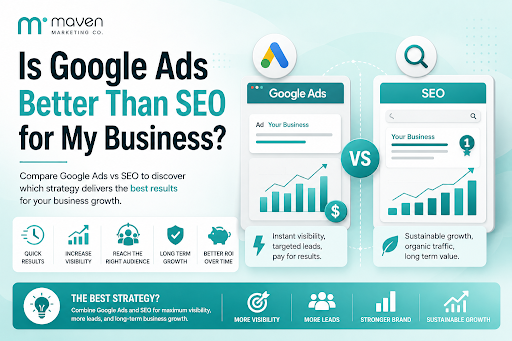
Is Google Ads Better Than SEO for My Business
One of the biggest questions business owners ask when they are planning online growth is whether they should invest in Google Ads or SEO. Both are strong marketing plays that help your company show up in Google search results, but they do things in separate lanes. Google Ads gives quicker visibility and can bring in leads fast, whereas SEO more or less focuses on slow, steady organic traffic that tends to grow the longer you keep building it. Picking the right direction depends on what you want to achieve, how much money you can spend, how crowded the market is, and how quickly you need results, like sooner rather than later. The good news is you don’t always have to choose one or the other; it’s not exactly a black-and-white situation. If you take time to understand the strongest points of both, you can put together a more sensible digital marketing plan that supports consistent expansion. In this guide, we’ll compare Google Ads vs SEO, explain the main differences, and help you figure out what option makes the most sense for your business.

When Should I Hire a Digital Marketing Agency
Growing a business today takes more than just having a website or throwing a post on social media; customers usually search around online, compare providers, skim reviews, and basically expect the brand to show up with a solid digital presence before they even think about buying. Many businesses try to run their marketing themselves, but there comes a point when “doing it all in-house” becomes clunky and hard to manage, all at once. Knowing when to hire a digital marketing agency can end up making a big, real difference for your growth. If you’re not getting enough leads, or your online visibility feels stuck, or sales are just not moving, the right agency can bring the know-how, plus a clear plan, to help you get noticeably better outcomes. In this guide, we’ll dig into what a digital marketing agency actually does, the usual signs it’s time to bring one on, and how picking the right marketing partner can help your business move forward at a faster pace.
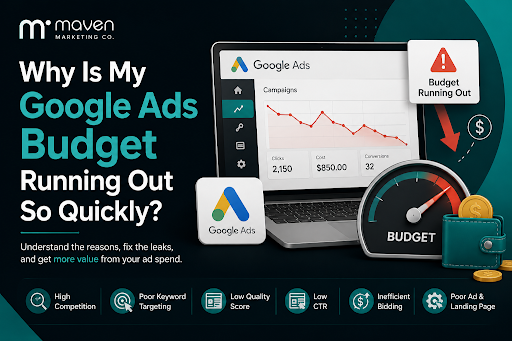
Why Is My Google Ads Budget Running Out So Quickly
Running a successful Google Ads budget isn’t only about throwing more money at it. It’s more like making every dollar, doing a bit extra. A lot of businesses start a Google Ads campaign with big hopes, then find out their daily budget is gone within a few hours, and that feels weird, right? After that, your ads stop showing effectively, new leads slip away, and your return on investment dips. So if your Google Ads budget is running out too fast, don’t stress. It’s a fairly common issue, and in most situations, it can be repaired with the right approach. There are multiple little things that can drain your advertising money quicker than you expected, from costly keywords to audience targeting that just doesn’t quite fit. In this guide, we’ll walk through why your budget disappears so quickly, how to cut wasteful spend, and the most reliable ways to boost your Google Ads ROI, even if your budget stays the same.