.svg)


%201.svg)

Local Service Ads for Australian Trades: Generating Quality Leads
Australian tradies waste thousands annually on generic Google Ads competing against aggregators, national franchises, and directory sites whilst Local Service Ads (LSA)—Google's pay-per-lead platform exclusively for service businesses—remains criminally underutilized despite delivering pre-qualified leads at 40-60% lower cost than traditional PPC. Unlike standard Google Ads charging per click regardless of quality, LSA charges only when customers call or message directly through Google, with leads backed by Google Guarantee badge building instant trust amongst price-conscious homeowners. Brisbane plumber Precision Plumbing replaced $2,800 monthly Google Ads spend with $1,600 LSA budget, reducing lead cost from $87 to $34 whilst increasing lead quality as Google's verification requirements filter tire-kickers and DIY researchers. This comprehensive guide reveals how Australian trades should leverage Local Service Ads strategically, from eligibility requirements and background checks through profile optimization, bid management, and review strategies that dominate local search results whilst generating qualified leads predictably.
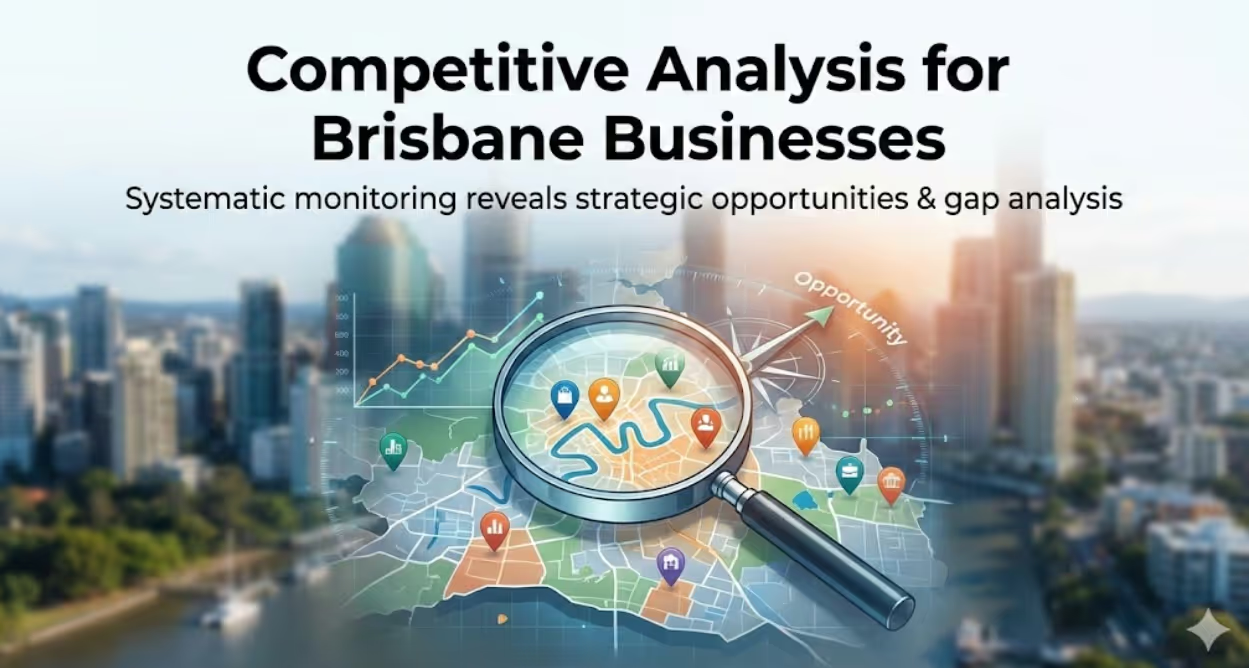
Competitive Analysis Framework: Benchmarking Brisbane Businesses
Brisbane's business landscape is intensely competitive across virtually every industry. Whether you're operating in hospitality on James Street, professional services in the CBD, retail in Paddington, or e-commerce competing nationally from Brisbane headquarters, understanding your competitive position isn't optional—it's fundamental to survival and growth. Yet most Brisbane businesses approach competitive analysis superficially: occasionally checking competitor websites, noticing their advertising, or reacting when they launch new offerings. This reactive approach misses the strategic intelligence competitors reveal through their digital presence, marketing tactics, pricing strategies, and customer engagement approaches. Systematic competitive analysis uncovers exploitable weaknesses, identifies emerging threats before they materialize, reveals untapped market opportunities, and provides the benchmarks necessary to evaluate your own performance objectively. This comprehensive framework reveals how Brisbane businesses can conduct strategic competitive analysis that generates actionable intelligence rather than surface-level observations.

Marketing Budget Allocation: How Australian SMEs Should Split Their Digital Spend
Australian SMEs waste an estimated $2.7 billion annually on misallocated marketing budgets, spreading resources thinly across channels delivering minimal returns whilst underfunding proven performers. The difference between struggling businesses and thriving competitors often isn't total marketing spend—it's strategic allocation matching investment to channel effectiveness, business maturity, and customer acquisition economics. Businesses allocating budgets by gut feel achieve average 2.1x return whilst data-driven allocation delivers 5.8x returns through concentrating resources where they drive measurable outcomes. This comprehensive guide reveals how Australian SMEs should split digital marketing budgets across channels, balancing short-term revenue generation with long-term brand building, optimizing spend based on industry benchmarks, and adjusting allocation dynamically as business needs evolve.

Customer Retention Strategies: Why Keeping Clients Costs Less Than Finding New Ones
Australian businesses obsess over customer acquisition whilst existing customers quietly defect to competitors, taking their lifetime value with them. The mathematics prove sobering: acquiring new customers costs five to seven times more than retaining existing ones, yet 44% of companies focus disproportionately on acquisition versus only 18% prioritizing retention. Increasing customer retention rates by just 5% boosts profits by 25-95% through reduced acquisition costs, increased purchase frequency, and higher average transaction values as relationships deepen. This comprehensive guide reveals the retention strategies Australian businesses deploy to transform one-time buyers into loyal advocates who generate predictable recurring revenue whilst referring new customers organically.

Why Leading Marketers Are Investing in Events to Drive Growth
The digital marketing pendulum has swung decisively back toward face-to-face connection. Leading Australian marketers are not just maintaining event budgets in 2026, they are actively increasing them, with 58% planning budget growth and 51% expanding their experiential marketing investments. This is not nostalgia for pre-pandemic practices. The data tells a compelling story: events deliver measurable ROI that digital channels struggle to match, particularly for complex B2B sales requiring trust and relationship depth. Whilst competitors pour resources into increasingly expensive digital advertising facing diminishing returns, smart marketers are capturing attention, building genuine connections, and closing deals through strategic event participation. This guide reveals why events have become the secret weapon for growth-focused marketing leaders.