
.svg)


%201.svg)
Key Takeaways
- Systematic competitive monitoring reveals strategic opportunities competitors have overlooked, with gap analysis identifying underserved customer segments, neglected geographic areas, or unaddressed customer pain points your business can exploit
- Digital competitive intelligence provides unprecedented visibility into competitor strategies, with SEO analysis, social media monitoring, advertising research, and content audits revealing tactical approaches without requiring insider access
- Regular competitive benchmarking establishes performance context, showing whether your metrics represent competitive advantages or deficiencies requiring attention
- Brisbane's geographic concentration creates unique competitive dynamics, with localized competition in inner suburbs, regional variations across northside/southside/western suburbs, and CBD versus suburban market differences
- Competitive analysis is ongoing discipline, not one-time project, with quarterly monitoring maintaining current intelligence while annual deep-dives reassess strategic positioning
Brisbane's business environment creates fascinating competitive dynamics. The city's size—large enough for sophisticated competition, small enough that competitors know each other—means your competitive moves are visible, and theirs are too.
In this environment, businesses operating without competitive intelligence are flying blind. You don't know if your pricing is competitive, why prospects choose competitors, or what opportunities exist. Strategic competitive analysis isn't about copying competitors—it's about understanding the landscape so thoroughly that you can identify unique advantages and exploit competitor weaknesses.
Identifying Your True Competitors
Direct competitors offer substantially similar products/services to the same customers in overlapping geographies. A Paddington cafe competes directly with other Paddington cafes but less with CBD cafes despite similar offerings.
Indirect competitors serve the same needs through different solutions. A Brisbane meal delivery service competes indirectly with restaurants, meal kits, and grocery delivery.
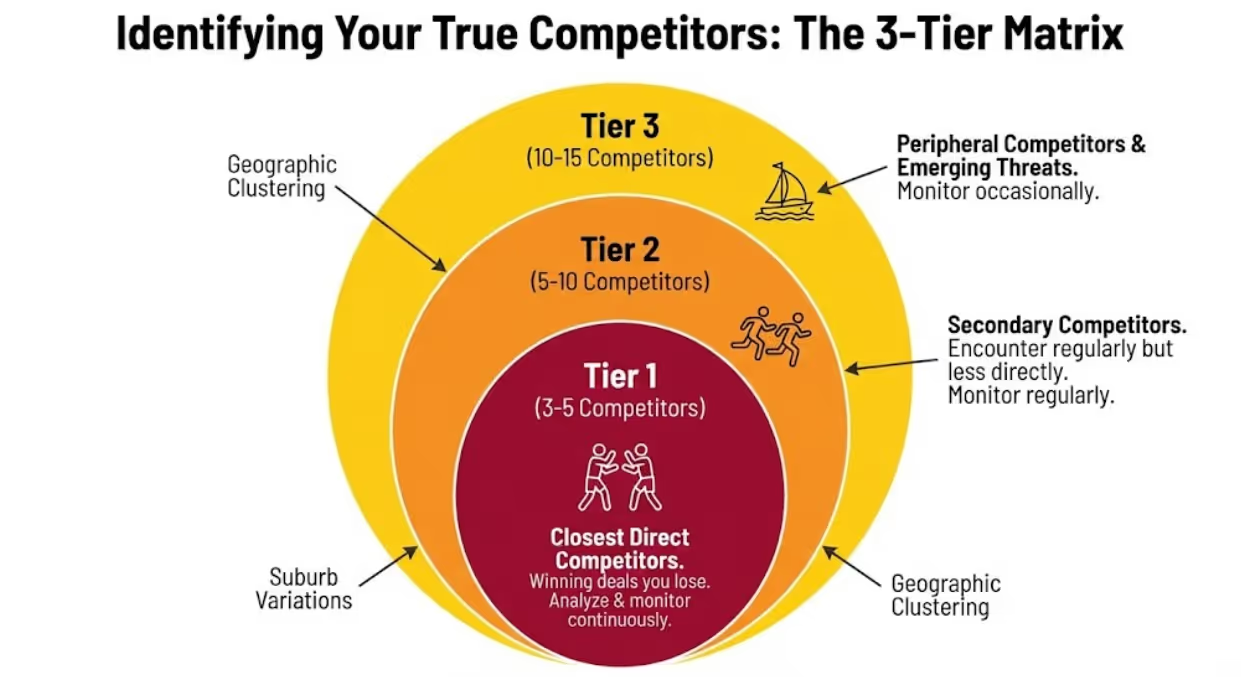
Create your competitor matrix across three tiers:
Tier 1 (3-5 competitors): Your closest direct competitors winning deals you lose. Analyze deeply and monitor continuously.
Tier 2 (5-10 competitors): Secondary competitors you encounter regularly but less directly. Monitor regularly.
Tier 3 (10-15 competitors): Peripheral competitors and emerging threats. Monitor occasionally.
Brisbane-specific considerations:
Geographic clustering: Many industries cluster geographically. Your geographic tier-one competitors may differ from category tier-ones.
Northside/southside dynamics: Brisbane's river-divided geography creates distinct competitive zones.
Suburb character variations: Paddington, New Farm, West End—each has distinct demographics. Analyze competitors succeeding in your specific suburb context.
Digital Competitive Intelligence Gathering
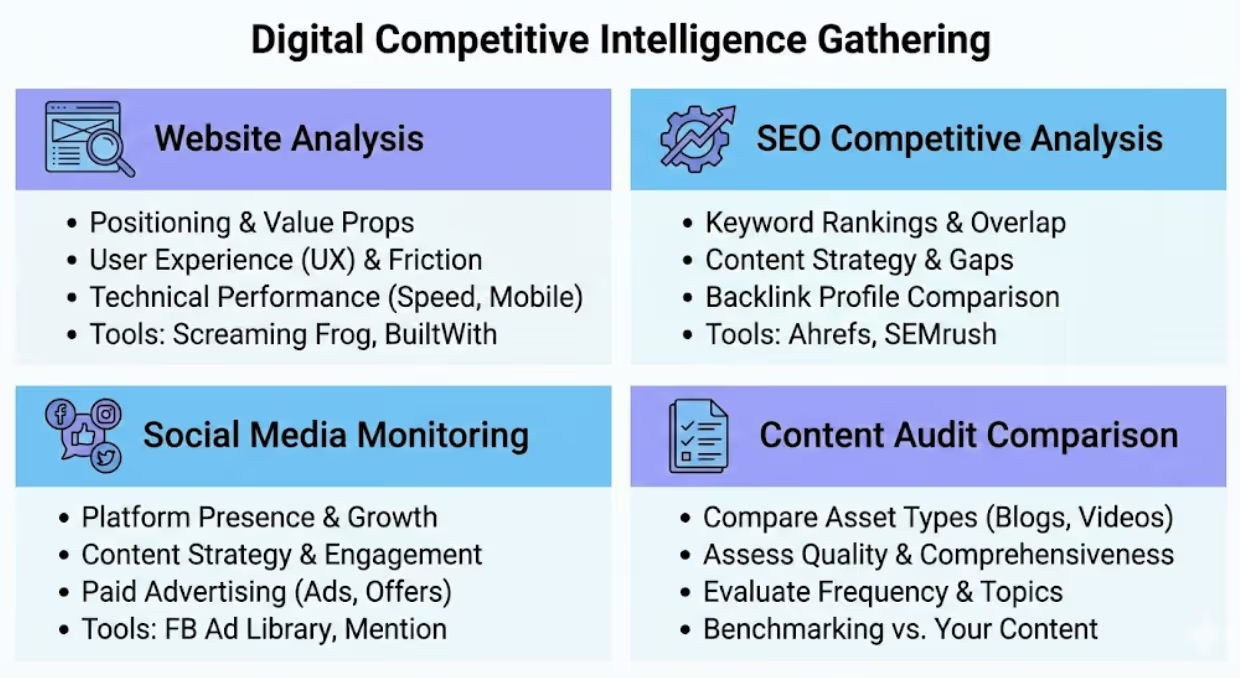
Website analysis reveals strategic positioning:
Positioning: How do competitors describe themselves? What value propositions do they emphasize? What segments do they target? What differentiators do they highlight?
User experience: How easy are sites to navigate? What conversion paths exist? What friction points? How well do they work on mobile?
Technical performance: Speed, mobile optimization, SEO issues, technology stack?
Tools: Screaming Frog, Google PageSpeed Insights, BuiltWith, SimilarWeb.
SEO competitive analysis:
Keyword rankings: What keywords do competitors rank for? Where do you overlap? What's their trajectory?
Content strategy: What topics do they cover? What gaps exist? How frequently do they publish? What formats do they use?
Backlink profile: Who links to them? What tactics work? How does their profile compare to yours?
Tools: Ahrefs or SEMrush for comprehensive analysis.
Social media monitoring:
Platform presence: Where are they active? Follower counts? Growth rates? Engagement rates?
Content strategy: What do they post? How frequently? What content generates engagement?
Paid advertising: What social ads are they running? What offers? What audiences? What creative approaches?
Tools: Manual monitoring, Facebook Ad Library, social listening tools (Mention, Brand24).
Content audit comparison:
Document competitor content assets: blog articles, resources, video content, podcasts, case studies, educational content. Compare comprehensiveness, quality, frequency, and topic coverage against your own.
Email marketing intelligence:
Subscribe to competitor lists to analyze: welcome series, newsletter frequency, promotional tactics, segmentation evidence, design and copywriting quality.
Pricing and offer analysis:
Document competitor pricing across tiers. Track promotional strategies, discounts, bundling, payment options. Compare value propositions.
Customer Experience Benchmarking
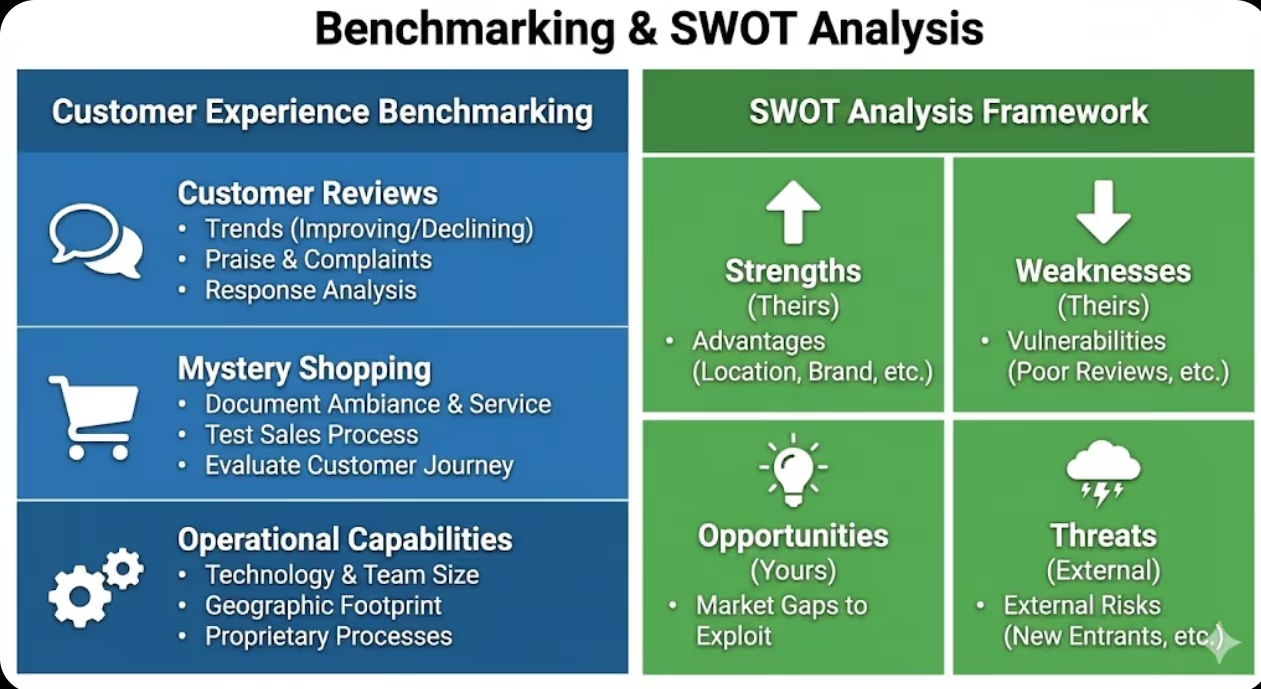
Customer review analysis:
Aggregate metrics: Review counts and ratings. Trends (improving, stable, declining)?
Review content: What do customers praise repeatedly? What complaints appear consistently? What expectations are competitors failing to meet? What unmet needs exist?
Response analysis: Do competitors respond? How quickly? How professionally? How do they handle negative reviews?
Mystery shopping:
For retail/hospitality: Visit locations. Document ambiance, service, selection, pricing, customer journey, friction points.
For service businesses: Engage as prospective customer. Experience sales process, responsiveness, proposal quality.
For e-commerce: Complete full customer journey. Test customer service, evaluate shipping/returns.
Operational capabilities:
What capabilities give competitors advantages? Technology, team size, geographic footprint, partnerships, certifications, proprietary processes?
SWOT Analysis Framework
Strengths (theirs): What advantages do competitors have? Location, team, technology, brand, service offering, prices, customer service, marketing?
Weaknesses (theirs): What vulnerabilities exist? Poor reviews, outdated website, inconsistent quality, limited service areas, high prices, poor communication, neglected channels?
Opportunities (yours): What market gaps can you exploit? Underserved segments, neglected geographies, unaddressed pain points, emerging needs, underutilized channels?
Threats (external): What dynamics threaten your position? New entrants, competitors expanding into your niche, pricing pressure, technology changes?
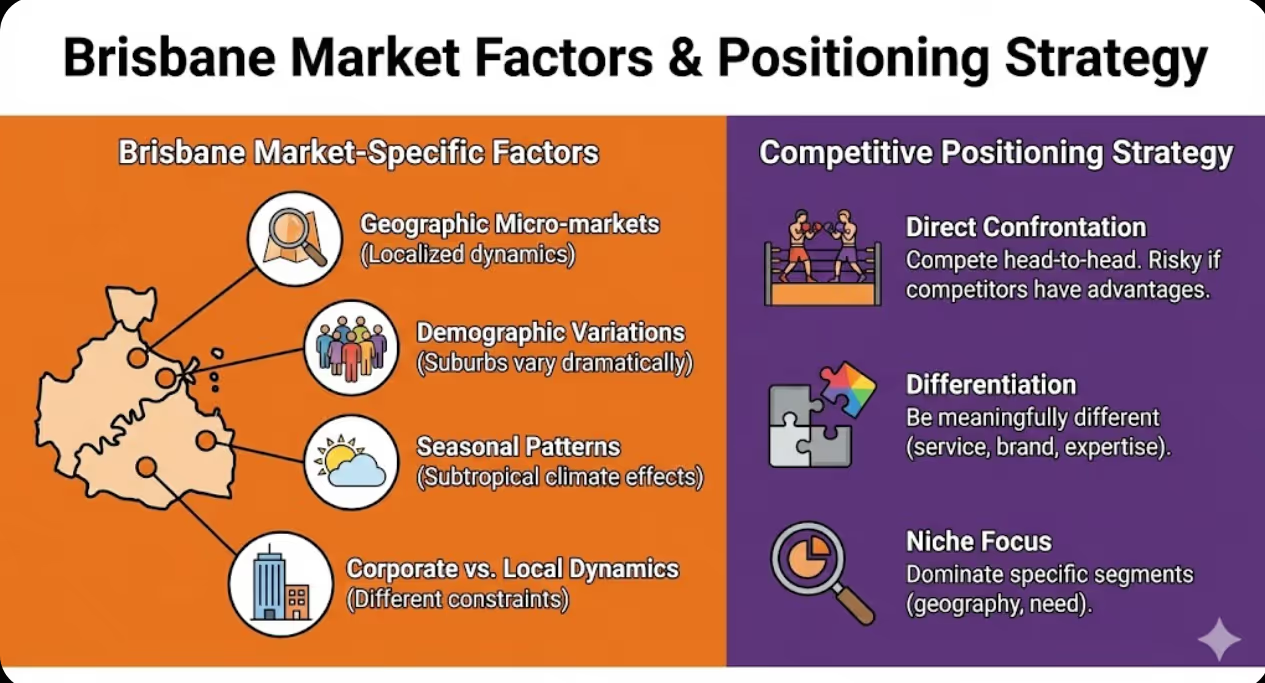
Brisbane Market-Specific Factors
Geographic micro-markets: Brisbane's sprawl creates localized dynamics. A Bulimba restaurant doesn't directly compete with an Albion restaurant despite 6km separation.
Demographic variations: Brisbane suburbs vary dramatically. Ascot versus Inala, Paddington versus Browns Plains—entirely different customer bases.
Seasonal patterns: Subtropical climate creates seasonal business fluctuations. Track competitor seasonal strategies.
Corporate versus local dynamics: National/corporate competitors versus local independents operate under different constraints. Analyze each type differently.
Competitive Positioning Strategy
After gathering intelligence, determine positioning:
Direct confrontation: Compete head-to-head. Appropriate with comparable resources. Risky if competitors have advantages.
Differentiation: Compete by being meaningfully different. Superior service, specialization, distinct brand, specialized expertise.
Niche focus: Dominate specific segments too small for larger competitors. Geography-specific, demographic-specific, need-specific.
For most Brisbane SMBs, differentiation or niche focus offer the most sustainable advantages.
Case Study: Brisbane CBD Professional Services Firm
A CBD consulting firm faced intense competition from 40+ similar firms within 2km. Their positioning was generic—indistinguishable from competitors.
Q1 2024 competitive analysis revealed:
All tier-1 competitors positioned generically as "full-service." None demonstrated industry specialization. Content marketing was sporadic. Websites were outdated. LinkedIn presence was minimal.
Customer reviews revealed: Clients valued consultants who understood their specific industry deeply.
Opportunity: Specialize exclusively in healthcare sector (30% of existing clients).
Results after 9 months:
Revenue increased 47% with higher margins. Marketing became more focused and cost-effective. Client satisfaction improved. Referrals increased.
Managing partner: "Competitive analysis revealed we were competing where everyone competed. Specialization eliminated 90% of competitors while making us the obvious choice for our market."
Case Study: Brisbane Northside Retail Store
A Kedron homewares store competed with nearby stores, major chains, and online retailers. Revenue stagnated for three years.
Competitive analysis revealed:
Local competitors competed on price through sales. Chains offered broader selection and lower prices. Online retailers offered unlimited selection and convenience.
Customer analysis revealed opportunity:
Customers valued immediate availability, seeing/touching products, and personalized advice. Loyal customers appreciated curated selection and owners' styling expertise.
Strategic repositioning: "Curated homewares and styling expertise."
Implementation: Reduced product range 40% to unique items. Launched complimentary styling consultations. Created styling content marketing.
Results after 12 months:
Revenue increased 34% with improved margins. Repeat purchases increased 56%. Marketing costs decreased. Competitive pressure reduced.
Owner: "We couldn't win on price and selection. But customers valued attributes we had. Leaning into those differences transformed us."
Competitive Monitoring Cadence
Quarterly (every 3 months):
- Review competitor website changes
- Check social growth and engagement
- Monitor new content/offerings
- Track review changes
- Scan paid advertising
- Update intelligence database
Annual deep-dive:
- Comprehensive SWOT refresh
- Full website and SEO audit
- In-depth review analysis
- Mystery shopping
- Strategic positioning reassessment
Ongoing awareness:
- Google Alerts for mentions
- Social monitoring for announcements
- Industry news following
- Customer feedback on competitor comparisons
Frequently Asked Questions
Is competitive analysis legal and ethical in Australia?
Yes, when conducted through publicly available information and ethical methods. Analyzing websites, social media, advertising, reviews, and public information is legal. Mystery shopping with honest identity is ethical. Subscribing to competitor emails is standard practice. What's unethical/illegal: industrial espionage, hacking systems, bribing employees, misrepresenting identity for proprietary information, stealing intellectual property. The framework relies exclusively on publicly available information and ethical methods completely legal in Australia.
How do small Brisbane businesses compete with larger competitors?
Small businesses can't outspend larger competitors but can outmaneuver through superior focus, agility, specialization, and local connection. Competitive analysis helps identify advantages: faster decisions, flexibility, ability to serve niches, local knowledge, community relationships, personalized service. Focus on finding where large competitors are vulnerable: segments they underserve, experiences they can't personalize, local knowledge they lack, responsiveness they can't match. Position exploiting those weaknesses rather than competing where they're strongest.
How often should competitive analysis be updated?
Quarterly lightweight monitoring plus annual comprehensive deep-dives work for most Brisbane businesses. Quarterly monitoring (2-4 hours) keeps intelligence current. Annual deep-dives (1-2 days) reassess strategic positioning comprehensively. For rapidly-evolving industries or competitive threats, increase frequency. For stable markets, semi-annual deep-dives may suffice. The goal is maintaining current intelligence informing decisions without creating analysis paralysis.
Turn Intelligence Into Advantage
Competitive analysis without action is academic exercise. The value lies in insights informing strategic decisions.
At Maven Marketing Co, we help Brisbane businesses conduct strategic competitive analysis that generates actionable intelligence. We interpret what it means for your specific business, identify exploitable opportunities, and develop strategic responses creating sustainable competitive advantages.
Contact Maven Marketing Co today to discuss competitive analysis for your Brisbane business. We'll identify your competitive set, conduct comprehensive intelligence gathering, analyze implications, and develop positioning strategies that exploit competitor weaknesses while leveraging your unique strengths.

Table of contents
read more blogs
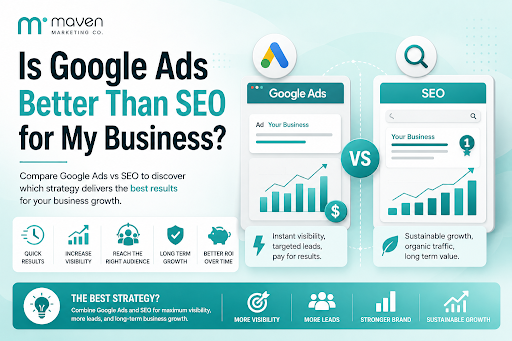
Is Google Ads Better Than SEO for My Business
One of the biggest questions business owners ask when they are planning online growth is whether they should invest in Google Ads or SEO. Both are strong marketing plays that help your company show up in Google search results, but they do things in separate lanes. Google Ads gives quicker visibility and can bring in leads fast, whereas SEO more or less focuses on slow, steady organic traffic that tends to grow the longer you keep building it. Picking the right direction depends on what you want to achieve, how much money you can spend, how crowded the market is, and how quickly you need results, like sooner rather than later. The good news is you don’t always have to choose one or the other; it’s not exactly a black-and-white situation. If you take time to understand the strongest points of both, you can put together a more sensible digital marketing plan that supports consistent expansion. In this guide, we’ll compare Google Ads vs SEO, explain the main differences, and help you figure out what option makes the most sense for your business.

When Should I Hire a Digital Marketing Agency
Growing a business today takes more than just having a website or throwing a post on social media; customers usually search around online, compare providers, skim reviews, and basically expect the brand to show up with a solid digital presence before they even think about buying. Many businesses try to run their marketing themselves, but there comes a point when “doing it all in-house” becomes clunky and hard to manage, all at once. Knowing when to hire a digital marketing agency can end up making a big, real difference for your growth. If you’re not getting enough leads, or your online visibility feels stuck, or sales are just not moving, the right agency can bring the know-how, plus a clear plan, to help you get noticeably better outcomes. In this guide, we’ll dig into what a digital marketing agency actually does, the usual signs it’s time to bring one on, and how picking the right marketing partner can help your business move forward at a faster pace.
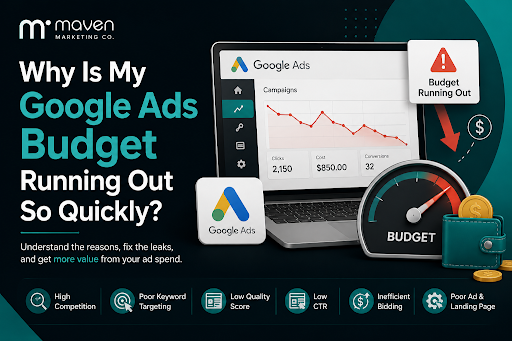
Why Is My Google Ads Budget Running Out So Quickly
Running a successful Google Ads budget isn’t only about throwing more money at it. It’s more like making every dollar, doing a bit extra. A lot of businesses start a Google Ads campaign with big hopes, then find out their daily budget is gone within a few hours, and that feels weird, right? After that, your ads stop showing effectively, new leads slip away, and your return on investment dips. So if your Google Ads budget is running out too fast, don’t stress. It’s a fairly common issue, and in most situations, it can be repaired with the right approach. There are multiple little things that can drain your advertising money quicker than you expected, from costly keywords to audience targeting that just doesn’t quite fit. In this guide, we’ll walk through why your budget disappears so quickly, how to cut wasteful spend, and the most reliable ways to boost your Google Ads ROI, even if your budget stays the same.


