.svg)


%201.svg)

Key Takeaways
- Microsoft Advertising reaches 15-20% of Australian search volume: Whilst Google dominates search, dismissing Bing's significant market share leaves substantial audience segments completely untargeted by competitors focusing solely on Google Ads
- Cost per click averages 30-40% lower than Google: Lower competition on Microsoft Advertising typically delivers cheaper clicks for identical keywords, improving cost efficiency whilst reaching engaged searchers actively seeking products and services
- Audience skews older and more affluent: Bing users trend 5-10 years older than Google users with higher household incomes, particularly valuable for industries serving established professionals, homeowners, and higher-value service categories
- LinkedIn profile targeting provides B2B precision: Unique integration with LinkedIn enables targeting by job title, company, industry, and professional attributes impossible on Google Ads, transforming B2B campaign precision and relevance
- Campaign import simplifies testing: Microsoft Advertising's import feature copies Google Ads campaigns including keywords, ad copy, and settings, enabling rapid Microsoft Advertising launch without rebuilding campaigns from scratch
- Desktop search dominates Bing usage: Microsoft Advertising skews heavily towards desktop compared to Google's mobile majority, benefiting B2B services and categories where desktop research and conversion prevails
- Edge browser integration drives growth: Microsoft Edge's rising adoption, particularly in enterprise environments, increases Bing search volume as Edge defaults to Bing unless explicitly changed by users
- Quality Score mechanisms mirror Google: Whilst using different terminology, Microsoft Advertising employs similar quality-based ad ranking considering relevance, expected click-through rate, and landing page experience
A Melbourne financial planning firm spent $8,500 monthly on Google Ads targeting retirement planning and wealth management services. Competitive bidding drove cost per click to $12-18 for valuable keywords. Despite reasonable conversion rates, client acquisition costs strained profitability margins whilst competition from large financial institutions made top ad positions prohibitively expensive.
They tested Microsoft Advertising by importing their Google Ads campaigns, allocating $2,000 monthly budget. Initial results revealed dramatically different competitive landscape. Identical keywords that cost $12-18 on Google averaged $4-7 on Microsoft Advertising. Click-through rates matched or exceeded Google performance whilst conversion rates actually improved slightly, likely reflecting Bing's older, higher-income demographic matching their target client profile perfectly.
LinkedIn profile targeting transformed their B2B lead generation. Targeting executives and business owners aged 45-65 in specific industries with household incomes above $150,000 delivered qualified leads at $63 cost per acquisition compared to $147 on Google Ads for similar audience quality. The financial planner steadily increased Microsoft Advertising budget to $4,500 monthly whilst maintaining Google Ads investment, effectively expanding total market reach by 35% whilst improving blended cost efficiency.
After twelve months, Microsoft Advertising delivered 28% of their total search advertising conversions whilst consuming only 22% of combined budget. The platform's lower competition and superior audience targeting for their demographic proved that Bing represented significant untapped opportunity rather than minor supplementary channel.
Understanding Microsoft Advertising's Australian Market Position
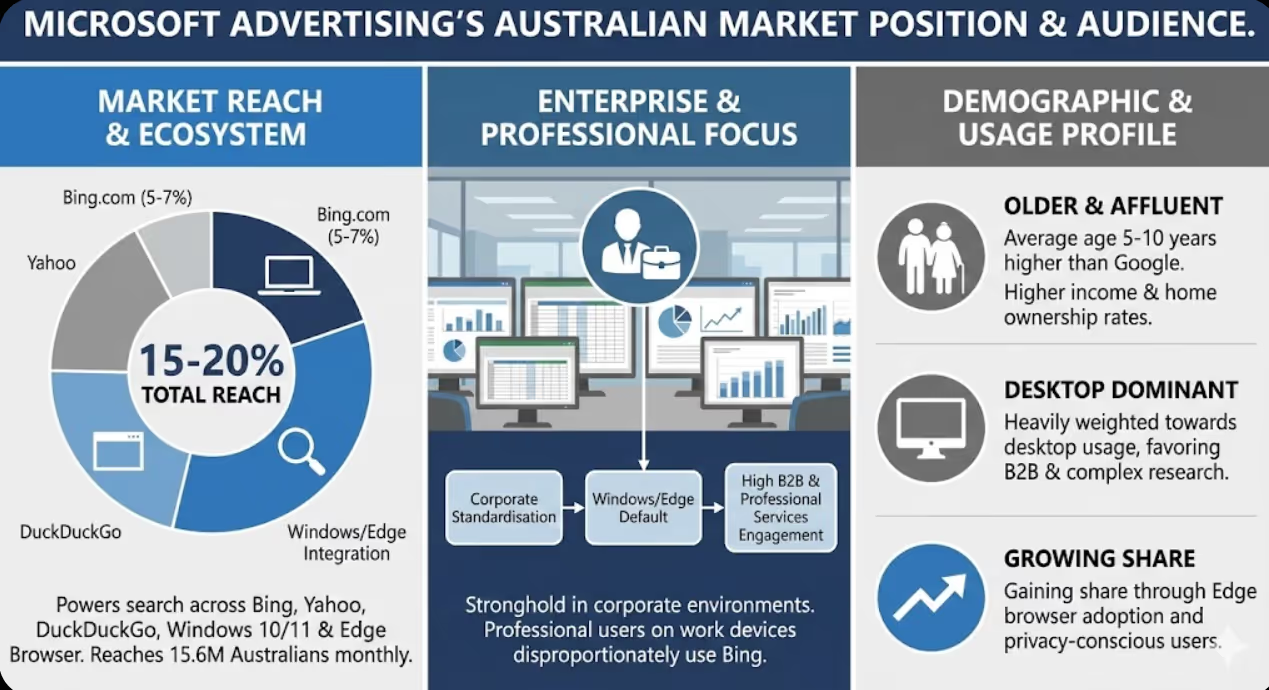
Microsoft Advertising, formerly Bing Ads, powers search advertising across Bing, Yahoo, and DuckDuckGo whilst reaching users through Windows 10/11 search integration and Microsoft Edge browser.
Australian market share data shows Bing holding approximately 5-7% of search engine market share through direct Bing.com usage, with total Microsoft Advertising reach extending to 15-20% when including Yahoo, DuckDuckGo, and syndicated search partners. According to Microsoft's own research, the Microsoft Search Network reaches 15.6 million Australians monthly, representing substantial audience that competitors ignoring Microsoft Advertising completely miss.
Enterprise and professional user concentration represents Microsoft Advertising's particular strength. Corporate environments often standardise on Microsoft products including Windows operating systems and Edge browsers defaulting to Bing search. These professional users conducting work-related searches on company devices disproportionately use Bing compared to consumer populations. B2B companies and professional services benefit enormously from this enterprise user concentration.
Demographic characteristics distinguish Bing users from Google users in ways favouring specific business categories. Bing users skew older with average ages 5-10 years higher than Google users. Income levels trend higher with Bing users more likely to fall into upper-income brackets. Education levels show slight positive correlation. Home ownership rates exceed Google user averages. These demographic patterns make Microsoft Advertising particularly effective for luxury goods, financial services, home improvement, healthcare, and other categories targeting established, affluent consumers.
Desktop versus mobile usage patterns show Microsoft Advertising heavily weighted towards desktop whilst Google has shifted predominantly mobile. This desktop concentration benefits B2B services, enterprise software, financial services, and categories where desktop research and conversion prevail. Categories thriving on mobile convenience may find Google's mobile dominance more advantageous, but desktop-focused businesses benefit from Bing's user base.
Growth trajectory analysis reveals Microsoft Advertising gaining share through Edge browser adoption, particularly following Windows 10 and Windows 11 releases making Edge the default browser. Corporate IT standardisation increasingly includes Edge deployment. Privacy-conscious users adopting DuckDuckGo contribute to Microsoft Advertising reach as DuckDuckGo uses Bing-powered search results. These growth factors suggest Microsoft Advertising's Australian reach will continue expanding rather than remaining static.
Competitive landscape comparison shows dramatically fewer advertisers on Microsoft Advertising versus Google Ads. Many Australian SMEs haven't discovered Microsoft Advertising whilst others dismissed it based on outdated market share data from years ago. This lower competition creates opportunity for early adopters capturing market share before competitors recognise the platform's value.
Cost Efficiency and Performance Advantages
Microsoft Advertising's lower competition and auction dynamics typically deliver superior cost efficiency compared to Google Ads for identical keywords and audiences.
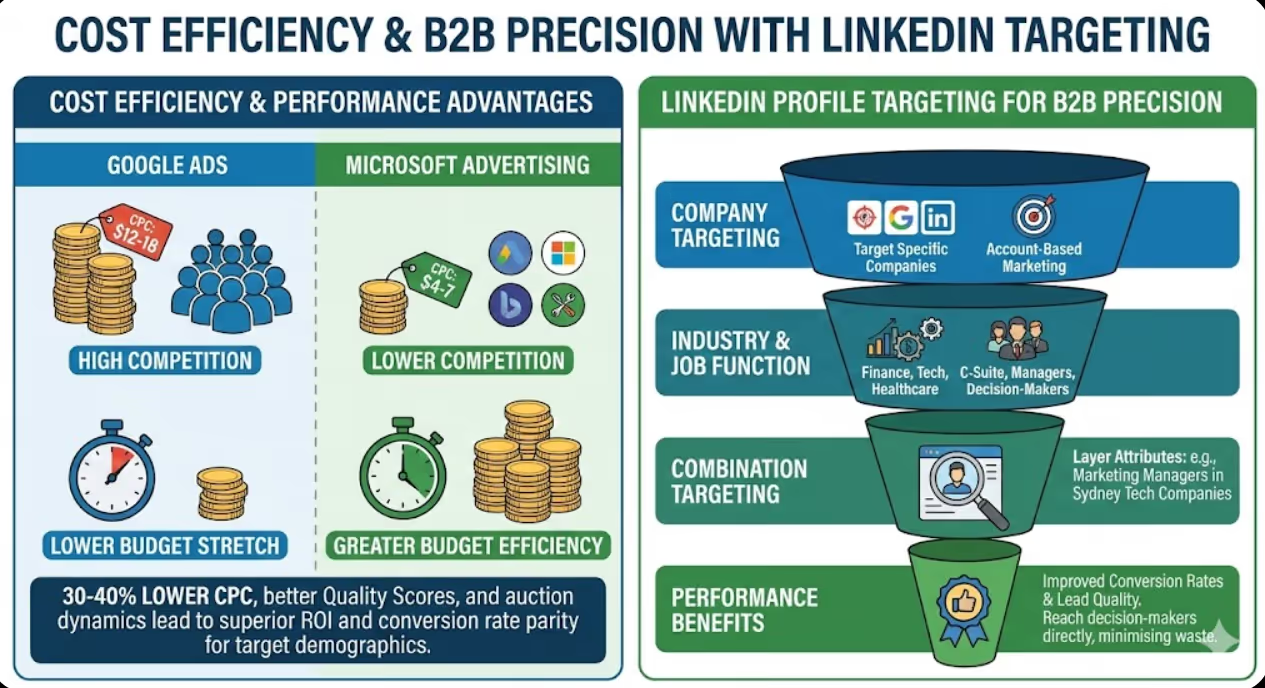
Cost per click differentials average 30-40% lower on Microsoft Advertising versus Google Ads for same keywords. Some competitive industries show even larger gaps with Microsoft Advertising clicks costing 50-60% less. These savings directly improve return on ad spend and cost per acquisition metrics when conversion rates remain comparable between platforms. According to research from WordStream's cross-platform analysis, average CPC on Microsoft Advertising runs $1.54 compared to Google's $2.69, representing 43% cost savings.
Conversion rate parity or improvement occurs frequently when audience demographics align well with Bing's user base. Businesses targeting older, affluent audiences often see higher conversion rates on Microsoft Advertising than Google despite lower traffic volumes. The quality versus quantity trade-off frequently favours Microsoft Advertising for appropriate business categories, delivering fewer but more qualified leads at lower acquisition costs.
Quality Score benefits from lower competition as achieving top Quality Scores requires outperforming competitors on relevance, click-through rate, and landing page experience. With fewer advertisers competing for keywords, achieving strong Quality Scores becomes easier on Microsoft Advertising than Google Ads. Higher Quality Scores reduce cost per click further whilst improving average ad positions, compounding cost efficiency advantages.
Auction dynamics differ subtly from Google with Microsoft Advertising's auction typically requiring lower bids for equivalent positions due to reduced competition. Second-price auction mechanics mean actual cost per click depends on competitor bids below yours, so lower overall bidding levels across Microsoft Advertising reduce costs even when your maximum bids match Google levels.
Budget efficiency allows smaller daily budgets to remain active throughout the day on Microsoft Advertising whilst equivalent Google Ads budgets might exhaust by midday in competitive markets. This budget stretch enables comprehensive daily coverage rather than fractional impression share, improving overall campaign effectiveness for budget-constrained SMEs.
Testing affordability makes Microsoft Advertising ideal platform for experimenting with new keywords, audiences, or strategies given lower costs reduce financial risk of unsuccessful tests. Learning acquired through Microsoft Advertising testing often applies to subsequent Google Ads optimisation, making Microsoft Advertising valuable testing ground even beyond its direct performance contribution.
LinkedIn Profile Targeting for B2B Precision
Microsoft's ownership of LinkedIn enables unique B2B targeting capabilities unavailable on Google Ads, transforming campaign precision for professional services and B2B companies.
Company targeting enables serving ads exclusively to employees of specific companies, valuable for account-based marketing approaches. Target decision-makers at prospect companies by name, competitors' employees to recruit talent or convert customers, or partner company employees for co-marketing initiatives. This company-level precision enables highly focused campaigns impossible through standard demographic targeting.
Industry targeting reaches professionals in specific industries using LinkedIn's professional classification data. Target accounting and finance professionals, healthcare administrators, technology sector employees, manufacturing decision-makers, or any LinkedIn industry classification. Industry targeting ensures ads reach relevant professional audiences rather than broader demographic approximations.
Job function and seniority filters enable reaching specific roles within organisations. Target only C-suite executives, mid-level managers, individual contributors, or combinations of seniority levels matching your decision-maker profile. Combine with job functions like "Marketing," "Sales," "Operations," or "IT" for precise role targeting. This granularity prevents budget waste on irrelevant employee levels whilst focusing investment on actual decision-makers.
Combination targeting layers multiple LinkedIn attributes creating highly specific audience definitions. For example, target "Marketing Managers" at "Companies with 100-500 employees" in "Technology industry" in "Sydney metropolitan area." These multi-attribute filters create laser-focused audiences impossible to replicate through demographic proxies on other platforms.
Privacy and scale considerations recognise that LinkedIn targeting requires minimum audience sizes preventing excessively narrow targeting potentially identifying individuals. Microsoft enforces minimum thresholds ensuring privacy whilst maintaining targeting effectiveness. These minimums generally don't constrain practical B2B campaigns but prevent micro-targeting of small companies or specific individuals.
Performance benefits from LinkedIn targeting typically show improved conversion rates and lead quality given precise professional targeting. B2B campaigns using LinkedIn attributes frequently achieve 20-40% higher conversion rates than demographic-only targeting despite potentially higher cost per click from audience specificity. The lead quality improvement often justifies cost increases through higher close rates and customer value.
Layering strategies combine LinkedIn targeting with other Microsoft Advertising targeting options like device type, location, and time of day. For example, target "CFOs at enterprise companies" on "Desktop devices" during "Business hours" in "Central business districts." This multi-dimensional targeting creates highly relevant audience definitions maximising campaign efficiency.
Strategic Campaign Implementation
Successful Microsoft Advertising implementation requires understanding platform-specific best practices whilst leveraging similarities to Google Ads for efficient campaign setup.
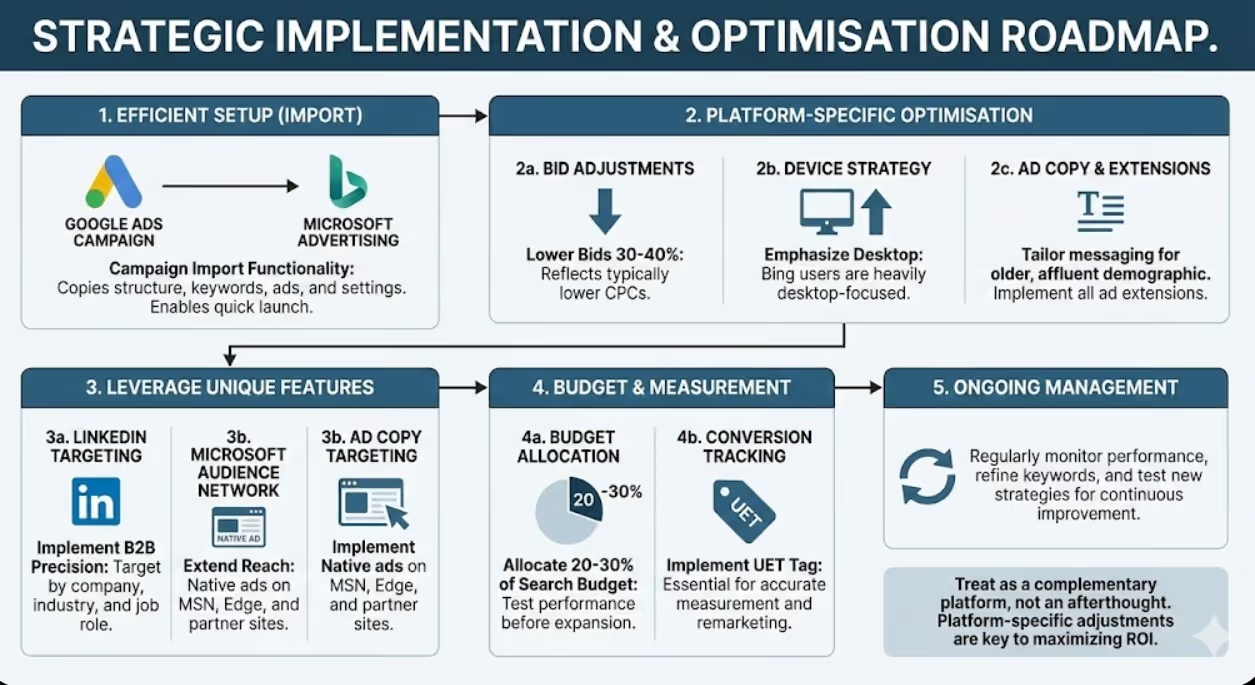
Campaign import functionality copies existing Google Ads campaigns into Microsoft Advertising including campaign structure, ad groups, keywords, ads, and many settings. This import feature dramatically reduces Microsoft Advertising launch effort, enabling testing within hours rather than weeks required for manual campaign building. However, imported campaigns benefit from platform-specific optimisation rather than running identically to Google versions indefinitely.
Post-import optimisation addresses platform differences including adjusting bids downward 30-40% reflecting lower typical costs on Microsoft Advertising, removing mobile-specific elements as Bing skews desktop, adding LinkedIn profile targeting where applicable, and adjusting ad copy to resonate with Bing's older demographic when relevant. These optimisations acknowledge that whilst import provides efficient starting point, best performance requires platform-specific refinement.
Budget allocation strategy determines appropriate Microsoft Advertising investment relative to Google Ads spend. Conservative approaches start with 10-15% of total search budget allocated to Microsoft Advertising, testing performance before expansion. Balanced strategies allocate 20-30% to Microsoft Advertising reflecting its market share plus efficiency advantages. Aggressive strategies, particularly for B2B or demographics matching Bing users, might allocate 30-40% capitalising on platform strengths. Budget allocation should reflect actual performance rather than arbitrary fixed percentages.
Ad copy considerations acknowledge Bing's demographic profile when relevant. References to experience, established brands, quality, and value may resonate more strongly with older, affluent audiences than urgency-focused or trendy messaging. However, effective ad copy fundamentally depends on product/service positioning rather than platform, so dramatic copy changes solely for Microsoft Advertising rarely prove necessary unless A/B testing reveals platform-specific preferences.
Extension utilisation matches Google Ads best practices with sitelink extensions, callout extensions, structured snippets, and call extensions all supported on Microsoft Advertising. These extensions improve ad visibility and click-through rates similarly to Google, making comprehensive extension implementation equally important across platforms.
Negative keyword management requires separate negative keyword lists for Microsoft Advertising as lists don't transfer through import or sync between platforms. Monitor search query reports identifying irrelevant searches, build Microsoft Advertising-specific negative keyword lists, and maintain ongoing refinement. Search behaviour differences between platforms occasionally necessitate platform-specific negatives despite keyword similarity.
Conversion tracking setup requires implementing Microsoft Advertising's UET (Universal Event Tracking) tag separately from Google Ads conversion tracking. UET tag installation on website enables conversion tracking, remarketing audiences, and automated bidding strategies. Proper conversion tracking remains essential for performance measurement and optimisation regardless of platform.
Platform-Specific Features and Optimisations
Microsoft Advertising offers unique features and optimisation opportunities distinct from Google Ads, warranting platform-specific attention beyond simple campaign imports.
LinkedIn profile targeting represents the most distinctive Microsoft Advertising feature already discussed extensively, providing B2B targeting precision unavailable elsewhere. Maximise this competitive advantage through strategic implementation in professional services, B2B software, recruitment, and other business-focused campaigns.
Microsoft Audience Network extends reach beyond search through native advertising on Microsoft properties including MSN, Microsoft Edge, and third-party sites. Audience Network ads appear as native content recommendations driving additional traffic at typically lower costs than search ads. However, conversion quality from Audience Network may differ from search traffic, requiring separate evaluation and budget allocation.
Import and sync functionality maintains ongoing synchronisation between Google Ads and Microsoft Advertising campaigns, automatically copying changes from Google to Microsoft rather than requiring manual updates in both platforms. This ongoing sync reduces management burden for advertisers running parallel campaigns, though platform-specific optimisations still warrant manual adjustments.
Automated bidding strategies mirror Google's Smart Bidding with enhanced CPC, maximise conversions, and target CPA options using machine learning for bid optimisation. However, Microsoft Advertising's Smart Bidding requires sufficient conversion data for effective operation, potentially limiting usefulness for low-volume campaigns. The algorithms function similarly to Google's though trained on Microsoft-specific data and user behaviour.
Remarketing capabilities enable targeting previous website visitors through Microsoft Advertising search and Audience Network ads. Remarketing lists segment visitors by page views, actions taken, or time since visit, enabling tailored messaging and bidding. Integration with LinkedIn enables remarketing to website visitors matching specific LinkedIn profiles, combining behavioural and professional targeting.
Ad scheduling controls day of week and hour of day bidding adjustments or complete ad disabling during non-business periods. B2B campaigns particularly benefit from business-hours scheduling whilst consumer campaigns may optimise towards evening and weekend traffic. Platform usage patterns may differ between Microsoft Advertising and Google Ads warranting platform-specific scheduling strategies.
Device targeting and bid adjustments enable emphasising desktop traffic given Microsoft Advertising's desktop concentration or adjusting mobile bids when mobile conversion rates differ significantly from desktop. Desktop bid premiums of 10-30% combined with mobile bid reductions of 20-40% reflect typical desktop preference on Microsoft Advertising versus Google's mobile dominance.
Measuring and Optimising Performance
Systematic performance measurement and ongoing optimisation ensure Microsoft Advertising delivers expected ROI whilst identifying improvement opportunities.
Conversion tracking verification confirms UET tag fires correctly, conversion actions track properly, and conversion data populates reports accurately before significant budget allocation. Test conversion tracking through test conversions ensuring data appears in reports matching actual website behaviour. Tracking problems waste budget while providing misleading performance data.
Performance benchmarking establishes baseline metrics during initial testing period enabling objective evaluation of Microsoft Advertising performance. Track cost per click, click-through rate, conversion rate, cost per acquisition, and return on ad spend comparing against Google Ads performance and business KPIs. Benchmark data supports data-driven budget allocation decisions.
Platform comparison analysis measures Microsoft Advertising versus Google Ads performance across key metrics. Simple comparison reveals relative performance, but sophisticated analysis adjusts for demographic differences, search intent variations, and audience quality when platforms serve different user segments. Microsoft Advertising's higher-income users might justify higher cost per acquisition if lifetime value exceeds Google-acquired customers.
Search query mining reviews search terms triggering ads, identifying high-performing queries warranting keyword additions and irrelevant queries requiring negative keywords. Microsoft Advertising search behaviour differs slightly from Google despite keyword overlap, making platform-specific search query analysis essential rather than assuming identical search patterns.
Quality Score monitoring tracks keyword Quality Scores identifying improvement opportunities through relevance enhancements, landing page optimisations, or ad copy improvements. Microsoft Advertising Quality Scores use different scales than Google but serve similar purposes in determining ad rank and cost per click. Low Quality Scores indicate optimisation priorities regardless of platform.
Attribution analysis evaluates whether Microsoft Advertising primarily drives new customer acquisition or assists conversions credited to other channels. Multi-touch attribution often shows Microsoft Advertising contributing to conversion paths completed through Google or direct traffic, providing value beyond last-click conversion credit. Understanding Microsoft Advertising's role throughout customer journeys informs appropriate performance expectations.
Seasonal performance patterns may differ between platforms given demographic differences and usage contexts. Holiday shopping behaviour, tax season professional services demand, or summer travel searches may show different patterns on Microsoft Advertising versus Google warranting seasonal budget allocation adjustments. Annual performance review identifies seasonal optimisation opportunities.
Integration with Broader Marketing Strategy
Microsoft Advertising achieves maximum value when integrated thoughtfully within comprehensive multi-channel marketing strategies rather than operating as isolated platform.
Cross-platform search strategy treats Microsoft Advertising and Google Ads as complementary platforms covering complete search landscape rather than competitive alternatives. Running both platforms simultaneously captures all search traffic whilst leveraging each platform's strengths. Google captures mobile-first audiences whilst Microsoft Advertising reaches desktop-focused users. Together they provide comprehensive search coverage competitors using single platforms cannot match.
Budget flexibility between platforms enables dynamic reallocation based on performance, seasonality, or competitive dynamics. Maintain minimum viable budgets on both platforms ensuring presence and data flow whilst shifting incremental budgets towards higher-performing platform during specific periods. This fluid allocation maximises overall search advertising ROI whilst maintaining multi-platform presence.
LinkedIn integration strategy leverages Microsoft's LinkedIn connection beyond advertising through content marketing on LinkedIn feeding Microsoft Advertising remarketing audiences, LinkedIn profile enrichment improving customer understanding, and coordinated messaging across LinkedIn organic content and Microsoft Advertising paid campaigns. This ecosystem integration amplifies Microsoft Advertising value for B2B marketers already investing in LinkedIn presence.
Competitive differentiation opportunities emerge from competitors' Google-only focus creating Microsoft Advertising blue ocean with dramatically reduced competition. First-mover advantages in professional services, B2B categories, or local markets enable capturing market share before competitors discover platform value. Early Microsoft Advertising adoption establishes presence while costs remain low and competition stays minimal.
Testing and learning transfer between platforms allows insights from Microsoft Advertising testing to inform Google Ads optimisation and vice versa. Keywords, ad copy, audiences, and strategies tested cost-effectively on Microsoft Advertising can graduate to Google Ads once proven effective. Conversely, Google Ads learnings accelerate Microsoft Advertising setup through informed campaign imports.
Reporting integration combines Microsoft Advertising and Google Ads data in unified dashboards providing complete search advertising performance view. Google Data Studio, Microsoft Power BI, or third-party platforms aggregate cross-platform data revealing blended performance and enabling holistic optimisation rather than platform-siloed decision making.
Common Microsoft Advertising Mistakes to Avoid
Understanding typical implementation errors helps Australian SMEs avoid costly mistakes diminishing Microsoft Advertising effectiveness.
Expecting identical performance to Google Ads sets unrealistic benchmarks given demographic, device, and volume differences between platforms. Microsoft Advertising should be evaluated on its own merits and audience characteristics rather than simply replicating Google Ads targets. Different user bases warrant different performance expectations and optimisation approaches.
Neglecting platform-specific optimisation after campaign import treats Microsoft Advertising as afterthought rather than strategic platform. Whilst import provides efficient start, optimal performance requires bid adjustments, LinkedIn targeting implementation, ad copy refinement, and ongoing platform-specific management. Imported campaigns left unchanged underperform properly optimised Microsoft Advertising campaigns significantly.
Insufficient budget allocation prevents accumulating meaningful performance data whilst limiting impression share so severely that campaigns barely run. Minimum budgets of $500-1,000 monthly per campaign enable reasonable testing and data accumulation. Token budgets of $100-200 monthly spread across multiple campaigns generate insufficient data for optimisation or reliable performance assessment.
Ignoring LinkedIn targeting for B2B campaigns wastes Microsoft Advertising's most distinctive competitive advantage. Professional services, B2B software, and business-focused campaigns should implement LinkedIn profile targeting as foundational strategy rather than optional addition. Demographic targeting without LinkedIn attributes sacrifices precision and performance.
Poor conversion tracking implementation prevents accurate performance measurement and optimisation. Installing UET tag without configuring conversion actions, implementing conversion tracking after campaign launch losing initial conversion data, or failing to verify tracking accuracy all compromise campaign evaluation. Proper tracking setup before campaign launch enables data-driven optimisation from day one.
Premature platform abandonment based on insufficient testing duration or volume prevents discovering Microsoft Advertising value for specific businesses. Minimum 60-90 day testing periods with adequate budgets enable fair platform evaluation. Brief tests with minimal budgets often yield inconclusive results leading to unjustified platform dismissal.
Mobile-focused strategies ignoring Microsoft Advertising's desktop strength create misalignment between platform characteristics and campaign requirements. Mobile-first businesses may find Microsoft Advertising less valuable than desktop-focused companies, warranting different budget allocation and optimisation priorities reflecting realistic platform usage patterns.
Ready to Explore Microsoft Advertising's Opportunity?
Microsoft Advertising represents significant untapped opportunity for Australian SMEs seeking cost-effective search advertising reach beyond Google's crowded marketplace. Lower competition, superior B2B targeting, demographic advantages for appropriate categories, and seamless Google Ads campaign import create compelling platform value proposition.
For businesses spending substantially on Google Ads, allocating 15-30% of search budgets to Microsoft Advertising typically delivers incremental reach and conversions at equal or better efficiency than Google-only approaches. The question isn't whether to use Microsoft Advertising but rather how quickly to capitalise on competitors' continued ignorance of platform value.
Need expert guidance implementing Microsoft Advertising strategy and optimising campaigns for maximum ROI? Maven Marketing Co. specialises in comprehensive search advertising strategies spanning Google Ads and Microsoft Advertising. Our team combines platform expertise with strategic thinking, implementing data-driven campaigns that leverage each platform's unique strengths whilst maintaining cohesive cross-platform performance.
We don't just import campaigns and hope for results. We develop strategic Microsoft Advertising implementations including LinkedIn profile targeting for B2B precision, platform-specific bid optimisation, audience segmentation leveraging demographic advantages, and integrated cross-platform strategies maximising total search advertising ROI.
Contact Maven Marketing Co. today for a comprehensive search advertising strategy consultation. We'll analyse your current Google Ads performance, identify Microsoft Advertising opportunities specific to your business, develop implementation roadmap leveraging platform advantages, and create integrated multi-platform strategy capturing complete search market opportunity. Let's ensure your business reaches every qualified prospect actively searching for your products and services across all relevant search platforms.
Frequently Asked Questions
Q: Is Microsoft Advertising worth the effort for small businesses with limited marketing budgets and resources?
Yes, particularly because campaign import makes Microsoft Advertising implementation far easier than building campaigns from scratch. Import existing Google Ads campaigns into Microsoft Advertising in under an hour, adjust bids downward 30-40%, add LinkedIn targeting for B2B campaigns, and launch with minimal additional effort. Even modest $500-1,000 monthly budgets often deliver meaningful results given lower competition and costs. The key is leveraging import functionality rather than treating Microsoft Advertising as entirely separate platform requiring duplicated effort. Most small businesses find that Microsoft Advertising delivers 15-25% of their total search conversions whilst consuming only 10-20% of time investment, representing efficient opportunity rather than resource drain.
Q: How does Microsoft Advertising's audience differ from Google's, and which businesses benefit most from these differences?
Microsoft Advertising users skew 5-10 years older, show higher household incomes, use desktop devices more frequently, and concentrate in enterprise/professional environments. Businesses benefiting most include professional services targeting established clients (financial planning, legal, accounting), luxury goods and premium services, B2B companies selling to enterprises, home improvement and real estate, healthcare services for older demographics, and desktop-focused software or services. Conversely, mobile-first businesses, youth-oriented products, and budget-focused categories may find Google's demographic more aligned. Understanding your ideal customer profile determines whether Microsoft Advertising's audience characteristics represent advantage or limitation for your specific business.
Q: Can we run Microsoft Advertising campaigns simultaneously with Google Ads without cannibalising performance on either platform?
Yes, platforms serve largely different users with minimal overlap cannibalisation. Google dominates mobile search whilst Microsoft Advertising skews desktop. Different demographics, device preferences, and user contexts mean platforms largely reach distinct audiences rather than competing for identical users. Running both platforms simultaneously expands total market reach by 15-30% compared to Google-only approaches whilst typically maintaining or improving blended cost efficiency. Budget allocation should reflect performance rather than arbitrary splits, with platforms complementing rather than cannibalising each other. Most businesses find cross-platform search strategies outperform single-platform approaches through expanded reach and reduced dependency on any single channel.

Table of contents
read more blogs

Why Your Google Ads Campaign Is Not Getting Results: Common Mistakes and Solutions
If your Google Ads campaign is getting impressions or clicks but not producing enough enquiries, sales, or qualified leads, the problem is usually not Google Ads itself. It is more often a strategy, tracking, or conversion issue somewhere in the system.That matters because paid search can look busy without being commercially effective. You can have traffic coming in, a reasonable click-through rate and money leaving the account every day, yet still have very little to show for it if your keywords are weak, your ad copy is misaligned, your landing pages do not convert or your tracking is incomplete.A strong campaign works as one connected chain. Search intent, keyword targeting, ad relevance, bidding, landing-page experience, and conversion tracking all need to support the same commercial outcome. If one link breaks, results usually suffer quickly.This guide explains the most common reasons a Google Ads campaign is not getting results, what those issues normally look like in practice and how to fix them without relying on guesswork. The focus is not on vanity metrics. It is on improving lead quality, conversion rate, and return on spend.

6 Ways Digital Marketing Can Boost B2B Lead Generation
B2B lead generation is not about filling a CRM with as many names as possible. The real objective is to attract businesses that fit your offer, give the right people a reason to engage and create enough confidence for a genuine sales conversation to start.That distinction matters because B2B buying is usually more targeted than consumer marketing and often involves several people influencing the decision. Current LinkedIn lead-generation guidance makes the same point: more leads do not automatically mean better results if only a small proportion are genuinely relevant or likely to progress.Digital marketing helps by creating multiple paths into the business. Search can capture active demand. Paid media can put an offer in front of a tightly defined audience. Content can build authority before a buyer is ready to talk. Social media can keep the brand visible across a long decision cycle. Your website turns interest into action, while email helps nurture that interest over time.The strongest B2B digital marketing strategies do not treat these as six separate activities. They use them as one connected system designed to generate quality B2B leads, support sales and build a more dependable pipeline

How to Build a Brand Positioning Strategy That Sets Your Business Apart
Most businesses can explain what they sell. Far fewer can explain, in a sentence or two, why the right customer should choose them instead of another credible option. That gap is where brand positioning matters.A strong brand positioning strategy gives your business a clear place in the market and a clear place in the customer's mind. It helps your team decide who you are speaking to, what you want to be known for, which benefits deserve the most attention and how your marketing should sound and look across every channel.It is not a slogan exercise and it is not something reserved for large consumer brands. For an Australian service business, e-commerce brand, professional firm, or growing B2B company, positioning can make everyday decisions easier, from website copy and campaign messaging to pricing, sales conversations, and brand identity. The goal is not to look different for the sake of it. The goal is to be meaningfully different in a way the right customers understand and value.