.svg)


%201.svg)
Key Takeaways
- A Google Business Profile is not a task to be configured once and left alone. The completeness of every field, the recency of photos and posts, the responsiveness to reviews, and the accuracy of the business information all contribute to both the ranking and the conversion performance of the profile.
- The business description field is one of the most underused conversion elements in the profile. Most Australian businesses use it to describe what they do. Descriptions that convert the most enquiries describe what makes the business the right choice for a specific type of customer.
- Photo quality and photo recency are among the strongest behavioural engagement signals the profile can produce. Businesses with recent, professional photos receive significantly more direction requests and website visits than businesses with outdated or absent imagery.
- Review volume and review recency are both important. A business with fifty reviews from three years ago is less compelling to a local searcher than one with thirty reviews from the past six months, because recency signals that the business is active and that the review evidence is current.
- The Questions and Answers section is a conversion asset that most Australian businesses ignore entirely, leaving it either empty (which creates uncertainty in searchers' minds) or populated by questions the business has not answered (which signals inattentiveness).
- Google Posts are the mechanism for maintaining profile freshness between major updates. A business that publishes a post every two to three weeks signals to both Google and to potential customers that the profile is actively managed.
- The booking feature integration, available through Google's scheduling partners, allows a searcher to move from discovery to confirmed appointment without leaving the Google search results page. Reducing this friction is one of the conversion improvements with the highest impact available in local search.
The Profile as a Conversion Surface
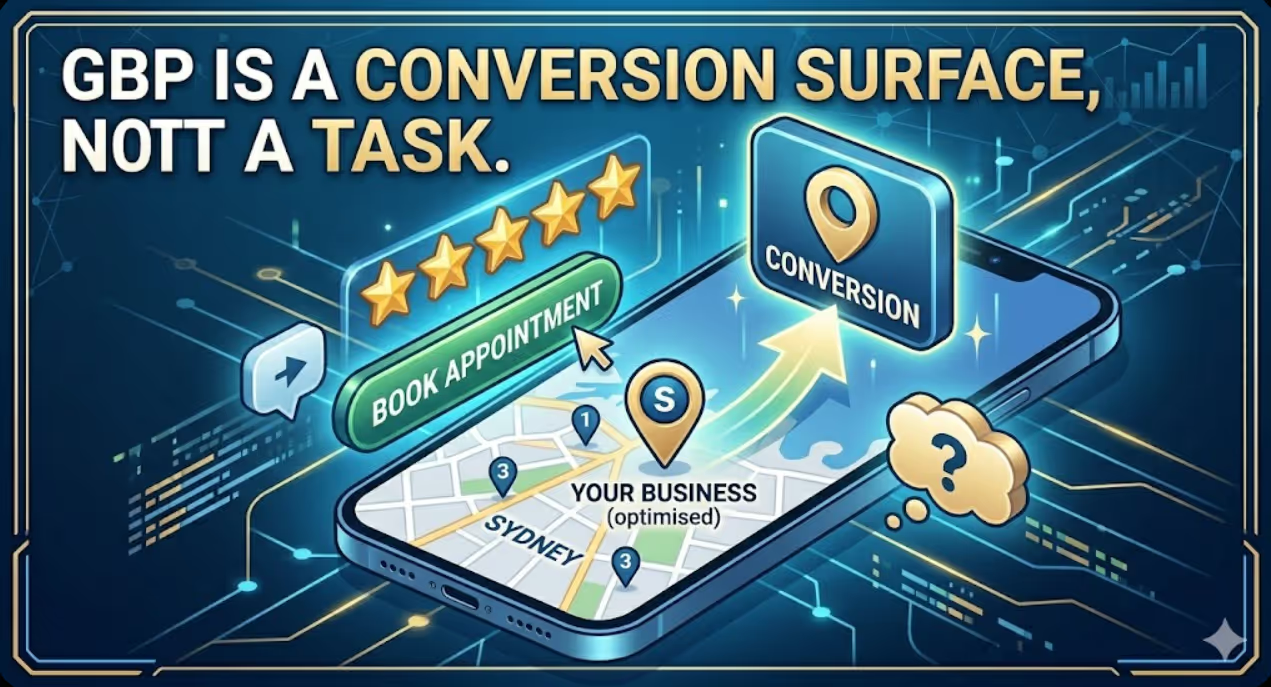
Most Australian businesses think of their Google Business Profile in terms of ranking: how do we appear in the local pack? The more commercially important question is: when we appear in the local pack, what happens? A business that appears in position three of the local pack with a profile that answers every question the searcher has and makes booking easy will convert more searchers into appointments than a business in position one with an incomplete, outdated, or unconvincing profile.
The conversion funnel in local search is short. A searcher sees the local pack results, scans the names, ratings, and brief snippets visible in the results, clicks through to the profile that looks most relevant and trustworthy, spends thirty to ninety seconds reviewing the information, and either books, calls, clicks through to the website, or moves on to a competitor. The profile has one interaction to make its case. Every element of the profile that is missing, outdated, or unconvincing is a friction point in that single interaction.
The Business Description: What Most Businesses Get Wrong
The business description field allows 750 characters. Most Australian businesses use some or all of those characters to describe what the business does, which is information the searcher already largely has from the business name and category.
The description that converts uses a different approach. It answers the questions a motivated local searcher actually has at the moment of comparison:
Why should I choose this business rather than the three competitors also showing in the results? The description should articulate the specific differentiating factor that makes this business the right choice: the specific experience level, the specific approach, the specific outcome specialisation, or the specific type of customer the business serves best.
Am I the right type of customer for this business? A physiotherapy practice that specialises in sports rehabilitation should say so in the description, because a searcher who has a sports injury wants to see that specifically, and a searcher who needs general physical rehabilitation should also know they are in the right place (or know quickly if they are not).
What can I expect from the experience? A brief statement of what the experience of being a customer looks like, the process, the commitment required, the style of service, builds the confidence that a searcher needs to move from browsing to booking.
The description should use the most natural, specific language possible and should avoid the generic claims that appear in every competitor's description ("exceptional service," "experienced team," "excellent results"). Specific and distinctive always outperforms generic.
Photography: The Element That Drives the Most Engagement
Photos are the most immediately visible and most psychologically impactful element of the profile. Before a searcher reads a word, they have formed an impression from the primary photo. That impression determines whether they slow down and engage or move to the next result.
The primary photo matters most. The image that appears in the local pack result (the small thumbnail) and as the hero image in the profile is typically the business's chosen cover photo. This image should be professionally photographed, well lit, and immediately communicative of the type of business and its quality level. A professional services business should show a professional environment. A trade business should show completed work at its best. A healthcare practice should show a welcoming environment that meets clinical standards.
Quantity signals activity. Profiles with ten or more photos receive a measurably higher volume of direction requests and website clicks than profiles with fewer than five photos. The photos should not all be of the same subject: a mix of the premises, the team, completed work or products, and the customer experience environment provides a comprehensive picture of what the business is and what it is like to engage with it.
Recency matters. Google's systems favour profiles with recently added photos, and searchers are put off by profiles where the most recent photo is three or four years old. Adding one new photo per month, whether it is a new piece of completed work, a team addition, or a seasonal image of the premises, keeps the profile appearing active and current.
Avoid stock photography. Stock photos in a Google Business Profile are detectable and unconvincing. Genuine photos of the actual business, its actual team, and its actual work always outperform polished but impersonal stock imagery in local search conversion.
Reviews: Collection, Recency, and Response
Reviews are the most influential element in local search conversion for most Australian service businesses. A searcher comparing two businesses with similar proximity and category will almost always choose the one with more, more recent, and more convincingly positive reviews.
Volume and velocity. The review count matters for the trust impression it creates: a business with forty reviews appears more established and more reliably positive than one with six. The review velocity, the rate at which new reviews are being added, matters for recency. A business that is actively generating new reviews signals ongoing commercial activity and current customer satisfaction. A business whose review acquisition has stopped signals either stagnation or an unwillingness to invite review.
Responding to every review. Responding to reviews, both positive and negative, is one of the time investments in local search conversion management that produces the strongest return. It signals to potential customers that the business is attentive and engaged. It signals to Google that the profile is actively managed. And for negative reviews, a professional, constructive response often converts the damage of the negative review into a positive signal about the business's service recovery approach.
The response to a positive review should be personal, brief, and genuine: acknowledge the specific thing the reviewer mentioned, thank them, and express something specific about the interaction rather than a generic "thank you for your review." The response to a negative review should acknowledge the concern without conceding fault where it is not warranted, express a genuine desire to resolve the situation, and invite further direct contact.
Asking for reviews at the right moment. The most detailed and useful reviews come from customers who are asked at the moment their satisfaction is highest. For service businesses, this is typically immediately after the service is completed, when the customer has experienced the outcome and is in a positive emotional state. A simple, direct request ("We would really appreciate it if you could leave us a Google review — it takes about a minute and makes a big difference to our ability to help other people in [suburb] find us") combined with a direct link to the review form produces significantly higher review response rates than a generic email sent afterward asking for feedback.
Questions and Answers: The Ignored Conversion Asset
The Questions and Answers section of a Google Business Profile allows both searchers and the business to post questions and answers. Most Australian businesses either do not know it exists or know it exists and have never engaged with it.
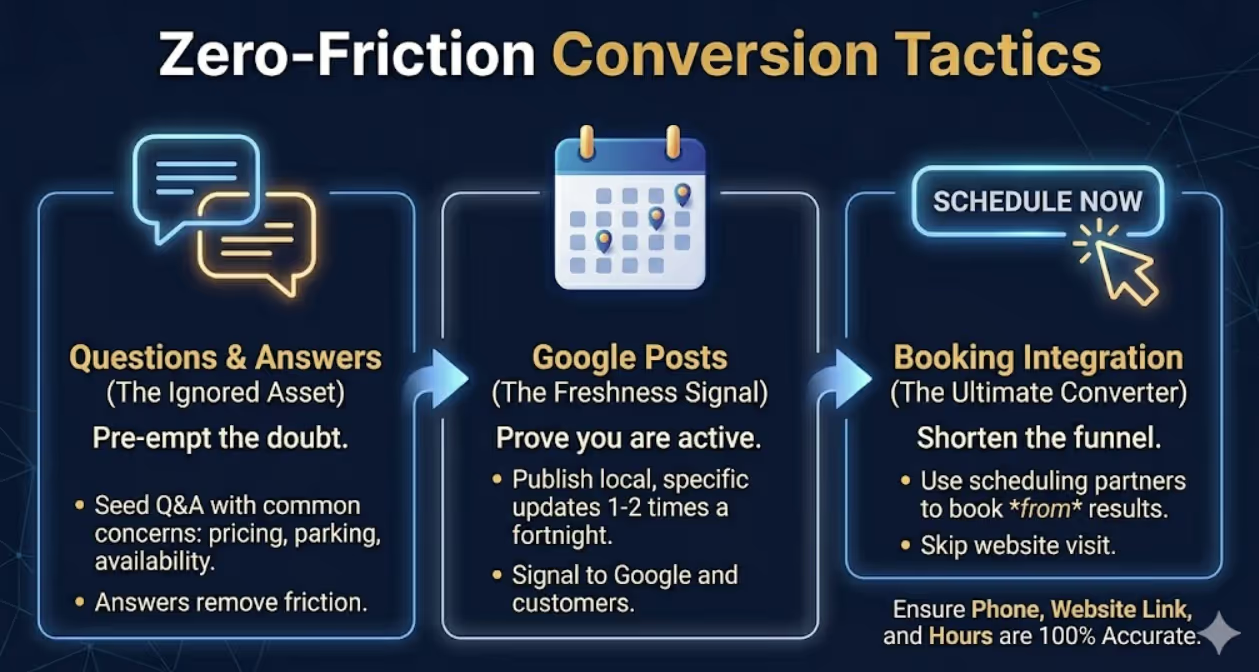
The unconverted opportunity is significant. A business can seed the Questions and Answers section with the questions it is most commonly asked during the enquiry and booking process: pricing questions, location and parking questions, service scope questions, availability questions, and any other question that creates friction between discovery and booking. By answering these questions proactively in the profile, the business removes a friction point for every searcher who has the same question but does not ask it.
When a searcher asks a question in the profile and the business does not answer it, any user can provide an answer, including competitors or people with inaccurate information. Monitoring and responding to questions quickly is an important profile management task.
Google Posts: Maintaining Freshness and Signalling Activity
Google Posts are short updates that appear in the profile in the Updates section. They can include text, a photo, and a call to action button linking to a URL. They remain visible for a set period and then roll off, creating a natural recency pressure that rewards regular posting.
The value of regular Google Posts for a local business is threefold. They signal to Google that the profile is actively managed, which is a positive signal in the local ranking algorithm. They provide an additional content surface in the search results where the business can highlight a current offer, a seasonal service, a new team member, or a relevant piece of information for local searchers. And they demonstrate to a searcher who reviews the profile that the business is currently active, which reduces the uncertainty that an inactive or outdated profile creates.
The post cadence that produces the strongest freshness signal without creating an unmanageable workload is one to two posts per fortnight. The content should be specific and local where possible: a completed project in a named suburb, a seasonal service reminder, a response to a local event or condition, or a timely piece of advice relevant to the local audience.
Booking Integration and Contact Friction Reduction
The most direct conversion improvement available in Google Business Profile is the booking feature, which allows searchers to schedule an appointment directly through the profile without visiting the website. This integration is available through Google's scheduling partners, which include Acuity Scheduling, Booksy, HotDoc, and other booking platforms.
For Australian businesses in categories where intent to book an appointment is strong (healthcare, personal services, professional services, trades), eliminating the step between discovery and booked appointment that a website visit represents can produce a meaningful increase in booking completion rates.
Beyond the booking feature, the other contact friction reduction elements to configure correctly are:
The phone number should be current, monitored during business hours, and formatted correctly for Australian mobile and landline conventions. A phone number that goes unanswered during business hours is a conversion loss that the profile's ranking cannot compensate for.
The website link should go to the most relevant page for the searcher's intent, which in most cases is a services or booking page rather than the homepage.
The business hours should reflect the actual hours during which the business is available to respond to enquiries and accept bookings, including any seasonal variations. Nothing creates a worse first impression than calling a business that the profile says is open and finding it closed.

FAQs
How long does it take for Google Business Profile optimisations to produce measurable improvements in local search performance?
Completeness improvements, such as filling in previously empty fields, adding photos, and updating hours, typically produce measurable improvements in profile views and engagement within two to four weeks as Google recrawls and reassesses the profile. Review generation is a longer-term effort whose impact on ranking and conversion compounds over two to six months as the volume and recency of reviews improve. The booking feature and contact information improvements produce immediate conversion benefits for anyone who views the profile from the moment they are configured, without any ranking or indexing delay. For businesses that have neglected their profile for an extended period, a comprehensive optimisation that addresses all elements simultaneously tends to produce a more significant and faster performance improvement than incremental changes spread over time.
Should an Australian business use a booking platform from a third party or the native Google booking feature?
The answer depends on the booking platform already in use for the business's internal operations. If the business is already using a booking platform that is a Google scheduling partner (HotDoc for healthcare, Acuity for professional services, Booksy for personal care, and many others), enabling the Google booking integration is a straightforward configuration step that makes the existing booking system accessible directly from the profile. If the business is using a booking system that is not a Google scheduling partner, the options are to add a booking link button in the profile that directs to the existing booking page on the website (which introduces one more step but uses the existing system), to switch to a scheduling partner platform, or to use a hybrid approach where the Google booking feature captures new enquiries and the existing system manages ongoing customers. For businesses currently using no booking system at all, the Google scheduling partner integration is an opportunity to introduce an appointment booking system at minimal cost while simultaneously enabling the Google profile's native booking feature.
How should an Australian business handle negative reviews, particularly those that appear to be from a competitor or that contain inaccurate information?
For reviews that appear to violate Google's review policies (competitor reviews, reviews from people who were never customers, reviews containing personal attacks, or reviews with demonstrably false factual claims), the correct first step is to flag the review for removal using the "Report review" option in the profile management interface. Google reviews these reports manually, and removal is not guaranteed, but clear policy violations are removed in a significant proportion of cases. While the removal request is pending, the business should still post a professional, measured response to the review for the benefit of all other searchers who will read the exchange. For genuine negative reviews from real customers containing inaccurate or exaggerated claims, the response should address the factual inaccuracies professionally without becoming defensive, acknowledge the concern behind the complaint, and demonstrate the business's willingness to resolve issues through direct contact. A measured, professional response to a negative review is consistently more persuasive to potential customers than a defensive or dismissive one.
The Profile Is the First Impression. Make It the Right One.
For most Australian service businesses, the Google Business Profile is the first substantive interaction a potential customer has with the business: before the website, before the conversation, before the consultation. The impression it creates in the thirty to ninety seconds a searcher spends reviewing it determines whether they move toward booking or toward a competitor. A complete, current, visually compelling, and a profile rich in reviews is not a competitive advantage reserved for large businesses with marketing teams. It is a series of deliberate decisions about photography, description writing, review management, and feature configuration that any Australian business can make and maintain with a few hours of focused effort per month.
Maven Marketing Co manages Google Business Profile optimisation and local search conversion programmes for Australian businesses, from initial profile audits through to ongoing photo, post, and review management.
Talk to the team at Maven Marketing Co →

read more blogs
Is Google Ads Better Than SEO for My Business
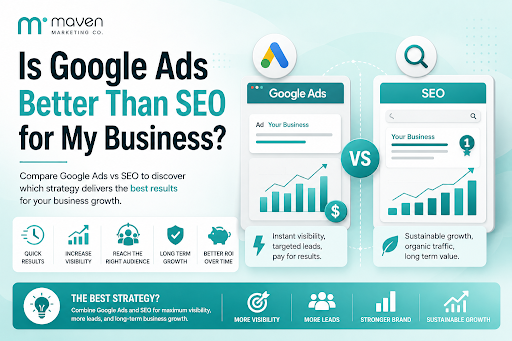
One of the biggest questions business owners ask when they are planning online growth is whether they should invest in Google Ads or SEO. Both are strong marketing plays that help your company show up in Google search results, but they do things in separate lanes. Google Ads gives quicker visibility and can bring in leads fast, whereas SEO more or less focuses on slow, steady organic traffic that tends to grow the longer you keep building it. Picking the right direction depends on what you want to achieve, how much money you can spend, how crowded the market is, and how quickly you need results, like sooner rather than later. The good news is you don’t always have to choose one or the other; it’s not exactly a black-and-white situation. If you take time to understand the strongest points of both, you can put together a more sensible digital marketing plan that supports consistent expansion. In this guide, we’ll compare Google Ads vs SEO, explain the main differences, and help you figure out what option makes the most sense for your business.

When Should I Hire a Digital Marketing Agency
Growing a business today takes more than just having a website or throwing a post on social media; customers usually search around online, compare providers, skim reviews, and basically expect the brand to show up with a solid digital presence before they even think about buying. Many businesses try to run their marketing themselves, but there comes a point when “doing it all in-house” becomes clunky and hard to manage, all at once. Knowing when to hire a digital marketing agency can end up making a big, real difference for your growth. If you’re not getting enough leads, or your online visibility feels stuck, or sales are just not moving, the right agency can bring the know-how, plus a clear plan, to help you get noticeably better outcomes. In this guide, we’ll dig into what a digital marketing agency actually does, the usual signs it’s time to bring one on, and how picking the right marketing partner can help your business move forward at a faster pace.
Why Is My Google Ads Budget Running Out So Quickly
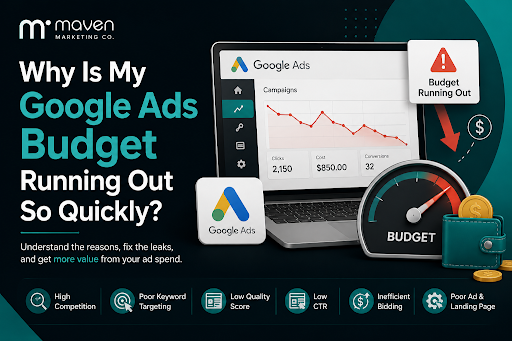
Running a successful Google Ads budget isn’t only about throwing more money at it. It’s more like making every dollar, doing a bit extra. A lot of businesses start a Google Ads campaign with big hopes, then find out their daily budget is gone within a few hours, and that feels weird, right? After that, your ads stop showing effectively, new leads slip away, and your return on investment dips. So if your Google Ads budget is running out too fast, don’t stress. It’s a fairly common issue, and in most situations, it can be repaired with the right approach. There are multiple little things that can drain your advertising money quicker than you expected, from costly keywords to audience targeting that just doesn’t quite fit. In this guide, we’ll walk through why your budget disappears so quickly, how to cut wasteful spend, and the most reliable ways to boost your Google Ads ROI, even if your budget stays the same.