
.svg)


%201.svg)

Key Takeaways
- Performance Max does not eliminate advertiser control. It relocates it. The controls available are different from those in Search, Shopping, and Display campaigns, but they are substantial and consequential if correctly configured.
- Asset groups are the primary creative control mechanism in Performance Max. Each asset group represents a distinct combination of audience signal, creative assets, and landing page that tells the algorithm which type of customer to find and what to show them. Most Australian advertisers run too few asset groups with too little differentiation.
- Audience signals are not targeting constraints. They are directional suggestions that tell Google's algorithm where to start its search for users likely to convert. The algorithm will expand beyond these signals if it identifies conversion opportunities elsewhere, but signals significantly influence where the budget concentrates in the early campaign learning phase.
- Brand exclusions, negative keyword lists (at the account level), and URL exclusions are the hard constraints available in Performance Max. These are the levers that prevent the campaign from appearing in contexts the advertiser explicitly does not want.
- Budget allocation between Performance Max and other campaign types in the account requires deliberate management. Performance Max competes with and can cannibalise brand search traffic, Shopping traffic, and Display retargeting traffic when it receives enough budget and signals to pursue those audiences.
- Conversion goals must be correctly configured before Performance Max is activated. The algorithm optimises toward the conversion actions it is given: if the wrong conversions are listed, or if conversion values are not accurately weighted, the algorithm pursues the wrong commercial outcomes regardless of how well the creative assets and audience signals are configured.
- Search term transparency in Performance Max improved in 2024 and continues to develop. Australian advertisers should use the available search terms reports and placement reports to monitor where the campaign is spending and intervene with exclusions when the spending pattern is producing commercially poor results.
What Performance Max Controls and What You Control
Understanding the division of control in Performance Max is the starting point for managing it effectively.
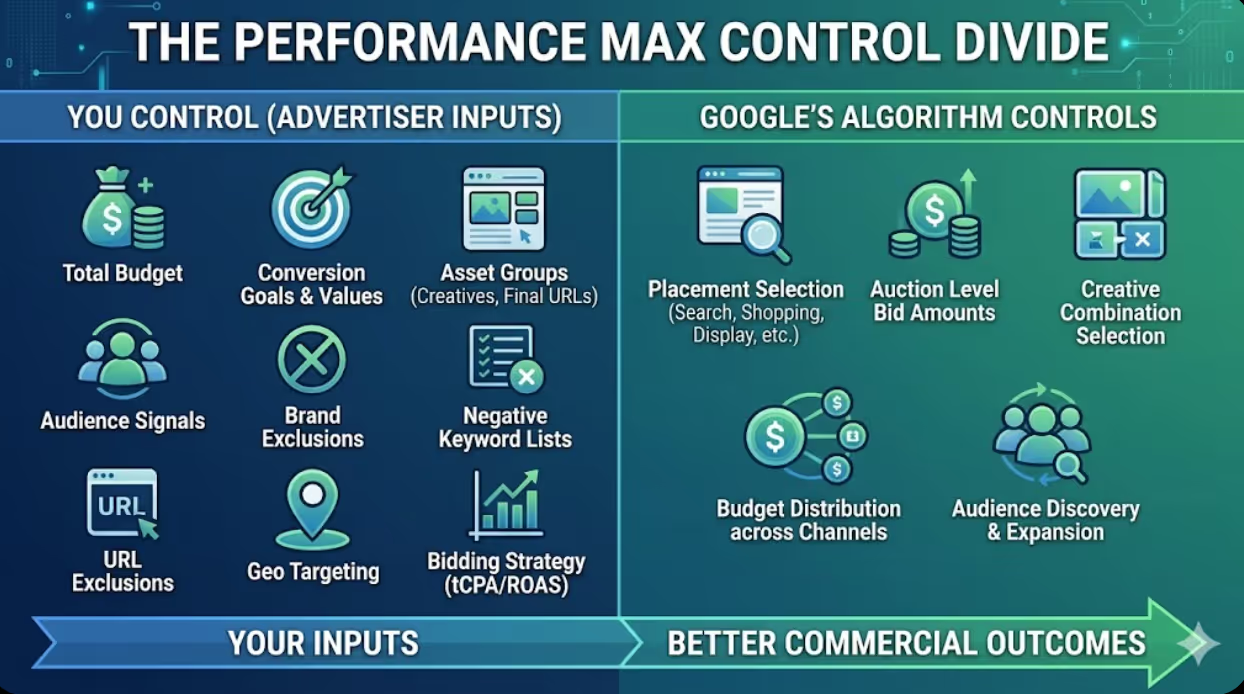
Google's algorithm controls: Placement selection across Search, Shopping, Display, YouTube, Gmail, and Maps. Bid amounts at the individual auction level. Creative combination selection from the assets provided. Budget distribution across channels and placements within the campaign. Audience discovery and expansion beyond the initial signals provided.
The advertiser controls: The total budget. The conversion goals the campaign optimises toward. The conversion values assigned to each goal. The asset groups, including the creative assets and landing pages within each group. The audience signals applied to each asset group. The brand exclusions, negative keyword lists, and URL exclusions applied. The geographic targeting. The bidding strategy and target CPA or ROAS.
This division means that the advertiser cannot tell Performance Max "bid for this keyword at this position" or "show my ad on this specific website." But the advertiser can tell Performance Max "optimise toward these conversions, with these values, using these creative assets, starting with this audience, excluding these brand terms and these content categories." The specificity and accuracy of those inputs determines how well the algorithm pursues the advertiser's actual commercial objectives.
Asset Groups: The Creative Architecture That Guides the Algorithm
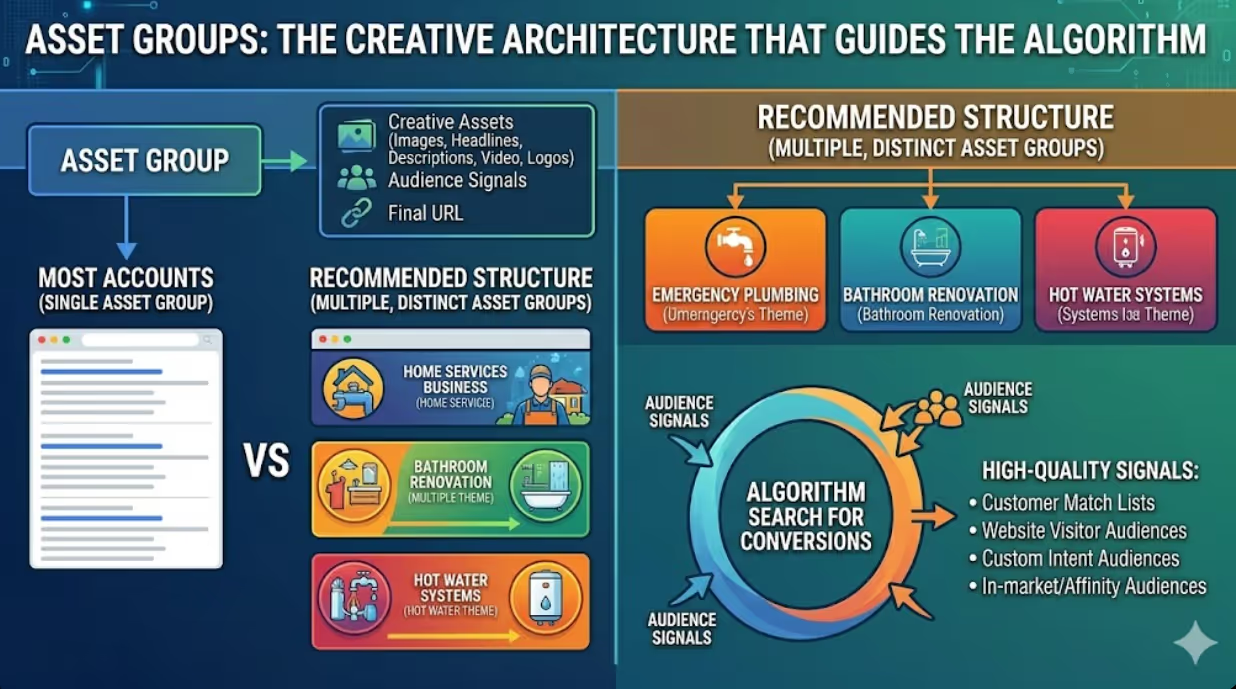
Asset groups are the primary organisational structure within Performance Max. Each asset group consists of a collection of creative assets (images, headlines, descriptions, logos, videos) combined with audience signals and a final URL. The algorithm uses the asset group structure as a guide for which types of inventory to pursue and which creative combinations to show.
Most Australian Performance Max accounts are structured with a single asset group containing a broad mix of creative assets and a generic audience signal. This structure gives the algorithm maximum freedom to distribute budget across any placement and audience combination it identifies as likely to produce a conversion, which sounds efficient but often results in budget being allocated to audiences and placements that are commercially marginal while underinvesting in the specific audiences with strong intent and placements that generate the business's best customers.
The more effective structure is multiple asset groups organised around distinct commercial objectives or audience segments, each with a specific creative angle and a specific audience signal:
Asset group by product or service category. A home services business might have separate asset groups for emergency plumbing, bathroom renovation, and hot water system installation. Each group has creative assets specific to that service, landing pages specific to that service, and audience signals built from the customers and intent categories most relevant to that service. The algorithm learns to find the audiences most likely to convert for each specific service rather than finding generic home services audiences that may or may not have the specific need.
Asset group by audience segment. A business with meaningfully different customer segments (commercial clients and residential clients, for example, or new customers and repeat purchasers) benefits from separate asset groups that speak to the specific needs and concerns of each segment, with audience signals built from the relevant customer data for each.
Asset group by stage of the purchase journey. An asset group targeting the consideration stage with educational content and softer conversion goals captures intent at an earlier stage that an asset group focused on purchases misses, at a different CPA and with different creative requirements.
Audience Signals: Steering Without Controlling
Audience signals in Performance Max are the directional guidance the advertiser provides to help the algorithm identify starting populations of high quality. Unlike targeting in standard campaign types, audience signals in Performance Max are not hard constraints: the algorithm can and will show ads to users outside the signal audiences if its models predict those users will convert.
This behaviour is intentional and is one of the core value propositions of Performance Max: the ability to discover audiences that convert at high rates and that the advertiser would not have targeted through standard campaign types. For Australian advertisers, accepting this behaviour is part of operating Performance Max effectively.
The practical approach to audience signals is to build them from the highest-quality signals available, which typically are:
Customer match lists. Uploading the business's existing customer email list as an audience signal tells the algorithm the specific characteristics of people who have already converted. This is the highest-quality signal available and should be included in every Performance Max campaign where the customer list is large enough to provide a meaningful pattern (typically a minimum of 1,000 customers for useful signal, though the campaign will accept smaller lists).
Website visitor audiences. Audiences built from visitors to specific pages with strong purchase intent, particularly the checkout, services, and contact pages, provide a strong behavioural intent signal. These are built through the linked Google Analytics 4 property or through Google Ads audience builder.
Custom intent audiences. Audiences built from specific search terms and URLs relevant to the business's category provide an intent signal for users who have demonstrated category-level search behaviour.
In-market and affinity audiences. Google's audience categories built into the platform provide a broader intent signal when customer lists and website visitor audiences are too small to be used effectively.
Hard Constraints: Exclusions That Protect Budget
Audience signals guide the algorithm. Exclusions constrain it. Three types of exclusion give Australian advertisers hard control over where Performance Max cannot appear.
Brand exclusions. Performance Max can appear for searches that include the advertiser's own brand name, capturing traffic that would otherwise go to the brand's organic listing or to the existing brand Search campaign. For accounts with active brand Search campaigns, allowing Performance Max to also bid on brand terms drives up the effective CPA by creating internal competition and by spending Performance Max budget on traffic that would convert at a lower cost through the dedicated brand campaign.
Brand exclusions at the campaign level prevent Performance Max from appearing for searches containing the specified brand terms. These should be configured for every Performance Max campaign that runs alongside a brand Search campaign.
Negative keyword lists at the account level. Performance Max supports negative keyword lists applied across the whole account. These lists prevent the campaign from appearing for searches that include the specified terms, which is the primary mechanism for excluding irrelevant traffic. Negative keywords in a Performance Max account should include competitor names where conquest traffic is not intended, research queries in the category without commercial intent, terms associated with irrelevant geographies or demographics, and any specific terms identified through the Search Terms report as generating clicks without commercial intent.
URL exclusions. URL exclusions prevent Performance Max from directing traffic to specific pages on the website that are not suitable landing pages for paid traffic. Excluding URLs for blog articles, team member pages, careers pages, and other content without commercial purpose prevents the algorithm from directing paid traffic to pages that will not convert.
Conversion Configuration: The Goal That Determines Everything
Performance Max optimises toward the conversion goals it is given. If the conversion configuration is wrong, the algorithm optimises toward the wrong outcome, and no amount of asset or audience configuration will compensate for a fundamental mismatch between the optimisation target and the commercial objective.
The most common conversion configuration errors in Australian Performance Max accounts are:
Optimising toward soft conversions when hard conversions are available. An account that lists page views or session duration events as conversion actions alongside form submissions and purchases is asking the algorithm to optimise toward a population that includes many users who will never take a commercial action. The conversion goal configuration should list only the conversion actions that directly represent commercial intent, and softer signals should be used as optimisation inputs rather than primary conversion goals.
Not assigning conversion values. An account that lists multiple different conversion actions without assigning relative values to them is telling the algorithm that a newsletter signup is worth the same as a quote request, which is worth the same as a purchase. Assigning values that reflect the actual commercial value of each conversion type (or approximate values that reflect the relative importance of each) allows the algorithm to prioritise conversions with higher value in its bidding decisions.
Including irrelevant conversion goals from the goal settings at the account level. Performance Max inherits conversion goals from the account level configuration by default. An account that has accumulated multiple conversion goals from previous campaigns, including outdated goals, test goals, or goals from other products, needs to be explicitly configured at the campaign level to narrow optimisation only toward the relevant goal set.
Monitoring and Intervention
Performance Max provides less reporting granularity than standard campaign types, but the available reports are sufficient for identifying performance problems and implementing appropriate corrections.
Search terms report. Available under Insights and Reports, the search terms report shows the specific search queries that have triggered Performance Max ads. This report should be reviewed weekly to identify queries that are generating clicks without commercial intent, which should be added to the negative keyword list at the account level.
Asset performance labels. Performance Max assigns performance labels (Best, Good, Low, Learning) to individual assets based on their contribution to conversions. Assets labelled Low should be replaced with new creative. Assets labelled Best indicate which messages and formats are resonating with the converting audience and should inform the direction of new creative development.
Placement exclusions. The placements report shows where Display and YouTube budget has been allocated. Placements that receive significant spend with poor conversion performance should be excluded through the placement exclusion list at the account level.
FAQs
Should Australian businesses run Performance Max alongside existing Search and Shopping campaigns, or should Performance Max replace them?The answer depends on the maturity of the existing campaigns and the quality of the conversion data available. Performance Max should generally run alongside, not instead of, brand Search campaigns, which should always be maintained as a dedicated campaign type with explicit brand keyword targeting and the associated control over bid and message. For Search campaigns not targeting brand keywords, the question is whether the existing campaign's conversion data and keyword targeting produce results that Performance Max's broader signal approach cannot match. In most Australian accounts with at least six months of conversion history, the recommended configuration is to run Performance Max with strong audience signals and conversion configuration alongside the existing Search campaigns targeting terms outside the brand, monitor the performance distribution between them for four to six weeks, and then make structural decisions about whether to consolidate or maintain both. For Shopping campaigns specifically, Performance Max with product feed integration typically outperforms standard Shopping campaigns when the product feed is well optimised and the conversion data is sufficient to support Smart Bidding.
How much budget does Performance Max need to learn effectively in an Australian market?Performance Max requires sufficient conversion volume to exit the learning phase and begin optimising effectively. Google's guidance is a minimum of thirty to fifty conversions per month at the campaign level before Smart Bidding strategies can operate reliably. In Australian markets where conversion costs are higher than global averages (which is common in B2B categories, professional services, and retail with high average order values), this minimum conversion volume may require a monthly budget of $3,000 to $10,000 or more, depending on the CPA in the category. For Australian businesses with smaller budgets, the practical implication is that Performance Max may not be the most effective campaign type until the account has sufficient conversion history and budget to exit the learning phase: a Search campaign that is well structured with manual or enhanced CPC bidding often produces better results at lower budget levels than a Performance Max campaign in permanent learning mode.
How should Australian advertisers handle Performance Max when it appears to be cannibalising existing campaign performance?Cannibalisation occurs when Performance Max captures conversions that would have occurred through existing campaigns, inflating its apparent performance while reducing the reported performance of other campaigns without improving the overall account outcome. The diagnostic signs include a simultaneous increase in Performance Max conversions and decrease in Search or Shopping campaign conversions, with total account conversions remaining flat. The interventions are: apply brand exclusions to Performance Max to return brand search traffic to the brand Search campaign; review the campaign priority settings and budget allocation to ensure Performance Max is not receiving more budget than the account's conversion volume can support; and use campaign labels and date range comparisons to assess the total account performance before and after Performance Max was introduced, not just the individual campaign performance. Where cannibalisation is confirmed, reducing the Performance Max budget to a level that complements rather than crowds out the existing campaigns typically restores the performance balance.
AI Control Is Not All or Nothing
The choice is not between full AI autonomy and full manual control. Performance Max offers a specific set of inputs that, when correctly configured, produce a campaign that operates within the advertiser's commercial parameters rather than at the algorithm's discretion alone. The advertisers who get the best results from Performance Max are not those who feed it the minimum and hope for the best. They are those who invest in the asset group structure, the audience signal quality, the conversion configuration, and the exclusion management that gives the algorithm the best possible information about what the business actually needs. The algorithm does its best work when the advertiser does theirs.
Maven Marketing Co configures and manages Google Performance Max campaigns for Australian businesses, including asset group architecture, audience signal development, conversion configuration, and ongoing exclusion and creative management.
Talk to the team at Maven Marketing Co →

Table of contents
read more blogs
Is Google Ads Better Than SEO for My Business
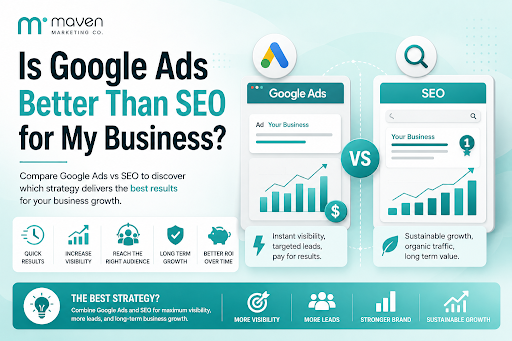
One of the biggest questions business owners ask when they are planning online growth is whether they should invest in Google Ads or SEO. Both are strong marketing plays that help your company show up in Google search results, but they do things in separate lanes. Google Ads gives quicker visibility and can bring in leads fast, whereas SEO more or less focuses on slow, steady organic traffic that tends to grow the longer you keep building it. Picking the right direction depends on what you want to achieve, how much money you can spend, how crowded the market is, and how quickly you need results, like sooner rather than later. The good news is you don’t always have to choose one or the other; it’s not exactly a black-and-white situation. If you take time to understand the strongest points of both, you can put together a more sensible digital marketing plan that supports consistent expansion. In this guide, we’ll compare Google Ads vs SEO, explain the main differences, and help you figure out what option makes the most sense for your business.

When Should I Hire a Digital Marketing Agency
Growing a business today takes more than just having a website or throwing a post on social media; customers usually search around online, compare providers, skim reviews, and basically expect the brand to show up with a solid digital presence before they even think about buying. Many businesses try to run their marketing themselves, but there comes a point when “doing it all in-house” becomes clunky and hard to manage, all at once. Knowing when to hire a digital marketing agency can end up making a big, real difference for your growth. If you’re not getting enough leads, or your online visibility feels stuck, or sales are just not moving, the right agency can bring the know-how, plus a clear plan, to help you get noticeably better outcomes. In this guide, we’ll dig into what a digital marketing agency actually does, the usual signs it’s time to bring one on, and how picking the right marketing partner can help your business move forward at a faster pace.
Why Is My Google Ads Budget Running Out So Quickly
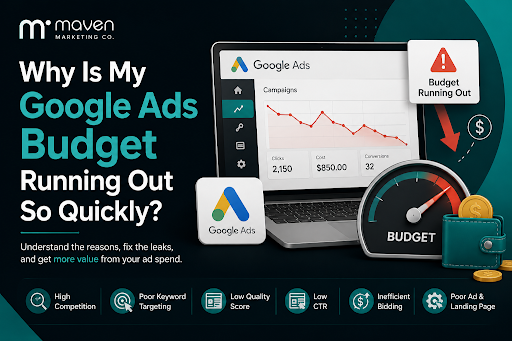
Running a successful Google Ads budget isn’t only about throwing more money at it. It’s more like making every dollar, doing a bit extra. A lot of businesses start a Google Ads campaign with big hopes, then find out their daily budget is gone within a few hours, and that feels weird, right? After that, your ads stop showing effectively, new leads slip away, and your return on investment dips. So if your Google Ads budget is running out too fast, don’t stress. It’s a fairly common issue, and in most situations, it can be repaired with the right approach. There are multiple little things that can drain your advertising money quicker than you expected, from costly keywords to audience targeting that just doesn’t quite fit. In this guide, we’ll walk through why your budget disappears so quickly, how to cut wasteful spend, and the most reliable ways to boost your Google Ads ROI, even if your budget stays the same.


