.svg)


%201.svg)

Key Takeaways
- Keywords at the suburb level have substantially lower competition than keywords targeting the city level in every Australian metropolitan area. A service business that ranks on the first page for thirty individual suburb keywords collectively outperforms many businesses ranking in positions four through ten for the equivalent keyword targeting the whole city.
- The combined search volume of keywords at the suburb level for a given service category across a metropolitan area frequently exceeds the volume of the single keyword targeting the city, because searchers use terms naming specific suburbs when their intent is specifically local rather than general.
- Suburb-level pages must be genuinely distinct from each other to avoid thin content and duplicate content penalties. The suburb strategy requires content differentiation, not simple template replacement of the suburb name across identical pages.
- Proximity signals, including the Google Business Profile location, the physical service address, and the internal linking structure between suburb pages and the main services pages, all contribute to how strongly the suburb pages rank in local search results.
- The competitive window for search at the suburb level is open now in most Australian metropolitan areas. The businesses that build this presence in 2026 will hold structural advantages in local search that take years for competitors who move later to overcome.
- Suburb pages without a genuine connection to local content, local references, or local proof signals are detectable by Google's quality systems as thin local pages and may be filtered from results. The quality requirement for content at the suburb level is as real as for any other content type.
- The suburb strategy is not exclusively a written content strategy. Google Business Profile posts, images specific to each suburb, local review content that mentions suburb names, and structured data that specifies the service area all contribute to the hyperlocal signal stack.
Why Suburb Search Is Where the Real Opportunity Lives
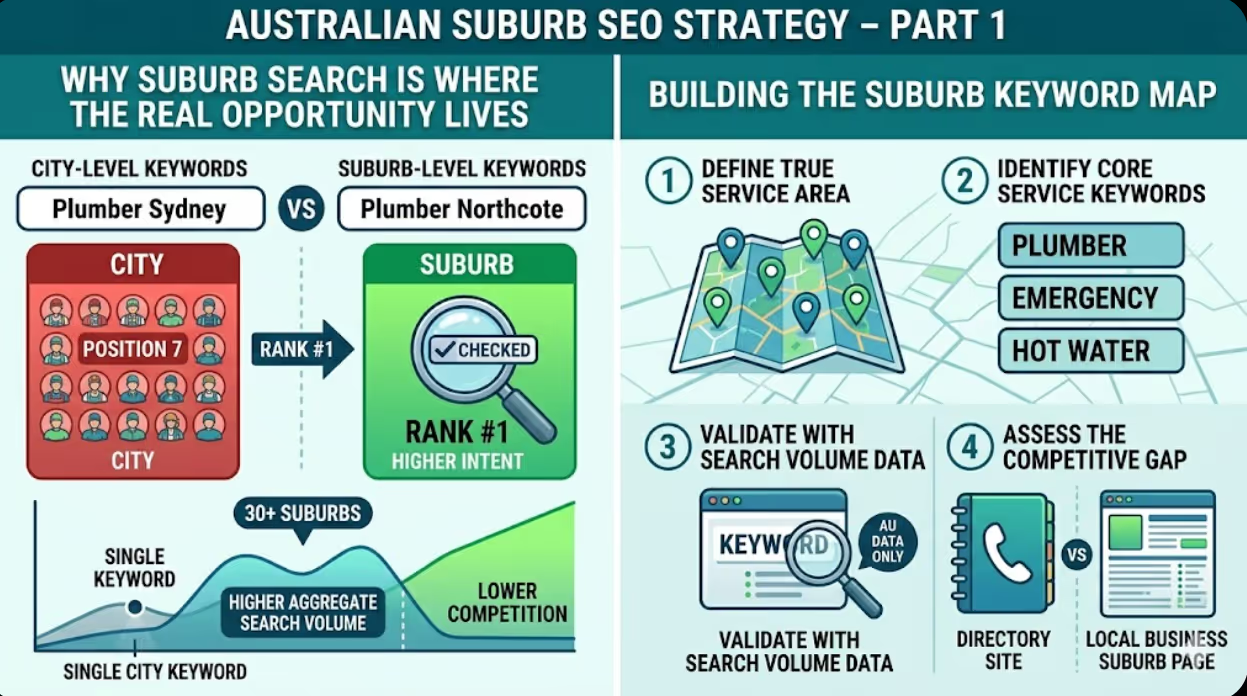
The economics of keyword competition in Australian local search are straightforward and misunderstood in equal measure. City-level keywords, "electrician Sydney," "dentist Melbourne," "bookkeeper Perth," are the terms that every business in the category knows about, every SEO audit mentions, and every Google Ads campaign includes. The competition for these keywords reflects the value of ranking for them: dozens of established businesses with years of domain authority, active link building programmes, and substantial paid search budgets are all fighting for the same positions.
Keywords targeting specific suburbs operate on a different competitive curve. A search for "electrician Northcote" has far fewer competing pages than a search for "electrician Melbourne," but the person making that search has a more specific intent, a stronger preference for a business that is genuinely nearby, and in most cases is at a more advanced point in their decision process than someone searching at the city level. The searcher at the suburb level knows where they are and wants a business that operates there. They are not browsing. They are selecting.
The aggregate opportunity is the part most businesses miss. A service business that serves thirty suburbs across metropolitan Melbourne has potential visibility across thirty keywords targeting specific suburbs in its category, plus the keyword for the whole city. If each suburb keyword generates an average of 100 searches per month, that is 3,000 searches targeting the suburb per month, often from people who are precisely the target customers the business needs. Building and ranking for all thirty is achievable within twelve to eighteen months for a business with a consistent content programme and basic link building activity. Ranking in the top three for the keyword targeting the whole city in the same timeframe is, for most businesses, not.
Building the Suburb Keyword Map
The suburb strategy begins with a keyword map: a systematic list of every suburb in the service area combined with every relevant service keyword, validated against real search volume data.
Step 1: Define the true service area. List every suburb the business actually serves, not just the suburbs near the business premises. For a mobile service business or one that sends staff to client locations, this list may span fifty or more suburbs across a metropolitan area. For a business with a physical premises that customers visit, the list is typically smaller and more geographically concentrated.
Step 2: Identify the core service keywords. The suburb strategy works by combining location modifiers with the service terms people actually search. For a plumbing business, these might be "plumber," "emergency plumber," "hot water system repair," "blocked drains," and "gas fitting." Each of these will be combined with each suburb name to produce the full keyword map.
Step 3: Validate with search volume data. Not every suburb and service combination generates measurable search volume. Use Google Keyword Planner, Ahrefs, or Semrush with Australian location settings to check which combinations have at least 10 to 30 monthly searches. Prioritise the suburb and service combinations with the highest volume for the first wave of content production, and include suburbs with lower volume in subsequent waves.
Step 4: Assess the competitive gap. For the suburb and service combinations with the highest volume, check the current ranking results in Australian Google search. If the top three results are large directory pages (HiPages, ServiceSeeking, Yellow Pages, Oneflare) or the business's larger competitors, there is still genuine opportunity: directory pages can often be outranked by a locally relevant page that is well optimised business page. If a specific competitor has already built pages targeting specific suburbs and is ranking with them, the content quality required increases but the opportunity remains.
What a Genuine Suburb Page Looks Like
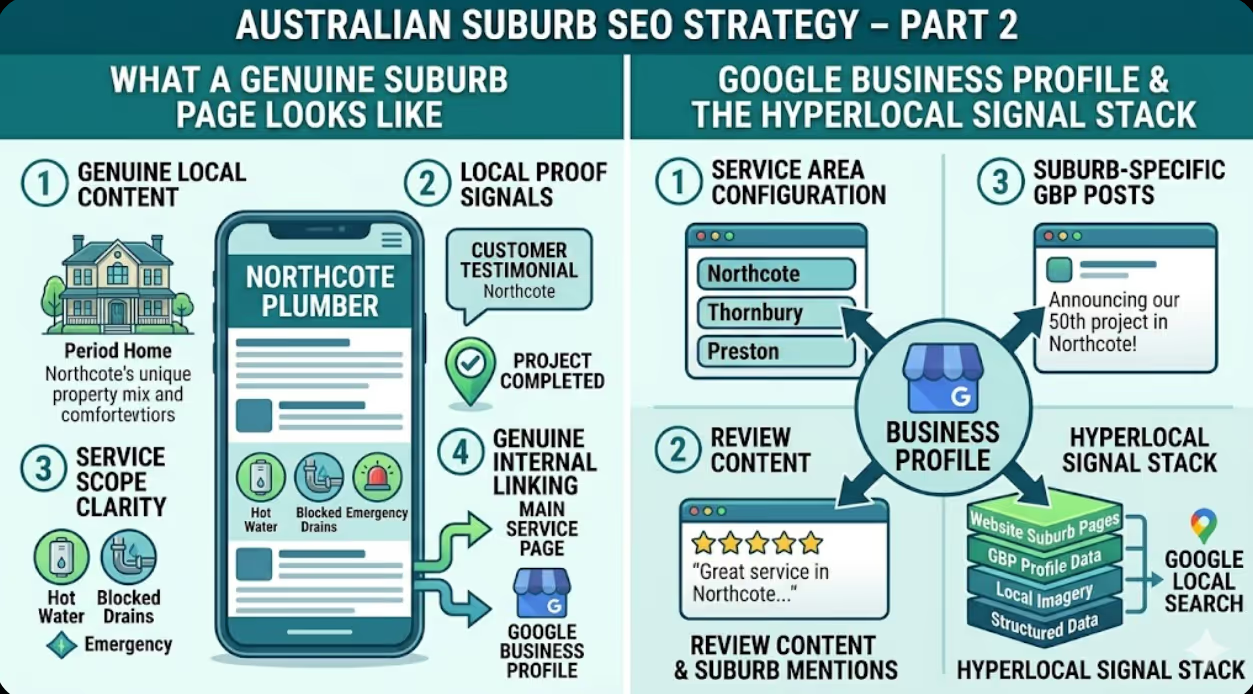
The most common failure in SEO targeting individual suburbs is producing pages that are, in practical terms, identical except for the suburb name. These pages are easily identified by Google as thin, templated local pages and are often filtered from results or assigned low quality signals. A genuine suburb page satisfies four requirements:
Genuine local content. Content that is specific to the suburb goes beyond simply naming it. It might reference the specific character of housing stock in the suburb (relevant for trade businesses: "Northcote's mix of period terraces and weatherboards from the decades after the war means drainage systems often require specialist knowledge"), the specific demographics or business environment of the suburb (relevant for professional services: "Fortitude Valley's commercial precinct includes a high concentration of hospitality venues, retail operators, and creative businesses whose bookkeeping requirements differ from suburban retail"), or the specific local context that makes the business relevant to that community.
Local proof signals. Mentions of past projects, completed work, or customers in the suburb make the page locally authentic. This might be a brief case study referencing the type of property or business the work was completed for (without specific identifying details if privacy is a concern), a testimonial from a customer in the suburb, or a reference to a specific local landmark or community feature that contextualises the business's familiarity with the area.
Service scope clarity. The suburb page should specify what services are available in that suburb, any specific conditions or considerations that apply in that area, and the process for booking or enquiring. This serves the visitor's need for information specific to their location while also providing content differentiation from other suburb pages.
Genuine internal linking. Suburb pages should link to and from the main services pages, the Google Business Profile should list the suburb in the service area, and where appropriate, suburb pages that are geographically close should link to each other to build topical and geographic context signals.
The Content Production System
Producing suburb pages at scale without producing thin, duplicated content requires a structured production system that builds in local differentiation from the start.
Create a suburb research brief for each location. Before writing each suburb page, gather specific local information: the suburb's character, common property or business types, any specific local context relevant to the service, any existing customers or completed work in the area, and any specific considerations that apply in that location. This brief becomes the raw material for the differentiated content rather than the suburb name being swapped into a template.
Write a genuinely distinct introduction for each suburb. The opening paragraph of each suburb page should be entirely original and specific to that suburb. It should describe why people in that suburb specifically need the service, reference local context that makes the business relevant to them, and establish the genuine local connection that distinguishes the page from a templated version.
Vary the structure and emphasis across pages. Different suburbs will have different priority questions. A page targeting a suburb with a high proportion of rental properties might emphasise the dynamic between landlords and tenants for trade services. A page targeting a suburb with a high density of professional services businesses might emphasise the compliance and regulatory aspects of bookkeeping. Building the page around the specific concerns of the likely audience in each suburb produces substantive content variation rather than word changes at the surface only.
Supplement with media specific to the suburb. A photograph of work completed in the suburb, a testimonial that mentions the suburb by name, or a video introduction that references the area adds local authenticity signals that purely written content cannot provide.
Google Business Profile and the Suburb Strategy
The suburb strategy operates across two surfaces: the website's suburb landing pages and the Google Business Profile. Both contribute to hyperlocal visibility, and they reinforce each other when managed together.
Service area configuration. The Google Business Profile allows businesses to specify their service area by suburb, postcode, or radius. For businesses that serve multiple suburbs, listing all relevant suburbs in the service area configuration signals to Google the full geographic scope of the business's commercial activity. This affects which searches the Business Profile is considered relevant for, which directly influences whether it appears in the local pack results for queries at the suburb level.
Suburb-specific Google Business Profile posts. Regular posts to the Business Profile that reference specific suburbs (announcing a completed project in a named suburb, sharing a tip relevant to property owners in a specific area, noting the business's presence at a community event in a suburb) build the geographic association between the Business Profile and specific suburb names over time.
Review content and suburb mentions. Customers who mention the suburb name in their Google review provide a locality signal associated with the Business Profile. Encouraging customers to mention where they are when leaving a review, where this happens naturally, strengthens the association of the Business Profile with the Business Profile with specific locations.
FAQs
How many suburb pages should an Australian service business create to start seeing results?The minimum viable suburb page set to begin accumulating meaningful signal is typically ten to fifteen pages covering the highest-volume, highest-priority suburbs in the service area. This is enough for search engines to begin recognising the site as having genuine geographic depth in the category, and for the internal linking structure between suburb pages and the main services pages to start contributing topical authority signals. Results from individual suburb pages typically appear within eight to sixteen weeks of publication, assuming the pages meet the content quality requirements described in this article. The business should expect to see measurable first-page rankings for some suburb keywords within the first six months, with rankings improving further as the page accumulates engagement signals and any links from local sources. The full suburb page set covering all target suburbs should be built out over twelve to eighteen months for most Australian service businesses, prioritising the highest-volume and most commercially valuable suburbs first.
Is it possible to build suburb pages for areas where the business has not yet completed any work, as a prospecting tool?Yes, and this is one of the most commercially interesting applications of the suburb strategy. A business that builds and ranks suburb pages for areas it currently serves at low volume but that represent expansion opportunities is creating both the digital visibility and the legitimacy signal in those areas simultaneously. The key requirement is that the content is still genuine: the page should reflect the business's capability to serve that suburb and any relevant local knowledge, even if specific local proof signals (completed projects, local testimonials) are not yet available. As work is completed in new suburbs, the pages can be updated with specific local proof signals that strengthen their rankings. The suburb page strategy in a new geographic area can be thought of as building the digital equivalent of a letterbox drop: establishing the business's name and proposition in an area before the volume of local business is sufficient to sustain the effort through word of mouth alone.
How does the suburb strategy interact with Google Ads for local businesses?The suburb strategy produces organic results that complement rather than replace a local Google Ads programme. In Google Ads, keywords targeting specific suburbs can be added as specific keywords in a localised ad group or campaign structure, targeting the same search queries with strong intent that the organic suburb pages are designed to capture. The advantage of the approach of building organic rankings in suburbs first is that the organic rankings, once established, produce traffic without ongoing cost per click. The advantage of running Google Ads against the same suburb keywords during the period when the organic rankings are being built is that it provides immediate visibility for searches in specific suburbs with strong intent that the organic pages have not yet reached the first page for. As organic suburb rankings are established over time, the paid budget for those specific suburb terms can be reduced or redirected to suburbs where organic rankings have not yet been achieved. The two approaches work together most effectively when the landing page for the Google Ads suburb term is the same suburb page used for organic ranking, ensuring the quality signal and the content quality that applies to organic performance also benefits the paid Quality Score.
The Suburbs Are Open. The Question Is Whether You Are In Them.
City-level search is crowded, expensive, and contested by businesses with years of head start. Suburb-level search is largely open, frequently uncontested by anyone beyond directory sites, and accessible to businesses that are willing to invest the content production effort required to build a genuine local presence across the suburbs they actually serve. The window for building this advantage before competitors recognise what is happening is exactly the kind of strategic opportunity that produces durable competitive positions in local search. The suburb strategy does not require a large budget. It requires a systematic approach, a genuine commitment to content quality, and enough time to let the rankings compound.
Maven Marketing Co designs and executes SEO strategies targeting specific suburbs for Australian service businesses, from keyword mapping through to content production, Google Business Profile optimisation, and ongoing local search performance reporting.
Talk to the team at Maven Marketing Co →

read more blogs

Is Google Ads Better Than SEO for My Business
One of the biggest questions business owners ask when they are planning online growth is whether they should invest in Google Ads or SEO. Both are strong marketing plays that help your company show up in Google search results, but they do things in separate lanes. Google Ads gives quicker visibility and can bring in leads fast, whereas SEO more or less focuses on slow, steady organic traffic that tends to grow the longer you keep building it. Picking the right direction depends on what you want to achieve, how much money you can spend, how crowded the market is, and how quickly you need results, like sooner rather than later. The good news is you don’t always have to choose one or the other; it’s not exactly a black-and-white situation. If you take time to understand the strongest points of both, you can put together a more sensible digital marketing plan that supports consistent expansion. In this guide, we’ll compare Google Ads vs SEO, explain the main differences, and help you figure out what option makes the most sense for your business.

When Should I Hire a Digital Marketing Agency
Growing a business today takes more than just having a website or throwing a post on social media; customers usually search around online, compare providers, skim reviews, and basically expect the brand to show up with a solid digital presence before they even think about buying. Many businesses try to run their marketing themselves, but there comes a point when “doing it all in-house” becomes clunky and hard to manage, all at once. Knowing when to hire a digital marketing agency can end up making a big, real difference for your growth. If you’re not getting enough leads, or your online visibility feels stuck, or sales are just not moving, the right agency can bring the know-how, plus a clear plan, to help you get noticeably better outcomes. In this guide, we’ll dig into what a digital marketing agency actually does, the usual signs it’s time to bring one on, and how picking the right marketing partner can help your business move forward at a faster pace.

Why Is My Google Ads Budget Running Out So Quickly
Running a successful Google Ads budget isn’t only about throwing more money at it. It’s more like making every dollar, doing a bit extra. A lot of businesses start a Google Ads campaign with big hopes, then find out their daily budget is gone within a few hours, and that feels weird, right? After that, your ads stop showing effectively, new leads slip away, and your return on investment dips. So if your Google Ads budget is running out too fast, don’t stress. It’s a fairly common issue, and in most situations, it can be repaired with the right approach. There are multiple little things that can drain your advertising money quicker than you expected, from costly keywords to audience targeting that just doesn’t quite fit. In this guide, we’ll walk through why your budget disappears so quickly, how to cut wasteful spend, and the most reliable ways to boost your Google Ads ROI, even if your budget stays the same.