.svg)


%201.svg)
Key Takeaways
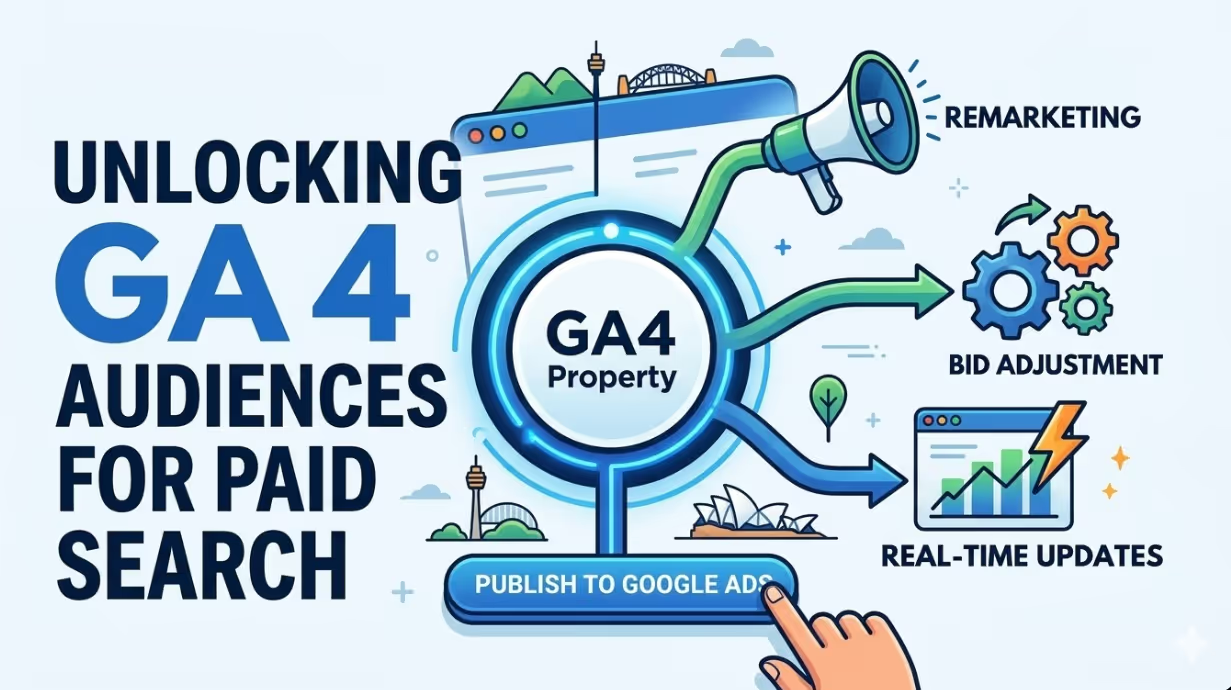
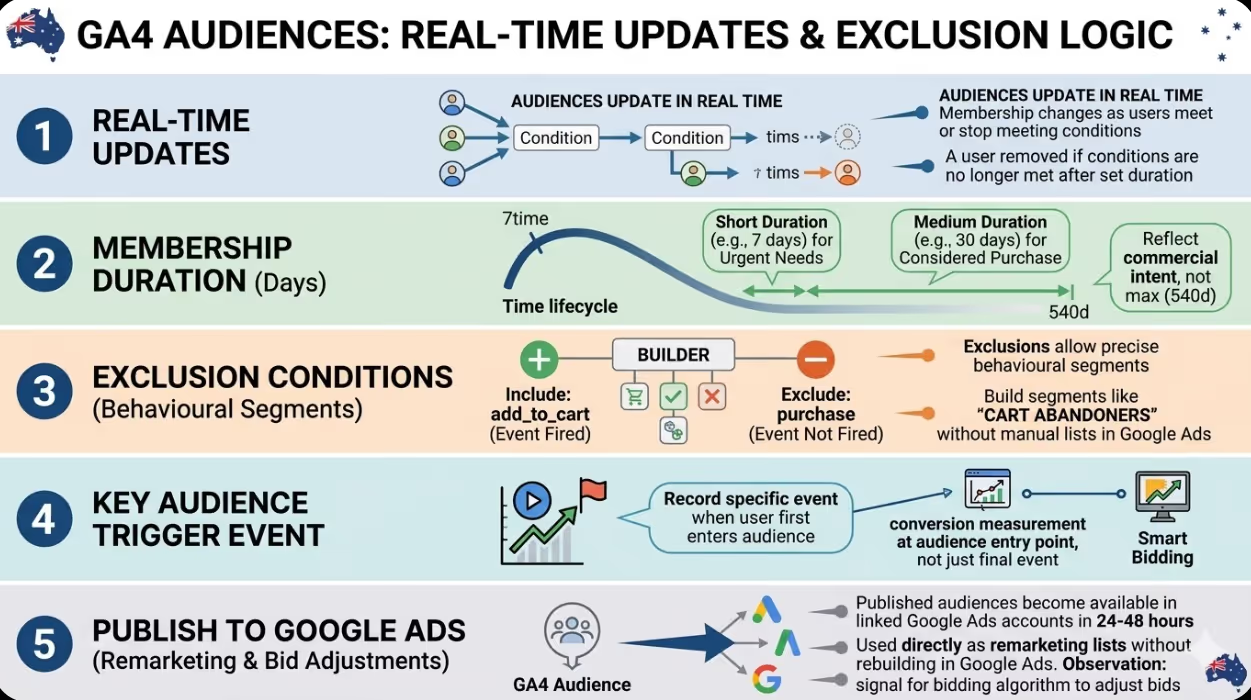
- GA4 audiences are dynamic and update in real time as users meet or no longer meet the defining conditions. A user added to an audience when they add a product to cart will be removed from that audience if the audience has a membership duration set and the user does not return.
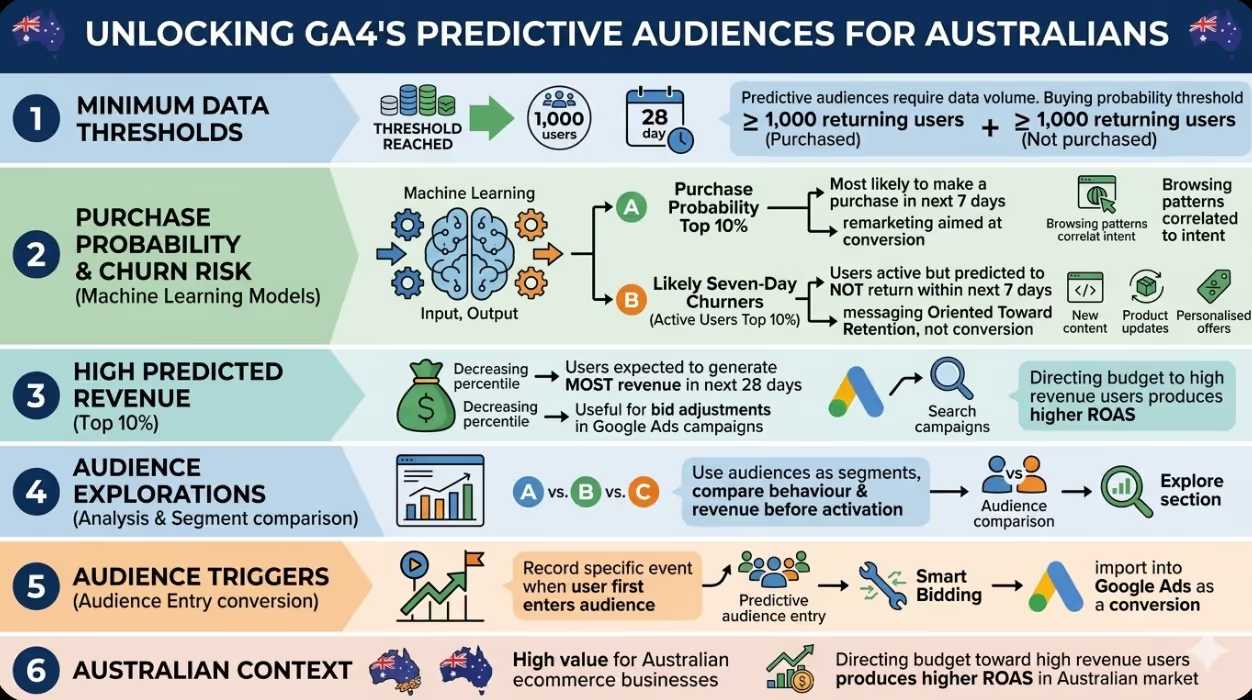
- Predictive audiences require a minimum data threshold before they become available. The purchase probability audience requires at least 1,000 returning users who have made a purchase and at least 1,000 returning users who have not, within the past 28 days. Properties below this threshold cannot access predictive audiences.
- GA4 audiences can be published to Google Ads, Display and Video 360, and Search Ads 360 for remarketing and bid adjustment. Publishing an audience to Google Ads does not require the audience to be rebuilt in Google Ads separately.
- The audience membership duration controls how long a user remains in an audience after they last met the qualifying conditions. Membership duration should reflect the commercial intent lifecycle of the audience rather than the maximum allowed value of 540 days.
- Exclusion conditions within audience definitions allow marketers to build precise behavioural segments. A "cart abandoners" audience can be defined as users who fired an
add_to_cartevent but did not fire apurchaseevent, without requiring manual exclusion list management in Google Ads. - GA4's Explorations can use audiences as segments, allowing marketers to compare the behaviour and revenue characteristics of different audience groups within the same report before activating them in paid campaigns.
- Audience triggers in GA4 allow a specific event to be recorded when a user first enters an audience, enabling conversion measurement at the audience entry point rather than only at the final conversion event.
Understanding GA4's Audience Types
GA4 provides three broad categories of audience: standard audiences built from conditions the marketer defines manually, suggested audiences from Google's recommended templates, and predictive audiences powered by machine learning models.
Standard audiences are fully customisable segments built using any combination of dimensions, metrics, and event sequences available in GA4. They are the most flexible audience type and can reflect any behavioural pattern present in the data: users who viewed a specific page, users who completed a specific event sequence, users who have been active within a defined time window, or users who match a combination of demographic and behavioural conditions.
Suggested audiences are templates provided by Google that correspond to common audience use cases for specific business categories. For ecommerce, suggested audiences include templates for cart abandoners, purchasers, and customers with high purchase value. These templates can be used as starting points and customised, or used directly where the template definition matches the business's requirements.
Predictive audiences are segments generated by Google's machine learning models based on each user's predicted probability of performing a specific action. Currently available predictive conditions include: purchase probability (the likelihood that a user will make a purchase in the next seven days), churn probability (the likelihood that a user who has been active will not return within the next seven days), and predicted revenue (the expected revenue a user will generate in the next 28 days). These predictive conditions can be filtered by top percentile (for example, the top 10 percent of users by purchase probability) and combined with other conditions to create highly targeted segments.
Building Behavioural Audiences
Behavioural audiences in GA4 are built by defining conditions based on events within the audience builder (Admin → Audiences → New Audience). Each condition set specifies one or more events or combinations of events and parameters that a user must have fired to qualify for the audience.
Cart Abandonment Audience
The cart abandonment audience targets users who have added a product to their cart but have not completed a purchase. It is among the most commercially valuable remarketing audiences for Australian ecommerce businesses and is straightforward to build in GA4:
Condition 1: Include users who have fired the add_to_cart event at any point in the lookback window.
Condition 2: Exclude users who have fired the purchase event at any point in the same lookback window.
The lookback window for both conditions should reflect the typical purchase cycle for the business. For most Australian ecommerce categories, a seven to fourteen day window captures the majority of abandoned cart sessions while excluding users whose purchase intent has expired.
The membership duration should be set to match the remarketing window: the number of days the business wants to continue showing ads to a cart abandoner before considering the opportunity lost. Seven to fourteen days is a common range for most categories.
Engaged Non-Purchasers
An audience of users who have demonstrated meaningful engagement with the site but have not purchased is a valuable remarketing segment for building campaigns that move audiences from awareness into consideration. The definition for this audience might include:
Condition 1: Include users who have fired a view_item event three or more times within the lookback window (indicating genuine product consideration).
Condition 2: Exclude users who have fired a purchase event at any point.
Condition 3: Optionally, include only users who have been active within the past seven days to focus the audience on recently engaged prospects.
Category Browsers
For businesses with distinct product categories that correspond to different customer needs and price points, a audience of browsers within a specific category segments users by the category they have most recently explored:
Condition 1: Include users who have fired a view_item_list event where the item_list_name parameter equals the specific category name.
This audience is useful for both remarketing (showing ads relevant to that category) and for analysis (comparing the behavioural and demographic characteristics of shoppers in different categories).
Building Predictive Audiences
Predictive audiences are available in the GA4 audience builder once the property has met the data volume requirements. When available, predictive conditions appear in the audience builder under the "Predictive" condition category.
Purchase Probability Audience
The purchase probability audience identifies users who are most likely to make a purchase in the next seven days. This is the most direct signal for remarketing aimed at conversion:
Condition: Predicted purchase probability is in the top 10 percent.
This audience typically corresponds to users who have recently visited the site multiple times, have engaged with specific product pages, and exhibit browsing patterns that, based on historical data from the property and Google's broader data models, correlate with purchase intent in the near term.
For Australian ecommerce businesses, the top 10 percent filter produces a relatively small and highly targeted audience. The top 25 percent produces a larger audience with somewhat lower average purchase probability, appropriate for campaigns with larger reach objectives. The right percentile threshold depends on the property's total user volume and the campaign's budget.
Likely Seven-Day Churners
The churn probability audience identifies users who have been active on the site but are predicted to not return within the next seven days. For subscription businesses, content publishers, and service businesses where repeat engagement is commercially important, this audience enables retention campaigns directed at users before they have actually churned:
Condition: Predicted churn probability is in the top 10 percent among active users.
Campaigns targeting likely churners typically use messaging that brings the user back with new content, product updates, or personalised offers, rather than the messaging oriented toward conversion that is appropriate for purchase probability audiences.
High Predicted Revenue Users
The predicted revenue audience identifies users expected to generate the most revenue in the next 28 days:
Condition: Predicted revenue is in the top 10 percent.
This audience is useful for bid adjustments in Google Ads campaigns, allowing the bidding algorithm to apply higher bids for users who are not only likely to convert but likely to generate high revenue when they do. For Australian ecommerce businesses with significant variance in average order value across customer segments, directing budget toward high predicted revenue users produces a higher return on ad spend than campaigns targeting all users with purchase probability equally.
Publishing Audiences to Google Ads
GA4 audiences can be published to linked Google Ads accounts directly from the GA4 interface. Once published, they are available in Google Ads as remarketing lists and can be used in campaigns exactly as Google Ads native audiences are used.
The publication process requires a linked Google Ads account (linked in the GA4 Admin → Product Links section) and the relevant permissions on both accounts. Published audiences typically become available in Google Ads within 24 to 48 hours and begin populating once users matching the audience definition are identified.
For Australian Google Ads campaigns using Smart Bidding, linking GA4 audiences and enabling audience observation in relevant campaigns allows the bidding algorithm to incorporate GA4 audience membership as a signal in bid adjustments. This is separate from manually targeting the audience and does not restrict the campaign's reach, but it allows the algorithm to use the audience signal to adjust bids upward for segments with high commercial value.
Audience Triggers
GA4 audience triggers record a custom event when a user first enters an audience. This feature enables measurement of audience entry points as conversion events, and is particularly valuable for audiences that represent a significant step in the customer lifecycle.
For example, creating an audience trigger on the "purchase probability top 10%" audience records an event each time a new user enters that audience. This event can be imported into Google Ads as a conversion, allowing campaign optimisation toward the signal of a user entering a commercially valuable predictive audience segment rather than only toward the final purchase event.
To create an audience trigger: after building and saving an audience, open it from the Audiences list and select "Create audience trigger." Specify the event name to be recorded when a user enters the audience, and confirm whether the event should be counted as a conversion.
FAQs
How many users are required in a GA4 audience before it can be used for remarketing in Google Ads?
Google Ads requires a minimum of 1,000 users in a remarketing list before it can be used to target users in campaigns. For audiences that are applied as observation segments (bid adjustments rather than targeting), the minimum threshold is lower. Small Australian service businesses or ecommerce businesses in niche categories may find that their GA4 audiences do not reach the 1,000 user threshold quickly enough for effective remarketing, particularly for narrow behavioural segments such as cart abandoners or browsers within specific categories. For properties with limited user volume, broadening the audience definition (extending the lookback window, reducing the number of required events, or expanding the geographic targeting) typically produces larger audiences. Alternatively, using Google Ads' audiences targeting users based on purchase intent or interests as the primary targeting mechanism and applying GA4 behavioural audiences as observation signals is an effective approach for smaller Australian businesses whose GA4 audiences are below the minimum targeting threshold.
Can GA4 audiences be used for both search remarketing (RLSA) and display remarketing simultaneously?
Yes. A GA4 audience published to Google Ads is available for use in any Google Ads campaign type, including Search, Shopping, Display, YouTube, Performance Max, and Demand Gen. The same audience list can be applied as a targeting or observation layer across multiple campaign types simultaneously. For Australian ecommerce businesses running both Search and Shopping campaigns, applying cart abandonment and purchase probability audiences as observation segments in both campaign types allows the bidding algorithms to incorporate GA4 audience signals across all campaign types, with the audience lists being shared rather than duplicated. The audience list in Google Ads reflects the current membership defined by GA4, so as users enter and leave the audience in GA4, the Google Ads list updates accordingly.
What is the difference between GA4 audiences used for remarketing and audience segments from the business's own data imported from a CRM?
GA4 audiences reflect observed behaviour observed on the site, which makes them particularly effective for audiences defined by specific event sequences, predictive signals, and recency of engagement. CRM audiences reflect the business's own customer records, which typically contain richer demographic, purchase history, and lifecycle data than GA4 can capture from anonymous web sessions. The two audience types are complementary rather than competing. CRM audiences (imported into Google Ads as Customer Match lists) are most effective for campaigns targeting known customers with personalised offers based on their purchase history. GA4 audiences are most effective for campaigns targeting users based on their recent behaviour on the site, including anonymous users who have not yet been identified in the CRM. Australian businesses using both GA4 and CRM audiences in their Google Ads campaigns can create a coverage structure that reaches both identified customers and anonymous prospects with strong intent, with each audience type contributing the signal it is best positioned to provide.
Behaviour Is the Signal. Audiences Are How You Act On It.
GA4 records what users do on your website. Audiences are the mechanism that translates that behavioural record into something actionable for paid media, personalisation, and analysis. Australian marketing teams that invest in building and activating GA4 audiences are using the measurement data they have already paid to collect to do something with it, directing budget toward the users who are most likely to convert, suppressing spend on users who are not, and building remarketing programmes that reflect the actual commercial intent of their audience rather than the blunt instrument of site visit recency.
Maven Marketing Co builds and activates GA4 audience programmes for Australian businesses, including behavioural audience definition, predictive audience configuration, Google Ads publication, and conversion measurement via audience triggers.
Talk to the team at Maven Marketing Co →

Table of contents
read more blogs
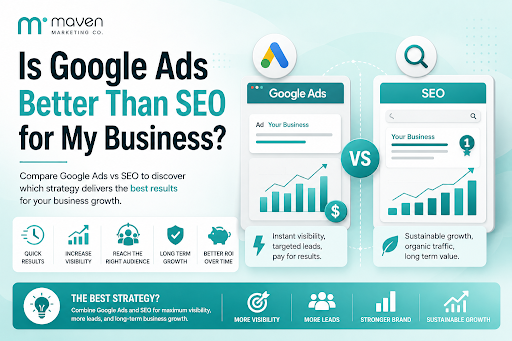
Is Google Ads Better Than SEO for My Business
One of the biggest questions business owners ask when they are planning online growth is whether they should invest in Google Ads or SEO. Both are strong marketing plays that help your company show up in Google search results, but they do things in separate lanes. Google Ads gives quicker visibility and can bring in leads fast, whereas SEO more or less focuses on slow, steady organic traffic that tends to grow the longer you keep building it. Picking the right direction depends on what you want to achieve, how much money you can spend, how crowded the market is, and how quickly you need results, like sooner rather than later. The good news is you don’t always have to choose one or the other; it’s not exactly a black-and-white situation. If you take time to understand the strongest points of both, you can put together a more sensible digital marketing plan that supports consistent expansion. In this guide, we’ll compare Google Ads vs SEO, explain the main differences, and help you figure out what option makes the most sense for your business.

When Should I Hire a Digital Marketing Agency
Growing a business today takes more than just having a website or throwing a post on social media; customers usually search around online, compare providers, skim reviews, and basically expect the brand to show up with a solid digital presence before they even think about buying. Many businesses try to run their marketing themselves, but there comes a point when “doing it all in-house” becomes clunky and hard to manage, all at once. Knowing when to hire a digital marketing agency can end up making a big, real difference for your growth. If you’re not getting enough leads, or your online visibility feels stuck, or sales are just not moving, the right agency can bring the know-how, plus a clear plan, to help you get noticeably better outcomes. In this guide, we’ll dig into what a digital marketing agency actually does, the usual signs it’s time to bring one on, and how picking the right marketing partner can help your business move forward at a faster pace.
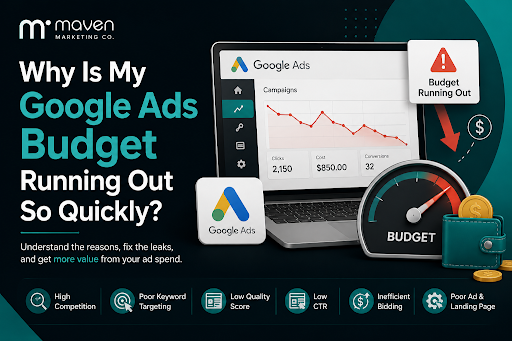
Why Is My Google Ads Budget Running Out So Quickly
Running a successful Google Ads budget isn’t only about throwing more money at it. It’s more like making every dollar, doing a bit extra. A lot of businesses start a Google Ads campaign with big hopes, then find out their daily budget is gone within a few hours, and that feels weird, right? After that, your ads stop showing effectively, new leads slip away, and your return on investment dips. So if your Google Ads budget is running out too fast, don’t stress. It’s a fairly common issue, and in most situations, it can be repaired with the right approach. There are multiple little things that can drain your advertising money quicker than you expected, from costly keywords to audience targeting that just doesn’t quite fit. In this guide, we’ll walk through why your budget disappears so quickly, how to cut wasteful spend, and the most reliable ways to boost your Google Ads ROI, even if your budget stays the same.