.svg)


%201.svg)

Google Analytics 4 Measurement Protocol: Server-Side Event Tracking
The JavaScript tag that powers standard Google Analytics 4 tracking has a weakness that is well documented: it runs in the browser, and anything that prevents the browser from executing it, whether that is an adblocker, a content security policy, tracking prevention built into the browser, or the simple absence of a browser in transactions between servers, creates a gap in the data. For Australian businesses whose revenue depends on accurate conversion tracking, that gap has real commercial consequences. Orders processed in the back end without a corresponding browser session, offline conversions that happen after the digital journey ends, events from mobile applications where web tags do not apply, and transactions that occur in audience segments with heavy adblocker use all represent data that the standard JavaScript implementation cannot capture. GA4's Measurement Protocol is the solution to this problem. It is an HTTP API that allows any system with the ability to make an HTTP request to send events directly to Google Analytics, bypassing the browser layer entirely. Tracking via the Measurement Protocol from the server restores the data completeness that browser constraints erode and enables event types that the JavaScript SDK cannot physically capture. This article covers the implementation of GA4 Measurement Protocol tracking for Australian development teams, from the authentication requirements and request structure through to the event parameters and debugging tools needed to validate the implementation.

BigQuery for Marketing: SQL Queries for Google Analytics 4 Data
The standard Google Analytics 4 interface is a capable reporting tool for the majority of marketing analysis tasks, and for most Australian businesses it covers the dimensions, metrics, and exploration tools needed for ongoing performance monitoring. But there is a category of marketing analysis that the interface cannot perform: analysis that requires joining GA4 data to external data sources, constructing custom attribution models across the raw event stream, building cohort analyses at the user level, or querying at the granularity of individual events and sessions rather than the aggregated summaries the interface presents. This is where BigQuery becomes essential. Google Analytics 4's native BigQuery export, available to all GA4 properties at no additional cost beyond BigQuery storage and query fees, sends the raw event data from every session to a BigQuery dataset where it can be queried with SQL, joined to CRM data, revenue data, and advertising data, and used to build analyses that the standard interface cannot construct. For Australian marketing teams with access to a SQL-capable analyst, the BigQuery export transforms GA4 from a reporting tool into a full analytical data warehouse. This article covers the foundational query patterns for marketing analysis on GA4 BigQuery data, with practical SQL that Australian teams can adapt for their own datasets.

Social Media Analytics Interpretation: Beyond Vanity Metrics
Australian businesses monitoring social media performance through follower counts, total likes, and impression volumes receive impressive-looking numbers that reveal almost nothing about whether social media investment generates genuine business value. These vanity metrics feel meaningful because they're large, visible, and consistently growing—yet they correlate poorly with the outcomes that actually matter: qualified website traffic, lead generation, customer acquisition, revenue attribution, and brand sentiment improvement among target audiences. Social media analytics interpretation requires moving deliberately beyond vanity metrics toward meaningful indicators revealing audience quality, content effectiveness, conversion contribution, and commercial impact that justify continued investment and inform strategic optimisation. This comprehensive guide reveals how Australian businesses can identify genuine performance signals within social media data, build measurement frameworks connecting platform activity to business outcomes, and develop analytical practices that transform social media from feel-good activity into strategically managed business development channel.

Customer Journey Mapping: From Awareness to Advocacy
Australian businesses invest heavily in acquiring new customers whilst remaining largely unaware of the complete experience those customers navigate from initial brand discovery through purchase, onboarding, ongoing relationship, and eventual advocacy or churn. This ignorance is expensive—organisations unknowingly create friction at critical journey stages that haemorrhages prospects before conversion, delivers disappointing post-purchase experiences that undermine retention, and misses systematic advocacy development opportunities that would otherwise generate valuable referrals. Customer journey mapping addresses this blindspot comprehensively, documenting every touchpoint, emotion, and decision point customers encounter throughout their relationship lifecycle—revealing where experiences delight, where they frustrate, and where they completely fail to meet customer expectations. This comprehensive guide reveals how Australian businesses can develop, validate, and act on customer journey maps that improve conversion rates, strengthen retention, reduce churn, and systematically develop the customer advocacy that drives sustainable organic growth.
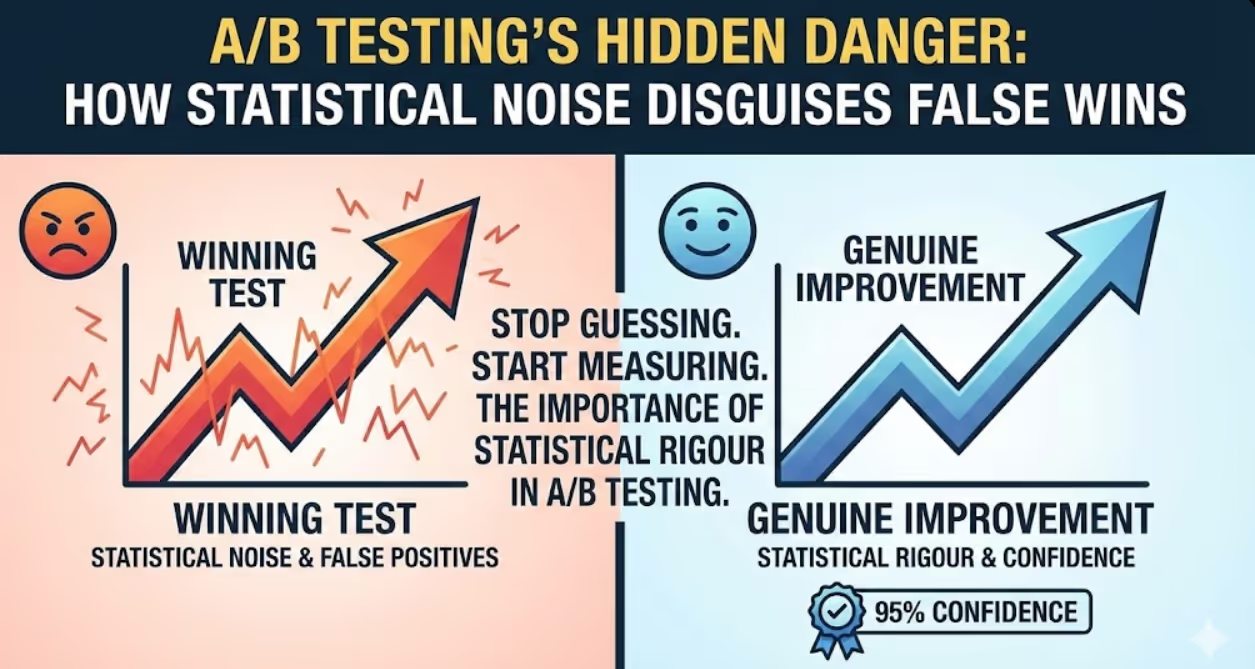
A/B Testing Framework: Statistical Significance for Australian Businesses
Australian businesses implementing A/B testing without statistical rigour consistently make one of two expensive mistakes—either declaring winners from tests with insufficient data and implementing changes that actually harm conversion rates, or abandoning genuinely effective improvements because poorly designed tests failed to detect real performance differences. Both errors waste testing resources whilst producing false confidence in decisions that proper statistical frameworks would have made reliable. Statistical significance isn't academic complexity reserved for data scientists—it's the practical foundation ensuring A/B test conclusions reflect genuine performance differences rather than random variation that coincidentally favoured one variant during a specific testing period. This comprehensive guide reveals how Australian businesses can implement statistically sound A/B testing frameworks that produce reliable conversion improvements through disciplined hypothesis development, appropriate sample size planning, proper test execution, and statistically valid result interpretation—transforming testing programmes from expensive guesswork into systematic conversion optimisation engines.
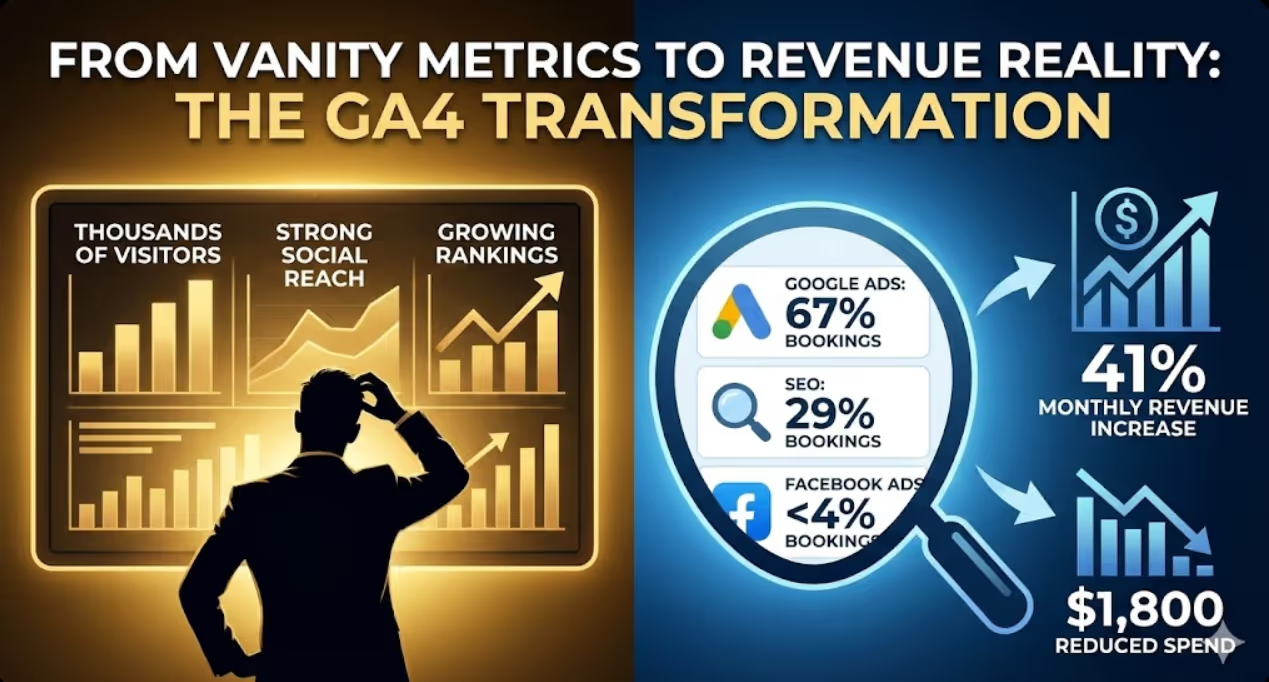
Google Analytics 4 Dashboard Setup: Metrics That Matter for SMEs
Australian small and medium enterprises invest significantly in websites, digital advertising, and content marketing whilst remaining largely blind to whether these investments actually generate business results—relying on vanity metrics like total page views and social media followers that feel impressive but reveal nothing about revenue impact, customer acquisition, or conversion performance. Google Analytics 4 provides sophisticated measurement capabilities previously available only to enterprise organisations with dedicated analytics teams, but its complexity intimidates many Australian SME owners who abandon GA4 after initial setup confusion, missing the actionable insights that properly configured dashboards deliver. Strategic GA4 dashboard setup cuts through data overwhelm by surfacing the specific metrics that reveal whether your digital marketing actually works—which channels attract customers, which content converts prospects, which pages drive revenue, and where your digital strategy needs adjustment. This comprehensive guide reveals how Australian SMEs can configure GA4 dashboards delivering genuinely actionable business intelligence without requiring data science expertise or enterprise analytics budgets.

Analytics That Matter: Setting Up Goals and Tracking That Drives Business Decisions
Australian businesses drown in analytics data whilst starving for actionable insights that drive confident decisions. Google Analytics 4 captures millions of data points monthly, yet 68% of businesses admit they don't understand what metrics actually matter for their growth objectives. The difference between data-rich and insight-poor organizations lies not in analytics sophistication but in strategic goal configuration that connects user behavior to business outcomes. This comprehensive guide reveals how Australian businesses configure analytics that answer critical questions driving profitability, identifying which traffic sources deliver customers worth keeping, which content drives conversions versus vanity engagement, and which user journeys predict purchase versus abandonment—transforming raw data into decision confidence.