.svg)


%201.svg)

Key Takeaways
- Last-click attribution systematically undervalues awareness campaigns: Crediting only final clicks ignores that display ads, YouTube campaigns, and generic search terms often initiate customer journeys, leading to budget cuts for channels actually driving conversion consideration
- Data-driven attribution uses machine learning for accurate credit: Google's algorithm analyses thousands of conversion paths comparing successful versus unsuccessful journeys, identifying which touchpoints genuinely influence conversion likelihood beyond coincidental presence
- Customer journeys involve multiple touchpoints across days or weeks: B2B purchases average 7-13 touchpoints over 2-8 weeks whilst e-commerce journeys span 3-7 interactions, making single-touch attribution models fundamentally inadequate for understanding true channel contribution
- Implementation requires sufficient conversion data: Data-driven attribution needs 300+ conversions and 3,000+ ad interactions per conversion action within 30 days for reliable modelling, limiting availability for low-volume campaigns
- Attribution changes don't retroactively affect historical performance: Switching models only impacts how future conversions get credited and how Smart Bidding optimises going forward, whilst historical reporting remains unchanged under previous model
- Different attribution windows affect credit distribution: 30-day versus 90-day windows significantly impact which touchpoints receive credit, with longer windows capturing more complete journeys but potentially including irrelevant early interactions
- Position-based and time-decay models offer middle-ground alternatives: When data-driven attribution isn't available, these rule-based models acknowledge multiple touchpoints whilst emphasising first and last interactions or recent touchpoints respectively
- Attribution insights reveal hidden campaign value: Channels generating awareness or consideration often show dramatically higher value under multi-touch attribution, justifying continued or increased investment despite appearing ineffective under last-click analysis
A software company spent $45,000 monthly on Google Ads across search, display, and YouTube campaigns. Last-click attribution showed search campaigns generating 87% of conversions at $42 cost per acquisition. Display and YouTube campaigns appeared to deliver only 13% of conversions at $156 and $189 cost per acquisition respectively. Management prepared to cut "underperforming" display and YouTube budgets, reallocating to search.
Before implementing changes, they switched to data-driven attribution revealing dramatically different performance picture. Search campaigns' conversion credit dropped to 52% as attribution recognised that 73% of "search conversions" involved prior display or YouTube interactions. Display campaign value increased 340% receiving credit for consideration-stage influence. YouTube campaigns' apparent cost per acquisition dropped from $189 to $67 when properly credited for journey initiation and brand building.
Top conversion paths analysis showed most valuable customers interacted with YouTube ads first, clicked display retargeting weeks later, then converted through branded search. The company's near-decision to cut YouTube and display would have eliminated touchpoints initiating and nurturing these high-value conversion paths, likely reducing total conversions by 40-50% whilst appearing to "optimise" towards cheaper search traffic.
This scenario illustrates attribution model impact on strategic decisions. Last-click attribution systematically misrepresents channel performance, penalising awareness and consideration touchpoints whilst over-crediting final conversion touchpoints that merely harvest demand created elsewhere in the journey.
Understanding Attribution Model Fundamentals
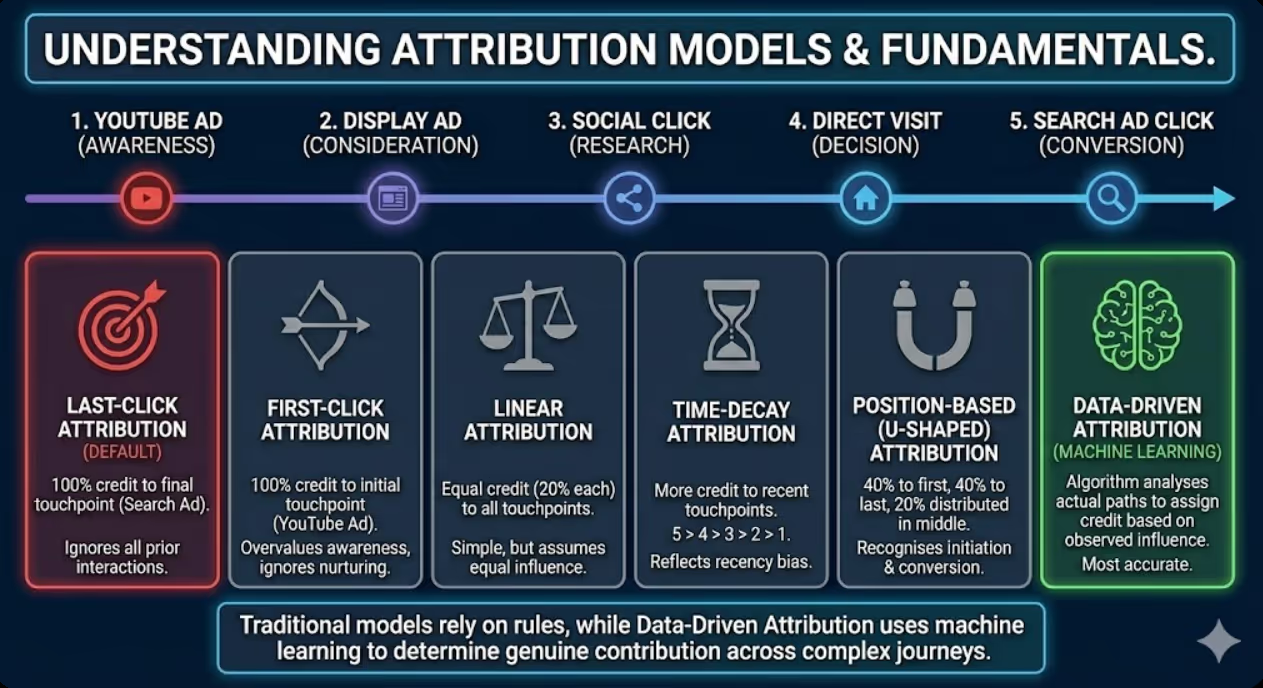
Attribution models define rules or algorithms determining how conversion credit distributes across multiple touchpoints in customer journeys from initial awareness through final conversion.
Last-click attribution represents the default model crediting 100% of conversion value to the final click before conversion. According to Google's support documentation on attribution models, this model ignores all previous interactions regardless of their influence on conversion likelihood. A customer might interact with five different ads over three weeks, but only the final click receives credit making earlier touchpoints appear valueless despite potentially initiating and nurturing purchase consideration.
First-click attribution credits 100% of conversion value to initial touchpoint that introduced customer to your business. This model overvalues awareness whilst ignoring nurturing and conversion touchpoints. Useful for understanding which channels generate new customer awareness but inadequate for comprehensive performance evaluation across full funnel.
Linear attribution distributes credit equally across all touchpoints in conversion path. A journey with four interactions gives each 25% credit. This model acknowledges multiple touchpoints but assumes equal contribution regardless of actual influence on conversion likelihood. Simple implementation but lacks sophistication distinguishing genuinely influential touchpoints from coincidental presence.
Time-decay attribution gives progressively more credit to touchpoints closer to conversion using exponential decay formula. Interactions days or weeks before conversion receive minimal credit whilst recent touchpoints receive substantial credit. This model reflects recency bias recognising that recent interactions likely have stronger influence but potentially undervalues crucial early awareness touchpoints initiating consideration.
Position-based attribution (also called U-shaped) credits 40% to first interaction, 40% to last interaction, and distributes remaining 20% equally across middle touchpoints. This model recognises special importance of journey initiation and conversion whilst acknowledging middle-funnel contribution. Provides balanced view but uses arbitrary percentages rather than data-driven weighting.
Data-driven attribution uses machine learning analysing actual conversion paths to determine credit distribution based on observed influence rather than predetermined rules. Google's algorithm compares successful conversion paths against similar non-converting paths, identifying which touchpoints correlate with increased conversion likelihood. This approach provides most accurate credit distribution when sufficient data supports reliable modelling.
The attribution problem complexity emerges from multi-device journeys where customers interact across desktop, mobile, tablet, and offline touchpoints, cross-channel paths spanning search, display, video, social, email, and direct traffic, and time delays with days or weeks between initial awareness and eventual conversion. Traditional single-touch models fundamentally cannot represent this complexity accurately.
How Google Ads Data-Driven Attribution Works
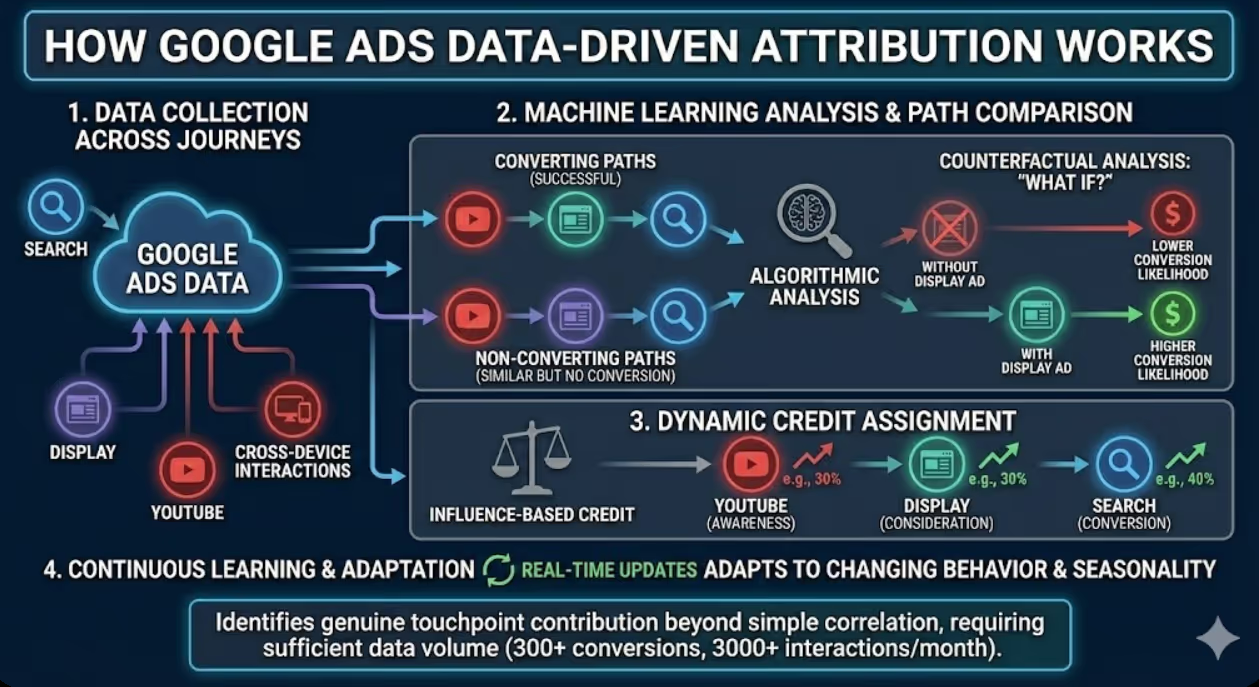
Data-driven attribution employs sophisticated machine learning algorithms analysing thousands of actual customer journeys to identify touchpoint contributions beyond simple correlation.
The algorithmic approach compares conversion paths against non-conversion paths sharing similar characteristics. According to research from Google's attribution white paper, the system identifies patterns where specific touchpoint sequences correlate with increased conversion likelihood compared to similar paths lacking those touchpoints. For example, if paths including display ad interactions convert at 40% higher rates than similar paths without display exposure, the algorithm assigns appropriate credit to display touchpoints reflecting their observed influence.
Counterfactual analysis represents the core methodology where the model asks "what would have happened without this touchpoint?" by comparing actual conversion paths against hypothetical paths removing specific interactions. If removing a touchpoint from typical paths significantly reduces predicted conversion likelihood, that touchpoint receives substantial credit. If removing it has minimal impact, it receives little credit regardless of presence in conversion paths.
Machine learning continuously updates attribution weighting as new conversion data accumulates, adapting to changing customer behaviour, seasonal patterns, and campaign modifications. This dynamic adaptation ensures attribution remains accurate despite evolving marketing conditions unlike static rule-based models using fixed formulas regardless of actual performance patterns.
Minimum data requirements mandate 300+ conversions and 3,000+ ad interactions per conversion action within 30-day periods for reliable data-driven attribution modelling. Insufficient data prevents algorithm from identifying statistically significant patterns, reverting to alternative attribution models when thresholds aren't met. High-volume accounts benefit most from data-driven attribution whilst low-volume campaigns may need to use rule-based alternatives.
Privacy-safe attribution uses aggregated anonymised data ensuring individual user tracking doesn't compromise privacy whilst still enabling pattern identification at population level. Google's implementation complies with privacy regulations whilst maintaining attribution accuracy through statistical analysis of aggregate patterns rather than individual-level tracking.
Cross-device attribution connects interactions across devices when users sign into Google accounts, enabling recognition that desktop research, mobile browsing, and tablet purchasing often represent single customer journey rather than separate unrelated interactions. This cross-device view dramatically improves attribution accuracy in multi-device customer journeys.
Integration with Smart Bidding enables automated bid adjustments based on data-driven attribution insights. Smart Bidding algorithms optimise towards conversions properly credited across touchpoints rather than optimising based on last-click attribution that systematically misrepresents channel contribution. This integration amplifies data-driven attribution value through improved automated bidding.
Implementing Data-Driven Attribution in Google Ads
Transitioning from last-click to data-driven attribution requires systematic approach ensuring smooth implementation whilst understanding performance implications.
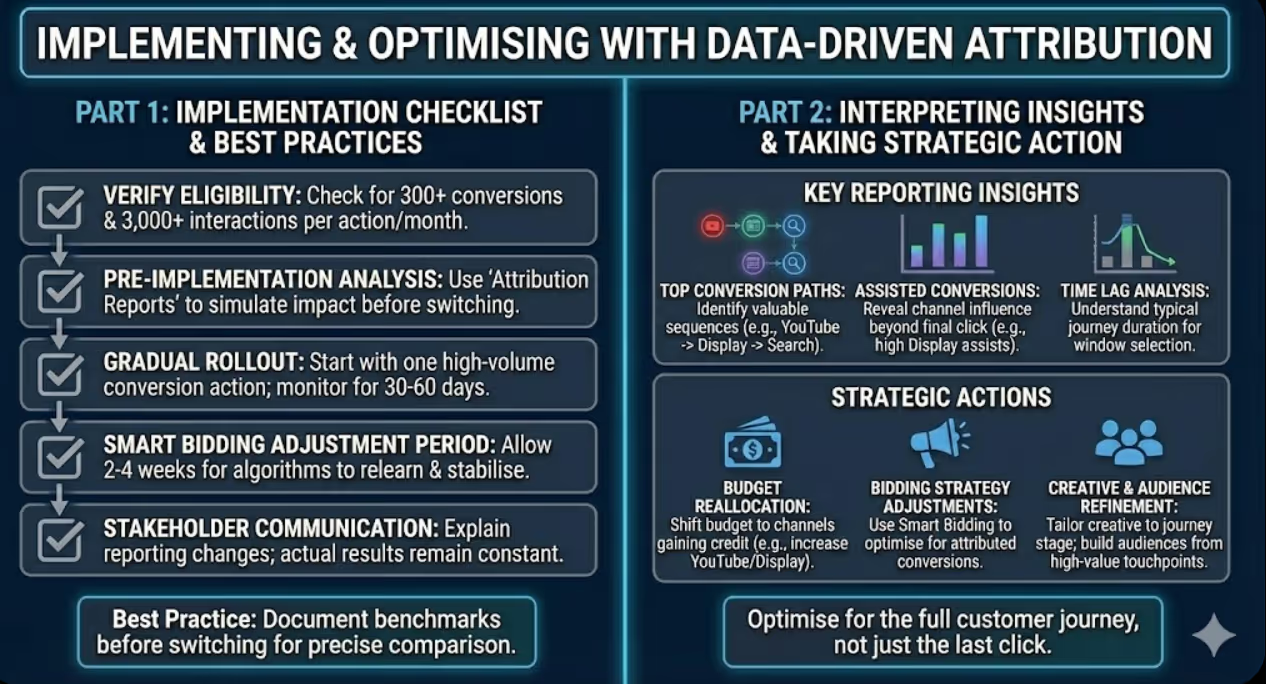
Eligibility verification confirms your account meets requirements including 300+ conversions per conversion action monthly, 3,000+ ad interactions per conversion action monthly, and conversion tracking properly implemented across all channels. Check eligibility through Google Ads attribution settings revealing whether data-driven attribution is available for each conversion action. Multiple conversion actions may have different eligibility based on their individual volume.
Pre-implementation analysis using Attribution reports in Google Ads reveals how switching models will impact reported performance before actually changing attribution. Compare current last-click attribution against simulated data-driven attribution showing which campaigns will gain or lose credit. This preview enables stakeholder communication and expectation setting about performance reporting changes.
Gradual rollout approach implements data-driven attribution for single conversion action initially, monitoring impact over 30-60 days before expanding to additional conversion actions. This phased approach enables learning and adjustment whilst limiting risk of unexpected campaign performance shifts. Start with highest-volume conversion actions where data-driven attribution provides most reliable insights.
Smart Bidding adjustment considerations recognise that attribution model changes directly impact Smart Bidding optimisation as algorithms optimise towards properly credited conversions rather than last-click conversions. Allow 2-4 weeks for Smart Bidding to adapt after attribution model changes, during which performance may fluctuate as algorithms relearn optimal bidding strategies under new attribution framework.
Conversion value updates ensure conversion values accurately reflect business value when attribution changes how credit distributes. If certain conversion types systematically receive less credit under data-driven attribution, consider whether their conversion values should be adjusted to maintain proper optimisation priorities. Conversion value assignment significantly impacts Smart Bidding behaviour under any attribution model.
Stakeholder communication prevents confusion when reported performance changes despite actual business results remaining constant. Clearly explain that attribution model changes affect how credit distributes across campaigns without changing actual conversion volumes or revenue. Historical performance under last-click attribution remains unchanged whilst future reporting reflects new attribution model.
Documentation and benchmarking establishes clear before-and-after comparison points. Export key metrics under last-click attribution before switching models, enabling precise quantification of reporting changes. Document which campaigns gain or lose credit, supporting data-driven optimisation decisions based on accurate attribution rather than last-click distortions.
Testing timeframes should span at least 30-60 days allowing sufficient data accumulation for attribution model to stabilise and Smart Bidding to adapt. Short testing periods may show volatility that normalises over time. Commit to testing duration before making major strategic changes based on initial fluctuations.
Interpreting Multi-Touch Attribution Insights
Data-driven attribution reveals customer journey complexity and channel contributions invisible under last-click attribution, requiring new analytical approaches for campaign optimisation.
Top conversion paths analysis identifies most common and most valuable sequences of touchpoints leading to conversions. Reports showing path length distribution, interaction sequences, time delays between interactions, and channel combinations reveal actual customer behaviour. According to Think with Google research, B2B buyers average 12 search sessions across multiple devices before purchasing, whilst e-commerce journeys typically involve 3-7 touchpoints. Understanding these patterns informs budget allocation and campaign strategy.
Assisted conversions metrics show how often campaigns contribute to conversion paths without being final touchpoint. High assisted conversion rates indicate strong consideration or awareness influence despite low last-click conversions. Display campaigns often show high assisted conversion ratios reflecting their role in journey initiation and mid-funnel nurturing rather than conversion harvesting.
Time lag reporting reveals typical duration between first interaction and conversion, informing attribution window selection and campaign patience expectations. B2B services often show 30-90 day lags whilst impulse purchases may convert within hours. Understanding time lags prevents premature campaign judgments and supports appropriate attribution window configuration.
Path length analysis shows average number of interactions before conversion, with longer paths suggesting complex decision processes requiring multiple touchpoints. Short paths indicate impulse or high-intent purchases whilst long paths reflect considered purchases benefiting from sustained multi-channel presence throughout customer journey.
Channel sequence patterns identify whether certain channels typically appear early, middle, or late in conversion paths. YouTube and display often appear early in journeys providing awareness, whilst branded search typically appears late as conversion mechanism. Generic search frequently appears throughout journeys supporting research at various stages. These patterns inform channel-specific strategies and budget allocation.
Cross-device journey analysis reveals device role throughout conversion paths. Desktop research, mobile browsing, and desktop purchasing represent common B2B pattern, whilst mobile research and mobile purchasing dominates e-commerce in many categories. Cross-device insights inform device bidding strategies and creative optimisation for device-specific customer journey stages.
Incremental value identification compares campaign performance under last-click versus data-driven attribution, revealing which campaigns gain substantial credit reflecting their true contribution. Campaigns showing significant credit increases under data-driven attribution provide hidden value that last-click attribution systematically ignored. These insights prevent budget cuts for high-value awareness campaigns appearing ineffective under last-click analysis.
Optimising Campaigns with Attribution Insights
Attribution insights enable strategic campaign optimisation and budget allocation reflecting genuine channel contribution rather than last-click distortions.
Budget reallocation based on attributed performance shifts investment towards channels receiving increased credit under data-driven attribution. Awareness campaigns like YouTube and display often gain credit justifying maintained or increased budgets despite appearing ineffective under last-click analysis. However, avoid dramatic budget shifts immediately after attribution changes, allowing performance to stabilise over 60-90 days before major reallocations.
Bidding strategy adjustments reflect attribution-aware performance using Smart Bidding algorithms that automatically incorporate data-driven attribution insights into bid optimisation. Manual bidding requires explicitly adjusting bids based on attributed performance rather than last-click metrics. Increase bids for campaigns receiving more credit under data-driven attribution whilst potentially reducing bids for campaigns whose apparent performance primarily reflected harvesting demand created by other channels.
Creative strategy refinement addresses different journey stages based on attribution insights showing where campaigns typically appear in conversion paths. Early-journey creative focuses on awareness and consideration with brand messaging and product education. Late-journey creative emphasises conversion with promotions, urgency, and clear calls-to-action. Attribution insights clarify appropriate creative strategies for each campaign's typical journey position.
Audience targeting optimisation uses attributed conversion data for audience creation and lookalike modelling. Audiences based on users interacting with high-attribution-value touchpoints rather than only final touchpoints create higher-quality prospect lists. Remarketing strategies informed by attribution insights target users based on their journey stage and interaction history rather than simplistic "website visitors" segmentation.
Campaign structure refinement separates campaigns by journey stage enabling stage-specific optimisation. Awareness campaigns targeting cold audiences, consideration campaigns targeting engaged audiences, and conversion campaigns targeting high-intent audiences each optimise towards appropriate journey stage objectives. Attribution insights clarify which campaigns naturally serve which stages supporting proper structure and measurement.
Cross-channel coordination increases when attribution reveals how channels work together throughout journeys. Sequential messaging across YouTube, display, and search creates cohesive journeys aligned with attribution insights showing typical channel sequences. Budget timing coordinates channel investment ensuring adequate awareness investment precedes consideration and conversion investment reflecting temporal journey patterns.
Performance expectation calibration adjusts KPI targets based on campaign journey position. Awareness campaigns optimise towards engagement and assisted conversions rather than direct conversions. Consideration campaigns balance assisted and direct conversions. Conversion campaigns focus on cost-per-acquisition whilst acknowledging their performance depends on earlier journey stages. Attribution-aware performance expectations prevent penalising campaigns for not performing roles they don't serve.
Common Attribution Implementation Challenges
Understanding typical obstacles enables proactive solutions preventing implementation failures and misinterpretation of attribution insights.
Insufficient conversion volume prevents data-driven attribution availability for low-volume campaigns. Solutions include using rule-based attribution models like position-based or time-decay as interim alternatives, combining related conversion actions to increase volume, extending attribution windows to capture more conversions, or accepting last-click attribution limitations whilst qualitatively acknowledging multi-touch reality. Not all accounts can use data-driven attribution making understanding alternative models essential.
Performance reporting confusion emerges when stakeholders misinterpret attribution changes as actual performance changes. Clear communication emphasising that attribution changes credit distribution without changing actual business results prevents panic over apparent performance declines in campaigns losing credit. Training stakeholders on attribution concepts and journey complexity supports informed interpretation.
Smart Bidding adjustment period creates temporary performance volatility as algorithms relearn under new attribution model. This 2-4 week adaptation period may show unexpected cost or conversion fluctuations that normalise as algorithms stabilise. Patience during adjustment prevents premature strategy changes based on temporary algorithmic learning.
Attribution window selection impacts which touchpoints receive credit with longer windows capturing more complete journeys but potentially crediting irrelevant early interactions. Standard 30-day windows suit most e-commerce whilst B2B services may need 90-day windows reflecting longer purchase cycles. Selecting appropriate windows requires understanding typical customer journey duration in your industry.
Cross-channel attribution limitations emerge when customer journeys span channels outside Google Ads like organic search, direct traffic, email, social media, or offline interactions. Google Ads attribution only captures Google Ads touchpoints, potentially crediting Google Ads channels for conversions influenced by non-Google channels. Comprehensive attribution requires Google Analytics 4 or third-party attribution platforms tracking all channels.
Historical data incompatibility means attribution model changes don't retroactively reattribute historical conversions. Reports comparing periods before and after attribution changes show discontinuity making year-over-year comparisons misleading. Maintain separate reporting for pre-change and post-change periods or use attribution model comparison tools showing how historical performance would appear under new attribution.
Organisational resistance from teams whose campaigns lose credit under data-driven attribution creates political obstacles to implementation. Brand awareness teams often champion data-driven attribution revealing their campaigns' hidden value, whilst direct response teams may resist attribution changes reducing their apparent conversions. Executive-level commitment to accurate attribution regardless of departmental impacts enables successful implementation.
Attribution Best Practices and Advanced Strategies
Sophisticated attribution implementation combines technical configuration with strategic thinking about customer journeys and organisational alignment.
Combining attribution models for different objectives uses data-driven attribution for Smart Bidding optimisation whilst maintaining last-click attribution for certain reporting views enabling comparisons and stakeholder familiarity. Google Ads supports multiple attribution models simultaneously for different purposes though Smart Bidding operates under single model.
Conversion value optimisation assigns appropriate values to conversions reflecting their business worth. Data-driven attribution distributes these values across touchpoints enabling value-based Smart Bidding optimisation targeting high-value conversion paths. Accurate conversion values become even more critical under data-driven attribution as algorithms optimise towards properly valued and properly attributed conversions.
Seasonal attribution analysis recognises that customer journey patterns vary seasonally. Holiday shopping involves longer research periods whilst impulse purchases during sales events show shorter paths. Reviewing attribution patterns quarterly or seasonally reveals whether customer behaviour shifts warrant strategy adjustments. Attribution insights during peak versus off-peak periods inform timing of awareness versus conversion investment.
Competitive attribution considerations acknowledge that competitor activity influences customer journeys. When competitors increase awareness advertising, your conversion campaigns may benefit from increased category interest their spending creates. Attribution insights help identify when your conversion performance depends on competitor investment in market education and awareness building.
Testing attribution window variations reveals sensitivity to window length. Compare 30-day, 60-day, and 90-day windows showing which campaigns gain or lose credit with longer windows. If window length dramatically impacts campaign attribution, customer journeys likely span months requiring longer windows for accurate credit distribution. If window length has minimal impact, shorter windows suffice whilst reducing noise from irrelevant early interactions.
Incrementality testing through geographic holdout tests or matched market tests validates whether attributed conversions represent genuinely incremental business or would have occurred anyway. Attribution shows credit distribution but doesn't prove incrementality. Complementary incrementality testing ensures attributed conversions represent real business impact rather than merely crediting unavoidable conversions.
Cross-platform attribution integration combines Google Ads attribution with Google Analytics 4 providing unified view across all marketing channels. GA4's data-driven attribution includes organic search, direct traffic, social media, and other channels outside Google Ads providing more complete journey view. However, GA4 and Google Ads attribution may differ due to different data sets and methodologies requiring understanding of both systems.
Ready to Implement Data-Driven Attribution?
Moving beyond last-click attribution transforms understanding of campaign performance, customer journeys, and channel contribution. Data-driven attribution reveals hidden value in awareness and consideration campaigns whilst providing accurate performance measurement supporting intelligent budget allocation and optimisation decisions.
For businesses spending significantly on Google Ads across multiple campaigns and channels, data-driven attribution eliminates systematic misattribution that penalises early-journey touchpoints whilst over-crediting final clicks. This accuracy enables confident investment in full-funnel strategies rather than defensive budget concentration in last-click conversion campaigns.
Need expert guidance implementing data-driven attribution and optimising your Google Ads strategy based on accurate multi-touch insights? Maven Marketing Co. specialises in advanced Google Ads management including attribution strategy, implementation, and performance optimisation. Our team combines technical expertise with strategic thinking, helping businesses understand customer journeys whilst optimising campaigns based on genuine contribution rather than last-click distortions.
We don't just change attribution settings. We develop comprehensive attribution strategies aligned with your customer journey complexity, implement data-driven attribution where eligible, optimise campaigns based on multi-touch insights, and provide ongoing analysis ensuring budget allocation reflects actual channel performance.
Contact Maven Marketing Co. today for a comprehensive Google Ads attribution audit. We'll analyse your current attribution approach, evaluate customer journey patterns, quantify potential insights from data-driven attribution, and develop implementation roadmap maximising attribution accuracy. Let's ensure your Google Ads strategy and budget allocation reflect accurate understanding of channel contribution across complete customer journeys.
Frequently Asked Questions
Q: Will switching to data-driven attribution change our actual conversion numbers or business results?
No, attribution model changes only affect how conversion credit distributes across campaigns and touchpoints without changing actual conversion volumes or business results. The same customer conversions occur regardless of attribution model, but credit distribution differs based on which touchpoints receive recognition for contribution. For example, a conversion might be credited 100% to search under last-click attribution but distributed as 30% YouTube, 40% display, and 30% search under data-driven attribution. Total conversions remain identical but campaign-level reporting changes reflecting multi-touch contribution. This distinction prevents confusion when campaign metrics shift after attribution changes despite business performance remaining constant.
Q: How long does it take for Smart Bidding to adjust after switching attribution models?
Smart Bidding algorithms typically require 2-4 weeks to fully adapt after attribution model changes, during which performance may fluctuate as systems relearn optimal bidding strategies under new attribution framework. The algorithms must accumulate sufficient conversion data under new attribution model to establish stable patterns and optimise effectively. During this adjustment period, cost-per-acquisition may temporarily increase or conversion volumes may vary as algorithms explore new bidding strategies. Avoid making major campaign changes during this adaptation period, allowing algorithms to stabilise before evaluating performance under new attribution model. Most accounts see performance normalise within 30 days with stable optimisation thereafter.
Q: Can we use data-driven attribution if our conversion volumes are below the 300 monthly threshold?
Data-driven attribution requires minimum 300 conversions per conversion action monthly for reliable modelling, making it unavailable for low-volume campaigns. When conversion volumes fall below thresholds, Google automatically reverts to last-click attribution or allows manual selection of rule-based alternatives like position-based or time-decay attribution. These alternative models acknowledge multiple touchpoints despite lacking data-driven precision. Consider combining related conversion actions to increase volume, extending attribution windows to capture more conversions, or accepting rule-based attribution limitations whilst understanding they provide approximations rather than data-driven accuracy. Focus optimisation efforts on increasing conversion volume to eventually qualify for data-driven attribution.

Table of contents
read more blogs

Is Google Ads Better Than SEO for My Business
One of the biggest questions business owners ask when they are planning online growth is whether they should invest in Google Ads or SEO. Both are strong marketing plays that help your company show up in Google search results, but they do things in separate lanes. Google Ads gives quicker visibility and can bring in leads fast, whereas SEO more or less focuses on slow, steady organic traffic that tends to grow the longer you keep building it. Picking the right direction depends on what you want to achieve, how much money you can spend, how crowded the market is, and how quickly you need results, like sooner rather than later. The good news is you don’t always have to choose one or the other; it’s not exactly a black-and-white situation. If you take time to understand the strongest points of both, you can put together a more sensible digital marketing plan that supports consistent expansion. In this guide, we’ll compare Google Ads vs SEO, explain the main differences, and help you figure out what option makes the most sense for your business.

When Should I Hire a Digital Marketing Agency
Growing a business today takes more than just having a website or throwing a post on social media; customers usually search around online, compare providers, skim reviews, and basically expect the brand to show up with a solid digital presence before they even think about buying. Many businesses try to run their marketing themselves, but there comes a point when “doing it all in-house” becomes clunky and hard to manage, all at once. Knowing when to hire a digital marketing agency can end up making a big, real difference for your growth. If you’re not getting enough leads, or your online visibility feels stuck, or sales are just not moving, the right agency can bring the know-how, plus a clear plan, to help you get noticeably better outcomes. In this guide, we’ll dig into what a digital marketing agency actually does, the usual signs it’s time to bring one on, and how picking the right marketing partner can help your business move forward at a faster pace.

Why Is My Google Ads Budget Running Out So Quickly
Running a successful Google Ads budget isn’t only about throwing more money at it. It’s more like making every dollar, doing a bit extra. A lot of businesses start a Google Ads campaign with big hopes, then find out their daily budget is gone within a few hours, and that feels weird, right? After that, your ads stop showing effectively, new leads slip away, and your return on investment dips. So if your Google Ads budget is running out too fast, don’t stress. It’s a fairly common issue, and in most situations, it can be repaired with the right approach. There are multiple little things that can drain your advertising money quicker than you expected, from costly keywords to audience targeting that just doesn’t quite fit. In this guide, we’ll walk through why your budget disappears so quickly, how to cut wasteful spend, and the most reliable ways to boost your Google Ads ROI, even if your budget stays the same.