.svg)


%201.svg)

Key Takeaways
- Dynamic Search Ads use Google's AI to automatically generate ad headlines and match searches based on website content rather than requiring manual keyword lists and ad copy creation that traditional campaigns demand
- DSAs excel at discovering long-tail search queries and new keyword opportunities that manual keyword research overlooks whilst traditional campaigns provide better control over messaging, bidding, and budget allocation for known high-value terms
- Website content quality directly determines DSA performance because Google's algorithms scan pages to understand topics and relevance making well-structured, comprehensive content essential for effective dynamic targeting
- Negative keyword implementation proves critical for DSA campaigns preventing AI from matching irrelevant searches that consume budget without generating qualified leads or conversions
- Hybrid strategies combining DSAs for discovery and coverage with traditional keyword campaigns for proven high-value terms typically outperform either approach alone by balancing automation efficiency against strategic control
An Australian accounting firm providing tax preparation, bookkeeping, and financial advisory services struggled with Google Ads management requiring weekly keyword additions, ad copy testing, and bid adjustments consuming 8-10 hours monthly. The firm's service offerings evolved seasonally with tax preparation dominating March through July, year-end bookkeeping increasing November through January, and advisory services maintaining steady demand. Traditional keyword campaigns required constant updating reflecting service availability, pricing changes, and new offering launches.
The marketing manager implemented Dynamic Search Ads as supplementary campaign targeting the firm's complete website allowing Google's AI to match searches against all service pages rather than limiting coverage to manually selected keywords. Initial DSA implementation with $2,000 monthly budget ran alongside existing $8,000 keyword campaign providing comparative performance data.
Three months of data revealed surprising patterns. DSAs discovered 347 search queries generating conversions that weren't represented in the keyword campaign including highly specific long-tail searches like "small business bookkeeping northern suburbs Sydney" and "tax depreciation schedule investment property accountant" that manual keyword research hadn't identified. Cost per conversion for DSA traffic averaged $89 compared to $127 for traditional campaigns despite less precise targeting. However, DSAs also generated wasteful traffic including searches for free tax advice, DIY bookkeeping software, and accounting career information that negative keywords subsequently blocked.
According to Google's performance data, Dynamic Search Ads help advertisers capture relevant traffic they might otherwise miss through traditional keyword targeting, with many advertisers seeing 5-15% incremental conversions beyond keyword campaigns.
The firm implemented refined DSA strategy including comprehensive negative keyword lists blocking informational and non-commercial searches, page feed implementation targeting only commercial service pages rather than blog content and resource materials, and custom bid adjustments lowering bids for broad auto-target categories whilst increasing bids for high-performing dynamic ad targets based on actual performance data. The optimised DSA campaign with increased $3,500 monthly budget generated 127% more conversions than traditional campaigns at 31% lower cost per conversion whilst requiring only 2-3 hours monthly management versus 8-10 hours for keyword campaigns.
However, DSAs couldn't entirely replace traditional campaigns because brand messaging for specific high-value services like business advisory required controlled ad copy that DSAs' automated headlines couldn't reliably deliver. The optimal strategy combined both approaches with keyword campaigns providing controlled messaging for core services whilst DSAs captured long-tail opportunities and adapted automatically to content updates.
Understanding Dynamic Search Ads Functionality
Effective DSA implementation requires foundational understanding of how Google's automation works, what inputs drive targeting, and where AI-generated campaigns differ from traditional approaches.
Dynamic Search Ad mechanics leverage Google's website crawling and indexing technology to understand advertiser website content and match searches dynamically. Google regularly crawls advertiser websites similar to organic search indexing, analyses page content identifying topics, products, services, and entities that pages discuss, stores this information in searchable index that ad serving algorithms query, matches user searches against indexed content determining relevance, dynamically generates ad headlines based on matched page content and search query, and automatically selects landing pages most relevant to specific searches rather than using advertiser-specified destinations. This process occurs in real-time for each search enabling instant adaptation to content changes without requiring manual campaign updates that traditional keyword campaigns necessitate.
Targeting source options determine what Google uses for matching searches including website content, page feeds, URL rules, and categories. Website content targeting crawls complete website or specified sections allowing broadest coverage but least control over exactly what triggers ads. Page feed targeting uses advertiser-uploaded spreadsheets listing specific URLs with optional labels enabling more precise control over which pages generate ads whilst maintaining dynamic matching. URL rules target pages matching specific patterns like example.com.au/services/* including all service pages whilst excluding others. Category targeting uses Google's automated categorisation grouping similar pages into topics enabling category-level bid adjustments. Australian service businesses typically combine approaches using URL rules to include service pages whilst excluding blog content, combined with page feeds for precise control over highest-value offerings.
Ad creation process differs fundamentally from traditional campaigns where advertisers write complete ads. DSA advertisers provide only description lines (2 descriptions up to 90 characters each) whilst Google automatically generates headlines based on matched page content and search queries. Headlines aim to reflect user search queries whilst incorporating website content making them highly relevant but reducing advertiser control over exact messaging. Display URLs show actual landing page URLs rather than allowing customisation providing transparency but potentially revealing complex or unattractive URL structures. Ad extensions including sitelinks, callouts, and structured snippets can be added providing some messaging control supplementing automated headlines. Australian businesses should write compelling, generic descriptions that work across service variations rather than service-specific descriptions that traditional ads use because DSA descriptions pair with varied automated headlines across different searches and landing pages.
Landing page selection occurs automatically based on Google's relevance algorithms rather than advertiser specification. Google determines which page on the targeted website section best matches specific searches considering page content relevance, historical performance including bounce rates and conversion rates, and page quality signals including load speed and mobile experience. This automation enables precise matching where searches for "small business tax preparation" might land on dedicated small business tax page whilst "individual tax return" directs to personal tax services despite both triggering ads from same campaign. Disadvantages include less control over user journey, potential landing on suboptimal pages when multiple pages discuss similar topics, and inability to force traffic through specific conversion funnels that traditional campaigns enable through fixed landing page assignments.
Search term matching operates differently from traditional keyword match types using website content rather than keyword lists for determining ad eligibility. Google matches searches that it determines are related to website content based on semantic understanding rather than exact keyword matching. This enables capturing searches advertisers never explicitly targeted including new terminology, colloquialisms, and unexpected phrasings that keyword research wouldn't identify. However, broad semantic matching increases risk of irrelevant traffic requiring robust negative keyword lists preventing budget waste on searches tangentially related to website content but not relevant to business offerings. Australian service businesses should expect DSAs to initially generate some wasteful traffic requiring iterative negative keyword refinement over first 4-8 weeks until exclusion lists adequately filter irrelevant searches.
Performance factors influencing DSA success include website content quality with comprehensive, well-structured service descriptions enabling better matching, page load speed affecting quality scores and conversion rates, clear calls-to-action on landing pages converting traffic that dynamic matching delivers, competitive bidding positioning ads favourably for valuable searches, and conversion tracking accuracy enabling algorithm optimisation toward valuable traffic. Google's DSA best practices emphasise that website quality directly determines DSA performance more than traditional campaigns because AI relies on crawling and understanding content rather than advertiser-provided keywords and targeting specifications.

Strategic Use Cases for Dynamic Search Ads
Specific business contexts and campaign objectives determine when DSAs provide advantages over traditional keyword campaigns versus scenarios where manual control proves essential.
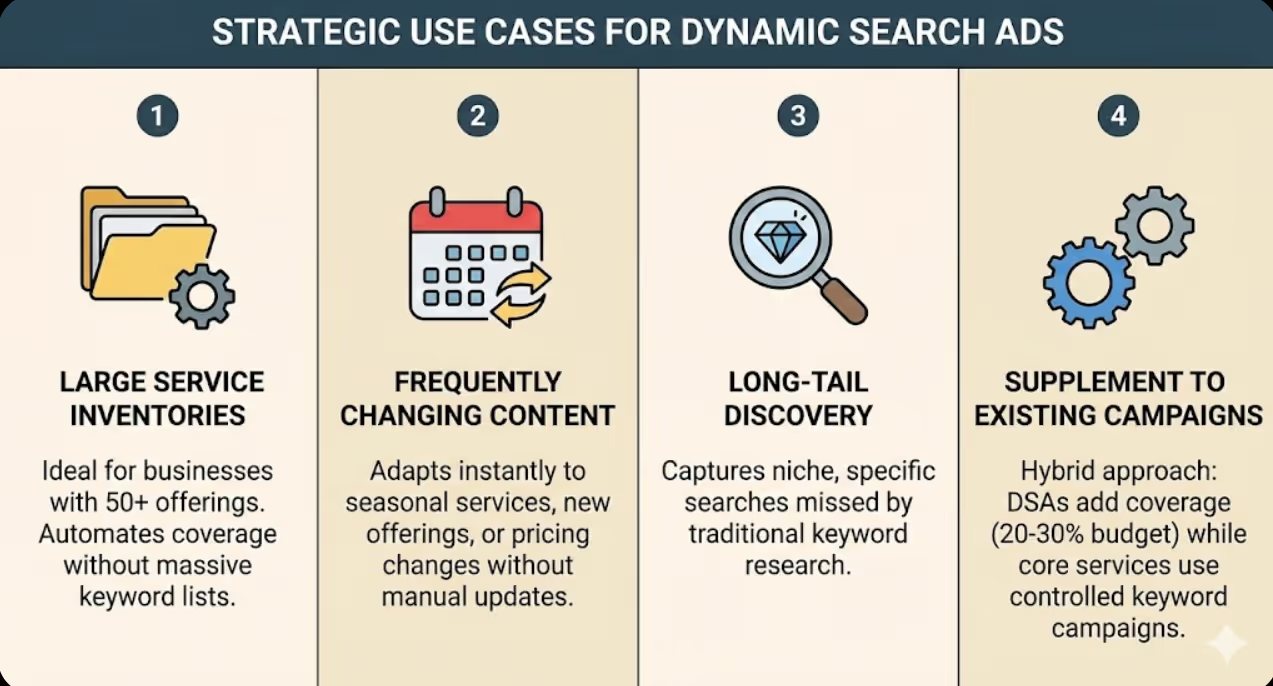
Large service inventories benefit substantially from DSA automation when businesses offer dozens or hundreds of distinct services making comprehensive keyword campaign coverage impractical. Law firms providing family law, commercial law, property law, criminal defence, and numerous practice areas each containing multiple specific services would require enormous keyword lists with hundreds of ad groups covering complete service range. DSAs automatically match searches against all service pages without requiring explicit keyword lists for every service variation. Medical practices, consulting firms, and professional services with extensive offering catalogues find DSAs enable comprehensive coverage without proportional management burden that traditional campaigns would require. Australian businesses should consider DSAs when service count exceeds approximately 50 distinct offerings where manual campaign management becomes prohibitively time-consuming relative to budget size.
Frequently changing content including seasonally adjusted services, regularly added offerings, or dynamic pricing models benefit from DSA automation adapting without manual campaign updates. Accounting firms with tax preparation availability changing based on tax year calendar, educational institutions with enrolment periods varying by programme and semester, and tourism operators with seasonal activity availability all face content changes requiring campaign updates that DSAs handle automatically. When website content updates reflect current offerings, DSAs adjust targeting without requiring parallel campaign modifications that traditional approaches necessitate. Australian seasonal businesses should evaluate DSAs when content updates occur weekly or more frequently because automation eliminates campaign maintenance overhead that frequent changes would otherwise create.
Long-tail discovery represents DSA strength where automation identifies valuable niche searches that keyword research overlooks. Traditional keyword research focuses on volume metrics, competitive analysis, and known search patterns potentially missing highly specific searches with lower volume but strong commercial intent. DSAs capture these opportunities automatically when website content addresses niche topics even if advertisers never explicitly targeted related keywords. Australian service businesses in specialised industries should leverage DSAs for discovering untapped search opportunities particularly when operating in markets where limited keyword data makes traditional research difficult.
Limited PPC expertise makes DSAs attractive for Australian small businesses lacking resources for sophisticated campaign management. DSAs reduce technical complexity requiring only description writing and negative keyword management versus keyword research, match type strategies, ad copy testing, and granular bid management that traditional campaigns demand. Small service businesses with limited marketing time or budget for professional PPC management find DSAs enable acceptable Google Ads presence without expertise that traditional campaigns require for avoiding wasteful spending. However, DSAs still require basic negative keyword strategy and performance monitoring preventing completely hands-off implementation that inexperienced advertisers might assume automation provides.
Supplement to existing campaigns provides hybrid approach where DSAs add coverage beyond traditional campaigns rather than replacing them entirely. Core services and high-value keywords remain in traditional campaigns providing controlled messaging and precise bidding whilst DSAs capture additional opportunities that keyword campaigns miss. This balanced strategy delivers automation benefits without sacrificing control over most critical searches and messaging. Australian businesses with mature keyword campaigns should add DSAs as supplementary budget allocation typically 20-30% of total PPC spend capturing incremental conversions without disrupting proven traditional campaign performance.
When DSAs don't make sense includes scenarios where control requirements outweigh automation benefits. Businesses with limited website content providing minimal crawling substance for Google's algorithms including websites under 50 pages or sites lacking detailed service descriptions generate poor DSA performance. Brand-sensitive businesses requiring precise messaging control for every search interaction find DSA automated headlines inconsistent with brand voice requirements. Businesses with limited budgets facing highly competitive markets where wasteful clicks prove costly should prioritise controlled keyword campaigns over DSA exploration requiring testing investment. Single service specialists with narrow offerings gain minimal benefit from DSA automation because comprehensive keyword coverage remains manageable through traditional campaigns. Australian businesses should evaluate whether their specific context aligns with DSA strengths before implementing rather than adopting automation arbitrarily.
Implementation Strategy and Best Practices
Systematic DSA implementation ensures Australian service businesses capture automation benefits whilst avoiding common pitfalls that inexperienced implementations encounter.
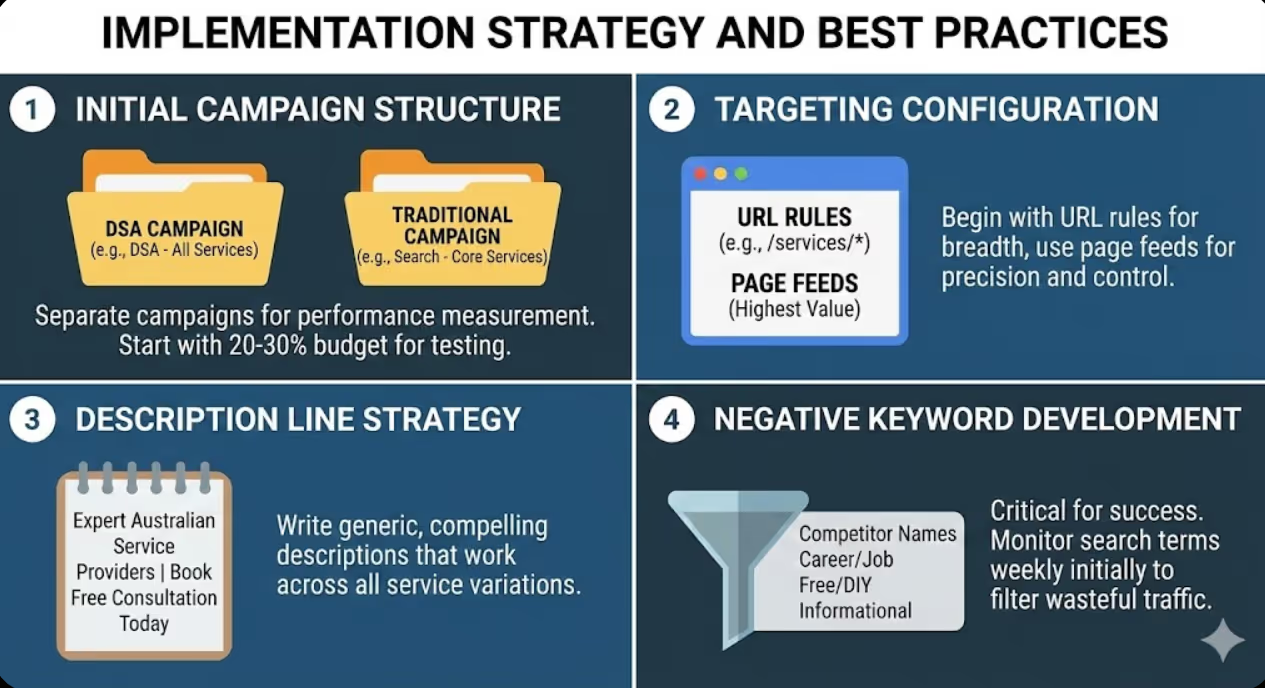
Initial campaign structure should separate DSAs from traditional campaigns enabling independent performance measurement, budget allocation, and optimisation. Create dedicated DSA campaign rather than adding dynamic ad groups to existing campaigns preventing cross-contamination between traditional and automated approaches. Use clear naming conventions like "DSA - All Services" versus "Search - Core Services" enabling easy identification in reporting and performance analysis. Set initial modest budgets typically 20-30% of traditional campaign spend allowing testing without risking substantial budget on unproven approach. Implement separate conversion tracking ensuring proper attribution identifying which conversions come from DSA automation versus traditional campaigns. Australian businesses should treat initial DSA implementation as testing phase lasting 30-60 days gathering performance data before scaling budget based on actual results rather than assumptions about automation effectiveness.
Targeting configuration determines which website sections DSAs crawl and what searches trigger ads requiring strategic decisions about coverage breadth versus precision. URL-based targeting including only commercial service pages like example.com.au/services/* whilst excluding blog content at example.com.au/blog/* prevents wasteful matches on informational content not generating conversions. Page feed implementation for highest-value services provides maximum control enabling custom labels for bid adjustments and performance tracking by service type. Category targeting using Google's automated categorisation enables quick implementation though sacrifices control over precise page inclusion. Landing page exclusion rules prevent DSAs from sending traffic to inappropriate pages including thank you pages, application forms, or internal navigation pages not intended as ad landing destinations. Australian service businesses should begin with URL rules providing reasonable precision without requiring extensive page feed maintenance that smaller businesses cannot sustain.
Description line strategy requires generic, compelling messaging working across varied automated headlines and landing pages. Descriptions should emphasise value propositions, competitive advantages, and calls-to-action applicable across service range rather than service-specific messaging that traditional ads use. Examples include "Expert Australian Service Providers | Book Free Consultation Today" or "Qualified Professionals | Affordable Rates | 5-Star Reviews" that work regardless of specific service Google's headline addresses. Avoid descriptions mentioning specific services, prices, or offers that might conflict with matched landing pages. Include location references when geographic targeting is important like "Serving Sydney Metro Area" providing local relevance across all searches. Australian businesses should write 3-4 description variations testing performance whilst maintaining consistent brand voice across all dynamic ad combinations.
Negative keyword development proves critical for DSA success preventing automation from matching irrelevant searches consuming budget without generating qualified traffic. Initial negative keyword lists should include obvious exclusions like competitor brand names, career/job searches, free/DIY searches, informational queries, and educational searches not indicating commercial intent. Monitor search term reports weekly during first month identifying new negative keywords from actual wasteful traffic rather than relying solely on predictive exclusions. Implement both campaign-level negatives applying across all DSAs and ad group-level negatives for more granular control when using segmented DSA structure. Consider negative keyword themes including location exclusions for areas not served, service exclusions for offerings not provided, and quality exclusions like "cheap" or "free" if business positioning doesn't align. Australian businesses should budget time for ongoing negative keyword maintenance requiring 30-60 minutes weekly during first quarter reducing to monthly maintenance as exclusion lists mature and wasteful traffic decreases.
Page feed implementation provides advanced targeting control when basic URL rules prove insufficient for precise coverage. Page feeds use spreadsheet uploads listing specific URLs with optional custom labels enabling more sophisticated targeting and reporting than automated website crawling provides. Create page feed including highest-value service pages with custom labels indicating service categories, commercial value, or seasonal availability. Update page feeds monthly or when significant content changes occur ensuring targeting remains current with actual website content. Use custom labels for bid adjustments increasing bids for high-value service categories whilst decreasing bids for lower-margin services. Australian businesses with 50+ service pages should invest in page feed implementation providing targeting precision that automatic crawling cannot match whilst maintaining automation benefits for search matching and ad generation.
Bid strategy selection affects DSA performance through automated versus manual bidding approaches influencing how aggressively campaigns compete for auctions. Manual CPC bidding provides maximum control but requires ongoing bid management that DSAs aim to reduce making this combination counterproductive. Target CPA bidding works well for DSAs with sufficient conversion volume (typically 30+ conversions monthly) enabling Google's algorithms to optimise toward cost-per-acquisition goals. Maximise conversions bidding suits businesses prioritising conversion volume over efficiency spending complete daily budgets whilst algorithms learn conversion patterns. Target ROAS (return on ad spend) requires e-commerce conversion value tracking enabling revenue-based optimisation rather than conversion-count focus. Australian service businesses should typically begin with manual CPC gathering performance data then transition to target CPA once conversion volume supports automated bidding algorithms requiring statistical significance.
Ad schedule and location targeting refine when and where DSAs show despite automation determining which searches trigger ads. Ad scheduling limits DSAs to business hours when phone calls or chat convert best preventing overnight ad spend on leads that business cannot engage until following day. Location targeting focuses budgets on serviceable areas using radius targeting, location groups, or presence/interest targeting depending on service delivery model. Exclude locations outside service areas preventing wasteful clicks from areas business cannot serve. Device bid adjustments increase or decrease bids for mobile, desktop, or tablet based on performance data showing which devices convert best for specific service types. Australian service businesses should implement basic targeting refinements even in DSA campaigns because automation handles search matching whilst strategic targeting controls budget allocation across time periods, locations, and devices affecting overall campaign efficiency.
Performance Monitoring and Optimisation
Ongoing DSA management ensures campaigns maintain efficiency whilst capitalising on automation's discovery advantages requiring different monitoring focus than traditional campaigns.
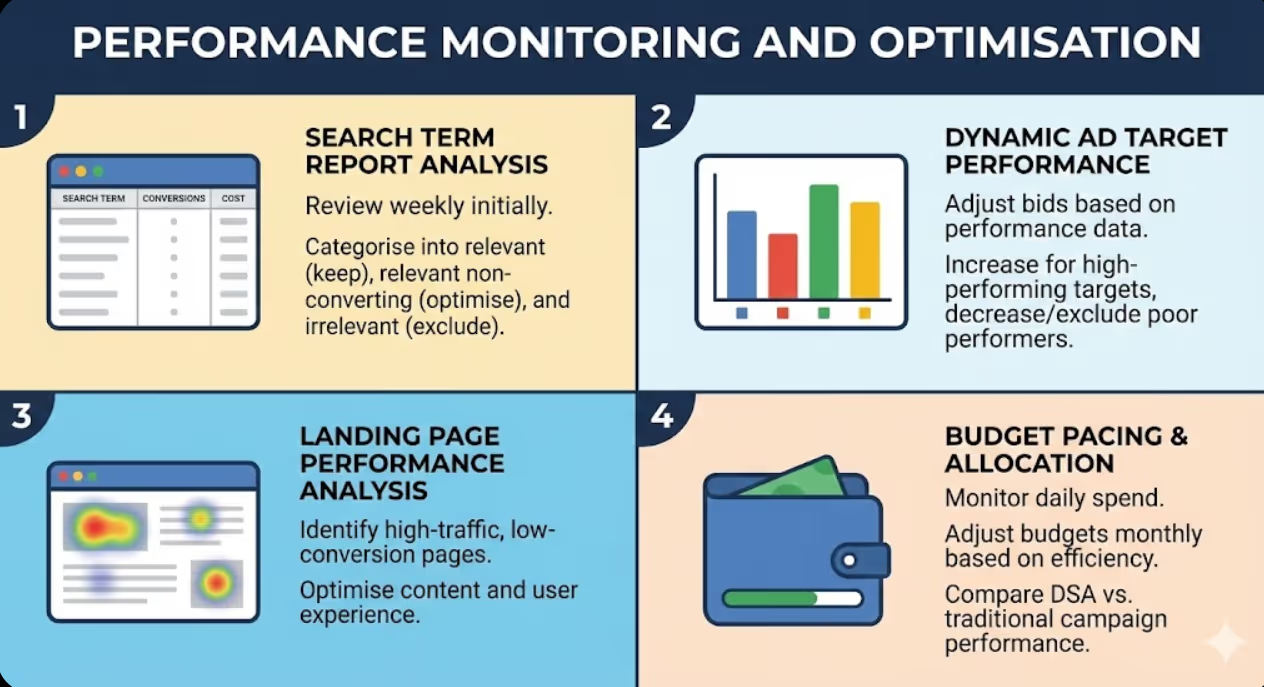
Search term report analysis reveals what searches actually trigger DSA ads enabling negative keyword identification and performance insights. Review search term reports weekly during first month capturing irrelevant queries before substantial budget waste accumulates. Categorise search terms into relevant conversions warranting continued inclusion, relevant non-conversions requiring bid adjustments or landing page improvements, and irrelevant searches requiring negative keyword exclusions. Identify patterns in wasteful searches revealing systematic issues like entire topic areas or search modifiers consistently generating poor traffic. Export search term data monthly for long-term analysis revealing seasonal patterns, emerging opportunities, and trending searches that strategic initiatives might address. Australian businesses should dedicate time specifically to search term analysis rather than only reviewing overall metrics because automation makes understanding what Google actually matches crucial for effective optimisation unlike keyword campaigns where targeting is predefined.
Dynamic ad target performance shows which website content categories generate best results enabling strategic bid adjustments and targeting refinements. Dynamic ad targets represent Google's automated grouping of similar pages enabling performance reporting and bid management at categorical level rather than only campaign-wide optimisation. Identify highest-performing targets justifying bid increases capturing more traffic from proven successful page categories. Discover lowest-performing targets requiring bid decreases or complete exclusion when categories consistently underperform. Adjust targeting settings excluding categories or URLs performing poorly whilst maintaining coverage for effective categories. Australian service businesses should review dynamic ad target reports monthly adjusting bids based on accumulated performance data rather than daily micro-optimisations because automation requires statistical significance that short timeframes don't provide.
Landing page performance analysis reveals which pages convert traffic effectively versus pages receiving traffic but failing to convert requiring content improvements. Identify pages receiving substantial traffic but minimal conversions indicating relevance issues where Google considers pages relevant for searches but users don't find expected information. Prioritise landing page optimisation for high-traffic, low-conversion pages where improvements affect substantial traffic volumes rather than optimising rarely-visited pages with minimal impact. Evaluate page experience including load speed, mobile experience, and conversion path clarity affecting conversion rates for dynamically directed traffic. Consider excluding persistently underperforming pages from DSA targeting through page feed omission or URL exclusion rules when pages cannot be improved to acceptable conversion standards. Australian businesses should coordinate with web development teams addressing landing page issues identified through DSA performance analysis because automated traffic direction reveals page quality problems that traditional campaigns' fixed landing page assignments might miss.
Conversion tracking validation ensures accurate performance measurement enabling proper optimisation decisions and ROI calculation. Verify conversion tracking implementation on all potential landing pages DSAs might direct traffic toward because dynamic page selection means conversions could occur on pages not traditionally monitored. Test conversion tracking across different user journeys and landing pages confirming proper attribution regardless of entry point. Monitor conversion rates by dynamic ad target and search term identifying anomalies suggesting tracking failures rather than actual performance differences. Implement value-based conversion tracking for service businesses with varying lead quality enabling optimisation toward valuable conversions rather than counting all conversions equally regardless of commercial worth. Australian businesses should audit conversion tracking quarterly verifying continued accuracy particularly after website updates potentially disrupting tracking implementations.
Budget pacing and allocation requires monitoring ensuring DSAs neither underspend wasting opportunity nor overspend on ineffective traffic. Review daily budget consumption patterns identifying whether campaigns spend complete budgets early in days indicating insufficient budget for demand or consistently underspend suggesting bid or targeting constraints limiting impression share. Analyse impression share metrics revealing what percentage of possible impressions campaigns capture and why additional impressions aren't served including budget limitations, rank limitations, or targeting constraints. Adjust budgets monthly based on performance trends increasing allocation for campaigns generating acceptable cost per conversion whilst decreasing or pausing campaigns failing to meet efficiency thresholds. Compare DSA budget allocation against traditional campaigns ensuring optimal distribution maximises total conversions across all campaign types rather than arbitrary fixed allocations. Australian service businesses should evaluate quarterly whether DSA budget proportions remain appropriate as campaigns mature and performance stabilises potentially justifying increased DSA allocation if superior efficiency persists.
Competitive performance benchmarking provides context about whether DSA results meet industry standards or indicate optimisation opportunities. Monitor impression share metrics comparing against auction insights showing competitive position for DSAs versus traditional campaigns. Track quality score metrics evaluating landing page experience, ad relevance, and expected click-through rate revealing opportunities for improvement. Compare cost per click trends against industry benchmarks for service category identifying whether DSA costs align with market rates. Evaluate conversion rates against website analytics baseline determining whether DSA traffic converts similarly to organic and traditional paid traffic. Australian businesses should recognise that DSA performance benchmarks differ from traditional campaign expectations because broader matching generates different traffic characteristics requiring comparative analysis against DSA-specific rather than general PPC benchmarks.
Frequently Asked Questions
Should Australian service businesses completely replace traditional keyword campaigns with Dynamic Search Ads?
No, hybrid strategies combining DSAs with traditional keyword campaigns typically outperform either approach alone by balancing automation efficiency against strategic control. Traditional campaigns should handle core services requiring specific messaging, brand-sensitive searches needing precise ad copy, and proven high-value keywords warranting dedicated budget allocation. DSAs complement by capturing long-tail variations, adapting to content changes automatically, and discovering untapped search opportunities that keyword research overlooks. Optimal allocation typically dedicates 60-70% budget to traditional campaigns providing controlled messaging for most important searches whilst 30-40% funds DSAs generating incremental conversions. Australian businesses should resist replacing proven traditional campaigns entirely with DSAs because automation cannot match human strategic decisions about messaging priorities, budget allocation across services, and brand consistency requirements that successful service advertising demands. Treat DSAs as supplementary coverage expanding reach beyond traditional limitations rather than complete replacement eliminating manual campaign management entirely.
How much website content do Australian service businesses need for effective Dynamic Search Ad implementation?
Minimum viable DSA implementation requires approximately 25-50 pages of substantive service content providing sufficient crawling material for Google's algorithms to understand business offerings and match relevant searches. Pages should contain 300+ words of unique content describing services, approaches, qualifications, and value propositions rather than thin pages with minimal text that provides insufficient context for accurate matching. Businesses with fewer than 25 service pages or sites consisting primarily of homepage, contact page, and minimal service descriptions generate poor DSA performance because limited content prevents Google from understanding topical breadth necessary for effective search matching. Conversely, businesses with hundreds of service pages, detailed service descriptions, case studies, and comprehensive content libraries maximise DSA value because extensive crawlable content enables precise matching across diverse search queries. Australian service businesses should audit website content quality and quantity before implementing DSAs ensuring adequate material exists for automation to work effectively or prioritising content development if current site lacks sufficient substance.
What negative keyword strategy should Australian businesses implement for Dynamic Search Ads?
Comprehensive negative keyword implementation proves essential for DSA success requiring both predictive exclusions and reactive additions based on search term performance. Begin with foundational negatives including competitor brand names preventing wasted spend on competitor comparison searches, career-related terms like "jobs," "careers," "employment," "hiring" blocking recruitment searches, free/DIY modifiers excluding non-commercial searches like "free," "DIY," "how to," "course," and geographic exclusions for areas outside service territory. Monitor search term reports weekly during first 4-8 weeks identifying wasteful queries requiring exclusion including informational searches, educational queries, and tangentially related searches consuming budget without generating qualified leads. Implement negative keyword themes covering problematic patterns rather than only individual keywords like excluding all "course" and "training" variations if educational searches consistently waste budget. Australian businesses should maintain active negative keyword lists expecting to add 20-40 negatives during first month declining to 5-10 monthly additions as exclusions mature and wasteful patterns are addressed systematically.
How do Dynamic Search Ads affect quality scores and ad positioning for Australian service advertisers?
DSA quality scores depend primarily on landing page experience and expected click-through rate because Google generates ad copy automatically removing ad relevance from quality calculations that traditional campaigns include. Landing page quality becomes disproportionately important for DSAs requiring fast load times, mobile optimisation, clear content structure, and strong conversion paths because page quality directly affects both quality scores and conversion performance. Expected CTR reflects how well Google's automated headlines match search queries typically generating reasonable performance because dynamic generation creates relevance but sometimes producing awkward phrasings reducing click-through rates versus carefully crafted traditional ads. Quality scores for DSAs typically range 5-8 with exceptional landing pages achieving 8-9 and poor pages scoring 4-6 compared to traditional campaigns potentially achieving 9-10 through optimised ad copy that DSAs cannot match. Australian businesses should prioritise landing page optimisation over ad copy refinement for DSAs because page quality represents controllable variable significantly affecting quality scores whilst automated ad generation provides limited optimisation opportunity beyond description line variations.
Can Australian e-commerce businesses use Dynamic Search Ads effectively or are DSAs only suitable for service providers?
E-commerce businesses can absolutely use DSAs effectively with some caveats about implementation compared to service applications. E-commerce DSAs work best for large product catalogues with hundreds or thousands of SKUs making comprehensive keyword coverage impractical similar to service inventory challenges. Product page content quality directly affects DSA performance requiring detailed descriptions, specifications, and unique content rather than thin pages with minimal text common in e-commerce. Negative keyword management proves critical for e-commerce excluding searches for free products, product research without purchase intent, and competitor product names. Product feeds provide superior control for most e-commerce implementations through Shopping campaigns generating better visual presentation and enabling detailed attribute-based targeting that DSAs cannot match. Australian e-commerce businesses should consider DSAs primarily as supplementary strategy capturing text ad traffic beyond Shopping campaign coverage rather than primary e-commerce advertising approach where Shopping campaigns typically prove more effective for product-focused searches whilst DSAs handle brand, category, and informational searches converting to commerce.
How long does it take for Dynamic Search Ads to start performing effectively for Australian service businesses?
DSA campaigns require 4-8 week learning periods gathering performance data before stabilising at sustainable efficiency because algorithms need statistical significance understanding which searches convert versus waste budget. Week 1-2 typically generates wasteful traffic as automation explores broad search landscape without sufficient negative keywords filtering irrelevant queries. Week 3-4 shows improvement as negative keywords accumulate and Google's algorithms begin identifying conversion patterns. Week 5-6 demonstrates stabilising performance approaching sustainable efficiency levels. Week 7-8 and beyond represents mature campaign performance where ongoing optimisation creates incremental improvements rather than dramatic efficiency shifts. Australian businesses should commit to minimum 60-day testing periods before judging DSA viability because premature evaluation based on initial 2-3 weeks misrepresents long-term potential after learning periods complete. Budget appropriately for testing phase expecting higher costs per conversion initially declining as optimisation progresses and algorithms learn from accumulated performance data which searches and landing pages generate best results.
What reporting and analytics should Australian businesses monitor for Dynamic Search Ads beyond standard campaign metrics?
DSA-specific reporting requires attention to metrics revealing automation effectiveness including search term reports showing what queries actually triggered ads enabling negative keyword identification, dynamic ad target performance revealing which content categories generate best results, landing page analysis showing which pages receive traffic and convert effectively, auction insights comparing DSA performance against traditional campaigns and competitors, and page feed performance when using advanced targeting showing how custom labels perform. Australian businesses should also monitor cross-campaign performance comparing DSA incremental conversions against traditional campaigns determining whether DSAs capture truly new opportunities or merely cannibalise existing traffic at potentially higher costs. Track assisted conversion metrics revealing whether DSAs introduce customers who ultimately convert through other channels contributing to multi-touch conversion paths. Analyse device performance separately for DSAs because automated matching may generate different device distributions than traditional campaigns requiring device-specific bid adjustments. Create custom reports comparing DSA costs, conversion rates, and volume against traditional campaigns ensuring hybrid strategies allocate budgets optimally across automation and manual approaches.
AI-Powered Advertising Complements Strategic Management
Dynamic Search Ads represent evolution toward AI-assisted advertising enabling Australian service businesses to capture search opportunities that manual management cannot efficiently address whilst requiring strategic oversight ensuring automation serves business objectives rather than consuming budgets on algorithm-selected traffic regardless of commercial value.
The frameworks outlined in this guide including use case evaluation determining when DSAs provide advantages over traditional approaches, implementation strategies combining automation with strategic targeting, negative keyword disciplines protecting budgets from wasteful traffic, and comprehensive monitoring ensuring sustained performance provide foundation for Australian businesses to leverage DSA automation effectively within balanced advertising strategies.
Australian service businesses working with Maven Marketing Co. benefit from professional DSA audits evaluating whether automation suits specific business contexts, strategic implementation combining DSAs with traditional campaigns for optimal coverage, ongoing management refining negative keywords and targeting based on performance data, and comprehensive reporting connecting DSA performance to business outcomes ensuring advertising investment delivers acceptable returns regardless of whether automation or manual management generates traffic.
Ready to evaluate whether Dynamic Search Ads can improve advertising efficiency whilst capturing search opportunities that manual campaigns miss? Maven Marketing Co. provides comprehensive Google Ads management including DSA implementation, hybrid campaign strategies, conversion tracking setup, and ongoing optimisation ensuring your paid search investment generates maximum returns through strategic combination of automation efficiency and human strategic oversight that neither approach alone provides.

Table of contents
read more blogs

The Role of Digital PR in Long Term SEO Growth
Building a solid online presence is basically more than just posting content now and then or sprinkling keywords across your website. Search engines such as Google tend to point users toward businesses that feel trustworthy, useful, and backed up by others online, even if it’s not always obvious at first. When a company puts together a well-thought-out digital PR strategy, it can bring in solid media mentions, earning high-quality backlinks and stronger brand awareness, all of which feed long-term SEO progress. Rather than obsessing solely over rankings, digital PR helps you build credibility plus authority, so your site looks more appealing to search engines and also to real people who might become customers. In this guide, we’ll walk through how digital PR supports SEO, what makes it such a key part of modern marketing, and the most effective approaches for sustainable growth in search results.

Is Google Ads Better Than SEO for My Business
One of the biggest questions business owners ask when they are planning online growth is whether they should invest in Google Ads or SEO. Both are strong marketing plays that help your company show up in Google search results, but they do things in separate lanes. Google Ads gives quicker visibility and can bring in leads fast, whereas SEO more or less focuses on slow, steady organic traffic that tends to grow the longer you keep building it. Picking the right direction depends on what you want to achieve, how much money you can spend, how crowded the market is, and how quickly you need results, like sooner rather than later. The good news is you don’t always have to choose one or the other; it’s not exactly a black-and-white situation. If you take time to understand the strongest points of both, you can put together a more sensible digital marketing plan that supports consistent expansion. In this guide, we’ll compare Google Ads vs SEO, explain the main differences, and help you figure out what option makes the most sense for your business.

When Should I Hire a Digital Marketing Agency
Growing a business today takes more than just having a website or throwing a post on social media; customers usually search around online, compare providers, skim reviews, and basically expect the brand to show up with a solid digital presence before they even think about buying. Many businesses try to run their marketing themselves, but there comes a point when “doing it all in-house” becomes clunky and hard to manage, all at once. Knowing when to hire a digital marketing agency can end up making a big, real difference for your growth. If you’re not getting enough leads, or your online visibility feels stuck, or sales are just not moving, the right agency can bring the know-how, plus a clear plan, to help you get noticeably better outcomes. In this guide, we’ll dig into what a digital marketing agency actually does, the usual signs it’s time to bring one on, and how picking the right marketing partner can help your business move forward at a faster pace.