.svg)


%201.svg)

Key Takeaways
- Customer Match transforms CRM data into targetable audiences: Upload email addresses, phone numbers, or physical addresses to create custom audiences in Google Ads, enabling targeting existing customers, past purchasers, newsletter subscribers, or any first-party data segment across multiple Google properties
- Match rates typically range 40-70% of uploaded contacts: Google matches provided data against signed-in users, with match rates varying based on data quality, recency, and whether contacts actively use Google services, making data hygiene and formatting critical for maximum match rates
- Segmentation enables lifecycle-based targeting precision: Separate audiences by purchase history, customer value, engagement level, or lifecycle stage allowing tailored messaging and bidding strategies matching each segment's relationship with your business
- Exclusion strategies prevent customer acquisition waste: Exclude existing customers from acquisition campaigns, exclude recent purchasers from promotional offers, or exclude churned customers from generic messaging, focusing budgets on appropriate audiences for each campaign objective
- Lookalike audiences scale reach beyond existing customers: Google's similar audiences feature identifies users resembling your best customers based on search behaviour, interests, and demographics, expanding reach whilst maintaining audience quality
- Privacy compliance requires explicit consent: Customer Match implementation must comply with privacy regulations including obtaining proper consent for data usage, providing transparency about advertising purposes, and maintaining secure data handling practices
- Bidding adjustments reflect audience value differences: High-value customer segments warrant bid premiums whilst price-sensitive segments may require bid reductions, with audience-based bidding strategies optimising spend allocation across segments
- Cross-channel activation maximises data utility: Customer Match audiences work across Search, Shopping, Display, YouTube, and Discovery, enabling consistent targeting and messaging across all Google properties where matched users appear
A subscription service company spent $18,000 monthly on Google Ads acquisition campaigns targeting cold prospects. Their customer retention analytics revealed that whilst initial subscriptions came from broad targeting, highest lifetime value customers shared identifiable characteristics: they engaged with educational content before subscribing, remained active users through first 90 days, and upgraded to premium tiers within six months.
They implemented Customer Match strategy segmenting their CRM data into targeted audiences: recent subscribers for onboarding content, engaged users for upsell campaigns, at-risk customers showing declining usage, churned customers for win-back offers, and high-value customers for referral incentives. Additionally, they excluded all existing customers from acquisition campaigns preventing wasted impressions on users already subscribed.
Customer Match match rates achieved 62% of uploaded emails, creating substantial audiences across segments. Search campaigns targeting high-value customers with premium upgrade messaging achieved 8.4% conversion rates at $23 cost per upgrade, dramatically outperforming generic campaigns. YouTube campaigns delivering educational content to recent subscribers reduced early churn by 34%. Win-back campaigns targeting churned customers reactivated 11% at $47 reactivation cost versus $156 new customer acquisition cost.
Most significantly, excluding existing customers from acquisition campaigns reduced wasted spend by $2,800 monthly whilst improving new customer quality. The company reallocated savings into lookalike audience expansion based on high-value customer characteristics, scaling acquisition efficiently whilst maintaining audience quality. After six months, Customer Match-enabled strategies delivered 43% improvement in marketing efficiency whilst increasing total subscription growth 27% through better segment targeting and reduced waste.
Understanding Customer Match Fundamentals
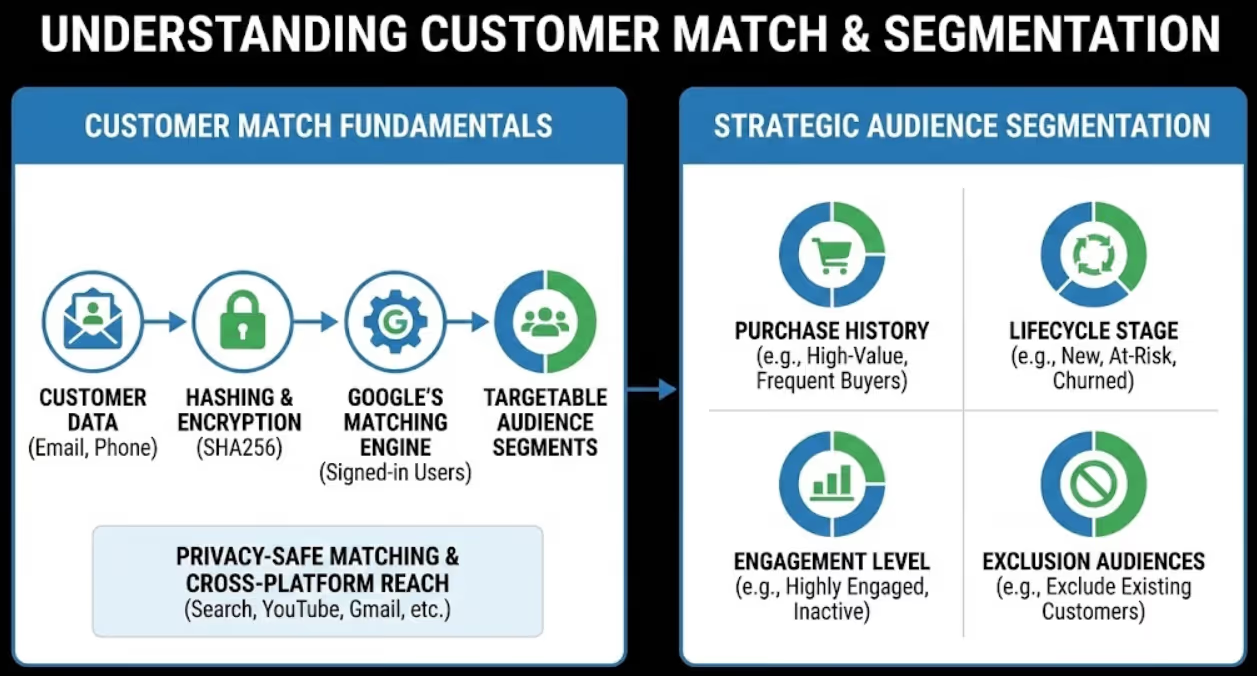
Customer Match represents Google Ads' first-party data activation feature enabling advertisers to upload customer information for audience targeting across Google properties.
Data types supported include email addresses as primary matching identifier with highest match rates, phone numbers formatted with country codes, and physical mailing addresses including name, postal code, and country. According to Google's Customer Match policy documentation, email addresses typically deliver highest match rates followed by phone numbers, whilst physical addresses show lower match rates due to formatting variations and moving frequency.
The matching process hashes uploaded data using SHA256 encryption before comparing against Google's signed-in user database. Google never receives plain-text customer data, only encrypted hashes protecting privacy whilst enabling matching. When hashes match Google's user database, those users become targetable audience members. Unmatched hashes get discarded immediately without retention.
Match rate factors affecting what percentage of uploads successfully match include data recency with recent contacts matching better than old data, data accuracy with valid, current information matching whilst outdated data fails, formatting quality where properly formatted data matches whilst errors prevent matching, and Google service usage where contacts actively using Google services match whilst non-users cannot. Typical match rates range 40-70% with variation based on these factors.
Platform availability spans Search campaigns showing text ads to matched audiences, Shopping campaigns targeting specific customer segments, Display campaigns reaching matched users across Google Display Network, YouTube campaigns serving video ads to customer segments, Discovery campaigns appearing in YouTube, Gmail, and Discover feeds, and Gmail campaigns delivering native ads within Gmail interface. This cross-platform reach enables consistent audience targeting throughout Google's ecosystem.
Minimum requirements mandate 1,000 matched users per Customer Match list for most campaign types ensuring sufficient scale for meaningful targeting whilst protecting individual privacy. Some campaign types like Search may allow smaller audiences whilst others require larger minimums. Lists below thresholds remain inactive until sufficient matches accumulate.
Account eligibility requires good policy compliance history and spending track record. New Google Ads accounts typically need 90+ days history and $50,000+ lifetime spend before Customer Match becomes available. These requirements prevent abuse whilst ensuring advertisers understand Google Ads before accessing powerful first-party data features.
Audience persistence means uploaded audiences remain active indefinitely unless explicitly removed or refreshed, with Google continuously updating matches as users sign in and out of Google services. Regular audience refreshes maintain accuracy as customer relationships evolve.
Strategic Audience Segmentation Approaches
Effective Customer Match implementation requires thoughtful audience segmentation matching targeting precision to business objectives and customer lifecycle stages.
Purchase history segmentation divides customers by transaction behaviour including recent purchasers for cross-sell campaigns, frequent buyers for loyalty rewards, one-time purchasers for repeat purchase encouragement, and high-value customers for premium product promotion. These transactional segments enable offers matching purchase patterns rather than generic messaging treating all customers identically.
Lifecycle stage segmentation targets customers based on relationship progression including new customers for onboarding support, active customers for engagement maintenance, at-risk customers showing declining activity, and churned customers for win-back campaigns. Lifecycle targeting ensures messaging appropriateness for each stage rather than inappropriate offers to wrong segments.
Engagement level segmentation groups customers by interaction intensity including highly engaged users for advocacy campaigns, moderately engaged users for activation initiatives, low engagement users for re-engagement efforts, and inactive users for reactivation campaigns. Engagement-based targeting optimises message intensity and offer aggressiveness matching audience receptivity.
Product category segmentation organises customers by purchase categories including category-specific buyers for related product promotion, multi-category buyers for cross-category expansion, and category-exclusive buyers for category deepening. These product-based segments enable relevant recommendations rather than irrelevant product suggestions.
Customer value segmentation tiers audiences by monetary value including high lifetime value customers for VIP treatment, medium value customers for upgrade targeting, and low value customers for basic retention. Value-based segmentation ensures marketing investment proportionality to customer worth, focusing resources where returns justify costs.
Demographic and psychographic overlays enhance transactional segments with characteristic data when available through CRM enrichment or third-party data integration. Combining purchase behaviour with demographic attributes creates nuanced segments like "high-value customers in premium markets" or "price-sensitive frequent buyers."
Exclusion audiences prevent inappropriate targeting including excluding recent purchasers from promotional campaigns, excluding high-value customers from discount messaging potentially devaluing brand perception, and excluding churned customers from generic retention messaging they've already rejected. Strategic exclusions improve campaign relevance whilst preventing waste and brand damage.
Dynamic segmentation through automated list updates maintains current segment membership as customer behaviours change. Integration with CRM systems enables automated Customer Match list refreshes reflecting latest customer states without manual export-import cycles. Dynamic segmentation ensures targeting accuracy despite constantly evolving customer relationships.
Creating and Managing Customer Match Audiences
Proper audience creation and ongoing management determine Customer Match effectiveness, requiring attention to data quality, formatting, and maintenance procedures.
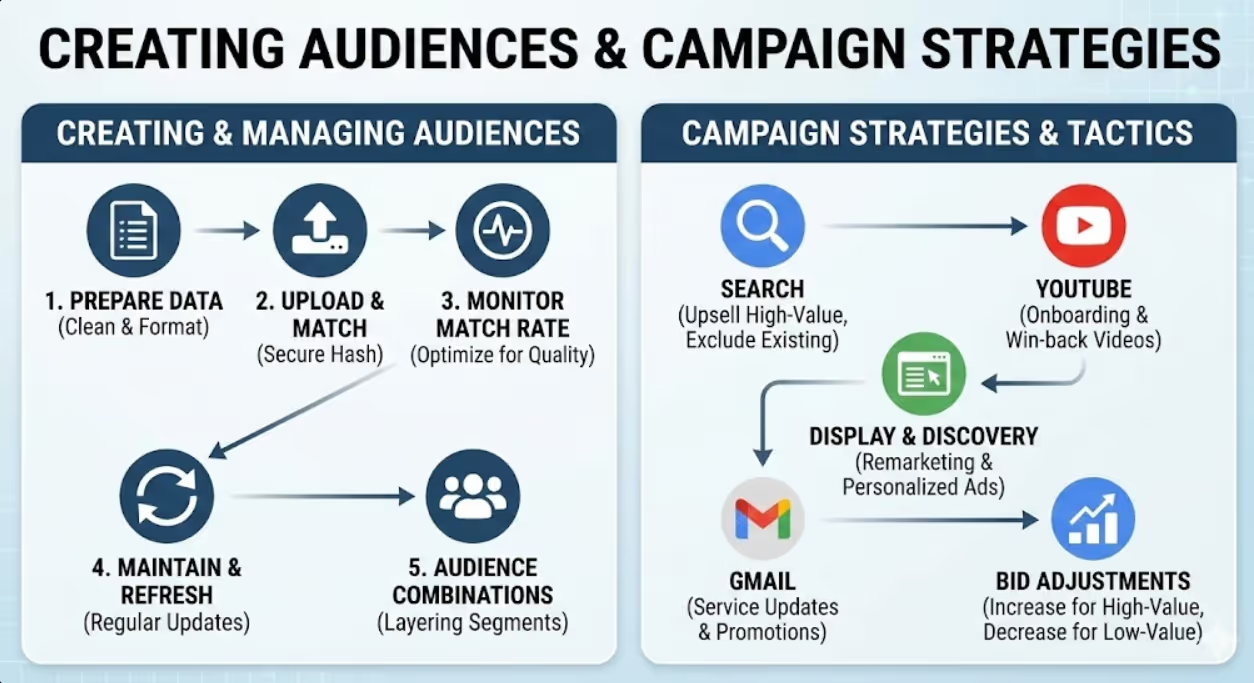
Data preparation requirements include collecting customer data from CRM, email platforms, or other systems, removing duplicates preventing inflated list sizes, validating email formats ensuring proper structure, normalising phone numbers to E.164 format with country codes, and cleaning physical addresses for consistent formatting. According to Google's data formatting guidelines, proper data preparation significantly improves match rates whilst poor preparation prevents matching entirely.
File format specifications require CSV files with specific column headers, proper character encoding (UTF-8), and maximum file sizes of 100MB or 5 million rows per upload. Multiple files can be uploaded when datasets exceed maximums, with Google combining them into single audience. Template downloads from Google Ads ensure correct formatting.
Privacy and consent documentation should accompany uploads confirming that data collection included appropriate consent for advertising purposes, privacy policies disclosed data usage intentions, and consent remains current and valid. Whilst Google doesn't verify consent directly, legal responsibility remains with advertisers ensuring compliance with applicable privacy regulations.
Upload process involves navigating to Audience Manager in Google Ads, selecting Customer Match creation option, uploading prepared CSV file, selecting matching parameters (email, phone, or address), and monitoring upload progress and match rates. Initial uploads may take 24-48 hours for complete matching whilst subsequent updates process faster.
Match rate optimisation tactics improve percentage of successfully matched contacts through regular data refreshes removing old contacts, adding newly acquired contacts, correcting formatting errors preventing matching, and supplementing email lists with phone numbers increasing matching opportunities. Higher match rates directly increase targetable audience sizes improving campaign scale.
List membership duration controls determine how long users remain in audiences with options for indefinite membership, time-based expiration, or manual removal. Transactional audiences like "recent purchasers" benefit from automatic expiration after defined periods whilst stable segments like "all customers" warrant indefinite membership.
Audience combination and layering enables creating sophisticated segment combinations through AND logic combining multiple Customer Match lists, OR logic merging lists, and NOT logic excluding lists from others. These logical operators create nuanced audience definitions like "high-value customers who haven't purchased in 90 days" through list combinations.
Regular maintenance schedules ensure audience accuracy through weekly or monthly refreshes adding new customers, removing opt-outs or unsubscribes, updating changed contact information, and archiving outdated segments no longer relevant. Stale audiences degrade performance whilst fresh audiences maintain targeting accuracy.
Campaign Strategies and Tactics
Customer Match audiences enable sophisticated campaign strategies leveraging first-party data for competitive advantage across various objectives and campaign types.
Search campaign customisation delivers tailored messaging to known audiences appearing in search results. Brand loyalty campaigns target existing customers searching your brand name with membership benefits messaging, competitive conquest campaigns exclude customers from generic searches allowing budget focus on new customer acquisition, and upsell campaigns target lower-tier customers searching premium category terms. Custom search ads matching customer relationships outperform generic messaging treating all searchers identically.
Shopping campaign segmentation enables product and promotion customisation by customer segment. Existing customers see different products or prices than new visitors, high-value customers receive premium product emphasis, and recent purchasers see complementary products rather than duplicate recommendations. Shopping campaign audience segmentation prevents showing inappropriate products whilst emphasising relevant items.
YouTube campaign targeting reaches customer segments with video content matching their lifecycle stage. Onboarding videos for new customers explain product usage, feature highlight videos for engaged customers showcase advanced capabilities, win-back videos for churned customers address common objections, and referral invitation videos for advocates encourage social sharing. Video content specificity improves engagement versus generic videos for all audiences.
Display remarketing combinations layer Customer Match with behavioural remarketing creating highly specific audience intersections. "Newsletter subscribers who visited pricing pages" combines email engagement with site behaviour signalling purchase consideration. "Past purchasers who abandoned carts" identifies customers already familiar with your brand showing renewed interest. These combination audiences enable precision remarketing to micro-segments.
Discovery campaign messaging customises creative for different customer segments appearing in YouTube, Gmail, and Discover feeds. Personalised product recommendations for returning customers, new product launches for engaged audiences, and re-engagement offers for inactive customers all leverage Discovery's native ad formats with segment-specific messaging.
Gmail campaign strategies deliver native ads within Gmail inbox to customer segments likely checking email frequently. Service updates for active customers, billing reminders for subscription customers, and promotional offers for price-sensitive segments all leverage Gmail's high-visibility native placements with contextually relevant timing.
Bid adjustments by audience segment allocate budget proportional to segment value with high-value customer audiences receiving 50-100% bid increases, medium-value audiences maintaining baseline bids, and low-value audiences reducing bids 20-30%. These bid modifiers ensure impression share and position advantages for valuable customer segments whilst maintaining presence across all segments.
Sequential messaging campaigns deliver progression across touchpoints using audience membership changes. Users moving from "recent purchasers" to "engaged customers" receive different messaging acknowledging relationship progression. Sequential campaigns mirror customer journey stages with messaging evolution matching relationship maturity.
Lookalike Audience Expansion
Similar audiences expand reach beyond uploaded customer lists by targeting users resembling your best customers based on Google's understanding of user behaviour and characteristics.
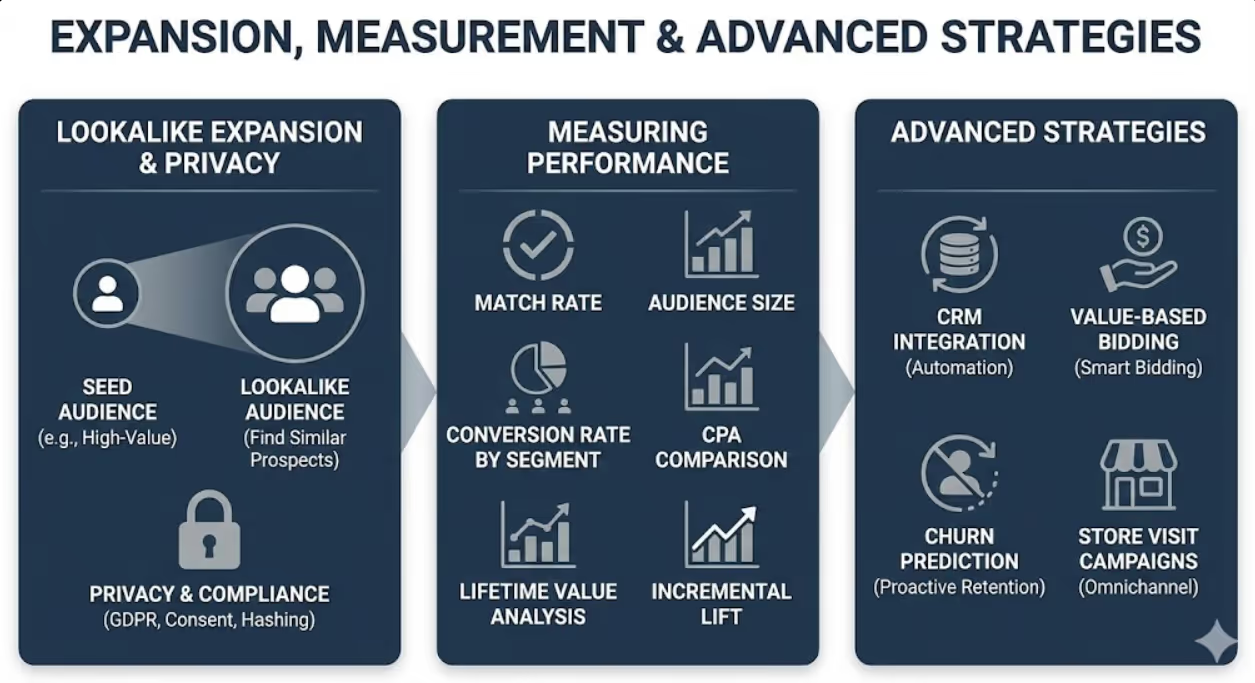
Seed audience selection determines lookalike quality by choosing source Customer Match lists representing desired target characteristics. High lifetime value customers as seed audiences produce lookalikes with similar value potential, whilst broad "all customers" lists create generic lookalikes with diluted characteristics. Seed audience quality directly impacts lookalike audience quality making strategic seed selection critical.
Similarity level controls balance audience size against match quality with narrow similarity producing smaller, highly similar audiences whilst broad similarity creates larger audiences with looser matching. Testing multiple similarity levels identifies optimal balance between scale and quality for specific campaigns and objectives.
Expansion algorithms use Google's machine learning analysing seed audience search behaviour, content consumption, site visits, and demographic patterns to identify non-customer users exhibiting similar patterns. The algorithms find users behaviorally resembling seed audiences without requiring identical characteristics, identifying prospects likely to respond similarly to marketing based on observed pattern matching.
Combination strategies layer lookalikes with other targeting criteria like geographic targeting, demographic filters, or interest categories. "Similar to high-value customers in major metro areas" combines lookalike expansion with location targeting whilst "similar to engaged customers interested in premium products" layers interest targeting. These combinations maintain lookalike quality whilst adding additional relevance filters.
Performance testing compares lookalike audiences against cold prospecting and other audience targeting approaches. Lookalikes typically outperform completely cold targeting whilst potentially underperforming remarketing or Customer Match, occupying middle ground between broad prospecting and known audience precision. Testing quantifies lookalike value for specific business models.
Refresh frequency impacts lookalike audience currency with seed audience updates automatically triggering lookalike recalculation. Regularly updating seed audiences with latest customer data maintains lookalike relevance as customer base characteristics evolve. Stale seed audiences produce increasingly outdated lookalike audiences over time.
Multi-segment lookalike strategies create separate lookalike audiences from different seed segments enabling testing which customer characteristics best predict prospect conversion. Lookalikes from "customers acquired through content marketing" may differ from "customers acquired through paid search" with different scaling potential and efficiency.
Privacy, Compliance, and Data Security
Customer Match implementation requires rigorous attention to privacy regulations, consent requirements, and data security practices protecting customer information whilst enabling marketing effectiveness.
GDPR compliance for European users mandates explicit consent for data usage in advertising, transparency about data processing purposes, ability to withdraw consent and request deletion, and documentation of lawful basis for processing. Australian businesses serving European customers must comply with GDPR regardless of business location when processing European user data.
Australian Privacy Act compliance requires collecting personal information only when necessary for business purposes, using information only for disclosed purposes including advertising, implementing reasonable security safeguards, and enabling access and correction requests. Whilst Australia's regulations differ from GDPR, similar principles of transparency and consent apply.
Consent documentation should include privacy policy disclosures explaining data usage for advertising, opt-in mechanisms for marketing communications, clear unsubscribe processes, and audit trails documenting consent collection. Proper consent protects businesses legally whilst building customer trust through transparency.
Data minimisation principles suggest uploading only necessary customer information rather than entire databases. Upload email addresses and customer IDs rather than full profile data including unnecessary personal details. Minimal data uploads reduce privacy risk whilst maintaining targeting effectiveness.
Hashing and encryption requirements include SHA256 hashing before upload ensuring Google receives only encrypted data, removal of spaces and special characters before hashing, and lowercase normalisation for email addresses. Proper hashing prevents Google from accessing plain-text customer data protecting privacy whilst enabling matching.
Data retention policies determine how long Customer Match lists remain active with options for automatic expiration, manual deletion schedules, or indefinite retention. Retention policies should align with business needs and privacy regulations ensuring data doesn't persist unnecessarily.
Third-party data restrictions prohibit uploading purchased email lists, scraped contact data, or information collected without proper consent. Customer Match explicitly requires first-party data with appropriate collection and usage rights. Violating these restrictions risks account suspension and legal liability.
Audit and monitoring procedures should include regular consent status reviews, data security assessments, usage logging for compliance documentation, and incident response plans for potential breaches. Proactive compliance monitoring prevents issues whilst demonstrating good-faith privacy practices.
Measuring Customer Match Performance
Systematic measurement quantifies Customer Match value whilst identifying optimisation opportunities across audience segments and campaign strategies.
Match rate tracking monitors what percentage of uploaded contacts successfully match Google users revealing data quality and audience accessibility. Match rates below 40% suggest data quality issues or outdated contacts whilst rates above 60% indicate healthy, current data. Tracking match rate trends over time reveals whether data quality improves or degrades with various collection and maintenance practices.
Audience size monitoring ensures sufficient scale for campaign effectiveness with minimum thresholds varying by campaign type. Small audiences below 5,000-10,000 users may limit campaign delivery and optimisation whilst very large audiences over 1 million enable comprehensive testing. Regular size monitoring identifies when audience refreshes or expansion becomes necessary.
Conversion rate analysis by audience segment reveals which customer segments respond best to targeting and messaging. High-value customers may show conversion rates 3-5x higher than cold prospects whilst churned customers convert at intermediate rates. Segment-level conversion data guides budget allocation and messaging strategies optimising for highest-performing segments.
Cost per acquisition comparison measures Customer Match efficiency against other audience targeting approaches. Customer Match typically delivers lower acquisition costs than cold prospecting whilst potentially showing higher costs than remarketing. Comparing Customer Match performance against alternatives quantifies incremental value and justifies continued investment.
Lifetime value analysis tracks whether customers acquired through Customer Match lookalike expansion show similar value to seed audience customers. If lookalike-acquired customers demonstrate comparable lifetime value, expansion successfully replicates best customer characteristics. Significant lifetime value differences suggest lookalike strategies need refinement or seed audience optimisation.
Incremental lift testing through holdout groups measures whether Customer Match campaigns drive additional conversions beyond organic baseline. Withhold Customer Match targeting from random subset of matched users, comparing conversion rates between targeted and holdout groups to quantify true campaign incrementality versus organic conversions that would have occurred anyway.
Attribution analysis reveals Customer Match's role throughout conversion paths including whether Customer Match touchpoints initiate consideration, assist mid-funnel, or drive final conversions. Multi-touch attribution often shows Customer Match contributing earlier in journeys with other channels completing conversions, revealing full funnel value beyond last-click credit.
Return on ad spend calculations aggregate revenue from Customer Match campaigns against costs determining profitability. ROAS expectations vary by segment with retention campaigns typically showing higher ROAS than acquisition expansion, and high-value segment campaigns justifying higher costs through superior customer value.
Advanced Customer Match Strategies
Sophisticated implementations leverage advanced features and integrations maximising Customer Match strategic value beyond basic audience targeting.
CRM integration and automation connects Customer Match with CRM systems enabling automated audience syncing, real-time segment updates, triggered campaign adjustments based on CRM events, and closed-loop reporting of campaign impact on customer database. Integration eliminates manual data exports whilst maintaining targeting accuracy as customer relationships evolve continuously.
Store visit campaigns for retail businesses combine Customer Match with location targeting and store visit conversion tracking. Upload customer addresses, target local store customers with in-store promotions, measure which campaigns drive physical store visits, and close loop between digital advertising and offline sales. These omnichannel strategies particularly benefit retailers with both online and physical presence.
Customer data platform integration enhances Customer Match with CDP-powered segmentation, cross-channel identity resolution, predictive scoring, and unified customer profiles. CDPs aggregate data from multiple sources creating enriched segments uploaded to Customer Match for Google Ads activation whilst maintaining single source of truth for customer data across marketing technology stack.
Value-based bidding strategies use Customer Match segments with Smart Bidding's value optimisation where different segments receive automatic bid adjustments based on predicted conversion value. High lifetime value customer segments automatically receive bid premiums whilst low-value segments reduce bids. Value-based bidding combines audience intelligence with automated bid optimisation.
Seasonal campaign customisation adapts Customer Match strategies by season or promotional period. Holiday campaigns target gift purchasers from previous years, anniversary campaigns reach long-term customers, and seasonal product campaigns target customers with previous seasonal purchase history. Temporal segmentation ensures promotional relevance.
Churn prediction models identify customers showing churn signals through declining engagement, reduced purchase frequency, or negative support interactions. Upload predicted-churn segments to Customer Match for proactive retention campaigns before customers actually leave. Predictive targeting prevents churn rather than reacting after occurrence.
Referral and advocacy campaigns target satisfied customers likely to recommend your business. Customer Match enables reaching advocates with referral incentives, social sharing encouragement, and review requests. These word-of-mouth campaigns leverage existing satisfaction for customer acquisition at lower costs than cold prospecting.
Ready to Activate Your First-Party Data?
Customer Match transforms owned customer data from passive CRM records into active targeting assets driving campaign precision, efficiency, and performance across Google's ecosystem. For businesses with substantial customer databases, email lists, or CRM systems, Customer Match represents powerful capability matching right offers to right audiences whilst eliminating acquisition waste on existing customers.
Strategic Customer Match implementation requires thoughtful segmentation, rigorous data management, privacy compliance, and ongoing optimisation. However, the performance improvements through personalised targeting, acquisition efficiency, and lifecycle marketing sophistication justify implementation investment for most businesses with sufficient customer data and advertising spend.
Need expert guidance implementing Customer Match strategy and optimising first-party data activation? Maven Marketing Co. specialises in advanced Google Ads audience strategies including Customer Match implementation, CRM integration, segmentation development, and privacy-compliant data activation. Our team combines technical expertise with strategic thinking, helping businesses unlock customer data value whilst maintaining proper compliance and privacy practices.
We don't just upload email lists. We develop comprehensive Customer Match strategies including audience segmentation matching business objectives, privacy-compliant data handling, cross-campaign activation strategies, lookalike expansion approaches, and measurement frameworks quantifying first-party data ROI.
Contact Maven Marketing Co. today for a Customer Match implementation consultation. We'll assess your customer data assets, identify high-value segmentation opportunities, develop privacy-compliant activation strategy, and create implementation roadmap transforming CRM data into powerful advertising asset. Let's ensure your first-party data drives targeted, efficient, privacy-compliant advertising reaching customers with personalised messaging matching their relationship with your business.
Frequently Asked Questions
Q: What match rate should we expect when uploading customer email lists to Customer Match?
Typical match rates range 40-70% depending on data quality, recency, and whether contacts actively use Google services. Email addresses generally achieve highest match rates at 60-70% for recent, accurate data, followed by phone numbers at 40-60%, whilst physical addresses show lower rates at 30-50% due to formatting complexity and mobility. Factors improving match rates include uploading recently collected data rather than old contacts, ensuring proper formatting with lowercase emails and international phone number formatting, removing duplicates and invalid entries, and supplementing emails with phone numbers increasing matching opportunities. Match rates below 40% suggest data quality issues requiring cleaning, whilst rates above 65% indicate healthy, current customer data suitable for targeting.
Q: Can we target Customer Match audiences on Search campaigns, and how does it work differently from other campaign types?
Yes, Customer Match works across Search campaigns enabling tailored ad messaging and bidding for known audiences appearing in search results. Search implementations differ from Display or YouTube by serving text ads when matched audience members conduct searches rather than showing display or video content proactively. This search context enables sophisticated strategies like excluding existing customers from acquisition searches whilst showing them loyalty messaging for brand searches, targeting high-value customers searching premium category terms with premium product ads, and showing win-back offers to churned customers researching competitor terms. Search Customer Match requires larger minimum audience sizes (typically 5,000+ matched users) compared to Display campaigns due to lower match frequency in search context.
Q: How often should we refresh Customer Match audiences, and what happens if we don't update them regularly?
Refresh frequency depends on business dynamics and data change velocity, with most businesses benefiting from weekly or monthly updates for active customer bases showing frequent changes. E-commerce businesses with daily transactions should refresh weekly, subscription services with monthly billing cycles update monthly, and B2B companies with longer sales cycles may refresh quarterly. Failing to update regularly causes audiences to become stale as customer statuses change, recent purchasers remain in prospect audiences wasting budget, churned customers continue receiving retention messaging, and new customers miss onboarding campaigns. Automated CRM integrations enable real-time audience syncing eliminating manual refresh requirements whilst maintaining perpetual accuracy as customer relationships evolve continuously throughout normal business operations.

Table of contents
read more blogs

The Role of Digital PR in Long Term SEO Growth
Building a solid online presence is basically more than just posting content now and then or sprinkling keywords across your website. Search engines such as Google tend to point users toward businesses that feel trustworthy, useful, and backed up by others online, even if it’s not always obvious at first. When a company puts together a well-thought-out digital PR strategy, it can bring in solid media mentions, earning high-quality backlinks and stronger brand awareness, all of which feed long-term SEO progress. Rather than obsessing solely over rankings, digital PR helps you build credibility plus authority, so your site looks more appealing to search engines and also to real people who might become customers. In this guide, we’ll walk through how digital PR supports SEO, what makes it such a key part of modern marketing, and the most effective approaches for sustainable growth in search results.

Is Google Ads Better Than SEO for My Business
One of the biggest questions business owners ask when they are planning online growth is whether they should invest in Google Ads or SEO. Both are strong marketing plays that help your company show up in Google search results, but they do things in separate lanes. Google Ads gives quicker visibility and can bring in leads fast, whereas SEO more or less focuses on slow, steady organic traffic that tends to grow the longer you keep building it. Picking the right direction depends on what you want to achieve, how much money you can spend, how crowded the market is, and how quickly you need results, like sooner rather than later. The good news is you don’t always have to choose one or the other; it’s not exactly a black-and-white situation. If you take time to understand the strongest points of both, you can put together a more sensible digital marketing plan that supports consistent expansion. In this guide, we’ll compare Google Ads vs SEO, explain the main differences, and help you figure out what option makes the most sense for your business.

When Should I Hire a Digital Marketing Agency
Growing a business today takes more than just having a website or throwing a post on social media; customers usually search around online, compare providers, skim reviews, and basically expect the brand to show up with a solid digital presence before they even think about buying. Many businesses try to run their marketing themselves, but there comes a point when “doing it all in-house” becomes clunky and hard to manage, all at once. Knowing when to hire a digital marketing agency can end up making a big, real difference for your growth. If you’re not getting enough leads, or your online visibility feels stuck, or sales are just not moving, the right agency can bring the know-how, plus a clear plan, to help you get noticeably better outcomes. In this guide, we’ll dig into what a digital marketing agency actually does, the usual signs it’s time to bring one on, and how picking the right marketing partner can help your business move forward at a faster pace.