.svg)


%201.svg)

Key Takeaways
- Server-side Google Tag Manager executes tracking code on advertiser-controlled servers rather than user browsers, providing immunity to ad blockers, enhanced privacy controls, and improved website performance versus client-side limitations
- Implementation requires provisioning tagging servers through Google Cloud Platform or alternative hosting, configuring server containers receiving data from websites, and migrating existing tags from client-side to server-side execution environments
- First-party cookies set from advertiser domains last longer than third-party cookies facing browser restrictions, improving conversion attribution accuracy for businesses implementing server-side tracking with proper cookie configuration
- Server-side setup enables enhanced conversions for Google Ads sending hashed customer data for improved match rates whilst maintaining privacy compliance through server-controlled data transmission versus client-side exposure
- Cost considerations including monthly hosting fees, technical implementation time, and ongoing maintenance requirements mean server-side GTM suits medium to large Australian businesses with substantial tracking needs rather than small businesses with basic analytics requirements
An Australian e-commerce retailer generating $2.5 million annual revenue through online sales struggled with conversion tracking accuracy affecting Google Ads and Facebook Ads optimisation. Analysis revealed that approximately 35-40% of website visitors used ad blockers preventing client-side Google Tag Manager from firing tracking pixels. Safari's Intelligent Tracking Prevention limited cookie duration to 7 days whilst their typical customer journey spanned 2-3 weeks from first visit to purchase resulting in attribution loss for conversions beyond Safari's cookie window. Website performance testing showed 3.2-second load time on mobile devices partly attributable to eight marketing tags executing client-side including Google Analytics, Google Ads conversion tracking, Facebook Pixel, LinkedIn Insight Tag, and various remarketing pixels.
The marketing team recognised that tracking limitations affected their advertising optimisation. Google Ads automated bidding strategies operated on incomplete conversion data because blocked tracking and cookie restrictions prevented approximately 30% of conversions from being properly attributed. Facebook Ads optimisation faced similar challenges with conversion events not firing for significant portion of purchasers. Attribution modelling remained unreliable when customer journeys spanning multiple sessions couldn't be properly tracked due to cookie limitations. Return on ad spend calculations understated performance because untracked conversions made campaigns appear less efficient than reality.
According to Google's server-side tagging documentation, server-side Google Tag Manager helps address data quality issues caused by ad blockers and browser restrictions whilst improving website performance through reduced client-side JavaScript execution.
Maven Marketing Co. implemented server-side Google Tag Manager architecture provisioning tagging server through Google Cloud Platform, configuring server container receiving data from website client container, migrating Google Analytics 4 and Google Ads conversion tracking to server-side execution, and implementing first-party cookie configuration extending attribution windows beyond browser restrictions. The implementation maintained existing client-side container sending simplified data to server-side container for processing and distribution to marketing platforms rather than direct client-to-platform communication that ad blockers intercepted.
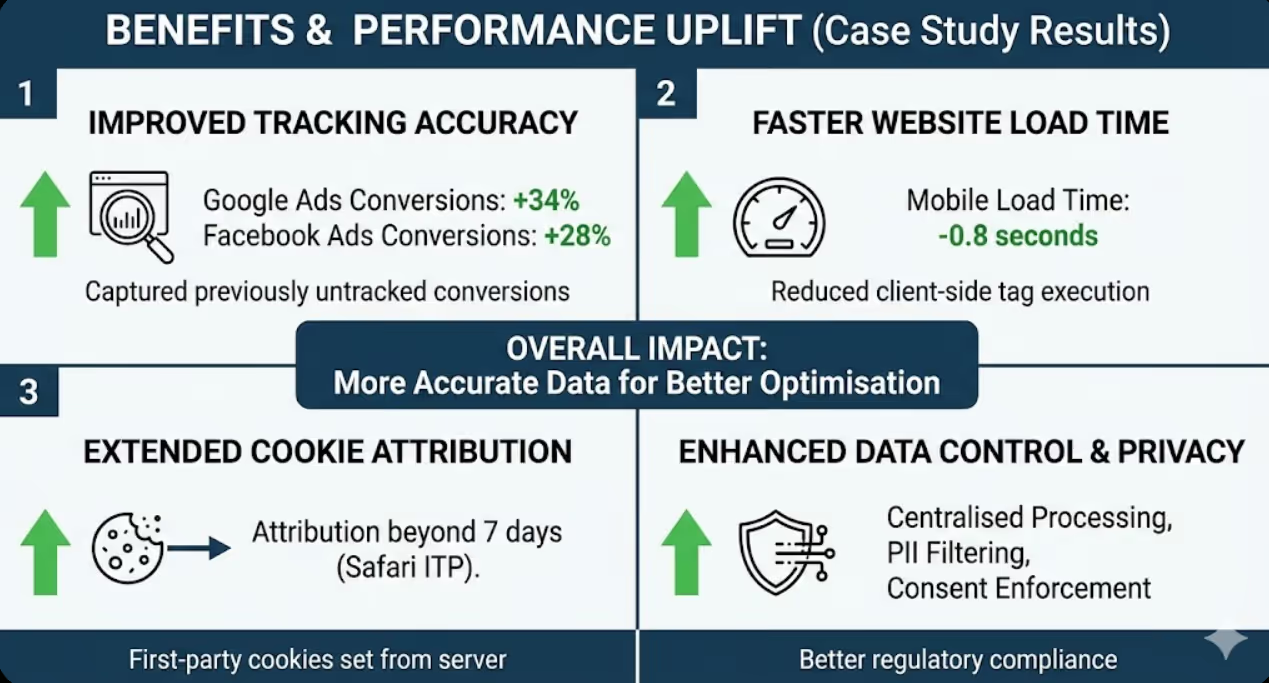
Eight weeks after implementation, conversion tracking accuracy improved substantially with Google Ads reporting 34% more conversions than pre-migration period despite similar traffic volumes, indicating previously untracked conversions now being captured. Facebook Ads conversion tracking improved 28% as server-side events bypassed client-side blocking. Website performance metrics showed 0.8-second reduction in mobile load time because fewer client-side tags executed on browsers. Customer privacy compliance improved through centralised data processing enabling granular control over what information reached third-party platforms rather than client-side tags sending unfiltered data directly from browsers.
However, implementation revealed challenges including $150 monthly Google Cloud Platform hosting costs for tagging server, 40+ hours technical implementation time configuring server containers and migrating tags, and ongoing maintenance requirements monitoring server performance and updating configurations as tracking requirements evolved. The business determined that improved tracking accuracy and website performance justified costs for their scale but acknowledged that smaller businesses might not achieve comparable return on investment given fixed implementation and hosting expenses.
Understanding Server-Side Google Tag Manager
Effective server-side implementation requires foundational understanding of architectural differences from client-side GTM, what problems server-side solves, and whether specific business contexts justify implementation complexity.
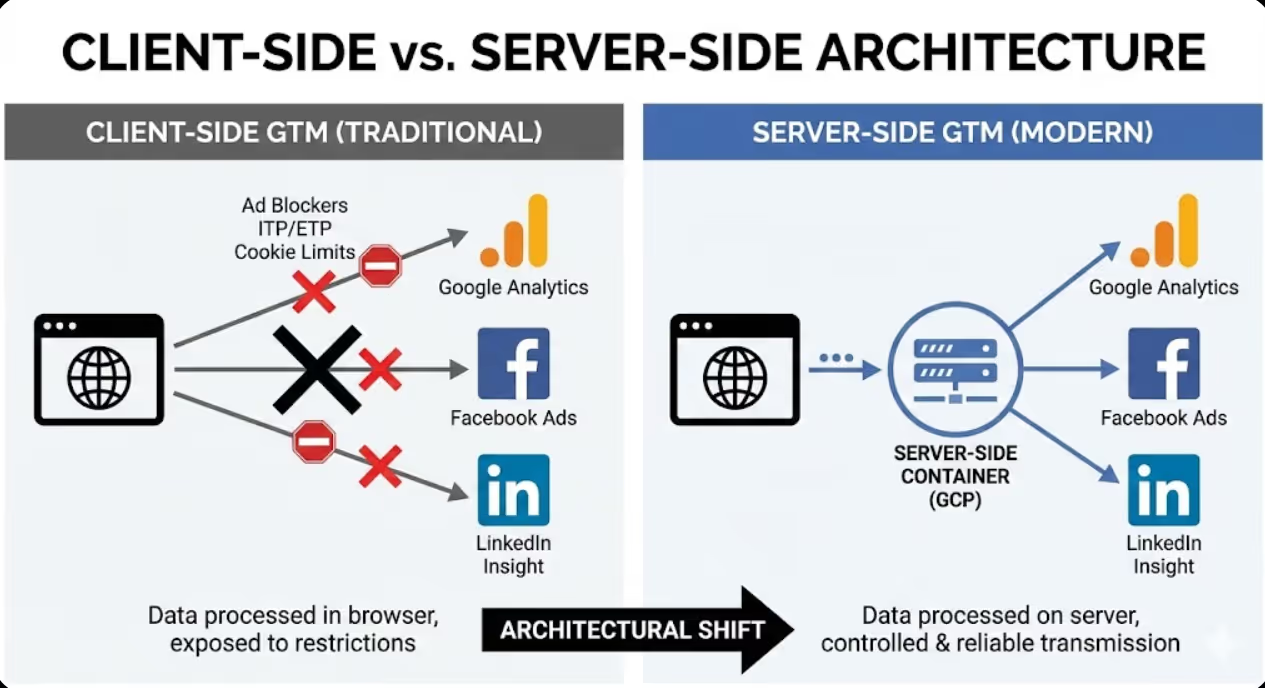
Client-side versus server-side architecture represents fundamental difference in where tag execution occurs and how data flows from websites to analytics platforms. Client-side GTM (traditional implementation) loads JavaScript in user browsers, executes tags directly on client devices, sends data from browsers to marketing platforms (Google, Facebook, etc.), and exposes all tracking to browser controls including ad blockers and cookie restrictions. Server-side GTM loads minimal JavaScript in browsers sending basic event data to advertiser-controlled server, executes tags on server infrastructure rather than client devices, processes and enriches data server-side before transmission, and sends data from servers to marketing platforms bypassing browser restrictions. This architectural shift moves processing burden from client devices to servers whilst providing control layer between data collection and third-party platform transmission that client-side implementations lack.
Problems server-side addresses include multiple tracking challenges affecting modern digital marketing. Ad blocker immunity occurs because servers sending data to marketing platforms cannot be blocked by browser extensions blocking client-side scripts. Cookie longevity improves through first-party cookies set from advertiser domains lasting beyond third-party cookie restrictions that Safari ITP and Firefox ETP impose. Data accuracy increases when server-controlled processing ensures consistent data formatting and validation before platform transmission versus client-side variations. Privacy compliance strengthens through centralised control enabling data filtering, PII removal, and consent enforcement before third-party transmission. Website performance improves by reducing client-side JavaScript execution moving processing to servers with greater resources. Attribution window extension beyond browser cookie limitations enables tracking conversions occurring weeks after initial visits that cookie restrictions would prevent.
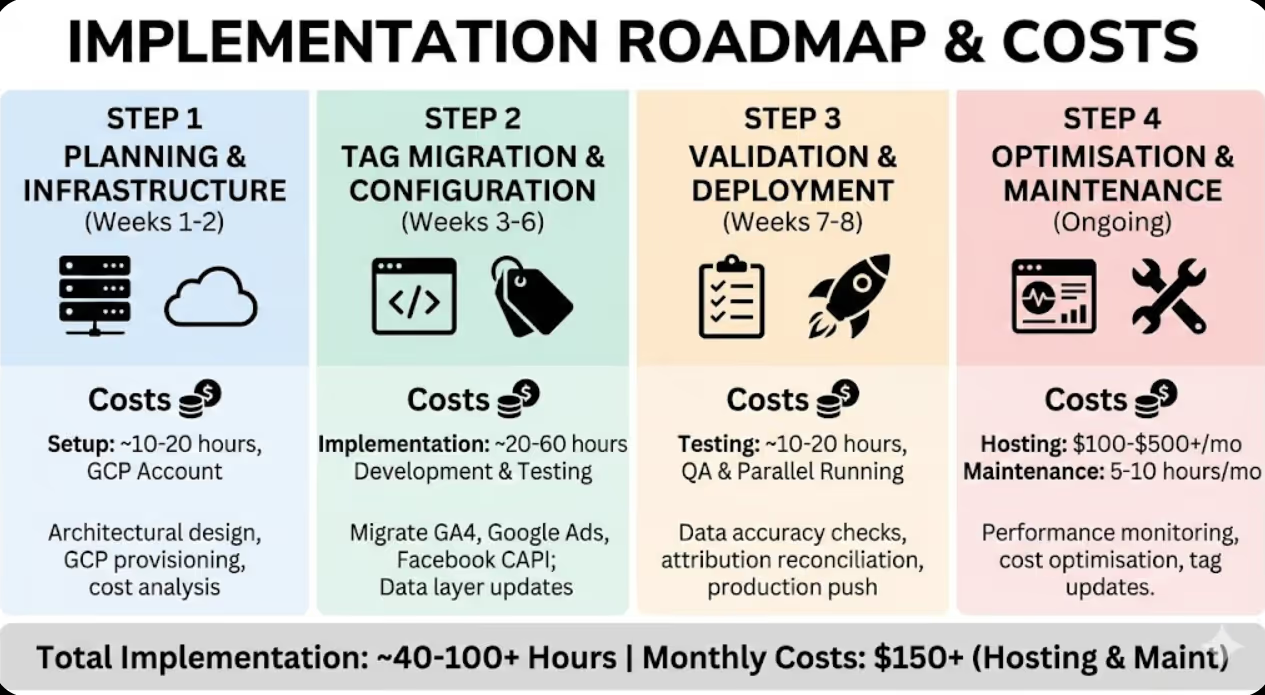
Technical requirements for server-side implementation demand capabilities exceeding client-side setup complexity. Server infrastructure provisioning requires Google Cloud Platform account (recommended) or alternative cloud providers including AWS or Azure. Technical expertise including JavaScript programming, API understanding, cloud infrastructure management, and debugging capabilities proves essential. Development and testing environments prevent production disruptions during implementation and updates. Ongoing maintenance capacity addresses server monitoring, tag updates, troubleshooting, and optimisation requirements. Budget allocation covers server hosting costs ($100-$500+ monthly depending on traffic), implementation time (40-100+ hours for complex setups), and ongoing management overhead. Australian businesses should honestly assess technical capabilities and resource availability before committing to server-side implementation because inadequate expertise leads to implementation failures causing tracking gaps worse than client-side limitations being addressed.
When server-side makes sense varies by business scale, technical capability, and tracking requirements. E-commerce businesses with substantial revenue ($1M+ annually) justify implementation costs through improved attribution and automated bidding optimisation. Websites with high ad blocker usage (30%+ of traffic) recover significant lost tracking through server-side implementation. Businesses with long sales cycles (2+ weeks) benefit from extended cookie attribution windows that first-party cookies provide. Privacy-conscious industries including healthcare, finance, and professional services gain control over data transmission that regulatory compliance demands. Websites with performance issues from excessive client-side tags improve user experience through server-side processing. Australian businesses meeting multiple criteria should prioritise server-side evaluation whilst those with limited revenue, technical resources, or tracking needs typically find client-side implementation adequate.
When to avoid server-side includes scenarios where complexity exceeds benefits or prerequisites aren't met. Small businesses with limited budgets (<$500K annual revenue) often cannot justify $2,000-$5,000 implementation investment plus ongoing hosting. Businesses lacking technical expertise without budget for professional implementation risk failed deployments. Simple tracking requirements limited to basic Google Analytics without extensive third-party tags don't benefit enough from server-side to warrant complexity. Websites with minimal ad blocker impact (<15% of traffic) and short sales cycles (under 1 week) gain marginal improvement insufficient to justify investment. Organisations without development resources for ongoing maintenance create unsustainable implementations requiring eventual migration back to client-side. Australian businesses should realistically evaluate whether server-side benefits materially improve business outcomes versus representing technical sophistication without proportional return on implementation investment.
Cost-benefit analysis framework helps Australian businesses determine implementation viability. Calculate current attribution loss estimating percentage of conversions untracked due to ad blockers and cookie restrictions (typically 25-40%). Estimate revenue impact of improved attribution enabling better bidding optimisation and marketing decisions (typically 15-30% improvement). Compare against implementation costs including setup time (40-100 hours at $100-$200/hour), monthly hosting ($100-$300), and ongoing maintenance (5-10 hours monthly). Calculate payback period dividing total implementation cost by estimated monthly revenue improvement. Generally, businesses achieving payback within 6-12 months should proceed whilst those requiring 18+ months to recoup investment should defer server-side implementation until scale justifies expense.
Server Infrastructure Setup and Configuration
Systematic server provisioning ensures reliable infrastructure supporting conversion tracking requirements without excessive complexity or unnecessary costs.
Google Cloud Platform setup provides recommended hosting for server-side GTM offering tightly integrated experience with simplified configuration. Create Google Cloud Platform account if not existing linking payment method for billing. Create new GCP project dedicated to GTM server-side tagging enabling organised management. Enable billing on project ensuring server resources can be provisioned without quota limitations. Configure server-side container in Google Tag Manager creating new container type "Server" distinct from existing web containers. Server container provides tagging server URL endpoint where client-side GTM sends data for processing. Automatic provisioning through GTM provisions GCP resources automatically simplifying initial setup versus manual configuration. Australian businesses should use automatic provisioning for initial implementation understanding that manual provisioning provides cost optimisation opportunities after mastering server-side fundamentals.
Manual server provisioning enables cost control and customisation beyond automatic setup limitations. Compute Engine configuration provisions virtual machine running tagging server software with appropriate specifications (typically e2-small or e2-medium instances for small to medium traffic). Container template deployment uses Google's official server-side GTM container image ensuring compatibility and updates. Load balancing setup distributes traffic across multiple server instances for high-availability if required. Custom domain configuration assigns branded domain to tagging server (like gtm.yourdomain.com.au) versus default appspot.com URL improving first-party cookie functionality. SSL certificate provisioning ensures HTTPS encryption for secure data transmission. Cost optimisation through right-sizing instances, committed use discounts, and appropriate region selection reduces ongoing hosting expenses. Australian businesses with technical capabilities should implement manual provisioning after initial testing because monthly hosting costs can reduce 40-60% versus automatic provisioning through careful infrastructure management.
Alternative cloud providers including AWS and Azure support server-side GTM though requiring more manual configuration than GCP's native integration. AWS implementation uses Elastic Container Service or App Runner hosting container image with Application Load Balancer distributing traffic. Azure deployment leverages Container Instances or App Service with appropriate networking configuration. Self-hosted infrastructure on dedicated servers provides maximum control though demanding greatest technical expertise and maintenance responsibility. Provider selection considers existing cloud relationships, technical team expertise, geographic requirements for data residency, and cost structures across providers. Australian businesses with established AWS or Azure usage might prefer those platforms despite additional configuration complexity versus GCP, whilst businesses without existing cloud infrastructure should favour GCP for simplified integration.
Container configuration establishes server-side GTM settings controlling data reception, processing, and transmission. Server container zones in different GCP regions improve latency for geographically distributed traffic though increasing costs. Default server URL provided by GCP or custom domain configuration affects first-party cookie functionality. Transport URL configuration specifies where client-side sends data for server processing. Preview and debug settings enable testing during development preventing production disruptions. User permissions grant appropriate access to team members managing server-side implementation. Version control and workspace functionality manages changes safely similar to client-side GTM best practices. Australian businesses should implement development and production server containers enabling testing before production deployment rather than making unvalidated changes affecting live tracking.
First-party cookie setup maximises attribution benefits by setting cookies from advertiser domains rather than third-party domains facing browser restrictions. Custom domain configuration pointing subdomain (gtm.yourdomain.com.au) to tagging server using CNAME DNS record enables first-party context. Cookie settings in server container specify cookie names, domains, and expiration periods. Google Analytics 4 client configuration uses first-party cookies for client ID persistence extending attribution windows. Google Ads conversion cookies benefit from first-party configuration improving match rates. Testing validates cookies set correctly from advertiser domain rather than third-party contexts. Australian businesses must configure custom domains for first-party cookie benefits because default appspot.com URLs still operate as third-party context limiting attribution improvements that proper implementation provides.
Security and compliance configuration protects sensitive data whilst maintaining regulatory compliance. Network security rules restrict server access to legitimate sources preventing unauthorised data submission. Data encryption for transmission and storage protects customer information. PII filtering removes or hashes personally identifiable information before third-party transmission. Consent mode integration respects user privacy preferences adjusting data collection and transmission accordingly. Logging and monitoring tracks data processing enabling audit trails for compliance verification. Data retention policies automatically purge old data meeting legal requirements. Australian businesses subject to Privacy Act 1988 must implement appropriate controls ensuring server-side processing doesn't inadvertently violate privacy regulations through inadequate data handling that server-controlled environment should enable better management versus client-side limitations.
Tag Migration and Implementation Strategy
Systematic tag migration from client-side to server-side execution ensures tracking continuity whilst capturing server-side benefits without creating attribution gaps during transition.
Migration planning and sequencing determines which tags migrate when avoiding wholesale migration that risks complete tracking failure. Phased approach begins with single non-critical tag testing server-side functionality before expanding to business-critical tracking. Google Analytics 4 typically migrates first because native server-side support and comprehensive documentation reduces implementation risk. Google Ads conversion tracking follows after GA4 validation because automated bidding dependency makes accurate tracking essential. Facebook Conversions API implementation adds server-side event transmission supplementing client-side pixel. Third-party marketing tags including LinkedIn, TikTok, or platform-specific tracking migrate after core platforms function reliably. Parallel running maintains both client-side and server-side tags during testing validating data consistency before deprecating client-side versions. Australian businesses should plan 4-8 week migration timeline enabling proper testing and validation rather than rushed implementation creating tracking gaps affecting advertising optimisation.
Client-side container modifications send data from websites to server-side container for processing. Client ID generation and transmission ensures consistent user identification across client and server processing. Event data structure design determines what information sends to server including event names, parameters, user properties, and custom dimensions. Data layer implementation or enhancement ensures complete event information available for server transmission. GTM web container configuration adds server container URL as destination for tag firing. Testing validates data reaching server container correctly with expected formatting and completeness. Minimising client-side JavaScript execution after server-side migration improves performance by removing redundant client-side tag firing. Australian businesses should maintain clean data layer architecture ensuring complete event information transmits to server without requiring multiple round-trips or supplementary data collection that undermines performance benefits.
Server-side container tag configuration processes received data and transmits to final destinations. GA4 server tag receives events from client and forwards to Google Analytics with enrichment including server-side user agent parsing, IP address handling, and custom processing. Google Ads conversion tracking server tag sends conversion events to Google Ads using Conversion Linker providing click-to-conversion matching. Facebook Conversions API tag transmits events to Facebook with event deduplication preventing double-counting when both server and client events fire. Custom tag templates enable platform-specific implementations for marketing tools without native server-side support. Transformation logic enriches or modifies data before final transmission including data validation, formatting standardisation, and PII removal. Error handling and fallback logic prevents data loss when servers or destination platforms experience issues. Australian businesses should implement comprehensive testing for each tag validating data accuracy versus client-side baseline before relying exclusively on server-side implementation.
Enhanced conversions implementation sends hashed customer data improving conversion attribution and remarketing match rates. Enhanced conversions for Google Ads transmits hashed email addresses, phone numbers, names, and addresses from conversion events enabling better offline and online attribution matching. Server-side implementation provides secure environment for enhanced conversion data handling versus client-side exposure of customer information. SHA-256 hashing occurs server-side ensuring sensitive data never exposes in browser environments. User consent verification ensures enhanced conversion transmission only occurs for users providing appropriate permissions. Match rate monitoring tracks improvement from enhanced conversions validating implementation effectiveness. Australian businesses collecting customer information during checkout or lead submission should implement enhanced conversions server-side maximising match rates for improved attribution whilst maintaining privacy through server-controlled hashing and transmission.
Custom event processing and enrichment leverages server-side environment adding data impossible or impractical client-side. Server-side data lookups query databases or APIs supplementing client events with additional context including customer segment information, product inventory status, or lifetime value data. Geographic enrichment uses server IP address determination providing accurate location data resistant to VPN and proxy manipulation. User agent parsing server-side provides consistent device, browser, and OS detection versus client-side variations. Fraud detection integration validates conversions server-side before transmission preventing fraudulent conversion pollution. A/B test assignment ensures consistent treatment allocation across sessions. Australian businesses should leverage server-side processing for enrichment rather than replicating client-side functionality because server environment enables sophisticated processing impractical within browser constraints.
Testing and validation procedures ensure server-side implementation maintains tracking accuracy throughout migration. Preview mode testing validates server-side tag firing and data transmission without affecting production reporting. Google Tag Assistant and server-side debugger verify data flow from client through server to final destinations. Data comparison validates server-side metrics match client-side baseline within acceptable variance (typically ±5%). Attribution reconciliation confirms conversion counts and values align between server-side and previous client-side tracking. Performance monitoring tracks server response times and error rates identifying infrastructure issues affecting reliability. Australian businesses should allocate 20-30% of implementation time to testing and validation rather than rushing to production because tracking failures discovered after client-side deprecation require emergency rollback or extensive debugging under time pressure.
Optimisation and Ongoing Management
Server-side GTM requires continuous monitoring and optimisation ensuring reliable operation, cost efficiency, and adaptation to evolving tracking requirements.
Server performance monitoring tracks infrastructure health identifying issues before they affect tracking reliability. Request latency monitoring ensures server response times remain under 200-300ms preventing delays affecting user experience. Error rate tracking identifies failed requests requiring investigation and resolution. Server resource utilisation including CPU, memory, and network monitors capacity preventing overload during traffic spikes. Uptime monitoring alerts team to server outages requiring immediate attention. Cost tracking monitors hosting expenses identifying unexpected increases requiring investigation. Australian businesses should implement automated alerting for performance degradation enabling proactive response rather than discovering issues through unexplained tracking gaps or customer complaints about website performance.
Data quality monitoring validates ongoing tracking accuracy maintaining confidence in server-side implementation. Event volume trending identifies unexpected increases or decreases suggesting configuration changes or technical issues. Conversion rate monitoring across client-side and server-side implementations flags attribution gaps requiring investigation. Data consistency checks validate server-side processed data matches client-side expectations for event parameters and user properties. Third-party platform validation confirms data arriving at final destinations (Google Analytics, Google Ads, etc.) matches server transmission. Discrepancy investigation procedures systematically diagnose and resolve data quality issues. Australian businesses should conduct weekly data quality reviews during first 3 months post-implementation reducing to monthly reviews once stable operation confirms reliable tracking without ongoing issues.
Cost optimisation strategies reduce ongoing hosting expenses without compromising tracking functionality. Server sizing optimisation adjusts instance types matching actual resource requirements versus over-provisioned initial configurations. Committed use discounts reduce GCP costs 30-50% by committing to consistent usage versus pay-as-you-go pricing. Traffic routing optimises by selecting appropriate GCP regions minimising egress costs. Request batching combines multiple events into single server requests reducing request volume. Caching implementation stores frequently accessed data reducing processing overhead. Efficiency analysis identifies unnecessary processing or redundant transmissions eliminating waste. Australian businesses should review hosting costs quarterly optimising configurations and usage patterns reducing expenses whilst maintaining adequate capacity for traffic fluctuations and growth.
Tag maintenance and updates address evolving tracking requirements as marketing platforms and business needs change. Marketing platform updates require server-side tag modifications accommodating API changes or new features. New tag additions expand server-side tracking to additional platforms or tracking requirements. Deprecated tag removal eliminates unused tracking reducing server processing overhead. Configuration refinements optimise existing tags improving accuracy or adding enhancement features. Testing procedures validate updates prevent production disruptions from configuration changes. Version control and rollback capabilities enable safe experimentation with ability to revert problematic changes. Australian businesses should establish change management procedures including testing requirements, approval workflows, and rollback plans preventing ad-hoc changes that risk tracking disruptions affecting business-critical advertising optimisation.
Compliance and privacy management maintains regulatory adherence as privacy regulations and business practices evolve. Consent management integration ensures server-side respects user privacy choices collected client-side. Data processing agreement reviews confirm vendor compliance with Australian Privacy Principles and GDPR where applicable. PII handling audits verify sensitive data properly hashes or removes before third-party transmission. Data retention policy enforcement automatically purges old data meeting legal requirements. Security updates maintain server software current preventing vulnerabilities. Audit trail maintenance documents data processing for regulatory inquiries or compliance verification. Australian businesses should conduct annual privacy compliance reviews of server-side implementations ensuring ongoing adherence as regulations and business practices evolve rather than assuming initial compliant implementation remains adequate indefinitely.
Documentation and knowledge transfer preserves implementation knowledge enabling team continuity and troubleshooting. Architecture documentation describes server infrastructure, data flows, and tag configurations. Tag inventory catalogues all implemented tags including purposes, configurations, and dependencies. Troubleshooting guides document common issues and resolution procedures. Runbook procedures establish operational processes for monitoring, maintenance, and incident response. Team training ensures multiple personnel understand server-side implementation preventing single-person dependency. Vendor relationship management maintains contact with Google, hosting providers, and marketing platforms. Australian businesses should invest in comprehensive documentation enabling new team members or external consultants to understand and manage implementations without requiring extensive knowledge transfer from original implementers who may depart or become unavailable.
Frequently Asked Questions
What are typical monthly costs for running server-side Google Tag Manager for Australian businesses?
Server-side GTM hosting costs vary by traffic volume, server configuration, and chosen cloud provider typically ranging $100-$500 monthly for small to medium businesses. Low-traffic sites (under 1 million monthly pageviews) can operate on GCP e2-micro or e2-small instances costing approximately $15-$30 monthly plus data egress charges bringing total to $100-$150 monthly. Medium-traffic sites (1-5 million monthly pageviews) require e2-small or e2-medium instances costing $30-$60 monthly with egress and processing bringing total to $200-$350 monthly. High-traffic sites (5+ million monthly pageviews) need e2-medium or larger instances with potential load balancing costing $100+ monthly for compute plus proportional egress reaching $500-$1,000+ monthly. Cost optimisation through committed use discounts, appropriate region selection, and efficient configurations can reduce expenses 30-50% versus default automatic provisioning. Australian businesses should budget minimum $150-$200 monthly for meaningful e-commerce implementations understanding costs scale with traffic growth and complexity requiring periodic review adjusting provisioning to actual requirements.
Can Australian businesses implement server-side GTM themselves or is professional implementation required?
Technical requirements for server-side GTM implementation exceed basic website administration demanding intermediate to advanced technical capabilities. Businesses with in-house development teams experienced in JavaScript, APIs, cloud infrastructure (GCP/AWS/Azure), and Google Tag Manager can undertake implementation themselves following Google's documentation and community resources. However, most Australian SMEs lack necessary expertise making professional implementation advisable through agencies like Maven Marketing Co. or certified GTM consultants providing systematic setup, testing, and documentation. DIY implementation risks include tracking gaps from misconfiguration, data loss during migration, ongoing maintenance challenges, and troubleshooting difficulties when issues arise. Professional implementation typically costs $2,000-$5,000 depending on complexity providing reliable setup, knowledge transfer, and documentation supporting ongoing management. Businesses should honestly assess technical capabilities before committing to DIY implementation because failed implementations requiring professional remediation often cost more than initial professional setup whilst creating tracking gaps affecting advertising optimisation during problem periods.
How does server-side Google Tag Manager affect Google Analytics 4 and Google Ads conversion tracking accuracy?
Server-side implementation typically improves GA4 and Google Ads tracking accuracy through multiple mechanisms. Ad blocker bypass enables tracking for 25-40% of users with ad blockers who completely evade client-side tracking. First-party cookie implementation extends attribution windows beyond Safari ITP 7-day limit and Firefox restrictions enabling conversion attribution for customer journeys spanning weeks. Enhanced conversions from server-side hashed customer data improve match rates by 20-40% enabling better attribution for conversions occurring offline or without cookies. Server-controlled data processing ensures consistent data formatting and validation before platform transmission versus client-side variations affecting data quality. However, implementation errors during migration can temporarily reduce accuracy if server-side tags misconfigure or data transmission failures occur requiring careful testing and validation. Australian businesses should expect 20-35% improvement in trackable conversions post-implementation based on typical ad blocker usage and cookie restriction impacts with larger improvements correlating to higher initial ad blocker prevalence and longer sales cycles benefiting from extended attribution windows.
What happens to existing conversion tracking and attribution data when migrating to server-side GTM?
Migration to server-side GTM should maintain conversion tracking continuity without historical data loss through parallel running and careful transition management. Historical data in Google Analytics, Google Ads, and other platforms remains unchanged because platforms store data independently from collection method. Parallel running period maintains both client-side and server-side tags simultaneously enabling comparison and validation before deprecating client-side tracking. Conversion action configuration in platforms like Google Ads continues using same conversion actions whether triggered client-side or server-side maintaining historical trend continuity. Attribution models continue functioning across transition because conversion data stream remains consistent despite collection method change. However, first-party cookie implementation may reset user identification for some visitors affecting individual user journey tracking whilst improving aggregate attribution through extended windows. Australian businesses should plan for brief adjustment period immediately post-migration where automated bidding algorithms adapt to server-side data patterns typically requiring 1-2 weeks stabilisation before performance returns to pre-migration levels.
Does server-side Google Tag Manager work with Facebook Pixel and other third-party marketing platforms?
Server-side GTM supports most major marketing platforms through Conversions API (for Facebook), server-side integration, or custom tag templates enabling migration beyond Google's native products. Facebook Conversions API transmits events server-side with event deduplication preventing double-counting when both client-side pixel and server-side API fire. LinkedIn Conversion API, TikTok Events API, Pinterest Conversions API, and similar platform offerings enable server-side event transmission. Platforms without official server-side APIs can implement through custom tag templates making HTTP requests to platform endpoints from GTM server. However, some niche marketing tools lacking API access cannot migrate to server-side requiring continued client-side implementation creating hybrid deployment. Australian businesses using multiple marketing platforms should inventory server-side support before implementation determining which platforms can fully migrate versus requiring continued client-side tracking that limits benefit realisation if majority of tags remain client-side.
How much technical maintenance does server-side GTM require compared to client-side implementation?
Server-side GTM demands substantially more ongoing maintenance than client-side implementation due to infrastructure management responsibilities and complexity. Client-side GTM requires primarily tag configuration updates (2-4 hours monthly) without infrastructure concerns because Google hosts container. Server-side GTM adds server monitoring, cost management, software updates, troubleshooting infrastructure issues, and security maintenance (additional 3-6 hours monthly) beyond tag configuration. Total ongoing effort typically ranges 5-10 hours monthly for stable implementations versus 2-4 hours for equivalent client-side setup. Crisis situations including server outages, configuration errors, or platform API changes can temporarily spike maintenance requirements to 10-20+ hours requiring rapid response. Australian businesses should ensure adequate technical resources available for ongoing management before implementing server-side because inadequate maintenance leads to tracking failures affecting business-critical advertising optimisation that relies on accurate conversion data from server-side implementation.
What are the main privacy and compliance considerations for server-side GTM in Australia?
Server-side GTM implementation must comply with Australian Privacy Principles under Privacy Act 1988 and potentially GDPR for European customers requiring careful attention to data handling. Consent management integration ensures server-side respects user privacy preferences captured client-side transmitting data only for users providing appropriate consent. PII handling requires server-side hashing or removal of identifiable information before third-party transmission unless explicit consent obtained. Data sovereignty considerations affect server location selection with Australian data potentially requiring Australia-region hosting versus international regions. Data processing agreements with vendors including Google and marketing platforms must cover server-side data transmission. Security controls prevent unauthorised access to server infrastructure processing customer data. Audit trails document data processing enabling compliance verification if regulatory inquiries occur. Australian businesses should conduct privacy impact assessments before server-side implementation identifying compliance requirements and implementing appropriate controls rather than assuming server-side processing automatically satisfies privacy obligations without intentional compliance-focused configuration.
Server-Side Tracking Balances Benefits Against Complexity
Server-side Google Tag Manager represents significant architectural evolution enabling improved data accuracy, enhanced privacy controls, and better website performance whilst demanding substantially greater technical expertise, ongoing maintenance commitment, and hosting investment versus client-side implementations that most Australian businesses currently employ.
The frameworks outlined in this guide including technical requirements assessment determining implementation viability, systematic setup procedures for server provisioning and container configuration, strategic tag migration approaches maintaining tracking continuity, and comprehensive optimisation strategies ensuring ongoing reliable operation provide foundation for Australian businesses to successfully implement server-side tracking when business scale and technical capabilities justify investment.
Australian businesses working with Maven Marketing Co. benefit from professional server-side GTM audits evaluating whether implementation benefits justify complexity for specific contexts, systematic implementation including infrastructure provisioning and tag migration, comprehensive testing validating tracking accuracy throughout transition, and ongoing management ensuring reliable operation through monitoring, optimisation, and maintenance that server-side architecture requires for sustained benefit realisation.
Ready to evaluate whether server-side Google Tag Manager can improve conversion tracking accuracy, enhance privacy compliance, and optimise website performance for your Australian business? Maven Marketing Co. provides comprehensive server-side GTM services including feasibility assessments, complete implementation, tag migration management, and ongoing optimisation ensuring your tracking infrastructure delivers reliable data supporting advertising optimisation whilst maintaining performance and privacy advantages that properly implemented server-side architecture provides.

Table of contents
read more blogs

The Role of Digital PR in Long Term SEO Growth
Building a solid online presence is basically more than just posting content now and then or sprinkling keywords across your website. Search engines such as Google tend to point users toward businesses that feel trustworthy, useful, and backed up by others online, even if it’s not always obvious at first. When a company puts together a well-thought-out digital PR strategy, it can bring in solid media mentions, earning high-quality backlinks and stronger brand awareness, all of which feed long-term SEO progress. Rather than obsessing solely over rankings, digital PR helps you build credibility plus authority, so your site looks more appealing to search engines and also to real people who might become customers. In this guide, we’ll walk through how digital PR supports SEO, what makes it such a key part of modern marketing, and the most effective approaches for sustainable growth in search results.

Is Google Ads Better Than SEO for My Business
One of the biggest questions business owners ask when they are planning online growth is whether they should invest in Google Ads or SEO. Both are strong marketing plays that help your company show up in Google search results, but they do things in separate lanes. Google Ads gives quicker visibility and can bring in leads fast, whereas SEO more or less focuses on slow, steady organic traffic that tends to grow the longer you keep building it. Picking the right direction depends on what you want to achieve, how much money you can spend, how crowded the market is, and how quickly you need results, like sooner rather than later. The good news is you don’t always have to choose one or the other; it’s not exactly a black-and-white situation. If you take time to understand the strongest points of both, you can put together a more sensible digital marketing plan that supports consistent expansion. In this guide, we’ll compare Google Ads vs SEO, explain the main differences, and help you figure out what option makes the most sense for your business.

When Should I Hire a Digital Marketing Agency
Growing a business today takes more than just having a website or throwing a post on social media; customers usually search around online, compare providers, skim reviews, and basically expect the brand to show up with a solid digital presence before they even think about buying. Many businesses try to run their marketing themselves, but there comes a point when “doing it all in-house” becomes clunky and hard to manage, all at once. Knowing when to hire a digital marketing agency can end up making a big, real difference for your growth. If you’re not getting enough leads, or your online visibility feels stuck, or sales are just not moving, the right agency can bring the know-how, plus a clear plan, to help you get noticeably better outcomes. In this guide, we’ll dig into what a digital marketing agency actually does, the usual signs it’s time to bring one on, and how picking the right marketing partner can help your business move forward at a faster pace.