.svg)


%201.svg)

Key Takeaways
- Discovery Campaigns place visually rich ads across YouTube Home Feed, Gmail Promotions, and Google Discover feed reaching 3+ billion monthly users during content consumption rather than active search
- Automated creative optimisation tests multiple image, headline, and description combinations determining best-performing variations without manual A/B testing that traditional campaigns require
- Audience targeting uses Custom Intent, In-Market, Affinity, and Demographic segments rather than keywords, requiring different strategic approach focused on user interests and behaviours versus search intent
- Feed-based placement means ads appear native to platform experiences requiring high-quality visual creative that doesn't disrupt user browsing experience whilst compelling engagement
- Discovery Campaigns suit businesses with strong visual content and longer consideration purchases better than urgent intent-driven categories where search campaigns excel through immediate demand capture
An Australian online furniture retailer struggled with Google Search Campaign saturation finding that their core product keywords had become increasingly expensive with competition driving CPCs to $4-$8 whilst conversion rates declined as auction dynamics favoured larger competitors with bigger budgets. The marketing team sought alternative Google Ads placements reaching furniture shoppers during earlier consideration stages before active search occurred. Market research indicated their target customers spent substantial time browsing YouTube home decor content, consuming lifestyle content in Google Discover, and checking Gmail where competitor promotional emails appeared.
The retailer implemented Discovery Campaign targeting Custom Intent audiences built from competitor websites and furniture-related search terms, In-Market audiences for home decor and furniture shoppers, and Affinity audiences interested in home improvement and interior design. Creative assets included 15 high-quality lifestyle images showing furniture in styled room settings, headlines emphasising free delivery and 30-day returns, and descriptions highlighting Australian manufacturing and sustainable materials. Budget allocation started conservatively at $2,000 monthly alongside existing $12,000 search campaign spend.
According to Google's Discovery Campaign documentation, Discovery ads reach users on YouTube, Discover, and Gmail when they're open to discovering new products and services, using Google's machine learning to show ads to users most likely to engage and convert.
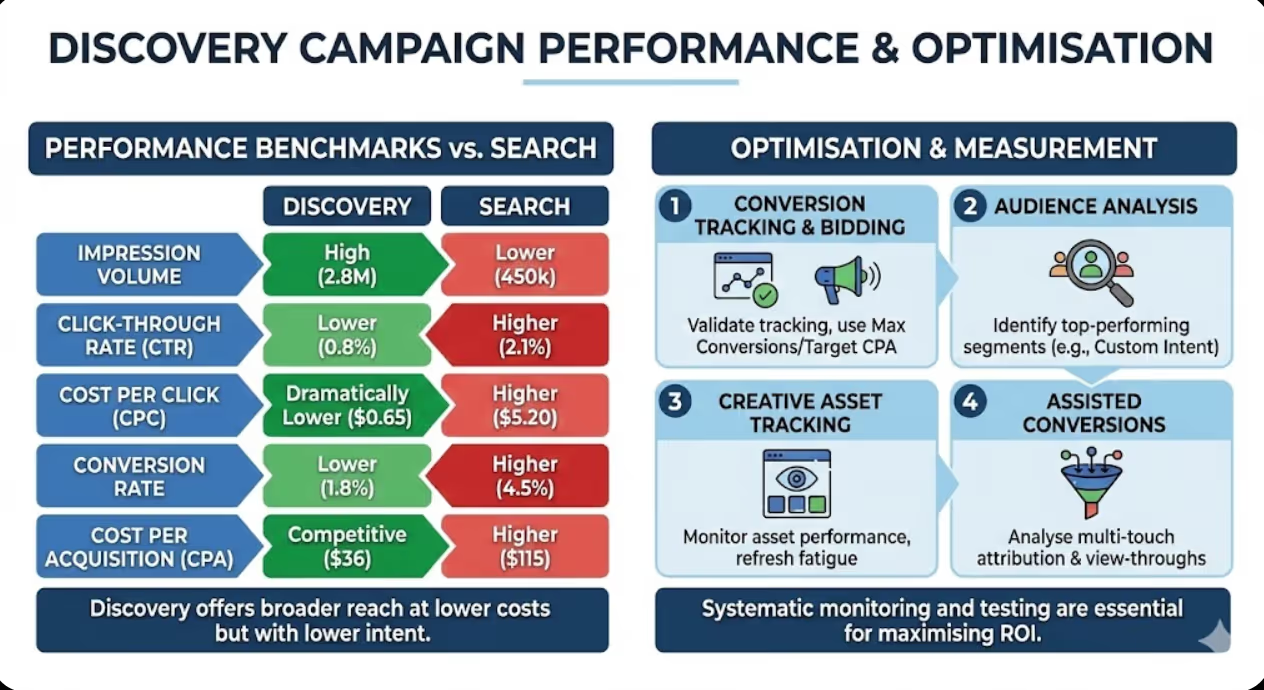
Three months of data revealed distinct performance patterns versus search campaigns. Discovery campaigns generated substantially higher impression volume (2.8 million impressions versus 450,000 for search) reflecting broader reach across discovery surfaces. Click-through rates averaged 1.2% lower than search campaigns (0.8% versus 2.1%) as expected given browsing versus intent-driven context. Cost per click was dramatically lower ($0.65 versus $5.20 for search) enabling more traffic within equivalent budgets. Conversion rates were 60% lower than search (1.8% versus 4.5%) but cost per acquisition remained competitive ($36 versus $115 for search) due to substantially lower traffic costs.
Audience analysis showed Custom Intent audiences built from competitor domains performed best with 2.4% conversion rates whilst broad Affinity audiences achieved only 0.9% conversion rates despite higher engagement. Creative testing revealed that lifestyle imagery showing furniture in complete room settings outperformed product-only photos by 43% on click-through rate. Mobile placements in YouTube feed generated 68% of conversions whilst Gmail promotions tab delivered lower conversion rates despite strong engagement metrics.
The retailer increased Discovery budget to $4,500 monthly recognising that Discovery campaigns complemented search by reaching earlier consideration-stage shoppers whilst search captured active demand. Six-month results showed Discovery campaigns attributed to 23% of total conversions including 15% direct conversions and 8% assisted conversions where Discovery initiated customer journeys completed through search or direct traffic. The combination of lower-funnel search campaigns with upper/mid-funnel Discovery campaigns provided more comprehensive Google Ads presence than search-only strategy had delivered.
However, Discovery limitations became apparent including minimal control over ad placement, automated bidding without manual bid adjustments, limited keyword exclusion capabilities, and creative refresh requirements as audiences tire of repeated ad exposure faster than search campaigns where intent drives engagement regardless of creative familiarity.
Understanding Discovery Campaign Fundamentals
Effective Discovery Campaign implementation requires foundational understanding of placement environments, how automated systems work, and strategic contexts where Discovery delivers value versus search or display alternatives.
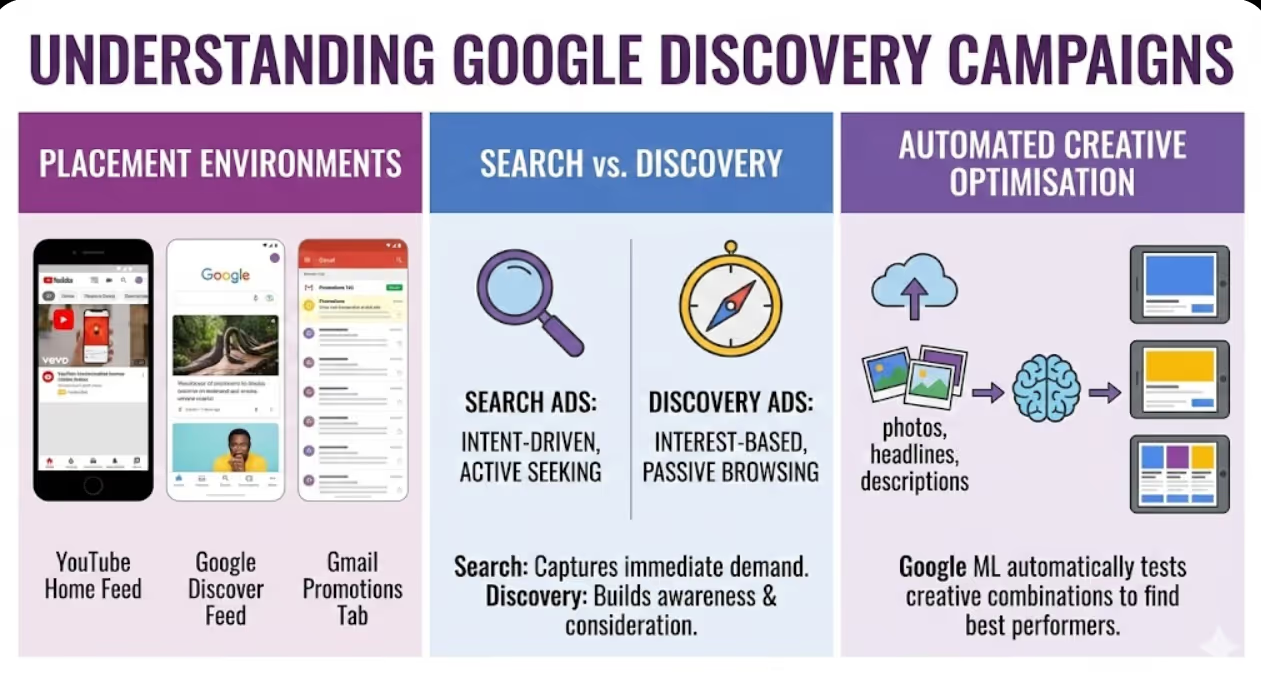
Discovery placement surfaces include three primary environments where ads appear. YouTube Home Feed places ads within recommended video content streams on YouTube mobile app and desktop homepage appearing as native content recommendations. Google Discover feed shows ads within personalised content recommendations appearing on Google app and mobile browser homepage when users swipe to Discover feed. Gmail Promotions and Social tabs display ads as email-style promotions within Gmail interface appearing above or between emails. These placements share common characteristics including visual-first formats, native integration appearing as platform content rather than obvious advertising, and consumption contexts where users browse rather than actively search. Australian businesses should understand that Discovery ads appear during leisure browsing and content consumption rather than urgent need satisfaction that search advertising addresses.
Discovery versus search campaigns represent fundamentally different advertising approaches. Search campaigns target keywords capturing intent-driven searches when users actively seek solutions showing text ads at moment of need. Discovery campaigns target audiences during content consumption showing visual ads to users potentially interested based on behaviours and demographics. Search provides immediate demand capture whilst Discovery builds awareness and consideration. Search audiences have explicit intent whilst Discovery audiences may not currently seek advertised products but match targeting criteria suggesting potential interest. Search offers precise control over keywords, match types, and bids whilst Discovery provides minimal control relying heavily on automation. Australian businesses need both approaches treating Discovery as upper/mid-funnel complement to lower-funnel search campaigns rather than replacement for intent-driven search advertising.
Automated creative optimisation represents Discovery's core functionality testing multiple creative combinations without manual A/B testing. Advertisers upload multiple assets including up to 15 images, 5 headlines, 5 descriptions, business name, and logo which Google's machine learning automatically combines into ads. System tests different combinations across placements determining which variations perform best for specific audiences and contexts. High-performing combinations receive more impressions whilst underperforming variations phase out. Optimisation occurs continuously without manual intervention required. Australian businesses should provide diverse high-quality assets enabling effective automated testing rather than minimal assets limiting system's ability to identify winning combinations through insufficient creative variety.
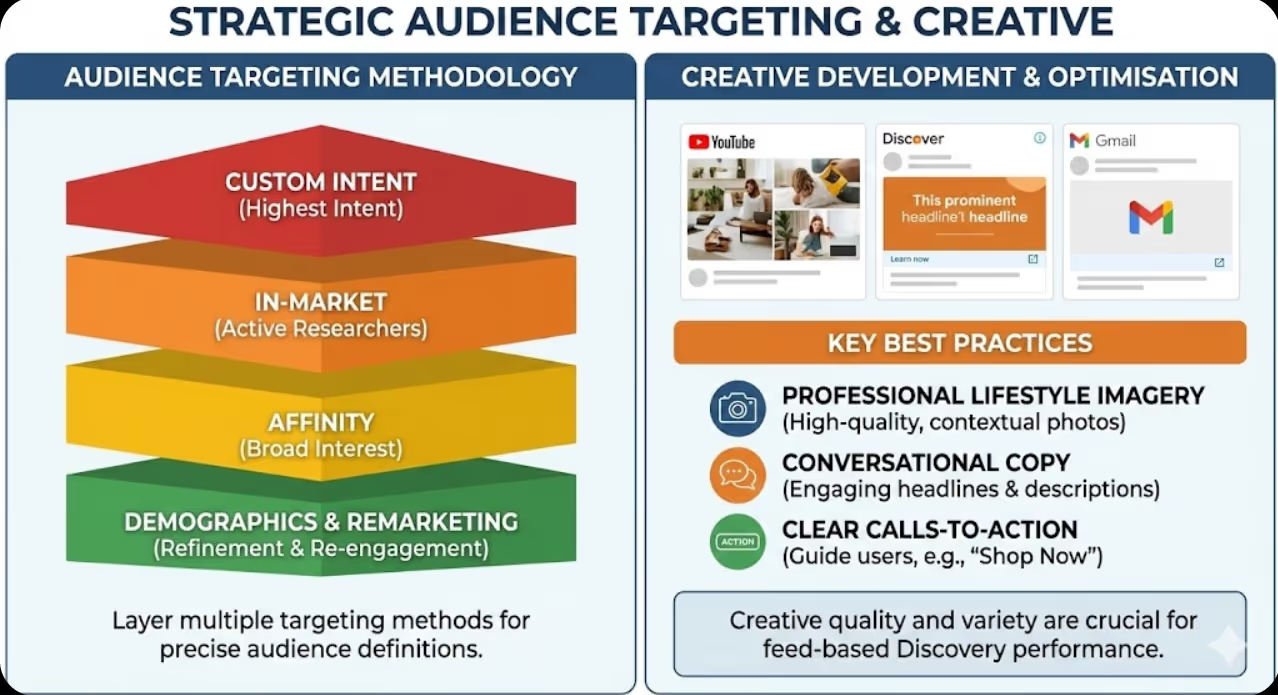
Audience targeting methodology determines who sees Discovery ads based on interests, behaviours, and demographics rather than keywords. Custom Intent audiences target users who searched specific terms or visited specific websites indicating interest in advertised offerings. In-Market audiences reach users actively researching or planning purchases in specific categories. Affinity audiences target users with sustained interest in topics related to advertised products. Demographic targeting including age, gender, household income, and parental status refines audience reach. Remarketing lists re-engage previous website visitors or customer list matches. Australian businesses should layer multiple targeting methods creating precise audience definitions rather than relying on single broad audience categories that waste budget on minimally qualified traffic.
Campaign objectives and conversion goals affect Discovery Campaign optimisation and recommended use cases. Website traffic objective focuses on driving clicks without conversion optimisation suiting awareness goals. Consideration objectives including engagement and video views prioritise interactions. Conversion objectives including purchases, leads, or sign-ups use automated bidding optimising toward specified actions requiring proper conversion tracking implementation. Different objectives suit different business models and campaign purposes with conversion objectives recommended for performance marketing whilst awareness objectives support branding initiatives. Australian e-commerce and lead generation businesses should use conversion objectives enabling automated bidding toward business outcomes rather than vanity metrics like impressions or clicks without revenue association.
Feed-based native advertising principles guide successful Discovery creative and messaging. Ads must blend naturally with feed content avoiding disruptive obvious advertising that users skip. Visual quality must match or exceed organic content standards maintaining user experience. Value propositions should be clear within seconds as users scroll quickly through feeds. Strong hooks capture attention amongst competing content recommendations. Mobile-first design priorities reflect that majority of Discovery impressions occur on mobile devices. Australian businesses should develop Discovery creative specifically for feed contexts rather than repurposing search or display assets not designed for native feed integration that Discovery placements require.
Strategic Audience Targeting
Systematic audience configuration ensures Discovery Campaigns reach qualified prospects rather than generating impressive impression volumes from disinterested users unlikely to convert.
Custom Intent audience development builds targeting from keywords and URLs indicating relevant intent. Keyword-based Custom Intent includes terms users search reflecting interest in advertised products or services. URL-based Custom Intent targets users visiting specified websites including competitor domains, industry publications, or related content sites. Combined approach layers keywords and URLs creating precise targeting. Negative keywords exclude irrelevant searches preventing wasteful impressions though functionality is limited versus search campaigns. Testing multiple Custom Intent variations identifies highest-converting audience definitions. Australian businesses should invest time building comprehensive Custom Intent audiences because they typically outperform broader audience types through more precise targeting to demonstrated interest rather than assumed affinity.
In-Market audience selection reaches users actively researching purchases in relevant categories. Google's In-Market segments cover hundreds of product and service categories including automotive, financial services, home & garden, and technology amongst others relevant to Australian businesses. In-Market identification uses search behaviour, content consumption, and conversion patterns indicating active purchase consideration. Segment relevance varies by business requiring testing to identify which In-Market categories actually contain qualified prospects versus superficially related audiences. Layering In-Market with other targeting types narrows audience definitions improving qualification. Australian service businesses and complex purchases benefit particularly from In-Market targeting because these categories involve extended research periods that Discovery placements effectively reach during consideration phases.
Affinity audience application targets users with sustained interest in topics related to advertised offerings. Affinity segments including lifestyle interests, hobbies, and habits identify users likely receptive to relevant advertising based on content consumption patterns. Broad Affinity categories provide large reach whilst Custom Affinity audiences enable precise definition based on website visits, app usage, and interests. Affinity audiences work best for awareness objectives and broad reach rather than immediate conversion driving. Testing is essential because Affinity relevance isn't always obvious with some seemingly relevant categories performing poorly. Australian businesses should use Affinity audiences cautiously favouring Custom Intent and In-Market for conversion-focused campaigns whilst reserving Affinity for top-of-funnel awareness initiatives where broad reach matters more than immediate conversion efficiency.
Demographic targeting refinements narrow audience definitions based on age, gender, household income, and parental status. Age targeting prevents wasteful impressions on demographics unlikely to purchase advertised products. Gender targeting suits products with clear gender skew in purchasing behaviour. Household income targeting qualifies audiences by purchasing power relevant to product pricing. Parental status targeting reaches families for child-related offerings or excludes parents for child-free positioning. Over-constraining demographics limits reach potentially excluding qualified prospects that broad targeting would capture. Australian businesses should apply demographic targeting strategically where clear relevance exists rather than arbitrary constraints limiting audience size without meaningful qualification improvement.
Remarketing and customer list integration re-engages users with prior brand exposure improving conversion likelihood. Website remarketing targets previous visitors who didn't convert enabling journey continuation. Customer list remarketing reaches existing customers for repeat purchases or upsells. Similar audiences expand reach to users resembling website visitors or customers based on Google's similarity algorithms. Remarketing typically achieves higher conversion rates than cold audiences due to brand familiarity and previous consideration. Exclusions prevent advertising to recent converters or customer segments not requiring continued exposure. Australian businesses should implement remarketing as campaign foundation building from known interested audiences before expanding to cold prospecting that requires larger budgets to achieve equivalent conversion volumes.
Audience layering and combination strategies create precise targeting through multiple criteria intersection. Combined Custom Intent plus In-Market targeting reaches users demonstrating both intent signals and active purchase consideration. Demographics layered with interest audiences refine broad categories to qualified segments. Geographic targeting combined with audience interests enables location-specific offers to relevant audiences. Observation mode tests audience performance without restricting reach enabling data-driven decisions about which audiences warrant targeting versus observation. Australian businesses should test single audiences initially establishing performance baselines then experiment with layered combinations determining whether added precision improves efficiency enough to justify reduced reach that intersection creates.
Creative Development and Optimisation
Visual creative quality determines Discovery Campaign success more than any other Google Ads format because feed-based placement makes ads compete directly with organic content for user attention.
Image asset requirements and best practices follow technical specifications whilst maximising visual appeal. Aspect ratios including 1.91:1 landscape and 1:1 square formats accommodate different placement requirements across YouTube, Discover, and Gmail. Minimum resolution requirements (600x314 for landscape, 300x300 for square) ensure quality across devices. File size limits (maximum 5MB) balance quality against loading speed. Safe zones avoid text or key elements near edges that cropping might eliminate. High-quality photography using professional images rather than amateur smartphone photos improves engagement substantially. Lifestyle imagery showing products in context outperforms sterile product-only shots by demonstrating use cases and aspirational positioning. Australian businesses should invest in professional photography or high-quality stock imagery rather than compromising visual quality that directly affects Discovery performance more than search text ads where copy matters more than visual elements.
Headline and description copywriting captures attention whilst communicating value within character limits. Headlines (maximum 40 characters) must hook attention immediately within scrolling feed contexts. Descriptions (maximum 90 characters) expand on headlines providing additional context or call-to-action. Multiple headline and description variations enable automated testing of messaging approaches. Clear value propositions communicate benefits quickly without assuming sustained attention. Emotional appeals and curiosity gaps encourage engagement. Australian-specific references including local delivery, Australian made, or regional targeting improve relevance. Consistency between visual and text elements ensures cohesive messaging. Australian businesses should write conversational engaging copy suited to browsing contexts rather than direct response urgency that search campaigns employ recognising different user mindsets during content consumption versus active search.
Call-to-action optimisation guides users toward desired actions without excessive aggressiveness disrupting browsing experience. CTA selection including "Learn More," "Shop Now," "Get Quote," or "Sign Up" should match user journey stage and campaign objective. Soft CTAs suit awareness objectives whilst harder CTAs like "Buy Now" match conversion-focused campaigns. CTA prominence balances visibility against native integration avoiding obvious hard-sell advertising that users reject. Testing different CTA approaches identifies what resonates with specific audiences. Secondary CTAs in description text supplement primary buttons. Australian businesses should match CTA aggressiveness to audience temperature with softer approaches for cold audiences and direct conversion CTAs for remarketing audiences already familiar with brand and offerings.
Logo and branding integration builds recognition without dominating creative or appearing overtly promotional. Logo placement and sizing follow platform guidelines ensuring visibility without overwhelming imagery. Consistent branding across creative variations builds recognition through repeated exposure. Branded elements including colour schemes and visual styles create cohesive identity. Subtle branding integration suits native feed contexts better than prominent logo-centric designs that appear obviously promotional. Balance between brand building and performance marketing depends on campaign objectives. Australian businesses should establish consistent visual branding across Discovery creative enabling recognition as users encounter multiple ads across different placements whilst avoiding heavy-handed branding that disrupts feed experience reducing engagement rates.
Creative testing methodology systematically identifies high-performing assets through structured variation testing. Asset diversity provides machine learning sufficient creative variety for effective optimisation requiring minimum 8-10 images and 3-4 headlines/descriptions. Performance monitoring tracks asset-level metrics identifying top performers versus underperformers. Creative refresh intervals prevent audience fatigue from repeated exposure to identical creative requiring new assets every 4-8 weeks. A/B testing different creative approaches including lifestyle versus product imagery, emotional versus functional messaging, and various visual styles determines what resonates with target audiences. Australian businesses should treat Discovery creative as ongoing iterative process rather than one-time setup because feed-based advertising requires fresh compelling content maintaining user interest as familiarity with repeated ads reduces engagement rates.
Mobile-first design principles reflect that Discovery Campaign majority occurs on mobile devices requiring mobile-optimised creative. Vertical and square formats work better than horizontal landscape on mobile screens. Text readability on small screens requires simple fonts and adequate sizing. Visual simplicity focuses attention without overwhelming small displays. Quick comprehension enables message absorption within seconds as mobile users scroll quickly. Touch-friendly design considers how users interact with mobile devices. Australian businesses should review Discovery creative on actual mobile devices rather than only desktop monitors because mobile experience differs substantially affecting engagement rates that desktop-only review cannot accurately predict.
Bidding Strategy and Budget Management
Strategic bidding configuration and budget allocation determine Discovery Campaign efficiency ensuring spend focuses on qualified traffic generating acceptable return on investment.
Automated bidding strategy selection determines how Google optimises Discovery Campaign bids toward campaign objectives. Maximise Conversions bidding aims to generate most conversions within daily budget without specific cost constraints. Target CPA bidding optimises toward specified cost per acquisition requiring historical conversion data for effective algorithm learning. Target ROAS bidding maximises conversion value relative to ad spend suiting e-commerce with varying transaction values. Maximise Conversion Value bidding focuses on revenue without specific ROAS target. Strategy selection depends on campaign maturity, conversion volume, tracking implementation, and business priorities. Australian businesses should begin with Maximise Conversions gathering performance data then transition to Target CPA or Target ROAS once sufficient conversion volume supports value-based optimisation that initial campaigns without conversion history cannot effectively employ.
Budget allocation and pacing ensures Discovery spending aligns with overall advertising budgets and business capacity. Daily budget settings control maximum daily spend with monthly spend approximately 30x daily budget. Budget pacing affects delivery with standard pacing distributing spend throughout days whilst accelerated pacing spends budgets as quickly as possible. Seasonal adjustments accommodate demand fluctuations aligning spend with peak conversion periods. Discovery proportion within total Google Ads budget typically ranges 15-30% complementing rather than replacing search campaigns. Portfolio budgets enable sharing across campaigns providing flexibility. Australian businesses should set Discovery budgets based on incremental traffic capacity and conversion handling capability rather than arbitrary percentages recognising that excessive Discovery traffic overwhelming fulfilment or sales processes wastes budget despite achieving traffic and conversion targets.
Learning period management recognises that Discovery Campaigns require data accumulation before automated systems optimise effectively. Initial learning period lasts approximately 1-2 weeks gathering performance data across audiences and creative combinations. Performance fluctuations during learning are normal with costs and conversion rates stabilising after sufficient data accumulation. Avoiding frequent changes during learning prevents restart that prolongs optimisation timeline. Minimum 30-50 conversions needed for Target CPA bidding with more conversions improving algorithm performance. Patient monitoring during learning periods prevents premature judgment or constant adjustments disrupting machine learning. Australian businesses should commit to minimum 4-6 week testing periods before evaluating Discovery Campaign viability because early performance during learning periods doesn't represent stabilised mature campaign results that develop after algorithms gather sufficient data informing optimisation decisions.
Performance benchmarking and expectations establishes realistic standards recognising Discovery differs from search performance. CTRs typically range 0.5-1.5% substantially lower than search campaigns reflecting browsing versus intent contexts. Conversion rates average 40-60% lower than search because audiences have lower purchase intent. CPCs are typically 60-80% lower than search enabling volume at reduced per-click costs. View-through conversions represent users who saw ads without clicking but later converted directly requiring view-through tracking to capture complete attribution. Cost per acquisition often achieves competitive levels despite lower conversion rates due to substantially reduced traffic costs. Australian businesses should evaluate Discovery performance against appropriate benchmarks rather than expecting search-equivalent metrics that different user contexts and campaign mechanics cannot replicate making direct comparison misleading for strategic decisions.
Incremental versus cannibalisation analysis determines whether Discovery generates new conversions or merely captures conversions that would have occurred through other channels. Incrementality testing through geographic holdout experiments measures conversion differences between test regions with Discovery versus control regions without. Attribution analysis tracks conversion paths identifying whether Discovery initiates new journeys or appears in paths alongside search that would have converted anyway. Brand search analysis monitors whether Discovery increases branded search volume indicating demand generation versus pure substitution. Customer surveys ask how customers discovered business identifying Discovery ad recall. Australian businesses should conduct incrementality analysis rather than assuming all Discovery-attributed conversions represent incremental revenue because some percentage would have occurred through organic search, direct traffic, or other channels making attribution analysis essential for accurate ROI calculation accounting for cannibalisation effects.
Scaling strategies and growth approaches expand successful Discovery Campaigns without sacrificing efficiency. Audience expansion tests new audience types beyond initial top performers. Geographic expansion enters new markets replicating successful approaches. Budget increases scale proven campaigns though monitoring for efficiency degradation at higher spend levels. Creative refresh intervals maintain engagement as audience fatigue affects performance. Lookalike audience development builds similar audiences to proven converters. Australian businesses should scale Discovery gradually testing expansions systematically rather than aggressive budget increases risking efficiency degradation that can occur when scaling exceeds qualified audience availability or when increased competition within auctions at higher spend levels increases costs beyond profitable thresholds.
Performance Measurement and Optimisation
Systematic monitoring and optimisation ensure Discovery Campaigns maintain efficiency whilst identifying improvement opportunities maximising return on advertising investment.
Conversion tracking validation confirms accurate measurement enabling reliable performance assessment and automated bidding optimisation. Tag implementation verification ensures conversion tracking fires correctly for target actions. Conversion action settings specify appropriate conversion windows, counting methods, and attribution models. Value tracking assigns revenue or lead values enabling value-based bidding. Conversion lag reporting shows timing between clicks and conversions informing attribution window appropriateness. Test conversions validate tracking before spending substantial budgets on potentially untracked campaigns. Australian businesses should audit conversion tracking quarterly ensuring continued accuracy particularly after website updates potentially disrupting tracking implementations affecting both measurement and automated bidding optimisation that relies on accurate conversion data for machine learning.
Audience performance analysis identifies which targeting approaches generate best results guiding optimisation priorities. Audience-level reporting shows performance metrics by audience segment. Conversion rates by audience reveal qualification levels distinguishing genuinely interested prospects from casual browsers. Cost per acquisition comparison identifies efficient versus expensive audience segments. Demographic overlays show which age, gender, or household income segments perform best within broader audience definitions. Combination performance evaluates layered targeting versus single-criterion audiences. Australian businesses should analyse audience performance monthly adjusting targeting based on accumulated data rather than daily micro-optimisation that lacks statistical significance because short timeframes don't provide reliable signals for strategic decisions about audience inclusion versus exclusion.
Creative asset performance tracking reveals which images, headlines, and descriptions drive engagement and conversions. Asset reporting shows impressions, clicks, and conversions by individual creative element. Automated system ratings indicate Google's machine learning assessment of asset quality. Performance comparison identifies top and bottom performers within asset libraries. Creative fatigue monitoring detects declining performance from repeated exposure requiring refresh. Combination analysis determines which image-headline-description combinations perform best. Australian businesses should review creative performance monthly adding new high-quality assets whilst removing persistent underperformers that sufficient exposure has proven ineffective rather than assuming all uploaded assets contribute equally to campaign performance regardless of their individual engagement and conversion rates.
Placement performance evaluation shows results across YouTube, Discover, and Gmail surfaces identifying strengths and weaknesses by environment. Placement-level reporting breaks down metrics by specific surface. Conversion rate variations by placement reveal which environments deliver qualified traffic versus vanity impressions. Device performance distinguishes mobile versus desktop results informing creative and messaging optimisation. Time-of-day analysis identifies peak performance periods. Geographic performance reveals regional variations. Australian businesses should analyse placement performance understanding that YouTube, Discover, and Gmail serve different purposes with different user mindsets affecting conversion likelihood requiring placement-appropriate expectations rather than expecting uniform performance across inherently different browsing and consumption contexts.
Assisted conversion attribution captures Discovery's role in multi-touch customer journeys beyond last-click attribution. Assisted conversion reporting shows conversions where Discovery appeared in journey but wasn't final click. Top conversion path analysis identifies common journey patterns involving Discovery touchpoints. Time lag reports show typical duration from Discovery exposure to conversion. Attribution model comparison evaluates different crediting approaches including last-click, first-click, linear, time decay, and data-driven models. View-through conversions credit users who saw ads without clicking but later converted. Australian businesses should analyse assisted conversions understanding Discovery's upper-funnel role generating awareness and consideration that search or direct traffic converts rather than expecting Discovery to independently drive complete customer journeys from initial exposure through final conversion that assisted conversion analysis reveals is unrealistic expectation for feed-based advertising.
Optimisation testing roadmap systematically improves Discovery Campaign performance through structured experimentation. Audience tests evaluate new targeting options versus control groups. Creative variations test different visual approaches, messaging angles, or design styles. Bid strategy experiments compare automated bidding options or target adjustments. Budget allocation tests determine optimal Discovery proportion within total advertising mix. Landing page variations test different post-click experiences. Australian businesses should maintain testing discipline with single-variable experiments providing clear results rather than multiple simultaneous changes preventing attribution of performance improvements or degradations to specific modifications that systematic testing methodology enables through controlled experimentation isolating individual variable impacts.
Frequently Asked Questions
Should Australian small businesses with limited budgets prioritise Discovery Campaigns or focus exclusively on Google Search Campaigns?
Small businesses with limited budgets typically achieve better immediate ROI from search campaigns capturing ready-to-buy searchers versus Discovery's awareness and consideration focus requiring larger budgets to achieve meaningful conversion volumes. Search delivers immediate demand capture from high-intent audiences whilst Discovery requires sustained investment building awareness before conversions materialise. Minimum viable Discovery budget typically ranges $1,500-$2,000 monthly with lower budgets unable to generate sufficient data for algorithm optimisation. However, businesses with strong visual content, longer sales cycles, or saturated search markets might benefit from Discovery even with modest budgets. Australian small businesses should establish profitable search campaigns first then add Discovery as supplementary channel once search scaling reaches diminishing returns or when seeking upper-funnel traffic complementing intent-driven search rather than replacing proven search performance with experimental Discovery that requires larger sustained investment before delivering meaningful results.
How does creative performance in Discovery Campaigns compare to Facebook and Instagram feed advertising?
Discovery and Facebook/Instagram feed ads share similar native placement and visual-first approaches but differ in audience intent and platform context. Discovery reaches users during Google ecosystem content consumption including YouTube, Gmail, and Discover whilst Facebook/Instagram engages social platform users. Discovery leverages Google's search and browsing signal data for targeting whilst Facebook uses social graph and engagement data. Creative requirements are similar prioritising high-quality visual content though Discovery requires more variations for automated optimisation. Performance typically shows Discovery generating lower engagement rates but higher purchase intent due to Google's signal quality versus social platforms' broader reach. Australian businesses should implement both channels rather than choosing exclusively because they reach different audiences in different contexts with Discovery capturing Google ecosystem users whilst Facebook/Instagram engages social media audiences creating comprehensive feed advertising presence across both major ecosystems.
What conversion tracking attribution window should Australian e-commerce businesses use for Discovery Campaigns?
E-commerce businesses should typically use 30-day click conversion windows and 7-day view-through conversion windows for Discovery Campaigns balancing attribution completeness against overcrediting delayed conversions unlikely resulting from Discovery exposure. Longer 90-day windows risk crediting conversions influenced more by subsequent search or direct traffic than initial Discovery exposure. Shorter 7-14 day windows undervalue Discovery's consideration-building role in multi-touch journeys. View-through attribution captures users who saw Discovery ads without clicking but later purchased directly or through search representing legitimate Discovery influence. Conversion lag reporting shows actual timing between Discovery exposure and conversion informing whether default windows capture majority of conversions or whether adjustments improve accuracy. Australian e-commerce businesses should analyse conversion lag data adjusting attribution windows to match actual customer journey timelines rather than using arbitrary defaults that either overattribute delayed conversions having minimal Discovery influence or underattribute legitimate conversions occurring within reasonable consideration periods that Discovery effectively influenced.
Can Australian B2B service businesses effectively use Discovery Campaigns or do they only work for e-commerce?
B2B service businesses can effectively use Discovery Campaigns though implementation differs from e-commerce requiring appropriate expectations and longer-term perspective. B2B targeting benefits from Custom Intent audiences built from relevant search terms and competitor domains, LinkedIn-style professional audience proxies, and In-Market segments for business services. Lead generation objectives suit B2B better than direct purchase conversions given complex sales cycles. Creative should demonstrate expertise and value proposition rather than product-centric e-commerce imagery. Longer conversion windows (60-90 days) accommodate extended B2B sales cycles. Lead quality metrics beyond volume matter substantially requiring lead scoring integration measuring outcomes beyond initial form submissions. Australian B2B businesses should use Discovery for awareness and lead generation feeding sales pipelines rather than expecting immediate closed-won business directly attributable to Discovery recognising that B2B sales involve multiple touchpoints across extended timeframes where Discovery serves as relationship initiator rather than sole conversion driver.
How frequently should creative assets be refreshed in Discovery Campaigns to prevent audience fatigue?
Creative refresh frequency depends on impression volume and audience size with high-impression campaigns requiring more frequent updates than low-volume campaigns. General guidelines suggest refreshing creative every 4-8 weeks for active campaigns though monitoring performance metrics provides objective refresh signals. Declining CTRs despite stable audience targeting indicates creative fatigue requiring new assets. Increasing CPAs whilst conversion rates decline suggests audience saturation. Asset performance reporting shows when individual images or headlines plateau or decline. Seasonal events and promotions necessitate timely creative updates beyond regular refresh schedules. Australian businesses should monitor creative performance metrics monthly adding new assets when performance degradation appears rather than arbitrary schedules that might refresh too early whilst creative still performs effectively or wait too long after performance has substantially declined from audience overexposure to identical creative reducing engagement that fresh imagery would restore.
What remarketing audience size and behaviour patterns work best for Discovery Campaign targeting?
Effective remarketing audiences for Discovery typically require minimum 1,000 active users within 30 days for campaign delivery though 10,000+ users enables better optimisation and scale. Website visitor remarketing works well targeting users who visited specific product categories, spent substantial time, or viewed multiple pages indicating interest. Abandonment audiences including cart abandoners or users who didn't complete key actions provide qualified remarketing pools. Recency matters with 7-30 day windows typically outperforming 90+ day windows where user interest has likely waned. Exclusions prevent advertising to recent converters or customers not requiring continued exposure. Similar audiences expand beyond direct remarketing reaching users resembling website visitors or customers. Australian businesses should segment remarketing by user behaviour rather than treating all website visitors equally because product viewers, blog readers, and single-page visitors have dramatically different conversion propensities requiring differentiated bidding and creative approaches that behaviour-based segmentation enables through targeted messaging matching user journey stage.
How should Australian businesses measure Discovery Campaign ROI accounting for assisted conversions and multi-touch attribution?
Comprehensive ROI measurement requires tracking both direct last-click conversions and assisted conversions where Discovery appeared in journey but wasn't final touchpoint. Last-click attribution provides conservative baseline showing conversions directly credited to Discovery. Assisted conversion reporting reveals additional value where Discovery influenced journeys completed through other channels. Attribution modelling including data-driven, linear, or position-based models allocates credit across touchpoints. Incrementality testing through geographic holdout experiments measures true incremental conversions versus cannibalisation. Customer acquisition cost calculation should include full-funnel spend across Discovery and search rather than siloed channel evaluation. Lifetime value analysis shows long-term customer worth beyond initial purchase. Australian businesses should use blended attribution recognising Discovery's role in generating awareness and consideration that search or direct traffic converts rather than expecting pure last-click attribution accurately representing Discovery's contribution to multi-touch journeys where upper-funnel Discovery exposure enables lower-funnel search conversion that last-click attribution incorrectly attributes entirely to search without acknowledging Discovery's initiating influence.
Feed-Based Advertising Complements Intent-Driven Search
Discovery Campaigns represent valuable addition to comprehensive Google Ads strategies providing feed-based reach across YouTube, Discover, and Gmail complementing intent-driven search campaigns through awareness and consideration-stage engagement that automated creative optimisation and audience targeting enable when businesses invest in high-quality visual content and systematic optimisation.
The frameworks outlined in this guide including strategic audience targeting approaches, creative development methodologies, bidding strategy selection, and performance measurement techniques provide foundation for Australian businesses to successfully implement Discovery Campaigns generating qualified traffic and conversions rather than vanity impressions from poorly targeted or creatively inferior campaigns that feed-based native advertising environments punish through user disengagement.
Australian businesses working with Maven Marketing Co. benefit from professional Discovery Campaign audits evaluating whether feed-based advertising suits specific business contexts, systematic implementation including audience configuration and creative development, ongoing optimisation refining targeting and creative based on performance data, and comprehensive attribution analysis connecting Discovery performance to business outcomes ensuring advertising investment generates acceptable returns accounting for Discovery's role in multi-touch customer journeys.
Ready to implement Discovery Campaigns expanding Google Ads presence beyond search whilst reaching engaged audiences across YouTube, Discover, and Gmail through visually compelling native advertising? Maven Marketing Co. provides comprehensive Discovery Campaign services including strategic planning, creative development guidance, technical implementation, and ongoing optimisation ensuring your feed-based advertising generates qualified traffic supporting business growth through effective audience targeting and compelling creative that native discovery placements reward with engagement and conversions.

Table of contents
read more blogs

The Role of Digital PR in Long Term SEO Growth
Building a solid online presence is basically more than just posting content now and then or sprinkling keywords across your website. Search engines such as Google tend to point users toward businesses that feel trustworthy, useful, and backed up by others online, even if it’s not always obvious at first. When a company puts together a well-thought-out digital PR strategy, it can bring in solid media mentions, earning high-quality backlinks and stronger brand awareness, all of which feed long-term SEO progress. Rather than obsessing solely over rankings, digital PR helps you build credibility plus authority, so your site looks more appealing to search engines and also to real people who might become customers. In this guide, we’ll walk through how digital PR supports SEO, what makes it such a key part of modern marketing, and the most effective approaches for sustainable growth in search results.

Is Google Ads Better Than SEO for My Business
One of the biggest questions business owners ask when they are planning online growth is whether they should invest in Google Ads or SEO. Both are strong marketing plays that help your company show up in Google search results, but they do things in separate lanes. Google Ads gives quicker visibility and can bring in leads fast, whereas SEO more or less focuses on slow, steady organic traffic that tends to grow the longer you keep building it. Picking the right direction depends on what you want to achieve, how much money you can spend, how crowded the market is, and how quickly you need results, like sooner rather than later. The good news is you don’t always have to choose one or the other; it’s not exactly a black-and-white situation. If you take time to understand the strongest points of both, you can put together a more sensible digital marketing plan that supports consistent expansion. In this guide, we’ll compare Google Ads vs SEO, explain the main differences, and help you figure out what option makes the most sense for your business.

When Should I Hire a Digital Marketing Agency
Growing a business today takes more than just having a website or throwing a post on social media; customers usually search around online, compare providers, skim reviews, and basically expect the brand to show up with a solid digital presence before they even think about buying. Many businesses try to run their marketing themselves, but there comes a point when “doing it all in-house” becomes clunky and hard to manage, all at once. Knowing when to hire a digital marketing agency can end up making a big, real difference for your growth. If you’re not getting enough leads, or your online visibility feels stuck, or sales are just not moving, the right agency can bring the know-how, plus a clear plan, to help you get noticeably better outcomes. In this guide, we’ll dig into what a digital marketing agency actually does, the usual signs it’s time to bring one on, and how picking the right marketing partner can help your business move forward at a faster pace.