.svg)


%201.svg)
Key Takeaways
- The first action after any overnight ranking drop should be diagnostic, not remedial. Making changes before the cause is identified risks addressing the wrong problem, compounding the issue, or making the original cause harder to identify later.
- The scope of the drop, whether it affects all pages or specific pages, all keywords or a specific category of keywords, reveals more about the cause than any other single data point in the first hour of diagnosis.
- Google Search Console is the primary diagnostic tool for all categories of ranking drop. Checking for manual actions, inspecting the coverage report for indexing errors, and reviewing the performance report for the specific pages and queries affected should be the first steps in every investigation.
- Algorithm updates produce characteristic patterns: broad drops affecting many pages simultaneously, drops correlating with confirmed Google update dates, and a gradual recovery profile over weeks rather than an immediate bounce back after a fix.
- Technical causes of ranking drops, including accidental noindex directives, broken robots.txt configurations, and server errors, typically produce sharper and more complete drops than algorithm updates and can be verified and resolved quickly once identified.
- Competitor improvements are a frequent cause of apparent ranking drops that are not detected by algorithmic or technical diagnosis. If specific keywords have dropped but the site has no technical issues and no algorithm update correlates with the timing, check who has moved above the affected pages.
- Recovery from an algorithm update requires addressing the quality signals the update targeted, which may take weeks to months and cannot be accelerated by rapid, reactive changes to the site.
Step 1: Establish the Scope Before Doing Anything Else
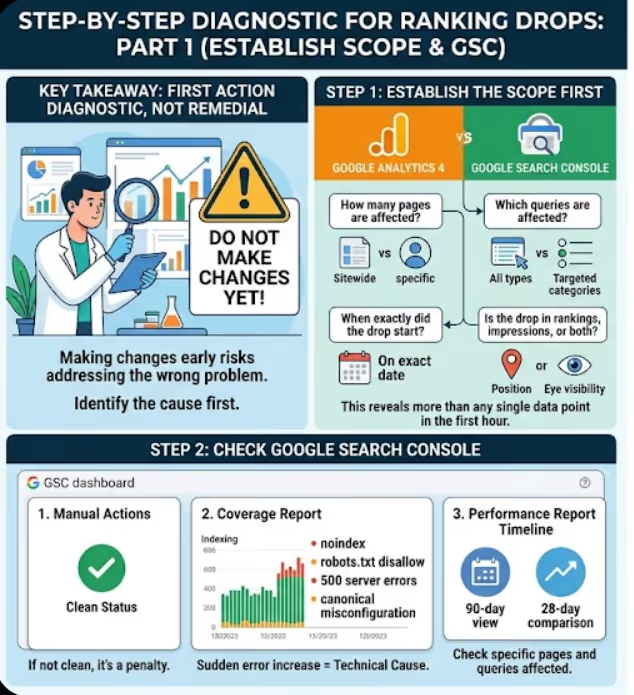
The single most useful piece of information in diagnosing an overnight ranking drop is its scope. A drop that affects the entire site looks different from a drop affecting one section. A drop affecting all query types looks different from one concentrated in a specific topic area or intent category.
Open Google Analytics 4 and Google Search Console side by side and answer these questions before touching anything on the site or in the campaign configuration:
How many pages are affected? If the drop in impressions in Search Console affects dozens or hundreds of pages across all sections of the site simultaneously, the cause is likely either a sitewide technical change (a robots.txt update, a canonical error, a server configuration change) or a broad algorithm update. If it affects one section of the site or a handful of specific pages, the cause is more targeted: a specific technical issue on those pages, a content quality assessment specific to that topic area, or a specific competitor improvement.
Which queries are affected? If the drop is across all query types, a sitewide event is more likely. If the drop is concentrated in specific keyword categories (transactional queries, informational queries in a specific topic, branded queries), the pattern suggests a more targeted cause.
When exactly did the drop start? The specific date the drop began is the single most important diagnostic data point. Export the daily impression data from Search Console and identify the exact date. Then compare that date against Google's confirmed update announcements.
Is the drop in rankings, in impressions, or in both? A drop in rankings without a corresponding drop in impressions suggests the site's pages are still appearing but in lower positions. A drop in impressions suggests the pages are appearing for fewer queries or less frequently. A drop in both suggests either a significant ranking demotion or a crawlability or indexing issue.
Step 2: Check Google Search Console for Manual Actions and Coverage Errors
With the scope established, the next diagnostic step is Google Search Console.
Check for manual actions. Navigate to Security and Manual Actions in the left menu. A clean status means no manual action has been applied. Any other status means Google has applied a deliberate human review penalty that is the cause of the drop, and the recovery path is the manual action remediation process rather than a technical or content fix.
Check the coverage report. Under Indexing in the left menu, the Pages report shows which pages are indexed and which are experiencing errors. A sudden increase in pages with errors, particularly in the "Excluded" or "Error" categories, concurrent with the ranking drop is a strong signal of a technical cause. The most common technical causes that produce sudden coverage errors are:
A noindex tag accidentally added to pages that should be indexed. This can happen through a theme update, a plugin conflict, a CMS configuration change, or a staging site setting that was unintentionally published to the live site.
A disallow rule added to robots.txt that blocks Googlebot from crawling key sections of the site. This can happen through the same routes as an accidental noindex tag and produces a similar sudden drop across affected pages.
Server errors (500 status codes) that prevent Googlebot from accessing pages. These typically correlate with a hosting or server configuration change and will appear in the coverage report as server errors.
A canonical tag misconfiguration that is pointing pages to an incorrect canonical URL, causing Google to index the wrong version of the content.
Check the performance report timeline. The Performance report's timeline view shows impressions, clicks, position, and rate of clicks through over time. Setting the date range to the last 90 days and looking at the 28-day comparison highlights the specific date and scale of the drop, and allows comparison of which specific pages and queries have been most affected.
Step 3: Cross-Reference the Drop Date Against Algorithm Updates
If Search Console shows no manual action and no significant coverage errors, the next step is to determine whether the drop date correlates with a confirmed Google algorithm update.
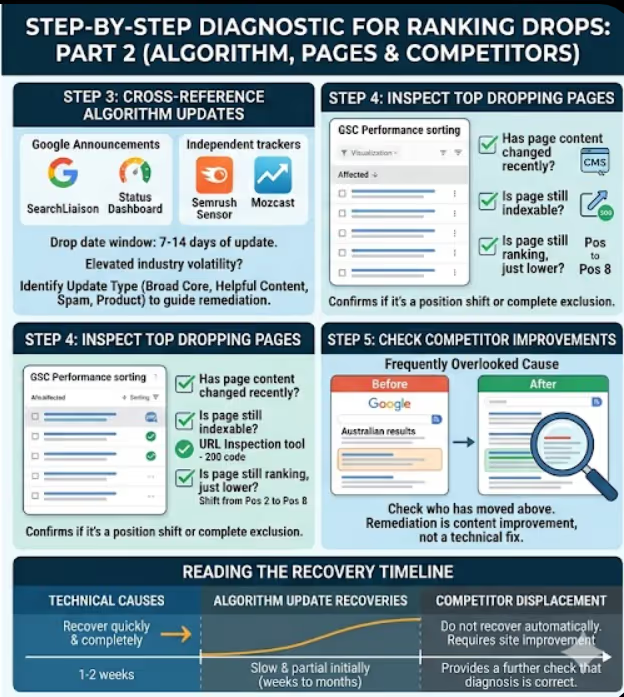
Google announces confirmed algorithm updates through its Search Status Dashboard and its @SearchLiaison account. Independent trackers including Semrush Sensor, Mozcast, and Ahrefs' algorithm update history page provide additional data on the timing and scale of confirmed and unconfirmed fluctuations.
The correlation does not need to be the same day. Algorithm updates are often rolled out over one to two weeks, meaning the observed drop may begin several days into the update's rollout period rather than on the day the update is announced. A drop that begins within a seven to fourteen day window of a confirmed update start date should be treated as potentially related to the update.
The size and pattern of the volatility matters. Algorithm updates typically affect many sites simultaneously, producing periods of broad ranking volatility across the industry. If the Semrush Sensor or Mozcast data shows elevated volatility on or around the drop date, the drop is more likely to be related to an update. If the volatility trackers show no unusual activity around the drop date, the cause is more likely to be specific to the site.
Which update type correlates matters. Google's Broad Core Updates, Helpful Content Updates, Spam Updates, and Product Reviews Updates each target different quality signals. Identifying which type of update correlates with the drop points the remediation in the right direction. A drop correlating with a Spam Update requires a different response from one correlating with a Helpful Content Update.
Step 4: Inspect the Specific Pages That Dropped Most
Whether or not an algorithm update correlates with the drop date, inspecting the specific pages that have dropped most provides additional diagnostic information.
In Search Console's Performance report, sort queries or pages by the largest position decline over the relevant period. Visit each of the most affected pages and assess:
Has the page content changed recently? If the page's content was significantly updated in the days before the drop, the update may have introduced a quality issue, a keyword alignment problem, or a change that removed content Google had been valuing. Checking the website's version control or content management system change logs will confirm whether a content change preceded the drop.
Is the page still indexable? Use Search Console's URL Inspection tool on each affected page to confirm it is currently indexed, that the page is returning a 200 status code, that canonical tags are correctly configured, and that no noindex directive is present. A page that appears to be ranking but is actually excluded from the index will appear to have dropped when in fact it has been removed from the index entirely.
Is the page still ranking, just lower? Sometimes what appears as a ranking drop in internal dashboards is actually a position shift from position 2 to position 8: still ranking but receiving dramatically fewer clicks because clicks in search results are concentrated in the first three positions. Confirming the current ranking position for the affected keywords, rather than relying only on click data, distinguishes a position shift from a complete exclusion.
Step 5: Check Whether Competitors Have Improved
If the diagnosis to this point has found no manual action, no coverage errors, and no clear algorithm update correlation, competitor improvement is a strong candidate cause.
Competitive displacement is the most commonly overlooked cause of apparent ranking drops. A competitor publishes a comprehensive new article on a topic where the site was ranking second or third. A direct competitor redesigns their service pages and improves their conversion and engagement signals. A new entrant in the category builds enough domain authority to overtake existing rankings within a short period. None of these produce a notification or a Search Console error. They simply produce a drop in the affected keywords' positions that looks, in the traffic data, like a ranking loss.
To diagnose competitive displacement, search for the affected keywords in Australian Google results and record which pages are now ranking where the site previously ranked. If a competitor has clearly moved above the affected pages with new or improved content, the cause is identified. The remediation is a content improvement or expansion programme for the affected pages, not a technical fix.
Reading the Recovery Timeline
Once the cause is identified, the recovery timeline provides a further check that the diagnosis is correct.
Technical causes recover quickly and completely once fixed. If a noindex tag is removed from affected pages and those pages reappear in rankings within one to two weeks, the diagnosis was a technical issue and the fix was correct. If the pages do not recover after a technical fix, the technical issue was either not the primary cause or was not fully resolved.
Algorithm update recoveries are slow and partial initially. A site that dropped during a Broad Core Update will typically see gradual ranking improvements over the weeks following the update, and may see more significant recovery at the next update cycle (which could be two to six months away). Rapid recovery within days of the update suggests the drop was not primarily driven by the algorithm or that the technical fix applied was the real cause.
Competitor displacement does not recover automatically. If the cause is a competitor improvement, the rankings will not return unless the affected pages are improved relative to the new competing pages. The recovery is a content improvement project, not a waiting game.
FAQs
Should an Australian business pause its Google Ads campaigns when organic rankings drop overnight?Pausing Google Ads campaigns is not the automatic response to an organic ranking drop, but it is worth reviewing the relationship between organic and paid visibility after a drop. If organic rankings have dropped for commercial queries with strong intent and the business relies on those rankings for a significant proportion of its leads or revenue, increasing the Google Ads budget temporarily for the affected keywords can maintain commercial visibility while the organic recovery is worked through. However, this decision should be made based on the cause of the drop: if the drop is due to a manual action for link spam, increasing paid spend does not address the underlying issue and may not be worth the cost during the investigation and remediation period. If the drop is technical and the fix is imminent, maintaining the existing paid budget is usually sufficient until organic rankings recover.
How quickly should an Australian business respond to an overnight ranking drop?The diagnostic steps described in this article should be completed within 24 hours of the drop being identified. This is not because rapid action is required, but because rapid accurate diagnosis prevents the compounding of the problem through reactive changes. Once the diagnosis is complete, the response timeline depends on the cause: technical fixes should be implemented as quickly as possible (typically within 24 to 72 hours for a correctly diagnosed technical issue); content quality improvements required by an algorithm update should be planned carefully and executed over two to eight weeks; and competitive responses should be planned as a content programme rather than rushed. Australian businesses that take 24 hours to diagnose and then move deliberately on the right fix will consistently achieve faster and more complete recovery than those that make rapid unplanned changes in the first hours after the drop is noticed.
What if the ranking drop is real but no cause can be identified from Search Console, algorithm update timelines, or competitor analysis?Unattributed ranking drops do occur, and they are more common than most practitioners acknowledge. They can result from subtle shifts in Google's quality assessment of the site that are not tied to a specific named update, from changes in the search intent interpretation for specific queries (where Google has decided to prioritise a different content type for those queries), or from gradual competitive drift where no single competitor has made a dramatic move but the cumulative drift of many small improvements across the competitive landscape has lowered the site's relative position. In these cases, the most reliable diagnostic step is a comprehensive content quality audit of the affected pages, assessing them honestly against the pages currently ranking above them. If the content below the current ranking level is substantively better, more current, more specific, or better structured than the affected pages, the answer is a content improvement programme even without a specific identified cause. If the content quality appears comparable, a link profile comparison and a technical health review of the affected pages are the appropriate next steps.
The Diagnosis Determines the Recovery
A ranking drop without a correct diagnosis is not a recoverable situation: it is a situation where the wrong treatment is applied to an unknown condition, and the site's recovery depends on whether the random treatment happens to address the actual cause. The systematic diagnostic process in this article takes most Australian businesses less than two hours to complete and produces a clear directional answer in the majority of cases. That two hours of diagnosis is the most valuable activity in the entire recovery process, because it determines whether the following weeks of effort are spent on the right problem or wasted on the wrong one.
Maven Marketing Co conducts SEO diagnostic audits for Australian businesses experiencing ranking drops, identifying the specific cause and providing a prioritised remediation plan with timeline and resource requirements.
Talk to the team at Maven Marketing Co →

Table of contents
read more blogs

Is Google Ads Better Than SEO for My Business
One of the biggest questions business owners ask when they are planning online growth is whether they should invest in Google Ads or SEO. Both are strong marketing plays that help your company show up in Google search results, but they do things in separate lanes. Google Ads gives quicker visibility and can bring in leads fast, whereas SEO more or less focuses on slow, steady organic traffic that tends to grow the longer you keep building it. Picking the right direction depends on what you want to achieve, how much money you can spend, how crowded the market is, and how quickly you need results, like sooner rather than later. The good news is you don’t always have to choose one or the other; it’s not exactly a black-and-white situation. If you take time to understand the strongest points of both, you can put together a more sensible digital marketing plan that supports consistent expansion. In this guide, we’ll compare Google Ads vs SEO, explain the main differences, and help you figure out what option makes the most sense for your business.

When Should I Hire a Digital Marketing Agency
Growing a business today takes more than just having a website or throwing a post on social media; customers usually search around online, compare providers, skim reviews, and basically expect the brand to show up with a solid digital presence before they even think about buying. Many businesses try to run their marketing themselves, but there comes a point when “doing it all in-house” becomes clunky and hard to manage, all at once. Knowing when to hire a digital marketing agency can end up making a big, real difference for your growth. If you’re not getting enough leads, or your online visibility feels stuck, or sales are just not moving, the right agency can bring the know-how, plus a clear plan, to help you get noticeably better outcomes. In this guide, we’ll dig into what a digital marketing agency actually does, the usual signs it’s time to bring one on, and how picking the right marketing partner can help your business move forward at a faster pace.
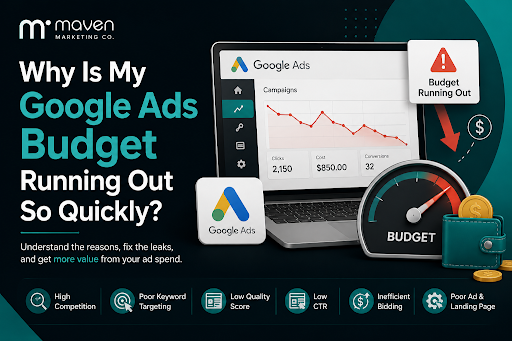
Why Is My Google Ads Budget Running Out So Quickly
Running a successful Google Ads budget isn’t only about throwing more money at it. It’s more like making every dollar, doing a bit extra. A lot of businesses start a Google Ads campaign with big hopes, then find out their daily budget is gone within a few hours, and that feels weird, right? After that, your ads stop showing effectively, new leads slip away, and your return on investment dips. So if your Google Ads budget is running out too fast, don’t stress. It’s a fairly common issue, and in most situations, it can be repaired with the right approach. There are multiple little things that can drain your advertising money quicker than you expected, from costly keywords to audience targeting that just doesn’t quite fit. In this guide, we’ll walk through why your budget disappears so quickly, how to cut wasteful spend, and the most reliable ways to boost your Google Ads ROI, even if your budget stays the same.