.svg)


%201.svg)
Key Takeaways
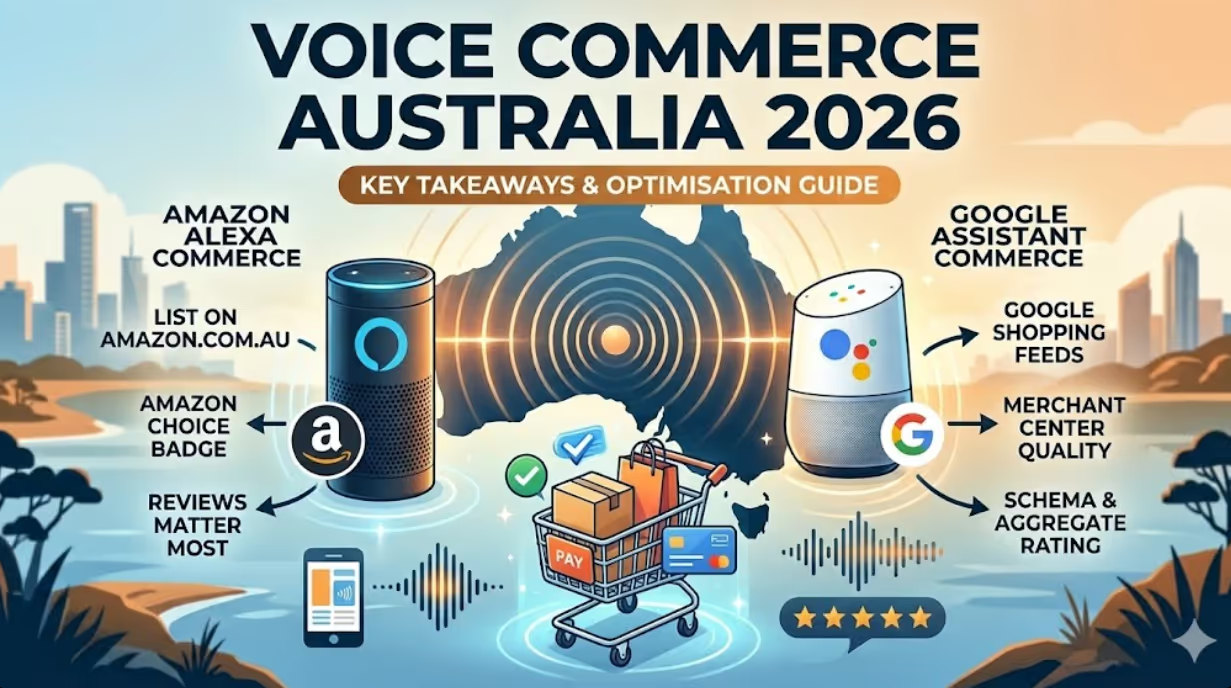
- Voice search queries are structurally longer and more conversational than typed queries. Product titles and descriptions optimised for short keyword phrases will not perform as well for voice searches as those that incorporate natural language patterns and complete product identifiers.
- Amazon Alexa shopping in Australia operates primarily through Amazon's own product catalogue. Australian businesses not selling on Amazon.com.au are largely absent from Alexa's voice commerce results and must list on Amazon to participate in this channel.
- Google's voice commerce integrates with the Google Shopping ecosystem, meaning that products with strong Google Shopping presence, accurate product feeds, competitive pricing, strong review scores, and correct structured data are the most likely candidates to appear in Google Assistant shopping responses.
- Product reviews and review scores are disproportionately important in voice commerce because the voice interface cannot show a grid of products for comparison. The product with the highest relevant review score in a category is significantly more likely to be recommended by a voice assistant than products with fewer or lower reviews.
- Reorder behaviour is the voice commerce use case with the highest conversion use case. Products that have been purchased before and are eligible for reorder, either through subscription programmes or repeat purchase incentives, are the most commercially valuable category to optimise for voice commerce.
- Schema markup including Product, Offer, and AggregateRating structured data on product pages signals to Google the information it needs to accurately represent the product in voice search responses, and is a prerequisite for Google Shopping voice integration.
- Voice commerce conversion optimisation requires frictionless fulfilment. A product discovered through voice that requires navigation through a complex checkout reduces conversion significantly relative to a product that can be added to cart and purchased with minimal additional steps.
The State of Voice Commerce in Australia in 2026
Smart speaker ownership in Australia has grown steadily since the introduction of Amazon Echo and Google Home devices, with both platforms having established a meaningful installed base in Australian households. The primary use cases for smart speakers in Australia remain music streaming, smart home control, weather and timer queries, and general information lookup. But voice interactions related to shopping, including product research, price comparisons, and purchases of frequently bought items, have grown as the platforms have expanded their commerce capabilities and as Australian consumers have become more comfortable with the interaction model.
The two significant voice commerce platforms for Australian businesses are Amazon Alexa and Google Assistant. They serve different audiences, operate on different infrastructure, and require different optimisation approaches.
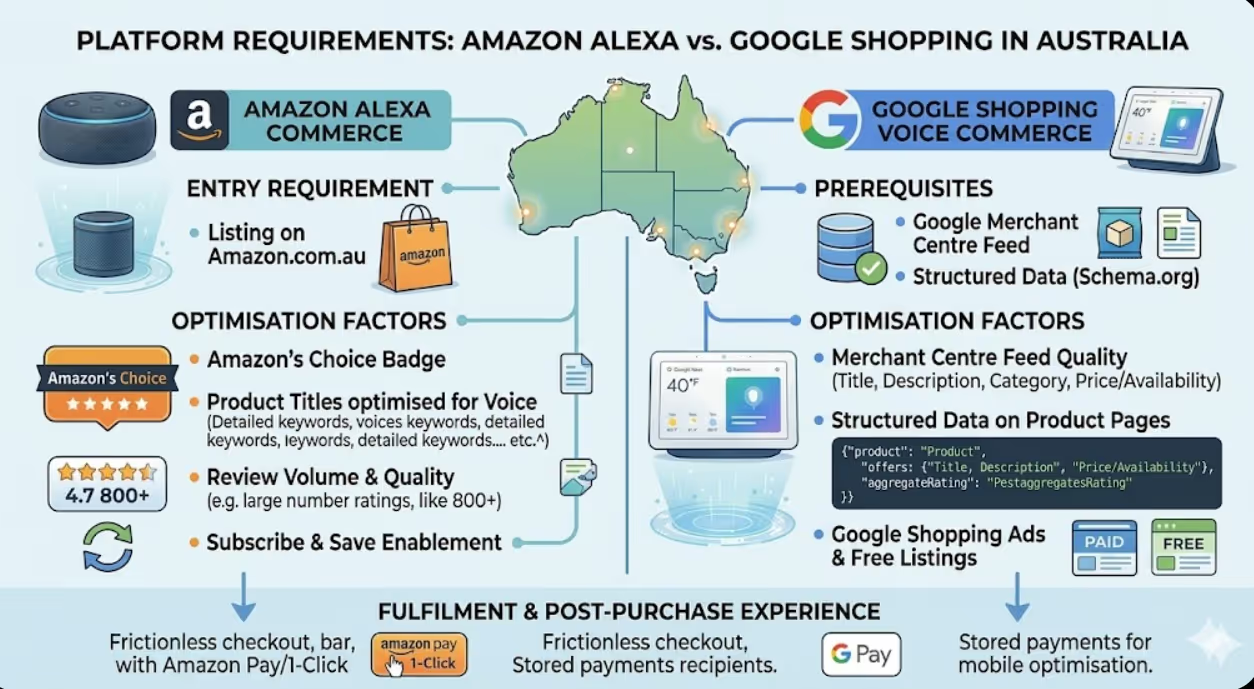
Amazon's Alexa shopping is deeply integrated with Amazon's own marketplace. When an Australian customer asks Alexa to order a product, Alexa draws primarily from Amazon's product catalogue and the customer's order history. This makes Amazon's marketplace the necessary entry point for Alexa voice commerce, and Australian businesses that do not sell through Amazon.com.au are effectively absent from this channel.
Google's voice commerce operates differently. Google Assistant's shopping responses draw from the Google Shopping ecosystem, which is populated by product feeds submitted through Google Merchant Center. A product with a strong presence in Google Shopping, meaning accurate feed data, competitive pricing, strong reviews, and correct structured data on the retailer's website, is a candidate for Google Assistant shopping responses regardless of whether the retailer is selling on a marketplace or through their own website.
For most Australian ecommerce businesses that operate their own website rather than exclusively through Amazon, the primary voice commerce opportunity lies in Google's ecosystem.
Optimising for Voice Search Query Structure
Voice search queries differ from typed queries in predictable ways that affect how product content should be written and structured.
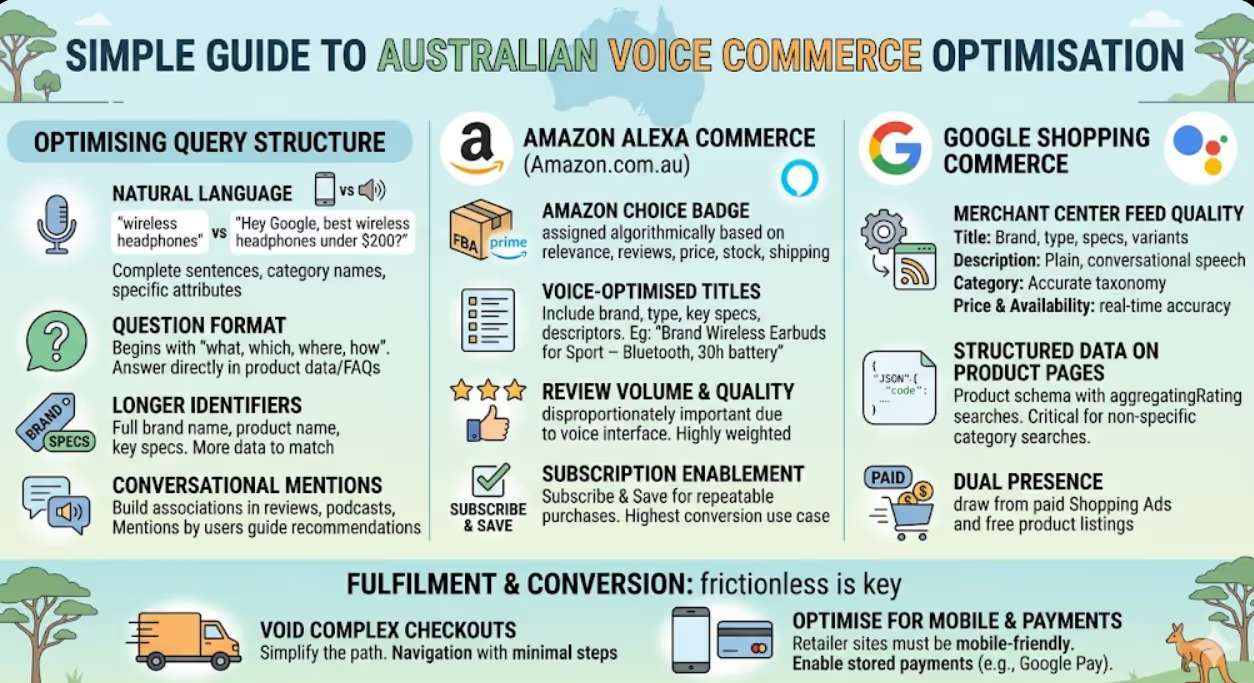
Natural language and complete sentences. A typed query might be "wireless headphones under 200." A voice query asking the same question is more likely to be "Hey Google, what are the best wireless headphones under $200?" or "Alexa, find me wireless headphones." Product titles and descriptions that incorporate natural language phrasing, complete product category names, and specific product attributes match the voice query pattern more closely than titles condensed to keyword phrases written for text search.
Question format queries. Voice queries frequently take the form of questions beginning with what, which, where, and how. Product content that answers these questions directly, whether in a product description or in FAQ structured data on the product page, is better positioned for voice search visibility than content written without this question-and-answer structure.
Longer, more specific product identifiers. A voice shopper asking for a specific product is more likely to use the full product name, the brand name, and a key specification than a typed shopper abbreviating to fit into a search box. Product titles that include the brand name, the full product category, the key differentiating attribute, and any commonly used alternate names give the voice search system more matching surface area against the natural language query.
Conversational brand and product mentions. How a product is talked about in reviews, in editorial content, and in content formats on platforms adjacent to voice such as podcasts and YouTube videos influences how voice assistants learn to refer to and recommend those products. Australian brands that are mentioned frequently in conversational contexts, and whose products are described in natural language that mirrors how consumers would request them, build stronger voice search associations over time.
Amazon Alexa Voice Commerce: What Australian Businesses Need
For Australian businesses that decide to pursue the Alexa commerce channel, the entry requirement is listing products on Amazon.com.au. Beyond that, several factors influence whether a product is recommended when a customer makes a voice purchase request.
Amazon Choice badge. Products designated as Amazon Choice for a category or search query are the ones Alexa will recommend when a customer makes a general voice purchase request in that category. Amazon Choice is assigned algorithmically based on relevance, review score, price, availability, and shipping speed. Achieving Amazon Choice status for a product category requires strong reviews, competitive pricing, reliable stock availability, and fulfilment through Amazon (either FBA or Prime through delivery fulfilled by the seller) for the fastest delivery options.
Product titles optimised for voice. Amazon product titles should include the brand name, the product type, the key differentiating specifications, and the most common use case or descriptor. A title that reads "Brand Name Wireless Earbuds for Sport — Bluetooth 5.3, 30-hour battery, IPX7 waterproof" gives Alexa more specific information to match against voice queries than a title written only for keyword density.
Review volume and quality. Alexa shopping recommendations weight review scores heavily because the voice interface cannot present a visual comparison. A product with 4.7 stars from 800 reviews will consistently outperform a competing product with 4.2 stars from 30 reviews in Alexa voice recommendations, even if the latter product has other advantages. Australian businesses listing on Amazon should prioritise legitimate review acquisition programmes and sequences that follow up with and encourage verified purchasers to leave feedback.
Subscription and reorder enablement. Amazon's Subscribe and Save programme allows customers to set up automatic repeat deliveries of frequently purchased products. A product enrolled in Subscribe and Save is significantly more likely to be reordered through voice commands than one that requires the customer to find and add the product manually each time. For Australian businesses selling consumable or replenishable products, enrolment in Subscribe and Save is one of the voice commerce optimisation with the highest leverage optimisation steps available.
Google Shopping Voice Commerce: What Australian Businesses Need
Google's voice commerce channel is an extension of the Google Shopping ecosystem, which means the optimisation path for Google Assistant shopping responses runs through Merchant Center, product feed quality, and the standard Google Shopping ranking factors.
Google Merchant Center Feed Quality
A product cannot appear in Google Shopping voice responses if it is not in the Google Merchant Center product feed, and it is unlikely to appear prominently if the feed data is incomplete or inaccurate. The feed attributes most important for voice commerce are:
Title. The product title in the Merchant Center feed is what Google uses to match the product to voice queries. Titles should be structured to match the natural language query patterns described earlier: brand name first, product type, key specifications, and variant information.
Description. The product description should be written in plain, conversational language that mirrors how a consumer would describe the product to another person. Descriptions that read like natural speech are better aligned with the conversational query patterns of voice search than descriptions written for keyword density.
Product category. Accurate Google product taxonomy categorisation is essential for voice queries that reference a category rather than a specific product name. A voice query asking for "the best running shoe under $150" requires the product to be correctly categorised in the footwear taxonomy for Google to identify it as a relevant result.
Price and availability. Voice commerce responses require accurate, pricing and availability data in real time data. A product that is listed as available in the feed but is out of stock on the product page will produce a poor voice commerce experience and may be demoted in voice search results over time.
Structured Data on Product Pages
For Google to serve a product confidently in a voice shopping response, the product page on the retailer's website should include Product schema markup containing at minimum the product name, description, price, currency, availability, and an AggregateRating element with the review score and review count.
The AggregateRating structured data is particularly important for voice commerce because Google's voice shopping algorithm, like Alexa's, weights review score heavily in deciding which product to recommend when the voice query is the category level rather than a specific product.
json
{
  "@context": "https://schema.org",
  "@type": "Product",
  "name": "Brand Name Wireless Earbuds",
  "description": "Wireless earbuds with 30-hour battery life and IPX7 water resistance, designed for sport and everyday use.",
  "brand": {
    "@type": "Brand",
    "name": "Brand Name"
  },
  "offers": {
    "@type": "Offer",
    "priceCurrency": "AUD",
    "price": "149.00",
    "availability": "https://schema.org/InStock"
  },
  "aggregateRating": {
    "@type": "AggregateRating",
    "ratingValue": "4.7",
    "reviewCount": "312"
  }
}
Google Shopping Ads and Free Listings
Voice commerce responses can draw from both paid Shopping ads and free product listings in Google's shopping graph. Australian businesses with strong Merchant Center product feeds that are also running Shopping campaigns have dual presence: their organic product listing and their paid Shopping ad may both be candidates for voice commerce responses. Maintaining strong Shopping campaign performance, including a high Quality Score, competitive bidding, and a thoroughly optimised product feed, contributes to the product's overall Shopping presence and, by extension, to its voice commerce visibility.
Fulfilment and Post-Purchase Experience for Voice Commerce
A purchase initiated through voice that results in a complicated or lengthy checkout process will convert at a much lower rate than the same purchase through a visual interface where the customer can read instructions and navigate deliberate steps. Voice commerce optimisation extends beyond search visibility to the checkout and fulfilment experience that follows discovery.
For Amazon Alexa purchases, the checkout and payment are handled within Amazon's infrastructure, so the fulfilment variables that matter are shipping speed, packaging quality, and the post-purchase experience that generates reviews.
For Google Assistant purchases that direct the customer to the retailer's own website, the experience following discovery must be as frictionless as possible. This means ensuring that products discovered through voice can be added to cart and checked out with a minimum of navigation steps, that the website is optimised for mobile on the smartphone on which many Google Assistant shopping interactions take place, and that payment options including stored payment credentials (Google Pay) are available to reduce the checkout friction.
FAQs
Which product categories perform best in voice commerce in Australia?The categories that generate the highest conversion rates in voice commerce are those with high repurchase frequency, strong brand recognition, and low complexity in the purchase decision. Consumable household products (cleaning supplies, personal care, pet food), grocery items, batteries, phone accessories, and other products where the customer already knows what they want and simply needs to reorder are the strongest performers. Categories requiring visual comparison, size selection, colour choice, or significant specification research, such as clothing, electronics with multiple variants, furniture, and specialty items, perform less well in voice commerce because the voice interface cannot support the evaluation process those purchase decisions require. Australian businesses in the consumable and replenishable category should treat voice commerce as a channel with high priority. Those in categories requiring considered purchases category should focus on voice search for discovery and research queries, driving traffic to their visual website rather than expecting voice to complete the transaction.
How should Australian ecommerce businesses measure voice commerce performance?Direct attribution of revenue to voice commerce is difficult because the journey often crosses platforms (voice discovery followed by visual completion on the website) and the attribution signals available in Google Analytics 4 do not specifically identify voice as a traffic source. The most reliable indicators of voice commerce performance are: changes in direct traffic volume and conversion rate, which may capture sessions initiated through voice where the customer navigated directly to the URL after a voice search; changes in branded search volume, which voice queries may contribute to; Google Merchant Center reports on free listing impressions and clicks, which include Shopping interactions initiated through voice where measurable; and Amazon's Alexa shopping analytics for sellers with Amazon listings. As voice commerce matures, attribution tools will improve, but for most Australian businesses in 2026, the best approach is to treat voice commerce optimisation as part of the broader programme of improving product feed quality, review scores, structured data accuracy, and Shopping performance, all of which contribute measurably to overall ecommerce visibility regardless of which specific channel generates the conversion.
Should small Australian ecommerce businesses invest in voice commerce optimisation now, or wait until the channel is more established?The optimisation steps most specific to voice commerce, including natural language product title restructuring, AggregateRating structured data implementation, and Amazon Subscribe and Save enrolment, overlap significantly with improvements that benefit search, Shopping, and overall ecommerce performance. A small Australian ecommerce business that improves its product titles to be more more natural language friendly, implements Product and AggregateRating schema on its product pages, and improves its Merchant Center feed quality will see improvements in standard Google Shopping performance alongside any voice commerce benefit. For businesses already selling on Amazon.com.au, pursuing Amazon Choice status through review acquisition and competitive pricing is a channel optimisation that benefits all Amazon traffic, not only voice commerce. The argument for investing now rather than waiting is that the businesses that establish strong voice commerce positions during the channel's growth phase will have a structural advantage when volume increases, and the work required to establish that position is largely work that improves other channels simultaneously.
Voice Commerce Rewards the Businesses That Are Already Doing the Basics Well
The pattern in voice commerce optimisation is that it does not require a separate programme running in isolation from the rest of the digital marketing and ecommerce function. The businesses best positioned to capture voice commerce conversions are those with the strongest product feed quality, the highest review scores, the most accurate structured data, the most competitive pricing, and the most reliable fulfilment. These are the fundamentals of ecommerce performance more broadly, and investment in them produces returns across every channel, with voice commerce as an additional and growing beneficiary.
Maven Marketing Co supports Australian ecommerce businesses with product feed optimisation, structured data implementation, Google Shopping management, and voice commerce readiness assessments.
Talk to the team at Maven Marketing Co →

Table of contents
read more blogs
Is Google Ads Better Than SEO for My Business
One of the biggest questions business owners ask when they are planning online growth is whether they should invest in Google Ads or SEO. Both are strong marketing plays that help your company show up in Google search results, but they do things in separate lanes. Google Ads gives quicker visibility and can bring in leads fast, whereas SEO more or less focuses on slow, steady organic traffic that tends to grow the longer you keep building it. Picking the right direction depends on what you want to achieve, how much money you can spend, how crowded the market is, and how quickly you need results, like sooner rather than later. The good news is you don’t always have to choose one or the other; it’s not exactly a black-and-white situation. If you take time to understand the strongest points of both, you can put together a more sensible digital marketing plan that supports consistent expansion. In this guide, we’ll compare Google Ads vs SEO, explain the main differences, and help you figure out what option makes the most sense for your business.

When Should I Hire a Digital Marketing Agency
Growing a business today takes more than just having a website or throwing a post on social media; customers usually search around online, compare providers, skim reviews, and basically expect the brand to show up with a solid digital presence before they even think about buying. Many businesses try to run their marketing themselves, but there comes a point when “doing it all in-house” becomes clunky and hard to manage, all at once. Knowing when to hire a digital marketing agency can end up making a big, real difference for your growth. If you’re not getting enough leads, or your online visibility feels stuck, or sales are just not moving, the right agency can bring the know-how, plus a clear plan, to help you get noticeably better outcomes. In this guide, we’ll dig into what a digital marketing agency actually does, the usual signs it’s time to bring one on, and how picking the right marketing partner can help your business move forward at a faster pace.
Why Is My Google Ads Budget Running Out So Quickly
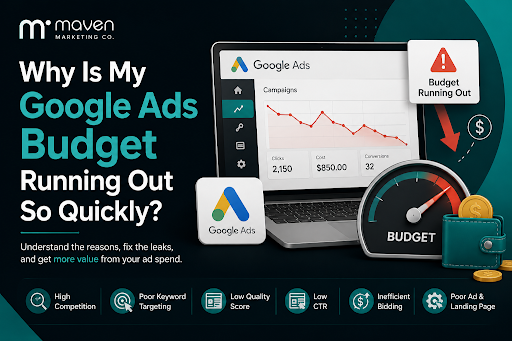
Running a successful Google Ads budget isn’t only about throwing more money at it. It’s more like making every dollar, doing a bit extra. A lot of businesses start a Google Ads campaign with big hopes, then find out their daily budget is gone within a few hours, and that feels weird, right? After that, your ads stop showing effectively, new leads slip away, and your return on investment dips. So if your Google Ads budget is running out too fast, don’t stress. It’s a fairly common issue, and in most situations, it can be repaired with the right approach. There are multiple little things that can drain your advertising money quicker than you expected, from costly keywords to audience targeting that just doesn’t quite fit. In this guide, we’ll walk through why your budget disappears so quickly, how to cut wasteful spend, and the most reliable ways to boost your Google Ads ROI, even if your budget stays the same.