.svg)


%201.svg)

Quick Answers
What is the difference between organic UGC and paid UGC?
Organic UGC is content created voluntarily by customers who genuinely use and love a product, shared without brand compensation or direction. Paid UGC is content commissioned by brands from creators who are compensated to produce authentic-looking material. Research shows 86% of consumers trust brands more when they feature content from real customers rather than paid creators, and 83% are more likely to purchase from brands sharing genuine customer content. While organic UGC offers unmatched credibility, paid UGC provides brands with greater control over messaging and faster content production.
Why does Reddit matter for understanding UGC authenticity?
Reddit's 97.2 million daily users are notoriously sceptical of traditional advertising and quick to reject anything that feels overly polished or sales-driven. The platform's upvote and downvote system creates a natural filter where authentic content rises and promotional material gets buried. Brands that succeed on Reddit see 5x higher ad awareness and 46% higher click-through rates by matching their content to community expectations. Reddit discussions provide unfiltered consumer sentiment, making it an invaluable resource for understanding what audiences consider genuinely authentic versus manufactured.
The Full Guide
Something fascinating is happening in the world of digital marketing. While brands pour millions into polished campaigns and carefully crafted influencer partnerships, consumers are increasingly turning to the most unfiltered corners of the internet to make their purchasing decisions.
They're searching Reddit threads. They're scrolling through genuine customer reviews. They're looking for content that feels real because, quite frankly, they've grown exhausted by content that doesn't.
The distinction between organic user generated content and paid UGC has become one of the most consequential conversations in modern marketing. Get it right, and you build trust that money simply cannot buy. Get it wrong, and your audience will see through the facade faster than you can say "sponsored post."
The Trust Gap: Why Authenticity Has Become Currency

The numbers paint a compelling picture of consumer sentiment. According to recent research, 86% of consumers trust brands more when they see content from real customers instead of paid creators. Even more telling, 83% of people are more likely to purchase from brands that share genuine user generated content rather than influencer-created material.
This shift represents more than a passing trend. It reflects a fundamental change in how consumers evaluate brands in an era of information overload. The average person encounters between 4,000 and 10,000 advertisements daily. When marketing messages are inescapable, consumers have developed sophisticated filters for detecting what's genuine and what's manufactured.
Research from Stackla found that consumers perceive UGC as 9.8 times more authentic than content created by influencers. That's not a marginal difference. That's a fundamental gap in credibility that shapes purchasing behaviour at every stage of the customer journey.
Generation Z, now wielding significant purchasing power, demonstrates particularly acute sensitivity to authenticity. Studies show that 84% of Gen Z consumers trust brands more when they see actual customers featured in advertising. They've grown up surrounded by sponsored content and have become remarkably skilled at identifying it, even when disclosure requirements are technically met.
What Reddit Reveals About Consumer Sentiment
If you want unvarnished opinions about brands, products, and marketing tactics, Reddit is where you'll find them. The platform's structure rewards authenticity and punishes promotional content through its upvote and downvote system. Content that feels genuine rises to the top, while anything perceived as inauthentic gets buried or called out in the comments.
This makes Reddit an invaluable window into genuine consumer sentiment. The platform's 97.2 million daily users are notoriously sceptical of traditional advertising. They're quick to reject anything that feels overly polished or sales-driven, and they're equally quick to celebrate brands that engage authentically.
Analysis from Brafton reveals a consistent pattern across successful Reddit marketing campaigns. Authenticity wins, full stop. Brands that lean into Reddit's culture through community engagement, genuine participation, and content that matches the platform's conversational tone see dramatically better results. One case study showed 5x higher ad awareness and 14x higher aided brand awareness compared to platform benchmarks.
The lesson extends beyond Reddit itself. When users discuss brands and products across subreddits, they're expressing preferences that translate directly to purchasing behaviour. They want to see real people using real products in real situations. They want honest assessments that acknowledge both strengths and limitations. They want content that respects their intelligence rather than attempting to manipulate their emotions.
Reddit threads increasingly rank highly in Google searches, particularly for product-related queries. This means the authentic discussions happening on the platform influence purchasing decisions far beyond Reddit's own user base. When someone searches for reviews of a product, they're likely to encounter Reddit discussions that shaped by the platform's authenticity-first culture.
The Organic UGC Advantage

Organic UGC represents content created voluntarily by customers who genuinely use and appreciate a product. These are the unboxing videos filmed on smartphone cameras, the honest reviews shared without prompting, the social media posts where customers tag brands because they're genuinely excited about their purchase.
The power of organic UGC lies in its inherent credibility. When a real customer shares their experience, there's no hidden agenda. They're not being compensated to say nice things. They're sharing because they want to, and audiences recognise and respond to that authenticity.
Research compiled by InBeat Agency shows that brands incorporating genuine customer content experience a 29% increase in web conversion rates compared to those relying solely on branded content. When site visitors interact with authentic UGC, lead conversions can increase by over 100%.
The trust factor extends across demographics, though it's particularly pronounced among younger consumers. Among Millennials, 84% report trusting brands more when they incorporate content from real customers into their marketing. The percentage decreases somewhat for older generations but remains substantial, with over half of Baby Boomers also expressing trust in genuine user content.
Beyond conversion metrics, organic UGC contributes to sustainable brand building. Every authentic customer testimonial strengthens social proof. Every genuine review adds to a body of evidence that helps new customers feel confident in their purchasing decisions. This accumulated trust becomes a competitive advantage that's difficult for competitors to replicate.
The Paid UGC Reality
Paid UGC occupies a complex space in the marketing landscape. These are content pieces commissioned by brands from creators specifically hired to produce material that looks and feels like organic content while aligning with brand messaging and campaign objectives.
The appeal is understandable. Organic UGC is powerful but unpredictable. Brands cannot control when customers will create content, what they'll say, or whether the production quality will meet campaign requirements. Paid UGC offers a solution: authentic-looking content created on demand, with messaging that supports specific marketing goals.
According to MightyScout research, paid UGC can be highly effective when executed thoughtfully. The key lies in selecting creators who genuinely connect with the brand's products and category. When creators are truly passionate about what they're promoting, that enthusiasm translates to viewers and maintains the authentic feel that makes UGC effective in the first place.
The economics of paid UGC have also become increasingly accessible. A typical UGC video costs between $100 and $500, depending on the creator's experience and usage rights required. This represents a fraction of traditional production costs while potentially delivering better performance, particularly in paid advertising contexts.
However, consumers are increasingly sophisticated at detecting paid content, even when it's designed to appear organic. Studies suggest that audiences can, as one expert noted, spot scripted content almost instantly. When paid UGC feels manufactured, it doesn't just fail to build trust. It can actively erode the credibility that brands have worked to establish.
The Authenticity Paradox
Here lies the central tension of modern UGC strategy. Brands need content to fuel their marketing efforts, and waiting for organic UGC to materialise naturally isn't always practical. Yet the moment brands commission content, they risk undermining the very authenticity that makes UGC valuable.
Reddit discussions illuminate this paradox with characteristic bluntness. Users regularly call out content that feels inauthentic, whether it's an overly polished review that reads like marketing copy or an influencer post that doesn't align with the creator's usual content style. The platform's community moderation means that 73% of subreddits actively reject blatant promotional content.
The solution isn't to abandon paid UGC entirely. Rather, it's to approach it with genuine respect for audience intelligence. This means hiring creators who have real experience with and affinity for your products. It means allowing creative freedom rather than scripting every word. It means focusing on honest experiences rather than pure promotion.
By 2026, projections suggest that up to 90% of online content could involve AI assistance in some form. In this environment, human-driven authenticity becomes even more valuable. Content that genuinely comes from real people, whether organic or paid, will stand out against an increasingly synthetic media landscape.
Building an Effective UGC Strategy
The most successful brands don't choose between organic and paid UGC. They build strategies that leverage both while maintaining authentic engagement as the north star.
Cultivate organic UGC systematically. Create experiences worth sharing. Make it easy for customers to create and submit content through branded hashtags, submission portals, and clear invitations. Respond to and amplify customer content to encourage more creation. Remember that 60% of consumers believe UGC represents the most authentic form of marketing content available.
Commission paid UGC thoughtfully. Select creators based on genuine brand affinity, not just content skills. Provide creative briefs that guide without scripting. Allow for honest assessments that include minor criticisms, as these actually enhance credibility. Ensure proper disclosure while integrating it naturally into content flow.
Let Reddit inform your approach. Monitor relevant subreddits to understand how your audience talks about products in your category. Note what content styles and messaging approaches generate positive engagement versus scepticism. Use these insights to guide both organic cultivation and paid content creation.
Balance production quality with authenticity. Research suggests that deliberately unpolished content often outperforms highly produced material. Audiences associate amateur aesthetics with genuine experience. That doesn't mean accepting poor quality, but it does mean not over-producing content to the point where it feels like traditional advertising.
Measure beyond vanity metrics. Track engagement, yes, but also monitor sentiment, conversion impact, and long-term brand perception shifts. Authentic UGC should generate discussion, not just passive consumption. Look for content that sparks genuine conversation and community engagement.

The Disclosure Question
One area where paid UGC strategies often stumble involves disclosure requirements. Regulations in Australia and internationally require clear identification of sponsored content, yet many brands and creators implement disclosure in ways that minimise visibility.
This approach carries significant risks. Beyond potential regulatory consequences, inadequate disclosure contributes to consumer cynicism about all branded content. When audiences feel deceived, they don't just lose trust in the specific brand involved. They become more sceptical of user generated content generally, undermining the entire category's effectiveness.
The better approach treats disclosure as an opportunity rather than an obstacle. Transparent acknowledgment of brand partnerships, done naturally and prominently, can actually enhance credibility. It signals that a brand respects its audience enough to be honest about relationships while allowing the content's genuine value to speak for itself.
What This Means for Australian Brands
The Australian market presents particular opportunities and challenges for UGC strategy. Australian consumers demonstrate strong preferences for authenticity and tend to be sceptical of overtly promotional content. At the same time, the relatively smaller market size means organic UGC volume may be lower than brands in larger markets experience.
This makes strategic cultivation of both organic and paid UGC especially important. Australian brands should focus on creating remarkable customer experiences that naturally generate sharing behaviour while building relationships with local creators who can produce authentic paid content when needed.
Reddit's Australian communities, while smaller than their American counterparts, are highly engaged and influential within local consumer circles. Brands that establish genuine presence in relevant Australian subreddits can build significant trust and visibility with engaged audiences.

The Bottom Line
The distinction between organic and paid UGC isn't simply about cost or control. It's about trust, and trust is ultimately what drives sustainable business growth.
Organic UGC offers unmatched credibility because it comes from customers with no financial incentive to praise your brand. This authenticity resonates with audiences who have grown weary of traditional marketing messages and are actively seeking genuine perspectives before making purchasing decisions.
Paid UGC offers scalability and message control but requires careful execution to maintain the authentic feel that makes user generated content valuable. When done well, it can complement organic content effectively. When done poorly, it can undermine brand credibility and contribute to consumer cynicism.
Reddit's brutally honest communities reveal what audiences truly think about brand authenticity, and the message is clear: consumers reward genuine engagement and punish manufactured enthusiasm. They can tell the difference, and they're making purchasing decisions accordingly.
The brands that thrive in this environment will be those that genuinely earn customer advocacy through excellent products and experiences while thoughtfully supplementing organic content with paid UGC that maintains authentic standards.
The question isn't whether to pursue UGC. The question is whether you're willing to build the authentic relationships that make UGC genuinely powerful.
Ready to Build Authentic Engagement That Converts?
At Maven Marketing Co, we help Australian brands develop UGC strategies that balance authenticity with scalability. Our team understands the nuances of organic cultivation and paid content creation, ensuring your brand builds genuine trust while meeting practical marketing objectives.
Whether you're looking to spark more organic customer content, build relationships with authentic UGC creators, or develop a comprehensive strategy that leverages both approaches, we're here to help you connect with audiences who value real over manufactured.
Let's create something genuine together

Table of contents
read more blogs
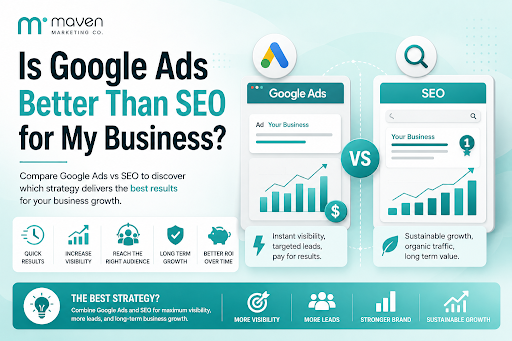
Is Google Ads Better Than SEO for My Business
One of the biggest questions business owners ask when they are planning online growth is whether they should invest in Google Ads or SEO. Both are strong marketing plays that help your company show up in Google search results, but they do things in separate lanes. Google Ads gives quicker visibility and can bring in leads fast, whereas SEO more or less focuses on slow, steady organic traffic that tends to grow the longer you keep building it. Picking the right direction depends on what you want to achieve, how much money you can spend, how crowded the market is, and how quickly you need results, like sooner rather than later. The good news is you don’t always have to choose one or the other; it’s not exactly a black-and-white situation. If you take time to understand the strongest points of both, you can put together a more sensible digital marketing plan that supports consistent expansion. In this guide, we’ll compare Google Ads vs SEO, explain the main differences, and help you figure out what option makes the most sense for your business.

When Should I Hire a Digital Marketing Agency
Growing a business today takes more than just having a website or throwing a post on social media; customers usually search around online, compare providers, skim reviews, and basically expect the brand to show up with a solid digital presence before they even think about buying. Many businesses try to run their marketing themselves, but there comes a point when “doing it all in-house” becomes clunky and hard to manage, all at once. Knowing when to hire a digital marketing agency can end up making a big, real difference for your growth. If you’re not getting enough leads, or your online visibility feels stuck, or sales are just not moving, the right agency can bring the know-how, plus a clear plan, to help you get noticeably better outcomes. In this guide, we’ll dig into what a digital marketing agency actually does, the usual signs it’s time to bring one on, and how picking the right marketing partner can help your business move forward at a faster pace.
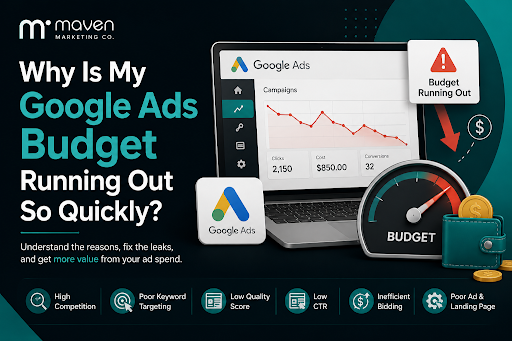
Why Is My Google Ads Budget Running Out So Quickly
Running a successful Google Ads budget isn’t only about throwing more money at it. It’s more like making every dollar, doing a bit extra. A lot of businesses start a Google Ads campaign with big hopes, then find out their daily budget is gone within a few hours, and that feels weird, right? After that, your ads stop showing effectively, new leads slip away, and your return on investment dips. So if your Google Ads budget is running out too fast, don’t stress. It’s a fairly common issue, and in most situations, it can be repaired with the right approach. There are multiple little things that can drain your advertising money quicker than you expected, from costly keywords to audience targeting that just doesn’t quite fit. In this guide, we’ll walk through why your budget disappears so quickly, how to cut wasteful spend, and the most reliable ways to boost your Google Ads ROI, even if your budget stays the same.