.svg)


%201.svg)

Key Takeaways
- TikTok Spark Ads allow brands to amplify existing organic posts, whether published by the brand itself or by creators and users, as paid advertisements without creating separate ad assets.
- Because Spark Ads run from the original post, all engagement such as likes, comments, shares, and follows accumulates on the organic post rather than being split across a separate ad creative.
- Spark Ads retain the authentic feel of organic TikTok content, which consistently produces stronger engagement rates than ads created purely for paid placement.
- Australian brands can use Spark Ads in two ways: boosting their own organic posts, or licensing content from TikTok creators to run as ads from the creator's account.
- Creator Spark Ads, where the ad appears as the creator's post rather than the brand's, are among the most effective formats on TikTok for reaching audiences who are resistant to traditional advertising.
- The content selection decision is the most important creative decision in a Spark Ads campaign. Posts that already show strong organic engagement are the best candidates for amplification.
- Spark Ads integrate with TikTok's full campaign objective and bidding structure, allowing advertisers to optimise for reach, video views, traffic, conversions, and lead generation.
Why Organic Feel Matters More on TikTok Than Anywhere Else
TikTok is a platform with a distinctly low tolerance for content that feels like advertising. The audience, particularly younger Australian users who represent a significant proportion of the platform's local base, has a well developed instinct for identifying branded content that has been produced to sell something and scrolling past it without engagement. This is not unique to TikTok, but the speed at which it happens on the platform is more acute than on most alternatives.
The content that earns genuine engagement on TikTok, and that consequently earns algorithmic distribution, consistently shares a quality of authenticity. It feels like something a real person filmed and published because they had something to say, something to show, or something to share, not because a brand needed an asset for its content calendar. This quality is difficult to manufacture and easy to destroy. The most common way brands destroy it is by producing content in a format that announces itself as advertising through visual language, pacing, tone, or polish that is inconsistent with the native platform aesthetic.
Spark Ads solve this problem at the structural level. By running paid spend behind content that was originally created and published as organic content, the authenticity of the original post is preserved in the promoted version. The ad looks like what it is: a real post from a real account that a brand has chosen to amplify. That framing generates fundamentally different audience behaviour than a ad creative built solely for paid placement.
According to TikTok's own platform research on Spark Ads, Spark Ads generate higher engagement rates, stronger view rates, and better conversion performance than standard in-feed ads on average. The platform attributes this performance advantage directly to the authenticity signals that organic-origin content carries into the paid environment.
How Spark Ads Work Technically
Understanding the mechanics of Spark Ads prevents the most common setup mistakes and makes the difference between a campaign that performs and one that runs without extracting any measurable value.
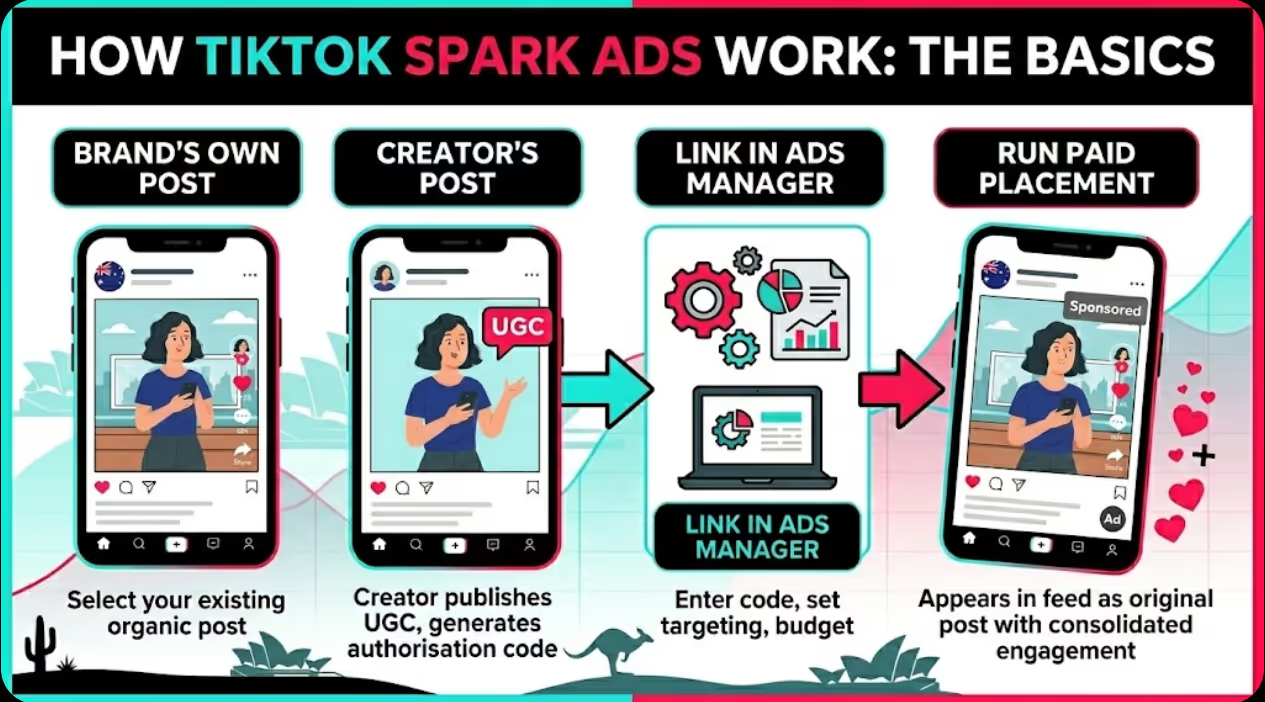
A Spark Ad can originate from two sources. The first is the brand's own organic TikTok account. Any post published to a TikTok business account can be selected as the basis for a Spark Ad within TikTok Ads Manager. The second is a creator's account. When a brand wants to run an ad using content published by a creator or user, the creator generates an authorisation code within their TikTok account that the brand then enters in Ads Manager to link the post to the campaign. This authorisation expires after a set period. The duration is set by the creator at the point of generating the code.
Once the post is linked to a campaign in Ads Manager, the campaign is configured with standard TikTok advertising parameters: objective, audience targeting, budget, bidding strategy, and schedule. The ad delivers to the defined audience as a paid placement but appears in the feed as the original post from the original account, with the same visual format, the same engagement counters, and the same profile link as the organic version.
The engagement consolidation is one of the most commercially significant features of Spark Ads. In standard non-Spark ad formats, likes, comments, and shares accumulate on the ad creative separately from any organic version of the same content. With Spark Ads, all paid and organic engagement aggregates on the single original post. A post that has accumulated 400 organic likes and then receives 6,000 additional likes through paid amplification shows 6,400 likes on the original organic post. This social proof accumulation has a compounding effect on subsequent organic performance and on the credibility signals the post sends to new viewers.
Own Posts vs Creator Content: Choosing the Right Source
Australian brands using Spark Ads have a meaningful strategic choice to make about the source of their promoted content, and the right answer depends on the specific objective of the campaign.
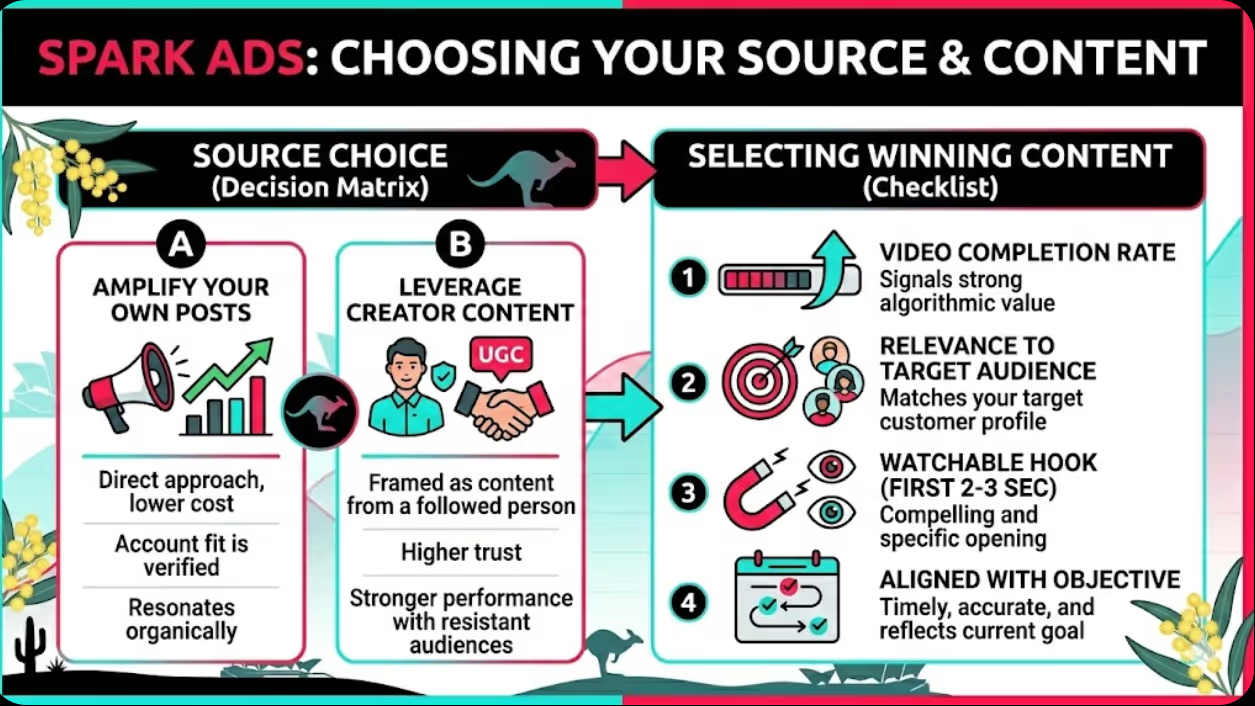
Amplifying your own organic posts is the more straightforward approach and is appropriate when your brand account has already developed a content presence on TikTok with posts that are performing well organically. The selection criteria for which posts to amplify are worth thinking through deliberately. A post that has already earned strong engagement from a highly relevant audience, one that reflects your ideal customer and has responded with saves, shares, and comments indicating genuine interest, is a strong candidate for Spark Ad amplification because the organic signal suggests the content is resonating with the right people. A post that received strong engagement from an audience unlikely to convert is a weaker candidate regardless of its view numbers.
Creator Spark Ads, where the paid ad runs from a creator's account rather than the brand's, represent a structurally different proposition. The audience sees an ad that is framed as content from a person they already follow and trust, with the brand identified as the sponsor but the creative authenticity of the creator's voice intact. For Australian brands trying to reach TikTok audiences who are resistant to brand content, creator Spark Ads frequently outperform Spark Ads running from the brand account in engagement and conversion metrics because the creator relationship with their audience carries trust that a brand account cannot replicate directly.
The practical requirement for creator Spark Ads is a working relationship with the creator, an agreement on content that serves both the creator's audience and the brand's objectives, and the authorisation workflow described above. This requires more upfront investment than amplifying your own posts, but for the right pairing between brand and creator the performance differential is substantial.
Content Selection: The Decision That Determines Everything
If there is a single decision in a Spark Ads campaign that outweighs all others in its impact on performance, it is the selection of which organic content to amplify. Budget, targeting, and bidding all contribute to campaign results, but none of them can compensate for weak source content.
The characteristics of TikTok content worth amplifying through Spark Ads are consistent across brand types and categories.
Video completion rate is a strong signal. A post that most viewers watch to the end, rather than abandoning partway through, signals to the algorithm that the content holds attention. This metric is visible in TikTok analytics for business accounts. Posts with completion rates above your account average are prime candidates for amplification because the paid distribution will extend the reach of content the algorithm has already identified as engaging.
Clear relevance to the target audience. Content that resonates broadly across a general TikTok audience may or may not resonate with the specific audience you are targeting with your Spark Ad. Reviewing the comment section and the audience demographic data for a candidate post helps assess whether the organic engagement is coming from people who match your target customer profile.
A specific and watchable hook. TikTok content lives or dies in its first two to three seconds. Posts that open with a clear, compelling, and specific hook, whether visual, verbal, or a combination, retain viewers at a significantly higher rate than those with slow or ambiguous openings. The quality of the hook is visible in the retention curve data available for each post in TikTok analytics.
Relevance to a current or ongoing business objective. Amplifying content that was relevant three months ago but does not reflect current product availability, pricing, or brand positioning is a common error. The best Spark Ad source content is timely, accurate, and aligned with what the brand currently wants to communicate.
Campaign Setup: Getting the Technical Foundations Right
Setting up a Spark Ads campaign in TikTok Ads Manager follows a similar structure to other TikTok campaign types, with the key difference occurring at the ad level where the organic post is linked rather than a separate creative being uploaded.
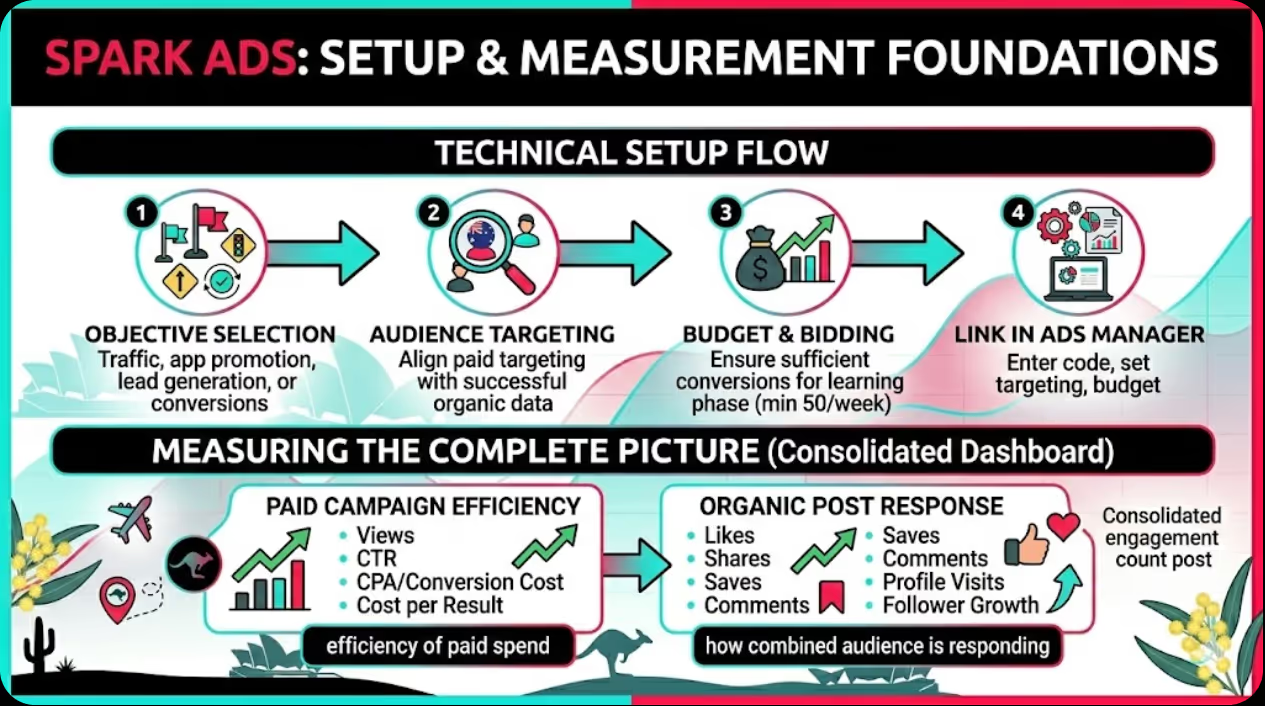
The campaign objective selection should reflect the actual commercial goal of the campaign. For awareness objectives, reach and video view campaigns are appropriate. For consideration and conversion objectives, traffic, app promotion, lead generation, and conversion campaigns give the algorithm the downstream signal it needs to optimise delivery toward the users most likely to take the desired action.
Audience targeting for Spark Ads should be aligned with the characteristics of the audience that has already responded to the organic content. If the organic post has attracted strong engagement from Australian women aged 25 to 35 with an interest in fitness, a Spark Ad campaign targeting a broader demographic is likely to underperform. The organic engagement data is the clearest signal available about which audience the content genuinely resonates with, and the paid targeting should reflect and extend that signal rather than contradict it.
Budget and bidding decisions for Spark Ads follow the same logic as other TikTok campaign types. For campaigns with conversion objectives, ensuring sufficient budget to accumulate the conversion data the algorithm needs to optimise is important. TikTok recommends a minimum of 50 conversions per ad group within the first seven days of a conversion campaign to exit the learning phase, which has direct implications for minimum daily budget settings.
Measuring Spark Ads Performance
Evaluating Spark Ads performance requires looking at metrics across both the paid campaign dashboard and the organic post analytics, since engagement on the original post and reach generated through paid distribution both contribute to the full picture.
Within TikTok Ads Manager, the standard campaign metrics apply: impressions, reach, video views, click through rate, cost per result, and for conversion campaigns, cost per conversion and return on ad spend. These metrics tell you how efficiently the paid spend is generating the defined campaign objective.
On the organic post itself, the accumulated engagement data tells you something different and equally important: how the combined paid and organic audience is actually responding to the content. A Spark Ad campaign that is generating paid views but not accumulating organic engagement actions such as likes, shares, saves, and follows suggests that the content is being watched but not compelling deeper action. This is a signal worth investigating at the creative level.
Profile visits and follower growth attributable to the Spark Ad period are also worth tracking, particularly for campaigns where building audience is a secondary goal alongside the primary campaign objective. Content that earns new followers through paid amplification is generating a sustained asset rather than a single impression, which improves the lasting return on the Spark Ad investment.
FAQs
Can any TikTok post be used as a Spark Ad, or are there restrictions?
Not every post is eligible. The post must comply with TikTok's advertising policies, which means content involving certain product categories, regulated industries, or content that would not meet the standard ad review requirements will not be approved as a Spark Ad. For posts from your own account, the account must be a TikTok business account or have a business account linked. For creator posts, the creator must generate and share the authorisation code, and the code is only valid for the duration the creator sets at the time of generation. Posts that have been deleted or made private after the Spark Ad has been activated will cause the campaign to pause.
How long should a Spark Ad campaign run?
The optimal campaign duration depends on the objective and the budget. For awareness and reach objectives, shorter bursts of one to two weeks allow you to amplify content during a relevant moment without flooding your target audience with the same creative. For conversion objectives where the algorithm needs time to gather data and optimise delivery, campaigns running for a minimum of two to four weeks are more likely to exit the learning phase and deliver meaningful optimisation. Running a Spark Ad on the same post for too long risks creative fatigue in the target audience, at which point performance typically declines and the creative should be refreshed or replaced.
Should the organic post be left public during and after the Spark Ad campaign?
Yes. The organic post should remain public for the duration of the campaign and ideally well beyond it. Making a post private or deleting it while a Spark Ad campaign is active immediately pauses the campaign. Beyond the technical requirement, keeping the post public after the campaign ends allows the social proof accumulated through the paid amplification period, the accumulated likes, comments, and shares, to continue serving as credibility signals to organic visitors to the profile. A post that shows thousands of engagements from a Spark Ad campaign is a more persuasive piece of content for future organic visitors than the same post with a handful of engagements.
Make Your Best Content Work Harder
Creating good TikTok content is an investment. Spark Ads are the mechanism for extracting the full commercial value of that investment rather than letting strong organic posts reach a fraction of their potential audience and then disappear into the feed history.
Maven Marketing Co helps Australian brands build TikTok strategies that combine organic content quality with paid amplification intelligence, turning platform presence into measurable business outcomes.
Talk to the team at Maven Marketing Co →

Table of contents
read more blogs

6 Ways Digital Marketing Can Boost B2B Lead Generation
B2B lead generation is not about filling a CRM with as many names as possible. The real objective is to attract businesses that fit your offer, give the right people a reason to engage and create enough confidence for a genuine sales conversation to start.That distinction matters because B2B buying is usually more targeted than consumer marketing and often involves several people influencing the decision. Current LinkedIn lead-generation guidance makes the same point: more leads do not automatically mean better results if only a small proportion are genuinely relevant or likely to progress.Digital marketing helps by creating multiple paths into the business. Search can capture active demand. Paid media can put an offer in front of a tightly defined audience. Content can build authority before a buyer is ready to talk. Social media can keep the brand visible across a long decision cycle. Your website turns interest into action, while email helps nurture that interest over time.The strongest B2B digital marketing strategies do not treat these as six separate activities. They use them as one connected system designed to generate quality B2B leads, support sales and build a more dependable pipeline

How to Build a Brand Positioning Strategy That Sets Your Business Apart
Most businesses can explain what they sell. Far fewer can explain, in a sentence or two, why the right customer should choose them instead of another credible option. That gap is where brand positioning matters.A strong brand positioning strategy gives your business a clear place in the market and a clear place in the customer's mind. It helps your team decide who you are speaking to, what you want to be known for, which benefits deserve the most attention and how your marketing should sound and look across every channel.It is not a slogan exercise and it is not something reserved for large consumer brands. For an Australian service business, e-commerce brand, professional firm, or growing B2B company, positioning can make everyday decisions easier, from website copy and campaign messaging to pricing, sales conversations, and brand identity. The goal is not to look different for the sake of it. The goal is to be meaningfully different in a way the right customers understand and value.

The Role of Digital PR in Long Term SEO Growth
Building a solid online presence is basically more than just posting content now and then or sprinkling keywords across your website. Search engines such as Google tend to point users toward businesses that feel trustworthy, useful, and backed up by others online, even if it’s not always obvious at first. When a company puts together a well-thought-out digital PR strategy, it can bring in solid media mentions, earning high-quality backlinks and stronger brand awareness, all of which feed long-term SEO progress. Rather than obsessing solely over rankings, digital PR helps you build credibility plus authority, so your site looks more appealing to search engines and also to real people who might become customers. In this guide, we’ll walk through how digital PR supports SEO, what makes it such a key part of modern marketing, and the most effective approaches for sustainable growth in search results.