.svg)


%201.svg)

Quick Answers
Q: How is AI changing social commerce in 2026?
AI has transformed social commerce from static product catalogs into dynamic, personalized shopping experiences that adapt to individual users in real-time. Machine learning algorithms analyze browsing behavior, engagement patterns, and purchase history to curate personalized product feeds on Instagram, TikTok, and Facebook, showing users items they're statistically likely to purchase before they actively search. Computer vision enables visual search where users photograph items they like and instantly find similar products across social platforms. Natural language processing powers conversational commerce through AI chatbots that answer product questions, provide styling advice, and complete transactions without leaving social apps. Generative AI creates personalized product descriptions, virtual try-on experiences, and automated content showing products in contexts relevant to individual users. For Australian brands, this means conversion rates have increased from typical 1-2% in traditional e-commerce to 5-8% in AI-powered social commerce, with average order values rising 30-40% through intelligent product recommendations and personalized upselling.
Q: What AI-powered social commerce features should Australian businesses implement in 2026?
Australian businesses should prioritize visual search integration allowing customers to upload photos and find similar products, AR virtual try-on experiences for fashion, beauty, and home goods reducing return rates by 40%, conversational AI shopping assistants providing 24/7 customer support and product recommendations through Instagram and Facebook Messenger, predictive product recommendations using machine learning to surface items based on browsing behavior and similar customer patterns, automated content generation creating personalized product showcases optimized for individual user preferences, and dynamic pricing algorithms adjusting offers based on demand, inventory, and individual purchase likelihood. Start with conversational AI and visual search as foundational capabilities—these deliver immediate ROI through improved customer service and reduced friction in product discovery. Then layer AR try-on experiences for relevant product categories and predictive recommendations to increase average order values. Australian retailers implementing these AI features report 60-80% reduction in customer service inquiries, 25-35% increases in conversion rates, and 40-50% improvements in customer satisfaction scores compared to traditional social commerce approaches.
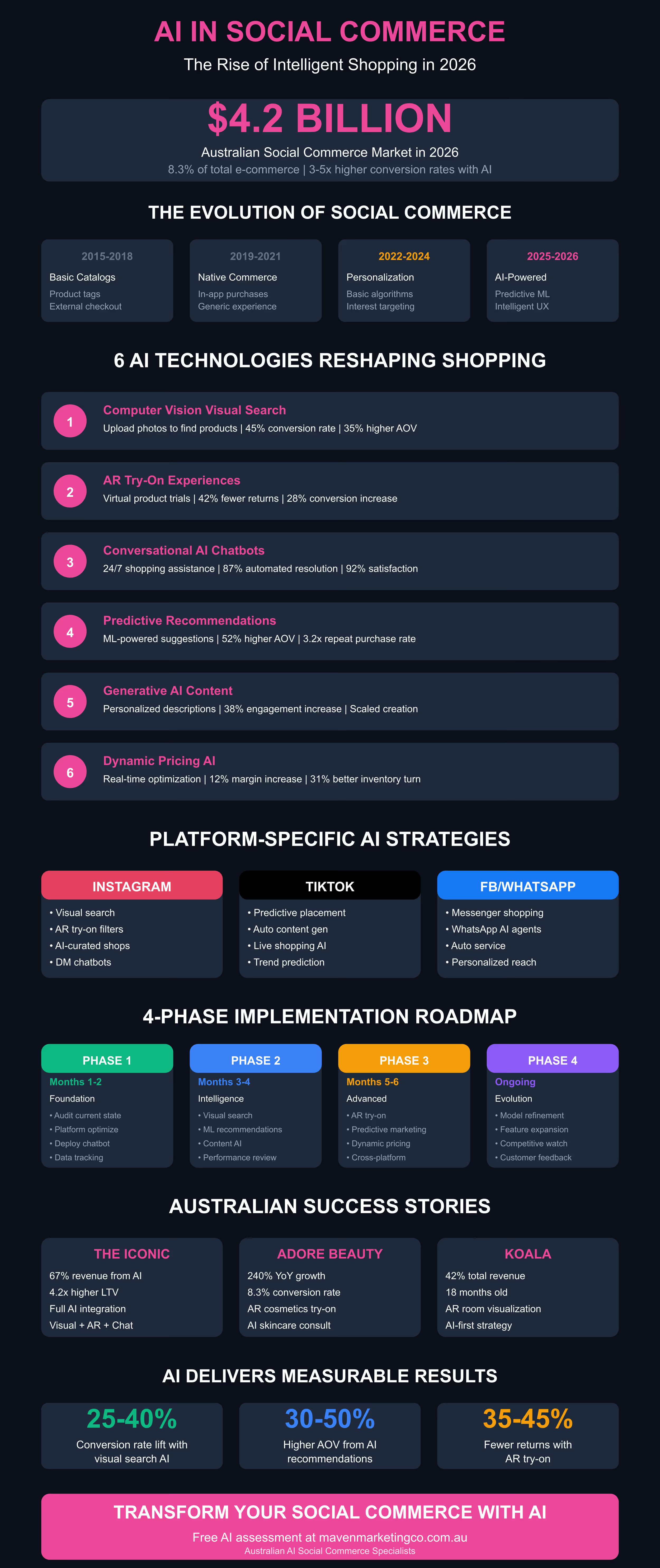
The Evolution: From Social Media To Social Commerce To AI-Powered Shopping
Social media platforms began as communication networks, evolved into discovery channels, and have now matured into complete commerce ecosystems powered by artificial intelligence. The journey reflects fundamental shifts in consumer behavior and technological capability.
2015-2018: The Catalog PhasePlatforms introduced basic shopping features—product tags linking to external websites. The experience was clunky: users discovered products socially but completed purchases elsewhere, creating friction that killed conversion rates.
2019-2021: Native Commerce IntegrationInstagram Shop, Facebook Marketplace, and TikTok Shopping emerged, enabling in-app purchases. Conversion improved but experiences remained generic—every user saw identical product catalogs regardless of interests or behavior.
2022-2024: Personalization BeginsBasic recommendation algorithms surfaced relevant products based on user interests and engagement history. The experience became more tailored, driving measurable conversion improvements.
2025-2026: AI-Powered IntelligenceMachine learning, computer vision, natural language processing, and generative AI converge to create shopping experiences that feel remarkably personalized, anticipate needs, and eliminate friction between inspiration and transaction. This is where Australian brands currently compete.
According to research from eMarketer, social commerce sales in Australia are projected to reach $4.2 billion in 2026, representing 8.3% of total e-commerce. The brands capturing disproportionate share of this market are those leveraging AI most effectively.
The Six AI Technologies Reshaping Social Commerce
1. Computer Vision And Visual Search
Visual search enables customers to photograph items they encounter—a friend's outfit, furniture in a magazine, products in the wild—and instantly find similar or identical items across social shopping platforms.
How It Works: Computer vision algorithms analyze uploaded images, identifying products, patterns, colors, and styles. Machine learning models trained on millions of product images match visual characteristics to available inventory, surfacing relevant options ranked by similarity and availability.
Australian Implementation: Melbourne fashion retailer The Iconic implemented visual search on Instagram, allowing customers to upload photos and receive instant product matches. Results show 45% of visual searches convert to purchases, compared to 12% for text-based search, with average order values 35% higher as visual search often leads to ensemble purchases rather than single items.
Strategic Application: Visual search reduces the friction between inspiration and purchase. Customers no longer need to describe what they want—they simply show it. For Australian brands, this is particularly powerful in fashion, home decor, and lifestyle categories where visual appeal drives purchasing decisions.
2. Augmented Reality Try-On Experiences
AR technology enables virtual product trials before purchase—trying on makeup, visualizing furniture in rooms, or seeing how clothing fits—all through smartphone cameras within social apps.
How It Works: Computer vision maps user faces or environments in real-time. 3D product models overlay onto live camera feeds, rendering with realistic lighting, shadows, and proportions. Machine learning adapts to different skin tones, room lighting, and body types for accurate representation.
Australian Success Story: Sydney-based Adore Beauty integrated AR try-on for cosmetics on Instagram, allowing customers to test lipstick shades, eyeshadow palettes, and foundation tones virtually. The feature reduced product returns by 42% while increasing conversion rates by 28%. Customers trying three or more products virtually have average order values 65% higher than those purchasing without AR interaction.
Strategic Value: AR try-on addresses the primary e-commerce challenge—customers can't physically experience products before purchase. For Australian beauty, fashion, and home goods retailers, AR reduces return rates (saving significant logistics costs) while increasing purchase confidence and conversion rates.
3. Conversational Commerce Through AI Chatbots
Natural language processing enables AI-powered shopping assistants that understand customer questions, provide product recommendations, and complete transactions through conversational interfaces on Instagram, Facebook Messenger, and WhatsApp.
How It Works: Large language models trained on product catalogs, customer service interactions, and shopping behavior understand natural language queries. AI assistants access inventory data, customer history, and recommendation algorithms to provide personalized responses. Conversational flows guide users from inquiry to purchase seamlessly.
Implementation Example: Brisbane furniture retailer Koala integrated an AI shopping assistant on Facebook Messenger answering questions about mattress firmness, delivery timelines, and warranty terms while recommending products based on customer preferences revealed through conversation. The chatbot handles 87% of inquiries without human intervention, operating 24/7 with 92% customer satisfaction ratings.
Business Impact: Conversational AI scales customer service infinitely while maintaining personalization. For Australian businesses operating across timezones or experiencing after-hours inquiry spikes, AI chatbots ensure no customer question goes unanswered, directly impacting conversion rates and customer satisfaction.
4. Predictive Product Recommendations
Machine learning algorithms analyze vast behavioral datasets—browsing patterns, engagement signals, purchase history, similar customer journeys—to predict which products individual users are most likely to purchase.
How It Works: Recommendation engines use collaborative filtering (users who liked X also liked Y), content-based filtering (recommending similar items to those previously engaged), and deep learning models identifying non-obvious patterns in customer behavior. Real-time processing adapts recommendations as users interact, becoming increasingly accurate.
Australian Case Study: Perth-based wine retailer Naked Wines implemented predictive recommendations on Instagram Shop, using AI to suggest wines based on previous purchases, rating patterns, and similar customer preferences. The system increased average order values by 52% and cross-category purchases by 73%. Customers purchasing AI-recommended wines are 3.2x more likely to become repeat buyers.
Strategic Advantage: Predictive recommendations increase both conversion rates and average order values by surfacing products customers genuinely want but might not discover through browsing. For Australian retailers with extensive catalogs, AI recommendations effectively personalize the shopping experience at scale.
5. Generative AI For Content Creation
Generative AI models create personalized product descriptions, generate lifestyle imagery showing products in relevant contexts, and produce automated content tailored to individual user preferences and demographics.
How It Works: Large language models generate product descriptions optimized for different customer segments—technical specifications for analytical buyers, lifestyle benefits for emotional purchasers. Image generation models create product visualizations in contexts relevant to individual users—showing outdoor furniture in Australian backyards with appropriate vegetation and architecture.
Implementation: Melbourne activewear brand Lorna Jane uses generative AI to create personalized product descriptions on Instagram, adapting copy based on user interests revealed through engagement history. Fitness enthusiasts see performance-focused descriptions, while casual buyers receive lifestyle-oriented copy. The personalization increased engagement rates by 38% and conversion by 24%.
Business Value: Generative AI scales content creation, enabling personalization previously impossible manually. Australian brands can now create hundreds of product description variations, generate imagery for different customer segments, and optimize content continuously based on performance data.
6. Dynamic Pricing And Offer Optimization
AI algorithms analyze demand patterns, inventory levels, competitor pricing, and individual purchase probability to optimize pricing and promotional offers in real-time across social commerce platforms.
How It Works: Machine learning models process multiple data streams—current inventory, historical demand patterns, seasonal trends, competitor pricing, individual customer purchase likelihood—to determine optimal pricing for maximum profit while maintaining competitive positioning. Algorithms can offer personalized discounts to users with high purchase intent but low commitment.
Australian Example: Sydney electronics retailer JB Hi-Fi uses dynamic pricing on Facebook Shop, adjusting prices based on inventory velocity and demand signals. Slow-moving items receive automated discounts for users showing interest, while high-demand products maintain premium pricing. The system increased profit margins by 12% while improving inventory turnover by 31%.
Strategic Application: Dynamic pricing maximizes revenue while clearing inventory efficiently. For Australian retailers, AI-powered pricing responds to local demand patterns, competitive dynamics, and individual customer behavior in ways manual pricing cannot match.
Platform-Specific AI Commerce Strategies
Instagram Shopping: Visual Intelligence

Instagram's visual-first platform pairs naturally with computer vision and AR technologies. Australian brands should leverage:
Visual Search Integration: Enable customers to photograph products and find them through Instagram Shop. This is particularly powerful for fashion, home decor, and lifestyle products where visual discovery drives purchases.
AR Try-On Experiences: Implement virtual try-on for beauty, eyewear, and accessories. Instagram's AR filters integrate seamlessly with shopping features, creating frictionless try-to-buy experiences.
AI-Curated Shops: Allow Instagram's algorithm to organize your Shop based on individual user preferences rather than manually categorizing products. Machine learning optimizes product presentation for each visitor.
Conversational Shopping: Deploy chatbots on Instagram DM handling product inquiries, size questions, and purchase assistance. Ensure seamless handoff to human agents for complex queries.
TikTok Shop: Predictive Discovery
TikTok's algorithm-driven content feed creates unique opportunities for AI-powered commerce. Australian strategies include:
Predictive Product Placement: Let TikTok's algorithm surface your products to users with high purchase intent based on engagement patterns and similar user behaviors.
Automated Content Generation: Use AI to create multiple product video variations, allowing TikTok's algorithm to test different approaches and optimize distribution to receptive audiences.
Live Shopping AI: Implement AI-powered live shopping experiences where machine learning suggests products to showcase based on real-time audience engagement and comment analysis.
Trend Prediction: Use AI tools monitoring TikTok trends to identify emerging product opportunities and create relevant content before competitors saturate the space.
Facebook & WhatsApp: Conversational Commerce
Facebook's ecosystem (including WhatsApp) excels at conversational commerce through AI-powered messaging. Australian businesses should implement:
WhatsApp Business AI: Deploy conversational AI handling customer inquiries, product recommendations, and order tracking through WhatsApp, which is increasingly popular among Australian consumers for business communication.
Facebook Messenger Shopping: Create AI shopping assistants guiding users through product selection, answering questions, and completing transactions entirely within Messenger.
Automated Customer Service: Use AI to handle routine inquiries—order status, return policies, product availability—freeing human agents for complex customer needs.
Personalized Outreach: Leverage AI to identify customers ready for re-engagement based on browsing behavior and purchase history, sending personalized messages with relevant product recommendations.
Building Your AI Social Commerce Tech Stack
Implementing AI-powered social commerce requires strategic technology selection balancing capability, cost, and integration complexity.
Foundational Layer: Commerce Platform
Your commerce platform must integrate seamlessly with social platforms while providing AI-ready infrastructure:
Shopify Plus: Leading choice for Australian mid-market and enterprise retailers, with native social commerce integrations, AI app ecosystem, and robust API enabling custom AI implementations.
BigCommerce: Strong alternative offering advanced API capabilities, headless commerce options, and growing AI integrations for brands requiring extensive customization.
WooCommerce: WordPress-based option suitable for smaller Australian businesses, with plugins enabling basic AI features and social commerce integration.
Choose platforms with documented social commerce APIs and active developer ecosystems supporting AI integration.
AI Capabilities Layer: Tools And Services
Select AI technologies matching your specific social commerce needs:
Visual Search: Google Cloud Vision API or Amazon Rekognition for computer vision enabling visual search capabilities. Australian retailers typically implement through specialized providers like Syte or ViSenze offering retail-optimized solutions.
Conversational AI: Solutions like ManyChat, Chatfuel, or custom implementations using OpenAI's GPT models for sophisticated conversational commerce on Instagram and Facebook Messenger.
Recommendation Engines: Platforms like Dynamic Yield, Nosto, or Clerk.io providing machine learning-powered product recommendations integrated with social commerce platforms.
AR Try-On: Perfect Corp, ModiFace, or AR Kit/AR Core for custom implementations enabling virtual product trials on Instagram and Facebook.
Generative AI: OpenAI API or Anthropic Claude for generating personalized product descriptions, customer service responses, and marketing copy optimized for social platforms.
Analytics And Optimization Layer
Track AI performance and optimize continuously:
Social Commerce Analytics: Use platform-native analytics (Instagram Insights, Facebook Analytics, TikTok Analytics) alongside tools like Sprout Social or Hootsuite for comprehensive cross-platform measurement.
AI Performance Tracking: Implement custom dashboards measuring AI-specific metrics—visual search conversion rates, chatbot resolution rates, recommendation click-through rates—enabling data-driven optimization.
A/B Testing Frameworks: Use tools like Optimizely or Google Optimize testing AI features against traditional approaches, measuring incremental value.
Implementation Roadmap: From Traditional To AI-Powered
Australian businesses should approach AI social commerce implementation strategically, building capabilities progressively.
Phase 1: Foundation (Months 1-2)
Audit Current State: Assess existing social commerce presence, conversion funnel performance, and customer pain points. Identify where AI delivers maximum impact.
Platform Optimization: Ensure seamless integration between commerce platform and social channels. Implement basic social shopping features if not already active.
Data Infrastructure: Establish analytics tracking social commerce behavior, creating the data foundation AI requires for effective personalization.
Quick Win Implementation: Deploy conversational AI chatbot handling basic customer inquiries on Instagram or Facebook Messenger. This provides immediate ROI through reduced customer service burden while establishing AI capability.
Phase 2: Enhanced Intelligence (Months 3-4)
Visual Search Deployment: Implement computer vision enabling customers to upload photos and find products. Test on primary social platform, expanding to others based on results.
Recommendation Engine: Deploy machine learning-powered product recommendations on social shops, personalizing product discovery for individual users.
Content Personalization: Use generative AI creating varied product descriptions and marketing copy optimized for different customer segments on social platforms.
Performance Optimization: Analyze AI feature performance, identifying high-value capabilities warranting expansion and underperforming implementations requiring refinement.
Phase 3: Advanced Capabilities (Months 5-6)
AR Try-On Implementation: Develop virtual try-on experiences for relevant product categories, integrating with Instagram and Facebook camera features.
Predictive Marketing: Deploy AI identifying high-value customers likely to purchase, enabling targeted social advertising and personalized outreach.
Dynamic Optimization: Implement machine learning algorithms optimizing product presentation, pricing, and promotions in real-time based on demand signals and customer behavior.
Ecosystem Integration: Connect AI capabilities across platforms, enabling insights from one channel to enhance experiences on others—Instagram browsing behavior informing Facebook recommendations.
Phase 4: Continuous Evolution (Ongoing)
Model Refinement: Continuously improve AI models based on performance data, updating recommendation algorithms, visual search accuracy, and conversational AI responses.
Feature Expansion: Add emerging AI capabilities as they mature—advanced generative AI, multimodal search, predictive demand planning.
Competitive Monitoring: Track competitor AI implementations, identifying differentiating capabilities and table-stakes features requiring adoption.
Customer Feedback Integration: Systematically gather user feedback on AI features, refining implementations based on actual customer preferences and pain points.
Measuring AI Social Commerce Success
Track metrics demonstrating AI's incremental value beyond traditional social commerce:
Conversion Rate Lift: Compare conversion rates on AI-powered features versus traditional approaches. Australian retailers typically see 25-40% conversion improvements with visual search and 15-25% with AI recommendations.
Average Order Value Impact: Measure AOV differences between AI-recommended purchases and organic discovery. Expect 30-50% higher AOV from intelligent recommendations.
Customer Service Efficiency: Track chatbot resolution rates, time to resolution, and customer satisfaction scores. Target 80%+ automated resolution for routine inquiries.
Return Rate Reduction: Monitor return rates for products purchased through AR try-on versus traditional product pages. Expect 35-45% reduction in returns with AR implementation.
Engagement Metrics: Measure time spent, products viewed, and interaction rates with AI features compared to baseline. Higher engagement indicates effective personalization.
Customer Lifetime Value: Track CLV for customers acquired or retained through AI-powered social commerce versus traditional channels. AI-personalized experiences typically increase CLV 20-35%.
Attribution Accuracy: Use multi-touch attribution models understanding AI's role throughout customer journeys, from initial discovery through recommendation-driven upsells.
The Competitive Landscape: Australian Brands Leading AI Social Commerce
The Iconic: Comprehensive AI Integration
Australia's largest online fashion retailer implemented end-to-end AI across social platforms—visual search on Instagram, AR try-on for sunglasses and accessories, conversational shopping assistants on Messenger, and predictive recommendations throughout the customer journey.
Results demonstrate AI's compounding value: 67% of social commerce revenue now originates from AI-powered features, with customers using three or more AI capabilities showing 4.2x higher lifetime value than those using traditional shopping features.
Adore Beauty: Beauty-Specific AI Excellence
Sydney's Adore Beauty pioneered AR try-on for cosmetics on Instagram, then expanded to AI skincare consultations through conversational commerce and generative AI creating personalized product descriptions based on skin type, concerns, and preferences.
Their AI-first social commerce approach increased social-sourced revenue 240% year-over-year, with AR try-on users converting at 8.3% compared to 2.1% industry average for beauty e-commerce.
Koala: Furniture Commerce Innovation
Disrupting traditional furniture retail, Koala leveraged AR room visualization on Instagram and Facebook, allowing customers to place virtual furniture in actual rooms through smartphone cameras. Combined with conversational AI handling product questions and customization options, they've captured significant market share from traditional retailers.
Their social commerce strategy, built entirely on AI-powered experiences, generates 42% of total revenue despite launching the channel only 18 months ago.
Challenges And Considerations For Australian Implementation
Privacy And Data Regulations
AI personalization requires customer data, creating privacy considerations under Australian privacy law. Implement transparent data practices:
- Clear opt-in for data collection supporting AI personalization
- Transparent explanation of how AI uses customer data
- Easy opt-out mechanisms for customers uncomfortable with AI personalization
- Regular privacy audits ensuring compliance with evolving regulations
Technology Investment And ROI Timeline
AI implementation requires upfront investment with returns materializing over months, not days. Set realistic expectations:
- Foundational AI capabilities (chatbots, basic recommendations): 2-3 month ROI timeline
- Advanced features (AR try-on, visual search): 4-6 month ROI timeline
- Comprehensive AI ecosystems: 6-12 month ROI timeline
Budget accordingly and track leading indicators (engagement, early conversion lifts) while waiting for full ROI manifestation.
Maintaining Human Touch
AI should enhance, not replace, human connection. Australian consumers value authentic brand relationships:
- Seamless handoff from AI to human agents when needed
- Human oversight of AI-generated content ensuring brand voice consistency
- Personal touchpoints for high-value customers alongside AI efficiency
- Transparent communication about AI usage, building trust rather than obscuring automation
Keeping Pace With Rapid Evolution
AI capabilities evolve quickly, with new features emerging constantly. Develop sustainable approach:
- Allocate budget for ongoing AI enhancement, not just initial implementation
- Partner with vendors committed to continuous platform evolution
- Maintain flexible tech stack enabling new capability integration
- Dedicate resources to monitoring AI innovation and competitor adoption
The 2026 Reality: AI Is No Longer Optional
Social commerce has reached an inflection point. AI-powered shopping experiences now deliver measurably superior conversion rates, customer satisfaction, and lifetime value compared to traditional approaches. The gap will only widen as AI capabilities advance and consumer expectations rise.
Australian brands delaying AI adoption face growing competitive disadvantage. Customers experiencing personalized visual search, AR try-on, and conversational commerce from competitors will find traditional social shopping inadequate. The question isn't whether to implement AI social commerce, but how quickly you can deploy competitive capabilities.
The Australian brands dominating social commerce in 2026 are those that embraced AI early, learned through implementation, and continuously refined their intelligent shopping experiences. They're capturing disproportionate share of the $4.2 billion Australian social commerce market while building customer relationships that translate to long-term value.
Start with foundational capabilities—conversational AI and basic recommendations—then progressively layer advanced features as you measure results and refine implementation. The brands winning in 2026 aren't necessarily those with the most sophisticated AI, but those who implemented strategically and optimized relentlessly based on customer behavior and business results.
Ready To Transform Your Social Commerce With AI?
Maven Marketing Co. specializes in AI-powered social commerce strategy for Australian brands seeking competitive advantage in the evolving digital marketplace. Our team combines social media expertise with AI implementation experience, creating intelligent shopping experiences that convert.
We've helped Australian retailers, consumer brands, and e-commerce businesses implement visual search, AR try-on, conversational commerce, and predictive recommendations that deliver measurable ROI.
Don't let competitors capture your customers with superior AI-powered experiences. Visit mavenmarketingco.com.au today for a complimentary social commerce AI assessment. We'll analyze your current social presence, identify high-value AI opportunities, and provide a clear implementation roadmap.
Book your AI social commerce consultation now and join the Australian brands leveraging artificial intelligence to dominate social shopping in 2026.

Table of contents
read more blogs
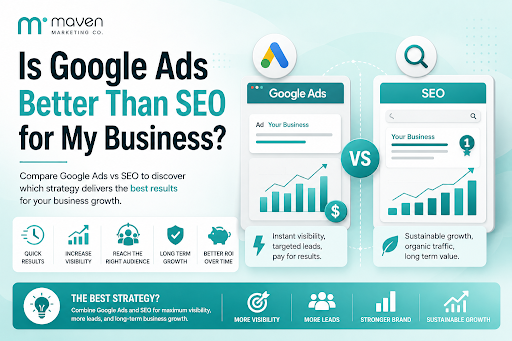
Is Google Ads Better Than SEO for My Business
One of the biggest questions business owners ask when they are planning online growth is whether they should invest in Google Ads or SEO. Both are strong marketing plays that help your company show up in Google search results, but they do things in separate lanes. Google Ads gives quicker visibility and can bring in leads fast, whereas SEO more or less focuses on slow, steady organic traffic that tends to grow the longer you keep building it. Picking the right direction depends on what you want to achieve, how much money you can spend, how crowded the market is, and how quickly you need results, like sooner rather than later. The good news is you don’t always have to choose one or the other; it’s not exactly a black-and-white situation. If you take time to understand the strongest points of both, you can put together a more sensible digital marketing plan that supports consistent expansion. In this guide, we’ll compare Google Ads vs SEO, explain the main differences, and help you figure out what option makes the most sense for your business.

When Should I Hire a Digital Marketing Agency
Growing a business today takes more than just having a website or throwing a post on social media; customers usually search around online, compare providers, skim reviews, and basically expect the brand to show up with a solid digital presence before they even think about buying. Many businesses try to run their marketing themselves, but there comes a point when “doing it all in-house” becomes clunky and hard to manage, all at once. Knowing when to hire a digital marketing agency can end up making a big, real difference for your growth. If you’re not getting enough leads, or your online visibility feels stuck, or sales are just not moving, the right agency can bring the know-how, plus a clear plan, to help you get noticeably better outcomes. In this guide, we’ll dig into what a digital marketing agency actually does, the usual signs it’s time to bring one on, and how picking the right marketing partner can help your business move forward at a faster pace.
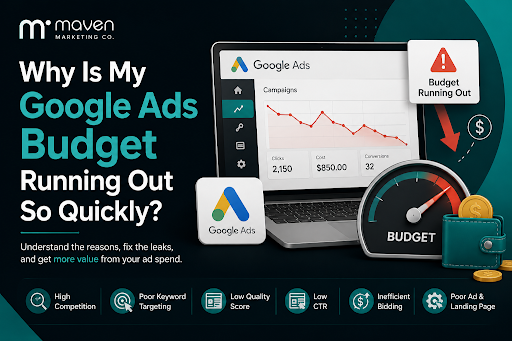
Why Is My Google Ads Budget Running Out So Quickly
Running a successful Google Ads budget isn’t only about throwing more money at it. It’s more like making every dollar, doing a bit extra. A lot of businesses start a Google Ads campaign with big hopes, then find out their daily budget is gone within a few hours, and that feels weird, right? After that, your ads stop showing effectively, new leads slip away, and your return on investment dips. So if your Google Ads budget is running out too fast, don’t stress. It’s a fairly common issue, and in most situations, it can be repaired with the right approach. There are multiple little things that can drain your advertising money quicker than you expected, from costly keywords to audience targeting that just doesn’t quite fit. In this guide, we’ll walk through why your budget disappears so quickly, how to cut wasteful spend, and the most reliable ways to boost your Google Ads ROI, even if your budget stays the same.