.svg)


%201.svg)

The search results page you knew is dead.
AI Overviews now appear for 30% of all searches, up from just 10% six months earlier. On mobile, where most Australians search, AI Overview presence surged 475% year over year. This isn't gradual evolution. It's algorithmic revolution happening in real time while most businesses still optimize for a search landscape that no longer exists.
Here's what makes this urgent for Australian businesses. When people click through from AI Overviews, they're higher quality visitors who spend more time on your site and convert at better rates. But here's the catch. If you're not appearing in those AI generated summaries, you're invisible to an increasingly dominant segment of search traffic.
Traditional SEO focused on ranking in position one. AI search focuses on being cited as an authoritative source. The tactics that got you to the top of Google's ten blue links won't get you mentioned in AI Overviews. Different game. Different rules. Different winners.
.avif)
How AI Overviews Changed Everything for Australian Businesses
Let's be clear about what happened. Between March 13 and 27, 2025, AI Overview presence exploded: 528% increase for entertainment queries, 387% for restaurant queries, and 381% for travel queries. If you're in hospitality, tourism, or entertainment, this shift already decimated traditional organic traffic patterns.
The Australian context makes this even more critical. With 49% of Australians now using generative AI in the past year and 33% using voice search daily, your potential customers aren't just typing keywords anymore. They're asking conversational questions expecting instant, comprehensive answers.
Meanwhile, 67% of Australian businesses now use AI powered tools like SEMrush and Ahrefs for their SEO strategies. Your competitors aren't just aware of this shift. They're actively adapting while you read this sentence.
The winners in this new landscape aren't the businesses with the most backlinks or the highest traditional rankings. They're the businesses whose content AI systems trust enough to cite. That trust gets built very differently than traditional authority.
The Four Types of Queries Dominating AI Overviews
Understanding which queries trigger AI Overviews helps you prioritize optimization efforts strategically.
Informational Queries Dominate: Approximately 84% of AI Overviews appear for informational queries. When someone searches "how to start a business in Australia" or "what is salary packaging," they're likely seeing an AI generated summary synthesizing multiple sources. If your content isn't among those sources, you're missing the audience.
Transactional Queries Are Rising: Initially, AI Overviews rarely appeared for purchase intent keywords. That changed. Transactional AI Overview appearances rose to 12.54% by September 2025 and continue climbing. Product recommendations, service comparisons, and buying guides increasingly feature AI summaries.
Long Form Queries Trigger More Overviews: Queries with eight or more words are 7x more likely to generate AI Overviews. As voice search drives longer, more conversational queries, this pattern intensifies. Optimize for natural language questions, not just short keywords.
Local Queries Remain Opportunity Territory: Only 0.01% of local queries trigger AI Overviews currently. For Australian businesses targeting "near me" searches and local customers, this represents competitive advantage. Get your local optimization right now before AI Overviews expand into this space.
Why Traditional SEO Metrics Are Failing You
Here's the uncomfortable truth. You might rank position one for your target keyword and still be invisible in the new search landscape.
Research shows over 99% of AI Overview sources come from the top 10 search results, but ranking in the top 10 doesn't guarantee inclusion. Sites ranking number one appear in AI Overviews about 25% of the time. That means 75% of number one rankings never get cited by AI.
What determines whether you get included? It's not traditional ranking factors alone. AI systems evaluate content quality, topical authority, structured clarity, answer completeness, source trustworthiness, and semantic relevance. You can have perfect technical SEO and strong backlinks but fail every AI evaluation criterion.
Companies like NerdWallet demonstrate this paradox. They lost 20% of website traffic but generated 35% more revenue because the traffic they retained was higher quality. AI Overviews reduce click through rates by an average 34.5%, but the clicks that happen are more valuable.
Stop obsessing over raw traffic numbers. Start measuring qualified engagement, conversion rates, and revenue per visit. The new search landscape rewards relevance over reach.
The Australian Advantage: Why Local Businesses Can Win
While multinational corporations scramble to adapt their global SEO strategies, Australian businesses have unique advantages in the AI search landscape.
AI Overviews in the UK showed that local authoritative sources like gov.uk dominated citations, highlighting the importance of regional context. The same pattern applies in Australia. Government resources, established Australian publications, and locally recognized authorities earn disproportionate AI visibility.
This creates opportunity. If you establish your business as the authoritative Australian source on your topic, you're competing against a smaller field than your US counterparts face. Focus on Australian specific context, local examples, regional terminology, and partnerships with Australian authoritative sites.
The Australian SEO market reached $1.5 billion with 12% year over year growth, yet most businesses still deploy generic international tactics. Those creating genuinely localized, authoritative content for Australian audiences are capturing outsized visibility as AI systems prioritize regional relevance.

Five Critical Strategies for AI Overview Optimization
Based on analysis of what actually works across thousands of AI Overview appearances, five strategies consistently deliver results for Australian businesses.
1. Structure Content for AI Comprehension
AI systems prefer content written in natural, conversational tone, similar to how people speak or ask questions. This isn't dumbing down your expertise. It's making your knowledge accessible to both humans and language models.
Begin each article with a summary box or TL;DR answering the primary query in 50 to 70 words. Use simple, accessible language aligning with user intent. Don't bury key information deep in articles. Lead with the answer, then expand.
Example structure: Question: "How often should you water native Australian plants?" Answer: Most native Australian plants should be watered deeply once weekly during summer and fortnightly in winter, allowing soil to dry between waterings. Overwatering causes more problems than underwatering for drought adapted natives.
Then expand with specific plant types, seasonal variations, and regional considerations.
2. Implement Comprehensive Structured Data
Structured data helps AI systems understand your content context and authority. This isn't optional anymore. It's foundational.
Implement schema markup for articles, how to guides, FAQ sections, local business information, products and services, reviews and ratings, and speakable content for voice search.
Adding speakable structured data specifically helps AI powered assistants identify which content portions to focus on when answering queries. This increases your chances of appearing in AI Overviews and voice search results.
Use Google's Rich Results Test to validate your markup. Monitor how AI systems interpret your structured data through regular searches of your key topics.
3. Optimize for Conversational and Voice Queries
With 33% of Australians using voice search daily, conversational query optimization becomes mandatory. Target natural speech patterns people actually use when talking to AI assistants.
Focus on question based keywords: who, what, where, when, why, how. Create content answering specific questions your customers ask. Use long tail conversational phrases like "what's the best way to" rather than fragmented keywords.
Optimize for "near me" queries and location based searches critical for local Australian businesses. Voice search users frequently include location in queries, making local SEO integration essential.

4. Build E E A T Signals That AI Systems Recognize
Experience, Expertise, Authoritativeness, and Trustworthiness aren't just SEO buzzwords. They're the foundation of AI citation decisions.
Demonstrate experience through detailed case studies, original research and data, specific examples from your work, and client testimonials with verifiable details. Show expertise via author credentials and bios, citations from other authorities, regular content publishing on your topics, and speaking engagements or media features.
Build authoritativeness through mentions in industry publications, partnerships with recognized organizations, awards and certifications, and consistent presence across authoritative platforms. Establish trustworthiness via transparent business information, customer reviews and ratings, clear policies and practices, and secure, professional website infrastructure.
AI systems cross reference multiple sources to verify claims. If your content contradicts established facts or lacks supporting evidence, you won't get cited regardless of your ranking position.
5. Create Content AI Systems Want to Cite
The average AI Overview length dropped 70% from 5,300 characters to 1,600 characters between July and August 2024. This isn't about less content. It's about more focused answers.
Google's guidance emphasizes creating unique, non commodity content that visitors from search find helpful and satisfying. Focus on making genuinely useful resources, not SEO optimized fluff.
Content characteristics that earn AI citations include comprehensive topic coverage, clear answer to primary question upfront, supporting details organized logically, original insights or data, practical, actionable information, credible sources cited appropriately, and regular updates maintaining accuracy.
The AI Mode Reality: What's Coming Next
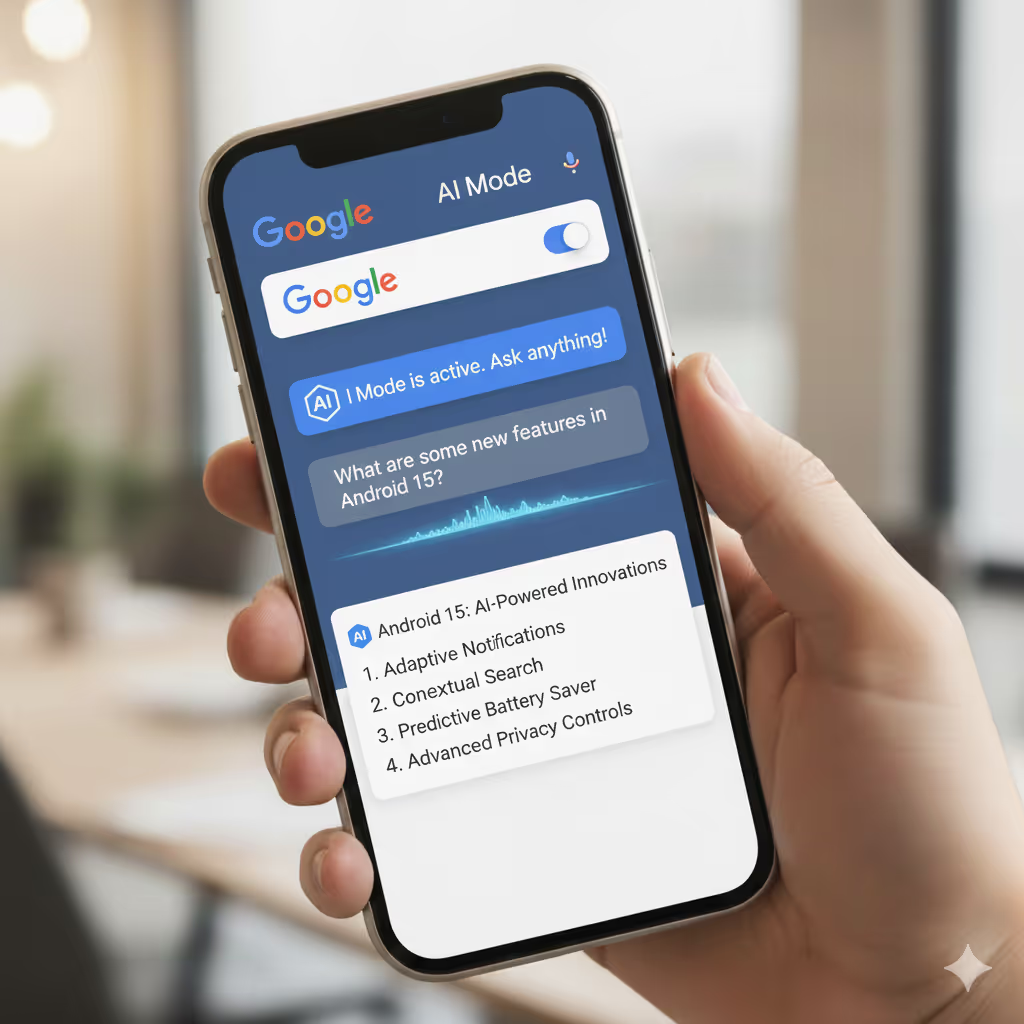
While you're adapting to AI Overviews, Google already launched AI Mode, an end to end AI search experience similar to ChatGPT. Unlike AI Overviews which still show traditional organic results, AI Mode doesn't include the ten blue links.
AI Mode represents search's future. It delivers smarter overviews powered by Google's latest AI models, with advanced reasoning capabilities understanding nuance better and accessing real time information from Knowledge Graph and shopping data for billions of products.
The implication? Visibility in AI generated responses becomes more critical than traditional search rankings. When there are no blue links to click, being mentioned in the AI response is the only visibility that matters.
Google's AI Mode explicitly prioritizes original, high quality content that generates value for readers. If you're creating commodity content that rehashes existing information, AI Mode will ignore you entirely.
Measuring Success in the AI Search Landscape

Traditional SEO metrics like rankings and impressions tell incomplete stories. Here's what Australian businesses should actually track in 2026.
AI Visibility Metrics: Monitor where your brand appears in ChatGPT responses, Google AI Overviews, Perplexity answers, and Claude citations. Tools are evolving to track AI search performance. Understanding your citation rate across platforms reveals true digital visibility.
Traffic Quality Over Quantity: Focus on conversion indicators like sales, signups, engaged audience metrics, and business information lookups. AI Overview traffic may be lower volume but higher intent.
Contextual Authority: Track mentions in authoritative publications, co citations with industry leaders, branded search volume trends, and social proof accumulation. These signals indicate whether AI systems view you as credible.
Long Tail Performance: Monitor rankings and visibility for conversational, question based queries. Success here predicts AI Overview inclusion.
Mobile Experience Metrics: Google uses mobile versions of websites to decide AI Overview content. Track mobile page speed, accessibility scores, and user experience metrics rigorously.
The Australian Competitive Landscape
Here's your strategic advantage. Most Australian businesses haven't caught on to AI Overview optimization, giving early adopters opportunity to claim dominant positions.
While 67% use AI tools for traditional SEO, far fewer understand how to optimize specifically for AI citation. The gap between using AI tools and understanding AI search creates opportunity for businesses willing to adapt quickly.
The Australian AI market is projected to reach $9.41 billion by end of 2025. This investment flows toward businesses demonstrating AI readiness across their digital presence, including search optimization.
Companies treating 2026 as transition year, implementing AI tools, optimizing for voice search, and building comprehensive strategies will establish market positions that become increasingly difficult for competitors to challenge.
The Bottom Line
The search landscape fundamentally changed. AI Overviews aren't a feature. They're the new interface between your potential customers and digital information.
Traditional SEO strategies that worked brilliantly through 2023 are actively harming businesses in 2026 by consuming resources on tactics that no longer drive results. Meanwhile, AI search optimization requires different skills, different metrics, and different strategic thinking.
Your competitors are either figuring this out or watching their visibility evaporate. There's no middle ground. AI systems cite authoritative sources or they cite nothing. If you're not optimizing for AI comprehension, structured data, conversational queries, and E E A T signals, you're invisible.
The businesses dominating search in 2026 won't be those with the most backlinks or the highest traditional rankings. They'll be the ones AI systems trust enough to cite. That trust gets built through consistent, authoritative, well structured content that genuinely serves user needs.
Which category will your business fall into? The cited authorities or the invisible majority?
Dominate the New Search Landscape
Stop optimizing for search results that no longer matter. At Maven Marketing Co., we help Australian businesses capture visibility in AI Overviews, voice search, and the emerging AI search landscape.
Our approach combines comprehensive technical optimization, strategic content development, and ongoing AI visibility monitoring to ensure your business gets cited by the AI systems your customers actually use. We don't just improve rankings. We build the authoritative presence that makes AI platforms choose your content over competitors.
We specialize in Australian market optimization, understanding local search patterns, regional authority signals, and the unique challenges Australian businesses face competing in AI driven search.
Contact Maven Marketing Co. today for an AI search visibility audit and discover exactly where your business appears in AI Overviews, voice search, and LLM responses. Let's ensure you're visible in the search landscape that actually matters in 2026.

Table of contents
read more blogs
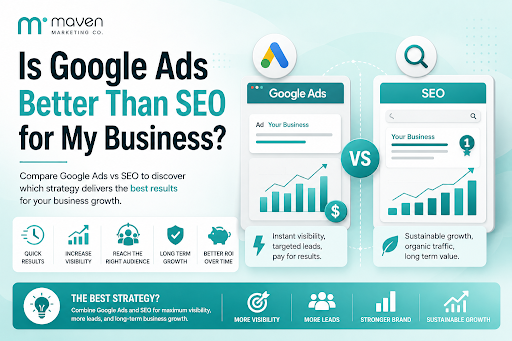
Is Google Ads Better Than SEO for My Business
One of the biggest questions business owners ask when they are planning online growth is whether they should invest in Google Ads or SEO. Both are strong marketing plays that help your company show up in Google search results, but they do things in separate lanes. Google Ads gives quicker visibility and can bring in leads fast, whereas SEO more or less focuses on slow, steady organic traffic that tends to grow the longer you keep building it. Picking the right direction depends on what you want to achieve, how much money you can spend, how crowded the market is, and how quickly you need results, like sooner rather than later. The good news is you don’t always have to choose one or the other; it’s not exactly a black-and-white situation. If you take time to understand the strongest points of both, you can put together a more sensible digital marketing plan that supports consistent expansion. In this guide, we’ll compare Google Ads vs SEO, explain the main differences, and help you figure out what option makes the most sense for your business.

When Should I Hire a Digital Marketing Agency
Growing a business today takes more than just having a website or throwing a post on social media; customers usually search around online, compare providers, skim reviews, and basically expect the brand to show up with a solid digital presence before they even think about buying. Many businesses try to run their marketing themselves, but there comes a point when “doing it all in-house” becomes clunky and hard to manage, all at once. Knowing when to hire a digital marketing agency can end up making a big, real difference for your growth. If you’re not getting enough leads, or your online visibility feels stuck, or sales are just not moving, the right agency can bring the know-how, plus a clear plan, to help you get noticeably better outcomes. In this guide, we’ll dig into what a digital marketing agency actually does, the usual signs it’s time to bring one on, and how picking the right marketing partner can help your business move forward at a faster pace.
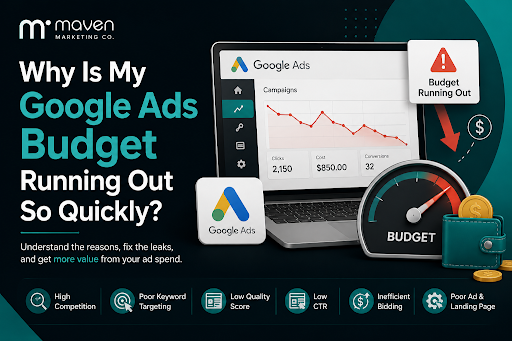
Why Is My Google Ads Budget Running Out So Quickly
Running a successful Google Ads budget isn’t only about throwing more money at it. It’s more like making every dollar, doing a bit extra. A lot of businesses start a Google Ads campaign with big hopes, then find out their daily budget is gone within a few hours, and that feels weird, right? After that, your ads stop showing effectively, new leads slip away, and your return on investment dips. So if your Google Ads budget is running out too fast, don’t stress. It’s a fairly common issue, and in most situations, it can be repaired with the right approach. There are multiple little things that can drain your advertising money quicker than you expected, from costly keywords to audience targeting that just doesn’t quite fit. In this guide, we’ll walk through why your budget disappears so quickly, how to cut wasteful spend, and the most reliable ways to boost your Google Ads ROI, even if your budget stays the same.