.svg)


%201.svg)
Quick Answers
Why are brands shifting from celebrity influencers to micro and nano creators?
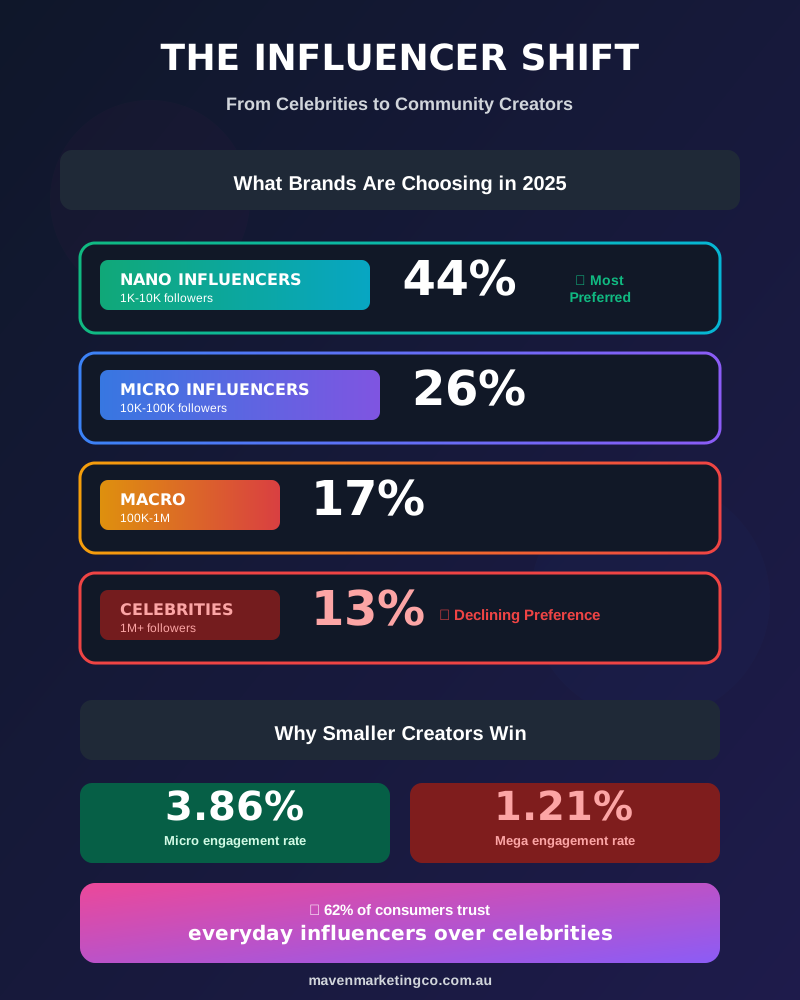
Brands are moving to smaller creators because 44% now prefer nano influencers and 26% favour micro influencers over expensive macro influencers (17%) and celebrities (13%). The shift is driven by superior performance with micro influencers achieving 3.86% engagement on Instagram compared to mega influencers' 1.21%, and nano creators reaching 4% engagement versus 0.92% for mega influencers. Additionally, 62% of social media users trust everyday influencers over A-list celebrities, while only 3% would consider purchases based on celebrity promotion compared to 60% for influencer recommendations. Cost efficiency also matters as influencer CPMs dropped 53% year over year, making smaller creators both more effective and more affordable.
What makes micro influencers more effective than traditional celebrity partnerships?
Micro influencers excel through authentic community connections and niche authority. With followings between 10,000 to 100,000, they maintain genuine two way relationships with audiences, creating trust that translates to action. Their recommendations feel personal rather than transactional, driving 2 to 5x higher engagement rates than macro influencers. Brands incorporating micro influencers see 29% higher web conversion rates, and 69% of consumers trust their recommendations over direct brand messaging. Unlike celebrities with broad but passive audiences, micro influencers operate within hyper focused communities around specific interests like skincare routines, toddler meal prep, or fitness, making their endorsements highly persuasive within those verticals while costing a fraction of celebrity partnerships.

The Full Guide
The celebrity endorsement is dying. Not with dramatic fanfare or public announcement, but through a quiet revolution happening in marketing budgets across Australia and the world.
Ten years ago, brands threw millions at celebrities with massive followings, banking on reach to drive awareness and sales. Today, those same brands are discovering something counterintuitive: the person with 15,000 genuinely engaged followers often delivers better results than the celebrity with 15 million passive ones.
Welcome to the new age of influencer marketing, where authenticity trumps fame, community beats celebrity, and smaller creators are reshaping how brands connect with audiences.
The Numbers Behind The Shift
The statistics tell a story of fundamental change. According to Influencer Marketing Hub's 2025 Benchmark Report, 44% of brands now prefer working with nano influencers (1,000 to 10,000 followers), while 26% favour micro influencers (10,000 to 100,000 followers). By contrast, only 17% prioritise macro influencers and a mere 13% focus on celebrity partnerships.
This isn't budget driven compromise. It's strategic reallocation based on performance. The engagement gap between creator tiers has become undeniable. On Instagram, micro influencers achieve average engagement rates of 3.86%, while mega influencers languish at 1.21%. The contrast becomes even starker when examining nano creators, who command 4% engagement compared to mega influencers' 0.92%.
The global influencer marketing industry reached $32.55 billion in 2025, growing 35.6% year over year from $24 billion in 2024. Yet within that expansion, spending patterns have shifted dramatically. Lower annual spending under $10,000 declined by 10.5%, while spending over $500,000 decreased by 3.5%. Brands aren't spending less overall, they're redistributing budgets away from expensive celebrity partnerships toward multiple smaller creator relationships.
Perhaps most telling, average influencer marketing CPM dropped 53% year over year, driven largely by the abundance of high quality micro and nano creators offering better value. The days of paying premium rates for celebrity reach are fading as brands discover they can achieve superior results at lower costs.
Why Community Creators Win
The superiority of smaller creators isn't just about engagement metrics. It's about the fundamental nature of influence itself.
Trust drives purchasing decisions, and consumers increasingly place that trust in peers rather than celebrities. Research shows that 69% of consumers trust influencer recommendations over direct brand messaging. When comparing influencers to celebrities specifically, 62% of social media users trust everyday creators over A-list stars.
The gap becomes a chasm when examining purchase intent. Only 3% of consumers would consider an in store purchase based on celebrity promotion. By contrast, 60% would purchase based on influencer recommendations. That's a twenty fold difference in persuasive power.
This trust advantage stems from perceived authenticity. Smaller creators maintain genuine relationships with their audiences. They respond to comments, engage in conversations, and exist within communities rather than above them. When a fitness creator with 25,000 followers recommends a protein powder, their audience knows that creator actually uses it. When a celebrity with 10 million followers posts the same recommendation, audiences assume payment drove the endorsement regardless of actual product experience.
Research from Statusphere found that micro influencers consistently deliver engagement rates 2 to 5x higher than macro counterparts. A skincare creator focused specifically on acne safe routines brings credibility that a general lifestyle influencer cannot match, regardless of follower count. This niche authority makes recommendations highly persuasive within specific verticals.
The community building aspect matters enormously. Micro influencers function as trusted nodes within hyper focused subcultures, from vegan parents to CrossFit athletes to productivity obsessed entrepreneurs. These communities are notoriously expensive to reach through paid media, but micro influencers already operate as recognised voices within them. The result isn't just more impressions but qualified impressions with higher intent to convert.
Brands incorporating genuine micro influencer content experience a 29% increase in web conversion rates compared to those relying solely on branded content. When site visitors interact with authentic creator content, lead conversions can increase by over 100%.
The Long-Term Partnership Model
One of the most significant shifts in influencer strategy involves moving beyond one-off campaigns toward sustained creator relationships.
The data supports this evolution. Research shows that 63.2% of brands worked with the same influencers across different campaigns in 2024, up from 61% previously and 57% in 2022. This represents a clear trend toward relationship building over transactional partnerships.
The logic is compelling. Ongoing collaborations build stronger connections between brands and creators, translating into greater trust and loyalty from audiences. When a creator mentions a brand once, audiences wonder if it's purely sponsored. When that same creator incorporates a brand naturally across months of content, it signals genuine affinity.
Long-term partnerships also enable more authentic storytelling. Rather than scripted promotional posts, sustained relationships allow creators to demonstrate actual product use, share genuine experiences over time, and integrate brands into their content naturally. This authenticity resonates powerfully with audiences increasingly skilled at detecting manufactured enthusiasm.
From a brand perspective, ambassador programmes consistently deliver the highest ROI compared to one-off campaigns. Building relationships with 10 to 20 aligned creators who genuinely love your products creates an ongoing content engine while establishing authentic social proof that compounds over time.
The economic model has evolved to support this approach. While 57% of creators increased their rates in 2025, 83% remain willing to work with brands for product only if they genuinely love the brand or the product value is high. This willingness creates opportunities for smaller Australian businesses to build creator relationships even with limited budgets, provided they offer products creators authentically want to use.
Platform Dynamics And Content Formats
The rise of community creators aligns with broader platform evolution. Instagram remains the dominant influencer marketing platform, with 93% of marketers choosing it for campaigns. Yet the platform's engagement dynamics favour smaller creators whose content feels native and authentic rather than polished and promotional.
Instagram Reels have become particularly important, outperforming static images and carousels in engagement, reach, and likes. The shift toward short-form video content benefits micro creators whose authentic, less polished content aligns with what audiences increasingly prefer. Research from Statusphere found that 87% of content brands requested from micro influencers in recent months came in the form of short videos like TikToks and Instagram Reels, with the most effective videos running 20 to 40 seconds.
TikTok's role in influencer marketing deserves special attention despite recent regulatory uncertainty. The platform's algorithm favours content quality and engagement over follower count, enabling smaller creators to achieve viral reach that would be impossible on follower-based platforms. This democratisation of visibility has empowered countless micro and nano creators to build influential communities rapidly.
YouTube continues to serve important functions for longer-form content and evergreen searchable videos. While mega influencers dominate YouTube's top tier, smaller creators build devoted audiences through specialised content that serves specific needs within their communities.
The cross-platform approach has become standard. Successful creator partnerships now typically involve content across multiple formats and platforms, with brands repurposing creator content for paid advertising, extending reach and value significantly.
The Australian Context
For Australian businesses, the shift toward community creators presents both opportunity and strategic imperative. The Australian market's relatively smaller size compared to the US or UK means organic reach for nano and micro creators can translate to significant penetration within target demographics.
Australian consumers demonstrate strong preferences for authenticity, making the trust advantage of smaller creators particularly relevant locally. Local micro influencers embedded within Australian communities bring cultural fluency and regional relevance that international celebrity partnerships cannot match.
The cost efficiency matters enormously for small to medium Australian businesses operating with modest marketing budgets. A single macro influencer campaign might consume an entire quarterly budget, while that same investment could fund ongoing relationships with 10 to 20 nano or micro creators, generating substantially more content and engagement.
Australian brands should also consider the hyperlocal opportunity. Working with local creators to connect authentically with regional audiences allows brands to build real loyalty and relevance within targeted communities. A Brisbane fitness creator connects with Brisbane audiences in ways a Sydney-based macro influencer cannot, regardless of follower disparity.
The regulatory environment matters too. Australian consumer law and advertising standards apply to influencer partnerships, with disclosure requirements that must be met. Smaller creators tend to be more collaborative on compliance matters compared to celebrity talent managed through layers of agents and lawyers.
Implementing A Community Creator Strategy
Transitioning from traditional celebrity or macro influencer approaches to community creator strategies requires thoughtful implementation.
Start with authentic alignment. The foundation of successful creator partnerships is genuine product affinity. Identify creators who already use products similar to yours, share your brand values, and serve audiences that match your customer demographics. Tools leveraging AI can help with influencer identification, but personal vetting remains essential. Review creator content, engagement patterns, and community interactions to ensure authentic fit.
Think portfolio, not individual. Rather than seeking the single perfect creator, build a diverse portfolio spanning nano, micro, and perhaps a few mid-tier influencers. This approach reduces risk, increases content volume, and reaches audiences across different community segments. Many brands now work with 10 to 50 creators simultaneously rather than one or two expensive partnerships.
Invest in relationships. Treat creators as partners, not vendors. Provide creative freedom rather than rigid scripts. Share brand values and goals, then trust creators to translate those authentically for their audiences. The best creator content doesn't look like advertising because it isn't, it's genuine enthusiasm expressed in the creator's natural voice.
Enable long-term collaboration. Structure partnerships for ongoing relationships rather than one-off campaigns. Offer product-only arrangements for nano creators, performance-based compensation for micro creators, and hybrid models combining fixed fees with affiliate commissions. As creators see results from genuine product use, they often become willing to expand partnerships.
Measure what matters. Move beyond vanity metrics like impressions and follower counts. Track engagement rates, conversion patterns, customer acquisition costs, and long-term customer value of influencer-driven customers. The goal isn't maximum reach but qualified reach that drives actual business results.
Repurpose creator content. Negotiate usage rights that allow repurposing creator content across your owned channels and paid advertising. Creator content consistently outperforms branded content in paid social campaigns, often dramatically. This content repurposing extends value far beyond the initial creator post.
Stay platform native. Encourage creators to produce content that feels natural to their platform and audience rather than forcing brand-directed concepts. Platform-native content performs better algorithmically and resonates more authentically with audiences.
The Technology Factor
AI and automation increasingly shape influencer marketing execution, though human judgment remains essential. Platforms now use AI to match brands with suitable creators based on multiple criteria including audience demographics, engagement patterns, content themes, and brand safety factors.
Brands report that 62% plan to use AI in executing influencer campaigns, with 55.8% applying it to influencer identification, 18.6% for content distribution, and 5.7% for detecting fraudulent engagement. These tools enhance efficiency but cannot replace strategic thinking about authentic partnerships.
Predictive analytics help forecast campaign performance based on historical data, while performance tracking has evolved from static end-of-campaign reports to real-time dashboards enabling in-flight optimisation. This agility allows brands to amplify what's working and adjust what isn't, maximising campaign effectiveness.
However, over-reliance on AI creates risks. Algorithms optimise for patterns in historical data but miss emerging creators and authentic opportunities that don't fit established templates. The most successful brands combine AI-powered efficiency with human curation that recognises authenticity and strategic fit.
What This Means For Brands
The shift from celebrities to community creators isn't temporary trend but fundamental restructuring of how influence operates in digital spaces. Several implications emerge for brand strategy:
Authenticity is non-negotiable. Audiences have become remarkably sophisticated at detecting inauthentic content. Forced partnerships, overly scripted content, and obvious payment motivation undermine credibility instantly. Successful influencer marketing in 2025 requires genuine creator enthusiasm and natural integration.
Scale through diversity, not reach. Maximum individual reach matters less than aggregate qualified reach across multiple aligned creators. Ten micro influencers with 20,000 followers each reach 200,000 people with far higher engagement than a single creator with 2 million passive followers.
Community over celebrity. The persuasive power comes from community membership, not fame. Creators who exist within communities as trusted peers influence purchasing behaviour more effectively than celebrities who exist above communities as aspirational figures.
Performance over prestige. The ego boost of celebrity partnership matters less than measurable business results. Brands must overcome the temptation to prioritise impressive follower counts over actual conversion performance.
Patience with process. Building authentic creator relationships and seeing results takes time. Unlike traditional advertising that delivers immediate impressions, influencer marketing builds trust that translates to sales over weeks and months rather than hours and days.
The Path Forward
The influencer marketing industry will reach $47.8 billion by 2027, continuing explosive growth. Within that expansion, the power dynamics will continue shifting toward smaller creators who maintain authentic community relationships.
For Australian businesses, this democratisation of influence creates unprecedented opportunity. No longer must brands compete for attention from overextended celebrity talent. Instead, they can build strategic partnerships with dozens of aligned creators who genuinely love their products and serve audiences perfectly aligned with target customers.
The brands that thrive will be those that understand influence now flows through community, not just from celebrity. They'll invest in relationships rather than transactions, prioritise authenticity over polish, and measure success by meaningful engagement rather than vanity metrics.
The new age of influencer marketing isn't about finding the biggest name. It's about finding the right voices, the authentic enthusiasts embedded within communities your brand wants to reach. Those voices may have 10,000 followers instead of 10 million. But in 2025, that's exactly why they matter more.
Ready to Build Your Community Creator Strategy?
At Maven Marketing Co, we help Australian businesses navigate the evolving influencer landscape by identifying authentic creator partnerships that drive real results. Our team understands that successful influencer marketing isn't about chasing follower counts but building genuine relationships with community voices that resonate with your target audiences.
Whether you're looking to develop your first micro influencer programme, optimise existing creator partnerships, or build a comprehensive strategy spanning nano to mid-tier creators, we're here to guide you toward authentic engagement that converts.
Let's build influence that matters

Table of contents
read more blogs
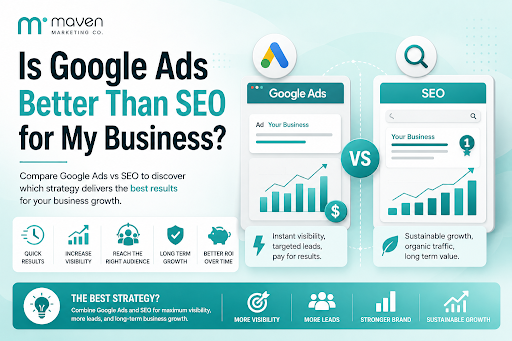
Is Google Ads Better Than SEO for My Business
One of the biggest questions business owners ask when they are planning online growth is whether they should invest in Google Ads or SEO. Both are strong marketing plays that help your company show up in Google search results, but they do things in separate lanes. Google Ads gives quicker visibility and can bring in leads fast, whereas SEO more or less focuses on slow, steady organic traffic that tends to grow the longer you keep building it. Picking the right direction depends on what you want to achieve, how much money you can spend, how crowded the market is, and how quickly you need results, like sooner rather than later. The good news is you don’t always have to choose one or the other; it’s not exactly a black-and-white situation. If you take time to understand the strongest points of both, you can put together a more sensible digital marketing plan that supports consistent expansion. In this guide, we’ll compare Google Ads vs SEO, explain the main differences, and help you figure out what option makes the most sense for your business.

When Should I Hire a Digital Marketing Agency
Growing a business today takes more than just having a website or throwing a post on social media; customers usually search around online, compare providers, skim reviews, and basically expect the brand to show up with a solid digital presence before they even think about buying. Many businesses try to run their marketing themselves, but there comes a point when “doing it all in-house” becomes clunky and hard to manage, all at once. Knowing when to hire a digital marketing agency can end up making a big, real difference for your growth. If you’re not getting enough leads, or your online visibility feels stuck, or sales are just not moving, the right agency can bring the know-how, plus a clear plan, to help you get noticeably better outcomes. In this guide, we’ll dig into what a digital marketing agency actually does, the usual signs it’s time to bring one on, and how picking the right marketing partner can help your business move forward at a faster pace.
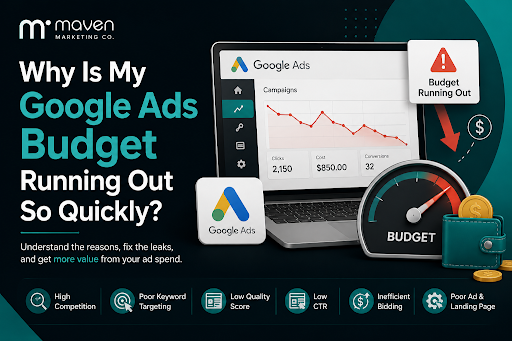
Why Is My Google Ads Budget Running Out So Quickly
Running a successful Google Ads budget isn’t only about throwing more money at it. It’s more like making every dollar, doing a bit extra. A lot of businesses start a Google Ads campaign with big hopes, then find out their daily budget is gone within a few hours, and that feels weird, right? After that, your ads stop showing effectively, new leads slip away, and your return on investment dips. So if your Google Ads budget is running out too fast, don’t stress. It’s a fairly common issue, and in most situations, it can be repaired with the right approach. There are multiple little things that can drain your advertising money quicker than you expected, from costly keywords to audience targeting that just doesn’t quite fit. In this guide, we’ll walk through why your budget disappears so quickly, how to cut wasteful spend, and the most reliable ways to boost your Google Ads ROI, even if your budget stays the same.