.svg)


%201.svg)
.avif)
Key Takeaways
- Zero-UI interactions will represent 50% of all searches by 2027, with voice assistants, visual recognition, and AI-generated answers replacing traditional "type and click" search behaviors that have dominated for 25 years
- Conversational long-tail queries now comprise 67% of voice searches, requiring content optimization for natural language questions rather than keyword-focused traditional SEO that served text-based search
- Structured data markup increases featured snippet probability by 340%, positioning content for voice assistant responses and AI-generated summaries that deliver answers without requiring users to visit websites
- Visual search adoption growing 140% annually as smartphone cameras become primary search interface for product identification, translation, navigation, and information discovery bypassing text queries entirely
- Australian businesses must optimize for answer engines, not just search engines, as Google's Search Generative Experience, ChatGPT, and other AI tools synthesize information from multiple sources into single responses that may never drive traditional website traffic
Your customer stands in a homewares store holding a lamp, uncertain if it matches their living room aesthetic. Instead of searching "mid-century modern floor lamp brass finish" on their phone and comparing results, they simply point their camera at the lamp. Google Lens instantly identifies it, shows how it looks in rooms similar to theirs through AR visualization, displays pricing from seventeen retailers including shipping costs, and surfaces 347 customer reviews with sentiment analysis.
The entire journey from question to purchase decision occurs in 90 seconds without typing a single word or visiting a traditional website.
This scenario isn't speculative future—it's present reality that most Australian businesses remain unprepared for. Search behaviour is fragmenting across modalities including voice queries to Siri, Alexa, and Google Assistant, visual searches through smartphone cameras and AR applications, conversational interactions with ChatGPT and other AI assistants, and contextual predictions from ambient devices anticipating needs before explicit queries.
Research examining search evolution patterns projects that by 2027, traditional text-based search will represent less than 50% of information discovery interactions, with zero-UI modalities dominating how consumers find products, services, and information.
Australian businesses optimizing exclusively for conventional search face strategic obsolescence as the interfaces mediating customer discovery transform fundamentally. Preparation requires understanding emerging search behaviors, implementing technical foundations enabling discoverability across modalities, and creating content that serves AI answer engines as effectively as human readers.
Understanding Zero-UI Search: The Interface-less Future

Zero-UI describes interactions where users receive information or complete tasks without traditional graphical interfaces, relying instead on voice, gesture, or ambient sensing that interprets intent and delivers outcomes seamlessly.
Voice search through smart speakers and mobile assistants has achieved mainstream adoption with 43% of Australians using voice search weekly according to consumer technology research. These interactions differ fundamentally from text search through conversational phrasing using complete sentences and questions, local intent with high percentage seeking nearby businesses or immediate needs, action orientation seeking specific outcomes like purchases or reservations rather than general information, and single-answer expectation with users wanting definitive response rather than ten blue links to evaluate.
Melbourne restaurant chain Grill'd optimized for voice search discovering that queries like "Ok Google, find me a healthy burger place near me that's open now" drove substantial traffic from voice assistants. Traditional keyword optimization for "healthy burgers Melbourne" proved less relevant than ensuring accurate Google Business Profile information, conversational content answering common questions, and structured data markup enabling assistants to confidently recommend their locations.
Visual search through smartphone cameras transforms physical world into queryable interface. Users photograph products to identify them and find purchase options, translate foreign language text in real-time through camera overlay, recognize plants, animals, landmarks, and objects without knowing names, navigate through AR wayfinding overlaying directions on camera view, and try products virtually through AR visualization before purchase.
Sydney furniture retailer Freedom implemented visual search optimization ensuring product images included detailed metadata, structured data markup identified furniture styles and dimensions, and AR visualization tools let customers see furniture in their homes through smartphone cameras. Visual search now drives 23% of their mobile traffic with 2.8x higher conversion rates than traditional text search due to high purchase intent from users photographing specific items they want to buy.
AI answer engines including ChatGPT, Google's Search Generative Experience (SGE), and Microsoft Copilot synthesize information from multiple sources delivering comprehensive answers without requiring users to click through to websites. This paradigm shift threatens traditional search traffic as users receive satisfactory answers without leaving the AI interface. Smart businesses adapt by positioning content as authoritative source material AI systems reference, implementing citation-friendly structured data, creating comprehensive topic coverage AI systems excerpt, and accepting reduced click-through whilst gaining brand mentions and authority signals.

Brisbane accounting firm William Buck discovered their comprehensive tax guides frequently appeared in ChatGPT responses to Australian tax questions, receiving attribution as source material. While this generated zero direct website traffic, brand awareness increased measurably with subsequent searches for "William Buck" rising 67% as users sought to engage the authoritative firm whose content informed AI responses.
Ambient computing through IoT devices and contextual sensors predicts needs before explicit queries. Smart home devices reorder consumables automatically when supplies deplete, vehicle systems recommend fuel stops and charging stations based on remaining range, wearable devices suggest workout modifications based on biometric data, and retail apps send location-triggered offers when users near stores. This proactive information delivery requires businesses to integrate with platforms and data ecosystems rather than wait for searches to occur.
Conversational Content Optimization: Writing for Natural Language Queries
Voice and AI searches use natural language differing dramatically from keyword-focused text queries that dominated traditional SEO.
Question-based content structure directly addresses how people ask questions verbally. Who, what, where, when, why, and how questions form foundation for conversational queries. Long-form answers provide comprehensive responses AI systems can excerpt for featured snippets. FAQ sections address multiple related questions users might ask in various phrasings. Natural language throughout content matches conversational tone rather than keyword-stuffed awkward phrasing.

Adelaide law firm Kelly + Partners restructured their employment law content around common questions clients ask verbally including "Can my employer make me work from the office?" instead of keyword "return to office requirements Australia," "What should I do if I'm being bullied at work?" instead of "workplace bullying legislation," and "How much notice do I need to give when resigning?" instead of "resignation notice period Australia." This conversational rewrite increased voice search traffic 156% whilst improving traditional search performance through better user engagement signals.
Local optimization becomes critical as voice searches demonstrate high local intent with users seeking nearby solutions to immediate needs. Google Business Profile completeness including accurate NAM (Name, Address, Phone), complete business categories, current hours including holiday variations, and high-quality photos showing location and offerings. Location-specific content answering local questions and addressing area-specific concerns. Review quantity and quality as voice assistants heavily weight highly-rated local businesses. Schema markup for local business structured data enabling assistants to confidently present your information.
Voice search optimization research reveals that businesses ranking in top three Google Business Profile results capture 89% of voice search recommendations, making local SEO optimization essential for voice discoverability.
Perth cafe The Flour Factory implemented comprehensive local optimization ensuring their Google Business Profile included detailed menu information, current opening hours updated for holidays, 200+ customer photos showing food and atmosphere, consistent NAP across all directories, and location-specific content about their Northbridge neighborhood. Voice search referrals increased 214% as Google Assistant confidently recommended them for queries like "best brunch spot in Northbridge" and "cafe near me with vegan options open now."
Featured snippet optimization positions content as definitive answer AI systems and voice assistants excerpt. Concise paragraph answers (40-60 words) addressing specific questions directly. List and table formats for processes, comparisons, and data AI systems present verbatim. Question-as-heading format with immediate answer following. Authoritative tone backed by credible sources increasing likelihood of being cited. Comprehensive coverage addressing question thoroughly preventing users from needing additional sources.
Melbourne financial advisor Curve Securities optimized content for featured snippets through restructuring articles with clear question headings, concise paragraph answers summarizing key points, detailed explanations following concise answers, and comparison tables for investment options and strategies. Featured snippet capture rate increased from 3% to 34% of their target keywords, dramatically improving voice search presence as assistants read their snippet content in responses.
Technical Foundations: Structured Data and Schema Markup
.avif)
Machine-readable structured data enables AI systems, voice assistants, and visual search to understand and utilize your content when graphical interfaces don't exist.
Schema.org markup provides standardized vocabulary describing content meaning beyond what human-readable text conveys. Product schema includes name, brand, price, availability, ratings, and specifications enabling shopping assistants to present accurate information. Local business schema provides address, hours, phone, and service areas helping voice assistants recommend appropriate businesses. FAQ schema marks questions and answers for excerpt in voice responses and featured snippets. How-to schema outlines step-by-step instructions voice assistants can narrate. Review schema aggregates rating data displayed in search results and used by recommendation algorithms.
Sydney e-commerce retailer THE ICONIC implemented comprehensive product schema across their catalog including detailed attributes like size, color, material, and care instructions. This structured data enabled Google Shopping integration, voice commerce through Google Assistant, visual search accuracy when users photograph products, and rich results in traditional search. Schema implementation correlated with 43% increase in organic product discovery across all modalities.
.avif)
JSON-LD implementation method provides cleanest approach to adding schema markup without cluttering HTML. Separate JSON-LD script in page head keeps structured data isolated from visible content. Easier to validate and debug than inline microdata formats. Google's preferred format according to documentation. Programmatic generation enables dynamic structured data for large catalogs and databases.
Brisbane real estate agency Ray White implemented JSON-LD schema across their property listings including property type, address, price, bedrooms/bathrooms, square footage, and amenities. Voice search queries like "show me three-bedroom houses in Paddington under $1.5 million" began reliably returning their listings as Google Assistant could parse structured data to match specific criteria.
Knowledge Graph optimization positions brand entities in Google's Knowledge Graph improving assistant understanding of your business. Consistent brand name, logo, and entity information across platforms. Wikidata entry providing structured information about organization. Social profile linking establishing authoritative accounts. Entity relationships through schema markup connecting people, products, and organizations. Press and news coverage from authoritative sources validating entity importance.
Adelaide wine producer Penfolds maintains Knowledge Graph presence ensuring Google's entity understanding includes their history, varieties produced, notable wines, and relationship to parent company Treasury Wine Estates. When users ask Google Assistant "Who makes Grange?" or "Tell me about Penfolds," assistant draws from Knowledge Graph delivering accurate, comprehensive information positioning Penfolds as authoritative source.
Voice Commerce Optimization: Enabling Purchase Through Conversation

Voice-activated shopping represents fastest-growing zero-UI commerce channel as consumers embrace conversational purchase experiences.
Product discovery optimization ensures voice assistants recommend your products for relevant queries. Comprehensive product titles including brand, product type, key attributes, and use cases. Natural language descriptions answering questions users might ask about products. Bullet-point features in conversational phrasing rather than technical specifications alone. Use case content explaining when and why customers choose products. Voice shopping integration with platforms like Google Shopping Actions and Amazon Alexa Skills.
Melbourne tea retailer T2 optimized product content for voice discovery restructuring titles like "Premium Organic English Breakfast Tea Loose Leaf 100g" and descriptions answering implied questions including "This organic breakfast tea is perfect for morning routines, with robust black tea flavor that pairs well with milk" and "Our English Breakfast blend suits people who enjoy traditional strong tea to start their day." Voice search referrals for queries like "Alexa, order organic breakfast tea" increased 340% as assistants could match conversational queries to optimized product content.
.avif)
Reordering enablement captures repeat purchases through voice convenience. Amazon Dash Replenishment integration for consumable products enables automatic reordering. Voice ordering skills allowing customers to reorder previous purchases through simple commands. Subscription programs that voice assistants can manage through conversation. Order history integration enabling "reorder my usual" functionality across platforms.
Sydney pet supply company Pet Circle integrated with Amazon Alexa enabling customers to say "Alexa, reorder dog food from Pet Circle" with assistant accessing order history and confirming previous brand/size before purchase. Voice reordering now represents 18% of repeat customer purchases with zero friction increasing purchase frequency 23% among customers who enable voice commerce.
Conversational commerce through messaging platforms and chatbots enables purchase through natural language without traditional e-commerce interfaces. WhatsApp Business API integration enabling product browsing and purchase through messaging. Facebook Messenger shopping allowing conversational product discovery and checkout. SMS commerce for simple reordering and subscription management. Chat commerce on website providing guided selling through conversation.
Voice commerce adoption research projects voice-activated purchases in Australia will exceed $3.2 billion by 2027, growing from $780 million in 2024, making voice commerce optimization commercially critical for consumer brands.
Visual Search Strategy: Optimizing for Camera-First Discovery
Smartphone cameras increasingly serve as primary search interface as visual recognition accuracy improves and users discover convenience of photographing rather than typing queries.
Image optimization for visual recognition requires technical precision beyond aesthetic appeal. High-resolution product images showing items clearly from multiple angles. Clean backgrounds without distracting elements confusing recognition algorithms. Consistent lighting revealing true colors and details. Multiple perspectives including front, side, top, and detail views. Lifestyle context showing products in use helping algorithms understand purpose and category.
Brisbane homewares retailer Bed Bath N' Table implemented visual search optimization ensuring product photography included minimum 2000x2000 pixel resolution, clean white backgrounds for primary images, lifestyle context images showing products in styled rooms, detail shots highlighting textures and features, and 360-degree views for key products. Google Lens identification accuracy for their products improved from 67% to 94%, driving substantial visual search traffic.
Metadata and alt text provide context algorithms use alongside visual analysis. Descriptive alt text explaining what image shows in natural language. File names reflecting content rather than generic IMG_1234.jpg. EXIF data preserving camera and lens information where relevant. Geolocation data for images tied to specific locations. Caption text providing additional context and keywords.
Perth fashion retailer Stylerunner optimized image metadata with alt text like "Woman wearing black activewear leggings with mesh panel detail during yoga workout" rather than "product-image-5432.jpg," file names like "mesh-panel-activewear-leggings-black.jpg," and captions providing style numbers, available sizes, and fabric composition. Visual search accuracy improved dramatically as algorithms could cross-reference visual analysis with metadata confirming product identification.
Pinterest Lens and Google Lens integration positions products for discovery through visual search platforms. Pinterest Product Pins with complete product information enabling purchase through platform. Google Merchant Center feed ensuring products appear in Google Lens results. Shopping annotations providing price and availability information in visual search results. Similar item recommendations appearing when users photograph competing products.

Adelaide jewelry retailer Larsson & Jennings implemented Pinterest Lens optimization discovering users frequently photographed jewelry they admired on friends or in magazines seeking similar styles. Pinterest Lens now drives 12% of their traffic with extremely high purchase intent as users visually demonstrate exact aesthetic preferences rather than struggling to describe desired style verbally.
AR try-on and visualization enables product evaluation without physical interaction. Virtual furniture placement through AR showing products in customer spaces. Cosmetic try-on allowing virtual makeup and hair color application. Eyewear fitting showing glasses on user faces through front camera. Apparel sizing through body scanning suggesting appropriate sizes. Product customization visualized in real-time through AR overlay.
Melbourne furniture company Koala implemented AR visualization enabling customers to place 3D furniture models in their rooms through smartphone cameras. Conversion rates for customers using AR try-on reached 8.7% versus 2.1% for those without AR, validating substantial investment in 3D modeling and AR development through measurably superior conversion.
Preparing for AI Answer Engines: Optimization Beyond Traditional SEO
Google's Search Generative Experience, ChatGPT, Microsoft Copilot, and other AI answer engines fundamentally alter how users receive search results, potentially bypassing traditional website visits entirely.
Authoritative content creation positions information as source material AI systems reference and cite. Comprehensive topic coverage addressing subjects thoroughly rather than superficially. Citation of credible sources backing claims with authoritative references. Expert credentials establishing author expertise and authority. Original research and data providing unique information AI systems cannot find elsewhere. Regular updates maintaining content accuracy and relevance.
Sydney technology publication InnovationAus produces comprehensive analysis of Australian tech policy and startup ecosystem that ChatGPT and other AI systems frequently reference when answering questions about Australian technology landscape. While AI-generated answers potentially reduce direct traffic, brand visibility as authoritative source drives subsequent direct searches and subscription conversions from users seeking deeper expertise.
E-E-A-T optimization (Experience, Expertise, Authoritativeness, Trustworthiness) signals content quality to both traditional search algorithms and AI systems determining source reliability. Author bylines with credentials and expertise demonstration. About pages establishing organizational authority and mission. Editorial standards and fact-checking processes. Transparency about commercial relationships and potential biases. External validation through backlinks, citations, and mentions from authoritative sources.
.avif)
AI search optimization guidelines emphasize that content demonstrating clear E-E-A-T receives preferential treatment both in traditional search rankings and as source material for AI-generated answers.
Brisbane medical clinic Brisbane Specialist Suites optimized content for E-E-A-T through bylines for all health content from qualified doctors with credentials listed, medical degree and specialty certifications prominently displayed, editorial review process ensuring medical accuracy, clear disclosure of any treatment recommendations' commercial aspects, and extensive citations to peer-reviewed medical research. AI systems increasingly reference their content for Australian healthcare queries given clear authority signals.
Attribution-friendly formatting makes content easy for AI systems to excerpt and cite. Clear section headings using H2 and H3 tags enabling systems to identify relevant segments. Concise key points formatted for extraction without requiring extensive editing. Source citations AI systems can preserve when excerpting content. Brand mentions integrated naturally throughout content rather than confined to headers/footers. Quotable statistics and facts formatted for easy reference.
Perth environmental consultancy AECOM Australia structured content with clear question-format headings, concise 2-3 sentence key points summarizing each section, detailed explanations following summaries, and data presented in tables with source citations. This formatting increased their content's appearance in AI-generated responses by 156% as systems could easily identify, extract, and attribute relevant information.
.avif)
Multichannel Presence Strategy: Being Discoverable Everywhere
Zero-UI search fragments discovery across platforms requiring strategic presence across multiple ecosystems rather than single-channel dominance.
Platform ecosystem participation ensures presence where users conduct various search types. Google Business Profile for local search and maps presence. Apple Maps Business Connect for iOS users navigating and searching. Amazon product listings for voice shopping through Alexa. Pinterest for visual discovery and shopping. YouTube for video search increasingly used for how-to and product research. Social platforms where in-app search captures substantial query volume.
Adelaide restaurant Africola maintains active presence across Google Business Profile with updated hours and menu, Instagram where food photography drives discovery, TripAdvisor where travelers research dining options, OpenTable for reservation searches, and Deliveroo/Uber Eats for food delivery searches. Multichannel presence captures customers regardless of which platform they use for restaurant discovery.
Smart device integration extends discoverability to ambient computing environments. Amazon Alexa Skills providing custom voice experiences. Google Actions enabling Assistant integration. Apple Siri Shortcuts for iOS automation. Smart home device compatibility for IoT ecosystem participation. Automotive system integration for in-vehicle search and commerce.
Melbourne fuel company 7-Eleven developed Alexa Skill and Google Action enabling users to find nearest location, check fuel prices, and access rewards program through voice commands. Smart speaker users increasingly query "Where's the nearest 7-Eleven with cheapest petrol?" receiving immediate answers without pulling out phones.
App indexing and deep linking ensures app content appears in search results when relevant. Android App Indexing surfacing app content in Google Search. iOS Universal Links enabling Safari search to deep link into apps. Firebase Dynamic Links creating smart URLs working across platforms. App actions enabling voice commands to trigger specific app functions. In-app content indexing making app information searchable outside app context.
Sydney transport app TripView implemented app indexing enabling searches like "When's the next train to Central?" to deep link directly to relevant timetable in app for users with TripView installed, whilst providing web results for others. App engagement increased 34% as users discovered they could search without opening app first.
Content Formats for Ambient Discovery

Different zero-UI modalities favor specific content formats requiring diverse content strategy beyond traditional blog posts and product pages.
Audio content serves voice search and podcast discovery as spoken-word consumption grows. Podcast episodes addressing common customer questions and topics. Audio versions of written content enabling voice assistant playback. Sonic branding creating distinctive audio identity across voice interactions. Voice-optimized landing pages designed for narration by assistants. Conversational scripts for chatbots and voice apps.
Brisbane financial advisor Curve Securities produces weekly podcast addressing investor questions with episodes optimized for discovery through voice search queries like "Should I invest in property or shares?" Podcast content ranks highly in voice search results with Google Assistant often playing relevant episodes in response to investment questions.
Video content captures visual search and YouTube's position as world's second-largest search engine. How-to videos addressing common questions and problems. Product demonstrations showing items in use. Tutorial content teaching skills related to products or services. Video product descriptions supplementing or replacing text. Shoppable video enabling purchase directly from content.
Perth home improvement retailer Bunnings produces extensive how-to video content ranking highly for searches like "How to build a deck" and "How to install ceiling fan." Videos often appear in Google's video featured snippets and receive voice recommendations from assistants directing users to YouTube content.
Interactive content enables personalization and engagement beyond static information. Calculators and tools providing personalized recommendations. Quizzes guiding users to appropriate products or services. Configurators allowing product customization. AR experiences enabling virtual try-on or placement. Chatbot conversations addressing specific needs through dialogue.
Adelaide solar installer Natural Solar developed interactive calculator estimating solar system size and savings based on user's address, energy usage, and roof characteristics. Tool appears prominently for voice searches like "How much money will solar save me?" as structured data exposes calculator functionality to search algorithms.
Measurement and Analytics for Zero-UI Search
Traditional analytics poorly track zero-UI interactions requiring new measurement approaches understanding cross-modal customer journeys.
Voice search attribution identifies traffic originating from voice queries through user-agent analysis detecting assistant browsers, UTM parameter tagging for voice-specific campaigns, direct traffic analysis showing spikes correlating with voice optimization, brand search increases indicating voice exposure driving subsequent searches, and survey data asking customers how they discovered business.
Melbourne cafe Higher Ground noticed unexplained direct traffic increases correlating with their Google Business Profile optimization. Customer surveys revealed 34% of new visitors discovered them through voice search queries like "best brunch in Melbourne CBD" that didn't generate traditional click-through but drove brand awareness leading to subsequent direct visits and navigation.
Visual search tracking measures camera-based discovery through Google Search Console filtering for Google Lens traffic, Pinterest Analytics showing visual search referrals, product SKU analysis tracking which items receive visual search traffic, and image performance reporting identifying which photos drive discovery.
Zero-UI analytics best practices emphasize indirect measurement as many zero-UI interactions don't generate traditional web analytics events, requiring businesses to infer zero-UI impact through proxy metrics like brand search increases and unexplained direct traffic growth.
Sydney furniture retailer Freedom tracks visual search effectiveness through correlation analysis between product photography improvements and subsequent direct traffic increases, Pinterest Lens referral tracking showing visual discovery volume, Google Lens traffic segmentation revealing high-intent visitors, and conversion rate analysis showing visual search traffic converts at 2.3x average due to high purchase intent.
AI citation monitoring tracks brand mentions in AI-generated responses through manual testing asking common industry questions and noting brand mentions, brand monitoring tools detecting citations in AI responses, traffic source analysis identifying AI referral patterns, and brand search correlation showing increased branded searches following AI exposure.
Brisbane accounting firm William Buck monitors ChatGPT and Google SGE responses to tax and accounting questions relevant to their expertise, documenting when their content receives attribution. While direct referral traffic from AI systems remains minimal, they observe 23% higher brand search volume following periods when their content appears frequently in AI responses, validating indirect brand value from AI citations.
Frequently Asked Questions
When should Australian businesses start preparing for zero-UI search?
Preparation should begin immediately as zero-UI search already represents 25-30% of total search interactions and grows 40% annually. However, prioritize foundational elements before advanced tactics. Start with Google Business Profile optimization and structured data implementation (immediate impact with modest effort), then progress to conversational content rewrites and FAQ development (3-6 months), followed by visual search optimization and AR experiences (6-12 months), and finally voice commerce integration and smart device skills (12+ months). Businesses in local services, retail, and consumer products see quickest zero-UI returns, whilst B2B companies may prioritize differently based on buyer behavior. The key is starting foundational work now rather than waiting until traditional search traffic declines force reactive scrambling.
Will traditional SEO become obsolete with AI answer engines?
Traditional SEO evolves rather than becoming obsolete. Core principles including authoritative content creation, technical site optimization, and backlink development remain relevant as these signals inform both traditional search rankings and AI system source selection. However, optimization focus shifts from ranking for keywords toward becoming the authoritative source AI systems reference and cite. This means comprehensive topic coverage matters more than keyword density, structured data and schema markup become critical for machine understanding, and content quality that humans and AI systems both recognize as authoritative determines visibility. Businesses should maintain traditional SEO whilst adding zero-UI optimization layers rather than abandoning proven practices for entirely new approaches.
How much should zero-UI optimization cost for typical Australian SME?
Investment scales based on business model and ambition. Minimum viable zero-UI optimization including Google Business Profile completion, basic schema markup, and conversational content rewrites costs $3,000-$8,000 as one-time project with most businesses handling in-house or through existing SEO providers. Intermediate optimization adding voice commerce integration, visual search enhancement, and comprehensive structured data typically requires $12,000-$25,000 investment over 6-12 months. Advanced implementation including AR experiences, custom voice skills, and AI-optimized content strategies ranges from $35,000-$75,000+ annually for businesses making zero-UI central to digital strategy. Most Australian SMEs should begin with minimum viable optimization proving value before advancing to intermediate and advanced tactics based on demonstrated returns rather than investing heavily before validating channel effectiveness for their specific business.
Position Your Business for Search's Zero-UI Future
Search evolution from text boxes toward ambient computing represents most significant shift in customer discovery since Google's founding. Australian businesses optimizing exclusively for traditional search face strategic risk as voice, visual, and AI-powered interactions increasingly mediate between customers and businesses.
The opportunity belongs to forward-thinking businesses implementing technical foundations, content strategies, and multichannel presence ensuring discoverability regardless of interface evolution. Early adopters capture disproportionate advantage as voice assistants and AI systems develop confidence in recommending businesses with complete, structured, authoritative information.
Maven Marketing Co specializes in zero-UI search optimization for Australian businesses, providing strategic implementation roadmaps, technical structured data deployment, conversational content development, and multichannel presence management that positions businesses for ambient computing future.
From foundational Google Business Profile and schema markup through advanced voice commerce and AR experiences, we deliver complete zero-UI readiness ensuring your business remains discoverable as search interfaces evolve.
Schedule your zero-UI readiness assessment with Maven Marketing Co today and discover exactly how prepared your business is for voice, visual, and AI-powered search—then implement the strategies ensuring you're found regardless of how customers search.
Stop optimizing for yesterday's search. Start preparing for tomorrow's discovery.

Table of contents
read more blogs
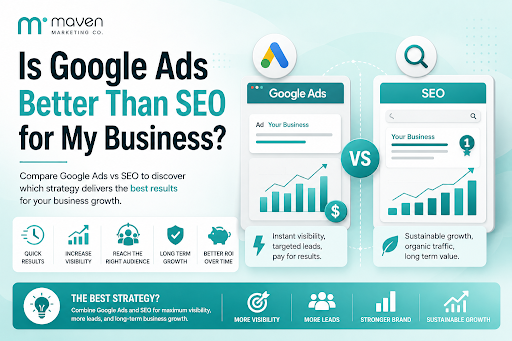
Is Google Ads Better Than SEO for My Business
One of the biggest questions business owners ask when they are planning online growth is whether they should invest in Google Ads or SEO. Both are strong marketing plays that help your company show up in Google search results, but they do things in separate lanes. Google Ads gives quicker visibility and can bring in leads fast, whereas SEO more or less focuses on slow, steady organic traffic that tends to grow the longer you keep building it. Picking the right direction depends on what you want to achieve, how much money you can spend, how crowded the market is, and how quickly you need results, like sooner rather than later. The good news is you don’t always have to choose one or the other; it’s not exactly a black-and-white situation. If you take time to understand the strongest points of both, you can put together a more sensible digital marketing plan that supports consistent expansion. In this guide, we’ll compare Google Ads vs SEO, explain the main differences, and help you figure out what option makes the most sense for your business.

When Should I Hire a Digital Marketing Agency
Growing a business today takes more than just having a website or throwing a post on social media; customers usually search around online, compare providers, skim reviews, and basically expect the brand to show up with a solid digital presence before they even think about buying. Many businesses try to run their marketing themselves, but there comes a point when “doing it all in-house” becomes clunky and hard to manage, all at once. Knowing when to hire a digital marketing agency can end up making a big, real difference for your growth. If you’re not getting enough leads, or your online visibility feels stuck, or sales are just not moving, the right agency can bring the know-how, plus a clear plan, to help you get noticeably better outcomes. In this guide, we’ll dig into what a digital marketing agency actually does, the usual signs it’s time to bring one on, and how picking the right marketing partner can help your business move forward at a faster pace.
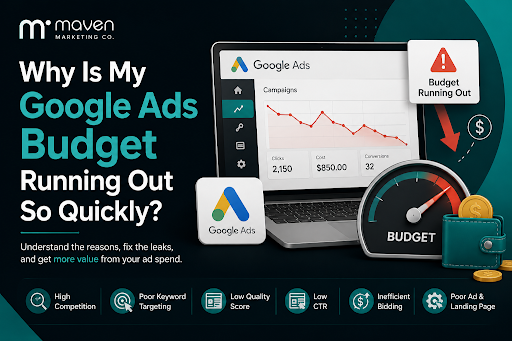
Why Is My Google Ads Budget Running Out So Quickly
Running a successful Google Ads budget isn’t only about throwing more money at it. It’s more like making every dollar, doing a bit extra. A lot of businesses start a Google Ads campaign with big hopes, then find out their daily budget is gone within a few hours, and that feels weird, right? After that, your ads stop showing effectively, new leads slip away, and your return on investment dips. So if your Google Ads budget is running out too fast, don’t stress. It’s a fairly common issue, and in most situations, it can be repaired with the right approach. There are multiple little things that can drain your advertising money quicker than you expected, from costly keywords to audience targeting that just doesn’t quite fit. In this guide, we’ll walk through why your budget disappears so quickly, how to cut wasteful spend, and the most reliable ways to boost your Google Ads ROI, even if your budget stays the same.