.svg)


%201.svg)

What are the main limitations of AI in SEO that require human expertise?
AI's fundamental limitations in SEO include:
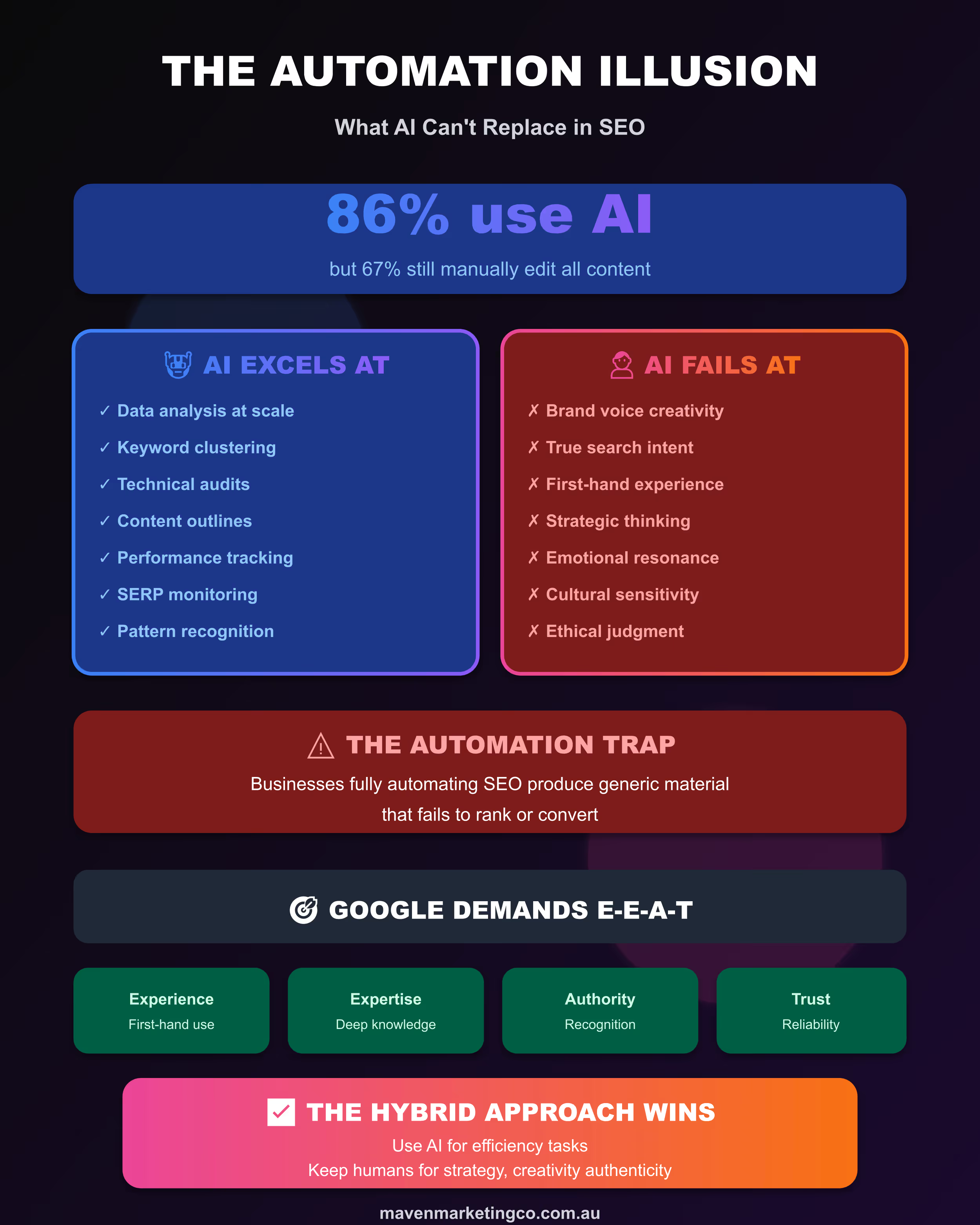
Creativity and emotional resonance where AI struggles to craft compelling brand stories, develop unique voice, create emotionally engaging content, and produce narratives that truly connect with audiences. Human creativity remains irreplaceable for content that resonates.
Strategic thinking and context as AI cannot make nuanced strategic decisions based on market conditions, competition, and brand identity. It processes data but lacks the broader business context needed for effective SEO strategy.
Experience and authenticity which Google's E-E-A-T framework demands. AI cannot provide first hand experience, lived expertise, or genuine authority on topics. Content requiring real-world involvement and original insight needs human input.
Ethical judgment and brand alignment since AI operates on data patterns without understanding brand values, cultural sensitivities, or ethical implications. Humans ensure SEO practices remain transparent and aligned with business integrity.
Understanding true search intent as while AI identifies patterns, humans grasp the emotional and contextual nuance behind searches that AI misses, especially for ambiguous or evolving queries.
Adaptation to algorithm changes where humans interpret broader implications of updates like Google's Helpful Content Update, adjusting strategy proactively rather than reactively responding to data shifts.
How should businesses balance AI automation with human SEO expertise in 2026?
The optimal approach treats AI as collaborative tool rather than replacement:
Use AI for efficiency tasks including keyword clustering, data analysis, SERP monitoring, content outlining, technical audits, and performance tracking. These automatable tasks free humans for strategic work.
Reserve humans for strategic work involving search intent interpretation, brand voice development, content strategy, relationship building, creative storytelling, and ethical oversight. These require judgment AI cannot replicate.
Implement hybrid workflows where AI generates initial drafts and data insights while humans refine tone, add experience based depth, ensure accuracy, and inject emotional intelligence that converts.
Focus on E-E-A-T signals by using AI for research and structure but humans for demonstrating experience, expertise, authoritativeness, and trustworthiness through original insights and first hand knowledge.
Monitor and adjust continuously because the balance shifts as AI capabilities evolve. Regular assessment of what AI handles well versus what requires human touch ensures optimal resource allocation.
Prioritize quality over quantity by using AI to increase output efficiency but maintaining human quality control. Better to publish less content of higher quality than flooding channels with generic AI material that fails to rank or convert.
Research shows businesses using this balanced approach see 30 percent ranking improvements within six months while those relying purely on AI struggle with generic output that search engines increasingly penalize.
The Full Guide
The pitch sounds irresistible. Deploy AI tools, automate keyword research, generate months of content in hours, optimize pages while sleeping, and watch rankings soar. Testimonials promise revolutionary results. Case studies showcase dramatic growth. The implication is clear: manual SEO is obsolete, and businesses clinging to human-driven strategies are digital dinosaurs.
There's just one problem. AI affects SEO by making it smarter rather than obsolete, not by replacing it entirely. The most successful SEO professionals in 2026 aren't asking "Will AI replace me?" They're asking "How can I use AI strategically while protecting the human elements that actually drive rankings?"
Because here's what the automation evangelists rarely mention: businesses that fully automate their content creation and optimization often produce generic material that doesn't match their brand voice or meet what users search for. The quality of AI output drops dramatically as it consumes more AI-generated source material, a phenomenon some call "Model Autophagy Disorder." And search engines, particularly Google, are getting remarkably good at detecting and demoting content that feels robotic or low quality.
The Automation Temptation
Understanding why businesses fall for the automation illusion requires grasping the genuine strengths AI brings to SEO. These capabilities are real, measurable, and valuable when deployed appropriately.
AI excels at processing vast amounts of data quickly. It can analyze search trends, identify keyword opportunities, cluster related terms, and spot patterns that manual analysis might miss. For technical tasks like site audits, broken link detection, and performance monitoring, AI tools provide efficiency that human teams simply cannot match at scale.
Content generation tools can produce drafts, suggest headlines, optimize meta descriptions, and create variations for testing in fractions of the time traditional methods require. For certain content types like financial reports, sports summaries, and data compilations, AI-generated text can be perfectly serviceable with minimal human editing.
Predictive analytics powered by machine learning can forecast which content types might perform well, which keywords are gaining momentum, and which competitors are making moves worth watching. This intelligence helps businesses make more informed strategic decisions faster than reactive approaches allow.
The numbers support AI adoption. According to recent research, 86 percent of SEO professionals have integrated AI into their strategies. Tools like Outranking, Surfer SEO, and Jasper leverage performance data to provide real-time content optimization, competitor analysis, and on-page SEO suggestions, saving hours of manual work.
With such compelling capabilities, why wouldn't businesses automate everything?

Where AI Fundamentally Fails
The limitations become apparent when you examine what actually makes content rank and convert in 2026. Search engines, led by Google's increasingly sophisticated algorithms, have evolved far beyond simple keyword matching. They're attempting to understand quality, relevance, and genuine value in ways that expose AI's fundamental weaknesses.
AI cannot truly create. It arranges patterns based on training data. When tasked with producing content, AI identifies statistical relationships in language and generates text that mimics those patterns. This works adequately for straightforward informational content but fails spectacularly for anything requiring original thinking, unique perspectives, or creative problem solving.
Creativity and brand voice cannot be authentically replicated by pattern matching. Crafting a compelling story that resonates emotionally with specific audiences requires understanding human psychology at levels AI simply doesn't possess. Developing a distinctive brand voice that sets a business apart demands cultural fluency and strategic positioning that algorithms cannot grasp. Creating content that sparks genuine interest rather than passive consumption requires the kind of narrative instinct humans develop through lived experience.
Search engines increasingly prioritize E-E-A-T, Google's framework demanding Experience, Expertise, Authoritativeness, and Trustworthiness. AI fundamentally cannot provide the experience component. It hasn't used your product. It hasn't solved the problems your customers face. It hasn't learned lessons through real-world trial and error. When content requires demonstrating genuine expertise through original insights rather than rehashing information available elsewhere, AI produces hollow imitation rather than valuable expertise.
Search intent understanding represents another critical limitation. While AI can identify patterns in how people search, it struggles with the contextual and emotional nuance behind queries. Why is someone searching "best marketing agency Sydney" at 2am on a Tuesday versus 11am on a Thursday? What emotional state drives someone to search "SEO help urgent" versus "SEO services"? Humans grasp these subtleties through empathy and experience. AI sees data points.
Strategic thinking across multiple business dimensions remains firmly in human territory. SEO doesn't exist in isolation. It intersects with branding, competitive positioning, customer relationships, product development, and long-term business strategy. Making decisions that balance immediate SEO gains against broader business objectives, brand reputation, and strategic positioning requires judgment that AI cannot replicate. Machines optimize for the metrics you give them. Humans understand when optimizing one metric damages more important objectives.
Ethical considerations and cultural sensitivity highlight perhaps AI's most dangerous limitations. AI trained on vast datasets inevitably absorbs biases present in that data. It doesn't understand why certain language might be offensive to specific cultures. It can't grasp why a technically accurate statement might damage brand reputation in certain contexts. It won't recognize when content approaches sensitive topics in ways that require nuance and care. These failures create risk that human oversight must mitigate.

The Quality Versus Quantity Trap
One of the most seductive aspects of AI automation is the promise of massive content volume. Generate 50 blog posts monthly instead of 5. Produce hundreds of product descriptions in an afternoon. Create countless landing page variations for testing. More content equals more visibility equals more traffic, right?
The reality proves more nuanced. Research from MindBees shows that 66 percent of SEO professionals say original content creation has the strongest impact, more than any other tactic. Notice the emphasis: original content. Not generic content. Not rehashed content. Original, expert-driven material that delivers genuine value.
Google's algorithm updates have consistently moved toward rewarding quality over quantity. The Helpful Content Update specifically targeted sites producing large volumes of mediocre content created primarily to rank rather than serve users. Sites that flooded the internet with generic AI content found themselves demoted, regardless of technical optimization.
The challenge is that producing truly high quality content at scale is expensive and time consuming. This economic reality drives businesses toward AI automation. But the result is often content that's technically competent yet strategically worthless. It checks optimization boxes without providing genuine value. It answers questions without offering insights. It fills pages without engaging readers.
The smart approach balances these forces. Use AI to increase efficiency in the production process, but maintain human quality control at every stage. Better to publish 10 genuinely valuable pieces monthly that rank and convert than 50 generic pieces that contribute nothing to business objectives beyond filling the content calendar.
The Hybrid Model That Actually Works
Rather than viewing AI and human expertise as competing approaches, the most successful businesses in 2026 treat them as complementary capabilities within integrated workflows.
The division of labour becomes clear when you map tasks to strengths. AI handles data processing at scale, monitoring rankings and traffic patterns, identifying keyword opportunities through cluster analysis, generating initial content outlines and structures, checking technical SEO elements across hundreds of pages, and tracking competitor activities. These tasks benefit from AI's speed and computational power while requiring minimal creative judgment.
Humans focus on interpreting data within broader business context, making strategic decisions about priority and positioning, crafting brand voice and emotionally resonant messaging, adding experience based insights and original perspectives, building relationships that generate links and authority, and ensuring content meets ethical standards and brand values. These tasks require judgment, creativity, and understanding that AI fundamentally lacks.
The workflow integration might look like this: AI analyzes keyword data and suggests content opportunities. Humans evaluate those opportunities against business strategy and audience needs, selecting topics worth pursuing. AI generates initial outlines incorporating SEO best practices. Humans refine those outlines, adding unique angles and strategic messaging. AI produces draft content based on the enhanced outline. Humans extensively edit, adding personal experience, brand voice, emotional resonance, and originality that transforms competent draft into compelling content. AI handles technical optimization and performance monitoring. Humans interpret results and adjust strategy accordingly.
This hybrid approach allows businesses to achieve the scale benefits of AI while maintaining the quality and authenticity that actually drive rankings and conversions. According to industry data, businesses using this balanced approach see ranking improvements of 30 percent within six months, while those relying purely on AI automation often see stagnant or declining performance as search engines evolve to detect and demote generic content.

Australian Business Context
For Australian businesses, the tension between AI automation and human expertise presents specific considerations worth addressing directly.
The Australian market's relatively smaller size compared to the US or UK means competition often comes from fewer players, but those players may be more sophisticated. In this environment, differentiation through genuine expertise and local cultural fluency becomes more valuable than volume-based strategies. Generic AI content that might marginally succeed in massive markets fails to cut through in tighter competitive landscapes where audiences expect local relevance and cultural understanding.
Australian English carries specific vocabulary, spelling, idioms, and cultural references that AI trained primarily on American English often mishandles. While tools can be configured for Australian spelling, the deeper cultural fluency required for truly resonant content remains challenging for AI. Content that feels authentically Australian versus technically correct but culturally generic makes difference in local market engagement.
Resource constraints at many Australian SMEs create pressure toward automation as cost saving measure. Human SEO expertise is expensive. AI tools promise cheaper alternative. However, this short-term cost focus often creates longer-term visibility problems. Better to invest in smart hybrid approaches that use AI for efficiency while preserving human strategic direction than to automate fully and wonder why rankings never materialize.
Regulatory considerations around AI-generated content and disclosure requirements will likely tighten in Australia as they have in other markets. Getting ahead of these requirements through transparent practices about AI use protects businesses from future compliance issues while building trust with audiences increasingly wary of synthetic content.
The Search Engine Response
Understanding how search engines are adapting to AI-generated content provides crucial context for strategy development. Google in particular has been remarkably clear about its position, even as that position creates apparent contradictions.
Google states that not all AI content is inherently bad, and using automation to create content doesn't automatically violate spam policies. Content quality matters, not how it was produced. However, Google simultaneously emphasizes that content created primarily to manipulate rankings rather than serve users violates their guidelines, regardless of whether humans or machines created it.
The practical implementation of these principles shows clear patterns. Generic AI content that rehashes information available elsewhere without adding value gets demoted. AI content demonstrating genuine expertise through original insights, first hand experience, and unique perspectives can rank well. The difference lies not in the tool used but in whether the content serves user needs authentically.
Google's emphasis on E-E-A-T creates particular challenges for pure AI approaches. The Experience component demands content demonstrating real-world involvement with the topic. Expertise requires insights that come from deep knowledge rather than pattern matching. Authoritativeness depends on recognition by others in the field. Trustworthiness reflects ongoing reliability and accuracy. While AI can assist with all these elements, it cannot provide them independently.
The evolution of search features like AI Overviews and Google's Search Generative Experience creates additional complexity. These features pull from existing content to generate synthetic answers, potentially reducing clicks to original sources. However, well structured content that search engines can easily parse and cite gains visibility even when direct traffic decreases. This means technical SEO and structured data implementation, areas where AI excels, become more important even as content quality demands remain high.
Looking Forward: 2026 and Beyond

Predictions about SEO's future vary wildly, but certain trends appear consistent across expert analyses. AI will continue becoming more sophisticated, handling increasingly complex tasks currently requiring human input. Search engines will become better at detecting low-quality AI content while also integrating AI more deeply into results. The businesses that thrive will be those treating this evolution as opportunity rather than threat.
The skills required for SEO success are expanding. Technical understanding of how AI tools work becomes more important. Data literacy to interpret AI-generated insights proves essential. Strategic thinking to deploy AI appropriately while preserving human value remains crucial. And creative skills to produce genuinely original content become even more valuable as generic content floods the market.
Some experts predict that successful SEO professionals will need to develop AI engineering capabilities, training custom models and deploying specialized agents for specific tasks. Whether that extreme proves necessary for most businesses remains unclear. What seems certain is that purely manual approaches become unsustainable while purely automated approaches prove ineffective.
The middle path requires continuous learning and adaptation. As AI capabilities expand, the boundary between appropriate automation and necessary human input shifts. Regular reassessment of what AI can handle effectively versus what requires human expertise ensures resources get allocated optimally. The businesses winning in 2026 and beyond will be those that maintain this flexible, pragmatic approach rather than dogmatically committing to either extreme.
The Bottom Line
The automation illusion promises effortless success through technology deployment alone. The reality is more nuanced and ultimately more interesting. AI is genuinely transforming SEO, making certain tasks faster, cheaper, and more data-driven than ever before. But it's not replacing SEO fundamentals. It's raising the bar for what those fundamentals demand.
Search intent understanding, brand voice development, creative storytelling, strategic positioning, ethical judgment, and authentic expertise remain firmly in human territory. These aren't vestigial skills hanging on temporarily before AI catches up. They're the core capabilities that determine whether content serves users, builds authority, and drives business results.
Australian businesses face a choice. Pursue the automation illusion, generating endless generic content that fails to rank and doesn't convert. Or embrace the hybrid reality, using AI strategically for efficiency while investing in the human expertise that actually differentiates successful SEO from wasted effort.
The fundamentals haven't disappeared. They've just become more valuable as automation makes technical competence widespread but genuine excellence rare. Focus on that excellence, leverage AI where appropriate, and watch competitors chase the illusion while you build sustainable organic visibility.
Ready to Build SEO That Actually Works?
At Maven Marketing Co, we help Australian businesses implement intelligent SEO strategies that balance AI efficiency with human expertise. Our team understands which tasks benefit from automation and which require the judgment, creativity, and strategic thinking that only humans provide.
Whether you're overwhelmed by AI tool options, uncertain about balancing automation with quality, or simply want SEO that drives real business results rather than vanity metrics, we're here to cut through the hype and build sustainable organic visibility.
Let's develop your human-intelligent SEO strategy

Table of contents
read more blogs
Is Google Ads Better Than SEO for My Business
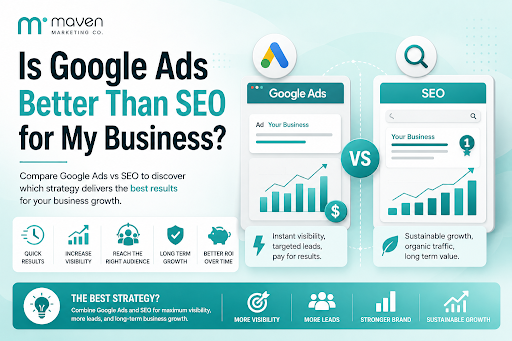
One of the biggest questions business owners ask when they are planning online growth is whether they should invest in Google Ads or SEO. Both are strong marketing plays that help your company show up in Google search results, but they do things in separate lanes. Google Ads gives quicker visibility and can bring in leads fast, whereas SEO more or less focuses on slow, steady organic traffic that tends to grow the longer you keep building it. Picking the right direction depends on what you want to achieve, how much money you can spend, how crowded the market is, and how quickly you need results, like sooner rather than later. The good news is you don’t always have to choose one or the other; it’s not exactly a black-and-white situation. If you take time to understand the strongest points of both, you can put together a more sensible digital marketing plan that supports consistent expansion. In this guide, we’ll compare Google Ads vs SEO, explain the main differences, and help you figure out what option makes the most sense for your business.

When Should I Hire a Digital Marketing Agency
Growing a business today takes more than just having a website or throwing a post on social media; customers usually search around online, compare providers, skim reviews, and basically expect the brand to show up with a solid digital presence before they even think about buying. Many businesses try to run their marketing themselves, but there comes a point when “doing it all in-house” becomes clunky and hard to manage, all at once. Knowing when to hire a digital marketing agency can end up making a big, real difference for your growth. If you’re not getting enough leads, or your online visibility feels stuck, or sales are just not moving, the right agency can bring the know-how, plus a clear plan, to help you get noticeably better outcomes. In this guide, we’ll dig into what a digital marketing agency actually does, the usual signs it’s time to bring one on, and how picking the right marketing partner can help your business move forward at a faster pace.
Why Is My Google Ads Budget Running Out So Quickly
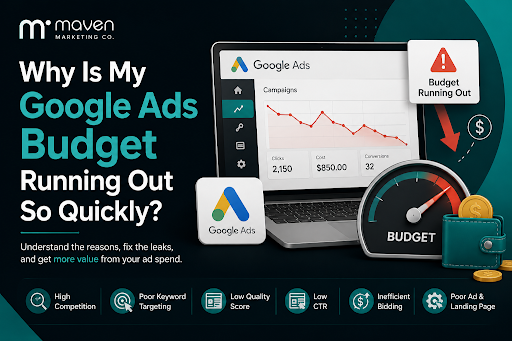
Running a successful Google Ads budget isn’t only about throwing more money at it. It’s more like making every dollar, doing a bit extra. A lot of businesses start a Google Ads campaign with big hopes, then find out their daily budget is gone within a few hours, and that feels weird, right? After that, your ads stop showing effectively, new leads slip away, and your return on investment dips. So if your Google Ads budget is running out too fast, don’t stress. It’s a fairly common issue, and in most situations, it can be repaired with the right approach. There are multiple little things that can drain your advertising money quicker than you expected, from costly keywords to audience targeting that just doesn’t quite fit. In this guide, we’ll walk through why your budget disappears so quickly, how to cut wasteful spend, and the most reliable ways to boost your Google Ads ROI, even if your budget stays the same.