.svg)


%201.svg)

Why does Q&A format content perform better in AI search than traditional content?
Q&A format succeeds in AI search because it matches how users interact with AI systems:
Direct answer extraction where AI systems pull clean, self-contained responses without needing surrounding context. Traditional narrative structures bury answers within paragraphs, forcing AI to interpret and synthesize, increasing error risk and reducing citation likelihood.
Standalone comprehension meaning each Q&A pair makes sense independently, allowing AI to extract and present individual answers without the full article. Traditional blog posts require reading previous sections for context, making them harder for AI to parse and cite accurately.
Question-based discovery as users type complete questions into ChatGPT, Perplexity, and Google AI Mode rather than keywords. Content with question headings that mirror actual user queries matches this search behavior directly, increasing relevance signals.
Structured clarity that enables AI to identify which specific answer addresses the query. When content explicitly states "How do I reduce website loading time?" followed by "You can reduce website loading time by optimizing images, enabling compression, and choosing faster hosting," AI systems confidently cite that source.
Multiple citation opportunities since each Q&A pair represents a potential citation point. A single article with ten questions creates ten opportunities to appear in AI answers, versus traditional articles offering one or two extraction points.
Research confirms this pattern with AI Overviews appearing in 88 percent of informational intent queries, and content structured as questions and direct answers showing significantly higher citation rates than narrative content covering identical topics.
What specific elements make Q&A content more likely to be cited by AI systems?
The most cited Q&A content includes:
Question headings using H2 or H3 tags that mirror exact user queries, like "How does a CDP improve personalization?" rather than vague titles like "Personalization Benefits." This alignment with search intent increases AI matching confidence.
Immediate direct answers placing the core response in the first one to two sentences before expanding detail. "You can reduce website loading time by optimizing images, enabling compression, and choosing faster hosting. Here's how each works..." gives AI the extractable answer upfront.
Concise comprehensive responses typically 75 to 150 words per answer, providing complete information without unnecessary verbosity. AI systems prioritize answers that thoroughly address questions without requiring readers to piece together information from multiple sections.
Structured formatting using bullet points for lists, numbered steps for processes, and clear paragraphing that aids both human reading and AI parsing. Dense text blocks reduce citation likelihood.
Named credible authorship with author bylines showing relevant credentials or experience signals trustworthiness to AI systems evaluating source credibility.
Recent publication or update dates as AI systems heavily weight recency, especially for fast-changing topics. One analysis noted ChatGPT prioritizes recent content over older comprehensive guides.
Clean semantic HTML with proper heading hierarchy, relevant schema markup where appropriate, and crawlable page structure that helps AI systems understand content organization and extract specific segments accurately.
.avif)
Search as we knew it is disappearing. Users no longer type "best project management tools" and scroll through ten blue links comparing options. Instead, they ask ChatGPT "What project management tool should a 15-person marketing agency use?" and receive a synthesized answer pulling from multiple sources, with citations buried at the bottom if they're included at all.
This shift isn't theoretical. It's happening now, measurably affecting how people find information and, critically, how they discover businesses.
The uncomfortable question Australian businesses must answer: if your content isn't being cited by AI systems, does it exist at all in this new search landscape?
Understanding the AI Search Shift
Traditional search optimisation focused on ranking in position one through three for target keywords. The prize was prominent placement on page one where users would click through to your site. Click-through rates dropped dramatically past position three, making those top spots incredibly valuable.
AI search fundamentally changes this dynamic. When AI Overviews appear, which they now do in 88 percent of informational queries, only 8 percent of users click through to traditional organic links. The AI-generated answer satisfies most users directly within the search interface. No click required.
For some businesses, this feels catastrophic. You've invested years building organic traffic through traditional SEO, and suddenly that traffic potential is evaporating as AI answers the questions your content used to answer.
But here's the reframe: getting cited inside AI answers is the new page one. When ChatGPT references your content, when Perplexity quotes your explanation, when Google's AI Overview pulls from your Q&A, that's the visibility that matters. You may not get the click, but you get the credibility, the brand mention, and the authority signal.
The businesses that understand this earliest will dominate their categories in AI search while competitors optimize for a search paradigm that's already becoming less relevant.
Why Q&A Format Works

The structure of question and answer content aligns perfectly with how AI systems process and present information. Understanding why this format succeeds helps you implement it strategically rather than superficially.
AI language models work by predicting likely next tokens based on training data patterns. When a user asks a question, the model searches its training for content that reliably provides accurate answers to similar questions. Content explicitly formatted as Q&A creates clear signal-to-noise ratios that increase citation confidence.
Think about what happens when AI encounters a traditional blog post titled "Ultimate Guide to Email Marketing." The post contains valuable information about deliverability, list building, and campaign strategy, but each topic flows narratively into the next. When someone asks ChatGPT "How do I improve email deliverability?" the AI must parse through the narrative structure, identify the relevant section, extract the key points, and synthesize an answer. This interpretation layer introduces potential errors and reduces confidence.
Contrast this with encountering a Q&A article containing "How do I improve email deliverability?" as an H2 heading followed by a clear, complete answer. The AI can confidently extract that specific Q&A pair knowing it's self-contained and addresses the query directly. The work of interpretation is already done by the content structure itself.
This explains why some comprehensive guides that rank beautifully in traditional search get ignored by AI systems while shorter, simpler Q&A articles get cited repeatedly. It's not about content quality in absolute terms but about format compatibility with AI processing.
The standalone comprehension factor matters enormously. Each Q&A pair functions independently, allowing AI to extract and present single answers without needing the full article context. This modular structure creates multiple citation opportunities within a single piece of content. Your article with ten strong Q&A pairs has ten chances to appear in AI answers, not just one.
Crafting Effective Questions

The question itself determines whether your content gets discovered and cited. Most businesses get this wrong by writing questions they think sound professional rather than questions people actually ask.
Start by mining real user queries. Google Search Console shows exactly what questions people type that lead to your site. ChatGPT itself will tell you what variations of questions people ask about your topic. Reddit threads in relevant communities reveal how your audience phrases questions when seeking help from peers. Customer support tickets contain the actual language customers use when confused or seeking information.
The questions that work best mirror this natural language exactly. "How does CDP improve marketing personalization?" will get asked. "Exploring the potential of customer data platforms for personalized marketing strategies" will not. The second sounds like a conference panel title. The first sounds like a human seeking help.
Question length matters, but not how you might think. Very short questions lack specificity: "What is SEO?" gets asked millions of times with massive competition. Extremely long questions become too specific: "What is the best SEO strategy for a B2B SaaS company selling project management software to mid-market enterprises in Australia?" narrows to an audience of near zero. The sweet spot sits between these extremes, specific enough to target clear intent without becoming absurdly niche.
Consider search volume and competition realistically. The perfect question has sufficient search volume to matter but isn't so competitive that your answer gets buried among hundreds of alternatives. Tools like AnswerThePublic, AlsoAsked, and Google's "People also ask" feature reveal related questions with less competition than primary terms.
Group questions logically within your content. If you're addressing email marketing, don't randomly mix questions about deliverability, list building, design, and analytics. Cluster related questions together so readers and AI systems can understand topical relationships. This clustering also helps with internal linking, allowing you to reference related Q&A content that provides additional depth.
Writing Answers That Get Cited
The answer structure determines whether AI systems extract and cite your content confidently. Start with the direct answer immediately, then provide supporting detail.
This inverted pyramid approach puts conclusions first, reasoning second. "You can improve email deliverability by warming up your IP address, maintaining clean lists, implementing SPF and DKIM authentication, and monitoring sender reputation. Here's how each factor works..." gives AI the complete answer upfront, allowing citation even if the supporting detail gets truncated.
Compare this to the traditional approach: "Email deliverability depends on numerous factors working together. Your sending infrastructure plays a role, as does list quality and authentication protocols. When combined effectively, these elements..." This buries the actionable answer beneath context, making AI extraction harder and less reliable.
Answer length matters more than you'd expect. Too short suggests superficiality: "Improve deliverability by using authentication." That's technically true but unhelpfully vague. Too long tests reader patience and AI processing limits. The reliable range sits between 75 and 150 words per answer for most topics, though complexity sometimes justifies longer responses.
Structure within answers aids both readability and citation. Use bullet points for lists of items or options. Use numbered lists for sequential steps or processes. Use clear paragraphing with one main idea per paragraph. Break dense information into scannable chunks that both humans and AI can parse efficiently.
Avoid ambiguous language that requires interpretation. "Consider implementing authentication protocols" is weaker than "Implement SPF, DKIM, and DMARC authentication protocols for your domain." Be specific. Name tools, techniques, and methods rather than speaking in generalities.
Include relevant numbers and data when available, cited appropriately. "Studies show email authentication improves deliverability" is less compelling than "Implementing DKIM authentication can improve inbox placement rates by 10-15% according to Return Path research." AI systems value specificity and seem to weight cited data positively in credibility assessments.
End answers with clear next steps or related considerations when appropriate. "Once you've implemented authentication, monitor your sender reputation through services like Google Postmaster Tools and adjust sending practices based on the feedback" guides readers naturally toward deeper engagement while showing AI systems your content provides actionable guidance.
Technical Optimization for AI
Beyond content structure and quality, technical factors influence whether AI systems discover, index, and cite your content. These aren't mysterious black boxes but logical extensions of how these systems work.
Crawlability remains fundamental. If AI can't access your content, it can't cite it. Ensure your robots.txt allows AI crawler access. Major AI systems respect standard crawling protocols but may use different user agents. Check that you're not accidentally blocking crawlers from OpenAI, Anthropic, Google's AI services, or other relevant systems.
Page speed affects everything. Slow pages hurt traditional SEO and appear to disadvantage AI citation likelihood as well. Users asking questions expect fast answers, and systems that must wait seconds for your page to load may skip to faster alternatives. Core Web Vitals thresholds matter here just as they do for traditional search.
Semantic HTML structure helps AI systems understand content organization. Proper heading hierarchy (H1 for page title, H2 for main questions, H3 for sub-questions) signals information architecture clearly. Avoid div-based heading styles that look like headings but don't use proper HTML tags. AI relies on markup semantics, not visual appearance.
Schema markup, particularly FAQ schema and Q&A schema, explicitly tells search engines and AI systems about question-answer content structure. While not every AI system directly uses schema, implementing it costs little and provides potential advantage as these systems evolve. At minimum, it helps your Q&A content appear in Google's rich results, which feeds into AI training data.
Mobile optimization isn't just nice to have anymore. Mobile-first indexing means Google primarily uses mobile content for all indexing, and mobile versions feed AI training. If your desktop site has rich Q&A content but your mobile site shows truncated versions, you're handicapping your AI visibility.
Update dates signal freshness to both traditional search and AI systems. For topics that evolve, regularly updated content signals reliability. One analysis noted ChatGPT appears to prioritize recent content significantly when choosing between sources of similar quality. For evergreen content, periodic reviews ensuring accuracy and updating publication dates maintains relevance signals.
The Australian Business Angle

Australian businesses face specific considerations when optimizing for AI search that differ from global contexts. Understanding these nuances prevents wasted effort on strategies that work elsewhere but fail locally.
Australian English matters for question phrasing. Users ask "What's the best mobile plan?" not "What's the best cell phone plan?" They reference "superannuation" not "401(k)" and "uni" not "college." AI systems trained primarily on American English sometimes struggle with regional language variations, but using authentic Australian phrasing in your questions ensures you match how your actual audience searches.
Local context and examples increase relevance for Australian queries. When answering "How do I start a business in Australia?" include specifics about ABN registration, ASIC requirements, and Australian tax obligations rather than generic global advice. AI systems attempting to answer location-specific queries prioritize sources demonstrating local expertise.
Smaller market size means less competition for many queries. While "best email marketing software" faces global competition from thousands of sources, "best email marketing software for Australian small businesses" has substantially fewer strong answers. This creates opportunities to establish authority in niche intersections that matter to your specific audience.
Time zone and cultural considerations affect when content gets published and promoted. Publishing when Australian users are active increases initial engagement signals that may influence AI training data. Cultural references and examples that resonate with Australian audiences create stronger engagement metrics that potentially feed into quality signals.
Regulatory and compliance context specific to Australia should be reflected in Q&A content for relevant industries. Financial advice, legal information, healthcare guidance, and employment matters all have Australian-specific frameworks. Generic international advice not only fails to serve users but may be actively misleading, damaging your credibility with both humans and AI assessment of content trustworthiness.
Measuring Success in AI Search
Traditional metrics like organic traffic and keyword rankings tell incomplete stories in AI search environments. You need new measurement approaches that capture citation performance and brand visibility within AI-generated answers.
Direct traffic monitoring becomes more important. When AI systems cite your content without linking, brand mentions increase. Users who see your name associated with helpful answers may directly search your brand later. Watch for upticks in brand search traffic that correlate with AI citation increases.
Citation tracking requires manual effort currently. Regularly query relevant questions in ChatGPT, Perplexity, Google AI Overviews, and other systems, noting when your content gets cited. Build a spreadsheet tracking which questions result in citations, from which sources, and how prominently you appear. This tedious process currently lacks good automation but provides critical intelligence.
Brand mention monitoring across the web may pick up increased references. If AI citations drive awareness, you might see more social media mentions, forum references, or other signals that your brand is gaining mindshare even without traditional backlinks.
Content performance in traditional search still matters as training data source. Content that ranks well in standard search results likely feeds into AI training datasets. Maintain traditional SEO fundamentals while adding AI-optimized Q&A formats rather than abandoning proven practices entirely.
Engagement metrics when users do click through become more valuable. If users coming from AI citations have strong engagement (low bounce rates, good time on page, multiple pages per session), that signals content quality to AI systems assessing trustworthiness for future citations.
Customer feedback and support tickets may reveal AI influence. If customers mention finding you through AI search or reference specific Q&A content you've created, that qualitative feedback indicates your strategy is working even before quantitative metrics show clear signals.

Building Your Q&A Content Strategy
Implementing Q&A content effectively requires systematic approach rather than random creation. Start by auditing your existing content library to identify pieces that could be restructured or supplemented with Q&A formats.
High-performing blog posts that currently rank well should be augmented with Q&A sections. Don't discard the narrative content that works but add explicit Q&A segments that make the same information more accessible to AI systems. This hybrid approach serves both traditional search and AI search simultaneously.
Create standalone Q&A hub pages for major topics in your domain expertise. These comprehensive resources addressing 10-20 related questions become powerful referral sources for AI citations. Structure these as ultimate guides to specific question themes, ensuring each answer stands alone while the collection demonstrates topical authority.
Develop a question bank across your organization. Sales teams know what prospects ask. Customer support knows what customers struggle with. Product teams understand technical questions. Aggregate these questions systematically and prioritize based on frequency, business impact, and competitive opportunity.
Assign questions to appropriate team members based on genuine expertise. The most compelling Q&A content comes from people with real experience answering those questions repeatedly. Their expertise shows through in the specificity, nuance, and practical examples they provide.
Publish consistently rather than sporadically. AI systems appear to favor sources that regularly produce quality content over sites that publish occasionally. A steady cadence of two to four strong Q&A pieces monthly likely outperforms quarterly massive publications in building citation momentum.
Promote Q&A content across channels to build engagement signals. Share on social media, include in email newsletters, reference in sales materials. The engagement these activities generate feeds into various quality signals that AI systems may use for credibility assessment.
Update and expand successful Q&A content over time. When certain questions get cited regularly, that indicates high value. Expand those answers with additional detail, current examples, and updated information. This continuous improvement compounds advantage in AI search.
The Reality Check
Let's be honest about what this shift means. For businesses that have built significant organic traffic through traditional SEO, the AI search transition feels threatening. Your hard-won rankings may drive less traffic as AI answers satisfy users directly.
This is genuinely disruptive. Some business models built entirely on organic traffic acquisition will need fundamental rethinking. If you monetize purely through display ads on high-traffic informational content, AI citations without clicks devastate that model.
But for businesses that use content marketing to build authority, credibility, and brand awareness before converting customers through direct channels, AI citations may actually amplify your strategy. Getting quoted by ChatGPT when someone asks about your category establishes you as an authority even without the click. That brand impression has real value.
The businesses that will struggle most are those creating me-too content that ranks purely through technical optimization rather than genuine expertise or unique perspective. AI systems aggregate information across sources, making any individual mediocre source increasingly unnecessary. Excellence and distinctiveness become more important, not less.
The opportunity exists for Australian businesses willing to adapt early. Many competitors remain focused exclusively on traditional SEO, creating a window where thoughtful Q&A content strategies face less competition. This won't last indefinitely. The playbook will become standard. Moving now captures advantage.
Whether you view this shift as threat or opportunity largely depends on how you've been using content and how adaptable your strategy proves. What's non-negotiable is acknowledging the shift is happening and requires response.
Ready to Adapt Your Content for AI Search?
At Maven Marketing Co, we help Australian businesses develop content strategies that work in both traditional search and AI search environments. Our team understands how to structure Q&A content that gets cited by AI systems while maintaining the narrative and brand voice that resonates with human readers.
Whether you need help auditing existing content for AI optimization opportunities, developing comprehensive Q&A resources for your key topics, or building sustainable content processes that serve both search paradigms, we're here to guide you through this transition.
Let's build content that wins in AI search

Table of contents
read more blogs
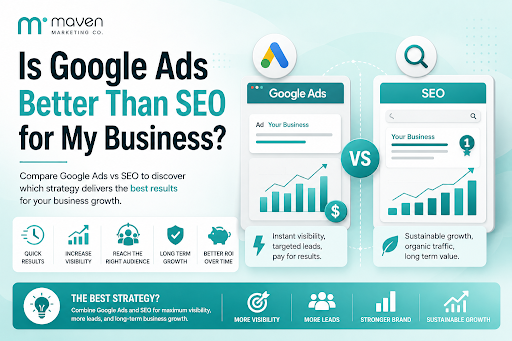
Is Google Ads Better Than SEO for My Business
One of the biggest questions business owners ask when they are planning online growth is whether they should invest in Google Ads or SEO. Both are strong marketing plays that help your company show up in Google search results, but they do things in separate lanes. Google Ads gives quicker visibility and can bring in leads fast, whereas SEO more or less focuses on slow, steady organic traffic that tends to grow the longer you keep building it. Picking the right direction depends on what you want to achieve, how much money you can spend, how crowded the market is, and how quickly you need results, like sooner rather than later. The good news is you don’t always have to choose one or the other; it’s not exactly a black-and-white situation. If you take time to understand the strongest points of both, you can put together a more sensible digital marketing plan that supports consistent expansion. In this guide, we’ll compare Google Ads vs SEO, explain the main differences, and help you figure out what option makes the most sense for your business.

When Should I Hire a Digital Marketing Agency
Growing a business today takes more than just having a website or throwing a post on social media; customers usually search around online, compare providers, skim reviews, and basically expect the brand to show up with a solid digital presence before they even think about buying. Many businesses try to run their marketing themselves, but there comes a point when “doing it all in-house” becomes clunky and hard to manage, all at once. Knowing when to hire a digital marketing agency can end up making a big, real difference for your growth. If you’re not getting enough leads, or your online visibility feels stuck, or sales are just not moving, the right agency can bring the know-how, plus a clear plan, to help you get noticeably better outcomes. In this guide, we’ll dig into what a digital marketing agency actually does, the usual signs it’s time to bring one on, and how picking the right marketing partner can help your business move forward at a faster pace.
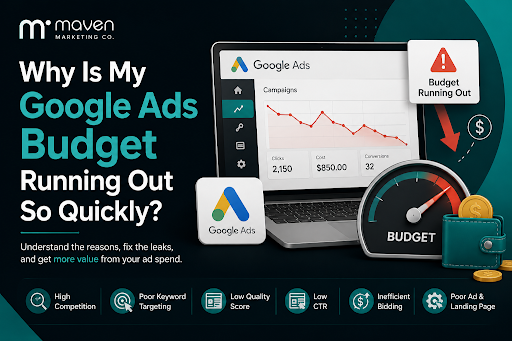
Why Is My Google Ads Budget Running Out So Quickly
Running a successful Google Ads budget isn’t only about throwing more money at it. It’s more like making every dollar, doing a bit extra. A lot of businesses start a Google Ads campaign with big hopes, then find out their daily budget is gone within a few hours, and that feels weird, right? After that, your ads stop showing effectively, new leads slip away, and your return on investment dips. So if your Google Ads budget is running out too fast, don’t stress. It’s a fairly common issue, and in most situations, it can be repaired with the right approach. There are multiple little things that can drain your advertising money quicker than you expected, from costly keywords to audience targeting that just doesn’t quite fit. In this guide, we’ll walk through why your budget disappears so quickly, how to cut wasteful spend, and the most reliable ways to boost your Google Ads ROI, even if your budget stays the same.