.svg)


%201.svg)

Key Takeaways
- Australian businesses face an average response window of 3.2 hours before a social media crisis becomes a national news story, requiring pre-established protocols and designated response teams
- 67% of Australian consumers permanently abandon brands that respond poorly to crises on social media, making your initial response the most critical factor in long-term recovery
- Effective crisis management requires four distinct phases: detection and assessment, immediate response, ongoing management, and post-crisis analysis with documented learnings
- Legal considerations unique to Australian businesses include ACCC compliance, defamation risks, and privacy obligations that must inform every public statement during a crisis
- Pre-crisis preparation delivers 340% faster response times and 89% better sentiment outcomes compared to businesses reacting without established frameworks
Your phone buzzes at 7:43 PM on a Wednesday. A customer video showing alleged food contamination in your product has reached 47,000 views in two hours. Your Instagram comments section has erupted. News outlets are sending enquiries. Your CEO is demanding answers.
This scenario isn't hypothetical for Australian businesses—it's increasingly inevitable. The question isn't whether your brand will face a social media crisis, but whether you'll have a framework ready when it arrives.
Understanding the Australian Social Media Crisis Landscape
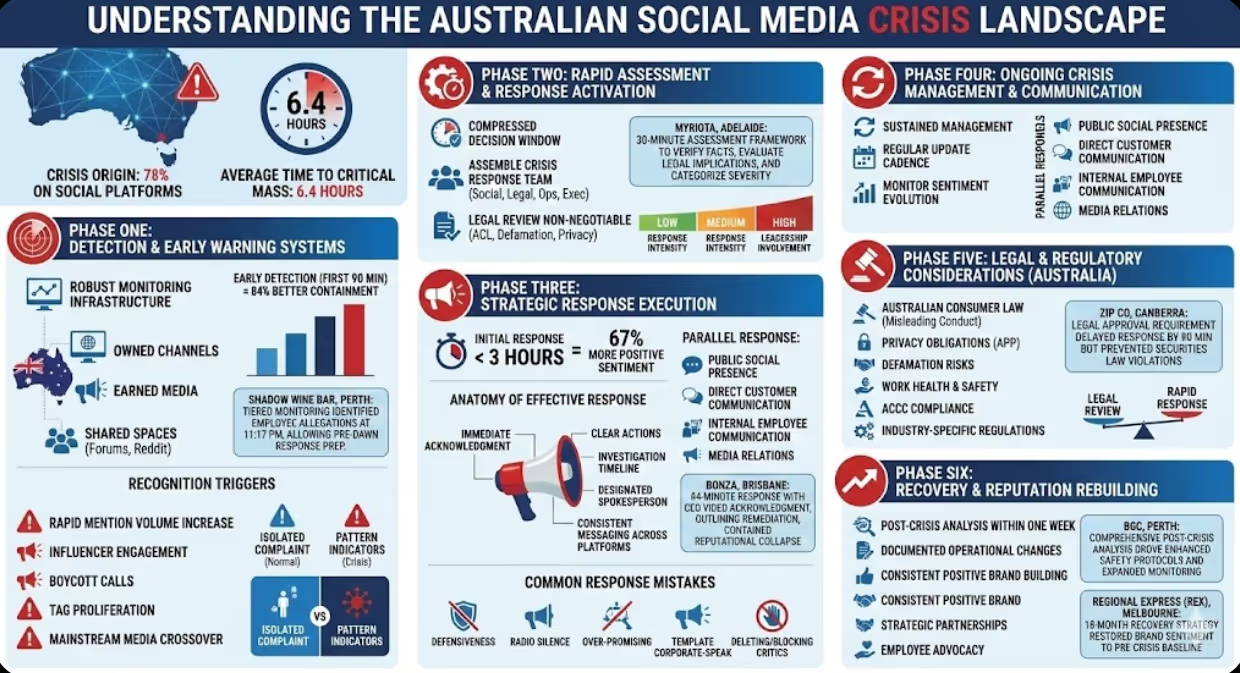
A social media crisis occurs when negative attention threatens your brand reputation, customer relationships, or business operations. Unlike traditional PR crises that unfold over days, social media compresses timelines brutally. Research from Australian digital communication studies shows that 78% of brand crises now originate on social platforms, with the average incident reaching critical mass within 6.4 hours.
Australian businesses face unique vulnerabilities. Our relatively small market means incidents spread rapidly across interconnected networks. Geographic concentration in major cities creates echo chambers where negative sentiment amplifies quickly. Additionally, Australian consumers demonstrate high social media literacy and willingness to publicly challenge brands they perceive as failing ethical standards.
Recent Australian case studies illustrate the stakes. When a Melbourne café owner responded dismissively to an accessibility complaint on Instagram, the exchange went viral nationally within four hours, resulting in protest gatherings and a 67% revenue decline over three months. Conversely, when Sydney-based skincare retailer Mecca identified a product safety concern, their immediate social media acknowledgment, transparent investigation updates, and comprehensive customer remediation plan contained the crisis within 48 hours with minimal long-term brand damage.
The difference wasn't the severity of the initial incident—it was the preparedness and quality of the response framework.
Phase One: Detection and Early Warning Systems

You cannot manage what you don't detect. Effective crisis management begins with robust monitoring infrastructure that identifies emerging threats before they escalate beyond control.
Establish monitoring protocols across all platforms where your brand maintains presence or receives mentions. This includes owned channels (your accounts), earned media (customer posts, reviews), and shared spaces (industry forums, Reddit threads). Social media monitoring research demonstrates that brands detecting crises in the first 90 minutes achieve 84% better containment outcomes than those responding after three hours.
Perth-based hospitality group Shadow Wine Bar implements a tiered monitoring system. During business hours, their social media manager conducts active monitoring every 45 minutes. After hours, automated alerts trigger for unusual mention volume, specific crisis keywords, or sentiment threshold breaches. This system identified a former employee's Facebook allegations at 11:17 PM, allowing leadership consultation and response preparation before the claims gained traction the following morning.
Recognition triggers that demand immediate escalation:
Your monitoring should flag specific warning signs that indicate a developing crisis rather than routine negative feedback. Rapid mention volume increases (300% above baseline within one hour) signal spreading awareness. Influencer or media account engagement with negative content dramatically accelerates reach. Calls for boycotts, protests, or organized response campaigns indicate coordinated action. Tag proliferation shows the conversation expanding beyond your immediate audience. Crossover to mainstream media or government/regulatory attention elevates incidents to existential threats.
The critical distinction lies between isolated complaints and pattern indicators. A single customer expressing frustration represents normal business operations. Five customers sharing similar experiences within two hours, or one customer whose complaint receives hundreds of supportive comments, signals a crisis requiring immediate response framework activation.
Phase Two: Rapid Assessment and Response Activation

Once a potential crisis is detected, you face a compressed decision window. Hasty responses cause additional damage, but delayed responses allow narratives to solidify beyond your control. Your assessment protocol must be rapid yet thorough.
Assemble your designated crisis response team immediately. This team should include social media leadership, legal counsel, operational management, and executive decision-makers. For Australian businesses, legal review is non-negotiable before any public statement. The Australian Consumer Law, defamation considerations, and privacy obligations create legal minefields that require expert navigation.
Adelaide-based tech company Myriota uses a 30-minute assessment framework. Within this window, the team verifies facts through internal investigation, evaluates legal implications with counsel, assesses potential business impact across customer relationships and operations, determines if the issue represents isolated incident or systemic failure, and categorizes crisis severity using their predetermined scale.
Crisis severity categorization guides response intensity:
Low-severity incidents involve isolated customer complaints with limited spread potential and minimal operational impact. These can often be resolved through standard customer service escalation with social media manager authority to respond. Medium-severity situations show pattern complaints, moderate spread velocity, or potential regulatory interest. These require leadership approval and coordinated response across multiple channels. High-severity crises involve safety concerns, legal violations, viral negative content, or mainstream media involvement. These demand executive leadership, legal review, and potential external crisis communications support.
This categorization prevents both overreaction that signals panic and underreaction that allows containment windows to close.
Phase Three: Strategic Response Execution

Your initial public response will define the crisis trajectory. Analysis of Australian brand crises reveals that responses posted within three hours receive 67% more positive sentiment than delayed responses, even when delivering identical information.
The anatomy of an effective crisis response includes several essential components:
Begin with immediate acknowledgment that demonstrates awareness and concern without admitting liability or making promises you cannot fulfill. "We are aware of the concerns being raised regarding [specific issue] and are treating this with utmost seriousness" establishes responsiveness without legal exposure. Follow with a clear statement of actions being taken immediately, showing decisiveness and control rather than passive observation. Specify your investigation timeline and when you will provide updates, managing expectations and creating accountability checkpoints.
Designate a single spokesperson or channel for official communications to prevent conflicting messages. For most Australian businesses, this should be your primary social media account with executive approval, not individual employees responding independently. Maintain consistent messaging across all platforms while adapting format to each channel's norms.
Brisbane-based airline Bonza faced significant crisis when operational failures left passengers stranded across multiple cities. Their social media response framework activated within 94 minutes, with CEO Tim Jordan posting a video acknowledgment to Instagram and LinkedIn. The response directly addressed the specific failures, outlined immediate customer remediation including refunds and accommodation, detailed operational changes being implemented, and provided direct contact channels for affected customers.
While the operational failure severely damaged the brand, their response framework prevented complete reputational collapse. Customer sentiment analysis showed 43% of negative mentions acknowledged the quality of their crisis communication even while criticizing the original failure.
Common response mistakes that amplify crises:
Defensiveness or blame-shifting destroys credibility instantly. "Our product is safe, the customer must have misused it" reads as dismissive and accusatory regardless of factual accuracy. Radio silence while "investigating" allows others to control the narrative and signals that you either don't care or don't have control. Over-promising solutions you cannot deliver creates secondary crises when commitments aren't met. Template corporate-speak without genuine acknowledgment of customer impact feels insulting rather than reassuring. Deleting negative comments or blocking critics typically escalates situations by adding censorship allegations to the original complaint.
Your response must balance legal protection with authentic human communication. Australian consumers quickly identify and reject corporate deflection.
Phase Four: Ongoing Crisis Management and Communication
Initial response is merely the beginning. Most social media crises require sustained management over days or weeks. Your framework must include protocols for this extended phase.
Establish a regular update cadence and maintain it religiously. If you commit to daily updates, deliver them even when providing "no new information to share, investigation continuing as planned" messages. Consistency builds trust that you remain engaged and in control.
Monitor sentiment evolution across platforms to identify whether your response is containing the crisis or whether new angles are emerging that require adjusted strategy. Melbourne-based food delivery platform Deliveroo monitors hashtag evolution during crises, tracking whether conversation shifts from the original incident toward their response quality, which indicates either successful containment or deepening reputational damage.
Parallel response channels serve different stakeholder needs:
Your public social media presence delivers broad transparency and brand positioning. Simultaneously, direct communication with affected customers through email, phone, or direct messages provides personalized remediation and prevents individual grievances from continually refueling public conversation. Internal employee communication ensures your team understands the situation and can represent the brand consistently when questioned. Media relations may require dedicated resources if the crisis attracts journalistic attention, with prepared statements and designated spokespersons.
Sydney retailer The Iconic faced crisis when a promotional campaign was accused of cultural insensitivity. Their multi-channel response included immediate public acknowledgment and campaign withdrawal on Instagram, personalized outreach to Indigenous community members who raised concerns, internal briefing for customer service teams on response protocols, and media statement providing context and learnings. This coordinated approach demonstrated genuine accountability rather than performative damage control.
Phase Five: Legal and Regulatory Considerations for Australian Businesses

Every crisis response must navigate Australian legal frameworks that create both obligations and constraints. This complexity demands legal counsel involvement from the assessment phase forward.
The Australian Consumer Law prohibits misleading or deceptive conduct, creating liability if your crisis response misrepresents facts about products, services, or incidents. Even well-intentioned statements made in crisis mode can create legal exposure if facts later prove different from your initial characterization. Legal frameworks governing Australian business communications require precision that often conflicts with the speed demands of social media crisis response.
Privacy obligations under Australian Privacy Principles restrict what information you can share about customers, employees, or other individuals involved in crisis situations. A customer's complaint might be factually inaccurate, but publicly sharing their personal information or transaction details to refute their claims likely violates privacy law.
Defamation remains a genuine risk in both directions. Your response cannot make false statements that damage another party's reputation, but you also must consider whether crisis participants are making potentially defamatory claims about your business that require legal response beyond social media engagement.
Work health and safety obligations create disclosure requirements if the crisis involves workplace incidents or product safety issues. ACCC compliance may require specific recall processes and communication protocols for product-related crises. Industry-specific regulations in sectors like finance, healthcare, or food service impose additional constraints on what can be said, when, and through which channels.
Canberra-based financial services firm Zip Co maintains a legal approval requirement for any crisis statement that references financial products, regulatory compliance, or customer financial information. This protocol delayed their initial response to a data breach concern by 90 minutes but prevented statements that would have created securities law violations.
The practical implication: your crisis response framework must build in legal review time without creating paralyzing delays. Pre-approved statement templates, standing legal counsel availability, and clear escalation thresholds enable rapid yet legally sound responses.
Phase Six: Recovery and Reputation Rebuilding

Crisis containment isn't crisis resolution. After the acute phase subsides, Australian businesses must execute deliberate reputation recovery that rebuilds trust and prevents permanent brand damage.
Post-crisis analysis should occur within one week of crisis conclusion. This review examines what triggered the crisis and whether it was preventable, how detection and response protocols performed against established benchmarks, which communication approaches succeeded or failed based on sentiment analysis, what operational or policy changes are needed to prevent recurrence, and how the crisis response framework itself requires updating based on learnings.
Perth-based construction firm BGC documented comprehensive post-crisis analysis after a workplace safety incident received social media attention. Their review identified that earlier employee safety training could have prevented the incident, their social media monitoring missed early warning signs in private contractor groups, their initial response used overly corporate language that damaged credibility, and their crisis team lacked sufficient operational expertise to accurately assess technical safety questions.
These insights drove concrete improvements including enhanced safety protocols, expanded monitoring to include industry forums and contractor networks, revised response templates emphasizing plain language and empathy, and crisis team expansion to include safety operations leadership.
Long-term reputation recovery requires sustained effort:
Demonstrate genuine change through transparent communication about improvements implemented in response to the crisis. Empty promises destroy credibility, but documented operational changes rebuild trust. Consistent positive brand building through ongoing content, community engagement, and customer experience excellence gradually shifts brand associations away from crisis memory. Strategic brand partnerships or community initiatives create new positive narratives that don't reference the crisis but demonstrate values and commitment. Employee advocacy programs empower your team to authentically represent the improved brand through their own networks.
Melbourne-based airline Regional Express (Rex) faced extended reputation damage from COVID-era service disruptions. Their recovery strategy included monthly operational transparency reports detailing on-time performance and customer service metrics, community partnership program supporting regional healthcare organizations, employee stories highlighting service commitment and training investments, and proactive customer communication about schedule changes before complaints emerged.
Eighteen months post-crisis, brand sentiment tracking showed Rex had recovered to pre-crisis baseline with improved scores in transparency and accountability categories that previously rated poorly.
Building Your Pre-Crisis Framework: Essential Preparation
The frameworks outlined above only function effectively if established before crisis strikes. Australian businesses cannot develop assessment protocols, response templates, and legal approval processes while managing an active reputational threat.
Minimum viable crisis preparedness includes:
Documented crisis response team with clear roles, authority levels, and 24/7 contact protocols ensures that whoever detects a crisis knows exactly who to contact and how quickly. Crisis severity definitions and corresponding response protocols remove decision-making ambiguity during high-pressure situations. Pre-approved response statement templates for common crisis scenarios (product issue, customer service failure, employee misconduct, legal/regulatory issue) allow rapid deployment with minimal customization. Legal counsel relationship with established crisis availability and familiarity with your business creates faster review cycles. Social media monitoring infrastructure with automated alerts for volume, sentiment, and keyword thresholds enables early detection. Media contact list including relevant journalists, bloggers, and influencers who cover your industry prepares for media management if crisis escalates beyond social media.
Annual crisis simulation exercises test your framework against realistic scenarios, identify gaps in protocols, and train team members in their roles before facing real crises. These simulations should include scenarios specific to your industry, business model, and known vulnerabilities.
Sydney-based retail chain Kmart conducts quarterly crisis simulations involving store-level incidents, supply chain failures, and social media controversies. These exercises revealed that regional managers lacked clarity on when to escalate to corporate crisis team, customer service teams needed faster access to approved response language, and their legal review process created unacceptable delays for high-severity incidents. Addressing these gaps before facing real crises significantly improved their response capability.
Protecting Your Brand in an Unforgiving Environment
Social media has fundamentally altered crisis dynamics for Australian businesses. The compressed timelines, public visibility, and permanent digital record create reputational risks that previous generations of business leaders never confronted.
Yet these same platforms provide unprecedented opportunity to demonstrate accountability, transparency, and genuine customer commitment. Businesses that embrace this reality and invest in robust crisis management frameworks don't just protect against downside risk—they build competitive advantage through demonstrable trustworthiness.
The brands that thrive through Australia's social media evolution will be those that prepare thoroughly, respond decisively, communicate authentically, and learn continuously. Crisis is inevitable. Reputational destruction is not.
Ready to Build Crisis-Proof Social Media Protocols?
Social media crisis management requires specialized expertise, legal awareness, and tested frameworks that most Australian businesses lack internally. Maven Marketing Co develops comprehensive crisis preparedness programs tailored to your industry, business model, and specific vulnerabilities.
From crisis response team training to monitoring infrastructure setup, legal-approved communication templates to post-crisis reputation recovery, we provide the complete framework that protects your brand when social media turns hostile.
Schedule your crisis preparedness consultation with Maven Marketing Co today and build the response framework that transforms potential brand disasters into demonstrations of accountability and customer commitment.
Don't wait for crisis to reveal your vulnerabilities. Prepare now. Protect always.

Table of contents
read more blogs
How to Build a Brand Positioning Strategy That Sets Your Business Apart
Most businesses can explain what they sell. Far fewer can explain, in a sentence or two, why the right customer should choose them instead of another credible option. That gap is where brand positioning matters.A strong brand positioning strategy gives your business a clear place in the market and a clear place in the customer's mind. It helps your team decide who you are speaking to, what you want to be known for, which benefits deserve the most attention and how your marketing should sound and look across every channel.It is not a slogan exercise and it is not something reserved for large consumer brands. For an Australian service business, e-commerce brand, professional firm, or growing B2B company, positioning can make everyday decisions easier, from website copy and campaign messaging to pricing, sales conversations, and brand identity. The goal is not to look different for the sake of it. The goal is to be meaningfully different in a way the right customers understand and value.

The Role of Digital PR in Long Term SEO Growth
Building a solid online presence is basically more than just posting content now and then or sprinkling keywords across your website. Search engines such as Google tend to point users toward businesses that feel trustworthy, useful, and backed up by others online, even if it’s not always obvious at first. When a company puts together a well-thought-out digital PR strategy, it can bring in solid media mentions, earning high-quality backlinks and stronger brand awareness, all of which feed long-term SEO progress. Rather than obsessing solely over rankings, digital PR helps you build credibility plus authority, so your site looks more appealing to search engines and also to real people who might become customers. In this guide, we’ll walk through how digital PR supports SEO, what makes it such a key part of modern marketing, and the most effective approaches for sustainable growth in search results.

Is Google Ads Better Than SEO for My Business
One of the biggest questions business owners ask when they are planning online growth is whether they should invest in Google Ads or SEO. Both are strong marketing plays that help your company show up in Google search results, but they do things in separate lanes. Google Ads gives quicker visibility and can bring in leads fast, whereas SEO more or less focuses on slow, steady organic traffic that tends to grow the longer you keep building it. Picking the right direction depends on what you want to achieve, how much money you can spend, how crowded the market is, and how quickly you need results, like sooner rather than later. The good news is you don’t always have to choose one or the other; it’s not exactly a black-and-white situation. If you take time to understand the strongest points of both, you can put together a more sensible digital marketing plan that supports consistent expansion. In this guide, we’ll compare Google Ads vs SEO, explain the main differences, and help you figure out what option makes the most sense for your business.