.svg)


%201.svg)

Key Takeaways
- Brand voice is the consistent personality and character expressed through a brand's written and spoken communication. It is distinct from tone, which shifts to suit different contexts, while the underlying voice remains stable.
- A distinctive brand voice is built on genuine choices about what the brand will sound like and what it will not: specific language patterns, vocabulary preferences, structural habits, and communication values that differentiate it from the generic default of its industry.
- Brand voice development begins with understanding the brand's actual character, the character of its best customers, and the gap between how the brand currently communicates and how it needs to communicate to resonate with the audience it is trying to grow.
- A brand voice guide that documents the voice in practical, actionable terms rather than abstract adjectives is the deliverable that makes consistency achievable when multiple people are producing content across multiple platforms.
- Each social media platform has its own communication norms and audience expectations. Adapting the brand voice to those norms does not mean abandoning the voice. It means expressing the same underlying character through the content formats and communication patterns that work on each platform.
- Brand voice consistency is particularly important for Australian businesses managing social media across a team, because inconsistency is most visible when different writers produce noticeably different-sounding content under the same brand handle.
- The test of a thoroughly developed brand voice is not that it sounds impressive in a brand document. It is that someone reading two pieces of content produced months apart by different writers can identify that they come from the same brand without seeing the logo.
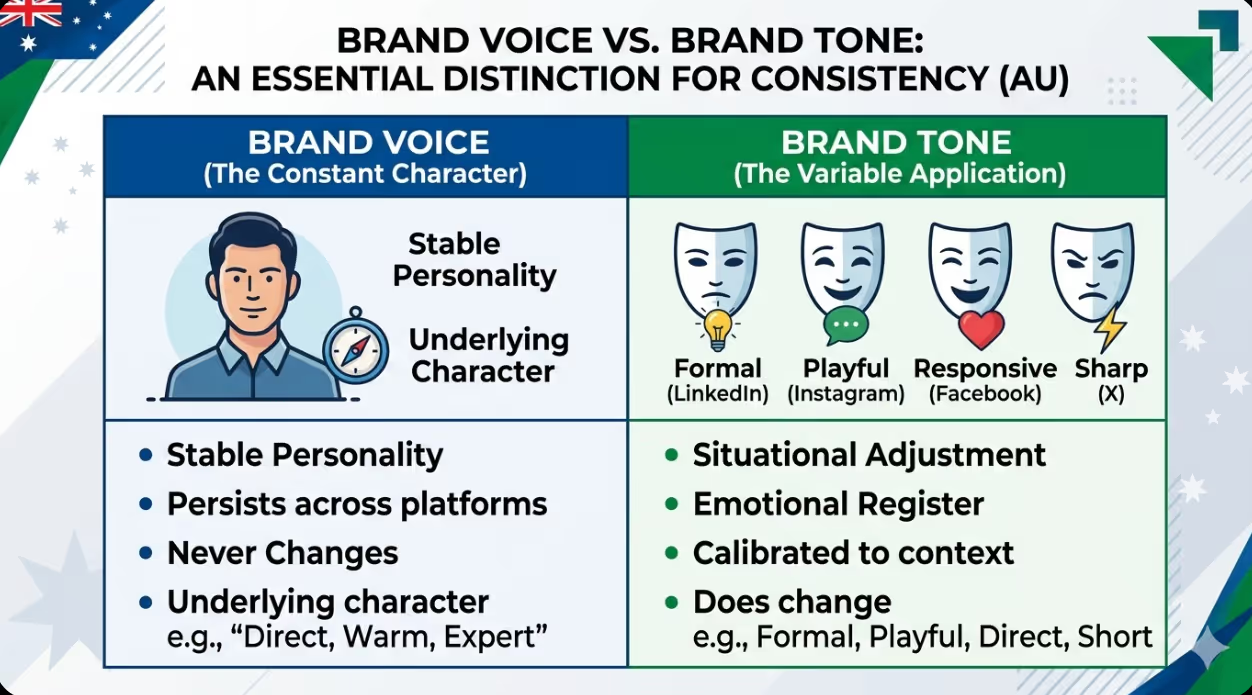
Voice Versus Tone: A Necessary Distinction
The terms brand voice and tone of voice are often used interchangeably, but they describe different things, and conflating them produces guidance that is difficult to apply consistently in practice.
Brand voice is the stable, underlying character of the brand's communication. It is the personality that persists across every platform, every content type, and every writer who produces content for the brand. A brand with a voice that is direct, warm, and expert does not become a different brand when it moves from LinkedIn to Instagram. Its voice remains direct, warm, and expert regardless of the format.
Tone is the situational adjustment of that voice to suit different contexts, audiences, and emotional registers. The same brand that is direct, warm, and expert will use a lighter, more casual tone in a playful Instagram caption and a more formal, structured tone in a LinkedIn article. The warmth, directness, and expertise are present in both. What changes is the degree of formality, the humour level, and the depth of information provided.
The practical importance of this distinction is that it gives content creators a stable foundation and a flexible application. The foundation is the voice, which should never change. The application is the tone, which should be calibrated consciously to the platform, the content type, and the audience state. When tone guidance is confused with voice guidance, brands end up with either a voice that shifts inconsistently between platforms or a voice so rigidly applied that it sounds wrong in casual social contexts.
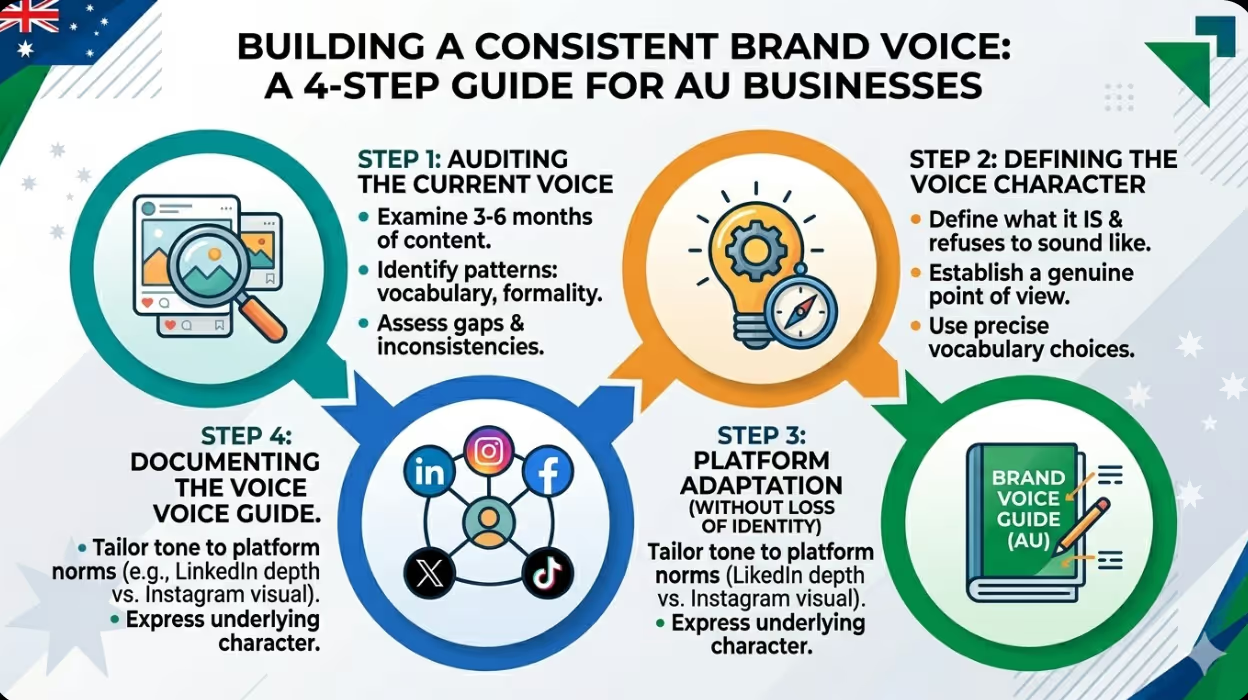
Step One: Auditing the Current Voice
Before a new brand voice can be developed, the existing voice must be assessed. For most Australian businesses with an established social media presence, the current voice is a mixture of deliberate choices made at the brand's founding, accidental patterns that emerged through the content habits of different writers, and inconsistencies that have accumulated as the team and platform mix has changed over time.
A voice audit examines the last three to six months of published content across all active social media platforms and identifies patterns in the vocabulary used, the sentence structures favoured, the level of formality applied, the use of humour, the degree of directness in calls to action, the handling of industry jargon, and the presence or absence of a distinctive point of view in content that is adjacent to opinion.
The audit produces three outputs. The first is an inventory of existing voice characteristics, the patterns that appear consistently enough to be considered established. The second is an inventory of inconsistencies, the places where the voice shifts noticeably in ways that are not explained by appropriate tone variation. The third is an assessment of the gap between the current voice and the voice that the brand's positioning and audience relationship requires.
For many Australian businesses, the voice audit reveals that the current voice is not wrong in any dramatic way. It is simply generic. It sounds like a reasonable approximation of what a competent business in the industry should sound like, without any of the specific character choices that would make it memorable, distinctive, or immediately attributable to the brand rather than to any number of competitors.
Step Two: Defining the Voice Character
The most important phase of brand voice development is also the most frequently handled superficially: the definition of what the voice actually is. Most brand voice guides produced by Australian agencies describe voice using sets of three to five adjectives (innovative, approachable, expert, passionate, bold) that are so broadly applicable they provide no useful guidance to a writer trying to produce a specific piece of content. Every second brand in any given industry would describe itself using the same adjectives.
A genuinely useful voice definition goes beyond adjectives to specify the precise character choices that make the brand's communication distinctive. This requires answering a more specific and more demanding set of questions.
What does the brand know that its audience needs to hear? A brand voice is most distinctive when it is built on a genuine point of view, a perspective on the industry, the audience's problems, or the best path to solving them that the brand holds with conviction and expresses consistently. The brand that has a clear point of view and expresses it directly will always sound more distinctive than one that hedges, qualifies, and presents all sides with equal weight.
What does the brand refuse to sound like? The negative definition of a voice is often more useful than the positive one. A financial services brand that refuses to sound condescending, laden with jargon, or evasive has made three powerful voice choices that immediately differentiate it from the generic financial services communication that dominates its category. Defining what the voice is not constrains the writing in ways that force the writer toward the distinctive.
What language does the brand use and not use? Vocabulary choices are among the most immediate markers of brand character. A brand that uses plain, direct language in a category full of inflated corporate vocabulary stands out immediately. So does a brand that uses the specific, precise terminology of its field in a category full of vague generalism. The vocabulary guidelines in a brand voice document should include specific examples of preferred and avoided phrasing, not just general principles.
What is the brand's relationship with its audience? The assumed relationship between writer and reader shapes every aspect of the communication, from the level of formality to the degree of assumed knowledge to the balance between instruction and conversation. A brand that treats its audience as knowledgeable peers will write differently from one that treats them as novices seeking guidance, and both will write differently from a brand that treats its audience as busy professionals who need information efficiently without being talked down to.
Step Three: Platform Adaptation Without Loss of Identity
With the voice defined, the task of applying it across different social media platforms requires understanding what makes each platform's communication norms distinctive and how the voice can be expressed within those norms without being diluted into something unrecognisable.
LinkedIn rewards depth, professional insight, and the expression of informed opinion. The brand voice on LinkedIn should apply the full weight of the brand's expertise and point of view, with content that takes a position, supports it with reasoning, and respects the audience's professional sophistication. Long-form posts that develop an argument over several paragraphs are native to LinkedIn in a way they are not on other platforms. The tone should be professional but not stiff, direct but not blunt, and substantive enough to add genuine value to a professional reader's day.
Instagram rewards visual storytelling, personality, and the kind of candid, human moments that build personal connection with a brand. The voice on Instagram should retain the brand's core character but apply it through shorter, more conversational copy that complements the visual rather than competing with it. Captions that sound like they were written by a real person rather than a marketing department tend to outperform those that are polished to the point of feeling corporate. The tone is warmer and lighter than LinkedIn, but the same underlying voice should be present in the vocabulary choices, the perspective expressed, and the way the brand addresses its audience.
Facebook occupies middle ground between the professional depth of LinkedIn and the visual personality of Instagram. For Australian businesses using Facebook primarily for community building and customer engagement, the voice should prioritise approachability and responsiveness. Content that invites interaction, shares relevant local or industry news, and creates genuine conversation with followers requires a tone that is accessible without being undignified, and warm without being cloying.
X (formerly Twitter) rewards brevity, wit, and the ability to distil a perspective into a small number of words with enough sharpness to earn engagement. The brand voice on X must retain its core character while operating within a format that punishes any hint of corporate bloat. Brands with a genuinely direct and confident voice tend to find X more natural than brands whose voice is cautious or heavily qualified.
TikTok requires a willingness to participate in formats native to the platform and communication patterns that may feel very distant from a polished brand identity. For Australian brands targeting younger audiences, TikTok is an opportunity to demonstrate that the brand has personality, self awareness, and the kind of cultural fluency that resonates with an audience that is highly sensitive to inauthenticity. The voice adaptation for TikTok is the most significant of any major platform, but the underlying brand character should still be detectable in the point of view, the humour register, and the values expressed.
Step Four: Documenting the Voice Guide
A brand voice that exists only in the minds of the people who developed it is not a brand asset. It is a fragile dependency on the continued involvement of those specific people. Documenting the voice in a practical, usable guide that a new writer can read and immediately apply is the step that transforms the voice development process into lasting operational value.
An effective brand voice guide covers the following components, in practical and actionable terms rather than aspirational descriptions.
The voice character section defines the core personality traits with specific examples of how each trait manifests in writing. Not "we are direct" but "we say what we mean in the first sentence, we do not bury conclusions, and we do not soften bad news with unnecessary qualifications."
The vocabulary section lists specific preferred terms and phrases alongside their avoided equivalents, with brief notes on why each choice reflects the brand character. It should include both the words the brand actively uses and the words it actively avoids, with examples from each category.
The tone spectrum section maps how the tone shifts across different contexts, platforms, and content types, giving content creators practical guidance on calibrating their approach without needing to seek approval for every piece.
The section covering guidance for each specific platform provides brief notes on how the voice should be applied on each active platform, with examples of strong and weak executions for reference.
The examples section is the most valuable component of a practical voice guide. Annotated examples of content that is well executed and on brand from each platform demonstrate the voice in action in a way that abstract guidance cannot, and they give content creators a concrete reference to check their own work against.
FAQs
How long does it take to develop a brand voice for an Australian business's social media presence?
A thorough brand voice development process, from audit through to a finalised and documented guide, typically takes three to five weeks when conducted properly. The voice audit and analysis phase requires a week to ten days of content review and pattern identification. The voice definition workshop or process, where the strategic decisions about what the voice is and is not are made, typically requires one to two sessions with key stakeholders and a consolidation period. The guide writing and revision process takes another week to ten days depending on the complexity of the brand and the number of platforms being covered. Businesses that attempt to compress the process significantly tend to produce voice guides that are too abstract to be practically useful, because the quality of the voice definition is determined by the depth of the thinking that goes into it, and that thinking cannot be rushed without producing generalities rather than genuinely distinctive choices.
What should an Australian business do when different team members are producing noticeably inconsistent content across social media platforms?
Inconsistency across team members is the most common practical brand voice problem for Australian businesses with social media teams working in house, and it is best addressed through a combination of documentation, examples, and a structured review process rather than through increased centralisation of approval. The documentation solution is the voice guide: a practical reference that gives every content creator the specific guidance they need to calibrate their writing without requiring approval on every piece. The examples solution is a growing library of approved content that is on brand from across all platforms that new team members can study and existing team members can reference when they are uncertain. The review solution is a lightweight monthly or quarterly review of published content across platforms to identify and address any patterns of inconsistency before they become established habits. Attempting to solve inconsistency purely through approval processes creates bottlenecks and does not build the capability for consistent independent production.
Can a single brand voice work effectively across B2B and B2C audiences simultaneously?
A single underlying brand voice can absolutely serve both B2B and B2C audiences, provided the voice is built on character qualities that resonate with both and the tone adaptation guidance is clear enough to calibrate the application appropriately. The key is distinguishing between character, which should be consistent, and context, which should be adapted. A brand that is knowledgeable, direct, and genuinely useful will read as those things to both a business buyer evaluating a services contract and a consumer comparing product options, provided the vocabulary, depth, and assumed familiarity are adjusted for each audience through the tone calibration layer. Where a single voice cannot serve both audiences well is when the brand's core positioning and relationship with each audience are so fundamentally different that a single character cannot credibly span them, which typically indicates a deeper brand architecture question about whether the same brand should be addressing both audiences at all.
The Voice Is the Brand's Most Portable Asset
A product can be matched by a competitor. A price can be undercut. A visual identity can be refreshed beyond recognition within a rebrand. But a genuinely distinctive brand voice, one that has been consistently expressed across every platform and every piece of content over months and years, becomes a form of recognition that lives in the audience's memory independent of any single execution. For Australian businesses investing in social media as a primary channel for audience building and commercial growth, the development of a consistent, distinctive, and thoroughly documented brand voice is among the strategic investments with the highest return available.
Maven Marketing Co develops brand voice guides and social media content strategies for Australian businesses, from the initial audit through to a practical, voice framework adapted for each specific platform ready for immediate application.
Talk to the team at Maven Marketing Co →

Table of contents
read more blogs

The Ultimate Guide to E-commerce Product Page Optimisation
A strong e-commerce product page has to do several jobs at once. It needs to be discoverable in search, easy to understand, persuasive enough to build confidence and simple enough for a customer to buy without unnecessary friction. That combination is what makes product page optimisation such an important part of both ecommerce SEO and conversion strategy.The difficulty is that product pages are often built from one reusable template across hundreds or thousands of products. If the template is weak, the problem scales. Thin descriptions, poor imagery, unclear variants, buried shipping information or an awkward mobile experience can affect a large part of the store at the same time.Current product-page UX research from Baymard continues to show how often shoppers abandon otherwise suitable products because of avoidable usability issues. At the same time, Google provides dedicated guidance for e-commerce sites, product structured data, product variants and image optimisation because product information needs to be clear and machine-readable as well as useful to people.The goal is not to stuff every product page with more text or technical markup. A complete digital marketing strategy combines SEO, user experience, content and conversion improvements to help ecommerce businesses attract and convert the right customers. It is to give shoppers the information they need, in the right order, while helping search engines understand what the product is, whether it is available and how the page relates to the wider store. This guide covers the practical elements that make that happen.

How to Choose the Right Digital Marketing Channels for Your Business
Choosing digital marketing channels is one of the easiest places for businesses to lose clarity. There are more options than ever, every platform promises reach and results, and it is easy to assume that the best strategy is simply to be everywhere. In reality, most businesses do better when they choose channels with intention rather than spreading budget and effort too thinly.The right channel mix depends on where your audience spends time, how they search or discover solutions, what your business is trying to achieve and how much resource you actually have to support execution properly. A channel is only useful if it helps move the right people towards a commercial outcome that matters to the business.This is why strong digital marketing strategy is not really about finding one perfect platform. It is about understanding the role each channel can play across awareness, demand capture, conversion and retention. SEO might build long-term visibility, Google Ads might capture active intent, social media might support familiarity and reach, while email may help nurture prospects and strengthen customer value over time.This guide explains what digital marketing channels are, how to assess them properly and how to build a balanced channel mix for your business. The focus is practical. Rather than chasing every new platform, the goal is to help you choose the channels that fit your audience, goals, budget and internal capability.

How to Build a Customer Journey Map for Your Digital Marketing Strategy
A strong digital marketing strategy is not just about channels, creative or traffic. It is about understanding how real people move from first awareness through to enquiry, purchase and ongoing loyalty. That is exactly why customer journey mapping matters.Without a clear view of the journey, businesses often optimise in fragments. They improve the website without thinking about the ad that drove the visit, produce content without considering where the audience is in the decision process, or judge conversion performance without understanding the friction points that sit earlier in the experience.A customer journey map helps you step back and see the bigger picture. It shows the stages people move through, the touchpoints they interact with, the questions they ask, the barriers they face and the moments where your marketing can either help or lose them.This guide explains how to build a practical customer journey map for your digital marketing strategy, what information to include, how to use the map to improve performance and which common mistakes to avoid. The goal is not to create a pretty workshop artefact that gets forgotten. It is to build a working tool that improves messaging, user experience, channel decisions and conversion outcomes.