.svg)


%201.svg)
Key Takeaways
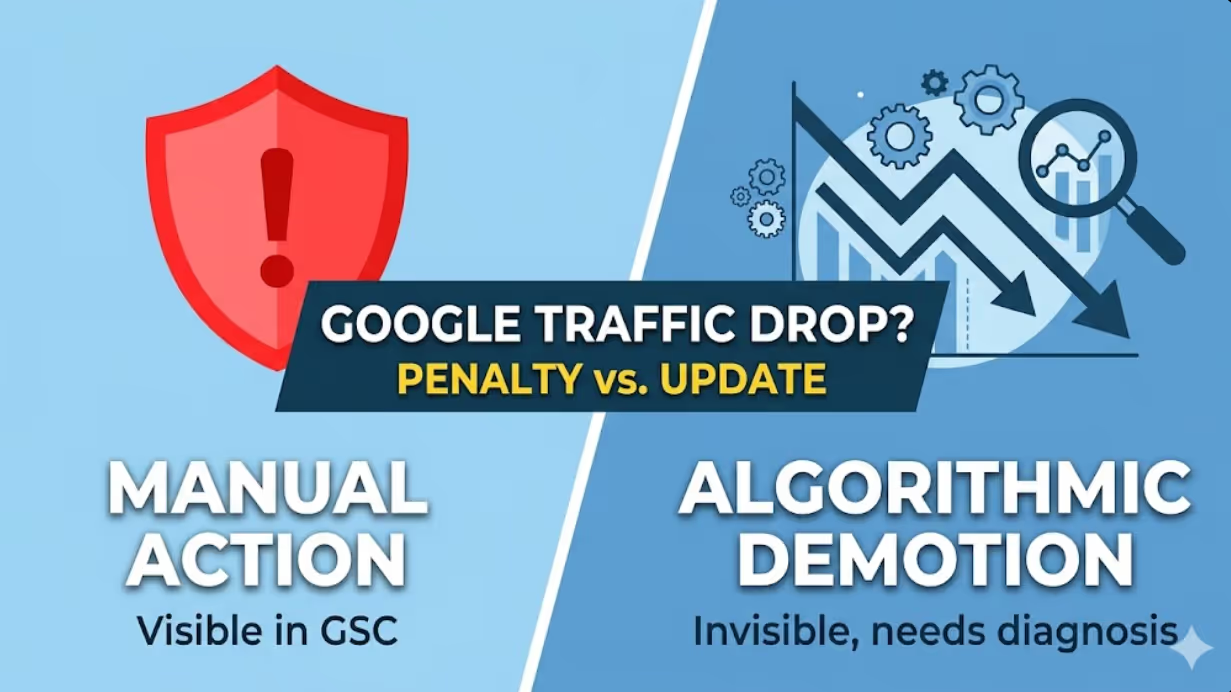
- Manual actions and algorithmic demotions are fundamentally different interventions. Manual actions are visible in Google Search Console under Security and Manual Actions, while algorithmic demotions produce no notification and must be diagnosed through traffic pattern analysis and correlation with known algorithm update dates.
- The first step after any significant traffic drop is to check Google Search Console for manual actions before proceeding with any other diagnosis. A manual action notification changes the entire recovery approach and makes most other diagnostic steps unnecessary until it is resolved.
- Manual actions have specific named categories, each with a defined recovery path. Identifying the specific manual action category is essential because the evidence required and the actions needed for reconsideration differ significantly between categories such as spammy links, thin content, and pure spam.
- Algorithmic demotions require correlation with known algorithm update dates. Google's Broad Core Updates, Spam Updates, Helpful Content Updates, and Product Review Updates each target different quality signals, and the update that correlates with the traffic drop indicates which quality factors to investigate.
- Link-related manual actions require a disavow file submission to Google Search Console alongside evidence of a genuine link cleanup effort. Submitting a disavow file without documented outreach attempts for link removal is not sufficient for a successful reconsideration request.
- Recovery from a Broad Core Update demotion is not achieved through quick fixes. Google's own guidance describes core update recovery as requiring the site to become demonstrably more helpful, authoritative, and trustworthy over time, which typically means a sustained content quality improvement programme rather than a technical fix.
- The timeline for penalty recovery varies widely. Manual action recovery after a successful reconsideration request typically produces measurable ranking improvements within four to twelve weeks. Algorithmic demotion recovery from a Broad Core Update may require waiting for the next core update cycle, which can be three to six months, for improvements to be reflected in rankings.
Step One: Establish the Timeline and Scale of the Drop
Before any diagnosis is possible, the precise timeline and scale of the traffic drop must be established. Google Analytics 4 and Google Search Console together provide the data needed to characterise the event accurately.
In GA4, the Acquisition report filtered to Organic search traffic should show the date on which the traffic drop began. A sharp, sudden drop beginning on a specific date suggests either a manual action notification or an algorithm update. A gradual decline over weeks or months suggests a competitive displacement or a content quality issue rather than a specific penalty event.
In Google Search Console, the Performance report shows impressions and clicks from Google Search over time. Comparing the total impressions, average position, and rate of clicks through during the period before the drop against the period after reveals whether the drop is caused by a position decline (pages still appearing but ranking lower), an impression decline (pages appearing less frequently), or both.
The scale of the drop is also diagnostically useful. A drop affecting the entire site uniformly, across all page types and keyword categories, suggests either a sitewide manual action or a Broad Core Update demotion. A drop affecting a specific section of the site (product pages but not blog content, or pages in a specific topic area) suggests a more targeted algorithmic adjustment or a manual action targeting a specific page type.
Step Two: Check for Manual Actions in Search Console
The single most important diagnostic step after establishing the timeline is to check Google Search Console for manual action notifications. This step takes approximately thirty seconds and determines whether the entire recovery process follows the manual action path or the algorithmic path.
In Google Search Console, navigate to Security and Manual Actions in the left menu. A clean status shows "No issues detected." Any other status indicates that a Google reviewer has determined that the site violates the Search Essentials guidelines and has applied a manual action.
If a manual action is present, the notification will specify:
The type of action. Google categorises manual actions into specific types, including pure spam (the site is predominantly spam), spammy automatically generated content, thin content with little or no added value, cloaking and sneaky redirects, hidden text or keyword stuffing, unnatural links to the site (the site has received manipulative backlinks), and spam originating from content created by users (spam in comments or content submitted by users).
The scope of the action. A sitewide action affects all pages on the domain. A partial action affects specific pages or sections.
The description. A brief description of the specific violation Google has identified, which provides the starting point for the remediation work.
If no manual action is present, the diagnosis moves to the algorithmic path.
Recovering From Manual Actions
Spammy Inbound Links Manual Action
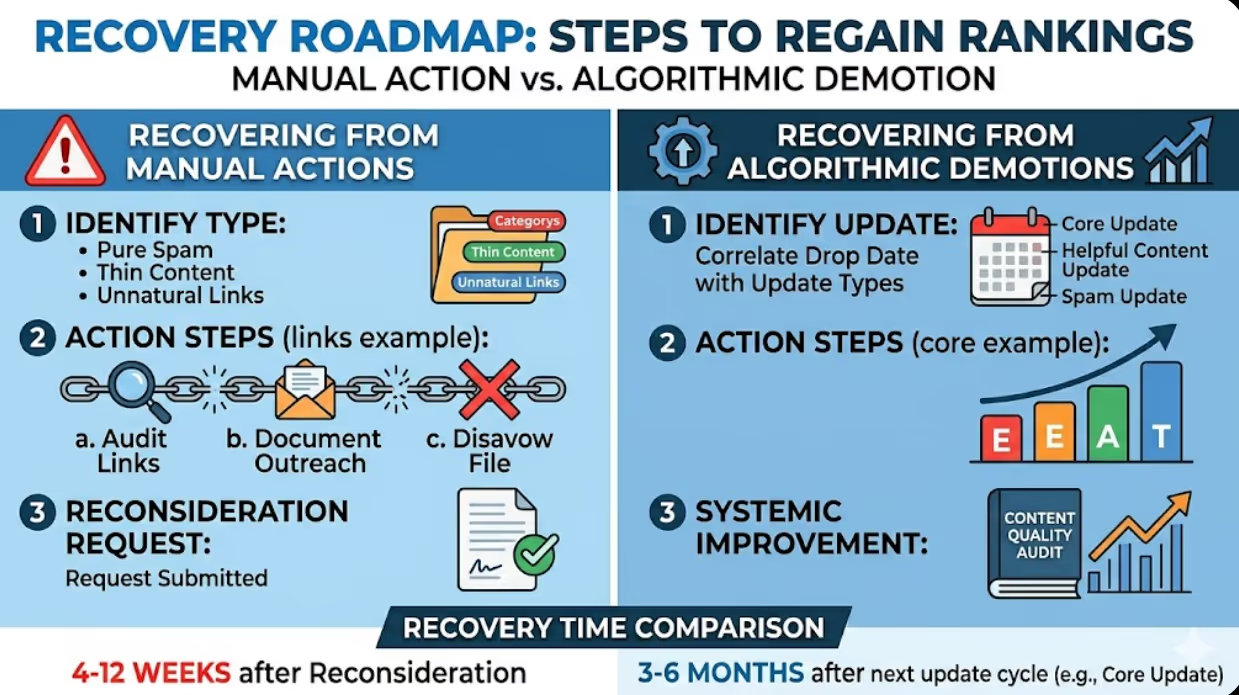
The inbound links manual action is applied when Google determines that a site has acquired backlinks through link schemes, paid link networks, or other manipulative practices that violate Google's link spam policies. The recovery process has two components: link removal outreach and disavow file submission.
Link removal outreach. The first step is to conduct a full backlink audit using Google Search Console's Links report, Ahrefs, Semrush, or a combination of these to identify every unnatural or spammy link pointing to the site. For each identified unnatural link, the domain owner or webmaster of the linking site should be contacted via email with a specific request to remove or nofollow the link. All outreach attempts must be documented: the email addresses contacted, the dates of contact, the responses received, and the links confirmed as removed or unresponsive. This documentation is a required component of the reconsideration request.
Disavow file submission. For links that cannot be removed through outreach after documented attempts, a disavow file is created listing the domains or specific URLs to be disavowed, and submitted through the Google Search Console disavow tool. The disavow file should be comprehensive and should include all unnatural links that outreach did not successfully remove. Submitting a disavow file covering only a portion of the problematic links while leaving others unaddressed is unlikely to result in a successful reconsideration request.
Reconsideration request. Once the link cleanup is complete, a reconsideration request is submitted through Google Search Console. The request must describe specifically what was wrong (the manipulative links), what actions were taken (the outreach process with evidence, and the disavow submission), and what steps have been taken to prevent the issue from recurring. A reconsideration request that is well documented with evidence of genuine effort is significantly more likely to succeed than a brief statement claiming the issue has been resolved.
Thin Content or Low-Quality Content Manual Action
A thin content manual action indicates that Google has determined that the site's pages provide little genuine value to searchers. Recovery requires substantively improving the content on the affected pages and, in some cases, removing or consolidating pages that cannot be improved to an acceptable standard.
The improvement work should be guided by reviewing the affected pages against Google's quality rater guidelines, which describe the characteristics of pages that meet the standard for expert, authoritative, and trustworthy content. Each affected page should be reviewed for whether it provides genuine value to a visitor, whether the content depth is sufficient for the topic, whether the page makes unsupported claims or provides inaccurate information, and whether the page serves the visitor's intent for the queries it targets.
After substantive improvements have been made across the affected pages, a reconsideration request is submitted with specific examples of the improvements made, an explanation of how the content now meets the quality standard, and any supporting evidence such as expert credentials, sourced claims, or author credentials that demonstrate the site's authority on the topic.
Diagnosing Algorithmic Demotions
When no manual action is present, the traffic drop is the result of an algorithm change. Identifying which algorithm change caused the drop is the foundation of the recovery strategy, because different updates target different quality signals.
The primary diagnostic tool for algorithmic demotions is correlation: matching the date of the traffic drop against the known dates of Google algorithm updates. Google announces confirmed algorithm updates in its search status dashboard and communicates significant updates through its Search Central blog. Independent tracking sources including Semrush Sensor, Ahrefs Rank tracker, and Moz's Google Algorithm Update History track fluctuation data that confirms the timing and scope of updates.
Broad Core Updates are Google's most significant regular algorithm updates, typically released three to five times per year. They affect a broad range of ranking signals and tend to produce widespread ranking changes across many sites simultaneously. A traffic drop correlating with a confirmed Broad Core Update suggests that the site's overall quality, authority, and trustworthiness signals have been assessed as below the new standard being applied.
Helpful Content Updates specifically target content that appears written primarily for search engine ranking rather than for genuine user benefit. Sites with significant volumes of content that is topically thin, overly optimised for specific keyword phrases, or that provides no original insight beyond what is available in multiple other sources are the typical targets.
Spam Updates target sites that have engaged in link spam, cloaking, keyword stuffing, or other practices that violate Google's spam policies. Unlike manual spam actions, these are algorithmic detections that apply automatically across large volumes of sites identified as meeting the spam signal threshold.
Product Reviews Updates target reviews that do not demonstrate genuine product expertise and do not provide original analysis beyond what is available from the manufacturer.
Recovering From Algorithmic Demotions
Recovering From a Broad Core Update Demotion
Google's own guidance on Broad Core Update recovery is unambiguous: there is no specific fix. The updates reflect an improvement in Google's ability to assess overall page quality, and the sites demoted are those that the improved system now judges as less helpful, trustworthy, or authoritative than their current ranking positions implied. Recovery requires making the site genuinely better.
The practical actions that address the most common causes of Broad Core Update demotion include:
Content quality audit and improvement. A systematic review of all content on the site, identifying pages that are thin, inaccurate, outdated, or lacking in original perspective. Thin pages should be either substantially expanded or consolidated with related content. Outdated information should be updated with current data and sources. Pages covering topics outside the site's demonstrated expertise should be critically reviewed for whether they should be retained, improved, or removed.
EEAT signals improvement. Expertise, Experience, Authoritativeness, and Trustworthiness are the quality dimensions Google's guidelines use to assess page quality. Improving EEAT signals involves ensuring content is attributed to named authors with demonstrated credentials, adding author biography pages, citing credible sources, displaying professional accreditations, and ensuring that the site's About page clearly describes the organisation and its qualifications.
Technical authority signals. Improving the site's backlink profile with genuine editorial links from relevant, authoritative sources in the topic area strengthens the authority signal that the Broad Core algorithm weighs heavily. This is a sustained effort measured in months rather than weeks, involving the guest posting, digital PR, and link acquisition through outreach strategies covered in other articles in this series.
Recovering From a Helpful Content System Demotion
The Helpful Content system applies a sitewide quality signal based on the proportion of the site's content that is judged as written primarily for search ranking purposes rather than for genuine user benefit. A site with a significant proportion of unhelpful content may see all of its pages demoted, including pages that would individually be judged as high quality, because the sitewide signal depresses all rankings.
Recovery requires removing or substantially improving the unhelpful content across the site. This is a more aggressive intervention than a content quality audit alone: it may require deleting significant volumes of content that cannot be meaningfully improved, which is a psychologically difficult recommendation for site owners who have invested in producing that content.
The practical test for whether a piece of content meets the Helpful Content standard is whether a visitor who found the page through a relevant search would leave with the information they needed, or would need to visit another source to fully answer their question. Content that provides only partial information, that summarises publicly available information without original analysis, or that was produced primarily because a keyword had search volume rather than because the site had genuine expertise on the topic, is the content that the Helpful Content system demotes.
FAQs
How can an Australian business tell whether a traffic drop is caused by a competitor improvement rather than a Google penalty or algorithm change?The distinguishing characteristic of a displacement driven by competitor improvement is selectivity: the traffic drop is concentrated on specific keywords where competitors have improved, rather than affecting the site broadly. In Google Search Console's Performance report, reviewing the specific queries where impressions have declined most significantly will reveal whether the drop is broad or concentrated. If the queries where traffic has declined are those where a specific competitor has recently published better content, the cause is competitive displacement rather than a penalty. Checking the current ranking pages for the most affected queries in Australian Google search results will confirm whether a competitor has risen and the target site has been displaced, versus whether the site's rankings have dropped across the board regardless of specific competitor changes.
How long should an Australian business wait for a reconsideration request to be processed after submitting it?Google's guidance states that reconsideration requests are reviewed by a human member of the search quality team and that most requests receive a response within a few days to a few weeks. In practice, Australian site owners typically receive a response within two to four weeks, with complex cases sometimes taking longer. If a reconsideration request is rejected, Google will specify the reason for the rejection in the Search Console notification, which provides guidance for what additional work is required before resubmitting. There is no limit on the number of reconsideration requests that can be submitted, but submitting a second request without addressing the specific issue identified in the rejection is unlikely to succeed. Sites should wait until they have genuinely addressed the identified issues before resubmitting, which may require a further two to eight weeks of remediation work depending on the scope of the problem.
What is the single most common mistake Australian businesses make during SEO penalty recovery?The most common mistake is making rapid and unplanned changes to a site immediately after a traffic drop without completing the diagnostic process. Site owners who notice a traffic drop and immediately begin changing page titles, restructuring content, removing pages, or altering their backlink profile before identifying the cause of the drop risk making changes that are irrelevant to the actual cause, or that actively worsen the site's position. The correct sequence is always diagnostic first: check for manual actions, correlate the timeline with known algorithm updates, assess the scope and pattern of the drop, and identify the most probable cause before taking any remediation action. Acting on a correct diagnosis produces recovery. Acting before diagnosis produces confusion, potentially introduces new problems, and makes it harder to identify what actually caused the original drop because the site's state at the time of the drop is no longer intact for analysis.
Recovery Starts With the Right Diagnosis
An SEO penalty recovery that begins with the wrong diagnosis is not a recovery programme. It is a programme of changes that costs time and resource without addressing the actual problem. The diagnostic process described in this article, checking Search Console for manual actions before doing anything else, correlating timeline with known algorithm updates, and assessing the scope and pattern of the drop, takes less than an hour to complete and determines whether the next steps are weeks of link cleanup work, months of content quality improvement, or something else entirely. Getting the diagnosis right is where the recovery begins.
Maven Marketing Co conducts SEO penalty diagnostics and recovery programmes for Australian businesses, including manual action audit and reconsideration request development, algorithmic demotion diagnosis, and structured content quality improvement programmes.
Talk to the team at Maven Marketing Co →

Table of contents
read more blogs

Is Google Ads Better Than SEO for My Business
One of the biggest questions business owners ask when they are planning online growth is whether they should invest in Google Ads or SEO. Both are strong marketing plays that help your company show up in Google search results, but they do things in separate lanes. Google Ads gives quicker visibility and can bring in leads fast, whereas SEO more or less focuses on slow, steady organic traffic that tends to grow the longer you keep building it. Picking the right direction depends on what you want to achieve, how much money you can spend, how crowded the market is, and how quickly you need results, like sooner rather than later. The good news is you don’t always have to choose one or the other; it’s not exactly a black-and-white situation. If you take time to understand the strongest points of both, you can put together a more sensible digital marketing plan that supports consistent expansion. In this guide, we’ll compare Google Ads vs SEO, explain the main differences, and help you figure out what option makes the most sense for your business.

When Should I Hire a Digital Marketing Agency
Growing a business today takes more than just having a website or throwing a post on social media; customers usually search around online, compare providers, skim reviews, and basically expect the brand to show up with a solid digital presence before they even think about buying. Many businesses try to run their marketing themselves, but there comes a point when “doing it all in-house” becomes clunky and hard to manage, all at once. Knowing when to hire a digital marketing agency can end up making a big, real difference for your growth. If you’re not getting enough leads, or your online visibility feels stuck, or sales are just not moving, the right agency can bring the know-how, plus a clear plan, to help you get noticeably better outcomes. In this guide, we’ll dig into what a digital marketing agency actually does, the usual signs it’s time to bring one on, and how picking the right marketing partner can help your business move forward at a faster pace.
Why Is My Google Ads Budget Running Out So Quickly
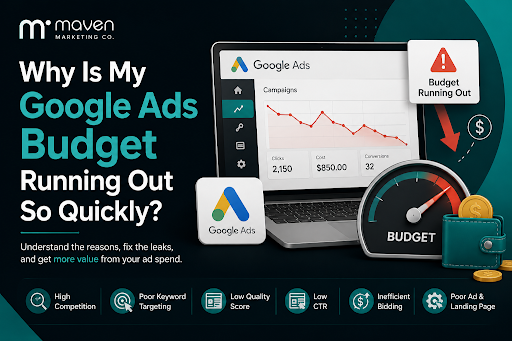
Running a successful Google Ads budget isn’t only about throwing more money at it. It’s more like making every dollar, doing a bit extra. A lot of businesses start a Google Ads campaign with big hopes, then find out their daily budget is gone within a few hours, and that feels weird, right? After that, your ads stop showing effectively, new leads slip away, and your return on investment dips. So if your Google Ads budget is running out too fast, don’t stress. It’s a fairly common issue, and in most situations, it can be repaired with the right approach. There are multiple little things that can drain your advertising money quicker than you expected, from costly keywords to audience targeting that just doesn’t quite fit. In this guide, we’ll walk through why your budget disappears so quickly, how to cut wasteful spend, and the most reliable ways to boost your Google Ads ROI, even if your budget stays the same.