.svg)


%201.svg)
Key Takeaways
- Google's ranking algorithm operates continuously, not seasonally. Rankings held during the peak period do not pause during the quiet period and will decline if the signals that supported them are not maintained.
- The quiet period is the most commercially appropriate time to invest in content development, site improvements, and activities to build authority that cannot be prioritised during the peak period when operational demands are highest.
- Seasonal keyword strategies should plan content publication timing to coincide with the period when search intent for seasonal queries begins to rise, which typically precedes the peak season by four to twelve weeks depending on the category.
- Evergreen content that remains relevant across the full year is the structural backbone of a seasonal business's SEO programme, providing consistent traffic and engagement signals during periods when the core seasonal content is not attracting the volume of peak season.
- Internal linking updates that connect newly published content to existing pages with high authority on the site strengthen the authority distribution across the site during the quiet period, improving the positions of the peak season pages before demand returns.
- Technical SEO issues discovered through regular auditing should be resolved during the quiet period rather than deferred, because technical problems left unaddressed during quiet periods compound into more significant ranking problems when peak season traffic returns to expose them.
- Competitor monitoring during the quiet period reveals whether competing sites are using the quiet season to develop content or build authority, allowing the seasonal business to respond proactively rather than discovering the competitive shift once the peak season has already begun.
The Ranking Decay Problem for Seasonal Businesses
Rankings are not a static achievement. They are a continuous assessment made by Google's algorithm against the full set of competing pages in the index at any given time. A page that ranks third for a seasonal query in December is ranked third because, at that moment, the quality signals for that page outperform the quality signals for the pages in positions four through ten. When those competing pages improve their signals during the intervening months, and the target page's signals stagnate, the ranking comparison changes.
The mechanisms through which rankings decay during the quiet period are predictable.
Reduced crawl frequency. Google's crawler allocates crawl budget based on a site's activity and freshness signals. A site that publishes new content and attracts engagement during peak periods generates a higher crawl frequency than a site that goes quiet during the quiet months. When crawl frequency drops, changes to existing pages (including quality improvements and technical fixes) take longer to be recognised and reflected in rankings.
Weakening engagement signals. User engagement metrics, including rate of clicks through from search results, time on page, and return visits, contribute to Google's assessment of page quality for specific queries. During the quiet period, the low traffic volume on seasonal pages means these engagement signals are thin or absent, which weakens the quality signal that the page generates for the queries it targets.
Competitor advancement. Australian businesses in seasonal categories often include competitors who operate throughout the year in related categories and maintain their content and activities to build authority throughout the year. During the seasonal business's quiet period, these competitors continue to produce content, attract links, and accumulate engagement signals, gradually improving their position relative to the seasonal business's pages.
Link decay. Over time, some of the backlinks pointing to a site are removed or become inaccessible as the linking pages change, sites go offline, or content is restructured. Without new link acquisition to replace these losses, the domain's overall authority erodes gradually.
Strategy 1: Evergreen Content as the Year-Round Foundation
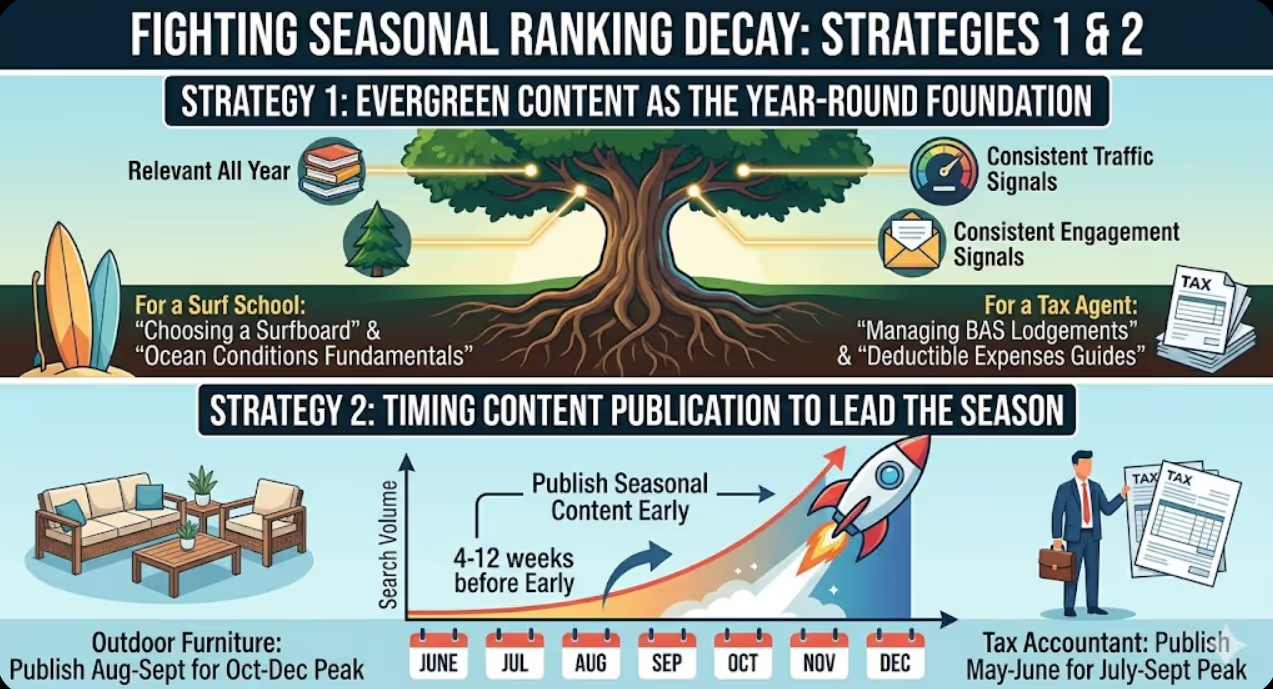
The most reliable structural defence against ranking decay during quiet periods is a library of evergreen content that generates consistent traffic and engagement signals throughout the year, independent of seasonal peaks. Evergreen content on topics that are relevant to the seasonal business but not tied to the peak season provides the baseline of activity throughout the year that prevents the site from going silent during the quiet period.
For a surf school that peaks in summer, evergreen content might include articles on how to choose a surfboard, the fundamentals of reading ocean conditions, surf etiquette for beginners, and guides to surfing locations along the relevant stretch of Australian coastline. None of these articles peak exclusively in summer. They attract traffic and generate engagement throughout the year, keeping the site's quality signals active during the autumn and winter months when the seasonal content is dormant.
For a tax agent or accounting firm with a peak around June to August for individual tax returns, evergreen content addresses the questions their target audience has throughout the year: how to set up a small business structure, what records to keep for an ABN, how to manage BAS lodgements, and guides to deductible expenses by profession. These topics generate consistent search traffic throughout the year and keep the site active and engaging for Google's quality assessment outside the July to September peak window.
The evergreen content library also serves the SEO programme during peak season by providing internal linking anchors for seasonal content. A summer surfing guide published in October that links to and from the evergreen articles on surfboard selection already has an established link context by the time search demand peaks in December.
Strategy 2: Timing Content Publication to Lead the Season
Search intent for seasonal queries does not switch on at the start of the season. It builds gradually in the weeks before the peak, as people begin planning, researching, and making decisions in advance of the seasonal activity or purchase. For many Australian seasonal categories, the the rise in search intent begins four to twelve weeks before the peak.
An outdoor furniture retailer whose sales peak in October to December should begin publishing and optimising seasonal content in August and September, giving the content eight to twelve weeks to be indexed, crawled, and begin accumulating engagement signals before the search demand peaks. An accountant targeting individual tax return clients whose peak is July to September should begin publishing tax season content and optimising landing pages specific to tax season in May and June.
The practical implication is that the content development and publication work for each season should be completed during the preceding quiet period, not during the season itself when the team is too busy to write and publish and the window to build page authority before demand peaks has closed.
A seasonal content calendar maps the publishing dates for each piece of seasonal content against the anticipated curve of rising search intent for the category, placing publication early enough that the content is indexed, ranked, and has accumulated some engagement signals by the time the peak volume arrives.
Strategy 3: Link Building During the Off-Peak Period
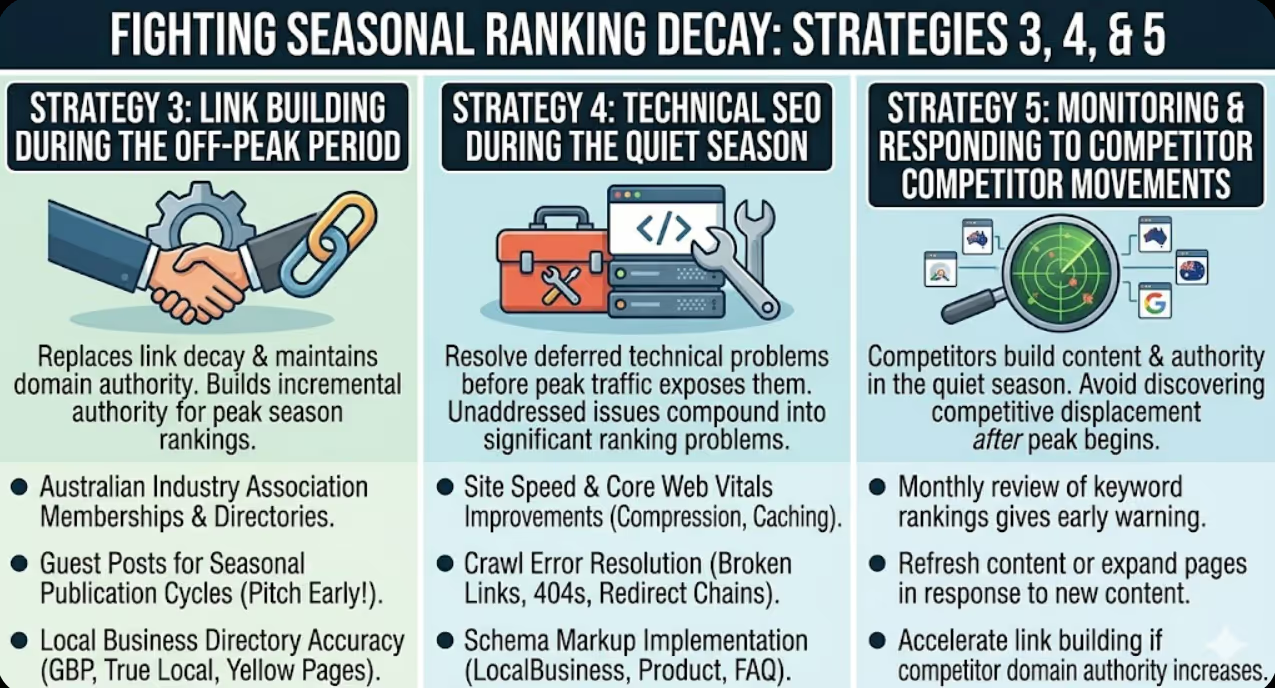
Link acquisition during the quiet period serves two purposes. It replaces any link decay that has occurred during the year, maintaining the baseline domain authority that supports all rankings. And it builds the incremental authority that improves peak season rankings by the time demand returns.
The quiet period is often a better time for link building activity than the peak season, because the team has more capacity to invest in outreach, content production for guest posts, and relationship building with relevant publications and industry sites. A seasonal business that conducts its most intensive link building activity during the quiet months arrives at the peak season with stronger domain authority than one that attempts link building while also managing peak operational demands.
Australian seasonal businesses have access to several recurring link building opportunities that align naturally with the quiet season period:
Industry association memberships and directories. Many Australian trade and professional associations publish directories of members, which provide relevant local links. Joining or renewing membership in the relevant associations and ensuring the directory listing is current and includes a link to the most relevant page on the site is a consistent link building activity during the quiet season.
Guest posts for seasonal publication cycles. Publications that cover seasonal industries often plan their content for the upcoming season months in advance. A surf school that approaches surfing and outdoor lifestyle publications with guest post pitches in April to June is targeting the publications at the point when their editorial teams are commissioning content for their spring and summer issues.
Local business directory accuracy. During the quiet period, reviewing and updating all local business directory listings (Google Business Profile, Bing Places, True Local, Yellow Pages, and relevant industry directories) ensures the site's local authority signals are accurate and current for the peak season, when local search visibility is most commercially important.
Strategy 4: Technical SEO During the Quiet Season
Technical SEO issues that are discovered during the peak season but cannot be prioritised because the team is managing operational demands should be queued for resolution during the quiet period. Technical problems left unresolved compound over time and become more disruptive when peak season traffic returns to expose them.
The technical SEO tasks most appropriate for the quiet period window are:
Site speed improvements. Page speed improvements on the core seasonal landing pages, including image compression, caching configuration, and server response time optimisation, have the highest impact during peak season when high traffic volumes amplify every millisecond of load time. Implementing these improvements during the quiet period ensures they are in place before the traffic returns.
Core Web Vitals assessment. Google's Core Web Vitals scores for the site's key landing pages should be reviewed in Google Search Console and PageSpeed Insights during the quiet period, with any failing or borderline pages addressed before the peak. Failing Core Web Vitals on a seasonal landing page with high traffic during the peak season is a visible and addressable quality problem that the quiet window provides the space to resolve.
Crawl error resolution. Broken links, 404 errors, redirect chains, and crawl accessibility issues identified through regular crawl audits (using tools such as Screaming Frog or Sitebulb) should be resolved during the quiet period. These issues consume crawl budget and dilute link authority, both of which weaken performance in peak season if left unaddressed.
Schema markup implementation. Structured data including Review, LocalBusiness, Product, and FAQ schema, which can improve search results appearance and contribute to featured snippet eligibility, is most effectively implemented during the quiet period when there is time for careful implementation and validation.
Strategy 5: Monitoring and Responding to Competitor Movements
The quiet period is when competitors often make their most significant investments in content and authority building, precisely because they also have reduced operational demands. A seasonal business that does not monitor its competitive landscape during the quiet months may find, when the peak season arrives, that a competitor has published a comprehensive guide that now outranks its key landing pages, or that a new competitor has entered the category and established rankings for queries that were previously uncontested.
Setting up keyword rank tracking for the most commercially important queries before entering the quiet period, and reviewing those rankings monthly during the quiet season, provides early warning of competitive movements and allows the seasonal business to respond before the displacement becomes entrenched.
When a competitor advances in the rankings during the quiet period, the appropriate response depends on the cause. If they have published substantially better content than the existing ranking pages, the response is a content refresh or expansion of the affected pages. If they have acquired links that have elevated their domain authority, the response is an accelerated link building programme. If they have improved their technical performance, the response is the same technical audit and improvement process described in Strategy 4.
FAQs
How long does it take to recover rankings that have declined during a quiet period?The recovery timeline depends on how much the rankings have declined, why they declined, and how aggressively the recovery work is executed. Rankings that have slipped by two to four positions as a result of normal decay in the quiet period, without a specific technical problem or a major competitor improvement causing the drop, typically recover within four to eight weeks of the seasonal content and link building activity resuming at the start of the period leading into peak season. Rankings that have dropped further, particularly if caused by technical issues, substantial competitor improvements, or significant link loss, may take a full period leading into the peak season of twelve weeks or more to recover. Australian seasonal businesses that maintain a continuous baseline of content activity and link building during the quiet period, even at reduced intensity, consistently experience faster ranking recovery at the start of the period leading into peak season than those that go fully inactive during the quiet months.
Should a seasonal Australian business maintain its Google Ads campaigns during the quiet period?Paid search and organic SEO serve different purposes during the quiet period. Google Ads campaigns targeting seasonal queries should be paused or significantly reduced during periods when search volume for those queries is minimal, because the cost of maintaining paid visibility for a category with low search demand does not produce a commercial return. However, pausing paid campaigns does not affect organic rankings, and the two should be managed independently. An evergreen content programme running throughout the year generates organic visibility on the queries that attract search interest throughout the year, regardless of whether the seasonal paid campaigns are active. The quiet period is an appropriate time to review the paid campaign structure, update ad copy, refine keyword lists, and prepare the campaign architecture for the peak season, so that paid campaigns are ready to scale quickly when seasonal demand returns.
How should Australian seasonal businesses handle their Google Business Profile during the quiet period?A Google Business Profile that is inactive during the quiet period loses engagement signals and may see its local search visibility weaken before the peak season begins. Maintaining activity on the Google Business Profile during the quiet months, even at a reduced frequency, protects its local authority signal. This activity might include publishing informational posts about the business, sharing candid content about preparation during the quiet season, responding to any reviews received during the quiet period, updating business information such as hours and contact details, and adding new photos. For seasonal businesses that close entirely during the quiet period, updating the Business Profile to show seasonal hours is important for preventing customer confusion and negative reviews from visitors who arrived during a closure period without knowing the business was shut.
The Quiet Season Is When the Rankings for Next Season Are Built
Australian seasonal businesses that treat their quiet period as a maintenance window rather than a dead period in the marketing calendar consistently outperform those that go dark during the quiet months. The competitors who are working on their content, building their links, and fixing their technical issues during the quiet season are the same competitors who appear above the seasonal business in the rankings when demand returns. The quiet period is the window to build the structural advantage that makes the next peak season's rankings stronger, faster to recover, and more durable than the one before.
Maven Marketing Co manages SEO programmes that run throughout the year for Australian seasonal businesses, maintaining ranking signals during quiet periods and executing the content and work to build authority that drives stronger performance at each successive peak.
Talk to the team at Maven Marketing Co →

Table of contents
read more blogs

Is Google Ads Better Than SEO for My Business
One of the biggest questions business owners ask when they are planning online growth is whether they should invest in Google Ads or SEO. Both are strong marketing plays that help your company show up in Google search results, but they do things in separate lanes. Google Ads gives quicker visibility and can bring in leads fast, whereas SEO more or less focuses on slow, steady organic traffic that tends to grow the longer you keep building it. Picking the right direction depends on what you want to achieve, how much money you can spend, how crowded the market is, and how quickly you need results, like sooner rather than later. The good news is you don’t always have to choose one or the other; it’s not exactly a black-and-white situation. If you take time to understand the strongest points of both, you can put together a more sensible digital marketing plan that supports consistent expansion. In this guide, we’ll compare Google Ads vs SEO, explain the main differences, and help you figure out what option makes the most sense for your business.

When Should I Hire a Digital Marketing Agency
Growing a business today takes more than just having a website or throwing a post on social media; customers usually search around online, compare providers, skim reviews, and basically expect the brand to show up with a solid digital presence before they even think about buying. Many businesses try to run their marketing themselves, but there comes a point when “doing it all in-house” becomes clunky and hard to manage, all at once. Knowing when to hire a digital marketing agency can end up making a big, real difference for your growth. If you’re not getting enough leads, or your online visibility feels stuck, or sales are just not moving, the right agency can bring the know-how, plus a clear plan, to help you get noticeably better outcomes. In this guide, we’ll dig into what a digital marketing agency actually does, the usual signs it’s time to bring one on, and how picking the right marketing partner can help your business move forward at a faster pace.
Why Is My Google Ads Budget Running Out So Quickly
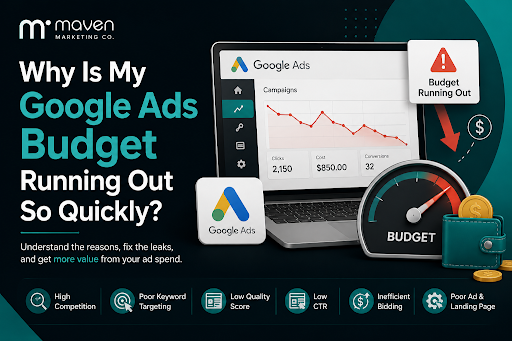
Running a successful Google Ads budget isn’t only about throwing more money at it. It’s more like making every dollar, doing a bit extra. A lot of businesses start a Google Ads campaign with big hopes, then find out their daily budget is gone within a few hours, and that feels weird, right? After that, your ads stop showing effectively, new leads slip away, and your return on investment dips. So if your Google Ads budget is running out too fast, don’t stress. It’s a fairly common issue, and in most situations, it can be repaired with the right approach. There are multiple little things that can drain your advertising money quicker than you expected, from costly keywords to audience targeting that just doesn’t quite fit. In this guide, we’ll walk through why your budget disappears so quickly, how to cut wasteful spend, and the most reliable ways to boost your Google Ads ROI, even if your budget stays the same.