
.svg)


%201.svg)

Your competitor just published their fifteenth blog post this month. You have managed three. They seem to have an endless stream of perfectly optimised content whilst you struggle to maintain consistency.
Here is what they know that you do not. They are not winging it. They have a system.
SEO content planning in 2026 is not about inspiration or creative bursts. It is about systematic execution of a strategic framework that aligns business objectives with audience needs whilst satisfying increasingly sophisticated search algorithms. The Australian businesses dominating organic search have all cracked the same code: strategic content planning beats ad hoc publishing every single time.
Why Random Content Creation Fails in 2026
Publishing without planning creates three fatal problems that kill your SEO potential before it starts.
First, you create keyword cannibalisation where multiple pages compete against each other for the same search terms. Google cannot determine which page deserves to rank, so none of them do. Without planning, you accidentally write five different blog posts targeting variations of the same keyword, fragmenting your authority instead of concentrating it.
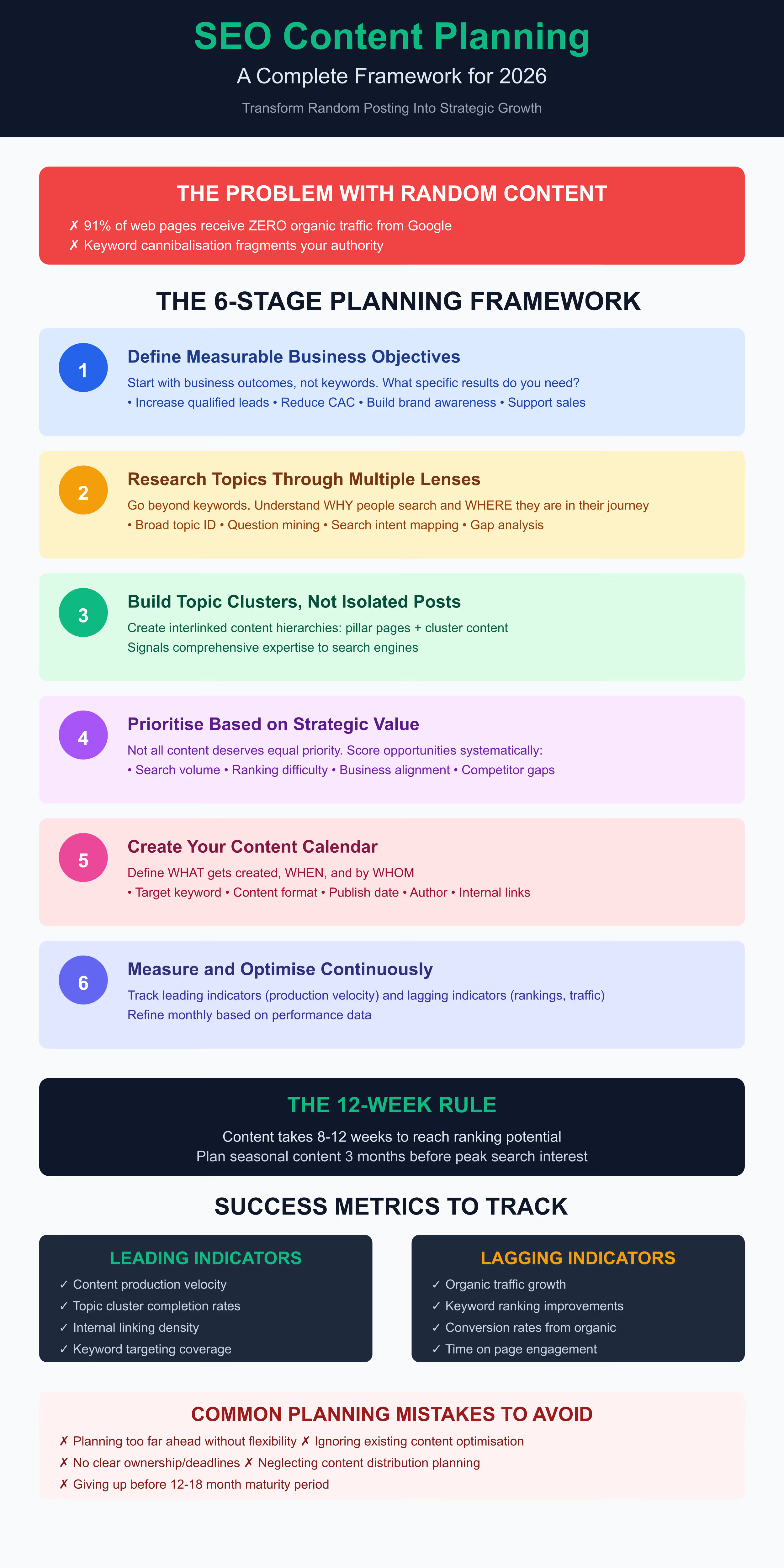
Second, you miss critical topics that your audience actively searches for whilst wasting resources on content nobody wants. When you write based on what feels interesting rather than what your market demands, you invest hundreds of hours into content that generates zero traffic. Research shows that approximately 91% of web pages receive no organic traffic from Google, primarily because they target topics without search demand.
Third, you fail to build topical authority. Search algorithms in 2026 do not evaluate individual pages in isolation. They assess your entire site's expertise on broader topics through comprehensive content coverage. Publishing random articles on disconnected subjects signals that you lack depth in any particular area.
Strategic planning solves all three problems simultaneously.
The 2026 Content Planning Framework
Effective SEO content planning follows a systematic six-stage process that transforms vague ideas into rankable assets.
Stage One: Define Measurable Business Objectives
Content planning starts with business outcomes, not keywords. What specific results do you need from organic search? Typical objectives include increasing qualified leads by a defined percentage, reducing customer acquisition costs through organic channels, building brand awareness in specific market segments, or supporting sales by answering prospect objections before they arise.
Your objectives determine everything downstream. If you need leads, you focus on bottom-funnel content targeting commercial intent keywords. If you need awareness, you prioritise top-funnel educational content. Without clear objectives, you cannot evaluate whether your content planning succeeds.
Stage Two: Research Topics Through Multiple Lenses
Traditional keyword research remains foundational, but 2026 demands a more sophisticated approach. You need to understand not just what people search for, but why they search, where they are in their journey, and what comprehensive answer would fully satisfy their intent.
Start with broad topic identification in your industry. What major subject areas relate to your business? For an Australian accounting firm, topics might include tax planning, business structures, compliance requirements, and financial reporting. Each broad topic becomes a content cluster.
Within each cluster, identify specific questions, problems, and information gaps your audience experiences. Tools like AnswerThePublic, Google's People Also Ask, and competitor content analysis reveal these specific subtopics. Understanding search intent has become critical as algorithms prioritise content matching user expectations.
Map search intent for each keyword opportunity. Informational intent seeks knowledge. Navigational intent targets specific brands or sites. Commercial intent compares options before purchasing. Transactional intent indicates purchase readiness. Your content format, depth, and call to action must align with the dominant intent.
Stage Three: Build Topic Clusters, Not Isolated Posts
Topic clustering creates interlinked content hierarchies that establish comprehensive topical authority. Instead of disconnected blog posts, you build content ecosystems where pillar pages cover broad topics comprehensively whilst cluster content addresses specific subtopics in depth.
A pillar page on "Small Business Tax Planning in Australia" might link to cluster content covering "FBT Optimisation Strategies," "Instant Asset Write-Off Rules 2026," "Trust vs Company Structures for Tax," and "R&D Tax Incentive Application Process." Each cluster piece links back to the pillar whilst also connecting to related cluster content.
This architecture signals expertise to search engines whilst providing users with comprehensive resources that answer related questions without leaving your site. Google interprets this structure as authoritative coverage of the entire topic domain.
Stage Four: Prioritise Based on Strategic Value
Not all content opportunities deserve equal priority. Apply a systematic scoring framework to rank content ideas by potential impact.
Consider search volume for commercial value. High-volume keywords with strong commercial intent typically deserve priority unless competition makes ranking unrealistic. Balance difficulty against your site's current authority. Target keywords you can realistically rank for within reasonable timeframes given your domain authority.
Evaluate business alignment. Content directly supporting your core offerings generates more value than tangentially related topics, even if those topics show higher search volume. A Brisbane law firm specialising in commercial property should prioritise commercial property legal content over general legal topics.
Assess content gaps where you lack coverage whilst competitors have established positions. Strategic gap-filling can quickly capture market share in underserved subtopics.
Creating Your SEO Content Calendar

A content calendar transforms strategy into execution by defining exactly what gets created, when, and by whom.
Your calendar should specify the target keyword and search intent for each piece, the content format that best serves that intent, the publication date aligned with seasonal relevance or strategic timing, the author with appropriate expertise to write authoritatively, and the internal linking structure connecting the piece to your topic clusters.
Calendar Organisation Options
You can organise calendars multiple ways depending on your team structure and complexity. Spreadsheet-based calendars work well for smaller teams managing straightforward publishing schedules. Tools like Google Sheets or Excel provide flexibility and easy collaboration.
Project management platforms like Trello, Asana, or Monday.com suit larger teams coordinating multiple stakeholders across research, writing, editing, design, and publication. These tools enable workflow automation and deadline tracking.
Specialised content calendar software like CoSchedule or ContentCal offers SEO-specific features including keyword tracking, performance analytics integration, and automated publishing.
Determining Publishing Frequency
How often should you publish? The honest answer is: as frequently as you can maintain quality whilst building comprehensive topic coverage.
Publishing consistency matters more than volume. One thoroughly researched, expertly written article weekly beats three rushed, superficial posts. Search engines reward depth and expertise over publication frequency.
For most Australian SMEs, a sustainable starting point involves one to two substantial pieces weekly, focusing on building complete topic clusters before moving to new subjects. This concentrated approach builds authority faster than scattering efforts across unrelated topics.
The 12-Week SEO Planning Rule
Content published today typically takes 8 to 12 weeks to reach its ranking potential as search engines crawl, index, evaluate, and gradually position it within results. This lag demands forward-thinking planning.
Plan content for seasonal topics three months before peak search interest. Christmas gift guides should publish in September. Tax planning content should go live in April for the June 30 financial year end. Australian Open content should be ready in October for the January tournament.
This timeline ensures your content has matured sufficiently in Google's index to capture peak search volume when it matters most.
Integrating AI Into Your Content Planning
AI tools have transformed content planning workflows, but their effective use requires understanding both capabilities and limitations.
AI excels at generating content ideas from keyword lists, creating initial content outlines based on top-ranking competitor structures, identifying content gaps by analysing your existing coverage against competitors, and drafting meta descriptions and title tag variations.
AI struggles with nuanced understanding of your specific business positioning, incorporating genuine expertise and lived experience that satisfies E-E-A-T requirements, and maintaining your distinct brand voice consistently across content.
The most successful approach combines AI efficiency with human expertise. Use AI to accelerate research and drafting, then apply human knowledge to refine, personalise, and inject genuine authority. Industry data shows that 58% of SEO professionals now use this hybrid approach, valuing quality over the pure automation that only 22% have adopted.

Measuring Content Planning Success
Your content planning system requires measurement frameworks that track both leading and lagging indicators.
Leading indicators predict future success and include content production velocity against plan, topic cluster completion rates, internal linking density within clusters, and keyword targeting coverage across your priority list.
Lagging indicators measure actual results and include organic traffic growth to specific topic clusters, keyword ranking improvements for target terms, conversion rates from organic traffic, and the time users spend on content pages.
Track these metrics monthly, comparing performance against your initial objectives. High-quality planning should show steady improvement in topic cluster rankings, increasing organic traffic concentration in your core business areas, and rising conversion rates as content better matches commercial intent.
When metrics disappoint, diagnose systematically. Low traffic despite good rankings suggests targeting keywords without genuine search volume. High traffic without conversions indicates misalignment between content and commercial intent. Stagnant rankings point to insufficient topical authority or technical SEO issues.
Common Content Planning Mistakes Australian Businesses Make
Even with good intentions, certain mistakes sabotage content planning effectiveness.
Planning too far ahead without flexibility creates problems when algorithm updates, market conditions, or business priorities shift. Plan your core topic clusters for the quarter, but maintain flexibility to adjust timing and priorities monthly based on performance data and market changes.
Ignoring existing content when planning new pieces wastes your most valuable asset. Before creating new content, audit existing pages. Often, updating and expanding existing content delivers better results than starting fresh. Add the optimisation projects to your calendar alongside new content creation.
Failing to assign clear ownership and deadlines transforms calendars from execution tools into wishful thinking. Each calendar item needs a specific person responsible and a firm deadline. Vague assignments like "team to handle" guarantee nothing gets done.
Neglecting content distribution planning means great content sits unread. Your calendar should include promotion tactics for each piece: email distribution to your list, social media scheduling, outreach to industry publications for backlinks, and internal linking from existing high-authority pages.
Advanced Planning Strategies for Competitive Markets

When you operate in highly competitive markets where ranking for primary keywords seems impossible, advanced planning strategies create alternative paths to visibility.
Programmatic SEO for Scale
Programmatic SEO creates hundreds or thousands of location-specific, product-specific, or variation-specific pages systematically. A Melbourne plumber might create individual service pages for every suburb: "Emergency Plumber in Carlton," "Emergency Plumber in Fitzroy," and so forth.
This approach works when you have structured data that can populate templates at scale whilst maintaining unique value for each variation. Poor execution creates thin, duplicate content that gets penalised. Effective execution captures long-tail traffic across thousands of specific searches.
Question-Based Content Strategies
Google increasingly features question-focused content in People Also Ask boxes and AI Overviews. Building content calendars around questions your market asks positions you for these featured placements.
Create comprehensive FAQ content, structure articles to directly answer specific questions with concise summaries, and use schema markup to help search engines identify question-answer pairs within your content.
Complementary Platform Content
Search discovery increasingly happens across multiple platforms beyond Google. Users under 44 use an average of five platforms including TikTok, ChatGPT, Reddit, and review sites for search activities.
Your content planning should consider where your audience searches beyond traditional search engines. Plan video content for YouTube, discussion contributions for Reddit, and review management strategies as part of comprehensive search visibility planning.
Building Your Content Planning Team
Effective content planning requires coordinated effort across multiple skill sets.
Small Australian businesses often start with one person wearing multiple hats: researching keywords, planning topics, writing content, and managing publication. This works initially but creates bottlenecks as content volume increases.
As you scale, specialise roles. SEO strategists focus on keyword research, competitive analysis, and topic cluster planning. Content managers build calendars, assign work, and ensure deadline adherence. Writers create content based on briefs. Editors ensure quality, accuracy, and brand voice consistency. Technical specialists handle on-page optimisation and publication.
Even small teams benefit from clearly defining these roles, even when one person performs multiple functions. Clarity about which hat you are wearing for each task improves both efficiency and quality.
Your Content Planning Implementation Roadmap
Implementing strategic content planning does not happen overnight. Follow this phased approach for sustainable success.
Month One: Foundation Building
Define your business objectives for SEO content. Conduct comprehensive keyword research across your core topic areas. Map search intent for your priority keywords. Audit existing content to identify optimisation opportunities and gaps.
Month Two: Framework Development
Design your topic cluster architecture. Create your content calendar tool and workflow. Develop content brief templates that ensure consistency. Establish measurement frameworks for tracking success.
Month Three: Execution Launch
Begin publishing according to your calendar. Build your first complete topic cluster. Implement internal linking structures. Start measuring performance against your objectives.
Months Four to Six: Optimisation and Scaling
Analyse what content types and topics perform best. Refine your planning based on performance data. Expand successful topic clusters. Develop processes for scaling content production whilst maintaining quality.
Month Seven Onwards: Systematic Growth
Maintain consistent execution against your calendar. Continuously optimise existing content based on performance. Expand into new topic clusters as you establish authority in core areas. Test advanced strategies like programmatic SEO or complementary platform content.
The Reality About Content Planning ROI

SEO content planning requires upfront investment in research, strategy, and system building. The payoff is not immediate, and that reality frustrates businesses seeking quick wins.
Content published today might take three months to rank well. Building complete topical authority across a subject cluster might require six to nine months of consistent publishing. Achieving dominance in competitive markets can take a year or more.
But here is the compelling economics. Once established, organic traffic compounds. Unlike paid advertising where traffic stops when spending stops, ranked content continues attracting visitors indefinitely. Your investment in month one continues generating returns in months 12, 24, and 36.
Australian businesses that commit to strategic content planning consistently report organic search becoming their most cost-effective customer acquisition channel within 12 to 18 months. The businesses that fail are those that give up after three months when results have not yet materialised.
Making Content Planning Work for Your Business
You now understand the frameworks, processes, and strategies that transform random content creation into systematic growth engines. The difference between knowing and succeeding is implementation.
Start small if resources are limited. Plan one complete topic cluster rather than attempting comprehensive coverage across all possible topics. Execute that cluster thoroughly, building genuine expertise and authority. Measure results. Learn what works for your specific market, audience, and business model. Then expand systematically.
The Australian businesses winning in organic search are not necessarily the largest or best funded. They are the ones with the discipline to plan strategically, execute consistently, and optimise continuously based on performance data.
Ready to transform your content from random posts into strategic business assets? The specialists at Maven Marketing Co. build complete SEO content planning systems for Australian businesses. We conduct comprehensive keyword research, design topic cluster architectures, create 12-month content calendars, and train your team to execute with precision. Stop wasting content budget on pieces nobody finds. Contact us today for a content planning audit that identifies your biggest opportunities and creates your roadmap to organic search dominance.

Table of contents
read more blogs
Is Google Ads Better Than SEO for My Business
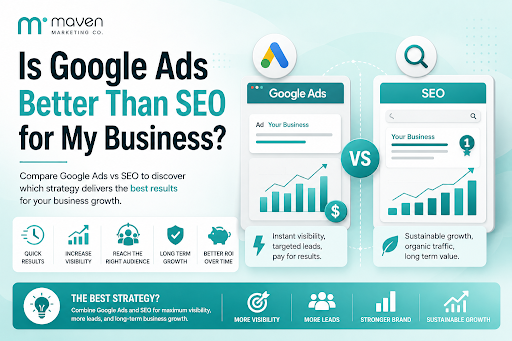
One of the biggest questions business owners ask when they are planning online growth is whether they should invest in Google Ads or SEO. Both are strong marketing plays that help your company show up in Google search results, but they do things in separate lanes. Google Ads gives quicker visibility and can bring in leads fast, whereas SEO more or less focuses on slow, steady organic traffic that tends to grow the longer you keep building it. Picking the right direction depends on what you want to achieve, how much money you can spend, how crowded the market is, and how quickly you need results, like sooner rather than later. The good news is you don’t always have to choose one or the other; it’s not exactly a black-and-white situation. If you take time to understand the strongest points of both, you can put together a more sensible digital marketing plan that supports consistent expansion. In this guide, we’ll compare Google Ads vs SEO, explain the main differences, and help you figure out what option makes the most sense for your business.

When Should I Hire a Digital Marketing Agency
Growing a business today takes more than just having a website or throwing a post on social media; customers usually search around online, compare providers, skim reviews, and basically expect the brand to show up with a solid digital presence before they even think about buying. Many businesses try to run their marketing themselves, but there comes a point when “doing it all in-house” becomes clunky and hard to manage, all at once. Knowing when to hire a digital marketing agency can end up making a big, real difference for your growth. If you’re not getting enough leads, or your online visibility feels stuck, or sales are just not moving, the right agency can bring the know-how, plus a clear plan, to help you get noticeably better outcomes. In this guide, we’ll dig into what a digital marketing agency actually does, the usual signs it’s time to bring one on, and how picking the right marketing partner can help your business move forward at a faster pace.
Why Is My Google Ads Budget Running Out So Quickly
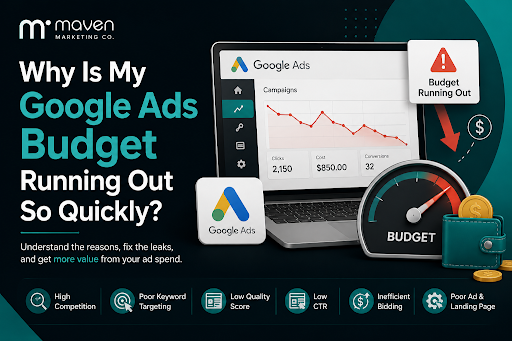
Running a successful Google Ads budget isn’t only about throwing more money at it. It’s more like making every dollar, doing a bit extra. A lot of businesses start a Google Ads campaign with big hopes, then find out their daily budget is gone within a few hours, and that feels weird, right? After that, your ads stop showing effectively, new leads slip away, and your return on investment dips. So if your Google Ads budget is running out too fast, don’t stress. It’s a fairly common issue, and in most situations, it can be repaired with the right approach. There are multiple little things that can drain your advertising money quicker than you expected, from costly keywords to audience targeting that just doesn’t quite fit. In this guide, we’ll walk through why your budget disappears so quickly, how to cut wasteful spend, and the most reliable ways to boost your Google Ads ROI, even if your budget stays the same.


