.svg)


%201.svg)

Key Takeaways
- Search intent classification reveals what users want to accomplish, with Google recognizing four primary intent types: informational (learning), navigational (finding specific sites), commercial investigation (researching before purchase), and transactional (ready to buy)
- Intent-matched content outperforms keyword-optimized content by 3.2x in engagement metrics, with users spending 2.8x longer on pages and converting 2.1x better when content precisely matches their search intent
- Single keywords can signal multiple intents depending on context, with "Melbourne accountant" potentially indicating informational intent (learning about accountants), commercial investigation (comparing options), or transactional intent (ready to hire), requiring analysis beyond the keyword itself
- Google's SERP features reveal intent interpretation, with featured snippets and "People Also Ask" indicating informational intent, local pack results showing local/transactional intent, and shopping results signaling product purchase intent
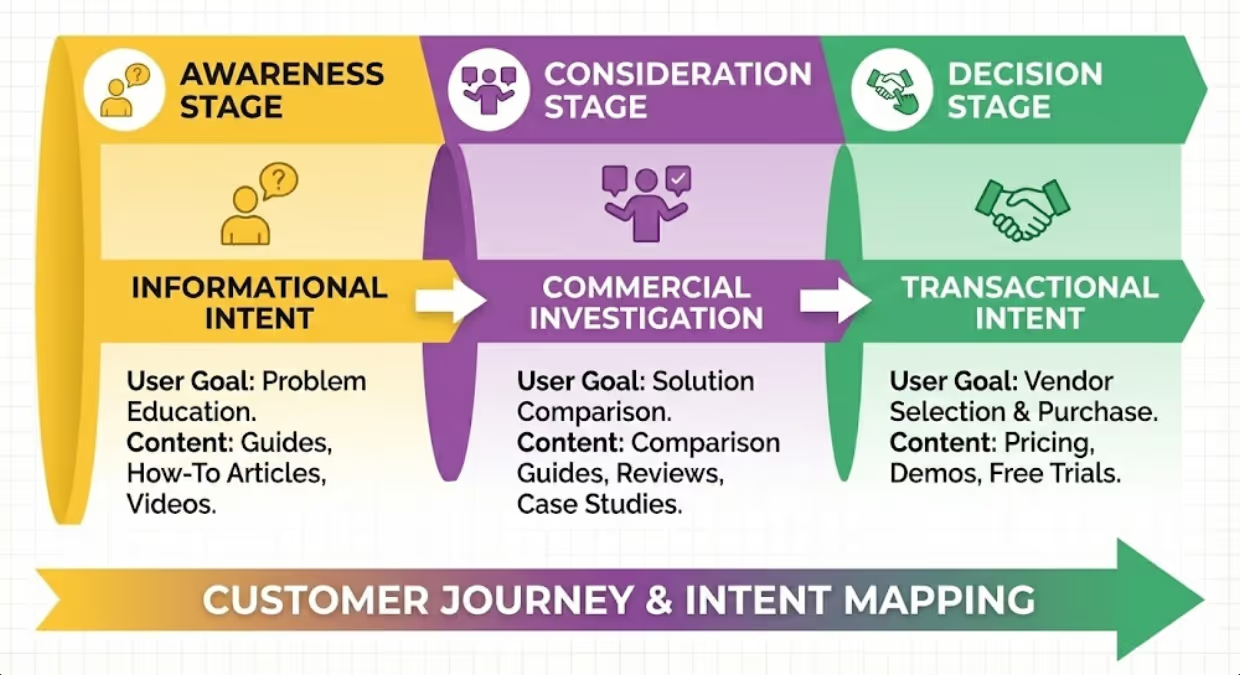
- Intent mapping across the customer journey creates comprehensive content strategies, ensuring you have appropriate content for users at awareness, consideration, and decision stages rather than gaps forcing prospects to competitors
A Brisbane business owner searches "digital marketing strategies." What does she actually want? Strategic overview? Tactical how-to guidance? Service providers? Pricing comparison? The keyword alone doesn't tell you.
Another searches "best digital marketing agency Brisbane." Different intent—clearly evaluating specific service providers. Another searches "Maven Marketing Co." Navigational intent—seeking a specific business.
Same industry, vastly different intents requiring completely different content. Yet most businesses create one service page targeting all variations, wondering why it ranks poorly and converts worse.
Google understands these intent differences and displays results matching what users actually want. The algorithmic question isn't just "does this page mention these keywords?" but "does this page satisfy what the user is trying to accomplish?"
Businesses aligning content with search intent don't just improve rankings—they transform their entire content strategy from hopeful broadcasting to precise user need satisfaction.
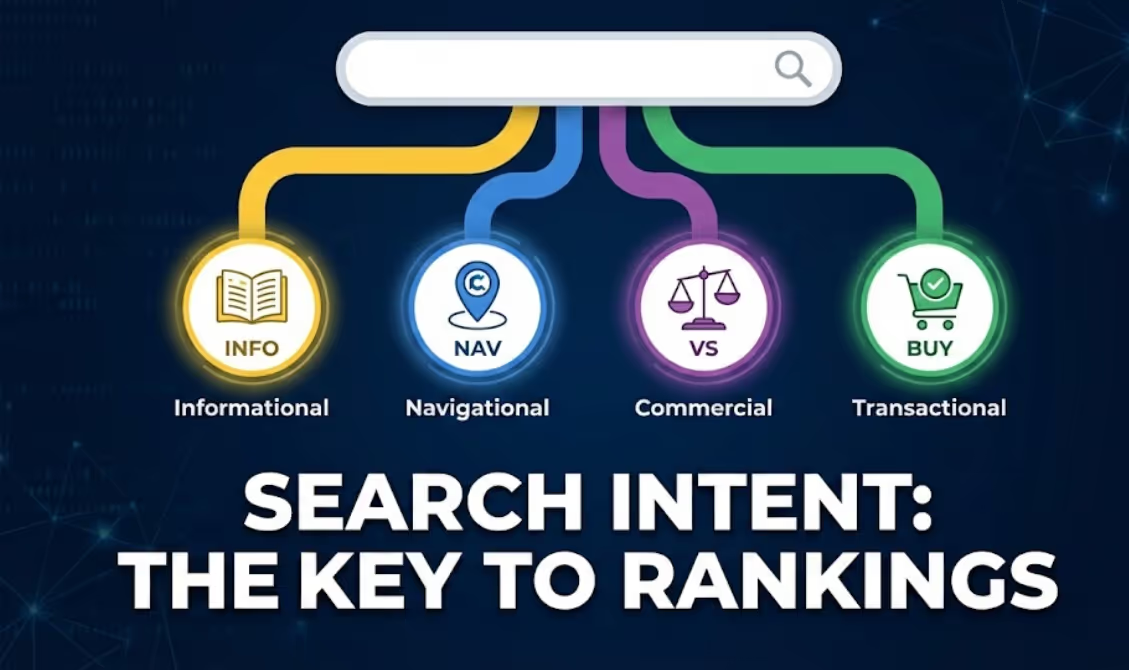
The Four Primary Search Intent Types
1. Informational Intent - Users seeking knowledge, answers, or education.
Characteristics: "How to," "what is," "why does," "guide to," "tips for," "best way to" modifiers. Users don't yet know solutions or may not recognize problems fully.
SERP features: Featured snippets, "People Also Ask" boxes, knowledge panels, how-to rich results, video carousels.
Content requirements: Educational articles, comprehensive guides, how-to tutorials, explainer videos, definitions, frameworks, step-by-step instructions.
Australian examples:
- "How to start a business in Queensland"
- "What is PAYG withholding"
- "Melbourne coffee roasting guide"
- "Why do I need business insurance"
2. Commercial Investigation Intent - Users researching solutions before purchasing.
Characteristics: "Best," "top," "vs," "review," "comparison," "alternative to" modifiers. Users know they need solutions and are evaluating options.
SERP features: Review snippets, comparison tables, "best of" listicles, video reviews, shopping comparisons.
Content requirements: Product/service comparisons, review roundups, "best of" lists, alternative evaluations, pros/cons analyses, buyer's guides.
Australian examples:
- "Best accounting software for small business Australia"
- "Xero vs MYOB comparison"
- "Top marketing agencies Sydney"
- "Coffee machine reviews Australia"
3. Transactional Intent - Users ready to complete specific actions (purchase, signup, download, contact).
Characteristics: "Buy," "price," "discount," "deal," "hire," "book," "order," brand names, product names, "near me" modifiers.
SERP features: Shopping results, local pack, paid ads, product carousels, booking widgets, store hours.
Content requirements: Product pages, pricing information, booking forms, purchase paths, contact details, location information, clear CTAs.
Australian examples:
- "Buy organic coffee beans Brisbane"
- "Book accountant consultation Melbourne"
- "Digital marketing services pricing"
- "Hire web developer Sydney"
4. Navigational Intent - Users seeking specific websites, brands, or locations.
Characteristics: Brand names, company names, website names, specific product names, URLs.
SERP features: Brand knowledge panel, site links, social media links, maps for physical locations.
Content requirements: Optimized homepage, about page, contact page, location pages, brand-specific landing pages.
Australian examples:
- "Maven Marketing Co"
- "Commonwealth Bank login"
- "Bunnings Warehouse Carindale"
- "MYOB support"
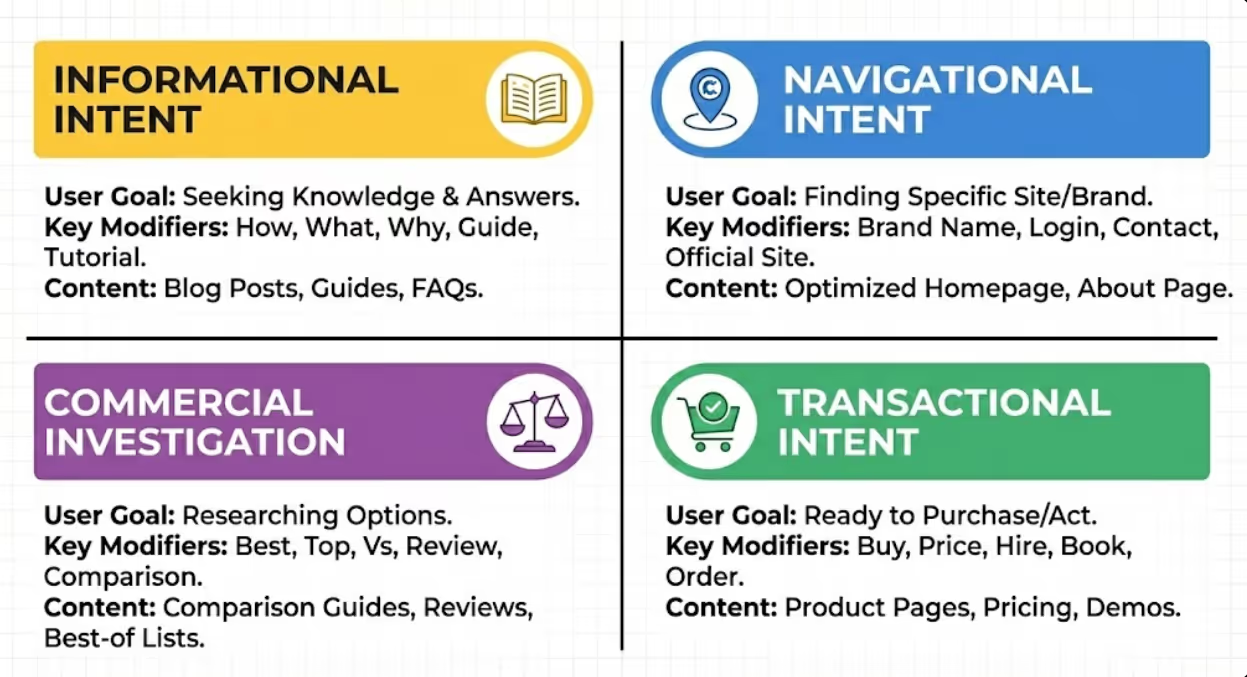
Analyzing Intent Behind Keywords
Keyword modifiers signal intent:
Informational modifiers: how, what, why, when, where, who, guide, tutorial, tips, ideas, examples, ways to, learn
Commercial investigation modifiers: best, top, review, comparison, vs, alternative, option, solution, recommendation
Transactional modifiers: buy, purchase, price, cost, cheap, discount, deal, hire, book, order, near me, [brand/product name]
Navigational modifiers: [brand name], login, contact, location, [specific company]
SERP analysis reveals Google's intent interpretation:
Search your target keywords and analyze what Google displays. Featured snippets indicate informational intent. Local pack results show local/transactional intent. Shopping carousel signals product purchase intent. Video results suggest how-to or review content works well.
This SERP analysis provides crucial intelligence—Google has analyzed billions of searches and user behavior determining what best satisfies each query. Match what Google shows.
Intent can vary by subtle keyword changes:
- "Project management" → Informational (what is it?)
- "Project management software" → Commercial investigation (evaluating options)
- "Asana pricing" → Transactional (ready to purchase)
- "Asana" → Navigational (seeking specific site)
Ambiguous intent requires comprehensive content:
Some keywords genuinely serve multiple intents. "Melbourne accountant" could be informational (learning about accounting), commercial (comparing accountants), or transactional (ready to hire).
For ambiguous keywords, create comprehensive content addressing multiple intents or separate targeted pages for each intent variation.
Mapping Intent to Customer Journey Stages
Awareness Stage = Informational Intent
User state: Experiencing problems or challenges but may not recognize solutions exist. Educating themselves on issues, seeking general information.
Search examples:
- "How to improve website traffic"
- "Small business marketing challenges"
- "Why am I not getting customers"
- "What is SEO"
Content strategy: Educational blog posts, beginner guides, problem identification content, industry insights, how-to tutorials, explainer videos.
Optimization focus: Question keywords, broad topic coverage, comprehensive educational value, establishing expertise and trust.
Consideration Stage = Commercial Investigation Intent
User state: Aware of problems and potential solutions. Actively researching and comparing approaches, building requirements, evaluating options.
Search examples:
- "SEO vs PPC for small business"
- "Best digital marketing strategies"
- "Marketing agency vs in-house team"
- "Email marketing software comparison"
Content strategy: Comparison guides, "best of" content, case studies, detailed service explanations, methodology overviews, webinars, ROI calculators.
Optimization focus: Comparison keywords, solution-oriented content, demonstrating expertise through detailed insights, building preference.
Decision Stage = Transactional Intent
User state: Ready to select specific vendor or make purchase. Comparing final options, evaluating pricing and terms, overcoming final objections.
Search examples:
- "Maven Marketing Co pricing"
- "Hire SEO consultant Brisbane"
- "Book marketing consultation"
- "Buy [specific product]"
Content strategy: Service/product pages, pricing information, testimonials and case studies, free trials/consultations, comparison pages vs competitors, guarantee information.
Optimization focus: Branded keywords, transactional modifiers, conversion optimization, reducing purchase friction, addressing final objections.
Creating Intent-Optimized Content
Informational content best practices:
Answer the question directly and immediately. Don't bury the answer in paragraph 5. Open with clear, direct response to the query.
Provide comprehensive coverage. Informational searchers want thorough understanding. 1,500-2,500 word comprehensive guides outperform 300-word superficial answers.
Use clear structure. Headers, bullet points, numbered lists make content scannable. Users skim informational content seeking specific answers.
Include related information. Address follow-up questions users likely have. "People Also Ask" boxes provide excellent related question insights.
Avoid heavy promotion. Informational content should educate, not sell. Ratio: 90% educational value, 10% subtle brand positioning. CTA can offer deeper resources (downloadable guide, related article) rather than immediate purchase.
Commercial investigation content best practices:
Be genuinely helpful, not purely promotional. Users distrust obviously biased comparisons. Acknowledge competitor strengths while highlighting your differentiators.
Provide specific comparisons. Vague "we're better" claims fail. Specific feature comparisons, pricing differences, use case suitability provide actual decision value.
Use comparison formats. Tables, side-by-side feature lists, pros/cons breakdowns make evaluation easier.
Address buyer concerns. What worries prospects considering this decision? Cost? Implementation difficulty? Results timeline? Address these proactively.
Include social proof. Case studies, testimonials, results data help prospects evaluate credibility and success probability.
Transactional content best practices:
Remove friction. Clear CTAs, simple forms, obvious next steps. Don't make users hunt for how to buy/contact/signup.
Provide pricing transparency. Users with transactional intent want pricing. If you hide it, they'll leave seeking transparent competitors.
Address objections immediately. FAQs, guarantees, return policies, risk reversals should be prominent on transactional pages.
Use social proof heavily. Reviews, testimonials, trust badges, customer counts, case study results all reduce purchase anxiety.
Create urgency appropriately. Genuine scarcity (limited availability, time-sensitive offers) works. Artificial urgency (fake countdown timers) damages trust.
Search Intent and Content Format Selection
Different intents prefer different formats:
Informational intent:
- Blog posts for in-depth topic coverage
- How-to articles with step-by-step instructions
- Video tutorials for visual learning
- Infographics for data visualization
- Comprehensive guides for complete topic mastery
- FAQ pages for common questions
Commercial investigation intent:
- Comparison articles evaluating alternatives
- Review roundups assessing multiple options
- Case studies demonstrating real-world results
- Webinars providing deep-dive education with Q&A
- Buyer's guides helping evaluation decisions
- Calculators/tools for quantitative comparison
Transactional intent:
- Product/service pages with clear offerings
- Landing pages optimized for conversion
- Pricing pages with transparent costs
- Booking/contact forms enabling action
- Product demos showing functionality
- Free trial signups reducing commitment barriers
Match format to intent—don't force blog posts for transactional searches or product pages for informational queries.
Intent Optimization for Australian Markets
Australian search behavior patterns:
Local intent dominance: Many Australian searches include local modifiers even when not strictly necessary. "Accountant" becomes "accountant Brisbane" or "accountant near me." Optimize for these geo-modified variations.
Suburb-specificity: Australians often search by suburb rather than city. "Paddington cafe" vs "Brisbane cafe." Create suburb-specific content where appropriate.
Mobile and voice search prevalence: 72% of Australian searches now occur on mobile. Voice searches tend toward longer, more conversational, question-based queries signaling informational intent. Optimize for natural language questions.
Direct, pragmatic content preference: Australian communication culture values straightforward, no-nonsense information over flowery marketing speak. Intent-matched content should be direct and practical.
Trust and credibility emphasis: Australians research thoroughly before purchasing, particularly for services. Commercial investigation content must build genuine trust through transparent, helpful comparison rather than pure promotion.
Measuring Intent Match Success
Intent alignment metrics:
Engagement metrics by intent type:
- Informational: Time on page (3-5+ minutes for comprehensive guides), scroll depth (70%+ for engaged users), pages per session (exploring related content)
- Commercial investigation: Time on page (2-4 minutes for comparison content), PDF downloads (comparison guides, buyers' guides), video completion rates (product demos, webinars)
- Transactional: Conversion rate (form submissions, purchases, calls), bounce rate (high bounce suggests intent mismatch), CTA click-through rate
Search Console performance indicators:
Click-through rate (CTR): Pages matching intent achieve higher CTR—users recognize relevance from search results. Low CTR despite good rankings suggests title/description don't communicate intent match.
Average position: Intent-matched content ranks better. Google rewards pages satisfying user needs with higher positions.
Impressions for intent-specific keywords: Are you appearing for keywords matching your content's intent? If informational content appears for transactional keywords (or vice versa), optimization needs adjustment.
Conversion funnel analysis:
Track how users progress through journey stages. Do informational searchers convert to email subscribers? Do email subscribers engage with commercial investigation content? Do users consuming comparison content convert to customers?
Breaks in progression indicate either content gaps (missing intent types for journey stages) or poor intent matching (content doesn't satisfy needs at each stage).
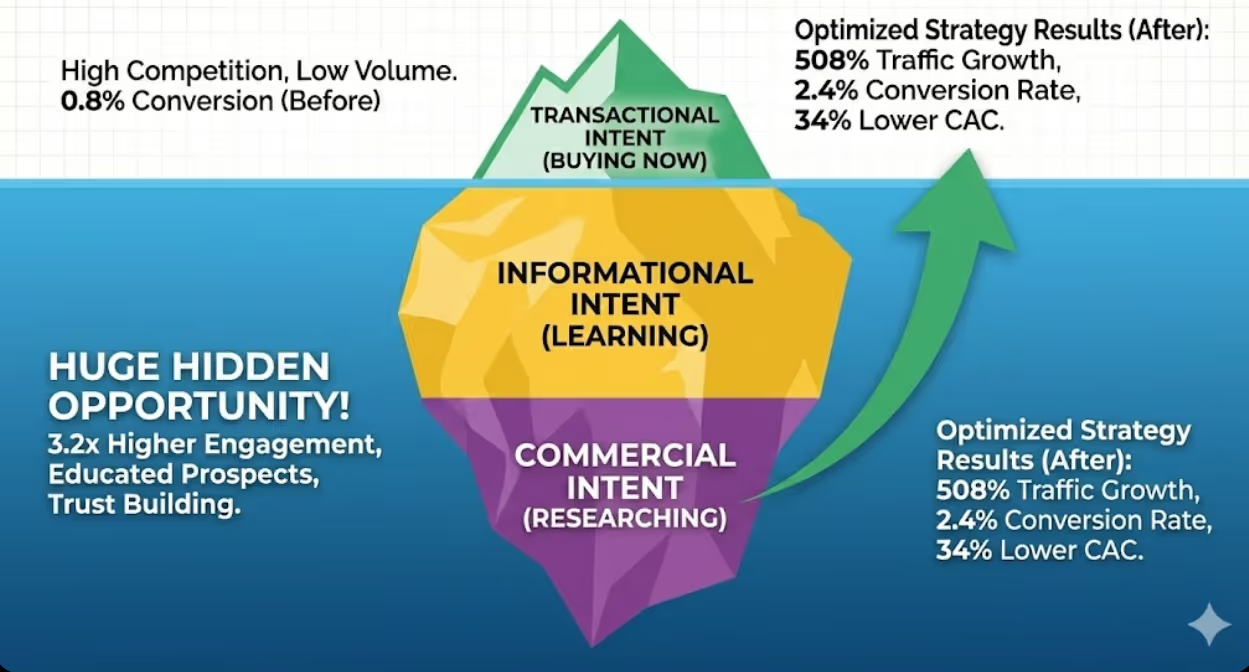
Case Study: Sydney Software Company's Intent Transformation
A Sydney B2B SaaS company sold project management software. Their content strategy focused almost entirely on transactional content—product pages, feature lists, pricing, free trial offers.
Problem: Organic traffic stagnated around 2,400 monthly visitors. Conversion rates from organic were poor (0.8%). Most traffic bounced quickly. SEO efforts focused on transactional keywords ("project management software," "buy project software") with intense competition and high cost-per-click.
Intent analysis revealed massive gaps:
Search volume breakdown for their industry:
- Informational intent keywords: 24,000 monthly searches ("how to manage projects," "project management guide," "improve team productivity")
- Commercial investigation: 8,200 searches ("best project management software," "Asana vs Monday.com," "project management tools comparison")
- Transactional: 3,100 searches ("project management software pricing," specific product names)
They competed exclusively for 3,100 monthly transactional searches while ignoring 32,200 searches from earlier journey stages.
Strategic implementation (Q2-Q3 2024):
Informational content creation:
- Published comprehensive "Project Management Fundamentals Guide"
- Created weekly how-to articles: "How to Run Effective Kickoff Meetings," "Managing Remote Project Teams," "Creating Realistic Project Timelines"
- Developed video tutorial series on project management best practices
- Built interactive project assessment tool
Commercial investigation content:
- Published detailed comparison guides comparing their software to competitors
- Created "Choosing Project Management Software: Buyer's Guide"
- Developed case study library showing different use cases and industries
- Hosted monthly webinar: "Project Management Software Selection Workshop"
Maintained transactional content but optimized based on commercial investigation learnings:
- Updated product pages addressing concerns from comparison content
- Enhanced pricing page with ROI calculator
- Added prominent testimonials and case study results
- Improved free trial signup flow
Results after 8 months:
Organic traffic increased from 2,400 to 14,600 monthly visitors (508% increase). Informational content attracted 8,200 monthly visitors. Commercial investigation content attracted 3,800 visitors. Transactional content maintained 2,600 but with higher quality from warmed prospects.
Email list grew from 1,800 to 11,200 subscribers (informational content CTAs). Trial signups from organic increased from 19 to 127 monthly. Conversion rate improved from 0.8% to 2.4% (prospects better educated through journey).
Most significantly: customer acquisition cost decreased 34% (organic pipeline reduced paid advertising dependency). Customer quality improved—free trials from informed prospects converted to paid at 31% vs 18% from cold traffic.
Marketing director: "We were fishing only where fish were ready to bite, ignoring the pond where they were feeding and growing. Mapping content to full intent journey filled our pipeline with educated prospects choosing us because we helped them through their entire journey, not just showed up when they were ready to buy."
Case Study: Brisbane Trade Services Intent Alignment
A Brisbane northside electrician had basic website with standard service pages. Content was purely transactional—services offered, service areas, contact forms.
Problem: Website generated minimal organic traffic (340 monthly visitors). Most traffic came from Google My Business and paid ads. Content provided no value until prospects were already ready to hire—missing opportunity to build relationships earlier.
Intent mapping revealed local search patterns:
Homeowner search behaviour:
- Informational: "Electrical safety tips," "how to know if I need electrical upgrade," "power surge causes," "circuit breaker keeps tripping"—12,400 monthly local searches
- Commercial investigation: "Best electrician northside Brisbane," "emergency electrician reviews," "commercial electrician Brisbane"—2,100 monthly searches
- Transactional: "Hire electrician Chermside," "electrician near me," "emergency electrician Brisbane"—3,800 monthly searches
Content strategy implementation:
Informational content targeting homeowners:
- Published electrical safety guides for Queensland homes
- Created seasonal content: "Preparing Your Electrical System for Summer," "Storm Season Electrical Safety"
- Developed problem diagnosis articles: "Why Does My Circuit Breaker Keep Tripping?" "Understanding Your Electrical Panel"
- Built suburb-specific electrical guides addressing common local issues
Commercial investigation content:
- Created "Choosing the Right Electrician: Brisbane Homeowner's Guide"
- Published "What to Expect from Professional Electrical Inspection"
- Developed transparent pricing guide explaining cost factors
- Built extensive FAQ addressing common concerns
Optimized transactional content:
- Enhanced service pages with before/after photos, detailed process explanations
- Added emergency service page with prominent call buttons
- Included extensive customer testimonials with suburb references
- Created suburb-specific landing pages for key service areas
Results after 6 months:
Organic traffic increased from 340 to 4,800 monthly visitors. Informational content attracted 3,200 visitors monthly, establishing expertise. Commercial investigation content converted 14% of readers to phone calls or contact form submissions.
Website-generated leads increased from 8 to 47 monthly. Average job value increased 23% (educated customers valued expertise over price). Customer retention improved—informational content readers became repeat customers at higher rates.
Google Business Profile views increased 167% (more people discovering business through content, then viewing profile). Local pack rankings improved for commercial/transactional keywords due to overall domain authority increase from content.
Owner reflection: "I thought content marketing was for big businesses selling products. Turns out homeowners need help understanding electrical issues, evaluating electricians, and making informed decisions. Being the helpful expert through their entire journey created trust that converted to jobs and loyalty."
Frequently Asked Questions
How do you optimize for keywords with mixed intent?
Create comprehensive content addressing multiple intents or separate targeted pages for each intent. For mixed-intent keywords, analyze SERP results—if Google shows varied content types (articles, comparisons, product pages), mixed intent exists. Options: (1) Create single comprehensive page with sections addressing different intents, starting with dominant intent first. (2) Create separate pages for each intent variation, optimizing each specifically. (3) Use primary page for dominant intent, link to related content addressing secondary intents. Monitor performance—if one approach underperforms, adjust. Test different structures using A/B testing or phased rollouts.
Should every piece of content target only one intent type?
Generally yes, for focused optimization. However, comprehensive resources can span intents intentionally—a complete guide might start informational (educating on topic), progress to commercial investigation (comparing approaches), conclude with transactional elements (your solution). The key is intentional progression matching natural user journey rather than confused mixing of intents. For most content, single-intent focus performs better because it satisfies specific user needs precisely. Multi-intent content works when it mirrors how users actually progress through decision journeys, maintaining clarity about which section serves which intent.
How often should search intent mapping be updated?
Review quarterly minimum, with deeper analysis annually. Search intent can shift as markets evolve, user sophistication changes, or new solutions emerge. Quarterly reviews identify: keyword intent changes (are informational keywords becoming commercial as market matures?), new intent opportunities (emerging searches at different journey stages), content performance shifts (intent-matched content suddenly underperforming), competitor content strategy changes. Annual deep analysis reassesses entire content strategy against current intent landscape. For rapidly-evolving industries, monthly monitoring may be appropriate. Stable industries might extend to semi-annual reviews. Set calendar reminders ensuring regular assessment rather than reactive response to problems.
Satisfy User Needs, Earn Rankings and Conversions
Search intent mapping isn't another SEO tactic—it's fundamental shift from keyword-focused content to user-need-focused content. Google rewards pages satisfying what users actually want to accomplish, making intent alignment non-negotiable for modern SEO success.
At Maven Marketing Co, we help Australian businesses develop comprehensive content strategies aligned with search intent across the entire customer journey. We don't just identify keywords—we map intent, identify content gaps, and create strategies ensuring you have appropriate content for users at awareness, consideration, and decision stages.
Contact Maven Marketing Co today to discuss search intent mapping for your business. We'll analyze your target keywords, identify intent patterns, audit your existing content against intent requirements, and develop the comprehensive content strategy that satisfies user needs while driving rankings and conversions.

Table of contents
read more blogs
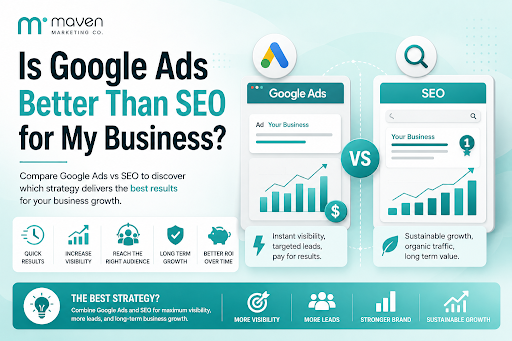
Is Google Ads Better Than SEO for My Business
One of the biggest questions business owners ask when they are planning online growth is whether they should invest in Google Ads or SEO. Both are strong marketing plays that help your company show up in Google search results, but they do things in separate lanes. Google Ads gives quicker visibility and can bring in leads fast, whereas SEO more or less focuses on slow, steady organic traffic that tends to grow the longer you keep building it. Picking the right direction depends on what you want to achieve, how much money you can spend, how crowded the market is, and how quickly you need results, like sooner rather than later. The good news is you don’t always have to choose one or the other; it’s not exactly a black-and-white situation. If you take time to understand the strongest points of both, you can put together a more sensible digital marketing plan that supports consistent expansion. In this guide, we’ll compare Google Ads vs SEO, explain the main differences, and help you figure out what option makes the most sense for your business.

When Should I Hire a Digital Marketing Agency
Growing a business today takes more than just having a website or throwing a post on social media; customers usually search around online, compare providers, skim reviews, and basically expect the brand to show up with a solid digital presence before they even think about buying. Many businesses try to run their marketing themselves, but there comes a point when “doing it all in-house” becomes clunky and hard to manage, all at once. Knowing when to hire a digital marketing agency can end up making a big, real difference for your growth. If you’re not getting enough leads, or your online visibility feels stuck, or sales are just not moving, the right agency can bring the know-how, plus a clear plan, to help you get noticeably better outcomes. In this guide, we’ll dig into what a digital marketing agency actually does, the usual signs it’s time to bring one on, and how picking the right marketing partner can help your business move forward at a faster pace.
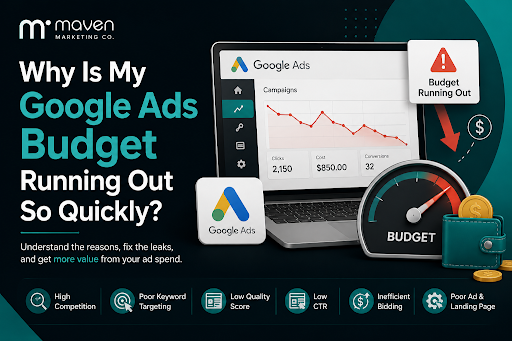
Why Is My Google Ads Budget Running Out So Quickly
Running a successful Google Ads budget isn’t only about throwing more money at it. It’s more like making every dollar, doing a bit extra. A lot of businesses start a Google Ads campaign with big hopes, then find out their daily budget is gone within a few hours, and that feels weird, right? After that, your ads stop showing effectively, new leads slip away, and your return on investment dips. So if your Google Ads budget is running out too fast, don’t stress. It’s a fairly common issue, and in most situations, it can be repaired with the right approach. There are multiple little things that can drain your advertising money quicker than you expected, from costly keywords to audience targeting that just doesn’t quite fit. In this guide, we’ll walk through why your budget disappears so quickly, how to cut wasteful spend, and the most reliable ways to boost your Google Ads ROI, even if your budget stays the same.