.svg)


%201.svg)

Quick Answers
What is advanced audience segmentation in remarketing and why does it matter for Australian e-commerce?
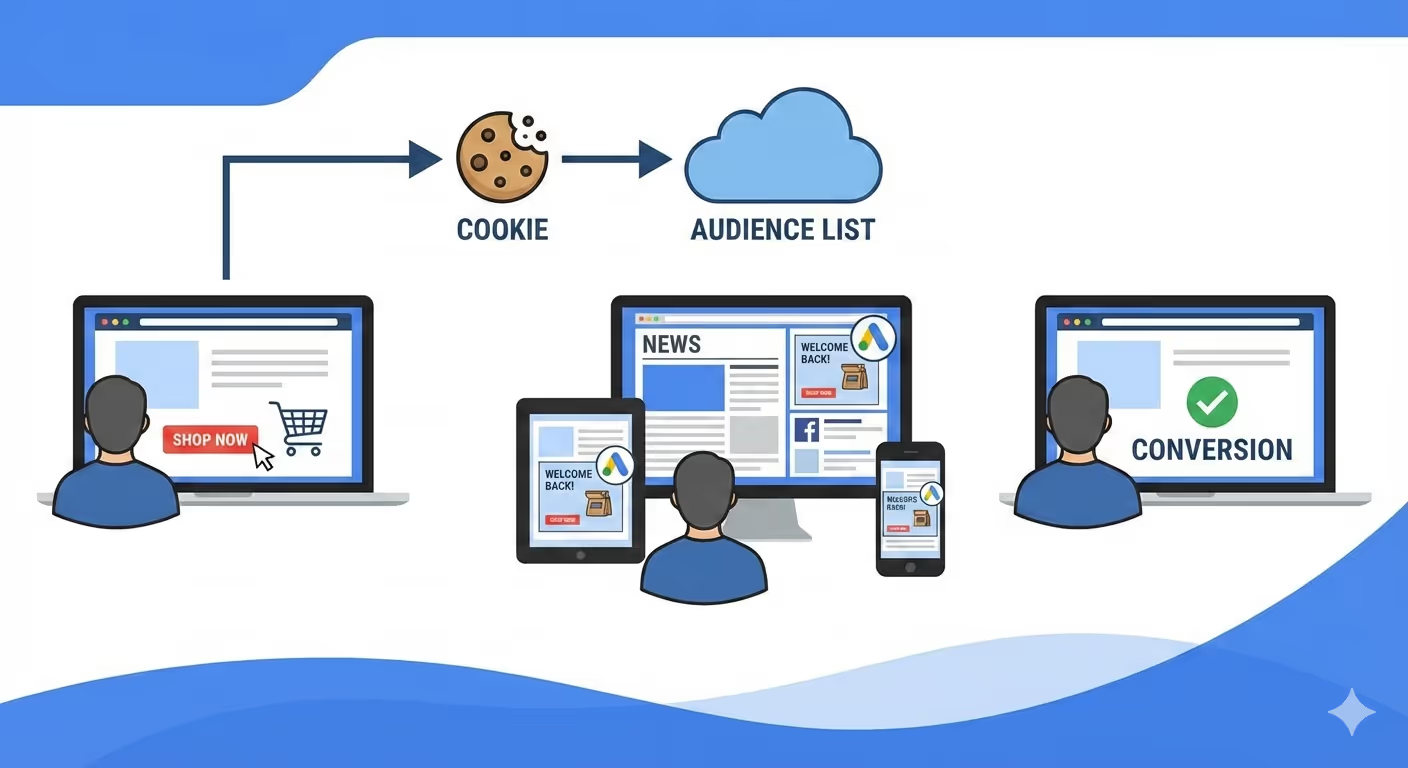
Advanced audience segmentation divides your website visitors into distinct groups based on specific behaviors, purchase intent signals, demographics, and lifecycle stages, then creates tailored remarketing messages for each segment. Instead of showing identical ads to everyone who visited your site, segmentation enables personalized messaging matching where each customer sits in their journey. For Australian e-commerce businesses, this matters because segmented campaigns deliver 147% higher conversion rates than generic remarketing whilst significantly reducing wasted ad spend on low-intent audiences. The fundamental principle is that someone who browsed one product requires different messaging than someone who added items to cart but did not complete purchase, who needs different treatment than someone who bought previously but has not returned. Segmentation acknowledges these behavioral differences through targeted creative, offers, and timing strategies. Australian businesses implementing systematic segmentation typically identify 8 to 12 distinct audience segments including cart abandoners, product viewers, past purchasers, high-value browsers, category explorers, and seasonal shoppers, each receiving campaigns optimized for their specific context and intent level.
What remarketing audience segments deliver the highest ROI for Australian e-commerce stores?
Cart abandoners consistently deliver the highest remarketing ROI, with recovery campaigns achieving 26% conversion rates when properly executed with dynamic product reminders, urgency messaging, and sometimes strategic discounts. This segment exhibits clear purchase intent having progressed through product selection and cart addition, requiring only final conversion push. Product viewers who spent significant time on specific product pages represent the second-highest ROI segment, converting at rates 3 times higher than general site visitors when shown dynamic ads featuring the exact products they viewed. Past purchasers constitute the third critical segment, with existing customers being 50% more likely to try new products and spending 31% more per transaction than new customers. For Australian businesses specifically, geographic segmentation within Australia proves valuable given shipping cost variations and regional preferences, whilst seasonal segmentation captures intent around Australian shopping events like Click Frenzy, EOFY sales, and pre-Christmas purchasing peaks. The lowest-performing segments are typically single-page visitors and bounce traffic showing minimal engagement, which many sophisticated advertisers exclude entirely from remarketing to preserve budget for high-intent audiences demonstrating genuine purchase consideration through meaningful site interaction.
Your Google Ads dashboard shows 50,000 people in your remarketing audience. Your campaign treats them identically, showing the same generic "Come Back" message regardless of whether they browsed one page or abandoned a cart with $500 of merchandise.
You are leaving money on the table.
The Segmentation Imperative
Australian e-commerce businesses face a brutal reality in 2026: customer acquisition costs continue climbing whilst competition intensifies across every category. Generic marketing approaches that worked when markets were less saturated no longer deliver acceptable returns.
Remarketing represents one of the highest-ROI channels available to e-commerce businesses, with retargeted customers being 70% more likely to convert than cold prospects. Yet most Australian stores implement remarketing poorly, treating diverse audiences as homogeneous groups.
The data tells a compelling story. Segmented remarketing campaigns deliver 147% higher conversion rates than non-segmented approaches. Retargeted ads generate click-through rates 10 times higher than standard display ads. Cart abandonment campaigns achieve 26% recovery rates when properly executed with segmentation.
These performance differences stem from a fundamental truth: people at different stages of the purchase journey require different messaging, offers, and timing to convert. Advanced segmentation enables this precision.
The 9 High-Converting Audience Segments
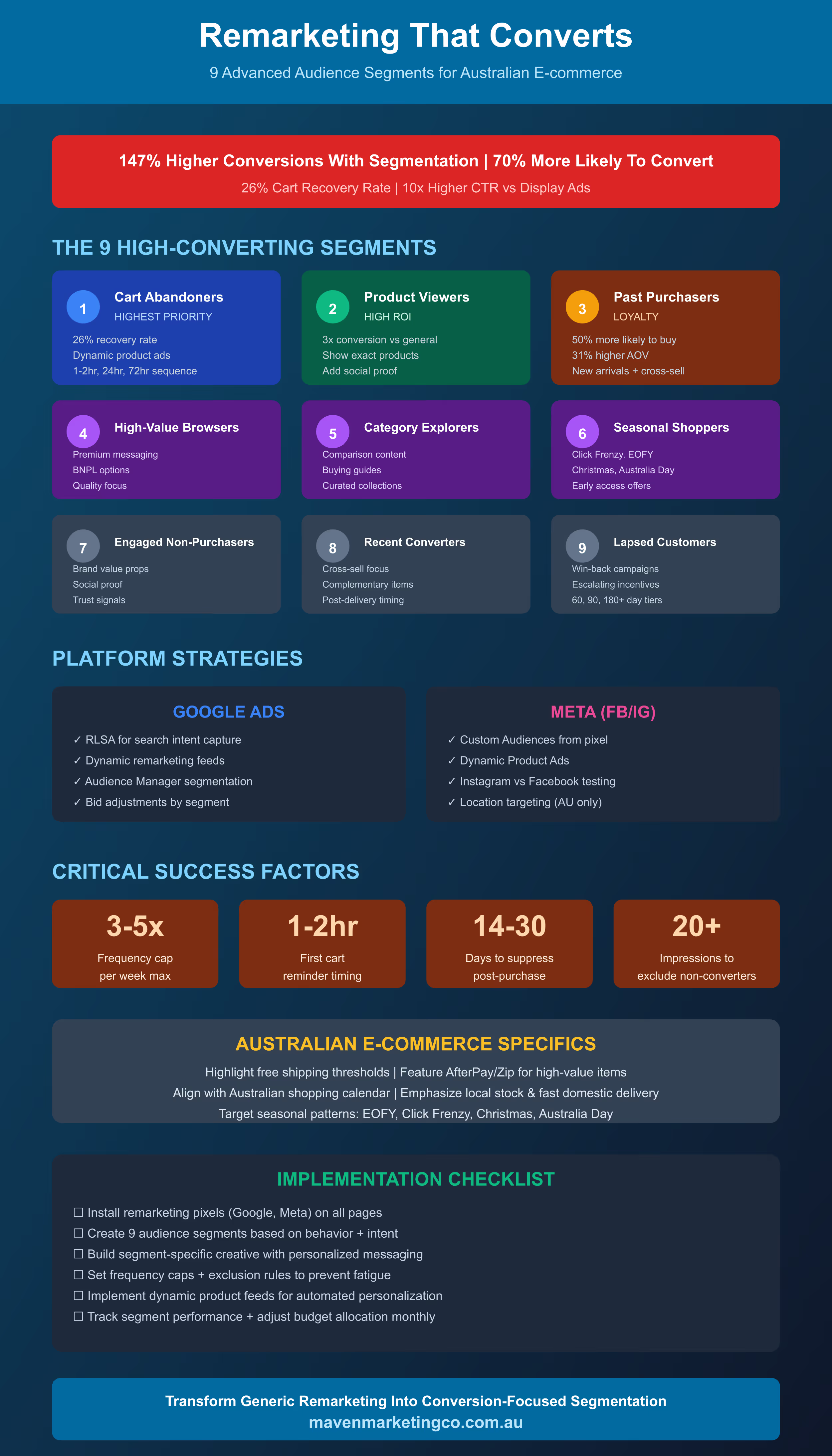
Segment 1: Cart Abandoners (Highest Priority)
Cart abandoners represent your hottest remarketing audience. They selected products, added them to cart, and progressed through the purchase funnel before abandoning. This behavior signals strong purchase intent requiring only final conversion push.
Implement dynamic remarketing showing the exact products they abandoned with clear imagery and pricing. Use urgency messaging highlighting limited stock or time-sensitive offers. For high-value carts exceeding $200, consider strategic discount codes in follow-up sequences. Australian businesses should test free shipping thresholds carefully, as shipping costs represent the leading cart abandonment reason locally.
Time your cart abandonment sequences strategically: first reminder within 1-2 hours, second at 24 hours, final push at 72 hours. Research shows 26% recovery rates achievable with proper sequencing and compelling creative.
Segment 2: Product Viewers
Product viewers who spent meaningful time on specific product pages demonstrate consideration even without cart addition. Create dynamic ads featuring the exact products they viewed plus complementary items or similar alternatives.
Use social proof in creative including review ratings and bestseller status. Highlight unique value propositions and address common purchase objections directly. For Australian audiences, emphasize local stock availability and fast domestic shipping when applicable.
Product viewer segments convert at rates 3 times higher than general site visitors when properly targeted, making them second only to cart abandoners in ROI potential.
Segment 3: Past Purchasers
Existing customers are 50% more likely to try new products and spend 31% more per transaction than new customers. Yet many Australian e-commerce stores neglect past purchaser remarketing entirely, focusing exclusively on acquisition.
Segment past purchasers by purchase recency, frequency, and monetary value. Create campaigns featuring new arrivals, complementary products to previous purchases, and exclusive loyalty offers. For consumable products, time remarketing based on expected replenishment cycles.
Use customer data to personalize creative with product recommendations based on purchase history. Australian businesses should leverage seasonal purchase patterns, targeting past summer apparel buyers ahead of warm weather or previous EOFY purchasers as financial year ends approach.
Segment 4: High-Value Browsers
High-value browsers viewed multiple products or expensive items without purchasing. They exhibit consideration behavior worth nurturing with premium messaging and strategic offers.
Create segments based on product value thresholds relevant to your category. Someone viewing $1,000+ items requires different treatment than $50 browsers. Use creative emphasizing quality, warranty, financing options, and satisfaction guarantees addressing higher-ticket purchase hesitations.
For Australian audiences, highlight AfterPay, Zip, or other BNPL availability prominently when targeting high-value browsers, as payment flexibility significantly influences purchase decisions for premium items.
Segment 5: Category Explorers
Category explorers browsed multiple products within specific categories without deep engagement on individual items. They are researching options and comparing, making them ideal candidates for buying guides, comparison content, and curated product selections.
Remarketing creative should feature category collections, bestsellers within the category, and editorial content helping narrow choices. Use educational angles like "Ultimate Buyer's Guide" or "Top 10 in Category" rather than hard-sell approaches.
Australian e-commerce businesses should create location-specific category messaging when relevant, highlighting products suited to Australian conditions, climates, or local preferences.
Segment 6: Seasonal Shoppers
Seasonal shoppers engaged during specific periods like Click Frenzy, EOFY sales, Christmas, or category-specific seasons. Create segments based on campaign engagement and purchase timing patterns.
Remarket to these audiences ahead of subsequent seasonal events with early access messaging and preview offers. For Australian businesses, align campaigns with local shopping calendar including Australia Day, Easter, mid-year tax sales, and pre-Christmas periods that differ from international markets.
Previous seasonal purchasers convert at significantly higher rates during subsequent seasonal periods when properly targeted with relevant messaging and timely offers.
Segment 7: Engaged Non-Purchasers
Engaged non-purchasers spent significant time on site, viewed multiple pages, and demonstrated interest without purchasing. They warrant remarketing investment but with lower priority than cart abandoners or product viewers.
Use broad awareness messaging showcasing brand value propositions, unique differentiators, and current promotions. Include social proof through customer testimonials and trust signals like return policies and security guarantees.
For Australian audiences, emphasize local business credentials, Australian ownership, or local stock availability when these represent competitive advantages over international retailers.
Segment 8: Recent Converters (Cross-Sell)
Recent converters purchased within the last 7-30 days. While post-purchase remarketing requires careful handling to avoid annoyance, strategic cross-sell opportunities exist.
Show complementary products and accessories related to recent purchases. For apparel, feature items completing outfits. For electronics, highlight accessories and add-ons. Use messaging framing additions as maximizing value from recent purchases rather than unrelated sales pitches.
Australian businesses should time cross-sell campaigns after products arrive, using delivery confirmation data to trigger relevant follow-up sequences when customers have received and presumably started using purchases.
Segment 9: Lapsed Customers (Win-Back)
Lapsed customers purchased previously but have not returned within expected timeframes based on your average customer lifecycle. These require re-engagement campaigns emphasizing what has changed since their last visit.
Segment lapsed customers by time since last purchase: 60-90 days, 90-180 days, 180+ days. Create escalating incentive sequences with progressively stronger offers for longer-lapsed segments. Highlight new products, improvements, and exclusive welcome-back offers.
For Australian e-commerce, test messaging addressing common lapse reasons including shipping costs, product range limitations, or customer service concerns. Position improvements in these areas when applicable.
Platform-Specific Implementation
Google Ads Remarketing
Google Ads offers sophisticated remarketing capabilities through Audience Manager enabling precise behavioral segmentation. Create audiences based on specific page visits, time on site thresholds, and conversion events.
Implement RLSA (Remarketing Lists for Search Ads) targeting users in your remarketing segments when they perform subsequent Google searches. This captures high-intent moments when lapsed visitors actively search for products in your category, enabling bid adjustments and targeted messaging.
Use dynamic remarketing for e-commerce, automatically generating ads featuring products users viewed. Australian businesses should ensure product feeds include local shipping details, Australian pricing, and stock availability to maximize relevance.
Meta (Facebook/Instagram) Retargeting
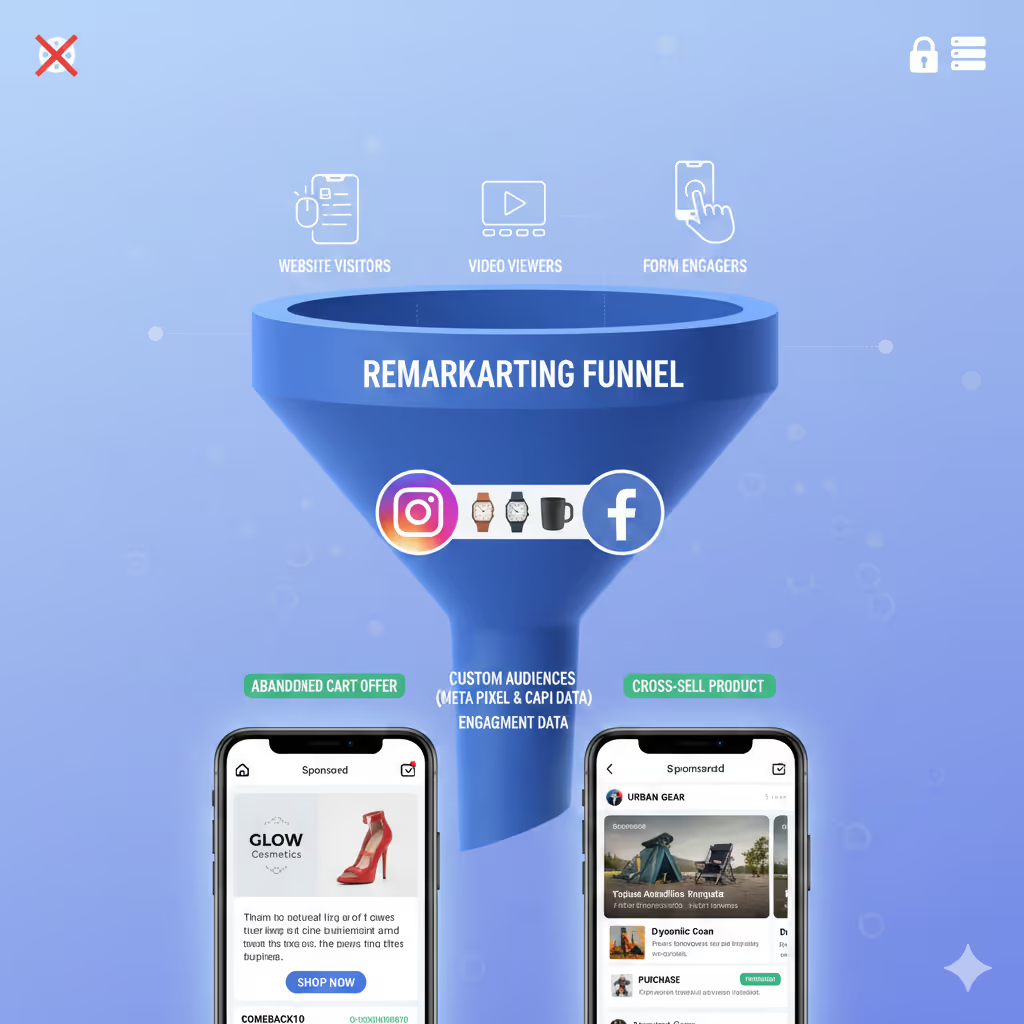
Meta's pixel enables detailed behavioral tracking and sophisticated segmentation through Custom Audiences. Create audiences matching the nine segments above using engagement criteria and purchase behavior.
Leverage Dynamic Product Ads automatically showing users products they viewed on your site. Meta's algorithm optimizes creative and product selection based on likelihood to convert.
For Australian audiences, use location targeting ensuring ads only show to domestic users when shipping internationally is unavailable or cost-prohibitive. Test Instagram versus Facebook placement based on your demographic skew, with younger audiences typically responding better to Instagram creative.
Frequency Management and Ad Fatigue Prevention
Sophisticated segmentation means nothing if frequency controls allow ad fatigue. Australian e-commerce businesses must balance visibility with annoyance.
Implement frequency caps preventing users from seeing the same ad creative more than 3-5 times weekly. Rotate creative regularly with multiple ad variations per segment tested systematically.
Exclude recent converters from most remarketing campaigns for 14-30 days post-purchase, focusing cross-sell messaging in controlled sequences rather than general campaigns. Suppress high-frequency browsers who have not converted after seeing 20+ ad impressions, as continued exposure without conversion signals lack of intent.
Ready to transform your remarketing from generic campaigns to sophisticated, high-converting audience strategies? The specialists at Maven Marketing Co. implement complete remarketing systems for Australian e-commerce businesses. We conduct audience behavior analysis identifying your most valuable segments, build platform-specific remarketing campaigns across Google Ads and Meta, create dynamic creative strategies personalized for each segment, implement proper frequency management and exclusion logic, and establish measurement frameworks proving which segments drive actual revenue versus vanity metrics. Stop wasting remarketing budget on one-size-fits-all campaigns whilst competitors systematically convert your abandoners and browsers. Contact us today for a remarketing audit revealing exactly which audience segments you are missing and creating your roadmap to conversion-focused segmentation that drives measurable e-commerce growth.

Table of contents
read more blogs
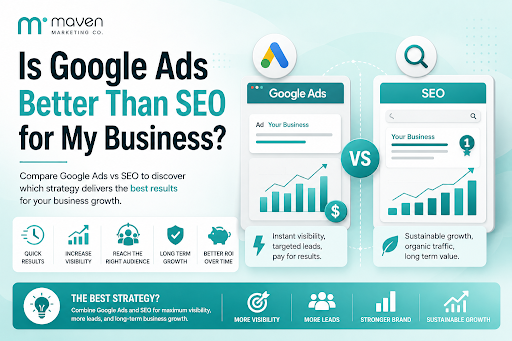
Is Google Ads Better Than SEO for My Business
One of the biggest questions business owners ask when they are planning online growth is whether they should invest in Google Ads or SEO. Both are strong marketing plays that help your company show up in Google search results, but they do things in separate lanes. Google Ads gives quicker visibility and can bring in leads fast, whereas SEO more or less focuses on slow, steady organic traffic that tends to grow the longer you keep building it. Picking the right direction depends on what you want to achieve, how much money you can spend, how crowded the market is, and how quickly you need results, like sooner rather than later. The good news is you don’t always have to choose one or the other; it’s not exactly a black-and-white situation. If you take time to understand the strongest points of both, you can put together a more sensible digital marketing plan that supports consistent expansion. In this guide, we’ll compare Google Ads vs SEO, explain the main differences, and help you figure out what option makes the most sense for your business.

When Should I Hire a Digital Marketing Agency
Growing a business today takes more than just having a website or throwing a post on social media; customers usually search around online, compare providers, skim reviews, and basically expect the brand to show up with a solid digital presence before they even think about buying. Many businesses try to run their marketing themselves, but there comes a point when “doing it all in-house” becomes clunky and hard to manage, all at once. Knowing when to hire a digital marketing agency can end up making a big, real difference for your growth. If you’re not getting enough leads, or your online visibility feels stuck, or sales are just not moving, the right agency can bring the know-how, plus a clear plan, to help you get noticeably better outcomes. In this guide, we’ll dig into what a digital marketing agency actually does, the usual signs it’s time to bring one on, and how picking the right marketing partner can help your business move forward at a faster pace.
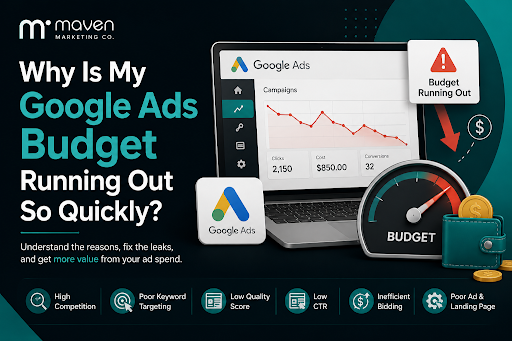
Why Is My Google Ads Budget Running Out So Quickly
Running a successful Google Ads budget isn’t only about throwing more money at it. It’s more like making every dollar, doing a bit extra. A lot of businesses start a Google Ads campaign with big hopes, then find out their daily budget is gone within a few hours, and that feels weird, right? After that, your ads stop showing effectively, new leads slip away, and your return on investment dips. So if your Google Ads budget is running out too fast, don’t stress. It’s a fairly common issue, and in most situations, it can be repaired with the right approach. There are multiple little things that can drain your advertising money quicker than you expected, from costly keywords to audience targeting that just doesn’t quite fit. In this guide, we’ll walk through why your budget disappears so quickly, how to cut wasteful spend, and the most reliable ways to boost your Google Ads ROI, even if your budget stays the same.