.svg)


%201.svg)
.avif)
Key Takeaways
- Programmatic advertising uses automated technology to purchase digital ad inventory across thousands of websites and apps through real time auctions, enabling precise audience targeting and efficient media buying at scales previously unavailable to smaller advertisers
- Australian SMEs can access programmatic advertising through self serve platforms like Google Display Network and Amazon Advertising or managed service platforms including The Trade Desk and other demand side platforms, with budget requirements starting as low as several thousand dollars monthly for meaningful testing
- Effective programmatic strategy requires shifting from placement based thinking where you choose specific websites to audience based thinking where you define target customer characteristics and let the platform find them across whichever sites they visit
- First party data including website visitors, email subscribers, and CRM contacts provides the foundation for programmatic audience targeting through retargeting campaigns and lookalike audience development that third party cookie deprecation makes increasingly essential
- Programmatic success measurement extends beyond last click attribution to view through conversions, brand lift studies, and multi touch attribution recognising that display advertising influences purchase decisions through awareness and consideration even when it doesn't generate final conversion click
.avif)
A Brisbane professional services firm spending $8,000 monthly on Google Search and LinkedIn advertising struggled to expand beyond these proven channels. Search reached customers actively seeking their services but couldn't build awareness among prospects not yet searching. LinkedIn reached their professional audience but with limited inventory creating high cost per impression that prevented scaling.
They allocated $3,000 monthly to programmatic advertising testing through Google Display Network, initially sceptical about whether display advertising could generate quality leads for complex professional services. Initial campaign results were discouraging. Broad audience targeting produced high impression volumes but minimal engagement and zero attributed conversions, confirming their suspicions that programmatic display was unsuitable for their category.
Strategic refinement transformed performance. They uploaded CRM data creating retargeting audiences of website visitors who had consumed specific content indicating service interest. They built lookalike audiences from their best clients. They implemented frequency capping preventing the same users seeing ads excessively. They developed display creative specifically designed for awareness and consideration rather than direct response. They implemented view through conversion tracking recognising that users influenced by display ads often converted through direct navigation or branded search rather than display click.
Within four months, programmatic became their second highest performing channel for pipeline contribution. Cost per marketing qualified lead through programmatic was 40% lower than LinkedIn and only slightly higher than search despite serving an awareness function that search couldn't fulfil. Attribution analysis revealed that prospects exposed to programmatic display ads converted through other channels at substantially higher rates than those without display exposure. The firm increased programmatic budget to $6,000 monthly, discovering that modest SME scale programmatic deployment could deliver performance that initial superficial testing had completely missed.
According to research from eMarketer, programmatic advertising now accounts for over 85% of digital display advertising spending in Australia, demonstrating that automated media buying has become the dominant mechanism for display advertising rather than a specialist approach limited to sophisticated advertisers.
Understanding Programmatic Advertising Technology
Programmatic advertising's technical foundation determines what targeting capabilities are possible, how pricing works, and why it differs fundamentally from direct media buying approaches.
Real time bidding mechanics power most programmatic advertising through auction systems where advertisers compete for individual ad impressions in milliseconds as web pages load. When a user visits a website participating in programmatic advertising, their browser sends bid requests to ad exchanges containing anonymous data about the user and the page context. Advertisers' systems evaluate whether this impression matches their target audience criteria and submit bids representing what they'll pay for that specific impression. The highest bidder wins the impression and their ad loads on the page. This entire process occurs in the 100 to 300 milliseconds between when a user requests a webpage and when the page finishes loading. The auction mechanism ensures advertisers pay market rates for impressions rather than fixed prices negotiated in advance as traditional media buying requires.
Demand side platforms provide the technology that advertisers use to participate in programmatic auctions. Platforms including Google Display Network, The Trade Desk, Amazon Advertising, and others connect advertisers to multiple ad exchanges simultaneously, manage audience targeting, optimise bidding strategies, deliver creative assets, and report campaign performance. Demand side platforms aggregate inventory from thousands of websites and apps that individual advertisers could never access through direct relationships, whilst providing the targeting and optimisation capabilities that make programmatic advertising more efficient than manual media buying. Australian SMEs typically access programmatic through either self serve platforms where they manage campaigns directly or managed service platforms where platform specialists or agencies operate campaigns on their behalf.
Supply side platforms represent the technology that publishers use to sell their ad inventory programmatically. Supply side platforms connect publisher websites and apps to multiple ad exchanges, optimise pricing for their inventory, enforce brand safety controls, and manage direct advertiser relationships alongside programmatic sales. Understanding supply side platform mechanics helps advertisers appreciate why programmatic inventory quality varies substantially, why brand safety controls matter, and why premium publisher inventory sometimes commands higher prices than remnant inventory in programmatic auctions despite both being theoretically available through the same demand side platforms.
Data management platforms enable the audience targeting that distinguishes programmatic from traditional display advertising. Data management platforms collect, organise, and activate first party data including website visitors, CRM contacts, and transaction customers, second party data from partner organisations, and third party data from data providers selling audience segments. The data management platform creates audience segments that demand side platforms can target in programmatic campaigns. As third party cookies deprecate and privacy regulations restrict data usage, first party data management becomes increasingly essential for programmatic targeting effectiveness. Australian SMEs with substantial owned customer data and active website traffic have inherent programmatic advantages over those without comparable first party data foundations.
Creative management platforms automate the production, optimisation, and delivery of display creative assets across multiple sizes and formats that programmatic campaigns require. A single programmatic campaign might require ten to twenty different creative sizes to serve inventory across desktop, mobile, and app placements effectively. Creative management platforms enable dynamic creative optimisation where multiple creative elements including headlines, images, and calls to action are tested in combinations to identify highest performing variants without requiring manual production of every possible combination. Australian SMEs should understand that programmatic campaign success depends as much on creative quality and relevance as on targeting and bidding sophistication.
Attribution and measurement technology tracks how programmatic campaigns influence customer behaviour across the complete purchase journey rather than only last click conversions. View through conversion tracking attributes conversions to users who saw but didn't click display ads, recognising display's awareness influence. Multi touch attribution distributes credit across all touchpoints in customer journeys rather than awarding all credit to final click. Brand lift studies measure awareness, consideration, and preference changes among exposed versus unexposed audiences. Measurement sophistication is essential because programmatic display campaigns frequently influence purchase decisions through channels that appear to get conversion credit in last click attribution without actually driving the awareness that initiated consideration.
.avif)
Programmatic Advertising Fit for Australian SMEs
Programmatic advertising suits specific business contexts and objectives whilst being poor fit or premature investment for others depending on strategic context.
Minimum viable scale requirements make programmatic most effective when monthly advertising budgets exceed several thousand dollars with sustained multi month commitment. Programmatic platforms require sufficient volume to accumulate performance data enabling algorithm optimisation that improves campaign efficiency over time. Campaigns running $500 monthly rarely achieve the scale necessary for meaningful optimisation before budget exhausts. Most Australian SMEs should consider programmatic viable when total digital advertising budget exceeds $5,000 to $10,000 monthly with at least $2,000 to $3,000 available for programmatic allocation. Below these thresholds, concentrating investment in higher intent channels including search and social typically produces better returns than spreading limited budgets across programmatic that requires scale for effectiveness.
First party data foundations determine programmatic targeting capability and campaign performance potential. SMEs with substantial website traffic generating retargetable audiences, email lists that can be uploaded for targeting, and CRM databases creating lookalike audience foundations have strong programmatic foundations. Those without these first party data assets face substantially greater challenges because third party audience targeting alone rarely delivers the performance that first party audience strategies achieve. Australian SMEs considering programmatic should honestly assess whether they have first party data sufficient to support audience targeting that justifies programmatic investment versus concentrating on building first party data through owned channels before expanding to programmatic.
Brand awareness objectives represent programmatic's strongest strategic fit particularly for SMEs whose customer acquisition depends on awareness building that search advertising cannot address because target customers aren't yet actively searching for solutions. Professional services, B2B SaaS products, complex consumer products requiring substantial education, and high consideration purchases all benefit from awareness advertising building familiarity that search and social retargeting capitalise on through later journey stages. Australian SMEs selling simple commodities through impulse purchase likely find limited programmatic value because awareness building doesn't substantially influence purchase decisions that occur immediately upon need recognition.
Geographic targeting precision enables Australian SMEs serving specific markets to concentrate programmatic spend on precise locations rather than wasting impression inventory on non serviceable geographies. Programmatic platforms support targeting by postcode, suburb, city, region, or state enabling precise geographic concentration. This capability is particularly valuable for Australian businesses serving specific metropolitan markets, regional areas, or multi location operations where different locations serve different territories. Geographic precision prevents the wasted reach that national advertising creates for locally focused businesses.
Competitive exclusion through programmatic enables SMEs to appear alongside competitors' content, reach competitor customers, or target competitor website visitors through third party data segments. Competitive displacement strategies using programmatic require sophisticated audience strategies beyond basic demographic targeting but can produce substantial competitive advantage when target audiences overlap with competitor customers. Australian SMEs competing against larger established competitors can sometimes achieve disproportionate share of voice in specific audience segments through strategic programmatic targeting despite overall budget disadvantages.
When programmatic is premature for Australian SMEs includes businesses with limited digital advertising experience that should establish performance through search and social before expanding to programmatic requiring more sophisticated measurement, businesses with monthly advertising budgets below $5,000 where search and social concentration produces better returns, businesses without substantial first party data unable to support audience targeting that programmatic effectiveness requires, and businesses selling products or services where awareness building doesn't meaningfully influence purchase decisions making programmatic's awareness function unnecessary overhead.
.avif)
Platform Selection for Australian SMEs
Different programmatic platforms suit different SME contexts based on technical capability, budget levels, and support requirements.
Google Display Network provides the most accessible programmatic entry point for Australian SMEs through integration with existing Google Ads accounts that most SMEs already manage. Google Display Network reaches over 90% of internet users across millions of participating websites and apps, provides audience targeting through Google's substantial first party data alongside advertiser uploaded audiences, and offers simplified campaign management requiring less technical expertise than independent demand side platforms. Budget requirements are flexible with campaigns viable from several hundred dollars monthly. The primary limitation is that Google Display Network provides access only to Google's advertising inventory rather than the complete open programmatic marketplace that independent platforms access. Google Display Network suits Australian SMEs wanting straightforward programmatic entry without platform learning investment or those already heavily invested in Google advertising wanting channel expansion within familiar interface.
The Trade Desk represents sophisticated demand side platform capability accessible to Australian SMEs through managed service relationships with agencies or platform specialists. The Trade Desk provides access to substantially broader inventory than Google Display Network including premium publishers, connected TV, audio, and display inventory across the open internet. Sophisticated targeting capabilities, advanced reporting, and cross channel orchestration enable campaigns that Google Display Network cannot match for targeting precision or inventory breadth. However, The Trade Desk requires either agency management or dedicated platform expertise that most SMEs don't possess internally. Minimum spending requirements typically start around $10,000 to $15,000 monthly when working through agencies making The Trade Desk more appropriate for larger SMEs or those with specific programmatic objectives that Google Display Network cannot adequately serve.
Amazon Advertising provides programmatic access to Amazon's substantial first party shopping and browsing data alongside display inventory across Amazon owned properties and the open web. Amazon Advertising is particularly valuable for e-commerce businesses, consumer product brands, and B2C retailers whose target customers substantially overlap with Amazon's audience. Product targeting capabilities enabling ads to appear to users browsing specific product categories or competitor products provide strategic advantages for e-commerce contexts that generic programmatic platforms cannot match. Amazon Advertising budget flexibility accommodates SME budgets from several thousand dollars monthly. The platform suits Australian SMEs in e-commerce and consumer products whose customers are active Amazon users.
Microsoft Advertising includes programmatic display inventory through Microsoft Audience Network alongside search advertising that many Australian SMEs already use. Integration with LinkedIn enables professional audience targeting valuable for B2B advertisers whilst Microsoft's partnership with Netflix and other premium publishers provides quality inventory access. Microsoft Advertising programmatic is most suitable for B2B Australian SMEs already using Microsoft/Bing search advertising wanting to expand into display without adding another platform relationship.
Managed service versus self serve decision depends on internal capability, time availability, and campaign complexity. Self serve platforms including Google Display Network and Amazon Advertising enable direct SME management without agency relationships but require time investment learning platforms, developing creative, managing campaigns, and optimising performance. Managed service through agencies or platform specialists reduces internal time requirements and potentially improves performance through specialist expertise but introduces agency costs and reduces internal capability development. Most Australian SMEs beginning programmatic should start with self serve platforms building internal knowledge before evaluating whether managed service relationships justify the additional cost at larger budgets where specialist expertise delivers measurable performance advantage.
Campaign Setup and Audience Targeting Strategy
Strategic programmatic campaign implementation requires fundamentally different approaches than search or social advertising that SMEs typically understand more intuitively.
First party audience development should be the foundation of SME programmatic targeting rather than relying primarily on third party audience segments whose quality is difficult to verify. Website retargeting audiences targeting users who visited specific pages, consumed specific content, or abandoned shopping carts provide the highest quality programmatic audiences because they're based on demonstrated interest in your specific offerings. CRM upload audiences targeting existing customers, qualified leads, or email subscribers enable reaching known audiences across the open web beyond owned channels. Lookalike audience development from best customers finds new prospects with similar characteristics to proven customer segments. Australian SMEs should prioritise first party audience strategies over third party targeting because first party data quality substantially exceeds third party alternatives particularly as privacy regulations restrict third party data availability.
Audience layering and exclusion refines targeting precision through combining multiple targeting criteria whilst excluding audiences where advertising is wasteful. Demographic overlays limiting campaigns to specific age ranges, genders, or income levels concentrate spend on highest potential segments. Geographic layers restrict serving to serviceable markets. Behavioural targeting adds intent signals including recent searches or content consumption. Frequency capping prevents the same users seeing ads excessively which wastes budget whilst irritating audiences. Existing customer exclusion prevents wasting impression inventory on audiences already converted unless specific objectives including upselling or retention justify continued exposure. Layered targeting precision enables efficient spend concentration on highest probability conversion audiences.
Contextual targeting places ads on content relevant to advertised products or services providing alternative to audience targeting that privacy regulations increasingly restrict. Contextual targeting analyses page content placing ads on articles, videos, and websites covering topics related to advertised offerings. A Brisbane accounting firm might contextually target business news, tax planning articles, and small business advice content rather than relying exclusively on audience segments. Contextual relevance improves ad performance through alignment between content consumption and advertising message whilst respecting privacy in ways that behavioural tracking does not. Australian SMEs should develop contextual targeting strategies complementing audience targeting as third party cookies deprecate reducing behavioural targeting effectiveness.
Dynamic creative optimisation improves performance through automated testing of creative variations rather than manually creating and testing every possible combination. Dynamic creative includes multiple headlines, images, descriptions, and calls to action that algorithms combine and test identifying highest performing variants for specific audiences and contexts. A single dynamic creative setup might test five headlines, four images, and three descriptions automatically generating the 60 possible combinations to identify winners without requiring manual creation of 60 separate ads. Australian SMEs should leverage dynamic creative reducing the creative production burden that programmatic's multi format requirements otherwise create whilst improving performance through continuous optimisation.
Bid strategy selection determines how campaigns optimise spend across available inventory and audiences. Target CPA bidding optimises toward specific cost per acquisition objectives automatically adjusting bids to achieve target efficiency. Target ROAS bidding optimises toward revenue objectives when conversion values are tracked. Maximise conversions bidding pursues volume within budget without specific efficiency constraints. Manual bidding provides control for sophisticated advertisers wanting precise bid management but requires substantially more management time than automated strategies. Most Australian SMEs should begin with automated bidding strategies that are target CPA or maximise conversions, only advancing to manual bidding if they develop sufficient expertise and time availability that manual management delivers measurable advantage.
.avif)
Creative Development for Programmatic Display
Display creative quality determines whether targeted audiences engage with programmatic campaigns or ignore them as irrelevant noise competing for attention across the web.
Format requirements for programmatic campaigns include multiple creative sizes serving different placements across desktop, mobile, and app inventory. Essential sizes typically include 300x250 medium rectangle, 728x90 leaderboard, 320x50 mobile banner, 300x600 half page, and 160x600 wide skyscraper covering the majority of available inventory. Responsive display ads automatically adapt to available sizes reducing the production burden of creating every format separately whilst ensuring campaigns can serve the complete inventory spectrum. Australian SMEs should at minimum develop responsive display ads for Google Display Network or platform equivalents whilst considering whether specific high value placements warrant dedicated creative production for optimal presentation.
Design principles for display advertising differ from social media creative that many SMEs understand more intuitively. Display ads compete within content rich environments requiring immediate visual impact capturing attention whilst communicating value proposition clearly despite limited exposure time. Bold headlines with benefit focused copy rather than feature descriptions, high quality imagery showing product usage or outcomes rather than isolated product shots, clear prominent calls to action directing next steps, and brand consistency maintaining visual identity across all formats collectively determine display creative effectiveness. Text heavy creative and complex messages underperform simplified focused communications in display contexts where audience attention is fragmented and fleeting.
Static versus animated creative involves strategic trade offs between production complexity and engagement performance. Static display ads are simpler to produce, load faster on slow connections, and comply with all publisher restrictions that sometimes prohibit animation. Animated creative including HTML5 ads and video attracts more attention, enables sequential storytelling across animation frames, and typically generates higher engagement rates than static equivalents. Most Australian SMEs should begin with static creative establishing campaign performance before investing in animated production whose complexity and cost are only justified when static performance validates the targeting strategy and creative approach.
Brand safety and creative compliance require ensuring that display creative meets platform policies and appears only on appropriate publisher inventory. Brand safety controls exclude categories including adult content, illegal content, violence, and controversial topics where ad appearance could damage brand reputation. Creative compliance requires avoiding prohibited content, respecting trademark usage rights, ensuring landing page experience matches ad promises, and maintaining honest claims that advertising standards require. Australian SMEs should configure brand safety settings conservatively initially, only expanding inventory access after confirming that conservative settings don't constrain reach excessively.
Mobile optimisation specificity acknowledges that the majority of programmatic impressions now occur on mobile devices requiring creative specifically designed for small screen viewing. Mobile creative should use large readable text, simplified messaging fitting small formats, vertical video formats matching mobile device orientation, and tap friendly call to action sizing. Creative designed for desktop viewing often fails completely on mobile where text is unreadable and call to action buttons are too small for reliable tapping. Australian SMEs should design mobile creative first or develop separate mobile and desktop creative variants rather than assuming desktop creative will adequately serve mobile inventory.
Measurement and Performance Optimisation
.avif)
Programmatic campaign measurement requires different frameworks than search advertising's direct response attribution because display influences purchase decisions through awareness and consideration that last click attribution systematically undervalues.
View through conversion tracking attributes conversions to users who saw display ads but didn't click them before converting through other channels typically within one to thirty days of ad exposure. View through attribution recognises display's awareness function where users influenced by ad exposure convert through direct navigation, branded search, or other channels rather than display click. Without view through tracking, programmatic display appears dramatically less effective than reality because last click attribution assigns zero credit for all conversions following ad exposure without clicks. Australian SMEs should implement view through conversion tracking through Google Ads, Google Analytics, or other measurement platforms rather than relying exclusively on click conversion attribution that systematically underrepresents display performance.
Multi touch attribution distributes conversion credit across all touchpoints in customer journeys recognising that purchases typically result from multiple exposures across several channels rather than single interactions. Multi touch models including time decay, position based, and data driven attribution all provide more accurate performance assessment than last click attribution for campaigns serving awareness and consideration functions. Google Analytics 4 provides basic multi touch attribution through data driven attribution models whilst more sophisticated attribution platforms including analytics tools provide deeper multi touch analysis. Australian SMEs should understand that programmatic display's true value often appears in multi touch attribution revealing substantial assisted conversion contribution invisible in last click measurement.
Audience performance analysis reveals which targeting strategies generate best results enabling budget concentration on highest performing segments. Audience reports comparing performance across retargeting, lookalike, demographic, and contextual segments identify winners warranting increased investment and underperformers justifying exclusion or refinement. Geographic performance analysis reveals whether campaigns perform consistently across targeted markets or show significant variation requiring geographic budget reallocation. Device performance comparison identifies whether mobile, desktop, and app inventory deliver comparable results or whether device specific optimisation is required.
Creative performance analysis identifies which messages, images, and formats resonate most with target audiences. A/B testing comparing creative variants reveals whether benefit focused or feature focused messaging performs better, which images generate highest engagement, and which calls to action drive most conversion activity. Dynamic creative reporting shows which specific combinations of headlines, images, and descriptions deliver best results informing future creative development priorities. Australian SMEs should maintain continuous creative testing rather than allowing campaigns to stagnate on single creative variants that may have been effective initially but decline in performance through audience fatigue over time.
Frequency analysis and optimisation prevents wasting budget showing ads excessively to the same audiences whilst ensuring sufficient exposure for message retention. Frequency reports reveal how many times average users see ads, what frequency levels correlate with highest conversion rates, and whether excessive frequency creates diminishing returns or negative reactions. Most display campaigns perform best at average frequencies between three and seven exposures with performance declining at higher frequencies as audiences become desensitised or annoyed. Frequency capping limiting maximum exposures per user prevents wasteful excessive serving whilst ensuring budget distributes across broader reach.
Frequently Asked Questions
What minimum monthly budget do Australian SMEs need to run effective programmatic advertising campaigns, and how should they allocate that budget across testing and scaling?
Meaningful programmatic testing typically requires minimum $2,000 to $3,000 monthly budget sustained for at least three months enabling sufficient data accumulation for reliable performance assessment and algorithm optimisation. Budgets below this threshold rarely generate the impression volumes and conversion events necessary for platforms to optimise effectively before monthly budgets exhaust. Initial budget allocation should dedicate 70% to proven strategies including website retargeting and customer list targeting providing the highest probability performance whilst reserving 30% for testing including lookalike audiences, new geographic markets, or contextual targeting expansion that might improve performance beyond initial conservative approaches. As campaigns establish performance baselines, testing allocation can increase to 40% or 50% for SMEs with growth objectives requiring audience expansion beyond proven initial segments. Australian SMEs with total digital advertising budgets below $5,000 monthly should carefully consider whether programmatic represents the best marginal investment or whether concentrating on search, social, or other proven channels produces better returns until total budget grows sufficiently that programmatic testing becomes viable without compromising established channel performance.
How should Australian SMEs approach programmatic advertising when they have limited creative production resources and can't produce the multiple format variations that programmatic requires?
Creative production constraints are solvable through several approaches that maintain programmatic viability without extensive production investment. Responsive display ads through Google Display Network automatically generate multiple format variations from single uploaded assets including headlines, descriptions, images, and logos reducing production requirements to basic asset provision rather than complete ad creation across every format. Creative as a service platforms including Canva, Adobe Express, and Creatopy provide templates specifically designed for programmatic display advertising enabling faster production than custom design for every format. Agencies and freelance designers specialising in programmatic creative can produce complete format suites more efficiently than general designers unfamiliar with programmatic requirements. Finally, static image creative in essential formats including 300x250, 728x90, and 320x50 provides adequate inventory coverage for initial testing with additional formats added only after initial performance justifies expanded creative investment. Australian SMEs should not let creative production constraints prevent programmatic testing since multiple creative solutions exist at various investment levels enabling participation without extensive internal production capability.
How long should Australian SMEs run programmatic campaigns before having sufficient data to evaluate whether programmatic advertising fits their business, and what metrics indicate success or failure?
Programmatic evaluation requires minimum three month commitment with consistent strategy and budget providing sufficient time for algorithm learning, seasonal variation smoothing, and performance pattern establishment that shorter testing periods cannot reliably assess. Month one typically shows below average performance as algorithms learn audience behaviour and optimal bid levels. Month two usually shows performance improvement as learning accumulates. Month three reveals sustainable performance levels that shorter tests cannot distinguish from temporary fluctuation. Success indicators include view through conversion rates demonstrating awareness influence, assisted conversion contribution in multi touch attribution revealing consideration stage impact, retargeting audience conversion rates exceeding cold audience performance confirming first party data value, and overall customer acquisition costs competitive with other channels when view through and assisted conversions are properly attributed. Failure indicators include click through rates below 0.1% suggesting creative or audience misalignment, conversion rates remaining essentially zero after three months despite adequate traffic volume, and cost per acquisition exceeding lifetime value multiples that make customer acquisition economically unviable. Australian SMEs should commit to complete three month tests rather than cancelling after disappointing first month results that may reflect algorithm learning rather than fundamental strategy failure.
Should Australian SMEs manage programmatic campaigns in-house or engage agencies, and what factors determine which approach is more appropriate?
In-house versus agency management decisions depend on internal capability, time availability, campaign complexity, and budget scale. In-house management through self serve platforms suits SMEs with marketing staff who have time to learn platforms, develop creative, and manage ongoing optimisation alongside other responsibilities, businesses running straightforward campaigns through Google Display Network or similar accessible platforms, and budgets under $10,000 monthly where agency fees would consume disproportionate budget share relative to media spend. Agency management suits SMEs without internal marketing expertise or time availability for campaign management, businesses pursuing sophisticated strategies including The Trade Desk or other advanced platforms requiring specialist knowledge, budgets exceeding $10,000 monthly where specialist management can demonstrably improve performance justifying agency fees, and situations where agency access to premium inventory or beta features provides advantages unavailable through self serve platforms. Hybrid approaches where SMEs manage basic retargeting through Google Display Network whilst engaging specialists for advanced strategies including prospecting, lookalike development, or premium inventory access combine in-house control with specialist capabilities for specific high value applications. Most Australian SMEs should begin with in-house Google Display Network management building internal knowledge before evaluating whether performance gaps or time constraints justify agency relationships at scale where fees represent reasonable performance investment percentages.
How does programmatic advertising performance compare to Facebook and Google Search advertising for Australian SMEs, and when should budget shift between channels?
Programmatic display, Facebook advertising, and Google Search serve fundamentally different functions making direct performance comparison misleading without understanding their distinct strategic roles. Google Search captures existing demand from users actively searching for solutions delivering highest intent traffic and typically lowest cost per acquisition but cannot build awareness among non-searching audiences limiting total addressable volume. Facebook advertising builds awareness whilst enabling precise demographic and interest targeting often at lower cost per impression than programmatic but within walled garden limiting reach to Facebook platform users exclusively. Programmatic display builds awareness across the complete open web reaching audiences beyond social platform users with sophisticated targeting at scales that Facebook cannot match despite typically higher cost per conversion than search or social in last click attribution. Budget allocation should reflect customer journey requirements rather than optimising single channel efficiency metrics. Businesses where customers actively search before purchasing should weight budgets toward search with programmatic supporting awareness. Businesses selling products or services customers don't actively search for should weight budgets toward awareness channels including programmatic and social. Most Australian SMEs benefit from multi channel approaches where search captures demand, social and programmatic build awareness, and programmatic retargeting recaptures consideration stage audiences across the open web. Budget shifts should occur when specific channels reach saturation reducing marginal returns rather than attempting to optimise single channel efficiency ignoring the strategic value of channel diversification.
How should Australian SMEs address brand safety concerns in programmatic advertising to ensure their ads don't appear on inappropriate content?
Brand safety management requires proactive configuration preventing ads from appearing on content categories that could damage brand reputation rather than reactive responses after inappropriate placements occur. Platform brand safety controls in Google Display Network, The Trade Desk, and other platforms enable category exclusions blocking placements on adult content, illegal activity, violence, hate speech, and other sensitive categories that most advertisers should exclude by default. Placement exclusion lists block specific websites or apps where ads previously appeared inappropriately preventing repeat occurrences. Publisher whitelisting restricts serving exclusively to approved publisher lists providing maximum control but substantially limiting reach and typically increasing costs through restricted inventory competition. Contextual keyword targeting and negative keyword lists prevent appearing alongside content containing specified terms ensuring thematic appropriateness. Australian SMEs should configure conservative brand safety settings initially excluding all potentially sensitive categories, monitor placement reports identifying any concerning ad serving despite controls, and progressively refine exclusions based on actual performance rather than theoretical risk. For most SME advertisers, platform default brand safety controls combined with adult content and illegal activity exclusions provide adequate protection without the restrictive inventory limitations that excessive controls create reducing campaign efficiency without proportional brand safety improvement.
What happens to programmatic advertising effectiveness as third party cookies deprecate, and how should Australian SMEs prepare for a cookieless future?
Third party cookie deprecation substantially reduces behavioural targeting precision that historically powered programmatic effectiveness but doesn't eliminate programmatic viability for SMEs with strong first party data foundations. Preparation strategies include building first party data assets through website visitor tracking using first party cookies, email list development, customer data collection, and CRM system development creating owned audiences independent of third party cookies. Contextual targeting strategies placing ads based on page content rather than user behaviour tracking provide privacy compliant alternatives effective for many SME use cases. Google Topics API and other privacy preserving targeting alternatives replacing third party cookies maintain some behavioural targeting capability through aggregated cohort approaches rather than individual user tracking. Publisher direct relationships including walled gardens like Amazon Advertising that use first party data from logged in users maintain targeting precision unavailable through third party cookie dependent approaches. Australian SMEs should prioritise first party data development immediately rather than waiting until cookie deprecation completes making historical targeting approaches obsolete, test contextual targeting alongside behavioural targeting comparing performance to understand fallback effectiveness, and concentrate programmatic investment in platforms including Amazon and Microsoft that maintain first party logged in user data enabling continued precision targeting regardless of broader cookie deprecation. SMEs without substantial first party data and unwilling to invest in developing it should consider whether programmatic remains appropriate or whether concentrating on walled garden advertising including Facebook and LinkedIn providing first party targeting independent of third party cookies better serves their objectives.
Programmatic Advertising Expands SME Reach
Programmatic advertising transforms Australian SME advertising capability from manual placement negotiation and limited inventory access to automated audience discovery across the complete open web at scales and efficiencies previously available only to enterprise advertisers with dedicated trading desk relationships and six figure budgets.
The frameworks outlined in this guide including programmatic technology understanding, platform selection, audience targeting strategy, creative development, and performance measurement provide comprehensive foundation for SME programmatic deployment that produces measurable results rather than expensive experimentation that confirms initial scepticism through poor implementation of fundamentally viable opportunity.
Australian SMEs implementing programmatic advertising strategically discover that automated media buying enables competitive customer acquisition particularly for awareness building that search advertising cannot address because target customers aren't yet actively searching for solutions programmatic display introduces to audiences through precisely targeted relevant messaging across their natural content consumption.
Ready to explore whether programmatic advertising fits your Australian SME marketing strategy and how to implement it effectively? Maven Marketing Co. provides comprehensive programmatic advertising strategy, platform selection guidance, campaign setup, creative development, and performance optimisation ensuring your automated media buying investment delivers measurable returns. Let's evaluate programmatic opportunity for your business and build campaigns that expand your reach whilst maintaining acquisition efficiency.

Table of contents
read more blogs

Is Google Ads Better Than SEO for My Business
One of the biggest questions business owners ask when they are planning online growth is whether they should invest in Google Ads or SEO. Both are strong marketing plays that help your company show up in Google search results, but they do things in separate lanes. Google Ads gives quicker visibility and can bring in leads fast, whereas SEO more or less focuses on slow, steady organic traffic that tends to grow the longer you keep building it. Picking the right direction depends on what you want to achieve, how much money you can spend, how crowded the market is, and how quickly you need results, like sooner rather than later. The good news is you don’t always have to choose one or the other; it’s not exactly a black-and-white situation. If you take time to understand the strongest points of both, you can put together a more sensible digital marketing plan that supports consistent expansion. In this guide, we’ll compare Google Ads vs SEO, explain the main differences, and help you figure out what option makes the most sense for your business.

When Should I Hire a Digital Marketing Agency
Growing a business today takes more than just having a website or throwing a post on social media; customers usually search around online, compare providers, skim reviews, and basically expect the brand to show up with a solid digital presence before they even think about buying. Many businesses try to run their marketing themselves, but there comes a point when “doing it all in-house” becomes clunky and hard to manage, all at once. Knowing when to hire a digital marketing agency can end up making a big, real difference for your growth. If you’re not getting enough leads, or your online visibility feels stuck, or sales are just not moving, the right agency can bring the know-how, plus a clear plan, to help you get noticeably better outcomes. In this guide, we’ll dig into what a digital marketing agency actually does, the usual signs it’s time to bring one on, and how picking the right marketing partner can help your business move forward at a faster pace.
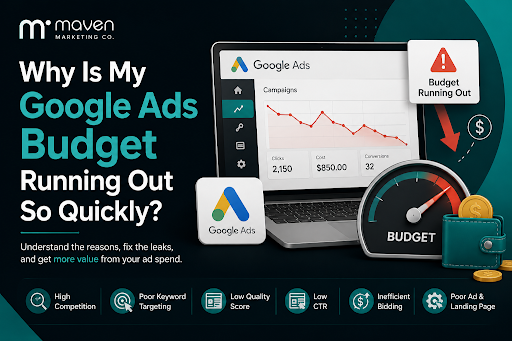
Why Is My Google Ads Budget Running Out So Quickly
Running a successful Google Ads budget isn’t only about throwing more money at it. It’s more like making every dollar, doing a bit extra. A lot of businesses start a Google Ads campaign with big hopes, then find out their daily budget is gone within a few hours, and that feels weird, right? After that, your ads stop showing effectively, new leads slip away, and your return on investment dips. So if your Google Ads budget is running out too fast, don’t stress. It’s a fairly common issue, and in most situations, it can be repaired with the right approach. There are multiple little things that can drain your advertising money quicker than you expected, from costly keywords to audience targeting that just doesn’t quite fit. In this guide, we’ll walk through why your budget disappears so quickly, how to cut wasteful spend, and the most reliable ways to boost your Google Ads ROI, even if your budget stays the same.