.svg)


%201.svg)
.avif)
Key Takeaways
- Australian retail calendar differs fundamentally from Northern Hemisphere seasonal patterns requiring locally calibrated planning rather than adapting international retail marketing templates developed for Christmas in winter and different financial year timing
- Effective retail marketing calendars balance major revenue driving seasonal events including Christmas, EOFY, and Boxing Day with smaller opportunities like Mother's Day, Father's Day, Valentine's Day, and school holidays alongside consistent always on brand activity maintaining engagement between peaks
- Campaign planning lead times of eight to twelve weeks for major seasonal events enable creative development, inventory procurement, channel integration, and staff training that six week or four week reactive timelines consistently compromise
- Integrated planning connecting marketing campaigns to merchandising, inventory management, staffing, and operations prevents the common failure where marketing creates demand that operations cannot adequately serve due to stock shortages, staffing gaps, or fulfilment capacity constraints
- Post campaign performance analysis feeding directly into subsequent year planning creates continuous improvement cycles where each year's campaigns benefit from the previous year's learnings rather than repeating identical approaches regardless of performance
.avif)
Two Melbourne homewares retailers with similar product ranges and comparable annual revenue approached the critical Christmas trading period with dramatically different preparation levels. Retailer A had developed their Christmas campaign in early August with creative concepts finalised, inventory ordered with extended supplier lead times accommodated, staff trained on gift suggestions and wrapping services, email sequences programmed, social content scheduled, and paid advertising campaigns ready to launch at optimal timing.
Retailer B began Christmas planning in mid October and was reactive to seeing competitors' Christmas communications appearing. They scrambled to develop creative, order inventory while accepting whatever stock suppliers could deliver on compressed timelines, brief staff hastily, and launch campaigns without the testing and refinement that adequate lead time enables.
Performance differences were stark. Retailer A's early inventory commitment secured complete stock of hero products that sold through entirely by December 20th. Meanwhile, Retailer B faced stockouts of best sellers by December 10th, leaving disappointed customers and lost revenue during the peak trading week. Retailer A's staff confidently delivered gift recommendations from thorough product knowledge training. In contrast, Retailer B's staff struggled with rushed training that didn't prepare them for the consultation selling that Christmas shoppers expect. Retailer A's integrated marketing across email, social, paid advertising, and in store created coherent customer experience. However, Retailer B's rushed execution produced fragmented messages that didn't reinforce each other.
Retailer A captured 18% of their total annual revenue during the six week Christmas period. Retailer B captured 14% despite identical opportunity and comparable marketing spend. The 4 percentage point difference of approximately $120,000 for a $3 million annual revenue business directly reflected planning discipline rather than capability, creativity, or budget differences.
According to research from the Australian Retailers Association, Australian retailers generate approximately 30% of annual revenue during the November to December Christmas trading period, demonstrating why calendar planning that optimises this critical window delivers outsized commercial impact relative to the two month period it represents.
Understanding the Australian Retail Calendar
Effective retail marketing calendar development requires deep understanding of the distinctive Australian retail seasonal pattern that international frameworks don't adequately address.
Summer Christmas reality fundamentally distinguishes Australian retail from Northern Hemisphere patterns where December Christmas occurs during winter, creating entirely different product demand, visual merchandising, and campaign tone requirements. Australian Christmas campaigns featuring snow, winter clothing, and northern hemisphere seasonal imagery feel disconnected from Australian customer reality. Successful Australian Christmas campaigns embrace summer themes, outdoor entertaining, beach holidays, and the distinctive Australian Christmas experience. Product selection for Australian Christmas reflects summer reality including outdoor dining equipment, swimwear, summer clothing, and holiday travel accessories rather than winter focused Northern Hemisphere equivalents.
Financial year end June timing creates the distinctive Australian retail phenomenon of EOFY sales during June and July that has no equivalent in December fiscal year international markets. EOFY represents the second largest retail discount period in the Australian calendar after Boxing Day, driven by both consumer tax planning motivations and business inventory clearance before new financial year. EOFY campaign planning requires different positioning than Boxing Day by emphasising tax deductibility for business purchases, new financial year preparation, and strategic purchasing rather than pure discount motivation that Boxing Day represents.
School holiday timing across Australian states creates retail traffic patterns and campaign opportunities spanning Term 1 from January to April, Term 2 from April to June, Term 3 from July to September, and Term 4 from October to December breaks. School holiday periods represent significant retail opportunities for categories including children's clothing, toys, entertainment, family dining, and travel adjacent products. State based school holiday variation where Queensland and Western Australia often have different timing from Victoria, New South Wales, and South Australia affects whether national retailers run uniform campaigns or state calibrated approaches.
Australia Day January 26 represents the summer public holiday with retail implications around outdoor entertaining, Australian made products, and patriotic themes. Australia Day sits within the post Christmas pre school year period where retail activity is typically lower than peak December, providing opportunity for campaigns targeting the substantial proportion of Australians on summer holidays during late January.
Easter timing variation between late March and late April affects retail planning across multiple categories including chocolate confectionery, food service, travel, and discretionary retail. Four day Easter long weekend creates travel and leisure spending concentration requiring campaigns launching sufficiently early to capture planning behaviour whilst respecting the Good Friday to Easter Monday holiday timing that compresses campaign exposure windows.
Mother's Day and Father's Day spacing in May and September respectively provides two significant gifting occasions with different product focuses. Mother's Day commands substantially higher retail spend than Father's Day in Australian markets, warranting proportionally greater marketing investment despite both representing gifting opportunities.
Back to School January to February represents significant retail opportunity for categories including school uniforms, stationery, technology, and children's products. Back to School campaigns must launch during the post Christmas period when families are still on holiday but beginning to prepare for school year commencement. This timing requires balancing holiday mode with preparation mode in campaign tone and messaging.
Black Friday November adoption in Australian retail has grown substantially despite lacking the Thanksgiving cultural context that anchors Black Friday in US retail calendar. Australian Black Friday has evolved into a primarily online discount event occurring the Friday after US Thanksgiving in late November, effectively extending the Christmas trading period launch earlier into November and creating expectation management challenges for retailers about Christmas pricing timing.
.avif)
Building the Annual Retail Marketing Calendar Framework
Systematic calendar development follows structured processes that prevent critical campaigns being overlooked whilst maintaining realistic planning timelines for effective execution.
Calendar template structure should map the complete twelve month period with clear hierarchy distinguishing major revenue driving campaigns including Christmas, EOFY, and Boxing Day from secondary campaigns like Mother's Day, Father's Day, and Valentine's Day and ongoing always on activity maintaining brand presence between major campaigns. Calendar visualisation formats including spreadsheets with monthly columns, Gantt charts showing campaign durations and lead times, and visual calendar displays showing customer facing campaign periods alongside internal planning timelines all serve calendar planning effectively when consistently maintained.
Major campaign identification for most Australian retail categories includes Christmas from November to December, Boxing Day to January Sales from December 26 to January, Back to School from January to February, Easter from March to April depending on calendar, EOFY from June to July, and Father's Day in September. These collectively represent the campaigns warranting most significant planning investment and marketing budget allocation. Specific retail categories add category relevant major campaigns. Fashion retailers prioritise season change campaigns for Autumn/Winter and Spring/Summer, sporting goods retailers prioritise major sporting season commencements, and electronics retailers prioritise new product launch windows.
Secondary campaign identification captures smaller revenue opportunities that don't warrant major campaign investment but provide valuable engagement and revenue when efficiently executed. Valentine's Day on February 14, Mother's Day on the second Sunday in May, Father's Day on the first Sunday in September, Halloween on October 31 which is primarily relevant for certain categories, and Click Frenzy in November represent the most common secondary campaign opportunities for Australian retailers. Category specific secondary campaigns might include Anzac Day for certain heritage brands, sporting finals periods for sports adjacent categories, or cultural celebration days for multicultural retail businesses.
Campaign planning lead time allocation determines when campaign development should commence to enable quality execution. Major campaigns typically require eight to twelve weeks lead time from planning commencement to campaign launch. This timeline enables creative development, inventory procurement, content creation, channel preparation, staff training, and testing without the quality compromises that compressed timelines produce. Secondary campaigns typically require four to six weeks lead time, which is sufficient for creative development and execution but proportionally lighter than major campaign investment. Always on content and brand activity requires continuous rolling planning rather than campaign specific lead times.
Budget allocation frameworks distribute annual marketing budgets across campaigns proportional to their revenue importance whilst maintaining baseline budget for always on activity. Christmas campaigns might warrant 25% to 30% of annual marketing budget despite representing only two months, reflecting the disproportionate revenue concentration during this period. EOFY and Boxing Day might each warrant 10% to 15% of annual budget. The remaining 40% to 50% distributes across secondary campaigns and always on brand building activity maintaining engagement during the majority of the year outside major campaign windows.
Cross functional integration planning connects marketing calendar to merchandise planning, inventory management, operations, and staffing schedules ensuring that marketing demand generation aligns with operational capability to serve that demand. Marketing calendars developed in isolation from operations consistently produce campaigns creating demand that inventory shortages, staffing constraints, or fulfilment capacity gaps prevent the business from adequately serving. This destroys customer experience and wastes marketing investment generating demand the business cannot convert.
.avif)
Campaign Development Process for Major Retail Events
Structured campaign development processes transform calendar dates into compelling customer experiences that drive revenue through every relevant channel.
Strategic brief development establishes campaign objectives, target audience, competitive context, budget parameters, creative direction, and success metrics before creative development begins. This prevents the common failure where creative development proceeds without clear strategic foundation producing campaigns that are creatively interesting but strategically misaligned. Strategic briefs for major campaigns should explicitly address revenue objective as absolute dollar target and percentage of annual revenue, target customer segments identifying which customer types the campaign primarily serves, competitive landscape covering what competitors will likely do during the same period, channel mix showing relative investment across digital, social, email, in store, and traditional media, creative territory including mood, visual style, and messaging approach, and measurement framework explaining how campaign success will be evaluated.
Creative concept development translates strategic direction into specific visual and verbal campaign expressions that work cohesively across all channels whilst adapting appropriately to each channel's specific context. Retail campaign creative should be developed as integrated systems rather than channel specific executions that happen to share some visual elements. Colour palette, typography, photographic style, messaging voice, and design approach should be established at system level before channel specific adaptation begins. Creative that works as hero imagery, social tiles, email headers, in store posters, and digital advertising simultaneously requires deliberate design rather than hoping website banner creative will also work effectively as Instagram posts.
Content production workflow manages the substantial content volume that omnichannel retail campaigns require. This includes product photography for hundreds or thousands of SKUs, lifestyle photography showing product usage contexts, social media content covering daily posts across campaign duration, email sequence creation, website landing page development, in store signage design and production, and potentially video content for high investment campaigns. Content production timelines should work backward from campaign launch dates with appropriate buffer for production delays. Photography requiring two weeks lead time should be scheduled three weeks before content deployment to accommodate inevitable delays.
Channel implementation planning sequences campaign deployment across email, social media, paid advertising, website, and in store touchpoints creating coherent customer experience regardless of which channel customers encounter first. Email sequences should be fully programmed and tested before campaign launch including welcome sequences for new campaign driven subscribers, cart abandonment sequences, browse abandonment sequences, and post purchase sequences all supporting campaign conversion objectives. Social media content should be scheduled covering the campaign duration without requiring daily manual posting during peak execution periods. Paid advertising campaigns should be built, tested, and paused ready to activate on launch day rather than being created during the launch period under time pressure that produces errors.
Staff training and enablement ensures that frontline retail staff can confidently represent campaigns, answer product questions, explain promotions accurately, and deliver the customer experience that campaign promises. Staff training for major campaigns should cover product knowledge including features, benefits, and differentiation for hero products, promotional mechanics covering discount structures, exclusions, and terms, gift services including wrapping, cards, and delivery options, and expected customer questions based on previous campaign experience. Staff who are informed, confident, and empowered to solve customer problems deliver the experience that marketing campaigns promise. In contrast, under informed staff create the experience gaps that undermine marketing investment.
Testing and optimisation before full campaign launch identifies problems whilst they're easily correctable rather than after customers have encountered them. Email testing should confirm that all sequences deploy correctly, links function, personalisation tokens populate accurately, and rendering is correct across major email clients. Website testing should verify that product availability is accurately reflected, shopping cart functions correctly, promotional pricing applies as intended, and checkout completes successfully. Social media testing should confirm that scheduled posts appear correctly and links direct to intended destinations. The testing investment of typically one to three days before campaign launch prevents the reputation damage and revenue loss that launching campaigns with functional errors creates.
.avif)
Channel Specific Campaign Execution
Each marketing channel requires specific planning and execution approaches within coordinated campaign frameworks.
Email marketing sequences for retail campaigns should include pre launch teaser emails building anticipation, launch announcement emails driving initial traffic, mid campaign reminder emails maintaining engagement, last chance emails creating urgency before campaign conclusion, and post campaign follow up continuing relationship beyond immediate campaign window. Segmentation within email campaigns enables personalised experiences. VIP customers receiving early access, lapsed customers receiving reactivation offers, and cart abandoners receiving specific recovery sequences all serve distinct audiences more effectively than uniform broadcast emails. Frequency management prevents email fatigue. Major campaign periods might warrant daily emails to engaged segments whilst less engaged segments receive every other day or every third day cadence that maintains presence without overwhelming.
Social media campaign strategy should establish content themes, posting frequency, paid amplification strategy, and engagement protocols before campaign launch. Content pillars for major retail campaigns typically include product showcases with specific items and styling suggestions, customer stories and user generated content, behind the scenes brand storytelling, promotional announcements, and educational content helping customers understand product usage or styling. Instagram, Facebook, and Pinterest serve different but complementary roles in retail social strategy. Instagram serves lifestyle inspiration and product discovery, Facebook builds community and provides detailed product information, and Pinterest creates gift guides and seasonal style boards. TikTok represents an emerging opportunity for retail brands willing to embrace its distinctive short form video content style.
Paid advertising strategy across Google Ads, Meta advertising, and potentially other platforms requires campaign structure planning, audience targeting definition, creative variation development, and budget allocation before campaign activation. Google Shopping campaigns for product focused retailers require product feed optimisation ensuring that product titles, descriptions, and images are fully optimised for shopping search visibility. Meta advertising campaigns benefit from multiple creative variations enabling algorithm optimisation whilst avoiding creative fatigue from identical ads shown repeatedly. Retargeting campaigns should be specifically designed for campaign periods by retargeting website visitors, email subscribers, and previous customers with campaign specific offers rather than generic year round retargeting creative.
In store experience design translates campaign creative into physical retail environments through window displays, entrance features, in store signage, product groupings, and point of sale materials. In store campaign implementation should create coherent visual experience reinforcing online campaign creative. Customers who encountered campaign imagery online and then visit physical stores should recognise the campaign immediately through visual consistency between digital and physical touchpoints. Product merchandising should reflect campaign priorities with hero products featured prominently, gift suggestions grouped logically, and seasonal product collections clearly identified separate from year round range.
Website optimisation for campaign periods includes homepage hero imagery refreshed to campaign creative, campaign specific landing pages created for email and paid advertising traffic, product categorisation updated to reflect campaign gifting themes or seasonal groupings, and conversion optimisation ensuring that increased campaign traffic converts at highest possible rates. Seasonal category pages like Christmas Gifts Under $50, Mother's Day Luxury Gifts, or Father's Day Experiences provide convenient customer navigation whilst concentrating traffic on high margin or strategic products. Website performance monitoring during campaign periods identifies and resolves any technical issues including slow loading, checkout errors, and inventory display inaccuracies before they significantly affect conversion.
Managing Peak Trading Period Operations
Operational excellence during peak trading periods determines whether campaign driven demand converts to revenue or is lost to stockouts, fulfilment delays, and service failures.
Inventory planning integration connects marketing campaign planning to merchandise buying ensuring that anticipated campaign demand is supported by adequate inventory across the product range. Inventory planning for campaigns requires forecasting demand by SKU based on previous campaign performance, supplier lead time accommodation with orders placed with sufficient lead time to ensure delivery before campaign commencement, safety stock calculations preventing stockouts of hero products, and contingency planning for demand exceeding forecast. Marketing teams creating demand without coordinating with inventory planning consistently produce customer disappointment when advertised products are unavailable. This undermines both immediate revenue and customer relationship quality.
Fulfilment capacity planning ensures that e-commerce operations can handle campaign driven order volume increases without delivery delays that damage customer experience. Fulfilment planning should address warehouse staffing for peak order volumes, courier capacity confirmation for projected delivery volumes, delivery promise accuracy by only promising delivery timeframes that fulfilment capacity can actually achieve, and customer communication protocols for any delays that do occur despite planning. Click and collect capacity for omnichannel retailers requires similar planning to ensure that store teams can handle increased collection volumes without creating queues or poor collection experiences.
Customer service preparation for increased inquiry volumes during campaign periods prevents the poor service experiences that undermine marketing investment. Customer service planning should include temporary staffing increases for peak periods, FAQ documentation addressing common campaign questions, empowered service staff able to resolve common problems without management escalation, and extended service hours during peak trading periods. Customer service response time commitments should reflect realistic capacity. Promising 24 hour email response when actual response times will be 48 hours creates the expectation gaps that damage customer trust more than honest 48 hour commitments would.
Store staffing optimisation for physical retail ensures adequate floor coverage during increased traffic periods without the labour cost inefficiency of overstaffing during quieter periods. Traffic forecasting based on previous campaign performance enables shift scheduling that concentrates staff during peak traffic periods, which typically occur on weekday evenings and weekends during major campaigns. Staff training should be completed before peak periods begin rather than attempting to train during peak periods when training quality suffers and trained staff capacity is reduced by training responsibilities.
.avif)
Post Campaign Analysis and Continuous Improvement
Campaign performance analysis transforms each campaign into learning that improves subsequent executions rather than repeating identical approaches regardless of results.
Revenue performance analysis compares actual campaign revenue against objectives and previous period performance. Total campaign revenue, revenue by product category, revenue by channel comparing online versus in store, average transaction value, and units per transaction all provide insight into campaign performance beyond headline revenue figures. Revenue analysis should identify hero products that exceeded expectations alongside disappointments that underperformed, informing inventory planning and creative focus for subsequent similar campaigns.
Marketing efficiency metrics reveal whether campaign investment generated adequate return. Customer acquisition cost during campaign calculated as marketing spend divided by new customers acquired, return on advertising spend for paid channels, email revenue per send, and cost per website session all measure marketing efficiency enabling channel by channel optimisation. Efficiency analysis identifying underperforming channels informs budget reallocation toward higher performing alternatives whilst revealing opportunities for underperforming channel improvement.
Customer behaviour insights from campaign performance inform future targeting and messaging. New versus returning customer revenue mix reveals whether campaigns succeeded at customer acquisition or primarily served existing customers. Customer cohort retention analysis tracking customers acquired during specific campaigns through subsequent periods reveals whether campaign acquired customers become loyal repeaters or prove to be single transaction bargain hunters. Geographic performance analysis reveals whether campaigns resonated evenly across regions or showed significant geographic variation.
Operational learning documentation captures what worked well and what should be improved in campaign operations. Inventory analysis identifying stockouts that lost revenue or overstock that requires clearance both inform subsequent campaign inventory planning. Fulfilment performance against delivery promises identifies whether capacity planning was adequate or requires adjustment. Customer service inquiry volumes and themes identify campaign communication that was unclear or incomplete requiring improvement.
Calendar refinement applies campaign learnings to next year's marketing calendar planning. Campaigns that exceeded expectations might warrant increased investment, earlier launch, or extended duration in subsequent years. Campaigns that underperformed might warrant reduced investment, cancellation, or significant repositioning. New opportunities identified during post campaign analysis can be added to subsequent year calendars whilst historical campaigns that no longer justify investment can be removed.
Frequently Asked Questions
How far in advance should Australian retailers begin planning major seasonal campaigns like Christmas, and what are the critical milestones in that planning timeline?
Christmas campaign planning should commence in August for November to December execution, which is twelve to sixteen weeks before campaign launch. The typical major campaign timeline includes strategic brief development and budget allocation in weeks 1 through 2, creative concept development and approval in weeks 3 through 5, inventory ordering with supplier lead time accommodation in weeks 3 through 6, content production including photography and copywriting in weeks 6 through 9, channel setup including email programming and website development in weeks 9 through 11, staff training and operational preparation in weeks 10 through 12, and testing and refinement before launch in week 12. Compressed timelines attempting to achieve the same outcomes in six or eight weeks consistently compromise quality across all elements. Creative development becomes rushed, inventory availability is constrained to what suppliers can deliver on short notice, content production lacks time for quality refinement, and staff training is inadequate. Australian retailers should work backward from campaign launch dates establishing realistic timelines for each campaign element rather than starting when timelines feel urgent.
How should Australian retailers balance investment between major revenue driving campaigns and maintaining brand presence during quieter retail periods?
Budget allocation should reflect revenue opportunity without entirely abandoning always on brand activity that maintains customer relationships between major campaigns. A balanced allocation might dedicate 60% to 70% of annual marketing budget to the major campaigns generating 70% to 80% of annual revenue including Christmas, EOFY, Boxing Day, and Back to School, 15% to 20% to secondary campaigns including Mother's Day, Father's Day, Easter, and Valentine's Day, and 15% to 20% to always on brand activity maintaining email engagement, social presence, and customer relationship through the remainder of the year. Always on investment prevents the boom and bust pattern where brands are highly visible during major campaigns then disappear from customer consciousness between campaigns. Consistent presence builds the brand familiarity that makes major campaign investment more effective when those periods arrive. Always on content can be produced more efficiently than campaign content through evergreen content, user generated content, behind the scenes storytelling, and educational content that doesn't require campaign specific creative investment.
What are the most common retail marketing calendar mistakes Australian businesses make, and how can they be prevented?
The most costly calendar mistakes include starting campaign planning too late, which produces the rushed execution and compromised quality that adequate lead times prevent. This is solved through working backward from campaign launch dates establishing realistic planning commencement dates and holding discipline to those timelines. Planning marketing campaigns without coordinating with inventory management creates demand that stockouts prevent from converting. This is solved through integrated planning connecting marketing calendars to merchandise buying cycles. Copying previous year's calendar without evaluating what worked and what didn't produces repeated underperformance. This is solved through disciplined post campaign analysis that identifies successful elements to repeat and unsuccessful elements to change. Treating each campaign independently without considering customer experience across the complete year produces message fatigue and brand inconsistency. This is solved through annual calendar planning that considers the complete customer experience across all touchpoints throughout the year. Finally, failing to document and share the marketing calendar with operations teams produces the inventory, staffing, and fulfilment problems that undermine campaign success despite marketing execution quality.
How should Australian retailers adapt retail marketing calendars for different business models including pure e-commerce, physical retail only, and omnichannel operations?
Pure e-commerce retailers can execute more campaigns more frequently because they lack the in store implementation overhead that physical retail campaigns require. Online only campaigns can be launched, tested, and iterated rapidly without physical signage production, in store merchandising changes, or store staff training. Pure e-commerce calendars might include weekly micro campaigns alongside major seasonal events, using email segmentation and website personalisation to target specific customer segments without the broadcast constraint that in store campaigns create. Physical retail only calendars require more lead time for campaign implementation due to signage production, window display creation, and in store merchandising changes. However, they benefit from creating destinations where in store experience quality becomes the primary campaign differentiator rather than promotional mechanics. Omnichannel calendars require the most complex coordination ensuring that online and in store experiences are coherent without being identical. They use same campaign creative and messaging, but channel appropriate execution recognising that in store and online customer journeys differ meaningfully.
How should retailers handle campaign planning when major seasonal dates fall on weekends or have variable timing like Easter?
Weekend timing for major retail dates requires campaign planning that acknowledges weekend versus weekday shopping behaviour differences. Australia Day falling on Wednesday versus falling on Monday creating three day long weekend produces significantly different retail traffic patterns requiring campaign adaptation. The solution is maintaining campaign flexibility rather than rigidly planned timelines by developing campaign elements sufficiently early that timing adjustments can be incorporated without compressed production timelines. Easter's variable timing between late March and late April requires calendar planning using date ranges rather than specific dates, confirming exact Easter timing for the specific year during strategic planning phase, and maintaining campaign readiness for the earliest possible Easter timing whilst being prepared to extend if Easter falls later. Back to School timing variation across states requires either state specific campaign deployment or national campaign timing that serves the earliest state commencement whilst remaining relevant for later starting states.
What role should promotional discounting play in seasonal retail campaigns, and how should retailers balance discount promotions with brand positioning?
Promotional strategy should reflect brand positioning and category context rather than defaulting to discount led campaigns because competitors use discounting. Premium positioning brands should emphasise value through product quality, exclusive availability, superior service, or added value bundling rather than percentage off discounting that undermines the premium perception they've invested in building. Value positioning brands can more comfortably lead with discount messaging because it reinforces rather than contradicts their market position. The perennial challenge is avoiding training customers to wait for discounts rather than purchasing at full price. This happens when brands consistently discount at predictable intervals. Solutions include limiting discount frequency, varying discount timing so it's not entirely predictable, offering added value rather than discounting through gift with purchase, complimentary services, or extended warranties, and maintaining full price products alongside selected promotional items rather than site wide discounting that devalues the complete range. Australian retail discount calendar rhythm has intensified with Black Friday adoption, potentially creating customer expectation of November discounting that makes December full price selling more difficult. Retailers should consciously decide whether participating in Black Friday serves their strategic positioning or trains customers to delay Christmas purchasing waiting for discounts.
How should Australian retailers measure marketing calendar effectiveness beyond revenue, and what leading indicators predict campaign success?
Revenue is the ultimate marketing success measure but leading indicators provide earlier feedback enabling in campaign optimisation rather than only post campaign assessment. Email engagement rates including open rates and click rates provide early indication of campaign message resonance before revenue data is available. Website traffic increases during campaign periods indicate that campaign awareness is successfully driving consideration behaviour. Social media engagement including likes, comments, shares, and saves indicates that campaign creative resonates with audiences. Early sales velocity in the first days of campaign launch predicts whether campaign will meet, exceed, or fall short of revenue objectives. This enables mid campaign adjustments like increased paid advertising investment for over performing campaigns or promotional enhancement for under performing campaigns. Customer acquisition cost during campaign compared to target CAC indicates whether campaign efficiency is meeting expectations. These leading indicators should be monitored actively during campaign execution with daily or every other day review enabling responsive optimisation rather than waiting until campaign conclusion to assess performance.
Strategic Retail Calendar Planning Drives Consistent Performance
Retail marketing calendar development transforms seasonal revenue opportunities from reactive responses to strategic programmes that consistently deliver because they're deliberately planned, adequately resourced, and excellently executed through disciplined processes that rushed reactive approaches cannot match.
The frameworks outlined in this guide including Australian retail calendar understanding, annual calendar structure, campaign development processes, channel specific execution, operational integration, and performance analysis provide comprehensive foundation for retail marketing planning that maximises revenue from every seasonal opportunity whilst maintaining efficient operations and sustainable customer relationships.
Australian retailers implementing disciplined marketing calendar planning consistently outperform competitors who operate reactively by discovering that the compound advantage of excellent execution across all major campaigns, supported by always on brand activity maintaining customer relationships between peaks, produces dramatically superior annual performance from the same fundamental market opportunity.
Ready to develop a retail marketing calendar that systematically captures every Australian seasonal opportunity? Maven Marketing Co. provides comprehensive retail marketing strategy, campaign planning, creative development, and execution management ensuring your retail business maximises revenue from the complete Australian retail calendar. Let's build marketing discipline that transforms seasonal opportunities into consistent commercial success.

Table of contents
read more blogs
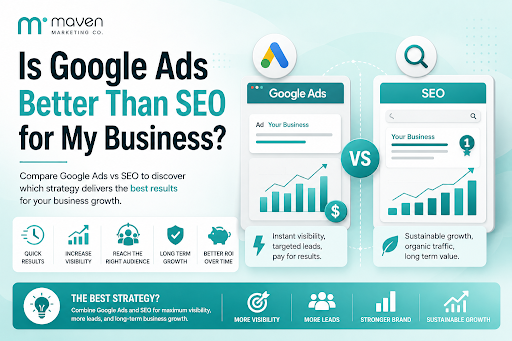
Is Google Ads Better Than SEO for My Business
One of the biggest questions business owners ask when they are planning online growth is whether they should invest in Google Ads or SEO. Both are strong marketing plays that help your company show up in Google search results, but they do things in separate lanes. Google Ads gives quicker visibility and can bring in leads fast, whereas SEO more or less focuses on slow, steady organic traffic that tends to grow the longer you keep building it. Picking the right direction depends on what you want to achieve, how much money you can spend, how crowded the market is, and how quickly you need results, like sooner rather than later. The good news is you don’t always have to choose one or the other; it’s not exactly a black-and-white situation. If you take time to understand the strongest points of both, you can put together a more sensible digital marketing plan that supports consistent expansion. In this guide, we’ll compare Google Ads vs SEO, explain the main differences, and help you figure out what option makes the most sense for your business.

When Should I Hire a Digital Marketing Agency
Growing a business today takes more than just having a website or throwing a post on social media; customers usually search around online, compare providers, skim reviews, and basically expect the brand to show up with a solid digital presence before they even think about buying. Many businesses try to run their marketing themselves, but there comes a point when “doing it all in-house” becomes clunky and hard to manage, all at once. Knowing when to hire a digital marketing agency can end up making a big, real difference for your growth. If you’re not getting enough leads, or your online visibility feels stuck, or sales are just not moving, the right agency can bring the know-how, plus a clear plan, to help you get noticeably better outcomes. In this guide, we’ll dig into what a digital marketing agency actually does, the usual signs it’s time to bring one on, and how picking the right marketing partner can help your business move forward at a faster pace.
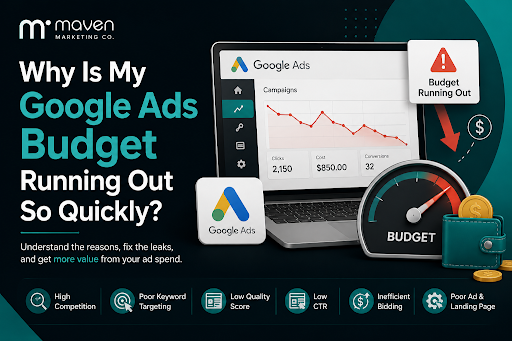
Why Is My Google Ads Budget Running Out So Quickly
Running a successful Google Ads budget isn’t only about throwing more money at it. It’s more like making every dollar, doing a bit extra. A lot of businesses start a Google Ads campaign with big hopes, then find out their daily budget is gone within a few hours, and that feels weird, right? After that, your ads stop showing effectively, new leads slip away, and your return on investment dips. So if your Google Ads budget is running out too fast, don’t stress. It’s a fairly common issue, and in most situations, it can be repaired with the right approach. There are multiple little things that can drain your advertising money quicker than you expected, from costly keywords to audience targeting that just doesn’t quite fit. In this guide, we’ll walk through why your budget disappears so quickly, how to cut wasteful spend, and the most reliable ways to boost your Google Ads ROI, even if your budget stays the same.